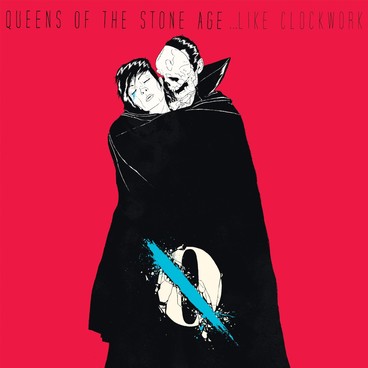
Queens of the Stone Age – “…Like Clockwork”

Photo Credit: Rolling Stone

Photo Credit: Rolling Stone

Grade: B

Key Tracks: “I Sat By the Ocean,” “Fairweather Friends”

“…Like Clockwork,” the long-teased and longer awaited new album from hard rock heroes Queens of the Stone Age, should be listened to with “Songs For the Dead” in mind, their behemoth, Grammy-winning album from 2002. “…Like Clockwork” is similar to “Songs” in three ways. The first is the re-introduction of former contributors Dave Grohl and Mark Lanegan, as well as ousted bassist and founding member Nick Oliveri (who only shows up in background vocals on two songs, but it is still a re-introduction). The other two similarities are thematic. “Songs” was a concept album, imagining a radio playing on a drive in southwestern America, and featured many Christian references. “Clockwork,” too, seems to feature a number of Christian references, if nothing more than metaphors. (Compare 2002′s “God Is in the Radio” to 2013′s “My God is the Sun”) Casual listeners might equate Josh Homme’s lyrics to those of the religiously-tortured soul of Dave Gahan, but Homme frankly chooses to sing about whatever he wants to.

The third similarity is the idea of conventional radio rock. “Songs” had a running theme of QOTSA’s songs playing on every station, in an attempt to solidify themselves as the kings of conventional rock radio. It worked, oddly enough, and they reflect that on “Clockwork.” Every one of the ten tracks feels significantly more conventional and regular than anything they’ve done before, with musical build-ups in slow songs and catchy guitar rhythms in the faster ones. Homme’s vocal melodies are incredibly catchy, even radio-friendly (particularly on the track “If I Had a Tail”). The album is still heavy, of course, but this is a side of QOTSA that has always stayed subtle. It is the band’s shortest album, and has only three songs over five minutes, a departure from the five on “Songs.” Homme likes to throw the audience loops and keep things fresh, which is tough to do for a rock band. “Clockwork” is almost a bit of a joke, in a way, that the original thing about it is its unoriginality. One almost has to wonder if the almost-optimistic sound is a response to Homme’s brush with death, or whether it is more of QOTSA’s relentlessly great tongue-in-cheek humor.

This does lead to some problems, however. “Keep Your Eyes Peeled,” the opener, never hits the intensity it thinks it does, and although the hauntingly-rhythmic “I Sat By the Ocean” follows it up, the tepid and unnecessary “The Vampyre of Time and Money” sits right after. And having this feeling of ‘Is this a joke or not?’ is a little iffy given that people have been waiting six years for a new album. The album grows stronger as it proceeds though, bolstered by barely audible but still appealing guest spots from Trent Reznor, Alex Turner and Sir Elton John (which was a surprise to come across). Homme is still heroically egotistical at times, which is when QOTSA is at their best. The album lacks at some points, falling too far into the unoriginality, but it is yet another great entry from the band overall.

-By Andrew McNally

Baths – “Obsidian”

Photo Credit: CMJ

Photo Credit: CMJ

Grade: A-

Key Tracks: “Incompatible,” “No Eyes”

Baths, the moniker for solo musician Will Wiesenfeld, received mass critical acclaim for his 2010 debut, “Cerulean.” The album was lo-fi alternative, recorded entirely in Wiesenfeld’s bedroom. Musically, the album was a bouncy dose of electronica, often fun and reminiscent of Passion Pit. His follow-up, however, is not any kind of status quo. Wiesenfeld was already setting out to make an album completely independently, which suggests the idea of a darker tone. Soon after, he became rundown with an awful case of E Coli (!) that left him bedridden and unable to perform even basic functions. Meaning, as a musician, he was left unable to express his inner emotions. “Obsidian” is a dark record, and even when it sounds danceable, it still feels dreadful and foreboding.

Musically, Wiesenfeld is on the same level as his debut. Most of the tracks feature just him on vocals and various keyboards and piano. It still sounds as if it were recorded in a bedroom, and may have been. The music, at times, takes a darker tone than his first album. There is little fun here. Tracks like “Worsening” and “Earth Death” suggest darker, personally destructive times. Some songs, like “No Eyes,” have more of a bouncy rhythm, only to get interrupted by noise for a few beats, before returning. The dark tone is not necessarily consistent, as occasionally Wiesenfeld will let more of a fun sound slip in. “No Past Lives” is built around a very original, fun rhythm, but one that really does not fit on the album.

Lyrically, Wiesenfeld is expressing his inner anguish at his post-debut troubles. “Earth Death” centers around the line “Kill me / I see so clearer.” The album opener, “Worsening,” features the darkly comic line “Where is God when you hate him the most?” Religion, death, and meaningless sex are topics on the album, marking a vast departure from his debut. There is some brilliant, dark lyricism here. Disgruntled 90’s alternative bands are re-imagined as a pained solo musician, recording alone. Artists in any genre often have trouble with their sophomore albums, but Baths has found a way to make something wholly different from his debut. “Obsidian” is an intensely pounding and completely satisfying listen.

-Andrew McNally

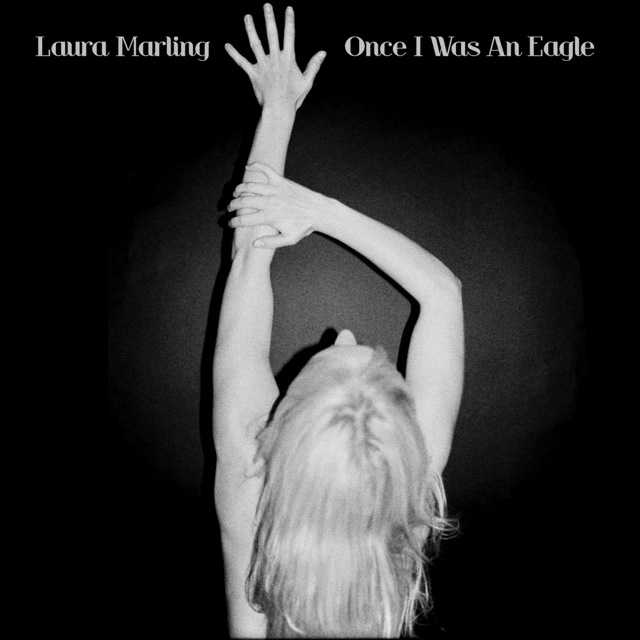
Laura Marling – “Once I Was An Eagle”

(Photo credit: Rolling Stone)

(Photo credit: Rolling Stone)

Grade: B+

Key Tracks: “Breathe,” “Saved These Words”

British singer-songwriter Laura Marling has been receiving constant praise for her work, including immediate approval of her fourth album, “Once I Was An Eagle.” The album does it’s job – it is an honest and effective folk album. But it does not start off that way. The first three tracks, “Take the Night Off,” “I Was An Eagle,” and “You Know,” are fairly tepid folk songs, with uninspiring lyrics and Marling’s vocals sounding phoned in. It is not until the fourth song, “Breathe,” that the album’s diverse originality starts to seep in. The song is a beautiful and building work of emotion. After “Breathe,” the album opens up into a mix of tracks with very diverse origins. Some have fast-paced with booming percussion, some are softer and more traditional of a singer-songwriter. Most songs feature just Marling and a slight instrument or two in the background. The album, as a whole, flows well in its transitions between different styles.

Once the album expands, there is a sense that Marling puts all the elements of herself into the record, exampled in the different styles. The songs have consistently great rhythms, no matter the volume or tempo. Marling deals with some tough thematic material in her lyrics, typical of a successful folk record. The album is long, stretching just over an hour, and it starts to feel tedious during the decrescendo towards the end. But the album’s final song, “Saved These Words,” is very reminiscent of “Breathe” in that it is a building song, a tough and perfect finale to the album.

Musically, the transitions between different styles keep it interesting, tough to accomplish for a folk singer. Marling’s guitar rhythms are often catchy and interesting, some less stale than others. Although the album starts slow, it turns into another near-perfect album for the acclaimed singer.

-Andrew McNally

Alice In Chains – “The Devil Put Dinosaurs Here”

(Photo credit: www.imwan.com

(Photo credit: http://www.imwan.com)

Grade: B-

Key Tracks: “Voices,” “Pretty Done”

A cut-and-paste rock album with a different singer might not be what all the 90′s revivalists are looking for, but Alice In Chains prove they still have some energy and spunk left. It’s been eleven years since the death of the original Alice In Chains singer, Layne Staley. He was a reclusive and tormented man, which brought life to the dark lyrics of Alice In Chains’ early music. The band’s reunion in 2005 with a new singer, William DuVall, was seen as misguided by many. But the band trekked on and released “Black Gives Way to Blue” in 2009 to surprising critical acclaim. Original guitarist and composer Jerry Cantrell picked up lyrical duties as well, becoming the band’s chief songwriter.

Their new album, “The Devil Put Dinosaurs Here” is more of the same for the band. The lyrics are typically gloomy and cover a wide spectrum of dark topics, including songs with titles like “Scalpel,” “Choke” and “Hung on a Hook.” The lyrics, penned by Cantrell, are effective, although the title track’s tackling of the blending of politics and religion just flat out does not work. The music is still loud and shrieking, with the monstrous and sludgy guitar tone from their previous album returning. Even in their advanced years, Alice In Chains are still being praised for bringing originality into heaviness.

“Devil” flows surprisingly well. The transition between the album’s first two tracks, “Hollow” and “Pretty Done,” is nothing more than a moment of silence before a similar rhythm comes in. Likewise, the fourth track, “Voices,” one of the slower songs, ends by building up volume before transitioning into the more haunting sound of the title track.

There is a problem with volume, however. The band focuses on the volume of it’s doom-and-gloom guitars, but it is consistently overpowering the vocals. DuVall and Cantrell share vocal duties, both with strong voices. On many tracks, though, the lyrics are only audible enough to hear, not audible enough to discern.

Alice In Chains’ original run had a number of emotionally powerful albums bolstered by Staley’s lyrics coming from real pain. Cantrell, chief lyricist, successfully follows in Staley’s footsteps in the manner of dark and haunting poetry. Post-Staley Alice In Chains, however, sounds like a band having fun in the studio, a band that probably is not feeling the lyrics they are singing. There is not necessarily anything wrong with this, it just further separates them from the 1989-1996 Alice In Chains that was popular on rock radio. “The Devil Put Dinosaurs Here” is an inventive rock album that plays around with traditional rock music while maintaining the sound. It does not resemble the original Alice In Chains, but it is still an enjoyable listen overall.

-Andrew McNally

John Fogerty – “Wrote a Song For Everyone”

(Photo credit: Consequence of Sound)

(Photo credit: Consequence of Sound)

Grade: A-

Key tracks: “Lodi,” “Who’ll Stop the Rain”

When a respected classic rock musician starts to get up there in years, they’re allowed to start having some fun in the studio. That’s exactly what Fogerty – famous most for Creedence Clearwater Revival, and some for his solo work – does on his ninth solo album. “Wrote” isn’t a duet album, it isn’t an original album, and it isn’t an album of covers, which many older singers resort to. Instead, it’s a healthy mix. A majority of the songs are reworkings of older songs of his, with guest stars. Fans of classic rock will instantly recognize CCR favorites like “Proud Mary,” “Who’ll Stop the Rain?” and “Fortunate Son” getting reworked, along many others. And to mix it up, Fogerty throws in a few original songs, just to prove that he hasn’t lost anything.

The guest stars on the album read like a planned tribute album, only the man being tributed showed up. Bob Seger and Alan Jackson, contemporaries of Fogerty, make two of the best appearances. Country singers like Keith Urban, Miranda Lambert and Brad Paisley contribute, as do current rock bands My Morning Jacket and Foo Fighters. The album’s most entertaining song, “Lodi,” features Shane and Tyler Fogerty, presumably his sons. The title track, though not one of the more memorable ones, features a unique pairing of Lambert’s vocals, and guitar work provided by Tom Morello of Rage Against the Machine. Jennifer Hudson, known for her powerful voice, dominates “Proud Mary” at the album’s finale. “Proud Mary,” one of classic rock’s most famous songs, has been covered by Tina Turner in the past, and this likely serves as an homage to her equally powerful version.

This album gets a high rating simply because there is nothing wrong with it. Fogerty, now 68 (happy birthday!), recorded this just to have some fun. There is no purpose to this album other than to show that Fogerty still loves his material and loves to perform. Fogerty successfully brings the fun to the audience, making for a completely enjoyable listen that erases that wonder of why the album exists in the first place. I even looked past some guest stars I do not like (namely, Kid Rock and Bob Seger) and recognized the great reworkings of the songs. Fogerty’s voice, too, is still kicking. Tom Petty and David Bowie might be the last holdouts of classic rock still recording successful new material, but Fogerty sounds as good as he ever has, kicking back and having fun.

The National – “Trouble Will Find Me”

(Photo Credit: Rolling Stone Magazine)

(Photo Credit: Rolling Stone Magazine)

Grade: A

Key Tracks: “Sea of Love,” “Demons”

With a title like “Trouble Will Find Me” and two opening tracks called “I Should Live in Salt” and “Demons,” the National give the immediate impression that their sixth album will be more of the same introspective and self-demonizing alt-rock that has brought them this far. And in many ways, the album is a continuation. Singer Matt Berninger is 42 now, so this is no time to drop the cynicism and open up. The National have always relied on sad, relateable lyrics to drive their songs close to home. “Trouble Will Find Me” continues the gloom, but after all these years, Berninger has begun to expand his horizon a bit.

Songs like “Sea of Love,” which might be my favorite song of the year so far, rallies about a situation filled with bad choices, a typical National song. What is not typical of the National, however, is some moments of dark humor and some namedrops across the record (Nirvana’s “Nevermind” album being one, to bring home the sadness). The National’s best albums, the two that preceded “Trouble,” relied on slight changes from the previous album, to make a separate but familiar listen. While the previous changes have been largely musical, “Trouble”s change relies more in lyric. Berninger seems to be making an attempt to bring himself closer to the listener, although the National have always been an engrossing band already. Still, Berninger sings about his own troubles, just ones that he relates to the listeners. The album’s cover, an interesting one on it’s one, serves as a symbol for these troubles as Berninger is swallowed by his inner demons and can only look to himself for help. Somehow, he makes us all understand.

The National have never been stupendous musically, and “Trouble” is no different, as the band focuses on the emotional impact of the lyrics. “Sea of Love”s pounding rhythm is one of their loudest songs, and is kind of a surprise on the album. But a majority of the songs are moderate-volume, guitar- or piano-driven tracks with repetitive music and lyrics, the band’s style. Sufjan Stevens, Richard Reed Parry and St. Vincent are among the album’s guest stars, with St. Vincent providing brief but powerful vocals on “Sea of Love.” The album may run a little long, and it feels a little anticlimactic after “Sea of Love”s boom, but the National have a way to always stay in the listener’s head. “Trouble Will Find Me” does this even more than their previous albums, and it might just be their best one yet.

-Andrew McNally

The Front Bottoms – “Talon of the Hawk”

(Photo credit: Property of Zack)

(Photo credit: Property of Zack)

Grade: C-

Key Track: “Twin-Size Mattress”

If you’ve never heard the Front Bottoms’ 2011 self-titled debut, then you might see this, their sophomore album, as a pretty unique blend of borderline-spoken word poetry, acoustic guitar, and beating drums. When this album was leaked by the band, however, the reaction was tepid. “The Front Bottoms” is one of my favorite albums, probably in my top five of all-time. A lot of my friends and I love this band dearly (I’ve even made friends because of mutual love for this band). On the opening chords of “Au Revoir,” a letdown was already starting. Bands often have their sophomore albums suffer from a bland rehashing of their debuts, and the Front Bottoms are no different.

The band – a duo in the studio – created a wholly original type of music on their first album, which is continued here. I can only call it “alt-emo folk-pop.” Their songs rarely feature anything more than acoustic guitar, drums and vocals that are barely sung, yet the band has a taste for making their music seem like it is always about to fly off the rails; like the musicians are about to lose control of their own song (For the best example, look up “The Beers,” their fastest and best song). The lyrics jump from sad poetry to non-described personal experiences frequently, even mid-line. And the poetic lines are often poignant, even ‘cutesy,’ still hitting the listener in the gut harder than they should.

But “Talon of the Hawk” is distinctly lacking. The lyrics are significantly cornier. They feels less poetic and more lame and forced, and the vocal delivery is not as random, with the verses formed into actual rhythmic lines. Musically, the band has never been proficient, as it is not their focus, but they are even less so here. The tracks on their first album are all instinctively catchy. On the second, they are almost all forgettable. Even the production quality, pristine, admittedly, feels better than it should. To their fans, the Front Bottoms are two goofy guys unaware of their own growing popularity, which does not come through on “Talon”s very professional recording style. The album’s only redeeming song is “Twin-Size Mattress,” both lyrically and musically strong. (The song is the album’s leadoff single. A video was recorded which, had I been standing ten feet to the right at a recent NYC show, I would’ve been in)

The album is dividing Front Bottoms fans. Some love it, some are left with a bad taste in their mouths. It is a serious decline from their first album in every way. Those previously unassociated with the band might find it much more intriguing and entertaining than those who ate up their debut. Reactions to pieces of work are, of course, subjective, but they are even more so with “Talon of the Hawk”

-Andrew McNally

Dirty Beaches – “Drifters/Love is the Devil”

(Photo credit: Paste Magazine)

(Photo credit: Paste Magazine)

Grade: A-

Key Tracks: Drifters: “Belgrade,” “Mirage Hall”

Love is the Devil: “Alone at the Danube River,” “Like the Ocean We Part”

“Drifters/Love is the Devil” is, distinctly, a double album. In a digital age, double albums have become a rarity. These two albums, however, are not attempting to open up to today’s electronic world. Album one, “Drifters” is reminiscent of a troubled past, with a gloomy 80’s sound being it’s only clear influence. “Love is the Devil,” album two, is haunting and largely instrumental, not trying to fit into any specific era. “Drifters” is a very honest album, as Dirty Beaches – the stage name for solo musician Alex Zhang Hungtai, Taiwanese but operating in Montreal – wind through 37 minutes of some deep, unseated sonic emotions. It’s nearly impossible to pinpoint the genre of music that “Drifters” falls under, as complex and winding guitar rhythms are fitted with equally complex electronic backgrounds. The vocals are largely unintelligible, but probably intentional on Hungtai’s sake. His vocal level ranges from barely audible (“Night Walk”) to semi-rhythmless belting (“Mirage Hall”). It is not the lyrics of the album that beg for the listener’s emotional response, but the volume levels and vocal rhythms. “Drifters” is a deep and gloomy work, asking for multiple listens. Hungtai is a difficult and pained man, and this album highlights the many facets to his own existence.

If “Drifters” did not rely on the lyrics, then “Love is the Devil” certainly doesn’t. The second album is largely instrumental, as Hungtai goes even further to explore his emotions musically. The second album is drastically different, but equally painful and complicated. “Love is the Devil” focuses less on songs and more on ideas. “Drifters” is certainly not radio-friendly material, but the tracks all had at least relative song structure. Hungtai experiments with concept instead of structure on the second album. The album, also hovering near 37 minutes, jumps from flowering epics (“Alone at the Danube River”) to moments of total silence (“Like the Ocean We Part”), all successfully displaying the ideas of a lonely man, recording music by himself.

The albums, though very different, are being sold together. When listened to back-to-back, they only further emphasize Hungtai’s varied and combined emotions. Taken on a basic level, the two albums share a similar and long-running lo-fi sound. But they are thematically different, taking vocal- and structure-based songs and placing them aside instrumental and unstructured songs. This is a very complex work, and is not going to be enjoyed by everyone. But listening to these two albums is an experience, and a look inside the life of a man that feels more like an opportunity to the listener, rather than an expression from the artist.

-Andrew McNally

30 Seconds to Mars – “Love Lust Faith + Dreams”

30 Seconds to Mars

Grade: C

Best Tracks: “Pyres of Varanasi,” “Northern Lights”

30 Seconds to Mars have never been ones to please the critics, with their often corny and awkward pairings of genres, and at most points, their fourth album never strays too far beyond that. Bandleader Jared Leto has always embraced the corniness of his lyrics and the music of his backing band. “Love Lust Faith + Dreams” feels no less cheesy or misguided than their previous efforts.

Lyrically, Leto’s meandering musings on the vague concepts can be summed up in the album’s title. The album is split thematically into four segments, each word in the album’s title. While Leto does stretch deeper and darker than his previous albums, a majority of the metaphors presented here are still largely depthless. The ‘faith’ section in particular is largely void of originality.

Musically, however, I have to applaud 30 Seconds to Mars. For a band that has never been very respected, they do find ways to reinvent themselves. The then-popular pop-emo brand of their second album was quite a different sound than their industrial-based debut. This album is louder, more experimental and electronic based, a sharp change from their vocally loud and musically quiet, unstructured third album “This Is War.” “Love Lust Faith + Dreams” sounds, at points, like a band too heavily inspired by Muse but more inventive. It also, at points, resembles a band that enjoyed the “Inception” soundtrack far more than they should have. But I was actually impressed by the music of this album. The more experimental nature diversified the individual songs more than their previous efforts. The ‘dream’ sequence is musically effective, introduced by “Convergence,” although the whole segment seems to build to a largely unsatisfactory ending.

I would wager to say that this is 30 Seconds to Mars’ best album, but I would not go out of the way to recommend it. Musically strong but lyrically, the band is still flailing in their typically cheesy nature, grasping at large concepts and ideas but rarely hitting the mark with any depth. 30 Seconds to Mars fans will surely love it, and they might even gain some new fans. “Love Lust Faith + Dreams” is not going to down as one of the year’s best, but it is a reasonable listen for general fans of the band.

-Andrew McNally

Daft Punk – “Random Access Memories”

Daft Punk

Grade: B+

I’m one of those rare people that’s never really been onboard with Daft Punk. I’ve rarely found their music as entrancing and intriguing as most. The robot suits, to me, have seemed like an act more than an output of the music, which I’d already seen (better) in Kraftwerk. And I never cared for the repetitive rhythms and lyrics of their hits, and of club music in general. “One More Time” will grab me every now and then, but I see nothing in it beyond catchiness. “Around the World” has for years been a throwaway song to me, totally pointless and obnoxiously repetitive.

But “Random Access Memories,” admittedly, sucked me in. The first two tracks – “Give Life Back to Music” and “The Game of Love” did little for me, and were perhaps not the most momentous songs to open an album with. But the album’s third and longest track, “Giorgio by Moroder” roped me in more than any other dance song ever has. The song is winding and experimental, incorporating many instruments in a building rhythm. After the epic ends, the album twists into a peak of very danceable songs that never stretch into unnecessary lengths, and feature some great collaborations with Julian Casablancas (The Strokes), Pharrell Williams and legendary songwriter Paul Williams, all of whom contribute to some genuinely funky rhythms.

The album continues to flow in segments, as the last few tracks feature just the duo more prominently, largely devoid of collaborators and focusing more on a stripped-down, electronica sound. “Beyond” is the most traditionally Daft Punk track on the record, with the typical repetitive, faint robot vocals, and is one of the album’s weak points. But the largely instrumental tracks “Motherboard” and “Contact,” the closer, bring the album to a momentous end, and allow the group to experiment with their music and break out of their repetitive habits.

The duo stray further away from EDM and electronica on this record, their fourth. The danceable tracks actually feature funky guitar rhythms over electronica, at points. At moments on this record, Daft Punk sound like more than a duo, incorporating many instruments into their swooping songs. Chances are, if you’re reading this, you’ve already heard the album and have formed an opinion of it. When the band streamed it on Pitchfork, the world went crazy. People are down with whatever Daft Punk has to offer and, on this album, it’s a whole helping of everything. I do believe that I am a converted fan, at least for now.

Key Tracks: “Giorgio by Moroder,” “Contact”

-Andrew McNally