Cräne – “15 minutes de plaisir”

Key Tracks: “Filth,” “The Hunt”

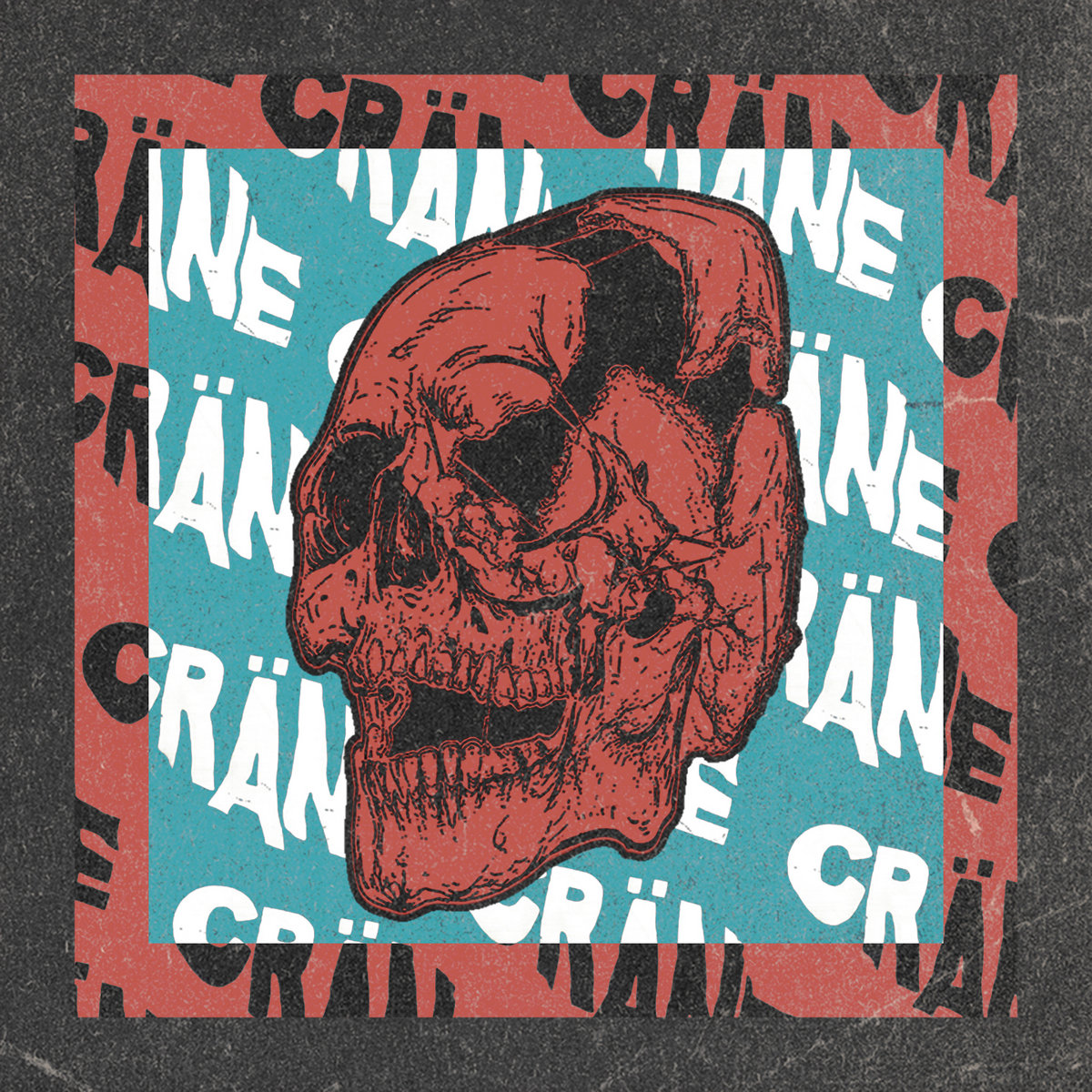
Whether it’s the underdiscussed hardcore revival happening, or my own tastes mutating out of solidifying anger at the world, or a combination of both – I’ve been digging into more and more hardcore bands over the past two years. There is absolutely a rebirth of hardcore happening, both classic and new mutations. Bands like Knocked Loose and Turnstile are taking the format of hardcore and spicing it up with anything they please, and pushing it onto stages not normally reserved for hardcore. It feels like every day I hear about a new hardcore band from a new corner of the continent. Well today, it’s Cräne, out of Montreal. They’re ultra-fresh on the scene, having just put their debut EP, 15 Minutes de Plaisir. As someone who loves hardcore and has always kept up with French lessons, c’est un grand cadeaux pour moi. 

Cräne is made up of Shirley on vocals, Jypse on guitar, Wawa on bass and Frank on drums.Although this band is new, it brings together members of Powercup, Apostoloï, Wild Call and Ditch. The band stray closer to the standard hardcore side of things, but never feel too complacent about it. All eight songs here are defiantly hardcore, from the bass opening of “Mépris” to the more drawn-out closer, “The Hunt.” Fans of classic hardcore will find solace in all 70 seconds of “Dead Heat,” a power chord-heavy blast of aggression. “Filth” and “Time’s Up” are also among the EP’s more hardcore-heavy tunes. 

But some songs go a little more astray. There’s a persistent garage rock influence on the tape, especially on “Lasso” and “The Hunt.” There’s some early 60’s proto-psychdelia present in the frantic melodicism. “Mépris” kicks the tape off with some of that energy as well, also backed up by some 70’s psychedelic-inspired vocals from Shirley. “Édifiant” is longer and denser than most of the other songs here, taking just a touch more time to lay things out. The longest track is “The Hunt,” a second shy of three minutes, and on top of the garage rock there’s a real 90’s punk feel to it. It’s the most melodic song on the tape, with hints of bands like Rancid in the rhythm. 

Gone are the stereotypical niceties of Canadians. This is aggressive hardcore, and the energy is palpable. The tape is, in case the title was not clear, only 15 minutes or so long. These songs put bass front and center, courtesy of opportunistic pummeling from Wawa. Shirley gets some good lyrical licks in too, singing “Hope you never get laid, hope you never the chance” on “Filth.” Her vocals carry most of these songs, with a big, shrieking feel to them that you don’t find too often in hardcore. It’s clear they’re not just ingesting hardcore, but old school garage rock and classic rock as well. Cräne might only be just now testing the waters, but it’s an impressive little debut to watch out for. 

15 minutes de plaisir is available now on Bandcamp. 

Wellness – “Wellness”

Key Tracks: “Shallow Graves,” “Stained Glass”

Does your math rock now come packed with extra protein? The sheer concept of health is up for debate in 2026, but wellness isn’t. And neither is Wellness, a new screamo-adjacent group out of New York who put out their self-titled debut album today, September 18th. The group comes with pedigree, bringing together Morgan Brown (Heavenly Blue) on guitar, Leo Didkovsky (Liturgy, Kayo Dot) on drums, Morgan “Mo” Miller (Liturgy, Chepang) on bass, Cara Moses (Channel Vessel) on guitar, and Aeryn Jade “AJ” Santillan (forever, Massa Nera) on vocals. Longtime readers may know that Liturgy is a particular favorite of mine, so naturally I was intrigued by how that group’s black metal influence may extend to hardcore.

Math rock, for the arithmetically disinclined, has its roots in the complex and drawn-out structures of songs in bands like Rush and Yes. But over time, it has become a bit of a catch-all for unpredictable heavy bands as well. This is where Wellness fit in, who self-describe as “chaotic mathcore.” The seven songs on their debut stretch across screamo, emoviolence, math rock, black metal, and a few other subgenres that would give a normal person a headache. All seven songs are hyper-aggressive, with bleak and pained screaming vocals courtesy of Santillan. The opener “503” really sets the tone for the album, as the most straightforward screamo song on the record. The song acts as a mission statement of intensity before the band starts kicking off in other directions. The math rock and emo elements come through in the riffs and rhythms on “Possessions” and the closing song called, well, “Wellness.” These are among the more melodic tunes on the album – something that is not a guarantee across every song.

Black metal is a major influence here, which is surprisingly uncommon for screamo bands like this. “Tell Me How It Ends” has the bluntest black metal influence, with nary a central rhythm and consistent walls of noise. The follow-up, “Stained Glass,” feels like only a half-step towards brightness, as the song matches the walls of noise with more stereotypical rock drumming. “Glass” is the most ambitious song on Wellness, with a huge pause after a minute followed by a noise wall, only to end in a very skramz finale. It’s an odyssey through the various interests of each band member. There is a slight metalcore nudge at times, as well – “Countering” sneaks a metalcore finish into what’s the grungiest song on the album, and “Wellness” tosses some metalcore influence into the mix too. On “Wellness,” the band manages to, somehow, end on the heaviest note on the record, sending listeners home with a cacophonous wall of guitars. Even though the album jumps to 10 from the opening beats and rarely lets up, it saves the biggest shove for the final few seconds.

Wellness describe their music as “made by and for the girls, the nerds, and the freaks.” I fit firmly into one of those and, on occasion, two. This is a deeply political release, reflective of the current oppressive state of American politics. Wellness is a melting pot of various extreme subgenres, just as the intended audience is any collective group of better-than-normal outcast. The album, in its brief runtime, tackles anticapitalism, transness, state violence and – most importantly – hope. The energy at which Wellness plays feels like pure catharsis, so much so that it trickles through to the listener. The way that the songs on Wellness blend from one to the next makes it sound like the band jumped in the studio and did one long, singular take of the record, one act of cathartic meltdown. It’s alright to let the anger out, especially when some hope is splashed in. In case this isn’t clear, PGMR stands firmly and permanently with the dolls, and anyone under the thumb who chooses to make art, especially when it is something so proudly loud and aggressive.

The individual members of Wellness have accrued a ton of experience already, but for a band that has only been jamming for a year, this is a breathtaking debut, literally. The ferociousness of these songs might actually take your breath away. Wellness is only 16 minutes, but listeners might not be able to take much more of it, for their own, uh, wellness.

Wellness is available now on Bandcamp and streaming sites (but not Spotify).

Perennial – “Modernism”

Key Tracks: “Modernism,” “Baby, Are You Abstract?”

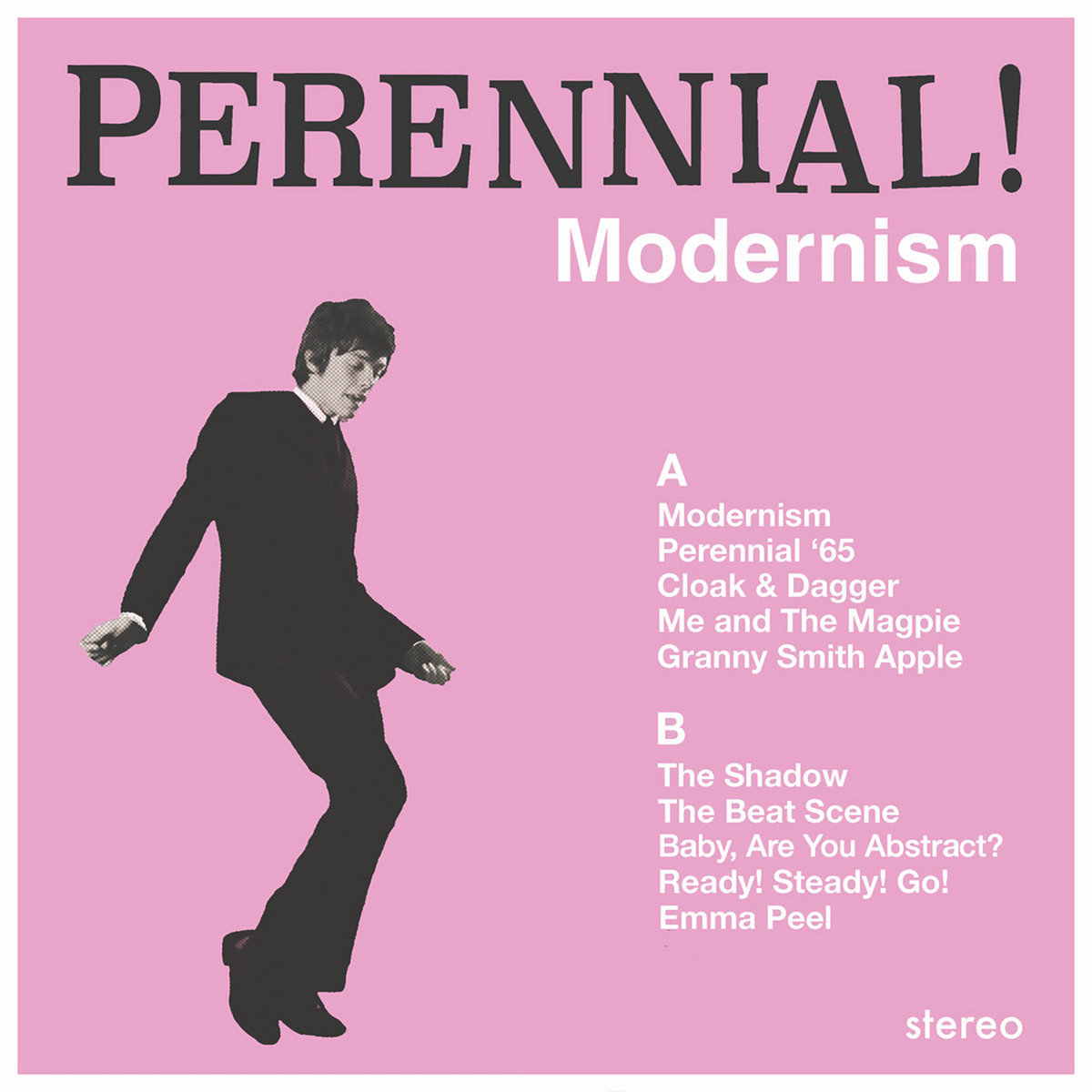
Over the past six years, I’ve been writing over at Allston Pudding, where I’ve become more and more entrenched in the local New England music scene. It’s been rewarding in many ways, one of which is finding artists and subsequently becoming friends with them. One of my favorite local artists is dance-punk group Perennial, who I’ve now had the pleasure of interviewing three times. But I didn’t get a true chance to write about their phenomenal new album Modernism, and I’ve been trying to restart this blog, so hey what’s one more Perennial piece? I’m already covering them perennially as it is! Sorry. Sorry!

The music made by Perennial is often very simple, yet the influences are extremely difficult to nail down. The band (Chad Jewett on guitar and vocals, Chelsey Hahn on electric organ and vocals, Ceej Wolf on drums) channel dance-punk and cite The Hives and Be Your Own Pet as influences – that much is obvious. But underneath the walls of guitar and duo vocals, there’s mod, there’s R&B, there’s free jazz, there’s krautrock, there’s…etc. If it was left of the dial in the 60’s and 70’s, it’s in there. The band’s appreciation of things like old jazz don’t always come through in the tunes, especially on Modernism, but you can almost feel the inspiration instead of hear it.

The band’s first three albums were already super high-energy, but their fourth feels the most feral. The album is largely stripped of the quieter, experimental ditties that splice through the tracklists of their first three records. Instead, we get almost nothing but ten straight punk bruisers. The title track starts the album with a bang, as the most chaotic mod song you’re likely going to hear all year. There are some songs like “The Shadow” and “What’s New On The Beat Scene?” that I can only describe as classic Perennial – short, blistering dance-punk songs with rough vocals that are also far more magnetically fun than any of those words imply. The closing song, all 1:12 of “Emma Peel,” is the closest Perennial have gotten to hardcore. It’s a ferocious ending tune, to cap off an already chaotic record.

But it isn’t all pummeling guitars, either. “Granny Smith Apple” is a poppier and more experimental song that harkens back to the 60’s influence more than any other song on the album. The album also includes the previously released song “Baby, Are You Abstract?” which is more mod than anything else on the record, and also arguably the band’s best song to date. “Cloak & Dagger” also features a more left-field organ segment from Hahn that takes from the band’s krautrock sensibilities. And, there are a few songs that still feature audioclips or abstract outros that can serve as a breather in between the bangers. Trust me, you need the breathers. The album is only a second over 20 minutes, but they use practically every single moment.

Perennial is as infectiously fun as they are cacophonous and loud. Their music pulls from many different genres – and, crucially, film and physical art – while sounding mostly like a 00’s dance-punk heyday. It’s been a pleasure of mine to watch them expand onto an international stage on the basis of their explosive live shows, and hopefully Modernism can help continue that trend. At ten songs and only twenty minutes, it’s the most assaulting burst of fun you’ll have this year.

Modernism comes out this Friday, 9/18, and can be pre-ordered on Bandcamp.

Our Wits – “Let Me Join You”

Key Tracks: “See You Later” “Let Me Join You…”

If the name Our Wits rings a far-off bell in the back of your head somewhere, then there’s a reason – the post-hardcore band just released their sophomore album Let Me Join You, a full nine years after their debut record The Manifesto. The band was initially started by singer Dean Scordilis as a solo spoken-word project (!) before Matt Billy, Nagee Diaz-Corpening and Mark Boulanger all came aboard. The length of time between records was both self-imposed, so the band could truly hone their sound, and world-imposed, with the COVID onslaught. The album explores grief and reckoning in broad terms, with a focus on the sheer passage of time and the people and memories we no longer hold close. It’s fitting, really, for such a lengthy absence before the record’s release.

As one might expect knowing the history of the band’s formation, Our Wits don’t comfortably fit into any one genre. Join You is, at its center, a post-hardcore record. We hear it the most in “Why Is It That Only You Were Saved?” and the title track. These are songs that have a pounding rhythm and a fairly relentless dose of heaviness, without sacrificing melody. Scordilis’s screaming throughout the record does the band favors. His voice is piercing and flat, and adds intensity to the tracks. It also helps put the band in the same league as someone like Actor|Observer, a post-hardcore group who use these similar vocals to edge towards – but never truly embrace – metal. This is the most evident on “See You Later,” which comes the closest to metal without bridging the gap. 

But this isn’t just a post-hardcore album. There are healthy doses of emo and punk as well. “See You Later” gives way to “Truly, A Diminishing Return,” which immediately resets things with a classically Midwestern emo guitar riff. It also shows a lot more restraint and patience than the previous tune, showing the band’s full spectrum within two tracks. “Martyrs” might be the biggest outlier on the album, a song that embraces the punk side the most and feels the most coordinated. The call-and-response chorus is indicative of pop-punk, though it’s difficult to mistake the song as being pop-punk at all. 

The biggest wrench in the adjective department, however, is the ambient element. I don’t mean true ambient music, but there are many moments of calmness peppered into the record. The opening track, “A Dream, Interrupted,” is a sour spoken-word tune that sets the album’s remorseful tone. “Why Is It That Only You Were Saved?” is the heaviest song on the album, but it does feature a long and somewhat peaceful bridge before it swings back into a big climax. “Haunt Me,” which acts as an interlude of sorts, is a sparkly and dreamy little cut that slices right through the middle of the record. And, “…Until Everything Fades” closes the record out with an extended and oddly soothing calmness to it. Many of these tracks seem to have some calm rhythms playing beyond the chaos. 

Lyrically, Join You explores the pessimistic side of nostalgia, while acknowledging the person of the present (whatever that means for you, the listener). Many of these songs do touch upon death and the immediate grief, with “Return” even taking place at a funeral. But these songs are more conceptual, pondering on losing people who are still alive, and the anger you can feel at yourself for letting people drift away. The lyrics here are very poetic and come straight from the heart. There are a lot of difficult pills to swallow here, even in times where the lyrics are strictly personal. Besides some necessary jabs at politicians, there are a lot of melancholic and grief-ridden passages of loss that read like eulogies. It’s feel-bad, but it’s a mood we can all relate to. 

This album crams a lot into a sub-40 minute runtime. We’ve got walls of guitars, peaceful bridges, rousing choruses, and imminently relatable lyrics that touch on the people we’ve lost and the memories we’re losing. What more could you ask for from a post-hardcore record? It’s a delectable blend of ideas and influences. Let’s hope we don’t have to wait nine years for the next album. 

Summer Colds – “Missing Out”

Key Tracks: “Something’s Coming” “The Moon” 

What better time to review an album from Summer Colds than the dead of winter? With multiple feet of snow still on the ground here in Boston, I’ve immersed myself into this subtle, pleasant sophomore album from Summer Colds that was released last Halloween. Though it may only be the second album under the Summer Colds moniker, Nic McNamara has been in the industry for a long while. The Oregon-by-way-of-Surrey-by-way-of-Johannesburg musician grew up with a studio producer father who worked alongside legendary Robert “Mutt” Lange. This evolved naturally into a love of music, and McNamara spent the early 2010’s releasing folk rock albums under the name Black Bears Fire. But a desire for a harder edge comes with a new name, and the power-pop project Summer Colds was born. 

The fact that Missing Out was born because COVID canceled McNamara’s plans to tour his first Summer Colds album, Here Comes Nothing, is only fitting for the latter album’s melancholic vibe. It’s a perfect title, too, since McNamara was denied the chance to take a victory lap tour. The record is a product of the downtime, and the frustration at the state of the delayed world is palpable throughout. While the album’s strength is patient songwriting, there is a lot of pent-up annoyance present, which helps set the tone and separate it from other glitzy power-pop acts.

To be honest, power-pop is not a genre that I am predisposed to enjoying. There are plenty of power-pop bands I do enjoy, but they always need to have something enticing. Missing Out isn’t afraid to stretch into punk or indie territory. Some of the songs here edge into speedier territory, like “Shakeout,” which is is more power- than -pop, and the rollicking opener “Something’s Coming.” There is a distinct indie rock vibe throughout too, more present on the patient songs like “Say It Back” and “If You Know.” Even though I am personally always all in on bangers, these tracks are key to the subtlety. While all eight songs here are centered on crunchy guitar and sound at least punk-adjacent, there is a lot maturity present. The tunes are largely midtempo and feel more comfortable focusing on melodies and lyrical content than they do resting on pure energy. 

There is another checked box here that is often ignored by bands, especially more modern bands. That’s vocal melodies. Setting aside the post-punk trend of talking bands (Cheekface, Dry Cleaning, etc), far too often do singers not put enough emphasis on vocal harmonies. It’s part of why I’m one of the biggest Dinosaur Jr. fans. Say what you will about J. Mascis’s vocals, he’s always got a new rhythm. What I find fascinating about this album is that many of the song’s choruses see McNamara singing a catchy vocal rhythm over a singular power chord wall. It’s a fun dynamic and makes for a unique listen. It isn’t because of technical inability; “All Time High” has a great guitar lick after the chorus, and “Dear Life” benefits from a musical bridge and comeback at the end of the song. Instead it sounds like something bright bursting through the cracks. Late album standout “The Moon” also puts more focus on the guitar, with a heavier and louder feel than any other track. It is an interesting little tactic that gives the album more texture and some earnestness. 

Missing Out is an album that hides a lot under a blanket of guitar. On the surface, it’s standard power-pop/indie rock. But the dense guitar, vocal rhythms, melancholic lyrics and wavering genre influence make for a pretty unique listen. Summer Colds are a solid listen for a day where it’s, well, cold. 

Missing Out by Summer Colds

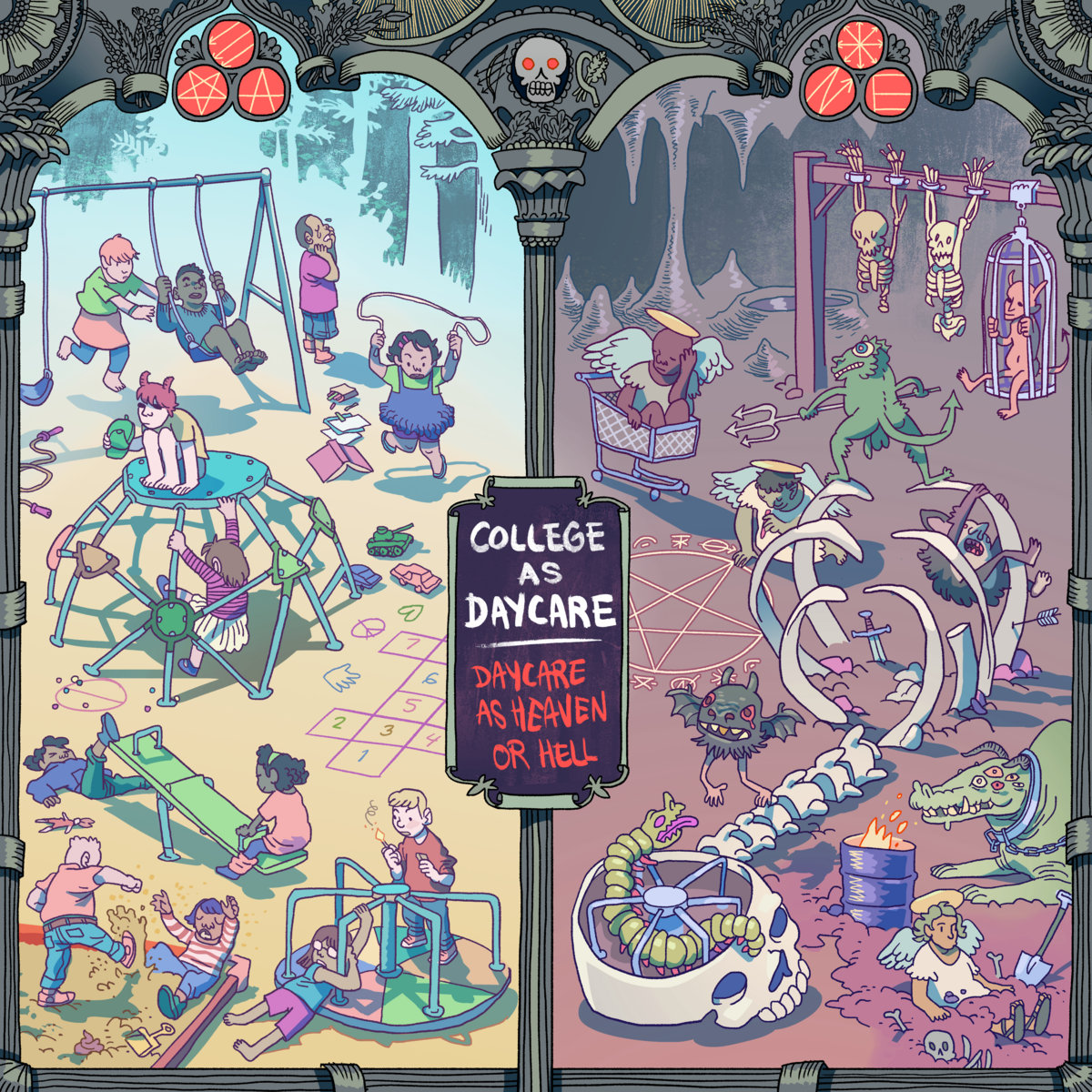
daycare – College as Daycare / Daycare as Heaven or Hell

Photo Credit: Bandcamp

Grade: B+

Key Tracks: “Life As A Petting Zoo,” “Diet Coke Saint”

2023 has already seen the debuts from genre-defying groups like Mandy, Indiana and Model/Actriz, and the debut album from new group daycare is no different. The Minnesota band bills itself as being pop-punk flair, and as “College as Daycare / Daycare as Heaven or Hell” kicks off, it seems like an apt indicator. But the album never finds comfortable territory, charging through a few other influences and ideas, in a delightful way.

The opener “Failed Disney Plot” is really only about 30 seconds long, an acoustic sensitive emo track that sounds closer to a Front Bottoms cut than anything. “Secs ‘n Babes” follows, showcasing the band’s spunky energy that they’ve prided themselves on. It’s the most characteristically pop-punk track on the album; energetic, ripe with tempo changes, and tongue-in-cheek references amidst more reflective lyrics. While I’m personally not big into pop-punk, these two songs prove themselves catchy as hell, and show the band can hang.

Daycare never intended to be a group – they only “formed” last year, as an excuse to put a few lingering songs to tape. Although a new group, the members – Andy Evren (vocals/guitar), Michael Kuhn (bass), and Eli Phillips (drums) – are seasoned songwriters, and those years show across the flowing nature of the album.

What I find interesting about this album is how it feels structured like a natural progression. The third track, “Life As A Petting Zoo,” exists well-within the confines of pop-punk, but has a more balanced rhythm and less referential lyrics. It feels like a Dirty Nil song more than anything – high praise in my eyes. From there, the band moves into more indie-inspired tunes. “funny” and “Xtian Boy” both feel like straight indie songs, especially with lyrics centered in religion. “DAYCARE” and “Rideout” are the same way – two great ballads on the album’s back half that stray far from the limits of pop-punk. “New Year’s Dissolution” is a great mid-album banger, with some strong energy, great guitar work and cool tempo changes. It’s also a song that can really only fall under “punk.” Late-album track “i.d.k.t.b.o.m.h.” is really the only time the band embraces pop-punk/emo again, fully, and it’s a much more-toned down track. And, as progressions logically go, the final track feels the furthest from the first. “Diet Coke Saint” is a straight indie ballad, complimented by haunting guest vocals and twangy guitar. It’s also maybe the best track on the album, and it comes as a real surprise given what came before it.

While some of the songs on this album won’t sound like the most exciting songwriting of the year, there’s a lot of interesting ideas. A lot of these songs rely on tempo changes, which feels like a nice symbol of how the band eschews any specific genre labels. It’s a very fun album, even through the more honest songs, which can be a difficult balance to capture on a debut. Also impressive for a debut is the production – the vocals sound crisp, and the band is all mixed well. All in all, there are some songs that sound a step above others, but this is a very solid punk debut. Daycare may not have intended to stick around after this, but they’ve begun booking shows – so check them out if you’re in Minneapolis!

“College As Daycare / Daycare As Heaven Or Hell” releases this Friday, June 9th. You can pre-order the album and stream the single “Life As A Petting Zoo” on their bandcamp page.

Death Valley Girls – “Islands In The Sky”

Photo credit: Bandcamp

Grade: B

Key Tracks: “Islands In The Sky,” “Sunday”

So between this and my recent Oozing Wound review, I think it’s clear that I’m hijacking my own blog to just hype up great new releases by underrated bands I love. Death Valley Girls are cool as hell, and their fifth album feels like an important step forward in their career.

DVG have never truly felt like a “punk” band solely because they sound like ones that would reject the label themselves, but they stray closer to punk than anything else. Their previous albums were a genre blend of punk, pop, alternative and hints of soul, all buried under intentionally lo-fi production. The production allows the band to have a distinct sound – hypnotic and wavey, even as they’re playing music that doesn’t sound like that. “Islands” is categorically a DVG album, because that unique production quality is still in tow. But it also feels closer to an indie album – more patient and mature than the previous, energetic releases. The opener “California Mountain Shake” is a haunting, minimalistic tune that immediately sets a tone, separating this album from the rest of the pack. The title track and the following “Sunday” make up my two favorite songs on the album, and they both present a slower and more balanced side without sacrificing any of the energy. They are both extremely melodic tunes, but ones that make a push for an indie breakthrough.

After two listens, I won’t say this is my favorite DVG album. They are certainly pushing themselves in a new direction and I think they lost a little of their genre-blending – too many songs on the album’s back half bleed together. The album needs a banger or two to balance it out. I don’t feel familiar with most of the tracks on the back half, which is not great after two listens. Still, they are all excellent tracks! It’s a very pleasant listen front to back.

I always applaud and encourage bands to step out of their comfort zone, and that’s exactly what DVG did on “Islands.” It feels like a definitively indie album, and a damn good one at that. The lo-fi production makes the music sound fun, but there’s a ton of talent hidden under there too. I’m hoping that this is the album that gets the name Death Valley Girls into the conversation, because they’ve been pumping out great stuff for a few years now. It’s a logical progression and a nice complement to their earlier albums, expanding their general output and setting them up as a multifaceted powerhouse. Please: pay attention to this group!

If you like this, try: A very similar band that I also love dearly, The Coathangers. Their most recent album, 2019’s “The Devil You Know,” has the most explicitly anti-NRA song I’ve ever heard.

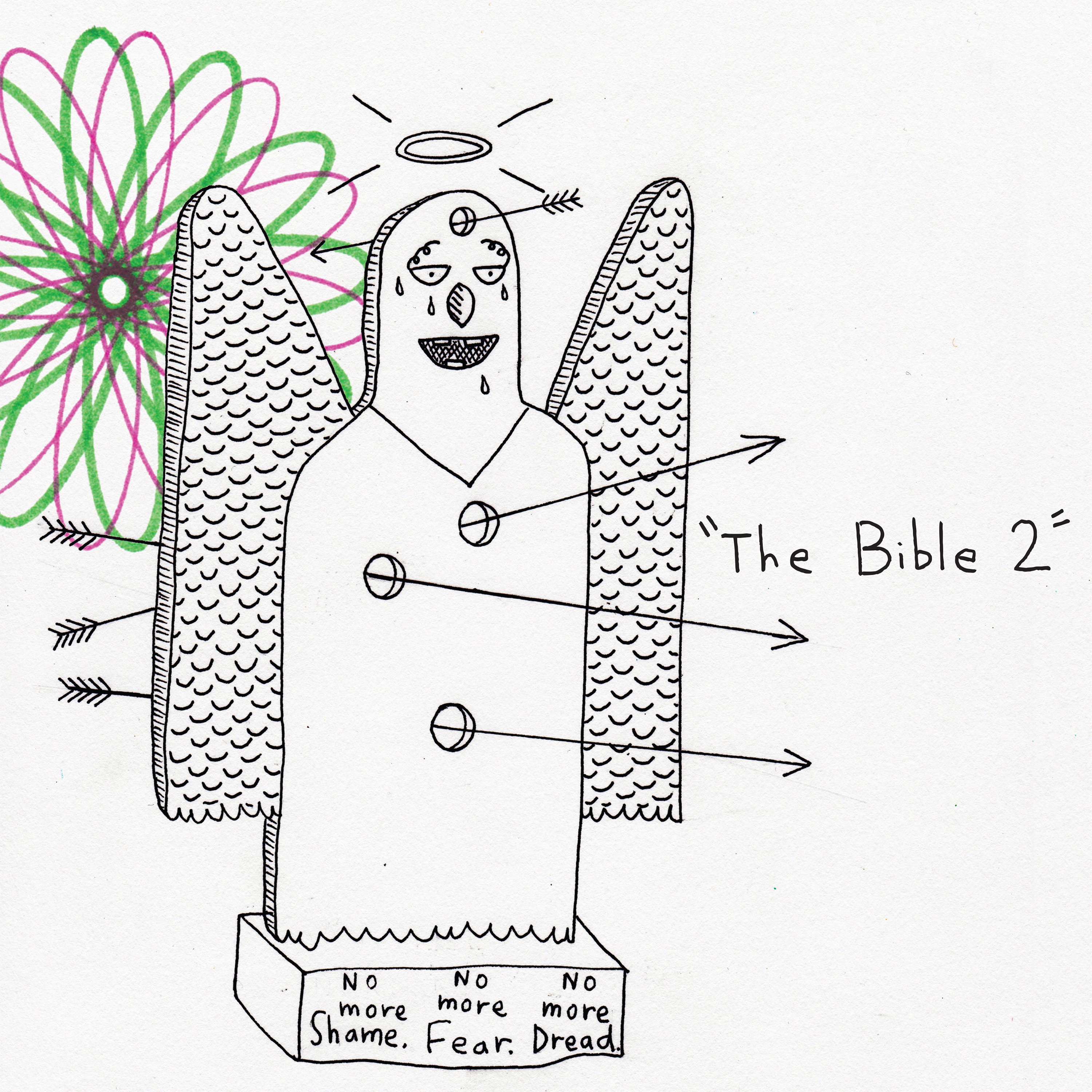
AJJ – “The Bible 2”

(Photo Credit: AJJ)Grade: B+

Key Tracks: “Cody’s Theme,” “Terrifyer”

Sometimes, punk bands grow up. There’s nothing that can stop a natural aging process. The Clash embraced reggae, the Offspring started writing about suicide, Green Day wrote a Broadway musical. What often gets mistaken as “selling out” is usually just a band’s members realizing their image is going to fade, and jumping the gun to adopt a new one. AJJ had hinted at this transition on their last album, the excellent “Christmas Island.” It opens with “Temple Grandin” and “Children of God,” two songs that are prime AJJ – fast, acoustic guitar mixed with lyrics that more-than-border on violence and gross imagery. But the album also included songs like “Linda Ronstadt,” which touches on the same loneliness that the band usually touches on, but with less violence, less disguises, and more palpable humanity. Sean Bonnette is better than anyone else in music at masking his own insecurities, faults and dark desires through characters, satire and overblown odes. But that started to chip on “Christmas Island,” and it gets stripped away on “The Bible 2.”

The band, sporting a new drummer, have awarded themselves a re-baptism: they abbreviated their name. AJJ, of course, used to stand for Andrew Jackson Jihad. But now it’s just “AJJ.” Partially because of maturity – I mean, their name was kinda racist for a bunch of Arizona white guys – partially because of an increase in actual Jihadist violence, and partially just because it’s what everyone called them anyways.  Eleven years after their first album, they’ve been re-christened, and it’s allowed them to expand, or decompress their sound and explore what they’ve previously ignored – their stance as an actual, successful band.

AJJ’s most progressive songs on “The Bible 2” aren’t necessarily the most interesting, because they’re slower and more adult than we’re used to. But this isn’t a bad thing; a lack of humanity, although AJJ’s strongest weapon, is also their biggest downfall. “American Garbage” is downright an indie song – a different cry than “American Tune” from only a few years ago. Slap a different band’s name on the song and it might pick up some airplay on college radio. Same goes for “Small Red Boy,” and “No More Shame, No More Fear, No More Dread,” which seems like a sequel to 2007’s “No More Tears,” but really isn’t. In fact, those two songs work together for a more honest, painfully aware song than any of the early guitar blasts.

All of this isn’t to say that old AJJ doesn’t pop in, too. Songs like “White Worms” and “Junkie Church” have lyrics that could’ve easily passed on any earlier album. “The waiting room was pissing in my ear / So we went and bought ourselves a can of beer / Steel Reserve,” Bonnette sings on the latter. The former: “My teeth are brown / My lips are blue / The grass is green / My tongue is too.” The horrors on this album don’t come as frequently. After years of songs like “Bad Bad Things,” “Back Pack” and “Dad Song,” there’s little that AJJ can sing in a song that’s still shocking. So, they reserve those moments. Opener “Cody’s Theme” has such lyrics, with the chorus: “I had to talk to the teacher / She had to talk to my mom / We had a real long talk / I had to talk to the teacher / She had to talk to my mom / They made the visions stop.” While this is nothing compared to the lyrics of, say, “Darling, I Love You,” they do announce that even if AJJ is growing, changing – they’re still the same at heart.

The secret weapon of “The Bible 2” is actually the songs that manage to place themselves in between ‘old’ and ‘new’ AJJ. “Cody’s Theme,” “Golden Eagle” and lead single “Goodbye, Oh Goodbye” all sound strangely reminiscent of Neutral Milk Hotel, with wickedly distorted guitar playing alongside acoustic. These songs almost act as the torchbearers, saying that yes, AJJ is transitioning, and no, they’re not changing completely. They could pass as indie songs, in a way, but it might not be a comfortable passing. “Terrifyer” might be one of the most interesting songs because its use of melody sounds pretty satisfying, while still giving in to the sound of “Sense & Sensibility,” in the best way possible.

Although I personally think the band hit a highest high with 2011’s “Knife Man,” this might be their most cohesive album. Musically, it hits more different territories than ever before. The album’s first half starts with guitar, dips gradually down into piano before revving back up for “Goodbye, Oh Goodbye.” And although the lyrics do once again embrace religion, mental illness, and deathly imagery, there’s broader topics at play. By shedding away the masks the band has previously used to hide their desires and delusions within the confinements of people worse then them, they’ve humanized themselves, fully, and even the first-person songs feel more real because of it. This isn’t a criticism of their older music – far from it, what they’ve done lyrically with the use of satire, violence, and irony is amazing – but simply an awareness that it was starting to get old. AJJ ran that line as long as they could, and, now that it’s over, they’re switching gears. While this is a transition album of sorts, there’s a lot to like, and it proves that AJJ might be able to bridge a gap that a lot of punk bands have previously failed – stay yourselves, stay interesting, yet change.

-By Andrew McNally

Head Wound City – “A New Wave of Violence”

Grade: A

Key Tracks: “Head Wound City, USA,” “Scraper”

Let it be known: this is not a noisegrind album. When Head Wound City formed in 2005, they formed as a nosiegrind supergroup, consisting of Cody Votolato and Jordan Blilie of the Blood Brothers, Justin Pearson and Gabe Serbian of the Locust and, uh, Nick Zinner of the Yeah Yeah Yeahs, they formed as a fun side project who wrote and recorded an entire EP in a week. The resulting project, a self-titled work, wasn’t extraordinary, but was a breath of fresh air nonetheless. The EP, at seven songs, clocks in at only 9:38. That was released 11 years ago. Their unexpected reformation has given us a full-length, one born out of maturity. “A New Wave of Violence” is about as mature as anything in this genre can get.

Zinner’s songwriting credit on “Lemonade” be damned, he requested a Head Wound City reunion. And that reunion led to the idea of a full-length. But with members like Blilie and Pearson among the ranks, the desire to expand upon noisegrind must have been obvious. Some of the people responsible for the sub-genre’s growth in America didn’t want to be consumed by it. And with the overall silliness of noisegrind becoming overwhelming – Pearson and Serbian once played in Holy Molar, a band that sang almost exclusively about teeth – the member felt a need to play themselves out of it. So while this album is intense, by all means, it doesn’t really fit under any qualifications. And, in that way, it is purely gratifying.

The first sign that this wasn’t going to be a proper noisegrind album was the lead single, “Scraper.” For one thing, it’s 2:40. While still short, it’s about two minutes longer than a proper noisegrind song. And the song builds for about half its length, building into a big climax. The band hit all kinds of marks across the album, be it immediate intense pleasure (“I Wanna Be Your Original Sin”) or restrained hardcore punk (“Closed Casket”). They strive to make every song unique, and succeed unequivocally. “Palace of Love and Hate” might be a proper noisegrind song, but “Avalanche in Heaven” shows massive restraint. Hell, “Love Is Best,” is as grown-up as anything that might otherwise be radio-approachable.

But that’s not to say that they hold back. Blilie’s vocals are as intense as ever, and there a few times where he seems to be dubbed over himself – screaming and regular vocals. It’s disorienting. The band, collectively, makes a statement, that they don’t need to be as aggressive as humanly possible to get their point across. Members of the band, especially Pearson and Serbian, expressed a desire to move away from the comedic side of noisegrind. Their primary band, the Locust, is responsible for such song titles as “Skin Graft at Seventy-Five Miles Per Hour,” “Get Off the Cross, the Wood is Needed,” and, my favorite Locust song, “Nice Tranquil Thumb in Mouth.” There’s little humor here, instead replaced by a less intense but more hard-hitting intensity, a demand to cut the shit and get to work. And that they do. “A New Wave of Violence” is a collaborative effort, and it feels like one. It is maturity through forced innocence, volume through forced filtration. It doesn’t classify as any sub-sub-genre of rock or punk, instead choosing to exist as its own brutal being. And pardon my French, but holy shit, is it going to rip your skull apart.

-By Andrew McNally