Myq Kaplan – “Meat Robot”

Photo Credit: Vegetarian Star

Photo Credit: Vegetarian Star

Grade: A

Key Bits: N/A, because they’re all equally great.

“You seem like a good crowd, like my demographic, which is people that know the word demographic” quips Kaplan on the opening bit of his album, “Meat Robot.” The comedian, still on the rise, is known for rapid-fire jokes that often involve clever wordplay and math. Kaplan is a vegan, and has used that as the basis on many bits from his two albums, this and his equally excellent debut, “Vegan Mind Meld.” The third track on “Meat Robot” sees him coming up with names of fake meats that have yet to be invented, including fake chicken called “Fiction,” “Chicken Pretenders,” “Baby Back Fibs” and “Ven-Isn’t.” This is just a taste (pun somewhat intended) of the wordplay Kaplan delves into.

Kaplan comes off as being as nerdy as he looks, and he has always used this as an advantage in his comedy. “Apollo is Apollo in Greek, in Roman, in French, in everything except Spanish, where he is a chicken.” Yet he still makes bathroom humor and race jokes, in totally inverted and original ways that appeal to broad audiences.

The only fault in “Vegan Mind Meld” is that Kaplan’s rapid-fire delivery went too fast at points, and although it makes it funnier, it requires a few listens to pick up every joke. He is still very speedy on this album, but he slows down a bit. At points, he audibly stops himself to slow down. Every bit on this album sticks. Some require a little work and patience, others are instant one-liners. But Kaplan’s grasp at smart and original stand-up is wholly original. The only fault on this album is not one of Kaplan’s, but the constant shrill of one audience member who almost ruins jokes. “Meat Robot” is a work of comic brilliance, one that tests the audience, but pays off on every single joke.

If you like this, try: “I Have a Pony” by Steven Wright. A classic comedy album from an even more deranged mind.

-By Andrew McNally

Black Sabbath – “13”

Photo Credit: Rolling Stone

Photo Credit: Rolling Stone

Grade: B+

Key Tracks: “God is Dead?” “Methademic” (Bonus Track)

“13” is refreshing, because it proves that bands long past their prime can still make quality records. I was losing faith in this after Megadeth’s awful Collider came out just last week.

“13″ is the first Black Sabbath album to feature bassist Geezer Butler in nineteen years, and singer Ozzy Osbourne in thirty-five. Drummer Bill Ward, originally part of the recent reunion, is not on the album because of a contract dispute, and has been replaced with Brad Wilk (Rage Against the Machine). Even with positive early reviews and three-quarters of a reunion, fans are most likely skeptical about a new album. Butler, Osbourne and guitarist Tony Iommi are 63, 64 and 65, respectively. But Sabbath brought in legendary producer Rick Rubin, who has done wonders for everyone from System of a Down to Johnny Cash. What resulted from their sessions is an album much more similar to classic, early Sabbath and not the tepid albums that came later.

Black Sabbath have often been misunderstood as a band that sang/sings exclusively about doom and gloom, life and death, heaven and hell (which is the name of one of their more famous songs). But closer listens to their early albums show that they expanded far out beyond those themes, lyrically. Yes, they were embraced and continue to be (like 13′s “God Is Dead?” and “Pariah”). But the band has always sung about more than that, evident in songs like the poorly-titled “Methademic,” that deals with years of drug problems. “13″ has some of the best lyrics in Sabbath’s history.

The biggest surprise of the album might be the quality of Ozzy’s voice. If you’re reading this, then you can probably imagine what Ozzy’s talking voice sounded like on MTV in 2004, and maybe even what it has sounded like on his more recent albums. But those albums were Rubin-less, and Rick Rubin did his best to bring the band back to it’s seventies roots. Iommi’s riffs are there, Butler’s bass is booming, Ozzy’s voice fits nicely, and there is a constant impending sense of doom. It has all the key elements of early works like “Paranoid” and their self-titled debut. Something is lacking, however. It seems like it is a mix of energy and volume. It is certainly loud, but it feels like it should be more so, and with a little more urgency. Still, the album comes as a nice surprise and just goes to show that when the line-up is back, they haven’t lost a thing.

If you like this, try: If you’re exploring this album as a classic rock fan, then Bob Dylan’s “Tempest,” another great album coming out late in the game. If you’re exploring this as a metal fan, then System of a Down’s “Toxicity,” to see both religious lyrics brought in alongside silly ones, and the magic of Rick Rubin.

-By Andrew McNally

Surfer Blood – “Pythons”

Photo Credit: Rolling Stone

Photo Credit: Rolling Stone

Grade: B-

Key Tracks: “I Was Wrong,” “Slow Six”

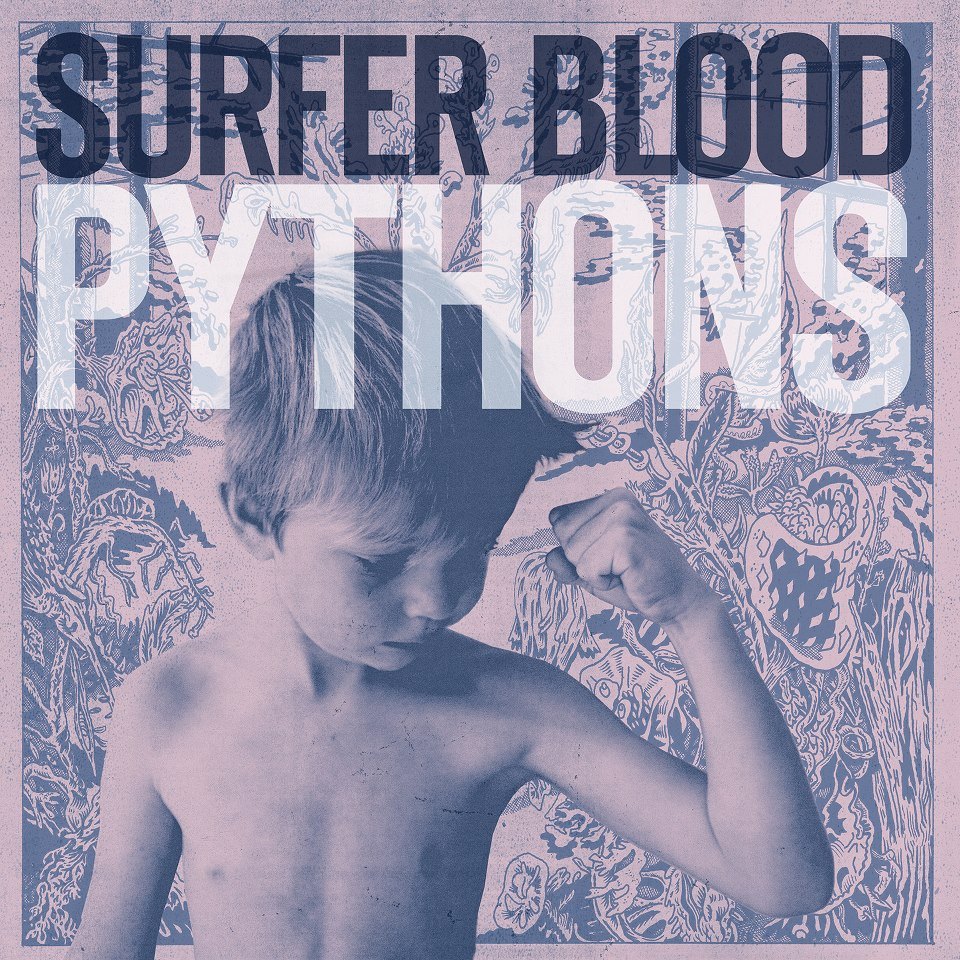
Surfer Blood’s John Paul Pitts sure is sorry. The band’s second full-length, “Pythons” acts as one long apology. The line ‘apology, meet apology’ shows up on a track that is not “I Was Wrong.” The whole album is pretty much apologies or Pitts singing about putting himself in uncomfortable situations because he feels like he deserves it. Why? Domestic abuse charges from August 2012. So Pitts has every right to be apologizing in his music.

The music of the album presents a challenge, because Surfer Blood’s sound has not really ever been one to match up with the uncomfortable lyrics presented on “Pythons.” Many tracks just follow basic, poppy melodies with sometime group choruses. Occasionally, Pitts will fall into screams in the chorus, possibly trying to emphasize the internal pain he’s feeling. But they usually do not fit within the context of the song. The only song that really grabs is “Slow Six,” the penultimate track, one heavier than anything presented before it. The other songs all feel too easy, and although they are catchy, they do not work alongside the apologetic lyrics.

Taken for what it is without any knowledge of the album’s inspiration, “Pythons” is an enjoyable and catchy record. It isn’t great but it’s worth a listen for fans of general pop-punk and surf rock. The B- is a response to this listening. The album takes on a new reflection when the listener knows why Pitts is so apologetic. Pitts might really be feeling the internal pain he sings and screams about, but with poppy and largely uninspired music, there’s no way to believe it. Which, ultimately, gives us no reason to care. I try my hardest to separate albums from the personalities that make them, but when an album like “Pythons” is so reflective of it’s maker, and an unconvincing one, I can’t help but to discredit it.

If you like this, try: “Crazy For You,” Best Coast’s debut. Not a fan of the band, personally, but they’re a similar sound.

-By Andrew McNally

Disclosure – “Settle”

Photo Credit: Wikipedia

Photo Credit: Wikipedia

Grade: B+

Key Tracks: “When A Fire Starts to Burn,” “F For You”

A debut from a European dance band coming only weeks after Daft Punk’s “Random Access Memories” burned up the charts might not seem like a good decision. It worked. Perhaps it was unintentional, but Disclosure might be on to something. The British duo – two brothers of ages 21 and 18 – have perfected an album harking back to dance music of the 90’s, not unlike the aforementioned French duo. Americanized house and dance music (the abrasively loud forms of EDM and dubstep I embraced in college) is still very popular, but has a definite expiration date, and that date might be coming soon. As “Get Lucky” climbs the charts, Boards of Canada release a comeback and Disclosure release a well-anticipated debut on the same day, all signaling a potential return to more controlled forms of dance music.

There is really nothing new on this record. It greatly succeeds, however, as an exploration and combination of many different forms of dance and house music. The combined opening tracks of “Intro” and “When A Fire Starts to Burn” present an almost Prodigy-type of heavy, hip-hop influenced type of electronica. This doesn’t stick around, as the album shifts through various volumes and tempos, and with a whole and welcomed line-up of up-and-coming British singers.

“Settle” is, at its core, exactly what it wants to be, and that is an effective dance record. It even flows well as an album, something nearly every dance band seems to struggle with. It might be very long, but if it’s put on at a party, that will no longer be a complaint. The beats are cooled and controlled, with little invention going on. In a world now filled with Skrillexs and Diplos, that might be just what we need.

-By Andrew McNally

Jimmy Eat World – “Damage”

Photo Credit: Antiquiet

Photo Credit: Antiquiet

Grade: C+

Key Tracks: “Byebyelove,” “You Were Good”

After some relative successes in the early- to mid-2000s, Jimmy Eat World have been quietly chugging along down the same relative path that led to fame in the first place. Kinda sad, kinda introspective, kinda inspirational, kinda pop, kinda punk alt-rock that is immediately listenable but never very interesting. “Damage,” their eighth album, is really no different. It’s more consistent and related than many of their previous albums, while also falling sometimes into forced or corny moments.

The members of Jimmy Eat World are approaching forty, and their inevitable disconnect from young crowds is becoming apparent. “Damage” tries, with moderate success, to be an ‘adult, break-up record.’ Lyrically, the album is among their stronger works. When it is effective, there are moments of Jim Adkins tearing away at the walls of youth hood. When it isn’t effective, the lyrics are cheesy bits of bad poetry. The album is pretty mix-and-match in this regard. It is consistent, at least, weaving through similar themes in many of the songs, definitely an intentional move.

The music of the album presents a problem, as the band has opted to largely keep the pop-punk sound of their previous albums, which does not successfully correlate with the themes they are attempting to highlight. It also means that many of the songs end up sounding too similar. The tempo is rarely a large difference from the previous track, and the volume almost never changes. This is expected of an album by a band like Jimmy Eat World, it just feels behind-the-times given the lyrical content.

The album’s two best tracks are actually the final two – the awfully-titled “Byebyelove” and “You Were Good.” The penultimate song is the only track on the album that has changes in volume, and has a certain intensity to it that is not achieved anywhere else on the record. “You Were Good” is a dramatic departure for the band, with a stripped-down, acoustic lo-fi sound, reminiscent of depressing folk singer-songwriters like Nick Drake. The change itself is so delightful and unexpected that I found myself caught up more in the realization than the actual song. “Damage” is definitely bolstered by it’s final two songs. Overall, it’s a decent record, one that is worth your time but not your memories. The band struggles to mature, but they’re trying.

If you like this, try: Weezer’s “Maladroit.” I personally think “Damage” will mirror “Maladroit” as an underrated entry in the given band’s canon.

-By Andrew McNally

The Ducky Boys – “Dead End Streets”

Photo Credit: Ducky Boys bandcamp page

Photo Credit: Ducky Boys bandcamp page

Grade: B

Key Tracks: “Up, Down & Wrong,” “I Was Intoxicated”

Boston street-punk legends the Ducky Boys returned from a second hiatus and even more line-up changes in 2011, and their second album since is a solid effort. It isn’t a goldmine, but it holds up remarkably well amongst the albums of their other aging contemporaries. The Ducky Boys have stuck to the same successful status quo, and it produces another good album. Lyrically, the album is kind of all over the place, in a good way. There is some emotional damage coming through in some lyrics, as the Ducky Boys have always defied some punk stereotypes and been ones to open up and explore themselves. There is, of course, typical street-punk songs too. Songs like the title track and the opener “You Don’t Wanna Know Me” exemplify the 90’s Boston street-punk scene that brought them thus far.

Musically, most tracks follow the simple punk formula, which is completely expected. In fact, it is welcoming to embrace, as most punk bands that survive the same length of time that the Ducky Boys have often open to slower and catchier music without any reason. The Ducky Boys have reason when they do, as they occasionally embrace acoustic, bluesy or reggae-inspired rhythms throughout the album, which provide some nice breaks in between stacks of punk songs. When the Boys switch up their influences, they work, because they have their reasoning to back it.

“Dead End Streets,” like many other punk albums, does begin to become tedious by the end, as the band’s better ideas are exhausted earlier in the album. Punk albums tend to have a way of making 34 minutes feel longer. “Dead End Streets” is still a strong record though. It is not completely original, and it does not stand up against classic punk. It does not try to be anything more than what it is, though, and it excels as an enjoyable and listenable street-punk record from some legends.

If you like this, try: “State of Grace” by Street Dogs, 2008.

-By Andrew McNally

Megadeth – “Supercollider”

Photo Credit: metalsucks.net

Photo Credit: metalsucks.net

Grade: D

Key Tracks: “The Blackest Crow”

Old age isn’t going to stop Megadeth! Well, they’re going to try not to let it. Rather unsuccessfully. It’s sad to see heroes fall but it can happen to the best. Dave Mustaine’s lyrics aren’t hitting as hard, the band’s volume isn’t as ferocious. Nothing works well on this record, apart from a few acceptable songs.

First, the music. The band is not achieving the heaviness that they once were. The leadoff track, “Kingmaker,” is not a good song, but it does have flickers of the 80’s thrash. It is readily apparent that these flashes are about the most the listener will get. The album as a whole tends to fall closer to a really heavy radio rock work, lesser than the thrash metal that made the band renowned in the 80’s and 90’s. The drums are beating and the guitars are crunching and rapid-fire, but it is all less than before. It is at least entertaining, as it is still heavy and should be recognized as so. It just is not of the same caliber as their previous successes.

Speaking of declines from previous successes, Mustaine’s lyrics are downright awful. His political leanings have always made for awkward and forced lyrics, but they are particularly cheesy on this release. “Dance in the Rain” is the ‘standout’ on the record, as the chorus is supposed to inspire people to dance in the rain and enjoy life, like life lessons from a cool uncle. An abrupt switch/interruption happens during the song when Mustaine begins to sing about the “racist, sexist wars in the middle class” or something like that. It really doesn’t make sense. Mustaine’s lyrics are consistently forced and corny, and often fail to rhyme or fit into any sort of rhythm.

Halfway through this album, I had to put on “Hangar 18” to be reminded of better times. “Supercollider” is tedious and corny, a bad mix for a thrash metal band. One footnote should be mentioned – “The Blackest Crow” is a well-crafted song, albeit not thrash metal. The track starts with an acoustic guitar rhythm and builds intensity around a more haunting sound than the rest of the album. It is far and away the best song on the album. Otherwise, “Supercollider” is a total miss.

If you like this, try: “From Mars to Sirius” by Gojira.

-By Andrew McNally

Deafheaven – “Sunbather”

www.neogaf.com

Photo credit: http://www.neogaf.com

Grade: A-

Key Tracks: “Vertigo,” “Dream House”

“Sunbather,” a seven track, full-length record, is largely unclassifiable. Deafheaven have been both widely acclaimed in the critic world, and occasionally scorned in the metal world for their blending of genres. The band is currently being labeled as “black metal,” but there is a distinct shoegaze element to their music as well. To put it simply, Deafheaven sounds like a couple guys who wanted to start a metal band but listened almost exclusively to My Bloody Valentine. And there is nothing wrong with that.

This is a brutally heavy record. A majority of the tracks stretch close to or well over ten minutes, allowing the band ample time to stretch their wings and experiment. The songs build up upon themselves, twisting and growing, not unlike God Speed! You Black Emperor. In fact, if it wasn’t for the traditionally growly black metal vocals, Deafheaven would probably be pegged as a very heavy alternative/shoegaze band. But the vocals, as often inaudible as they are, add to the intensity, leaving Deafheaven declaring themselves as a metal band.

“Sunbather” is truly one of the most original and interesting albums I have heard in a long time. I do not have much of an affinity for most subgenres of metal, yet I could do nothing but gasp and let myself be wholly entranced by the band’s originality. Bands are finding it tougher and tougher to make volume equate intensity, but Deafheaven does it ceaselessly. Fans of heavier alternative bands might be able to transition over genres and appreciate what this band is doing. Nearly every track on this album, from the lengthy, abrasively loud songs, to the shorter and quieter interlude pieces, borders on perfection. Only the album’s closer, “The Pecan Tree,” is disappointing, solely because it ends anti-climatically, and this album needs a more proper climax. Give this album a few listens; it might just be one of the most original of the year.

If you like this, try: “Allejuah! Don’t Bend! Ascend!” – Godspeed You! Black Emperor.

-By Andrew McNally

Portugal. The Man: “Evil Friends”

Photo Credit: Under the Gun Review

Photo Credit: Under the Gun Review

Grade: B+

Key Tracks: “Modern Jesus,” “Holy Roller”

Portugal. The Man have somehow found their way to prevalence in the indie world. They’re not the most interesting band, but they are constantly on tour and they try (and usually succeed) to record an album every year. Their consistency might be what has helped to make them a name over the past few years. Whatever it may be, they picked the right time to make a record like “Evil Friends.” Famous producer Danger Mouse was brought in to diversify the band’s sound, and although his mark might be left a little too hard, the band was left with their best album yet.

Portugal. The Man have always been an enjoyable band, but it took many albums for them to start to hit outside their comfort zone. True, their comfort zone has switched from garage rock to more of a sweeter, indie-pop sound. The transition has been slow, though, and this album expands their sound while maintaining their musical innocence. Every track is a fun and bouncy dose of indie-pop, all radio-ready but different from the previous song. Danger Mouse helped the band expand their sound to every limitation of alt-pop, with the best possible results.

Interestingly, the lyrics consistently haunt at things deeper. They don’t always get there, but with song titles like “Creep in a T-Shirt,” “Evil Friends,” and “Modern Jesus,” some darker themes are clearly being presented. Religion and nasty break-ups are emotionally worked through, sometimes cleanly, sometimes not. The lyrics do not necessarily fit the music, but the quality of the package as a whole makes it possible to overlook this. Overall, it is not the most unforgettable album, or the most original. If some great indie-pop from a respected band is what you’re looking for, though, “Evil Friends” is the right direction to turn in.

If you like this, try: “Dear Miss Lonelyhearts” by Cold War Kids, 2013.

-By Andrew McNally

Camera Obscura – “Desire Lines”

Photo credit: Spin Magazine

Photo credit: Spin Magazine

Grade: C

Key Tracks: “I Missed Your Party,” “Troublemaker”

Indie-folk bands like Camera Obscura are generally not known for being adventurous and playing around with genres and ideas. Any fan or casual listener of the genre pretty much knows what he or she is getting into when a new album by a band like Camera Obscura comes out. But “Desire Lines,” the band’s fifth album and first in four years, is seriously lacking something. The album is almost minimalistic, relying on only key instruments in a majority of the songs. It adds a certain consistency to the record, that helps it to flow without any rough transitions between ideas. It also, however, starts to feel like one long, run-on song that was not very interesting to start with.

The album, as a whole, feels like an unfinished idea. Indeed, the final track, “Desire Lines,” ends like a normal song. On both listens I found myself checking to see if my Internet had crashed, not realizing I had hit the album’s end. Lyrically, there is little original going on. Some of the more stand out tracks, like “I Missed Your Party” and “William’s Heart” have boring and uninspired lyrics. They are presented, too, by pretty and rhythmic vocals, but singer Tracyanne Campbell does not sound like she believes in her own lyrics.

Musically, the album is largely devoid of any detail. Every song is dominated by conventional rock instruments. Most of the songs seem to take the same relative tempo, with only “Cri Du Coeur”‘s wickedly-slow (and ultimately exceedingly dull) tempo providing a switch. “I Missed Your Party” has a nice addition of horns, which does bring a listener back in towards the album’s close.

“Desire Lines” is a moderately enjoyable listen, to someone who likes indie-folk acts like Rilo Kiley. Once it ends, though, it is immediately forgettable. It is innocent and fun pop, but never tries to be remarkable or original. “Desire Lines” is a low point for the usually great Camera Obscura.

-By Andrew McNally