The Menzingers – “Rented World”

(Photo Credit: Noisey)

Grade: A-

Key Tracks: “I Don’t Wanna Be An Asshole Anymore” “Rodent”

*** Let me start, as I have a few times before, by saying that this review should be taken with a grain of salt, as my love for the Menzingers runs deep enough that it’s impossible for me to stay unbiased as I shriek and clap listening to their new album. ***

The only downside to releasing a heralding, magnum opus of an album is figuring out how to follow it. Look at the most magnum opus-y album of this generation: Titus Andronicus’ “The Monitor.” (Okay, it’s probably “Yeezus,” but for the sake of conversation). The band followed it up with a significantly more straightforward and approachable album, “Local Business” (that’s just as good and I do and will always defend it). But this is tougher for pop-punk group the Menzingers, because 2012’s “On the Impossible Past” is simply a “magnum opus” because of how good it is. Listening to it for the first time is as memorable as graduating or getting married. The band accidentally created a masterpiece. So the only way to follow up an album as good as it is to just stick to the formula.

“Rented World” opens with a track called “I Don’t Wanna Be An Asshole Anymore.” It starts with a shrieking guitar and frantic energy, as any pop-punk opener should. But the song seems to slowly cool down, giving way a few times to just vocals. The follow-up, “Bad Things,” is strong but a lot more moderately-paced. This is how the Menzingers operate – their energy often feels forced, like they don’t quite have the heart to give it their all. And it fits them well, given their often lackluster-y existential lyrics. The album still has a ton of energy to it, but as with “Past,” the emotion comes first. Pop-punk has changed. This isn’t pizza, jorts and hating this town, this is death, addiction and overwhelming apathy.

For those playing along at home, the second track is indeed called “Bad Things.” “Past” had “Good Things” and “Nice Things,” and even those ironically-named times have taken a turn for the worse. While the album isn’t as interesting musically – it’s straighter, and it isn’t self-referential – it might just be even darker lyrically. “Past” was a cohesive album, because it told reflective stories. “Casey,” “Freedom Bridge,” “Nice Things” and “Gates” all tied specific memories to specific, lost people. But where that album was outward, this one is inward. There’s exceptions on both albums, of course, but “Rented World” is a look at all that’s wrong inside. The album is peppered with beautifully devastating lines like “I am only bad news / For you,” on “Rodent,” and “If everyone needs a crutch / I need a wheelchair” on first single and Key Track runner-up “In Remission.” “I know where your heartache exists,” “Nothing feels good anymore.” If “Past” was a sad look at a memory that can’t be relived, “World” is an honest look at a present that can’t be changed.

The Menzingers need to stop hogging talent. Sure, they’re a pop-punk band, they’re not the most talented group. But the band shares two great, similar singers in Tom May and Greg Barnett, and somehow, sharing rough lyrics between two singers deepens their impact. This album’s only real fault is lacking the arc that made “On the Impossible Past” the overnight success it is. But again, it’s an extremely tough act to follow. They do branch out just a little – “Transient Love” is a legit slower song, and almost a minute longer than any song on it’s predecessor. And it’s followed by “The Talk,” a >2:30 kicker that, at times, sounds more like traditional early 00’s pop-punk than their own moody blend. Otherwise, “Rented World” is simply a collection of songs meant to beat you up inside, and it certainly succeeds. It’s going to forever be compared to “Past,” but it doesn’t need to be; it’s a separate, confident and viable album that’s going to be remembered nearly as fondly. It’s crisp and concise; inspired and emotional, and loud as all hell. Effortlessly great songs like “Hearts Unknown” and “In Remission” prove that the Menzingers know exactly what they’re doing. So don’t fear a mediocre follow-up, and prep your heart and stomach in advance.

If you like this, try: This is a tough one, but as mentioned before, I defend Titus Andronicus’ “Local Business” to death. It’s another example of capitalizing on an insurmountable predecessor in a more straightforward but equally inspired manner.

-By Andrew McNally

The Creeping Ivies – “Ghost World”

(Photo Credit: bandcamp)

Grade: A

Key Tracks: “Ghost World” “The Creeps”

An immediate comparison between the Creeping Ivies and the Black Keys or the White Stripes might be unwarranted, but tough to ignore – the Creeping Ivies are a guitar and drums duo, making loud and fuzzy garage-blues-punk that calls back to their idols. But that’s only a jumping-off point, because the Creeping Ivies harken back to an entirely different era of music. “Ghost World,” their second full-length, sounds more like an album that would fit right in at a dark NY punk club in 1979.

The Scottish band – consisting of Becca Bomb and Duncan Destruction (real names, I’ll continue to pretend) – use bluesy-garage rock to channel some of the more inventive 80’s punk. Becca’s wide vocals dominate the album, often booming over the guitar and drums. It’s almost impossible not to be reminded of Poly Styrene of X-Ray Spex and Exene Cervenka of X, two 80’s punk bands that often incorporated blues and jazz into their music. And like Styrene and Cervenka, Becca’s vocals determine the song, especially on trippier songs like the excellent “Ramona Wolf.” Alternately cool, standard and hollering, Becca’s vocals are disarmingly decisive, and go against the rather lackluster vocals of most other garage bands today.

While other blues-punk bands often use blues as the center of their music, the Creeping Ivies tend to gravitate more towards punk and, in the aftermath, volume. The garage and blues elements help to pump the songs up and differentiate them, but are background parts. Songs like “The Creeps” sound ripped out of a Cramps album, not from a garage somewhere in Tennessee. And it helps give the songs energy. Even if the album is bluesy, it isn’t moody or too into itself, like the Black Keys can sometimes get. Instead, it’s loud and fun, never taking itself too seriously.

So whether the Creeping Ivies would qualify more as “blues” or “punk” I think would go to the latter. Penultimate track “What Would Johnny Ramone Do?” brings forth angst about MTV and the radio while channeling, again, an idol. “Ghost World” packs a bigger punch than first expected, and sounds very original in the midst of some bands that are starting to sound too similar. It’s loud, fun, distorted, and over not too long after it begins. It’s an album for a couple different eras, as long as it’s turned up.

The album is available for streaming and purchase here. (Bandcamp has a money conversion)

If you like this, try: As mentioned, I was reminded of the Cramps, so the Cramps’ classic 1980 debut, “Songs the Lord Taught Us.”

-By Andrew McNally

Phooey! – “Hello, Doubt” & “End End End”

,

(Photo Credit for both: bandcamp)

Grade: A-

Key Tracks: Hello, Doubt: “Little Boy (Who Dreams)” “Not a Day Goes By” / End End End: “Laughter Guns” “Teenage Kids”

Let me start by breaking character for a minute and saying that I recently received an interesting submission for this blog. Nikita, a man slightly younger than myself and residing in Ukraine, sent me a link to the bandcamp page for his band, Phooey!, and asked me to review something on the more recent side. Phooey!, very much led by Nikita, has four times as many releases as years that the band has existed – 12 releases, including seven EP’s. Seven EP’s might seem troublesome for a young group, but each is drastically different than the next. Their only two full releases are an LP that is not on the more recent side of their discography, and a collection of cut tracks that are self-described as “very awful,” so I chose two of the EP’s – “Hello, Doubt,” released this past February, and “End End End” from August 2012.

“Hello, Doubt” is their most recent solo release (second to a split they contributed two songs to), an offering of six, though really five, songs that fall somewhere between indie-pop and punk. The EP’s first four songs are all guitar-heavy, fast bits of fun pop/punk. All four, although especially “Not a Day Goes By,” mix catchiness, volume and harmonies into enjoyable jams that immediately get stuck in your head. The last two songs are more calmed and laid back, with “Cheetah” as a partially acoustic track and “The Elevator Song” a quick outro.

“End End End,” meanwhile, has distinct punk/noisepop qualities to it, a far cry from the band’s original acoustic recordings. The EP is a fun kind of punk – like some of Japanther’s more recent albums. It’s fast and loud, without taking itself too seriously. And it has some lo-fi elements of muzzled vocals and fuzzy guitars, usually uncommon in punk (although growing in popularity). The EP is structured like a full-length album, actually having a distinct beginning of three energetic songs, a middle of two shorter songs that form an interlude, and three slightly longer and more developed songs to close out. It’s surprisingly cohesive for a band that seems to want to dabble in everything.

And dabble they do – the follow-up to “End End End” was a sadder and more twee-based EP, “Girl Songs,” coming out only a month later. So it’s understandable why the band is focused on EP’s – they offer samples of all the different ways Nikita wants to go. The music on these EP’s can be a lot of fun, the work of a man who enjoys experimenting instead of settling down. I can’t say where Phooey! might go next, and they might not know either. But these two EP’s are two quick and fun releases, and show the diversity that Phooey! is about.

Hello, Doubt is available here and End End End is available here.

If you like this, try: Since I guess this is a band review, I’ll just say listen to Japanther. They’re more experimental but there were remnants of their music on these EP’s.

-By Andrew McNally

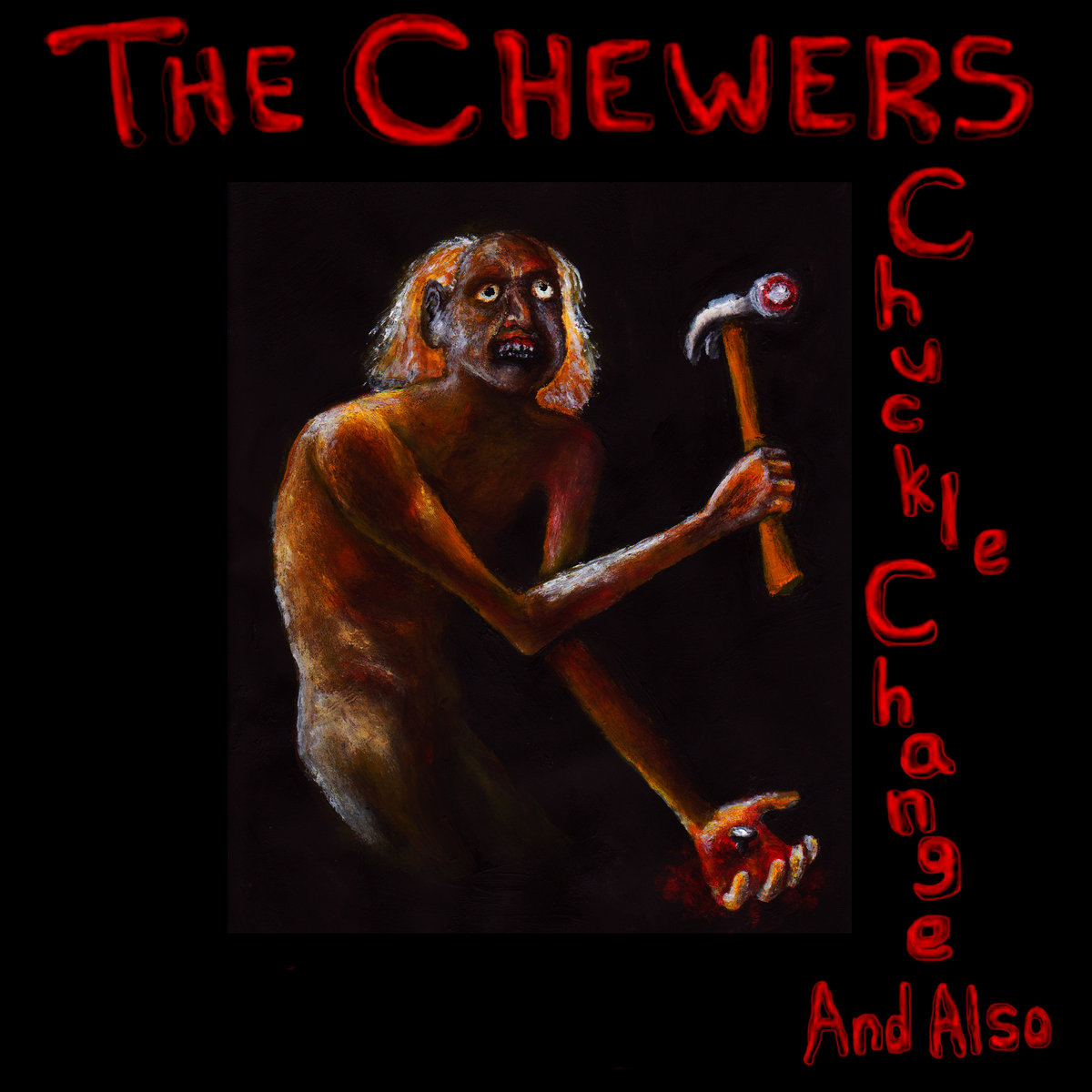
The Chewers – “Chuckle Change And Also”

(Photo Credit: bandcamp)

Grade: B+

Key Tracks: “Burn it Down” “Teeth Lock”

The Chewers describe their music as “deliberately off-kilter,” a very accurate self-description. The band, consisting of Travis Caffrey and Michael Sadler, plays a unique brand of avant-rock. The duo channels avant-garde bands like the Residents, making somewhat minimalist avant-rock that’s bizarre but still a little rhythmic. Take this album song-by-song and it’s almost too weird. But take it as a whole and it’s a continuous and surprisingly consistent look at a theme of dissatisfaction.

What separates the Chewers from most avant-rock bands is their location. The band hails from West Virginia and record in Nashville. Avant-garde music doesn’t exactly have a usual base, but the Midwest hasn’t exactly provided many avant bands. What the band adds is a bluegrass/hillbilly aspect to what’s otherwise noise-rock. It’s a bizarre combination, surely, and one that reinforces what the band seems to be about. Both men play a variety of instruments, and the music is a healthy, low-key mix of bluegrass and noise-rock. The album’s 22 songs only add up to 46 minutes, meaning almost none of the ideas stick around too long and the album is constantly changing.

With the album constantly changing ideas, the theme of isolation is made more present. The music itself sounds almost dissatisfied, played in a way that sounds upset with itself. The band adopt a number of characters throughout the album, singing in a variety of voices. These characters are all angry or sad about something typical, often something small. It’s an interesting approach, that adds a surprising amount of cohesiveness that might not be noticeable at first.

But most of all, the two are clearly enjoying making their off-kilter music, which makes for a fun and diverse listen. Each song, even though many fall around a minute in length, is like a small adventure in that you don’t know what it’s going to be. Avant-rock should be wildly unexpected, and even though the Chewers are more melodic than most avant-rock bands, their mix of noise and hillbilly and use of one-off characters makes for a satisfyingly bizarre listen.

The album can be streamed and purchased on their bandcamp page.

If you like this, try: the Residents are one of the longest running bands ever, and their long career started with the avant-rock and Beatles spoofing classic “Meet the Residents.” I’d start there.

-By Andrew McNally

The Used – “Imaginary Enemy”

(Photo Credit: Wikipedia)

Grade: C+

Key Tracks: “Revolution” “Cry”

Do you like the Used? If you do, you’ll probably like this, their sixth album. If you don’t like the Used, then this won’t win you over. The Used are one of the modern examples in music of sticking to a template. Songs from this album sound interchangeable with their 2002 debut, and any album in between. Fans know what to expect: some chaotic, occasionally violent songs, coupled with some slower, occasionally meaningful emo ballads. This album is a little more coherent than their past few offerings, and might by that logic actually be one of their better albums.

This album is more coherent because it takes itself as a whole, not as a collection of a dozen or so songs. The band takes a political agenda here, whatever exactly it may be. It’s a little more rooted in anarchist punk than what the band is used to. It’s often pretty vague, calls to action with group vocals, etc. But it only gets groan-y once, on “Evolution,” with the line “Call me a criminal / If thinking’s a crime.” Otherwise, the emo group goes via street punk, fed up with the current state and trying to inspire change.

The Used have always had a topheavy problem. Every single one of their albums has gotten off to a strong, energetic start for the first three to five songs, only to weigh it down with some questionable, usually overly conventional slower tracks. “Imaginary Enemy” is no different, although some of the slower tracks are better than normal. “Make Believe” and the title track are two that aren’t constantly upping the ante, but serve as reasonably likable album tracks. There are only a couple bombs, and they’re less overtly bad as they are just easy to get distracted from. The balance is still off, though, between the fast and the slow, and the album suffers from a poor tracklisting, as every other one has in the past.

The Used aren’t a band that is going to take big risks. Straying too far from their comfort zone would probably be a bad idea for them. So to see them move just a little towards a prominent theme and a little more direct punk sound is refreshing. While the album is still very imbalanced (and with a few songs that don’t fit thematically), it is better than the two stale previous efforts. The band has settled into being comfortable with the audience they have, and Used fans – and probably only Used fans – should be happy with “Imaginary Enemy” overall.

-By Andrew McNally

Daniel hales, and the frost heaves. – “Contrariwise: Songs from Lewis Carroll’s Alice’s Adventures In Wonderland & Through the Looking​-​Glass”

(Photo Credit: bandcamp)

Grade: A-

Key Tracks: “Jabberwocky” “Contrariwise”

“Contrariwise” is, in a very loose term, a companion piece. The album was first performed (in my home state of Massachusetts) during a production of “Alice In Wonderland,” and was later released as an album. All but two of the seventeen tracks on the album are musical versions of Lewis Carroll’s poems found within the Alice works. The other two songs, “Contrariwise” and “(Push Them Into the) Wishing Well” were written by Daniel Hales, and co-exist in Carroll’s world. This album certainly isn’t for a commercial audience – it’s an ambitious and dense work that seeks to add more musicality to Carroll’s writing, and it’s largely successful.

Given that Carroll’s poems are often totally fantastical and even, at least in the case of “Jabberwocky,” total gibberish, you can’t exactly place this album under any one genre of music. At times it’s experimental, other times folksy, other times indie. The album’s one long song, “The White Knight’s Song,” feels like a 60’s folk song where the focus was on storytelling. “Beautiful Soup” is almost a ballad, while “Father William” brings guitars into a noisy ending, and “‘Tis the Voice of the Lobster” is almost a little psychedelic. Carroll’s words are usually reflected through the variety of music, although some songs are more straightforward. “Jabberwocky,” for one, leads off the album with a surprisingly straightforward indie ditty, but it is still one of the best songs on the album.

The band, in this iteration, consists of Hales on vocals, guitar, banjo, harmonica and ukelele, James Lowe on bass, Ivan Ussach on drums and Anna Wetherby on viola. Daniel Kasnitz sings back-up vocals, and also credited are “the Looking Glass Creatures,” which happens to include Jeff Steblea. The band is swift throughout the album, often effortlessly switching between genres. The album, in many ways, feels similar to Steblea’s recent Mystics Anonymous, often blending straightforward indie/folk songs with more experimental works.

The band does a standout job at bringing Carroll’s words to life, and a great job expanding beyond their usual indie-folk sound into something more unpredictable. “Contrariwise” is a fun and ambitious album, if you’re looking for something like it. It won’t be something for everyone, but Carroll fans should take notice.

The physical and digital album and tracks are available here, and live videos, dates, merch and more are available here.

If you like this, try: As mentioned, the album loosely resembles the Mystics Anonymous album I recently reviewed, even having Steblea involved.

-By Andrew McNally

Foster the People – “Supermodel”

(Photo Credit: fosterthepeople.com)

Grade: C-

Key Tracks: “Coming of Age” “A Beginner’s Guide to Destroying the Moon”

It must be tough to follow up on instant success. Pop rock group Foster the People’s first album, “Torches,” had the inescapable singles “Pumped Up Kicks” and “Helena Beat.” Sophomore albums are usually difficult anyways, even without following worldwide hits. “Supermodel” tries hard to deepen the band’s sound, but it ends up being a mess of empty songs that aren’t nearly as dark as they want to be.

Foster the People, led by chief songwriter Mark Foster, wanted “Supermodel” to be a concept album about the ugliness of consumerism and capitalism – relatively dark themes for a catchy alt-pop band. And that may end up being part of the problem. Take the songs purely on a musical standpoint, and all but one of them are catchy pop tunes (odd man out being “Goats In Trees,” a spoken-word-over-acoustic-guitar song). It’s simply tough to imagine any sort of believability when a band that plays commercially friendly and high-grossing music is singing about the horrors of commercialism.

The album’s other problem is tripping out of the starting gate. The first three songs – “Are You What You Want to Be?” “Ask Yourself” and leadoff single and admittedly great “Coming of Age” all tackle the exact same vague subject of self-discovery. There’s a thin line between having a consistent narrative arc and just repeating yourself, and they fall in the latter. Had the songs been split up or diversified, the whole album might be stronger – it just lacks any momentum to start.

Musically, the album is also a little lackluster. They traded in the unique synth rhythms of their two big hits for a more straightforward guitar approach. It was an attempt to sound a little heavier – but it’s quite the opposite. It’s lighter than before, especially the acoustic songs. Only the memorable “A Beginner’s Guide to Destroying the Moon” kicks the volume up at all (and is then followed by the aforementioned acoustic “Goats in Trees”). Using all-too-familiar guitar rhythms does nothing to separate Foster the People from their counterparts. Think of them like an alt version of Katy Perry – one of the biggest names in their genre, but one of the most unoriginal. Sophomore albums are notoriously difficult, and Foster the People have fallen victim. “Supermodel” will please most fans of the band, but other listeners will likely be turned off by the album’s repetition, boring music and lack of pairing between music and lyrics.

If you like this, try: fellow alt-pop group Fitz and the Tantrum’s great sophomore album from last summer, “More Than Just a Dream.” They didn’t change anything, just focused on a consistent and catchy album that isn’t too repetitive.

-By Andrew McNally

Nepotism – “Black Sheep”

(Photo Credit: bandcamp)

Grade: A-

Key Track: “New American Drugs”

Nepotism are a very eclectic group from South Carolina, taking the best parts out of 90’s punk, modern rock, metal and more, to make a distinct alt-metal sound. The five track EP jumps all around, making sure each song is unique, nearly all of which are successful. What makes Nepotism immediately attractive is the catchy quality of their music. While a lot of louder guitar-based alternative bands aim for discord and noise, Nepotism look for harmonies and memorable rhythms within volume.

The album’s stand out is “New American Drugs,” the most punk-influenced of the five songs. The song has a speedy and relentless central guitar rhythm, that’s equal parts funky, catchy and angry. It wouldn’t sound out of place on your favorite 90’s throwback radio station, but that doesn’t mean it sounds old. Closer “Nobody Knows” is another great track, in the same vein. It’s ferocious and non-stop, but still comfortably accessible. The song is nuzzled in rock radio – fit for radio, but not fit for all of radio’s audience.

“In Disguise” might be the only weak song on the EP. It is the EP’s slow song (hesitate to call it a ‘ballad’) and although it’s a completely successful song in it’s own right, it sounds a little too close to 311’s “Amber,” in many ways. It also suffers from being placed too early on the EP. As the second song, it kills the momentum brought up from strong opener “Let It Out.” All that said, those criticisms are easy to ignore, and I found myself humming on the second listen.

Nepotism are like many alt-rock bands today, taking their inspirations from eclectic groups and genres. This EP shows hints of Incubus, Tool, the Stone Roses and many 90’s alt-rock bands. While those bands all created molds and became victims of their own product, bands like Nepotism are using the molds made by everyone from 311 to Green River and turning them on their heads. “Black Sheep” is five songs that are definitely recorded by the same band, but really don’t sound alike. And that makes for a pretty unique release.

The album can be streamed and downloaded here.

If you like this, try: Pissed Jeans’ “Honeys.” Not really all that related, but there were certain moments where I was reminded of the post-rock band’s excellent (and equally diverse) new LP.

-By Andrew McNally

Mystics Anonymous – “Dreaming For Hours”

(Photo Credit: bandcamp)

Grade: A-

Key Tracks: “Made of the Time” “Vanishing Phase”

Mystics Anonymous, aka singer-songwriter Jeff Steblea, approaches music “where nothing is off-limits.” Indeed, nothing is more limitless than dreams. “Dreaming For Hours,” his first project under this moniker in a decade, is a transient mix of indie rock and dreamy, electro influences, finding a healthy balance. “Dreaming For Hours” sounds like a 90’s product – but one that we would have then said was ‘ahead of it’s time.’ It’s experimental, but very accessible, carving itself a home in between conventional indie and experimental dream-pop.

There are points on the album where Steblea’s music does become just standard singer-songwriter type music. One of the standouts, “Made of the Time,” is essentially a straight rock song. There’s plenty of tracks on the album like this, and a majority of them are strong. Steblea, and his backing band, are not afraid to sound familiar – there are alt-rock songs with big choruses and folk-minded acoustic tracks. But there are outside elements. The first track, “Sinner’s Lament” starts with a 90’s house-like rhythm, and there are “dream” interludes throughout the album, some sounding like video games, some like nightmares. Some songs, like “False Voices” and “The Fifth Business,” blur the two into original, dream-like songs that intersperse the straighter alt songs.

Steblea’s vocals are not the most powerful, but they seem to dominate most of the songs. The straight tones balance the dreaming quality of some of the music, and it helps to establish a 90’s-type alt-sound. Likewise, the backing band sound effortlessly talented, but they often reserve themselves to simpler music. “Dreaming For Hours” acts almost as an exercise for musicians – advertising the fact that talented musicians can create rock songs that are just as good as complex, electro ones (and there’s plenty of both). (It’s also worth noting that the band includes Daniel Hales).

“Dreaming For Hours” certainly resembles a dream. Some ideas are over in a minute, many stretch over six. There’s something very unexpected about the album, hidden amongst more familiar themes, just like a dream. The album’s only real fault is it’s length – a little too much of a good thing. It’s problematic, because there are few songs that overstay their welcome, and the album is cohesive as a whole. But five of the album’s fourteen songs are over five minutes, and it makes for a lengthy listen. For a musician, that’s about the best problem to have. “Dreaming For Hours” is an achievement; an original yet familiar piece, centered around the great songwriting of Jeff Steblea.

The album can be streamed and purchased on the Mystics Anonymous bandcamp page. It is also available on Amazon, iTunes, Spotify, and most major sources.

-By Andrew McNally

No Man’s Valley – “…And Four Other Songs”

Grade: B+

Key Track: “Happy?”

It’s tempting to call No Man’s Valley a throwback band for today’s music. The Dutch group has the constructs of a typical rock band – vocals, guitars, bass, drums and keyboard. But the band prides themselves on incorporating 60s’ style rhythms and moods into their songs, and there’s elements from many different eras. The songs have a garage rock energy to them, and there is a frequent use of soundclips. When the whole package comes together, it becomes a band taking many different influences to become their own unique sound.

No Man’s Valley hails from the Netherlands, but their feelings are universal. The band sings of common themes like work, not fitting in, and, on the opener and best song “Happy?,” societal pressures to seem happy. “Happy?,” serving as a single of types, is the most 60’s-inspired song on the EP. The guitar-and-synth at the song’s beginning sounds like something the Zombies would have jammed on, if they sang about struggling to be happy instead of an actual happy song. it has a slow-burning energy and has a classic feel to it. “Sleeping on the Job” is a much more ‘recent’ era song – another slow-burner, but one that angrily takes on the tediousness of working (specifically, at an ad agency). Again, the song’s guitar/synth combination is a winner, this time taking on a 70’s feel.

“Moon” is definitely the most experimental song on the release, to the point where it almost doesn’t fit. But it’s a great song. The nearly five-minute song is slower, and has a hefty instrumental midsection played over soundclips, before erupting into a big, synth-heavy climax. Lyrically, the song tackles a feeling of loneliness, with the frequently repeated “The moon is a good listener” speaking volumes. The follow-up, “Black Sheep,” the quickest, shortest and most energetic track. It might be the least interesting one, but it does capture the band’s 60’s inspirations pretty dead-on. Finally, “We Have Lost the Way” serves as a fitting finale. The midtempo song strips away the vocals for a majority (save a soundclip, again tackling the ad agency), for a rousing sendoff, before bringing them back in and ever so slowly fading out.

Listeners could strike many comparisons to No Man’s Valley. One of the most immediate would be Nick Cave. Cave’s music is eclectic, but with a strong personal identity. “…And Four Other Songs” has a consistent tone and energy, combining many styles while staying original. The vocals might be compared to the vocals of Scott Walker – deep, and almost crooning at times. It doesn’t always work on this EP, but it often reinforces the dark and introspective lyrics. No Man’s Valley find originality in established influences, and “…And Four Other Songs” only goes to show that.

“Happy?” is streaming on their bandcamp page, and the EP will be available for free on March 23rd.

-By Andrew McNally