White Lung – “Deep Fantasy”

Grade: A

Key Tracks: “Drown With the Monster” “I Believe You”

In a world where punk is an ever-increasing and subjective term, we’re seeing more and more bands stretch the limits of the genre – the Waxahatachees and Andrew Jackson Jihads take a more acoustic-driven approach, and the Menzingers and the Modern Baseballs opt for deft poetry instead of angst. So it’s almost surprising to hear a band like White Lung, a well-oiled machine of anger and energy. They have a ferocity normally reserved for hardcore, and indeed, their music tends to hover towards hardcore and thrash metal, but it stays distinctly punk. Their excellent third album, 10 songs and 22 minutes, is a sweaty and kinetic burst that never once lets up.

White Lung aren’t changing anything on “Deep Fantasy.” This album isn’t an increase in power – they’ve always been as intense as they are here. But it’s still impressive. All ten songs on “Deep Fantasy” are at a non-stop, ferocious volume, as if they don’t know anything except that. White Lung have the ability to make a song that’s 2:26 feel long. The music is no frills – no drum fills, no theatrics, no breakdowns, no intros, no outros. Just volume. And yet, it doesn’t quite align with punk or metal. If they were to rely more on chords – which I’m glad they don’t – they’d veer into thrash metal. But the verses are usually marked by guitarist Kenneth William’s shearing, high-pitched rhythms, adding a shrieking element that isn’t metal at all.

Mish Way’s vocals dominate the album. She inverts some typical vocal structures by letting her voice fly high over the verses and taking a backseat, sometimes in a deeper pitch, during the choruses. Her voice is more stable on this time around, actually sounding intentionally conventional at most times. It creates a weird disparity – there’s clear, common vocals centered around a mass of volatile, unstable music. Her voice, at least on this record, actually resembles that of Debbie Harry’s, and the result is the album that Blondie always sounded like they wanted to experiment with, but never did.

To refer to a band, especially a punk band, as “female-fronted” in 2014 is ineffectual and stupidly ignorant, but for “Deep Fantasy,” it’s important to point out the album’s feminism. With blinding punk like this, you’d expect angry lyrics, whether personal, political, etc. And sometimes that’s the case – the repeated line “the water looks good on you” on “Drown With the Monster” speaks volumes. But some of the songs are poignant and rational. The album’s most intense track, the 1:42 blast “I Believe You,” is in response to sexual assault. Elsewhere, Way sings about other issues that society has laid on women – eating disorders, sexual fantasies and body image. To present rational and balanced lyrics in an otherwise aggressive setting brings home the importance of what Way presents – forcefully saying we need to address these issues in a safe manner.

White Lung only does one thing, and they do it extremely well. At 22 minutes, the album is a chugging engine that never gets repetitive or tired. It just keeps going, until you’re starting to break a sweat, and ending before the actual pain comes. Years ago, White Lung turned their instruments all the way up, and they haven’t adjusted them since. “Deep Fantasy” is an aural assault, and one of the best punk albums of the year. The band is a driving force in punk, and “Deep Fantasy” establishes them as a deafening group to watch out for.

If you like this try: an obvious comparison is equally feminist group Perfect Pussy, but they include effective moments of silence and feedback as major song points, that White Lung instead totally eschews. So, a better comparison might be noise-punk group So Stressed’s album “Attracted to Open Mouths.”

-By Andrew McNally

Phooey! – “A Collection of Sins”

Grade: B+

Key Tracks: “This Ain’t No Picnic” “Charted Trips”

Just a few weeks ago I compared and contrasted two albums done by Phooey!, praising the pseudo-collective for both the diversity of their music and the speed that they put out releases. And indeed, “A Collection of Sins” shows both – it’s a full-length, coming out on the heels of an EP and a split, and this time, it’s a little more baroque and psych-pop than it is noise/pop/twee/punk. And Phooey!, an ever-changing band, exists on this album solely as bandleader Nikita. It’s an 18 song collection of some covers and some originals, not aligning as much to any sort of subgenre than their past releases, instead making itself resemble a collection of vignettes. Only one song, “This Ain’t No Picnic,” is over three minutes, and nine are under two. The album’s strongest quality is probably how much it feels like someone in their bedroom, playing some little songs they’ve learned along the way.

There’s a lot going on during this album, a number of different ideas. “This Ain’t No Picnic,” the album’s first real song (after a Bugs Bunny soundclip intro), is calm and heavy on background percussion instruments. It has a baroque resemblance, without any of the grand ambitions. “Waiting Room,” is closer to psych-pop, “Charted Trips” is an acoustic semi-ballad and “Unfinished” sounds more like some of Phooey!’s earlier pop-punkish tunes. And “Rebel Gurrrl” is a much weirder, somewhat psychedelic finish to the album. In between are a number of alt-pop and fuzzy guitar songs, all ideas that don’t stick around too long.

“A Collection of Sins” is a pleasant album, the sound of a man recording some music in his alone time, messing around with the Replacements and Sam Cooke, among others. Each song is like a small offering of what Phooey! does, some more different than others. And at only 35 minutes, the “collection” feel to it doesn’t get too quick or repetitive. Not every song is as memorable as the album’s best, but since they’re all samples, it’s easy to overlook the less grabbing ones. So overall, it’s a fun release, just as varying as Phooey! is in general, and a good mix of covers and originals. If Phooey! was avoiding falling into any genre of music before, they certainly are now.

The album is available for stream and download here.

If you like this, try: Last time I compared Phooey!, as a whole, to Japanther. But this album’s varying style of vignettes is much more reminiscent of Guided By Voices and their offshoot, Swearing at Motorists.

Parquet Courts – “Sunbathing Animal”

Grade: A-

Key Tracks: “She’s Rolling” “Sunbathing Animal”

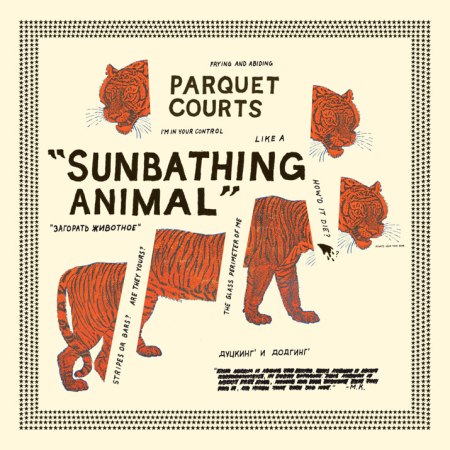
The men of Parquet Courts are growing older, but just in the sense that we all are. “Sunbathing Animal,” the second accessible full-length and third release from the band in barely a year and a half, shows hints at maturity. It’s a reluctant maturity, one of attempts at denial but eventual acceptance. The band, as they did on last year’s “Tally All the Things You Broke” EP, open up to more influences and more ideas. The always-terrific “Light Up Gold” mixed garage-rock and country influences, but was filled with a boundless youthful energy that is roped in and controlled here.

Parquet Courts seem to know that they can’t just keep playing hybrid country-punk forever. “Stoned and Starving” is one of the best songs in years, but at 5:12, it’s the only song on “Light Up Gold” that’s over 3:30. Of the 13 songs on “Sunbathing Animal,” five break that threshold, with two more only seconds away. The band is, in one way, slowing things down and introducing some more developed songwriting. “Bodies Made Of” starts the album on a deceiving, medium tempo. “Dear Ramona” follows a narrative and shows more mature songwriting. “She’s Rolling” goes past six minutes, and “Instant Disassembly” past seven, with the latter being a pseudo-ballad and the former ending in crazy, layered harmonicas.

But in another way, they’re not slowing things down at all. They’re still a punk band, and “Ducking & Dodging” shows its love for 8ths and 16ths. Its “vocals over a drum and soft guitar line” is one of the most garage-y rhythms in years. The title track provides a volume and energy blast after the slow-burning “She’s Rolling.” And there’s musical interludes, just as on “Light Up Gold.” “Vienna II” and “Up All Night” provide brief break-ups throughout the album. “Sunbathing Animal” is more drawn-out, and more expansive, but it packs as many punches as their previous works.

“Sunbathing Animal” pairs nicely with “Light Up Gold,” as a band exploring the width of their own sound. “Sunbathing Animal” is no better or worse than “Light Up Gold,” and it doesn’t immediately demand any comparisons. It’s a lot more structured, and the band is more in control of their energy. It’s still very youthful and tongue-in-cheek, still fun but serious. “Sunbathing Animal” is a distinctly different album for the band, but it’s still definitively Parquet Courts. And that should be enough of a reason alone to pick the album up.

If you like this, try: together PANGEA’s “Badillac,” a less exciting (but still agreeable) example of a garage-punk band expanding.

-By Andrew McNally

Fucked Up – “Glass Boys”


Grade: B

Key Tracks: “Echo Boomer” “DET”

The most immediately jarring thing about Fucked Up’s fourth proper full-length is it’s running time. At 44 minutes, it’s barely half the length of their previous album, “David Comes to Life.” It’s only ten songs, and only three are over five minutes. This isn’t to say Fucked Up are taking a backseat after the success of their last album – instead they’re taking a whole new approach. “David Comes to Life” was an unequivocally ambitious rock opera with many characters and four parts. And it was so good that they forced publications like The Chicago Tribune into not only putting a hardcore album in their 2011 “Best Of” lists, but finding ways to blur the name. It did leave the band in an accidental awkward position though – as one of the most unique and unconventional bands in music, they were suddenly mentioned in the same breath as bands like Foo Fighters, who they’d previously spoken out against. So to continue fighting from the inside, they released “Glass Boys” – their attempt at a skewering, conventional rock record.

First off, it doesn’t really work. Asking Fucked Up to release a typical rock record is like asking Charlie Kaufman to direct the next “Transformers” movie – it just isn’t going to be as dumb as it should be. “Glass Boys” is still littered with narratives, references to mythology and dark, convoluted poetry. And furthermore, Fucked Up is a hardcore band at heart. Even if the band has never been as raging as most hardcore bands, Pink Eyes’ vocals are still as throaty and guttural as before. They’re just too ambitious to try to pull off a normal rock record – even if it’s not done seriously. This is the band that’s doing “Year of the…” EP’s in between albums, with 10+ and 20+ minute songs. Fucked Up are too imaginative, and exist in too many genres, to really pull this off.

So what results is a batch of moderately regular songs. On one hand, it’s interesting to hear Fucked Up go back to some traditional hardcore roots, with songs that are easier to wrap your head around. It’s all high energy, still. On the other hand, it does sound like a bit of a failed experiment. The biggest case is on “Warm Change,” where they mimic classic rock by ending with a pointless, meandering guitar solo and a keyboard fade-out. It’s a bit of a parody, sure, but one that doesn’t fit alongside any other song on the album.

But still, if you take the album at a base level and don’t look at it like a certain concept, it’s still a strong hardcore album. “Echo Boomer” is a raging intro to the album, and songs like “Touch Stone,” “Sun Glass” and “DET” are just as loud and abrasive as you’d expect from Fucked Up. And in some ways, their ambition works – the drums and guitars were recorded differently. Jonah Falco recorded four different drum tracks throughout the album, and the guitars are layered and smoothed out to make more of a drone noise than a lead melody. They’ve released a whole alternate version of the album, with half-time drums. Even at their least ambitious, Fucked Up is still incredibly ambitious. So even if this is a grand idea that provides little fruitful, it’s still a solid record from the most inventive band in music. The fact that Fucked Up even thought to make the exact opposite of their previous album shows they’re still at the top of their game.

If you like this, try: Tonally, Fucked Up has always been a tough band to place. Hardcore-inspired rock, built for the indie crowd – there’s no specific audience. So thematically, I recommend two of my favorite albums: Titus Andronicus’ “Local Business,” where the band was similarly finding a way to make a post-magnum opus album, and Queens of the Stone Age’s “Songs For the Deaf,” an earlier attempt at an overly-regular rock album.

-By Andrew McNally

Cheap Girls – “Famous Graves”

(Photo Credit: punknews)

Grade: B-

Key Tracks: “Slow Nod” “Knock Me Down”

As with any Cheap Girls’ record, the main fault of “Famous Graves” is also it’s biggest strength. The band has never, ever left it’s comfort zone, and have left their music in this frustrating void where the listener knows what to expect and is delighted with another similar record, until it inevitably becomes tedious by the halfway point. “Famous Graves” is no different. It starts strong, but it has a middle that sags from too many similar sounding songs.

Part of Cheap Girls’ original act was not to do anything revolutionary, merely to add their own spin onto fuzzy indie/pop-punk (think a more emotional version of Weezer’s Blue album). By sticking so closely to the formula, it reinforces their aim to make consistent and appealing music. But that works a little too well in their favor. “Slow Nod” opens the album, a typically high-volume, medium-speed song with plenty of fuzz and tough to interpret vocals. It’s the band’s staple sound, and songs like “Slow Nod” prove they can still do it well, and with plenty of energy.

The second track, “Short Cut Days,” has a catchy vocal rhythm and excels on a sound that’s intentionally condensed in the studio, with a garage feel – but also sounds like it could tear the walls down live. Cheap Girls, at their best, manage to make both sounds simultaneously. The album’s third song and lead single, “Knock Me Down,” is a more personal song about overwhelming pain felt after surgery, and combines strong vocals, strong lyrics and energetic music, the album’s best package.

After that, though, there’s a long string of songs that do nothing to differentiate themselves from each other. While they’re inherently enjoyable, they all follow the same formula. They’re almost all in the three-to-four minute range and they feel like time that’s being killed off until the album’s strong finale. Having weak and formulaic tracks is almost unavoidable, but five of the eleven songs feel like underdeveloped cuts they’re burning off. A bulk of the album, roughly half of it, falls victim to serious repetition.

The album does have a strong finale, though. “Thought Senseless” stretches (barely) over four minutes, and is a little more developed than a typical Cheap Girls song. “Turns” is a pseudo-ballad, one that has many of the characteristics of one, except that it isn’t a soft song, which makes for an interesting listen. And bonus track “7-8 Years” is more vocally forceful than any of the album’s other songs. The mix of acoustic and electric allow the vocals to come through more clearly, and it ends up adding an element to it.

At their core, Cheap Girls are an enjoyable band. They’re both incredibly simple and subtly complex. They’ve always blended fuzz and pop, in a 90’s throwback. Their sound translates well live, and their albums can accompany any real mood or season. “Famous Graves” just sounds too repetitive, and it could easily be shuffled in and lost amongst their past albums. Cheap Girls aren’t going to win any new fans over with this album, they’re just going to have a few more great songs for fans to eat up, and some more to pass on by.

-If you like this, try: Lemuria’s semi-classic 2008 album, “Get Better.” They have a constant sound much like Cheap Girls (and the two have recorded together).

-By Andrew McNally

The Black Keys – “Turn Blue”

(Photo Credit: chimes.biola.edu)

Grade: B+

Key Tracks: “Weight of Love” “Bullet in the Brain”

The Black Keys either like to take corners, or listen to criticism. Their last two albums – “Brothers” and “El Camino” – were distinctly different from what they’d done previously, and both suffered from it. “Brothers” had some quality songs, but it was too long and stuffed with slower tracks. After they found it difficult to play them live, they wrote more upbeat songs for “El Camino,” but they were so focused on the quality that it didn’t seem like they enjoying themselves. “Turn Blue,” however, sees the duo having fun again, and balancing loose and polished.

The first track on “Turn Blue,” called “Weight of Love,” is just ten seconds shy of hitting the seven minute mark. This is pretty different for band who is known for a quick and heavy blues sound. (Look through the Keys prior albums, it’s rare to find a song over five minutes). But it sets the tone of the album. The song is sleepy and a little psychedelic, a drastic departure from the old Keys. It isn’t fast, it’s much more of an extended way to open an album. But Dan Auerbach sure sounds like he’s having fun. The song, as do a few others later, has a distinct classic rock feel to it. Though always resembling garage bands of the 60′s, the Keys have usually stayed away from a classic rock sound. But it gets embraced on “Turn Blue,” and it’s a surprisingly welcome shift. Even the album’s hypnotic cover shows an embrace of a more suspended sound.

The album also benefits from having Danger Mouse on board, producing. He worked on “El Camino,” too, but the relationship between him and the band is more equal. Though still a duo, the band has added distinct bass parts that make a much groovier sound. It’s most evident on the title track and the hit “Fever,” but it adds a fun element throughout.

The album’s only real fault is a handful of songs that still sound a little too prepared. “Year in Review” sounds a little too strained, a little too rehearsed. “It’s Up to You Now,” meanwhile, feels so loose it almost sounds improvised. It’s also possibly the album’s heaviest track, with a booming drum intro. It’s very enjoyable, reminiscent of early Black Keys. They recapture a little of their earlier sound in some of the other heavier songs, like “Bullet in the Brain.” While “Tighten Up” and “Lonely Boy” were heavy in their own right, they felt more directed towards songwriting. The guitar fuzz and the loud, crushing drumming are more ambitious here, less constrained to an album format.

“Turn Blue” has many things working for it. It’s more energetic than “Brothers,” it’s more open than “El Camino,” and it’s just as wide and heavy as “Attack & Release.” A welcome groove makes the album more fun than what we’re used to, without sacrificing any of the volume. And on songs like “Weight of Love” and closer “Gotta Get Away,” it’s easy to tell the band is having fun with the record. “Turn Blue” doesn’t quite stand up to “Attack & Release” and “Thickfreakness,” but it is definitely one of the band’s better records.

If you like this, try: Given that most of the bands that resemble the Black Keys are equally famous, I’ll recommend another fuzzy, bluesy duo – The Creeping Ivies.

-By Andrew McNally

The Boston Boys – “Idea of Love”

Grade: B+

Key Tracks: “Between You and Me” “Become Like One”

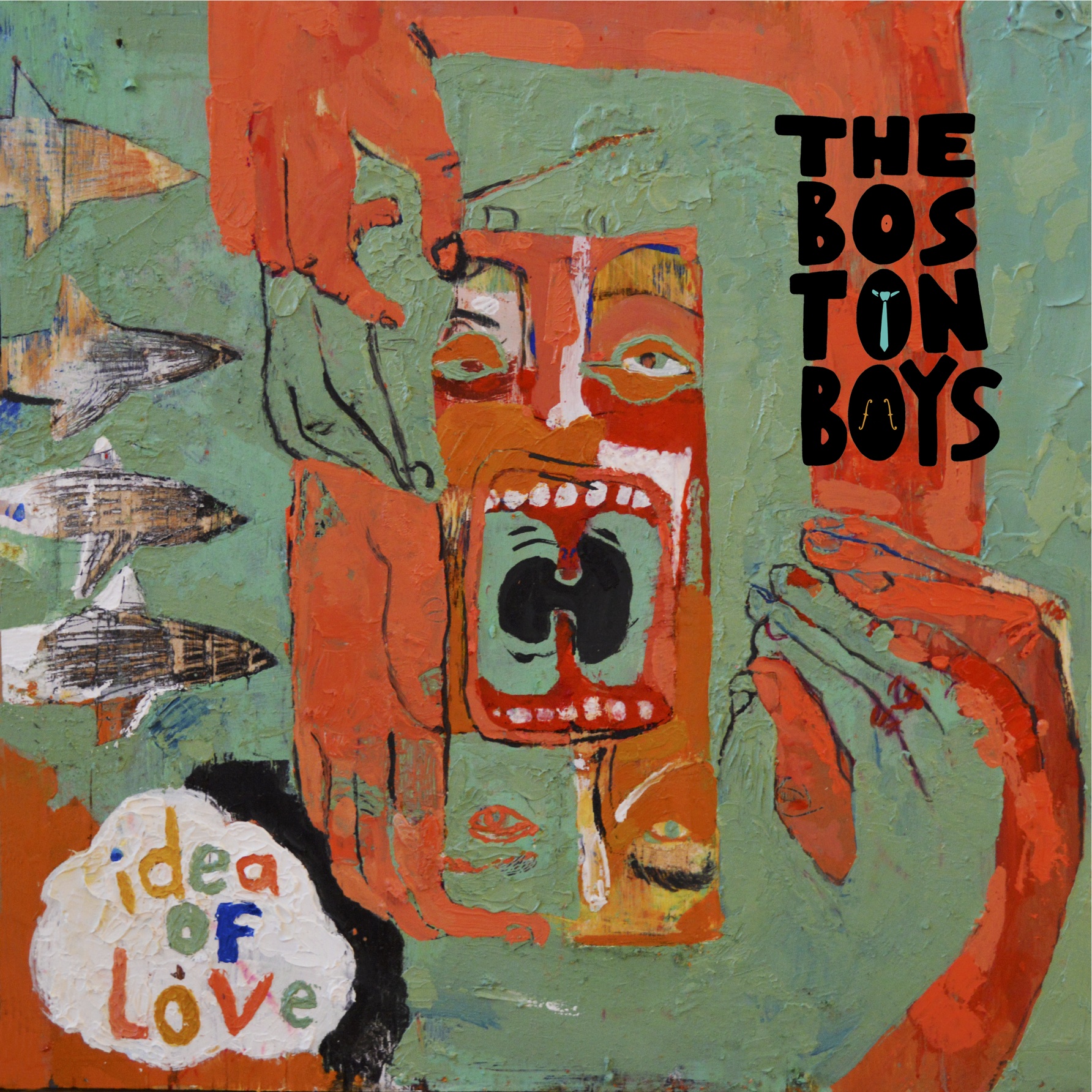
The Boston Boys, a folk-heavy roots band now decidedly living in Brooklyn, have always relied on their diverse sound as their strongest quality. I wrote about “Keep You Satisfied,” their last EP, that the guys were able blend folk, rock, country and americana elements into a sound that’s both predictably shiny and refreshingly original. “Idea of Love,” their third EP, keeps this blend just as strong.

The opening song, the aptly titled “The Beginning,” sets the mood for the EP. The band doesn’t start with a bang, instead opening with a slow and string-heavy track that’s more psychedelic than it is folk. It’s the EP’s most interesting song and, although it ultimately doesn’t really resemble the five songs that follow it, it does set the tone the band is looking for – there’s going to be a lot of little surprises. From there they jump into “Between You and Me,” a much more traditional country-folk song. It’s rhythmic, has a medium tempo and some pleasant vocal harmonies. It’s more what you’d expect from a band like the Boston Boys; it sounds conventional, but it doesn’t fit under the monikers of ‘folk’ or ‘country,’ instead landing in their own little niche in between.

“Times Like These” is more stripped-down, largely just vocals and guitar, a decidedly folksy move. And as soon as the mood calms for it, the more fun and drum-heavy “Become Like One” starts. The transition between these two songs works well, as they show the band at their calmest and highest points, respectively. “Become Like One” really is a fun track, breaking out of folk to incorporate some standard rock elements (that stay true through the next song, as well). Final track “You Don’t Need Me” is a slow, folk-rock type ballad, a solemn way to end the EP.

As with “Keep You Satisfied,” the band’s diversity in the music makes for a fun listen. The lyrics might sometimes get drowned out because of it, but their constant mixing of genres can make for a unique listen, and helps each song on the EP separate itself from the others. The band has a distinctly American sound, like their music should be played on a front porch in a small town on a warm summer day. They take the best parts of American genres – folk, country, bluegrass and americana – add a little rock from time to time, and produce a sound that’s both wholly original and lovingly American. It’s surely no surprise that the Boston Boys are named after an American city, because their music serves to optimistically celebrate a whole range of American heritages.

The EP is officially released on Tuesday, May 20th.

-By Andrew McNally

Twin Berlin – “Sleazebrain”

(Photo Credit: http://www.rslblog.com)

Grade: B+

Key Tracks: “Rtbrfloat” “No Fun / Not 21”

Twin Berlin’s raw debut full-length comes catapulted out of a garage in the mid-’90’s. The Travis Barker-approved Connecticut trio channels underground indie-alt bands from the 90’s and blends them with a friendlier and more straightforward sound of today. The volume and the energy are high, as is the rhythm. The songs presented on “Sleazebrain” are probably going to get stuck in your head, guitar crunches and all.

The band, a trio consisting of Matt Lopez on vocals and guitar, Sean O’Neil on bass and James Janocha on drums, channel some storied predecessors. Their welcoming fuzz and guitar blasts do not sound out of place with the likes of Mudhoney and the Meat Puppets. The band is able to produce a batch of alt songs with strong, energetic punk influences and indie rhythms, all wrapped into a loud and warped sound that’s both raw and refined.

But although the band is able to recapture an image of the past, they add their own current flair, too. Where “Sleazebrain” differs from the likes of Dinosaur Jr., or some straighter 90’s revivalist bands of today, is catchier songwriting. Fuzzy guitar songs were radio-friendly in the 90’s, but Twin Berlin use more straightforward songwriting to make songs that aren’t aiming to reinvent the wheel, yet aren’t easy to forget. The band’s lyrics are more open and easy to relate to, and their adherence to conventional rock song structures allows for an album that seems to mix two different eras.

“Sleazebrain” isn’t a revolutionary album, and it isn’t trying to be. Instead, it establishes Twin Berlin as an honest and loud band, mixing punk, indie and garage fuzz with a ton of energy and ambition. The album is a punk album, masquerading behind some overly catchy rhythms. The guitar is roaring and rhythmic, the bass and drums adding ample energy. “Sleazebrain” sounds like it fell from the 90’s, but it has enough of a current flavor to survive today. The band’s best quality is their underground energy, and that’s readily apparent all throughout “Sleazebrain.”

-By Andrew McNally

Pixies – “Indie Cindy”


(Photo Credit: http://www.juno.co.uk)

Grade: D

Key Tracks: “Bagboy” “Magdalena 318”

Surviving Nirvana members Dave Grohl, Krist Novoselic and Pat Smear recently played at the Rock & Roll Hall of Fame induction with some rotating singers – Joan Jett, St. Vincent, Kim Gordon and, unpredictably, Lorde (and J. Mascis in an afterparty). It was only the third time they had performed together after Kurt Cobain’s death, the first two times being with Sir Paul McCartney. In that time, they only recorded one new song (with Sir Paul). The men have been very careful not to alter the band’s legacy in any way, and the only performances have honored both their own music and Cobain’s life.

Pixies, sadly, have gone the way of almost every other early 90′s band – Alice in Chains, Sublime, Smashing Pumpkins, Bush, Hole, Blind Melon – in reforming with a different lineup in a move that seems just shamelessly capitalistic. (Exceptions, of course – Soundgarden kept the same lineup, Pearl Jam and Radiohead are still going strong). Their first album in 23 years, “Indie Cindy” captures almost none of their perverse magic of the past. While it isn’t a horrendous album, it’s wildly, wildly inconsistent and is usually content being just a footnote to the band’s career rather than trying to expand on it.

There’s a lot to pick apart on the album. The most obvious, and most painful thing to note is that none of these 12 songs are necessarily new. Pixies released three EP’s, four songs each, from the end of last year to just last month. “Indie Cindy” is simply those 12 songs put together and reordered. At the tail end of an era where bands are reforming in the name of capitalism, this seems like the biggest moneygrab of them all.

For the most part, the music itself isn’t bad. It just isn’t Pixies. Pixies made a name for themselves (and influenced a whole decade of music that followed them) by creating wholly unpredictable music that was both melodic and noisy, with lyrics often about violence and mutilation. Yet there was a radio-friendly quality to the music that bridged the gap between radio alternative and underground bands. Here, most of the songs are closer to straight radio rock, ranging anywhere from decent to totally forgettable.

The album’s best songs are the ones were there are many things going on. “Bagboy” is a prime example – it’s partially spoken word, with heavy guitar rhythms and a few different percussion things going on. And “Magdalena 318,” which has a more industrial and grungier feel to it, easily the album’s best song. Too many of the songs are too straightforward, lacking energy and any real creativity. “Greens and Blues,” “Silver Snails” and “Snakes,” as just three examples, are three melodic and rounded alternative songs, but ones that are instantly forgettable. The good tracks on this album are diamonds in the rough, and there’s a lot of sifting to go through.

Besides the music, Black Francis’ vocals are inconsistent, too. There’s none of the screaming and unpredictability, but he hits some classic Pixies vocals – at points. On “Magdalena 318″ and “Blue Eyed Hexe,” his voice sounds just like it used to. Yet elsewhere his vocals are pretty average, contributing to the very average quality of the music. And on “Andro Queen,” his vocals are downright bad, with the song sounding like some cut track from a trippy 60′s band.

From the time that the Pixies first reunited to the time they actually put out “Indie Cindy,” two things happened – they lost Kim Deal, the equally creative force behind their earlier music (and have yet to find a permanent replacement), and they surpassed the amount of time in which they were a band in their first run. That should be indicative of the album – the time it took to put out one album in 2014 is longer than the time it took them to put out four studio albums and an EP in the early 90′s. “Indie Cindy” is passable as an alternative album, but it never has any idea what it wants to be. Occasionally, the band tries to grasp at their amazing legacy. But usually, they’re comfortable with sorely unremarkable alternative/”butt-rock” songs, and there’s simply no reason for this album to exist. It takes their legacy down a notch; adds an asterisk onto the ends of some legendary albums. “Indie Cindy,” to put it honestly, will please the local alternative radio DJ’s, but not the station’s listeners.

If you like this, try: I don’t exactly know what to recommend here, but if you’re into this album then you’re probably really into 90’s music rebirthed so I’d recommend Soundgarden’s surprisingly passable 2012 album “King Animal” or Smashing Pumpkins’ great 2007 album “Zeitgeist.”

-By Andrew McNally

Sinai Vessel – “profanity [ep]”

(Photo Credit: bandcamp)

Grade: A-

Key Track: “cuckold”

The guys in North Carolina’s Sinai Vessel were once approached after a show by someone, who may or may not have enjoyed the show, who called their music “punk for sissies.” The phrase “punk for sissies” is now draped across the band’s bandcamp page, as a source of inspiration. Taken in a non-derogatory way, the phrase fits the band – they’re punk, but one that’s smarter and more personal than most. There are hints of emo in their music, often in place of punk energy. Their new EP, “profanity,” is a solidly well-rounded listen that examines maturity and confusion, in a manner that switches from angry to introspective.

The EP doesn’t exactly start with any punches. Opener “cats” aligns itself a little closer to some twinkly emo than to punk, even if it’s examining small town religion. The vocals, as they are across the EP, are forceful, but the more midtempo music sets the tone of the EP – melodic and reflective, not always going for volume. The second track, “greatham,” is simply a forty second interlude. “cuckold,” possibly the EP’s best song, is a little louder and packs a secret punch in both it’s power and it’s poetry.

“drown around” matches the melodic and powerful nature of “cuckold,” with it’s screamed vocals and honest lyrics. Sinai Vessel are not focused on pulling intense punches, but the EP’s midpoint is it’s most forceful and loudest section. “flannery” is a very honest track, with the line “good country people with bad city hearts” repeated throughout. It serves as a slower song, and possibly the most developed on the whole EP. And “index on the oval” is a heavy and drawn-out finale, one that fits the EP well.

The band, consisting of Caleb Cordes on guitar, bass and vocals, Nathan Larson on drums and David Wimbish on horns, can easily create an atmosphere of cerebral and vulnerable punk, a largely untapped market. Sinai Vessel can be loud when they want to, and can even stretch themselves in post-punk (like on “index on the oval”). But they don’t overdo anything – they’re content playing midtempo and melodic rock most of the time. “profanity” is an eclectic work, one that shows Sinai Vessel have different intentions than most punk bands. Where the vocals are often intense, the music isn’t necessarily, and it’s a blend that entirely works. Sinai Vessel might be “punk for sissies,” but it’s punk for smart and despairing people, too.

You can stream and download the EP here.

If you like this, try: For the sound of Sinai Vessel, the emo-punk blend of Sleep Weather that I happened to have just reviewed. For the idea of Sinai Vessel, check out the band Swearin’, a relatively calm and poetic band that still qualifies as punk.