Middle Class Rut – “Pick Up Your Head”

(Photo Credit: http://www.playmusic.tw)

Grade: B

Key Tracks: “Cut the Line,” “Aunt Betty”

Middle Class Rut were one of the more successful bands to ride the coattails of Band of Skulls in 2009-10. The band, sometimes referred to as MC Rut, heralded a surprisingly successful debut album in 2010, shortly after Band of Skulls began to seep into alternative radio. There has been a recent revival in simple, heavy alt-rock, like a Ramones updated for the indie world. Middle Class Rut are some of the champions of this revival, being just a two-piece that plays heavy guitar rock that may have been recorded in a basement somewhere. This could all be traced back to the White Stripes, but these more recent bands specialize in an incredibly straight-forward approach to music, delivering the listener quick and heavy blasts, often over soon after they start.

Albums by bands like Middle Class Rut sound boring on paper, as the straight-forward sound of their music sounds wholly unoriginal. But Middle Class Rut are playing off the ever-increasing experimental nature of indie music, in the same way early punk bands were combating David Bowie and The Beatles’ “White Album.”  What the listener gets is a heavy alternative album of two guys messing around in the studio. There might not be a focus, but there might not have to be. The result is a dose of refreshingly heavy and fast album of personal lyrics.

The whole unoriginal nature of Middle Class Rut’s music does get old, surely. Some tracks on this album are less entertaining than others. The opener, “Born Too Late,” is even heavier and faster than the normal for the band. “Cut the Line” and lead-off single “Aunt Betty” are the album’s more thought-out songs, with some experimentation and just good songwriting. Other tracks get meddled in their own repetitive nature. The album is better than their debut, which was somewhat lighter and less interesting because of it. “Pick Up Your Head” is no great album, but it never achieves to be. What it does succeed at is being a fun and intense listen, surprisingly effective for a two-piece that always kind of sound the same.

If you like this, try: “Supermegafantastic” by IAMDYNAMITE (2012). They’re the best of these simplistic rock revival bands, in my opinion. Also a male two-piece, coincidentally.

-By Andrew McNally

Larry And His Flask – “By the Lamplight”

(Photo Credit: Brooklyn Vegan)

Grade: B

Key Tracks: “Pandemonium,” “The Battle For Clear Sight”

“By the Lamplight,” the second official release for the band Larry and His Flask, begins a capella. It only stays that way for a few beats, but it is enough for the band to set the stages. Larry And His Flask are, at the end of the day, a punk band. Yet the banjos and intense acoustic guitar are equally reminiscent of both folk and folk-punk bands, far away from the slight Irish tone to their music. They are a diverse band, taking their inspirations more from cultures than genres, like a Gogol Bordello without an eccentric lead singer.  Their second official release follows this trend, although it is a little more standard than their previous full-length. Still, the a capella opening acts as a bizarre intro for an unfamiliar listener and a gleefully expected one for fans.

When Larry and His Flask are at their best, which is often, they invoke one-thirds Mumford & Sons speed-folk and two-thirds Nekromantix rockabilly punk. The opening half of the album sees them accomplishing this frequently. Early track “The Battle For Clear Sight” has a nice addition of a female singer, Jenny Owen Youngs. The second half of the album gets a little bogged down in songs that sound a little too unoriginal, because of an already high standard that has been previously set. Still, the album’s fastest and slowest tracks, “Home of the Slave” and “All That We’ve Seen,” help to break it up some. And the band always sounds like they are having fun in the studio, which transposes to the listener. They are a fun band, one that genuinely enjoys what they are recording.

“By the Lamplight” is a little less experimental than their previous effort, but it still ranks the band among the most experimental bands in punk music. Their sound is equal parts Celtic punk, rockabilly and folk, and their diversity makes for a truly interesting band. I learned about this band after seeing them in Brooklyn open for the Menzingers (a perfect band), at a show that Gogol Bordello was coincidentally supposed to play at (it got cancelled part way through because of weather). If Larry and His Flask come your way, I recommend them live. Their diversity translates to a fun live show.

If you like this, try: Frank Turner’s “England Keep My Bones,” another diverse Irish-folk-punk musician whose best album is the second most recent.

By Andrew McNally

Pity Sex – “Feast of Love”

(Photo Credit: Brooklyn Vegan)

Grade: B-

Key Tracks: “Wind Up,” “Fold”

“Feast of Love” is the full-length debut for the hyped lo-fi band. The quartet plays a shoegaze-inspired band of emo. The album is equal parts alt-pop, emo and traditional shoegaze walls of sound. Sonically, despite the creative blending of genres, the album could use for some expansion. It is only twenty-seven minutes long but it feels a little tiring. Part of it is the shoegaze itself, it as a genre can often tire and frustrate the listener in the best possible ways. But part of it is a lack of individuality amongst the songs. The album feels like one drawn-out idea, and that’s generally what an individual shoegaze song is to start with, so a full album of similar ideas gets really bogged down. Still, it is a creative blending of genres and is it at times challenging and staggeringly original.

The lyrics are often tough to decipher, which is pretty characteristic of shoegaze (Godspeed You! Black Emperor did away with them entirely). This recent revival of lo-fi emo groups is often accompanied by poetic lyrics that are almost too easy to relate to, that result in heart-wrenching songs. Pity Sex is no different, with some great, poetic lyricism happening. Unfortunately, some of it is buried under walls of guitar.

“Feast of Love” has its faults, but it shows promise as a debut. It is tedious but creative, and is definitely worth a listen for people intrigued by the lo-fi emo revival and shoegaze. Pity Sex is currently on tour with two of the best young bands in America today, Dads and The World is a Beautiful Place & I Am No Longer Afraid to Die.

If you like this, try: The aforementioned bands, or check out the work done by the bands Teen Suicide and Julia Brown for something wickedly lo-fi.

-By Andrew McNally


Veenstra – “Six Months of Death”

Photo Credit: Bandcamp.com

Photo Credit: Bandcamp.com

Grade: B+

Key Tracks: “A Bear/A Fire/A Cave,” “Stone Burial”

Francois Veenstra, a solo musician from Brazil, is in the midst of an existentially lo-fi trilogy. His second album, “Six Months of Death,” was recorded like his debut, in an ultimate lo-fi setting: a bedroom, alone, with a handheld recorder. The album’s title sets the existential tone and states that the album is going to be no less introspective than his previous effort, “Journey to the Sea”. The first album in the series saw a protagonist following a river to the sea. “Six Months of Death” follows this protagonist as he finds the sea and begins to wander aimlessly, realizing the pointlessness of his previous adventure.

Musically, the protagonist’s existential pains are felt through winding, quiet music, all recorded by Veenstra. The songs are more like movements, building up or winding down at unexpected points. The transitions between songs feel more like thought breaks than song breaks – which is good, as it implies that the album works well as a whole. His vocals are tough to decipher, but they only show up sometimes, as the whole entity of the album seems to encompass this character and his travels. The album is experimental lo-fi alternative stuff, often quiet but getting the point across. Veenstra is a pretty decent musician, commandeering drums and bass just when the muted guitar begins to get a little slow. It is certainly quiet and toned-down, so lo-fi fans take notice. I’m curious what will happen to the protagonist next.

Veenstra’s albums can be found on Bandcamp, and he runs the blog Beings Being.

If you like this, try: “Whenever, If Ever” by The World Is a Beautiful Place & I Am No Longer Afraid to Die, the previous review before this one.

-By Andrew McNally

The World is a Beautiful Place & I Am No Longer Afraid to Die – “Whenever, If Ever”

Photo  Credit: Top Shelf Records

Photo Credit: Top Shelf Records

Grade: B+

Key Tracks: “Picture of a Tree That Doesn’t Look Okay,” “You Will Never Go To Space,” “Ultimate Steve”

The band trying to claim their prize for current longest name have released their full-length debut on the glorious Top Shelf Records. The band – often abbreviated, or called “The World Is” for short – is a six-piece from Connecticut. They differ from Top Shelf’s normal bands, who fall under the umbrella term of ‘modern emo’ (here’s looking at you, Snowing). They are definitely a modern emo band, but one that is even more original than their label-mates. Their first EP’s, “Formlessness” and “Josh Is Dead,” were four and three tracks, respectively. But in those three tracks the band established themselves as one that was not afraid to play around with lo-fi influences that can also include group choruses and screaming intensity.

Those previous EP’s showed that The World Is was not afraid of recording a quiet and toned-down piece that builds to a big and loud payoff later on the album. While bands will often do this in a song (think: nearly every Sonic Youth song), The World Is does it as arcs. Two songs might be separate ideas that contribute to a booming climax a song later. It’s all very unique and often very wrenching. Their first full-length, though, suffers from too much build-up and not enough pay-off.

That is not to say the album is not good. It’s great, it’s absolutely great. Even in it’s outwardly subdued moments, the band can easily create an uneasy feeling, a sense that something is not right. They competently do this in every one of the album’s ten songs. This is what emo sounds like now, inspired equally by shoegaze, experimentation, other current emo bands, and probably suburban CT life. The World Is is one of my favorite bands out there now, they’re pioneering a wholly new sound. “Whenever, If Ever” just needs one or two more pay-offs of screaming vocals to separate the quiet moments. Still, this album is unique. It has its faults, but it is extraordinarily original. And at the end of the day, a band making some faulty quests into new territory is largely better than one sticking around in familiar territory.

If you like this, try: Their old EP’s, mentioned above. All are available on Spotify and Bandcamp. Alternately, “Fun” by Algernon Cadwallader or “I Could Do Whatever I Wanted If I Wanted” by Snowing. Check out every band on Top Shelf Records, if you’re truly interested.

-By Andrew McNally

Sigur Ros – “Kveikur”

Photo Credit: Wikipedia

Photo Credit: Wikipedia

Grade: B+

Key Track: “Brennisteinn,” “Hrafntinna”

Prolific and critically-acclaimed Icelandic alternative band Sigur Ros’s seventh album is a tad darker and more abrasive than their previous works, and it retains the band’s minimalistic qualities in its engrossing songs. I cannot speak to the lyrics of the album, as I know absolutely no Icelandic, but the vocals behind the lyrics fit amongst the band’s haunting music.

The band has always approached their music with a minimalist approach, consistently churning out music that builds upon itself, like a moderately more accessible Godspeed You! Black Emperor. Although they have always taken this approach, and continue to do so many years later, “Kveikur” has a slightly darker tone. The album’s opening track (and longest), “Brennisteinn,” begins with a pounding synthesizer rumble that sets the tone for what is a darker experience than the rest of their albums.

Sigur Ros have never been ones to seem comfortable with fame, and their ever-growing popularity might be a cause for the darker tone. “Kveikur” might serve as a response to all of the critics and musicians that cite Sigur Ros as inspirations and jumping-off points. The album might also be reflective of the loss of keyboardist Kjartan Sveinsson, who left the band last year. This is only their second album without Sveinsson since their debut, “Von,” in 1997.

“Kveikur” is a dense album, with a lot of winding music. It requires some participation from the listener, which is deserved. Sigur Ros are getting a little darker and they expect their core audience to follow. Thankfully, they provide no reason why we shouldn’t. The album builds and builds, and totally engrosses the listener. At points, it is repetitive, but this is Sigur Ros. We should all be on-board with what they’re offering.

-By Andrew McNally

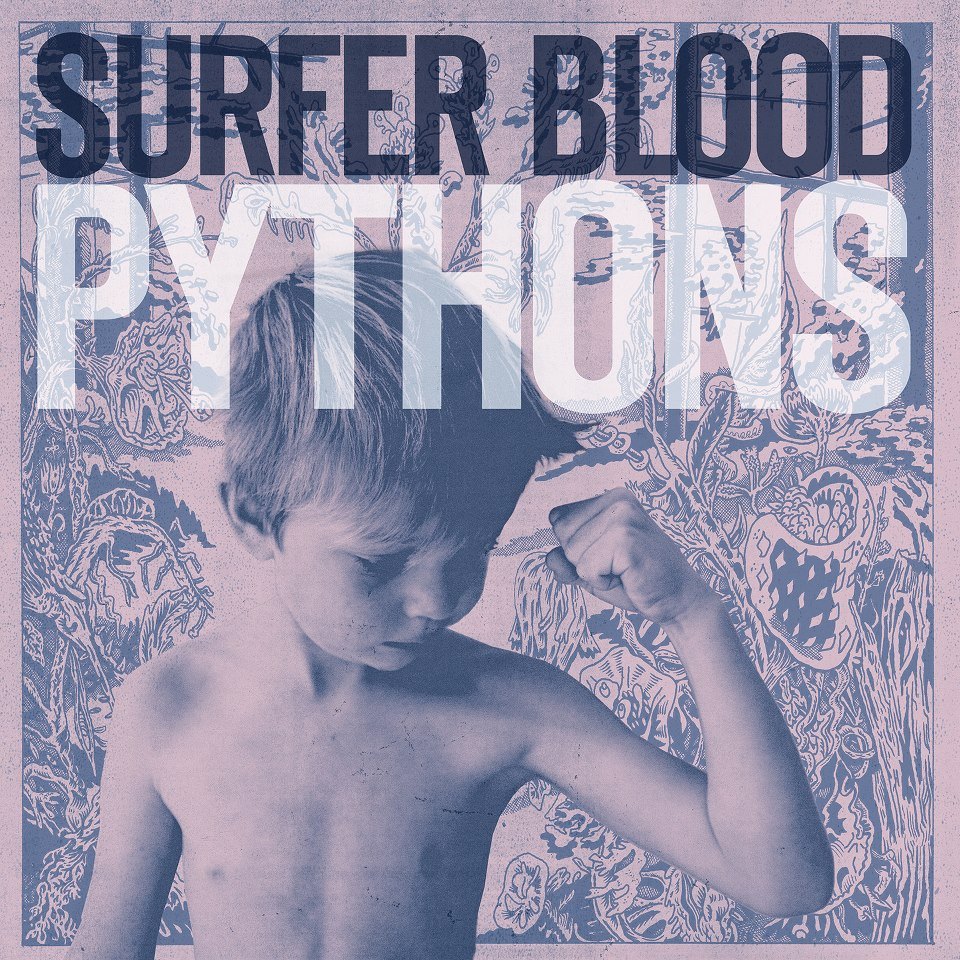
Surfer Blood – “Pythons”

Photo Credit: Rolling Stone

Photo Credit: Rolling Stone

Grade: B-

Key Tracks: “I Was Wrong,” “Slow Six”

Surfer Blood’s John Paul Pitts sure is sorry. The band’s second full-length, “Pythons” acts as one long apology. The line ‘apology, meet apology’ shows up on a track that is not “I Was Wrong.” The whole album is pretty much apologies or Pitts singing about putting himself in uncomfortable situations because he feels like he deserves it. Why? Domestic abuse charges from August 2012. So Pitts has every right to be apologizing in his music.

The music of the album presents a challenge, because Surfer Blood’s sound has not really ever been one to match up with the uncomfortable lyrics presented on “Pythons.” Many tracks just follow basic, poppy melodies with sometime group choruses. Occasionally, Pitts will fall into screams in the chorus, possibly trying to emphasize the internal pain he’s feeling. But they usually do not fit within the context of the song. The only song that really grabs is “Slow Six,” the penultimate track, one heavier than anything presented before it. The other songs all feel too easy, and although they are catchy, they do not work alongside the apologetic lyrics.

Taken for what it is without any knowledge of the album’s inspiration, “Pythons” is an enjoyable and catchy record. It isn’t great but it’s worth a listen for fans of general pop-punk and surf rock. The B- is a response to this listening. The album takes on a new reflection when the listener knows why Pitts is so apologetic. Pitts might really be feeling the internal pain he sings and screams about, but with poppy and largely uninspired music, there’s no way to believe it. Which, ultimately, gives us no reason to care. I try my hardest to separate albums from the personalities that make them, but when an album like “Pythons” is so reflective of it’s maker, and an unconvincing one, I can’t help but to discredit it.

If you like this, try: “Crazy For You,” Best Coast’s debut. Not a fan of the band, personally, but they’re a similar sound.

-By Andrew McNally

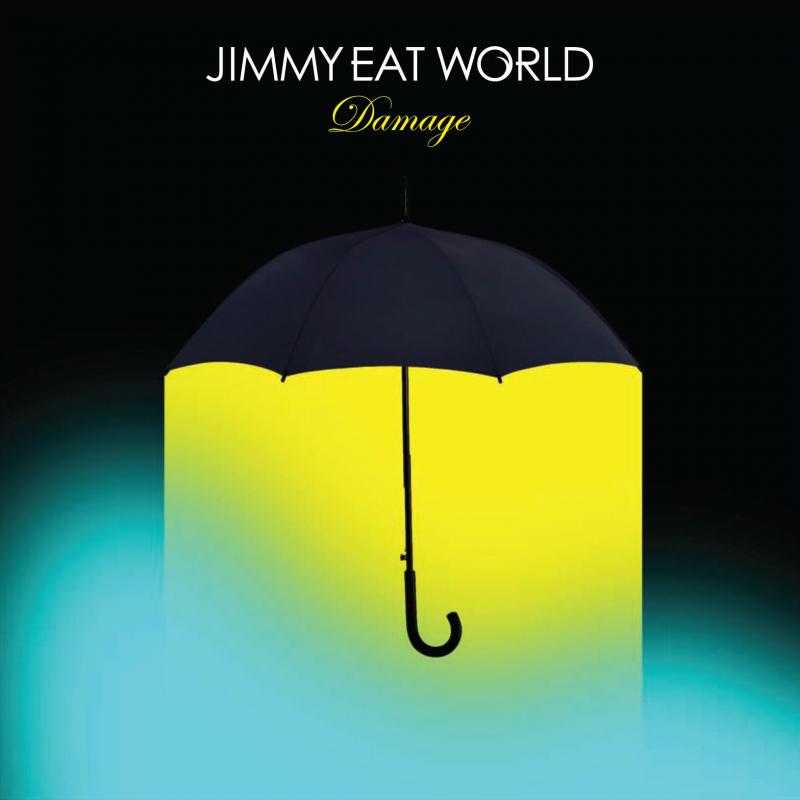
Jimmy Eat World – “Damage”

Photo Credit: Antiquiet

Photo Credit: Antiquiet

Grade: C+

Key Tracks: “Byebyelove,” “You Were Good”

After some relative successes in the early- to mid-2000s, Jimmy Eat World have been quietly chugging along down the same relative path that led to fame in the first place. Kinda sad, kinda introspective, kinda inspirational, kinda pop, kinda punk alt-rock that is immediately listenable but never very interesting. “Damage,” their eighth album, is really no different. It’s more consistent and related than many of their previous albums, while also falling sometimes into forced or corny moments.

The members of Jimmy Eat World are approaching forty, and their inevitable disconnect from young crowds is becoming apparent. “Damage” tries, with moderate success, to be an ‘adult, break-up record.’ Lyrically, the album is among their stronger works. When it is effective, there are moments of Jim Adkins tearing away at the walls of youth hood. When it isn’t effective, the lyrics are cheesy bits of bad poetry. The album is pretty mix-and-match in this regard. It is consistent, at least, weaving through similar themes in many of the songs, definitely an intentional move.

The music of the album presents a problem, as the band has opted to largely keep the pop-punk sound of their previous albums, which does not successfully correlate with the themes they are attempting to highlight. It also means that many of the songs end up sounding too similar. The tempo is rarely a large difference from the previous track, and the volume almost never changes. This is expected of an album by a band like Jimmy Eat World, it just feels behind-the-times given the lyrical content.

The album’s two best tracks are actually the final two – the awfully-titled “Byebyelove” and “You Were Good.” The penultimate song is the only track on the album that has changes in volume, and has a certain intensity to it that is not achieved anywhere else on the record. “You Were Good” is a dramatic departure for the band, with a stripped-down, acoustic lo-fi sound, reminiscent of depressing folk singer-songwriters like Nick Drake. The change itself is so delightful and unexpected that I found myself caught up more in the realization than the actual song. “Damage” is definitely bolstered by it’s final two songs. Overall, it’s a decent record, one that is worth your time but not your memories. The band struggles to mature, but they’re trying.

If you like this, try: Weezer’s “Maladroit.” I personally think “Damage” will mirror “Maladroit” as an underrated entry in the given band’s canon.

-By Andrew McNally

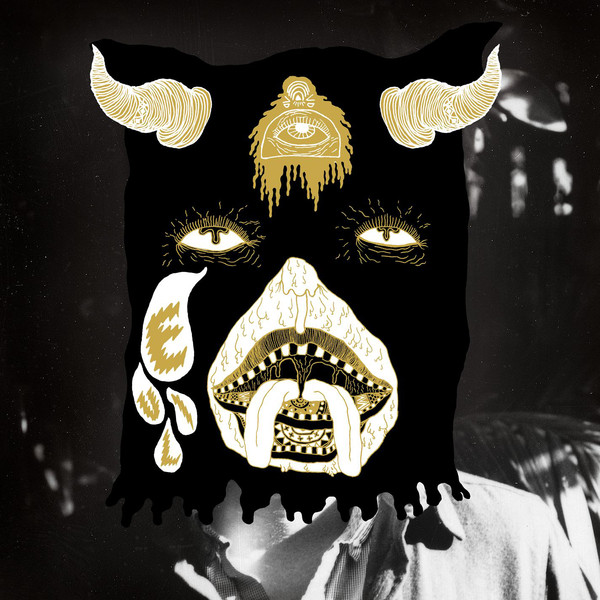
Portugal. The Man: “Evil Friends”

Photo Credit: Under the Gun Review

Photo Credit: Under the Gun Review

Grade: B+

Key Tracks: “Modern Jesus,” “Holy Roller”

Portugal. The Man have somehow found their way to prevalence in the indie world. They’re not the most interesting band, but they are constantly on tour and they try (and usually succeed) to record an album every year. Their consistency might be what has helped to make them a name over the past few years. Whatever it may be, they picked the right time to make a record like “Evil Friends.” Famous producer Danger Mouse was brought in to diversify the band’s sound, and although his mark might be left a little too hard, the band was left with their best album yet.

Portugal. The Man have always been an enjoyable band, but it took many albums for them to start to hit outside their comfort zone. True, their comfort zone has switched from garage rock to more of a sweeter, indie-pop sound. The transition has been slow, though, and this album expands their sound while maintaining their musical innocence. Every track is a fun and bouncy dose of indie-pop, all radio-ready but different from the previous song. Danger Mouse helped the band expand their sound to every limitation of alt-pop, with the best possible results.

Interestingly, the lyrics consistently haunt at things deeper. They don’t always get there, but with song titles like “Creep in a T-Shirt,” “Evil Friends,” and “Modern Jesus,” some darker themes are clearly being presented. Religion and nasty break-ups are emotionally worked through, sometimes cleanly, sometimes not. The lyrics do not necessarily fit the music, but the quality of the package as a whole makes it possible to overlook this. Overall, it is not the most unforgettable album, or the most original. If some great indie-pop from a respected band is what you’re looking for, though, “Evil Friends” is the right direction to turn in.

If you like this, try: “Dear Miss Lonelyhearts” by Cold War Kids, 2013.

-By Andrew McNally

Camera Obscura – “Desire Lines”

Photo credit: Spin Magazine

Photo credit: Spin Magazine

Grade: C

Key Tracks: “I Missed Your Party,” “Troublemaker”

Indie-folk bands like Camera Obscura are generally not known for being adventurous and playing around with genres and ideas. Any fan or casual listener of the genre pretty much knows what he or she is getting into when a new album by a band like Camera Obscura comes out. But “Desire Lines,” the band’s fifth album and first in four years, is seriously lacking something. The album is almost minimalistic, relying on only key instruments in a majority of the songs. It adds a certain consistency to the record, that helps it to flow without any rough transitions between ideas. It also, however, starts to feel like one long, run-on song that was not very interesting to start with.

The album, as a whole, feels like an unfinished idea. Indeed, the final track, “Desire Lines,” ends like a normal song. On both listens I found myself checking to see if my Internet had crashed, not realizing I had hit the album’s end. Lyrically, there is little original going on. Some of the more stand out tracks, like “I Missed Your Party” and “William’s Heart” have boring and uninspired lyrics. They are presented, too, by pretty and rhythmic vocals, but singer Tracyanne Campbell does not sound like she believes in her own lyrics.

Musically, the album is largely devoid of any detail. Every song is dominated by conventional rock instruments. Most of the songs seem to take the same relative tempo, with only “Cri Du Coeur”‘s wickedly-slow (and ultimately exceedingly dull) tempo providing a switch. “I Missed Your Party” has a nice addition of horns, which does bring a listener back in towards the album’s close.

“Desire Lines” is a moderately enjoyable listen, to someone who likes indie-folk acts like Rilo Kiley. Once it ends, though, it is immediately forgettable. It is innocent and fun pop, but never tries to be remarkable or original. “Desire Lines” is a low point for the usually great Camera Obscura.

-By Andrew McNally