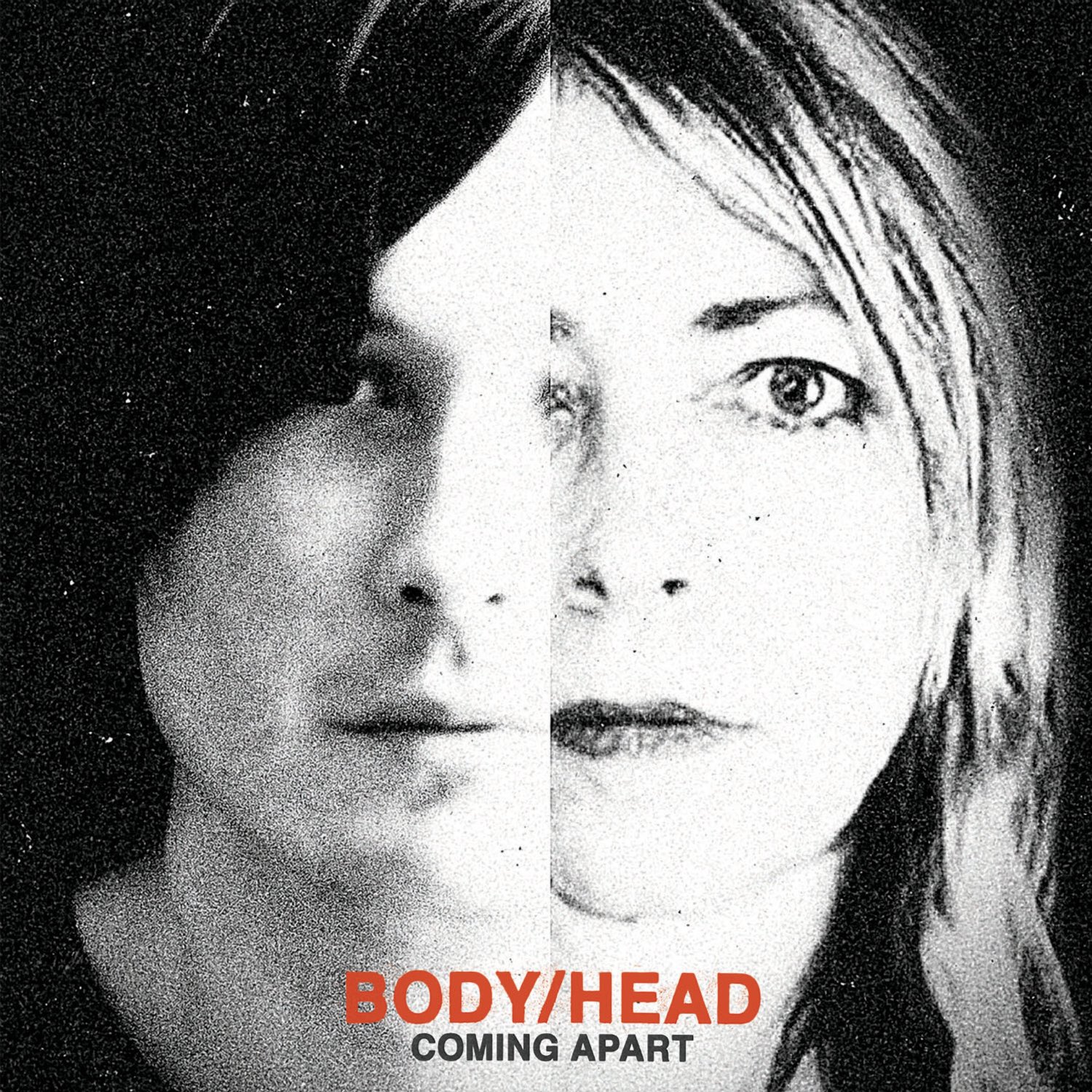
Body/Head – “Coming Apart”

Grade: A

Key Tracks: “Last Mistress,” “Black”

Sonic Youth fans like myself were heartbroken by their relatively unexpected 2011 break-up. But most fans expected to see the members in other projects soon enough. And two years later, we’ve already got three projects. Lee Ranaldo released his first proper solo album in 2012, an inconsistent but largely great album. Thurston Moore’s new, energetic band Chelsea Light Moving released their debut earlier this year (and it stands as one of my favorite albums of the year), and now Kim Gordon’s new duo have released their debut LP. Sonic Youth fans may have expected Gordon’s new project to be the most experimental and ambitious of all the immediate post-Youth groups, and it certainly is. Body/Head, also featuring Bill Nace, is a minimalistic guitar duo, playing long, crunchy drones, with occasional lumbering lyrics from Gordon. To put it simply, Body/Head sounds a little like some of Sonic Youth’s earliest records, slowed down a lot.

“Coming Apart” is a double album, coming in at roughly 68 minutes (but with only 10 songs). There is no way to tell when the album one switches to album two, but the album does have a building experimentation. That is, it tends to get more experimental as it goes along. “Abstract” starts the album off with a vocal-heavy song, and “Last Mistress” serves as one of the most droning tracks on the album. But it only gets more minimalistic as it goes on. Songs often lack beats, sometimes lack rhythms, and have long instrumental sections. And the last two songs, “Black” and “Frontal,” combine for a total of 30 minutes. “Black” is a dissonant, building odyssey with violent lyrics that channel Patti Smith’s “Land” portion of her album “Horses.” Gordon’s voice largely stays monotone throughout the album, and it is the most effective on “Black,” a song that’s too menacing to ignore.

The album is punishingly minimalistic, one that starts off making boldly ambitious claims and slowly grows even more so, until the listener is suddenly engulfed in a seventeen minute finale. It certainly won’t appeal to everyone, but those interested probably already know what they’re going into, with Kim Gordon involved. The duo works with both song structures and the total absence of them, drawing out notes as Gordon draws out words. Minimalism can often feel pointless, but “Coming Apart” never does. “Coming Apart” has poetry, it has meaning, and it has subtexts. It’s dark and heavy, but there’s beauty amidst the mess.

If you like this, try: “Drifters / Love is the Devil” by Dirty Beaches. It’s a little less noisy and has wider influences, but it’s another double album that only gets more experimental as it goes on.

-By Andrew McNally

Drumgasm – “Drumgasm”

(Photo Credit: exclaim.ca)

Grade: A-

There’s very little to say about this album, other than your ears are about to get audited. “Drumgasm” is the debut album from the instrumental percussion supergroup consisting of Janet Weiss (formerly from Sleater-Kinney, now drummer for Wild Flag), Matt Cameron (of Pearl Jam and Soundgarden) and Zach Hill (of Hella, Marnie Stern and, importantly, Death Grips). All three drummers are known for a brash, edgier, sound – Hill especially – so there was already going to be an intense factor to this album. What makes it all the more intense and ear-busting, though, is it’s total improvisation. The three drummers are heard at the beginning of the album chatting, trying to figure out a plan before they decide to just start playing and see what happens. Their voices aren’t heard again until after they finish, as they congratulate each other.

The album consists of just two tracks, both called “Drumgasm.” Both songs hover almost exactly around twenty minutes, and focus more on skill and intensity, rarely finding a groove or constant beat. There are extended moments where one drummer is featured more prominently than the other two, and although it’s impossible to determine who it is, it’s not unwise to assume it’s Hill, based purely on speed and intensity.

This album excels best as a concept – a truly improvised duo of brash drum pieces without names. If percussion interests you at all (as it does to me), then this album is like a undeserved present. There are call-and-response moments, there are moments where the three work together to berate the volume of your speakers, and there are moments where they fall out of line with each other and it sounds messy. It’s got mistakes and miscues. Of course it does, it’s improvised, and although those missteps aren’t appealing, they further build the concept. The album’s only real fault, a “fault” that shouldn’t be blamed on the musicians, and the same one that could be attributed to most jazz, is that listening is a commitment. There are no breaks, and although the listener gets sucked in, it is immediately lost when either track is paused (I streamed the album via Pitchfork Advance, and my internet connection was lost 15 minutes into the first track). This is a really original album, and it’s execution is nearly perfect. It is loud and abrasive, musically interesting, yet it is ultimately three people having fun and messing around in the studio, and I recommend it as both a fun, and a sonically complex and challenging listen. Somehow.

-By Andrew McNally

Poor Lily – “Vuxola”

(Photo Credit: Poor Lily)

Grade: A-

Key tracks: “Birdbomb,” “Railroad Spike”

Charging in at 19 tracks and 30 minutes, Bronx based punk trio Poor Lily’s sophomore release blends 80’s political hardcore punk with 90’s street punk, taking the best of both genres. Opener “Birdbomb” starts immediately with Max Capshaw’s charging guitars and Dom Baiocco’s drums that set the album’s tone of never-ending urgency. The song’s lyrics reference Slaughterhouse Five, a nice touch for the educated listeners. From there, the lyrics often switch from bleakly metaphorical to bluntly political. Tracks like “Crank Radio” and “Microwave” tell stories through their lyrics, while songs like “Send in the Drones” and “Justice Kennedy Has a Cold” tackle politics head-on. In this sense, the album resembles the Dead Kennedys, who handily switched from funny to topical to disturbing on a moment’s notice. Singer Adam Wisnieski’s voice even heavily resembles Jello Biafra’s, a natural resemblance, not faked. His voice is uneven at times, but given the album’s frantic nature, it’s easy to assimilate.

Where the band resembles the Dead Kennedys vocally and lyrically, they’re more musically aligned with street punk bands. The occasional bass breakdown (also provided by Wisnieski) would not sound out of place on a Ducky Boys or an early Dropkick Murphys record. There are hints of hardcore and post-rock included, though, so the album isn’t as formulaic as most street punk bands. Varying song lengths and lyrical switches keep the album interesting. No song sticks around too long, and no idea is too drawn-out. All in all, it is an inventive punk record that does not sacrifice any intensity for ambition.

“Vuxola” is streaming on Soundcloud for free, and drop by their website for more information and shows.

If you like this, try: There’s so many directions to go here. Future of the Left’s “the plot against common sense” (2012) is a much more metrical blending of politics and metaphors (and one of my favorite albums). The Dead Kennedys’ “Fresh Fruit For Rotting Vegetables” (1980) is a classic. Also, a forgotten band from the mid-00’s called Cheap Sex put some decent records that resemble what Poor Lily is doing.

-By Andrew McNally

The Civil Wars – “The Civil Wars”

(Photo Credit: Rolling Stone)

Grade: B+/A-

Key Tracks: “The One That Got Away,” “Devil’s Backbone”

A band name and bleak album cover have never sounded so apropos, as the Civil Wars release their second album amid public fighting. The folksy duo of Joy Williams and John Paul White have been having trouble making their partnership work lately, something that has not been kept secret from the media’s eye. While it is awful to have a group – especially a duo – struggling to make their magic work, the resulting product is a beautifully tormented album of folksy sadness and acoustic ballads. Whatever is happening over at the Civil Wars home base, they have pushed through to release music as planned, and although only some of the tension seeps through the album, we’re left with a whole album of strung together painful memories and broken hearts, always sounding beautiful and never too mellow or self-indulgent.

Save two covers – Etta James’ “Tell Mama” and a surprising, lyric-only cover of the Smashing Pumpkins’ “Disarm” – Williams and White share writing duties on every song (alongside a few other names). Williams seems to get a majority of the vocal duties, however, getting many moments to shine her powerful and remorseful voice. Parts of “Tell Mama” have the instruments cut out almost entirely behind Williams’ singing. White still gets his moments. Closer “D’Arline” sees him expanding his vocal wings too. Some tracks, like single “From This Valley,” feature some beautiful harmonies ripped right out of a CSNY song. Both singers have strong voices, ones that can intensify the sadness and the internal tension.

“The Civil Wars” is very light on music. Few songs feature more than an acoustic guitar and violin, if even the latter. This album is low-key folk to the max (or better yet, the min), focusing on the strength of the vocals and lyrics. Luckily, the tempos are constantly switched out. The album is never too slow, bolstered by a pleasant number of faster tracks. People that are not too into the light nature of the album might find it tedious by the end, but it stands as a beautiful piece of folk art that maintains a message without overstaying it’s welcome. “The Civil Wars” might be the most accurate album title of the year. Let’s hope they can work through everything and keep going.

If you like this, try: I don’t need to plug this band, but Fleet Foxes. Both albums of theirs are more harmonized, folksy sadness, albeit with a little more instrumentation.

-By Andrew McNally

Fuck Buttons – “Slow Focus”

(Photo Credit: Electric Banana)

Grade: A-

Key Tracks: “Prince’s Prize,” “Stalker”

The shortest track on this album, the 4:22 of “Prince’s Prize,” is longer than the longest song on the new Hunx & His Punx album, sitting right below this one. This has always been the approach to music for the Buttons. Their songs are long, leaving a lot to dig through. Fuck Buttons, much like their name itself, challenge popularity to accept them. The band is an instrumental, electronic duo that creates long, dense works that are never easy and conventional yet never mean on the ears. There is a secret formula to their music, and it continues on their third album.

With all of the EDM and electronica albums coming out this year already – Daft Punk, Disclosure, James Blake and Zomby have already released great albums – it’s surprising that there is room for the Buttons to fit in. But there is, because they don’t attempt to make music people can dance to. Their music is more complex and tougher to crack. Daft Punk’s “Get Lucky” is one of the best songs of the year, but any ten seconds of this album has more complexity and depth than the entirety of Daft Punk’s hit. These songs are mesmerizing, switching to and from rough and pretty, and often mixing the two. “Stalker” is the best example of this, a ten minute dissection of a pretty but monotonous rhythm, played over some decidedly noisy bits. The Buttons give a lot to dissect, but don’t give many clues. They do it in a way that makes for a puzzling listen, not a frustrating one. “Slow Focus” plays out like a mystery that doesn’t get answered, with an ending that is totally acceptable anyways.

Through all three albums, Fuck Buttons have been tough to nail down, with their intentionally complicated sound always being on the verge of remix-worthy without ever going there. “Slow Focus” is loud and empty, seemingly devoid of human emotions, through its grandiose and expansive ideas. It always seems like it is about to crack into club music, but will never go there, because the band places value on the depth of it’s music. “Slow Focus” is long and fantastic. Seven tracks and fifty-two minutes of brilliance. It is too tough to crack on one listen, and will confuse most listeners. Hopefully, enough people will give it a few listens without shrugging it off and moving on to dance music. Although with the attitude of this music, the band might just not care if they do.

-By Andrew McNally

Gogol Bordello – “Pura Vida Conspiracy”

(Photo Credit: Rolling Stone)

Grade: A-

Key Tracks: “Dig Deep Enough,” “Malandrino”

Let me start by admitting something: Gogol Bordello has been one of my favorite bands since “Super Taranta!” came out in 2007. Eugene Hutz and his gang could release an album of nails on a chalkboard and I’d find something great to say about it. Okay. That’s out. Let’s start –

Do gypsies ever slow down? Do they settle, even for a period of time that’s barely remarkable? This is the main existential crisis at the heart of “Pura Vida Conspiracy,” the sixth album from the world’s only famous gypsy-punk band. They have been on tour since they formed in the late ’90’s, recording and performing all around the world, and taking their inspirations from as many places. Singer/guitarist Eugene Hutz is Ukrainian, and the rest of the band hails from all over Europe, bringing folk, flamenco and salsa into standard punk music. Where did they form? Manhattan. 2010’s “Trans-Continental Hustle” was recorded after Hutz lived in Brazil. “Pura Vida Conspiracy” was recorded in El Paso, Texas. Hutz sings about people in all cultures and in all walks of life, always convincing the listener he has experienced each one firsthand.

But this is the band’s first introspective record. Think back to previous albums. 2005’s “Immigrant Punk” dealt with world travelers. 2007’s “American Wedding” was an open letter on how boring American cultures can be compared to European ones. 2010’s whole album “Trans-Continental Hustle” tackled the inherent contradictions in the idea of immigration. But here, Hutz sings about himself. On a track called “The Other Side of the Rainbow,” he proclaims that the other side of a rainbow is black and white. Gogol Bordello are world travelers and surprisingly famous, given their totally radio unfriendly acoustic-electric-flamenco-salsa-dance-political-hyperspeed-punk. What Hutz has found, however, is an unexpected hollowness in being well-known. Maybe it is because his previous political motives haven’t made waves, or maybe it’s because Hutz is disgusted by fame. But this album features more slower tracks than previous efforts. Slow Gogol Bordello sounds bad on paper, but the collective can still pull it off.

There is still ferocious drumming and acoustic guitar. Hutz’s voice is still ridiculously Eastern European. The album blasts out of the gate with three speedy and diversely inspired songs. Track two, “Dig Deep Enough,” is my personal favorite, and features a reliance on flamenco inspiration, pretty new to the band. The introspection starts soon after, leading to the first Gogol Bordello album that actually makes the listener think instead of blinding agreeing with political ambitions. Lyrically, it might just be the strongest album yet. Musically, it isn’t. Something about their formula of ten stringed instruments playing over brutal drums never gets old, and the album could use a little more oomph. It doesn’t fit with the lyrics, yes, but the album does get just a little too down at points. Still, Hutz’s existential lyrics are frighteningly easily to relate to, and poetic, and carry any bogged down moments. “Pura Vida Conspiracy” isn’t so much disappointing as it is different. We probably should’ve seen this album coming, we all knew Hutz wouldn’t be comfortable with fame. Politics were swapped out for personal. It’s new, even for them, but as long as Hutz and his (currently) seven-piece backing band can keep delivering a whole beautiful mess of ideas, we should be on board.

If you like this, try: Okay I thought about this for a while and there aren’t any bands I can think of that sound remotely like Gogol Bordello, so how about Dropkick Murphys’ “The Meanest of Times” (2007). A punk band that began to get introspective, and there’s accordion. As close a connection as I can make.

-By Andrew McNally

Tig Notaro – “LIVE” + Maria Bamford- “Ask Me About My New God!”

Grade: A/A

Let me preface this review by saying that I am not lumping these two comediennes together for any reason other than their total opposites. Tig Notaro’s album “LIVE” is the rawest, most unprepared and emotionally heart-wrenching comedy album ever. Maria Bamford’s “Ask Me About My New God!” is a wholly prepared journey through characters and comically dramatic situations that many of us have been through. My purpose for combining the two in a review is simply to highlight the versatility two combined comediennes can have. Stand-up comedy is still dominated by men, despite there being many outstandingly funny women out there, and I want to highlight two in the most opposite way possible.

So let’s start with Notaro. Notaro was a relative unknown before her 2012 sophomore album “LIVE” (which is pronounced “to live” and not “to see someone live”) as Louis C.K. plugged the album to everyone in his e-mail outbox. A simple $5 donation was needed to download an album that was “revolutionary.” Her biggest acting credit was one episode of the Office and she only had one album to date, but the word of Louis was enough to push “LIVE” to the forefront. Notaro’s comedy is dark, and usually more easy to relate to than on this album. But 2012 was a bad year for Notaro. She suffered a bacterial intestinal disease, and her mother died tragically shortly after she got out of the hospital. Her girlfriend left her soon after, unable to deal with the stress. Only a few months later, she was diagnosed with breast cancer. The album was recorded only a couple days after this. “LIVE” is a short set, one that is definitely improvised in parts. Notaro says that she cannot competently tell the jokes she has written and talks mainly about all of the problems in her life. Thankfully, the audience plays into her troubles and is sympathetic. Towards the end of her set, she says that she should probably tell some actual scripted jokes, to which some audience members yell “No!” and “This is awesome!” because no such display of brutal and personal honesty has ever graced a comedy album, and maybe no recording ever. Notaro’s jokes on the album grace along her cancer, and the death of her mother, and it is painfully aware to the listener that Notaro is doing comedy because she has nothing else left to lose. The album came out last year but just got a physical release this week. Pay for it, if you can, because she is one comedienne that deserves it. I am not reviewing it for the grade; I am reviewing it for the publicity of her name coming up. “LIVE” is the most brutal record you’ll ever hear.

Maria Bamford, meanwhile, released her fourth album “Ask Me About My New God!” to the typical audience. Bamford is now most well-known for her turn as DeBrie in season four of Arrested Development, and I’ll admit that I was not familiar with her comedy beforehand. But Bamford shares some personal problems throughout her comedy. While Notaro deals with physical illnesses, Bamford deals with depression and her family’s misunderstandings of it in a long burst of practiced characters and dark honesty. Ironically, the thing that the two comediennes share in common is an age – 42 (Notaro is roughly four and a half months older than Bamford) – and both use it as a gauge of immaturity and not growing up among traditional standards. Bamford cites people saying that she should be married by now as one of the main inspirations for the album. She jumps between voices and characters – her specialty – to emphasize the heaviness of mental illnesses and the families that don’t understand them. Her humor is dark throughout, in a more realistic way than Notaro’s. Think of the cynicism of Seinfeld updated for the Internet age and done solely by Elaine.

“LIVE” and “Ask Me About My New God!” couldn’t be more different. “LIVE” is only thirty-something minutes long, and is like no comedy you’ve ever heard. Seriously, it is revolutionary. Notaro plays into her audience’s reactions to all of the bad news and gives a superior set of raw, emotional comedy that both assures the listener that someone always has it worse and prompting the listener to want to reach through their listening device and give Notaro a hug, because no one has ever sounded more in need of one. Bamford’s album trusts audience participation, meanwhile, through many practiced acts and bits that lead into humor almost as dark as Notaro’s. Bamford’s album is also very long, compared to Notaro’s. Yet both are hysterical, and emotionally draining, and both defy the long-standing sexist myth that male comedians are funnier than female ones. These are honestly two of the funniest comedy albums I have ever listened to. Notaro’s album is painful and honest, a look into maybe the worst year any human has ever undergone. Bamford’s album is satirically dark with many personas and voices in a predetermined setlist. They are both hysterical, and both Notaro and Bamford should be forces to watch out for in the near future.

I don’t have an “If you like this” because of how much I stress listening to these two albums.

-By Andrew McNally

Roomrunner – “Ideal Cities”

(Photo Credit: Stereogum)

Grade: A-

Key Tracks: “Bait Car,” “Wojtek”

The dream of the 90’s is alive in Baltimore. Roomrunner gleefully throw ode to some of the early 90’s grunge and noise rock bands. Nirvana is idolized through fast rhythms that let a punk influence bleed heavily through. Pavement is redrawn through heavy distortion that adds to the melodies and through the rough transitions between songs. Roomrunner never tries to be conventional. The opening track, “Bait Car” is an assault on time signatures that are sometimes impossible to decipher. “Wotjek” sounds like more of a poppy side to the band, until the chorus, featuring rhythms of pure feedback that are different on each passby. The finale, “Snac Error,” ends with a waving drone of guitar that takes up a good chunk of the track.

“Ideal Cities” is over in about a half hour, and it is one of the rare times where the short length of a punk album does not feel entirely fulfilling. The album wasn’t one idea stretched into a certain number of tracks, but a bunch of little experimentations that left me wanting more. This is hardly a criticism, as the band made an interesting record that sounds fresh but resembles the pre-grunge bands of yesteryear. It is melodic and noisy, all while maintaining a sense of fun. Pavement and the Pixies would be proud.

If you like this, try: “Living Dummy” by Pangea (2o12). More of a conventional (surf-)punk record, but there is a similarity between bands, I cannot emphasize enough my love for “Living Dummy”

-By Andrew McNally

Myq Kaplan – “Meat Robot”

Photo Credit: Vegetarian Star

Photo Credit: Vegetarian Star

Grade: A

Key Bits: N/A, because they’re all equally great.

“You seem like a good crowd, like my demographic, which is people that know the word demographic” quips Kaplan on the opening bit of his album, “Meat Robot.” The comedian, still on the rise, is known for rapid-fire jokes that often involve clever wordplay and math. Kaplan is a vegan, and has used that as the basis on many bits from his two albums, this and his equally excellent debut, “Vegan Mind Meld.” The third track on “Meat Robot” sees him coming up with names of fake meats that have yet to be invented, including fake chicken called “Fiction,” “Chicken Pretenders,” “Baby Back Fibs” and “Ven-Isn’t.” This is just a taste (pun somewhat intended) of the wordplay Kaplan delves into.

Kaplan comes off as being as nerdy as he looks, and he has always used this as an advantage in his comedy. “Apollo is Apollo in Greek, in Roman, in French, in everything except Spanish, where he is a chicken.” Yet he still makes bathroom humor and race jokes, in totally inverted and original ways that appeal to broad audiences.

The only fault in “Vegan Mind Meld” is that Kaplan’s rapid-fire delivery went too fast at points, and although it makes it funnier, it requires a few listens to pick up every joke. He is still very speedy on this album, but he slows down a bit. At points, he audibly stops himself to slow down. Every bit on this album sticks. Some require a little work and patience, others are instant one-liners. But Kaplan’s grasp at smart and original stand-up is wholly original. The only fault on this album is not one of Kaplan’s, but the constant shrill of one audience member who almost ruins jokes. “Meat Robot” is a work of comic brilliance, one that tests the audience, but pays off on every single joke.

If you like this, try: “I Have a Pony” by Steven Wright. A classic comedy album from an even more deranged mind.

-By Andrew McNally

Deafheaven – “Sunbather”

www.neogaf.com

Photo credit: http://www.neogaf.com

Grade: A-

Key Tracks: “Vertigo,” “Dream House”

“Sunbather,” a seven track, full-length record, is largely unclassifiable. Deafheaven have been both widely acclaimed in the critic world, and occasionally scorned in the metal world for their blending of genres. The band is currently being labeled as “black metal,” but there is a distinct shoegaze element to their music as well. To put it simply, Deafheaven sounds like a couple guys who wanted to start a metal band but listened almost exclusively to My Bloody Valentine. And there is nothing wrong with that.

This is a brutally heavy record. A majority of the tracks stretch close to or well over ten minutes, allowing the band ample time to stretch their wings and experiment. The songs build up upon themselves, twisting and growing, not unlike God Speed! You Black Emperor. In fact, if it wasn’t for the traditionally growly black metal vocals, Deafheaven would probably be pegged as a very heavy alternative/shoegaze band. But the vocals, as often inaudible as they are, add to the intensity, leaving Deafheaven declaring themselves as a metal band.

“Sunbather” is truly one of the most original and interesting albums I have heard in a long time. I do not have much of an affinity for most subgenres of metal, yet I could do nothing but gasp and let myself be wholly entranced by the band’s originality. Bands are finding it tougher and tougher to make volume equate intensity, but Deafheaven does it ceaselessly. Fans of heavier alternative bands might be able to transition over genres and appreciate what this band is doing. Nearly every track on this album, from the lengthy, abrasively loud songs, to the shorter and quieter interlude pieces, borders on perfection. Only the album’s closer, “The Pecan Tree,” is disappointing, solely because it ends anti-climatically, and this album needs a more proper climax. Give this album a few listens; it might just be one of the most original of the year.

If you like this, try: “Allejuah! Don’t Bend! Ascend!” – Godspeed You! Black Emperor.

-By Andrew McNally