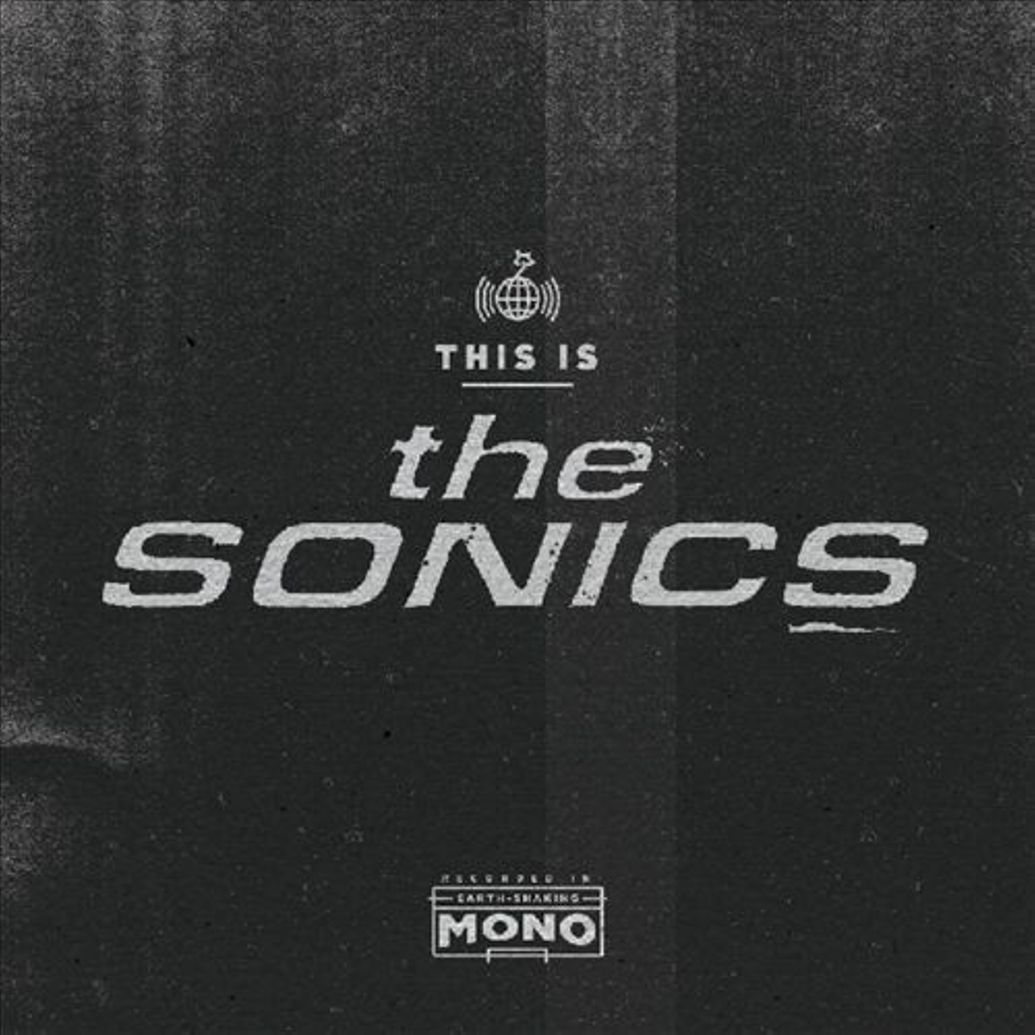
The Sonics – “This is the Sonics”

Grade: A-

Key Tracks: “I Don’t Need No Doctor” “Save the Planet”

Does history repeat itself, or do things never change?

Fans of My Bloody Valentine, Guns N’ Roses and the Stooges are breathing a sigh of relief. “At least I’m not a Sonics fan.” “This is the Sonics” now takes the cake as the longest time in between albums. It’s the first album from the band’s original line-up in 49 years, and they play like nothing’s changed. Although the members are now in their 70’s, they’re still playing incendiary pre-punk garage rock.

This album plays like a movie in a series that ignores the films that came before it. The Fast and Furious series ignores Toyko Drift, like the film never happened. Except that in the world of the Sonics, what hasn’t happened is punk, disco, new wave, hip-hop, metal, boy bands, and everything else since “Sgt. Pepper”. The Sonics play like they’re still the forefront of music, something that would be vain if it mattered. In reality, it’s an incredibly refreshing listen. The band blow through 12 garage instant-classics in 32 minutes, each as good as the last.

All of the instruments work off each other on the album – there’s no competition for value. This is partly garage-rock mentality, and partially due to the record being recorded in mono. The producer, the legendary Jim Diamond, does little more than hit the start and stop buttons, just recording the band live. To add any flourishes, or to clean the sound up, would do the band injustice. Instead, the band is recorded as they should be – geared up, roaring with a possibly vampiric energy that some bands can’t match when they’re young.

There’s only really two nods to the fact that the Sonics aren’t still in 1966. The first is the inclusion of horns, something that wasn’t in the band until entirely different iterations of the Sonics played into the 70’s. The other is the late-album “Save the Planet,” which addresses global warming in the most Sonics way possible, by letting us know Earth is the only planet with booze. “Reality’s for people who don’t know how to drink,” Jerry Roslie sings, daring us to ignore his age.

The Sonics still have a cynical edge to their lyrics, a cynicism that separated them from the more party-hardy garage acts of the 60’s. There’s a relatively harmless causal sexism to the lyrics, much like the 60’s, as well as songs like “I Got Your Number,” with “I’ve Got Your Number, and it’s 666” sung in an offhand way. By convincing themselves that 60’s garage rock still wants to be heard, they’ve convinced us that lyrics like this are still surprising. “This is the Sonics” boasts a very 60’s throwaway album title (like “The Who Sings My Generation”), but it’s also very literal – this is them, all these years later. And to anyone that wasn’t around then, this is what they were. And it’s what they still are. 2015 hasn’t stopped throwing surprises at us, and a wholly rocking new Sonics album is something none of us expected.

If you like this, try: early garage rock like this has a big influence on the Burger Records type surf-punk bands, try Japanther at their more direct (“Surfin’ Coffin”).

-By Andrew McNally

Alabama Shakes – “Sound and Color”

Grade: A-

Key Tracks: “Don’t Wanna Fight” “Gimme All Your Love” “The Greatest”

Alabama Shakes’ “Sound and Color” is their sophomore album, but you wouldn’t know it. They sound like veterans, who have earned the right to indulge themselves in whatever they want. They spend most of the album resembling bands that have come before them – anywhere from TV on the Radio, to Citizen Cope, to the MC5. But all the while, aside from a few digressions, they’re a Southern blues-rock band, in total control of their sound. If they want to have fun, they’re damn well going to have some.

The opening song is the title track, a minimalist song based around layered vocals and beats. Intentional or not, it harkens strongly back to TV on the Radio’s opener “I Was a Lover” (from “Return to Cookie Mountain”), as a hushed song that gives the impression that the band could, but isn’t necessarily going to, erupt. The album follows exactly as it’s presented – usually calm and ethereal, but with occasional, noisy flourishes. The second track, “Don’t Wanna Fight,” establishes a smooth guitar line that’s instantly more melodic than the whole previous song. Brittany Howard’s vocals come in as a prolonged squeak, because, why not? Smooth blues vocals are expected to complement the music, and she gets to that point. But fighting the grain is the album’s mission statement.

“Sound and Color” is an album that sounds like it was designed around individual songs, not around an album format. What I mean – take a classic like “Dark Side of the Moon” or “Abbey Road.” Excellent albums, but not every song sounds great when it comes up on shuffle. They’re centered around an album format. Blues (and blues rock) is usually centered around songs, and nearly every track sounds like the band worked out the components that would make it unique. “Dunes” has a quick section where the band gives way to a dissonant pair of acoustic guitars. “Future People” has a synth-y drone in the background that would’ve sent John Lee Hooker to the hospital. Best track “Gimme All Your Love” sounds like an improved version of any song by any boring alt-jam band, occasionally bordering on near-silence. And then it picks up, suddenly, and unexpectedly. And “The Greatest” is a straight, worn punk track, one that sounds like it’s going to have a deceiving, disappointing red herring intro but doesn’t, keeping the energy up for nearly four minutes.

Every member of Alabama Shakes is clearly exceptional. Howard’s voice goes from low and subdued to high and shrieking at any turn. Zac Cockrell’s bass bumps the band through the whole album, more audible than on most rock releases. Heath Fogg’s and Howard’s guitars drive funky, usually melodic but occasionally dissonant rhythms. And Steve Johnson’s drums keep the rhythms afloat, expanding the band’s whole sound. The band occasionally works in group vocals, and sometimes not. Sometimes, they sound like a collective, sometimes they’re supporting one member. But always, they’re laid back and just enjoying what they’re doing. Without the band’s pure enjoyment of the music they’re making, half of the songs on “Sound and Color” would sound unoriginal, played out. But the band seems to understand that they’re playing some pretty hybrid genres, and they roll with it. “Sound and Color” probably isn’t going to be an album we’re looking back on in twenty years, but for an immediate time, it’s a hell of a ride.

If you like this, try: TV on the Radio, but as great as “Cookie Mountain” is, their follow-up “Dear Science” was even better.

-By Andrew McNally

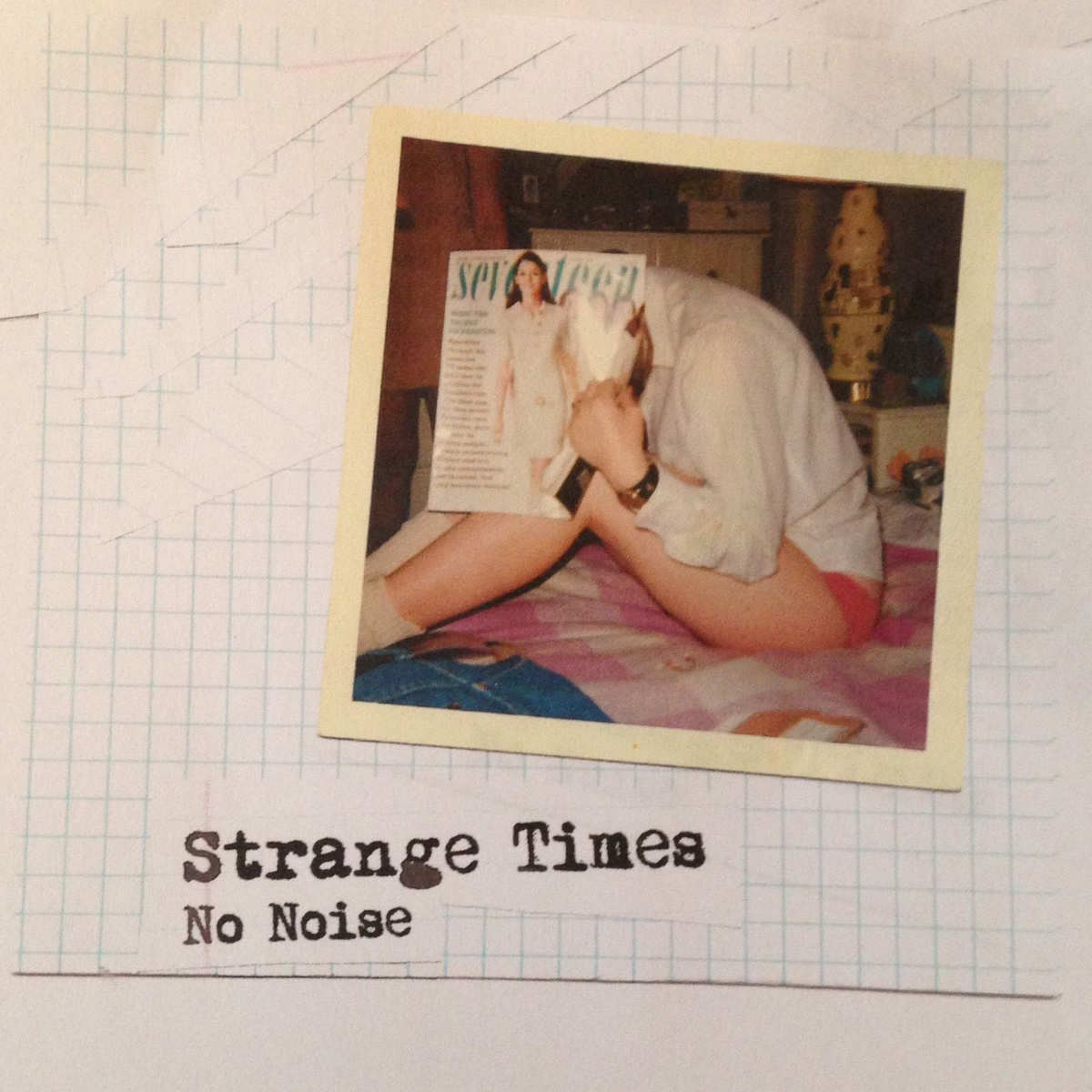
No Noise – “Strange Times”

Grade: A-

Key Track: “People Downstairs”

The best attribute of young rock bands is usually their youthful energy; No Noise is no different. Coming from (possibly a garage in) Montclair, New Jersey, the five-piece alt-rock band is marked by their 90’s influenced, energetic alt-fuzz.

“Strange Times” is led through battle by singer Mika, whose vocals dominate the EP. She rarely flourishes, instead letting her strong vocals fit within the music. She owns tracks like “Blisters” and “People Downstairs.” She complements the band behind her, with an energy that lifts them past similar, settled bands.

The five-piece, which also consists of Sam and Alec on guitar, Max on bass and Joe on drums, are younger than this reviewer – significantly younger. This bleeds through onto “Strange Times,” which benefits from a general aversion to metrics and structure. The band does conform to relatively standard rock structures, but they have a loose, almost practiced-sloppiness to them. Intentional or not, they’re reminiscent of early ’90’s acts like Built to Spill or ‘Blue Album’ Weezer in their rehearsed garage feel. Equal parts grunge and surfer, No Noise are able to tone it down, like on the bluesier “Play Dumb,” and are more than capable of kicking it back up, like on “People Downstairs.”

Lyrically, No Noise seem to be pretty straightforward, sticking more to a rock structure than the music might. And that’s alright, because they fit within the context of the songs, and the focus is stronger on the music and vocals anyways. And when it all comes together, it’s largely successful. “Strange Times” is an EP that demands replays, and it gets better with each spin. Their influences may lie in the greats, and they’re picking and mixing the best parts of each. No Noise have an open road ahead of them, and “Strange Times” is just a revving of the engines.

Stream the album on Spotify or on their Bandcamp page.

If you like this, try: Pavement, at their more guitar-heavy times.

-By Andrew McNally

Kendrick Lamar – “To Pimp a Butterfly”

Grade: A

Best Tracks: the whole damned thing

He is a winner, and he’s probably gonna win again.

Oh, Jesus. One of 2015’s most hotly anticipated albums didn’t even have a confirmed release date, title, or tracklist a month ago. And now, it’s out a week early. It’s not known if Lamar dropping it early was to avoid a leak, or to pull a Bey, or just sheer confidence. But whatever way you look at it, “To Pimp a Butterfly” is not only one of the best rap albums of the year, it’s one of the best of the decade.

Lamar nails down a wide range of emotions and influences on “TPAB.” While rappers often try to make diverse albums, not all of them can pull it off. But Lamar shows all sides of himself simultaneously, not individually. “To Pimp a Butterfly” is as self-referential as an episode of Arrested Development. It is the work of a man who is confident to an arrogant point, but still deeply, deeply pained. Throughout the album, there’s a repeated spoken word bit about depression leading to screaming in a hotel room. He’s vulnerable when he raps “loving you is painful” on “u.” Lamar’s ability to shift tone is natural, and he’s possibly the best at playing off his emotions with the sound of his voice alone.

But at the same time, he’s confident, almost to a fault. Loving an unknown subject might be tough, but loving himself isn’t, as proven on the leadoff single “i,” even though the album version of the song is radically different. More still, he’s said the album’s title is a play on “To Kill a Mockingbird,” in one way because seeing “Pimp” next to “Butterfly” is an alarming juxtaposition, but also because he believes the album is Harper Lee-level importance. That’s bold; hell, that’s stupid. But, he’s right. It’s that good. He even ends with a 12 minute track, “Mortal Man,” which starts as a song, then transitions into a poem, and ends with another poem. In between the two – a spliced up interview with 2Pac from 1993. Pac. In the hip-hop world, that’s the equivalent of putting the Frost/Nixon tapes in the middle of a campaign speech.

The music on the album is dense. It goes from abrasive – “The Blacker the Berry,” “King Kunta” – to chill – “Momma,” “How Much a Dollar Cost” – to surprisingly funky – “Wesley’s Theory,” “i.” He pulls them all off, and they all flow and bleed together, sometimes in the middle of a track. There’s repeated musical sections, repeated phrases, and self-references. There’s also well-picked guest inclusions. The production credits read like a novel, but the album itself has few guests. Pharrell, Rapsody and Snoop Dogg round out expected roles. George Clinton and Ron Isley are less expected. Least expected is a sample of a Sufjan Stevens song.

Lamar knows what he wants and what he likes. “TPAB” is significantly different, tonally, than the song that made him famous – Big Sean’s “Control.” In his guest verse, he calls out nearly every rapper imaginable, even the beatified Andre 3000. On this album, Lamar raps about racial politics, and calls for black rappers to come together, overcome differences and fight against racism (most notably on “Mortal Man”). He praises Snoop, and calls out critics on “Hood Politics”: “Critics say they miss when hip-hop was rapping / Motherfucker if you did then Killer Mike would be platinum.” “Hood Politics” might be the album’s most important track, ironic given that it’s one of the more forgettable ones, musically. The song establishes Lamar’s political beliefs more than any other track.

Over the past few years, hip-hop albums have had a tendency to get bloated. But at 78 minutes and 16 tracks, there isn’t a moment that doesn’t belong on “To Pimp a Butterfly.” It doesn’t even feel like 78 minutes, anyways. Lamar is celebratory, depressed, angry; he is human. And he’s a phenomenal rapper, writer, and performer. If everyone was shocked by Lamar getting the Grammy snub last year, then they shouldn’t be shocked at the next ceremony.

-By Andrew McNally

Heems – “Eat Pray Thug”

Grade: A-

Key Tracks: “Sometimes” “So NY”

Review also printed on Seroword.com

BRUH. Do you want to get shaken up? Wanna get rattled? Heems’ debut is the album to mess you up.

Queens rapper Heems finally has his debut album out, on his own Greedhead Records (search the name on my blog). He has described the album as “post-9/11 dystopian brown man rap.” Indeed, Himanshu Suri is a phenomenally unique force in hip-hop – a man living in New York who’s proud of his heritage, but also feels ostracized because of his race. And that politically charged motive is all over “Eat Pray Thug.” The songs excel on contradiction – New York is home; I’m driven from home.

The lead-off single, opening track and best song “Sometimes” establishes the discord perfectly, by setting Heems up as a rapper who isn’t taking on a persona. “Sometimes I’m pacifist / Sometimes it’s pass the fist / Sometimes I stay sober/ Sometimes it’s pass the fifth,” he raps about his human qualities. This disconnect is what demands the album work as a whole – on “So NY,” he raps about being so New York-based that, “I still don’t bump Tupac.” But, on most of the songs, especially closer “Patriot Act,” he’s more honest about the racism that he, his family, and others have been through as a Middle Eastern man living in New York City. On “Patriot Act,” he bemoans how life became difficult for many people he knew after 9/11, in a spoken word piece that references stop & frisks and donating to local politicians to stay safe. On “Flag Shopping,” he rhymes ‘flags’ with ‘rags,’ and later raps “They wanna Toby us / Like we Cunta Kinte.” Heems cuts deep with his personal experiences, accurate accusations and brutal truth.

But Heems doesn’t spend the whole album expanding on that. He tries pop songs and ballads, too. On “Pop Songs (Games),” he goes for a genuine, bona fide pop song and, while it’s results aren’t quite spectacular, he’s putting in the effort to diversify his music. And on “Home,” Heems and Dev Hynes (Blood Orange) expertly pull off a ballad (courtesy of the line “Be my remix to Ignition”). Heems hits all boundaries on a relatively short album, expanding a brief time to include everything he can.

“Former Das Racist frontman” “Das Racist head” “Creator of internet rap sensations Das Racist” Uuuuuuuuuugh. Still referring to Heems as being the frontman for Das Racist is like still referring to Conan as being a “Tonight Show” host. It happened, it was great and it was underappreciated, but it’s over. Das Racist hasn’t been a band for something like two and a half years, and it’s time to start recognizing Heems for what he is – an incredibly complex, diverse and talented rapper and entrepreneur. On “Eat Pray Thug,” Heems gives it his all, and nearly everything he throws at the wall sticks. “Eat Pray Thug” is an open, honest and powerful work, one that examines New York City as both a lifestyle and a germ pool. And it proves Heems to be the affronting rapper he’d set himself up to be; ready to grab the throne whenever it’s left unattended. There’s a lot going on, and Heems has a lot to say. We should all be listening.

If you like this, try: Any of the people Heems has signed to Greedhead; namely Le1f, or Lakutis.

MisterWives – “Our Own House”

Grade: A-

Key Tracks: “Reflections,” “Coffins,” “No Need For Dreaming”

Let’s get this out of the way: there’s nothing inherently special about MisterWives. They’re not one of the more unique indie bands you’re going to hear. But, it’s their sweetness and earnest desire to just make music and bank off each other that makes them great. They’ve only existed for a short while, but on their full-length debut, they sound like a full-fledged band that’s had years of practice. The band’s pretty, vocal-heavy folk-indie is strong at every point.

I was lucky enough to catch MisterWives live at what had to have been one of their earliest shows. They were opening for another great band called Pyyramids in Manhattan, and I remember seeing enough of them to think that they seemed like a down-to-Earth, groovy group that was playing what they wanted to. On “Our Own House,” they’ve expanded their sound, but they haven’t lost much of the fun qualities that they had in that tiny Manhattan bar.

Three of the first five songs on this album have horns. Openers “Our Own House” and “Not Your Way,” and fifth track “Best I Can Do.” It’s worth noting, because the band has an interesting strategy, where they come out with the bang of some extra musicians, before settling into who they are themselves. They bust out with a groove, with a funky grip that hooks you in for a few tracks before you things have calmed and you’re listening to just a few people.

The best tracks on the album are the ones where MisterWives work as a collective – some songs are too heavy on vocals, but some are collective efforts. Two of the album’s better songs, “No Need For Dreaming,” and “Imagination Infatuation,” are collaborative efforts. “Hurricane” is even more guitar-heavy. But even on the tracks on that aren’t as cohesive, Mandy Lee Duffy’s vocals are strong throughout. She’s the anchor of the band; she formed it, she leads it, and her sweet but booming voice propels the band forward. The band’s best song, “Reflections,” is centered almost entirely around her vocals.

“Reflections” is one of five songs on the album that already existed, on last year’s “Reflections” EP. But it’s okay, because they’re worked into the twining of the album organically. They’re just reprints of the older versions, but they fit fine within the album’s frame.

On first listen, MisterWives might seem like another folksy-indie throwaway band, but there’s a lot of substance to their music. It’s grasping, and catchy, and a ton of fun. There isn’t a dull moment on their debut. What MisterWives really is, is five talented musicians sitting in a studio, simply creating whatever they want. And as far as the (pseudo-)indie-folk genre goes, MisterWives are already one of the better bands in the game.

if you like this, try: Company of Thieves. Genevieve Schatz’s voice was sweet but dominant, like Duffy’s, and the band also had a collaborative indie sound. “Oscar Wilde” is one of my permanent favorite songs.

-Andrew McNally

Kyle Kinane – “”I Liked His Old Stuff Better””

Grade: A-

Key Bits: “This Track is Not Called 8 Ball” “This Track is Not Called Dopeman”

Comedy is tough on people that aren’t young. Kinane, at age 38, isn’t old, but you wouldn’t guess it. In his new special, he relates himself to the elderly via buying shelled nuts and fighting a battle against them. Kinane struggles with approaching middle age in a few segments, lamenting being “closer to the end than the beginning” and “tailgating your own funeral” at one point. One of the album’s best jokes lies in how Kinane finds himself reading signs out loud when he’s driving alone, imagining his brain is running diagnostics (“weird, bored Dad shit”). Jokes about burning his laundry and throwing change in the trash make Kinane uncomfortable with how his mind is seemingly rapidly degrading.

Age works in the other direction, too. Two of the album’s best bits are semi-repressed memories from his early 20’s – one, of a house party ruined by a confusing, out of place cop, and the other about the accidentally felonious blowjob he got behind a grocery store. Rarely do stand-up specials have themes that can run through the whole special, but Kinane manages to relate nearly every joke and story to the aging process. And the few bits that don’t, including saying “God bless you” to a cat and recounting his parents searching to find his interview in an issue of “Hustler,” land just as well.

What makes Kinane unique is his voice, both in the physical and metaphorical sense. Kinane has the gruff voice of a lumberjack who just slammed down a glass of whiskey (and he very well could be). Comedy Central hired Kinane to record their promos, he’s the voice you hear in their commercials (i.e. “Next Wednesday on an all new Broad City”). And his ‘voice’ is one that’s weirdly optimistic. Although much of this special is self-deprecating, Kinane always has the choice in his humor to do mean jokes, but almost never opts to. There’s an upbeat rhythm in his voice, that grabs the listener. Even if he’s talking about coroners hitting on women at a party or dropping a brick on a frog, he has an aura to him that makes it feel like things are going to be okay. I can’t say there are many comedians like that.

“”I Liked His Old Stuff Better”” is Kinane’s third special, and it follows in the trend of pointless track titles. His first two specials had bits that were named after songs by Cheap Trick and KISS, respectively. This special is all of the songs from “Straight Outta Compton,” preceded by “This Track is Not Called [track title].” It makes remembering bits for later a little difficult, but it doesn’t give away bits like other comedians would (my favorite comedy album, John Mulaney’s “New in Town,” has a bit titled “Asian American Woman” that gives away the big punchline).

“”I Liked His Old Stuff Better”” is an excellent comedy album, that proves Kinane is one of the funniest and most interesting people in comedy today. I’ve already listened to it a second time.

If you like this, try: Marc Maron. But since anyone familiar with Kinane obviously knows Maron, I’ll say Eugene Mirman’s “God is a Twelve Year Boy With Asperger’s.” I might say that because that’s the album I jumped to after listening to this last night, but the two comedians do share a voice that’s more welcoming than most other people in stand-up.

-By Andrew McNally

Sup, Muscles? – “More Feelings”

Grade: A-

Key Track: “It Totally Would Have Happened”

In an ever-growing emo scene, bands have to become more and more adaptable – twinkly guitars and lyrics about basements aren’t going to cut it anymore. It’s becoming a bloated scene, and bands have to find ways to stand out from the crowd. Pittsburgh’s Sup, Muscles? come ready to answer the question. While sticking to emo principles, their debut EP comes alongside less straightforward songwriting, dual vocals, and occasional saxophone.

Sup, Muscles? bill themselves as having a female lead singer (Molly Spear). So when the opening track, “I’m Resilient” starts, it’s surprising to hear a man singing. But after about a minute and twenty seconds, the song re-energizes itself and Spear takes over. What follows is a song that is both rhythmic and despondent, in a way a lot of emo bands aren’t entirely capable of achieving. It’s both fun and utterly desperate. The same goes for most of the five-track EP. The band balances different emotions instead of just playing an onslaught of sadness.

The band, consisting of Spear, Jacob Campbell (guitar/vocals), Trevor Wedekind (guitar) and John Paul Zigterman (drums), creates their appeal in the music and it’s songwriting. Three of the five tracks have tempo changes where the band essentially stops and regroups before various increases in volume/speed. It’s a little much, but it works on a track-by-track basis. It works the best on “Danica,” where the track does literally stop for a moment, before warping into something else. The songwriting is also a little math-y at times, complex and changing. “Drinking Alone Can Only Take You So Far” and the climax of “Something About Ghosts” offer the most intense moments, the former courtesy of rough energy, and the latter of dual, battling screams.

For the most part, the band focuses more on music than lyrics, but they do offer little slivers of wasteful gold. The climax to closer “Something About Ghosts” has singer Campbell screaming “I am a ghost” while Spear is screaming “You’re the living.” It’s a particularly affecting double line, especially considering that the lyrics prior aren’t the aspect that grab you.

“More Feelings” is a promising debut. It’s got more to offer than most by-the-books emo groups: dense music, tempo changes, reliance on screamed vocals. It never quite decides on a tone, and that’s fine, because it creates a bit of a disconnect. It makes the music feel like the band is trying not to care, even though they do – you know, like good emo. Spear’s songwriting is strong, and the band is creating music that is consistently surprising. The tempo changes do get a little exhausting, but Sup, Muscles? are clearly a band that take the time to perfect the uniqueness of their songs. It’s tough to break out into emo these days, but “More Feelings” is a solid start.

Listen for yourself here.

If you like this, try: House Olympics’ “…And My Mind is Restless,” another emo EP that relies on heavier vocals.

-By Andrew McNally

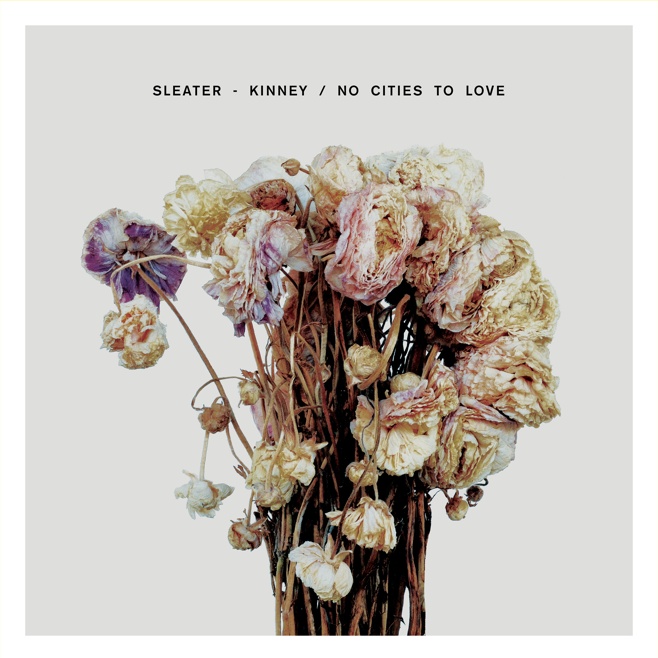
Sleater-Kinney – “No Cities to Love”

Grade: A-

Key Tracks: “Price Tag” “No Cities to Love” “Bury Our Friends”

Confession: This isn’t my first review of 2015. That belongs to Meghan Trainor’s “Title.” But do you know how cliche the metaphor is to start the year with a review of a debut? No, the first review of the year needs to be something more momentous – a comeback (and one that fits in well with my recent post on feminism in music, something Trainor does *not* fall under). So here, one of the biggest comebacks a blog like this could ask for – the first Sleater-Kinney album in 10 years.

Sleater-Kinney never really gave us a reason for their hiatus in 2006. It just seemed like they suddenly appeared, and suddenly disappeared. So, nine years after, it seems just as odd that they’d come back, especially given their successes – Janet Weiss has since played with the Shins, Wild Flag, Stephen Malkmus, and the densely uncrackable trio Drumgasm; Corin Tucker has found solo success; and Carrie Brownstein has found mainstream success as one-half of the largely improvised IFC show Portlandia (as well as Wild Flag). But 2015 needs Sleater-Kinney more than Sleater-Kinney needs 2015. We’ve caught up to their third-wave feminism; their leftist politics may have been “radical” for music in the 90’s (sad) but sound more anthemic today. There’s a revolution looming, and we’ve left Sleater-Kinney’s throne open for their welcome return.

Nearly needless to say, it’s an incredibly successful return. While Sleater-Kinney have never been a challenging band, their varying albums do rely on the listener to interpret the music, rather than the band. And for a band that’s woven through indie rock, riot grrrl and classic rock, “No Cities to Love” feels like a retrospective, that lets the listener reflect on which Sleater-Kinney exactly they’re listening to. Although “No Cities to Love” often sways sonically towards an indie S-K, it packs punk punches, and it’s brimming with energizing, political lyrics that are seemingly banned from indie otherwise. S-K’s political and social lyrics have never sounded fiercer, stronger, and Tucker’s vocals have a catchy scowl to them that entice the listener into their fury.

The album starts, by no coincidence, with “Price Tag.” The band sound like they’re restraining energy, not wanting to exhaust the listener from the get-go; but the lyrics about overspending on both political and personal levels rival the most ferocious and specific lyrics Against Me! or Sonic Youth could dream of. “A New Wave” matches the album’s catchiest, bounciest music with equally anthemic lyrics. “Surface Envy”‘s lyrics about making and breaking rules might sound a little tired, but S-K always have a way of putting out their own spin. And late-album highlight “Bury Your Friends” isn’t as political, but looks at the apathy of burying and reviving friends and idols (kind of like early songs by, well, Sonic Youth).

Musically, “No Cities to Love” leaps around. The title track is one of a few songs that’s outright catchy, with the band exploring its indie side. But “Surface Envy,” “No Anthems,” and “Fade” are all aided by a heavier, denser sound. Brownstein’s guitar is heavy throughout, reinforcing her importance and virtuosity in the guitar world. “Hey Darling” sounds like an indie track but has an unexpected heavy guitar, and “Surface Envy” has a dissonant chord running through its verses. “Bury Our Friends” even takes on a more mechanic tone at times, sounding more rehearsed and intentionally repeating than other tracks.

The Sleater-Kinney we get in 2015 is a mix of previous Sleater-Kinney’s, and it’s necessary blending. Indie and punk have come a long way in 10 years, and can go hand-in-hand now (whereas separated by sharp divides in 2005, unless you were Karen O or a member of Sleater-Kinney). “No Cities to Love” is rarely uneven, often totally complete, and serious in its beliefs. Comeback albums are tricky, but I don’t think there was much doubt that Sleater-Kinney could succeed in a world even more in need of political anthems. Leftist, catchy, angry and energetic, “No Cities to Love” is exactly what you want from a Sleater-Kinney album, just in the year 2015. Setting the bar high early, we’re 1-0 in great albums so far.

If you like this, try: Aside from rechecking your teen angst, rehanging posters you had in your bedroom in 1998, and remembering why you picked up a guitar in the first place, check out Potty Mouth’s 2013 debut, “Hell Bent.” Although more outwardly punk, Potty Mouth owe a lot to S-K’s feminist indie-punk sound.

-By Andrew McNally

(Okay. 1-1. Meghan Trainor review to be posted later.)

Tinashe – “Aquarius”

Grade: A-

Key Tracks: “Bet” “2 On” “Bated Breath”

There are a number of goals an artist has to have going into a debut album, but maybe the most important is signifying your sound and immediately making it your own. Tinashe does this and more, with her hip-hop/R&B blend and smart lyrics coming together in one of the year’s biggest surprises.

“Aquarius” doesn’t subscribe to any genres. This is growing typical of the hybrid R&B/hip-hop genre that is melting together and becoming it’s own being, but this album is especially inclusive. Tinashe comes out of the gate brimming with confidence, knowing she can pull off any of the ideas that come up. And she does – from sultry R&B, to smooth vocal ballads to a straight DJ Mustard track (“2 On,” which you’ve heard a million times, but it still hasn’t gotten worn out). By the end of the second track, Tinashe has already established herself as a unique voice, unafraid to try things unheard of in older R&B.

That second track, “Bet,” firmly establishes the album’s foundation. The song, distinctly R&B, is also a collaboration with Blood Orange and ends with a very lengthy, ambient guitar solo. It’s the album’s second-longest track, and it takes its sweet time. The song announces for the album that Tinashe is in total control, flowing through different styles and dominating every track. Her vocals are strong and engaging, traditionally sultry in an untraditional format. “Bated Breath” is the album’s best vocal song (and the actual longest track), a seductive ballad in the album’s final act with Tinashe’s voice soaring over the music, and one that stops on a dime halfway through and re-crescendos with an engrossing coda. Compare this with the straight hip-hop of “2 On,” and you get a well-rounded singer. Her lyrics, too, are often smart and occasionally conceptual and subversive. The most notable track is “Pretend,” about trying your hardest to ignore problems in a relationship, even for a minute. A$ap Rocky drops in for a verse, as her deadbeat boyfriend. A$ap Rocky, Future and Schoolboy Q all contribute excellent verses on the album, and are all shown up by Tinashe.

Musically, Tinashe takes as many liberties as she does vocally. The album is mostly slow-moving, melodic and low-key R&B with club beats and ambient rhythms. But it is peppered with guitar, piano, and volume. Each track is it’s own entity, and they’re nearly all distinguishable from each other. “Pretend” excels on an unexpected, minimalistic beat that’s closer to a home recording than it is a radio cut. The album is also divided into pieces, split by five interludes and an outro. Most are little more than minute-long tracks serving to shake up the flow, although the interlude titled “Indigo Child” is itself a rather experimental and slightly haunting track, one that hits the album’s loudest volume.

The album’s only real fault is a slightly bloated running-time of 55:43. Its eighteen tracks do include the six interludes, so it is less daunting than it looks, but it does sag a bit in the midsection. It could do without a few tracks; it could stand to be a little tighter. Still, as it stands, “Aquarius” might be the year’s best debut, and is certainly one of the best hip-hop albums. In a world filled with young TV personalities trying to shed their former status and make it in music – namely Miley and Ariana Grande – Tinashe has quickly emerged as one of the stars (Tinashe, only 21, was known previously not for music but for roles in “The Polar Express” and “Two and a Half Men”). “Aquarius” is an instantly enjoyable and thorough album, one that doesn’t demand multiple listens, but slyly convinces them instead. Tinashe is in total control on her debut, and it’s relentless fun.

-By Andrew McNally