Best, Worst and Everything Else of 2014

2014

2014 was surely a year. I heard a lot of great albums, I missed a lot more. Really, I missed a ton of albums this year, guys, really didn’t do my one job right. Over on the Filtered Lens I compiled two “official” reviewer’s Top 10 Songs and Albums lists, but here I’m going stretch out, take off my tie and be totally personal. Here’s the crap I liked:

Top 10 Favorite Albums of the Year:

10. Andrew Jackson Jihad – “Christmas Island” (Review)
9. Tinashe – “Aquarius” (Review)
8. Future – “Honest” (Review)
7. Run the Jewels – “Run the Jewels 2”
6. Pharmakon – “Bestial Burden” (Review)
5. Modern Baseball – “You’re Gonna Miss It All” (Review)
4. Interpol – “El Pintor” (Review)
3. the Menzingers – “Rented World” (Review)
2. White Lung – “Deep Fantasy” (Review)
1. St. Vincent – “St. Vincent” (Review)

(Honorable mentions: Lana Del Ray’s “Ultraviolence,” Parquet Courts’ “Sunbathing Animal,” Perfect Pussy’s “Say Yes to Love,” Lakutis’ “Three Seashells” and The World is a Beautiful Place & I Am No Longer Afraid to Die’s “Broken Bodies,” which originally sat at #7 until I decided an EP in a list of LP’s didn’t fit)

And now for tonight’s main event, my totally subjective, completely personal 30 Best Songs of the Year, regardless if they were singles or not:

30. FKA twigs – “Video Girl”
29. Andrew Jackson Jihad – “Temple Grandin”
28. Run the Jewels – “Close Your Eyes (and Count to Fuck) [feat. Zack de la Rocha]”
27. Parquet Courts – “Sunbathing Animal” (Album Review)
26. Prince – “FUNKNROLL” (Album Review)
25. Foxygen – “How Can You Really” (Album Review)
24. Courtney Barnett – “Avant Gardener”
23. Andrew Jackson Jihad – “Children of God”
22. Lakutis – “Too Ill For the Law” (Album Review)
21. Jeremih, YG – “Don’t Tell ‘Em”
20. The Creeping Ivies – “The Creeps” (Album Review)
19. White Lung – “I Believe You”
18. MisterWives – “Reflections” (EP Review)
17. Jessie J/Ariana Grande/Nicki Minaj – “Bang Bang”
16. Pharmakon – “Bestial Burden”
15. Beck – “Wave” (Album Review)
14. the Menzingers – “In Remission”
13. Phantogram – “Fall in Love”
12. Tinashe – “2 On (feat. ScHoolboy Q)”
11. Nicki Minaj – “Anaconda”
10. Sia – “Chandelier”
9. the Menzingers – “Rodent”
8. Interpol – “All the Rage Back Home”
7. St. Vincent – “Rattlesnake”
6. Bruce Springsteen – “The Ghost of Tom Joad”
5. White Lung – “Drown With the Monster”
4. Phantogram – “Black Out Days”
3. Grimes – “Go (feat. Blood Diamonds)”
2. Future – “Move That Dope (feat. Pusha T, Pharrell, Casino)”
1. St. Vincent – “Birth in Reverse”

Here’s a link to a Spotify playlist of 29 of these songs (the Lakutis album “Three Seashells,” which has song #22, is not on Spotify)

And here’s thirty more songs I loved (but not enough to rank), in alphabetical order, by artist:

Aphex Twin – “180db_[130]”
Iggy Azalea – “Black Widow” (god, I’m sorry)
Beyonce/Jay-Z – “Drunk in Love”
Big Data – “Dangerous”
Bleachers – “I Wanna Get Better”
Cardinal Cardinal – “When I’m Not Alone”
Clean Bandit/Jess Glynne – “Rather Be”
DJ Snake/Lil’ Jon – “Turn Down For What”
Drake – “0 to 100/The Catch Up”
Foxygen – “Can’t Contextualize My Mind”
Ariana Grande/Iggy Azalea – “Problem”
Maroon 5 – “Maps”
the Menzingers – “I Don’t Wanna Be an Asshole Anymore”
Milky Chance – “Stolen Dance”
Modern Baseball – “Fine, Great”
Bob Mould – “I Don’t Know You Anymore”
the Orwells – “Who Needs You”
Parquet Courts – “Ducking & Dodging”
Tom Petty & the Heartbreakers – “American Dream Plan B”
Shakira/Rihanna – “Can’t Remember to Forget You”
Sleeper Agent – “Waves”
St. Vincent – “Bring Me Your Loves”
Taylor Swift – “Shake It Off”
Tove Lo – “Habits (Stay High)”
the World is a Beautiful Place and so on and so on – “If and When I Die”
You Blew It! – “Surf Wax America” (Weezer cover)

Superlatives:

Best guest spot: 1) YG on Jeremih’s “Don’t Tell ‘Em”
2) ScHoolboy Q on Tinashe’s “2 On”
3) Pusha T, Pharrell and Casino on Future’s “Move That Dope”

Worst guest spot: Eat the cake, anime

Best cover song: “Surf Wax America” – You Blew It!

Best two bands that are great but I still have a little trouble telling apart – You Blew It! and Modern Baseball

Most Irritating Song of the Year: 1) “Lazaretto” – Jack White
2) “Rude” – Magic! (sorry, I know that’s a big blow to the Canadian reggae scene)
3) “Animals” – Maroon 5

Best Person to Wish He Were Born in a Different Generation and For Us to All Agree: Jack White!

Best Jack White Album: The Black Keys – Turn Blue! Fight me.

Best Free U2 album: an illegally downloaded copy of “The Joshua Tree”

Best Classic Rock Album Overshadowed by U2: Tom Petty & the Heatbreaker’s “Hypnotic Eye.” Sorry, AC/DC, Pink Floyd and Bruce.

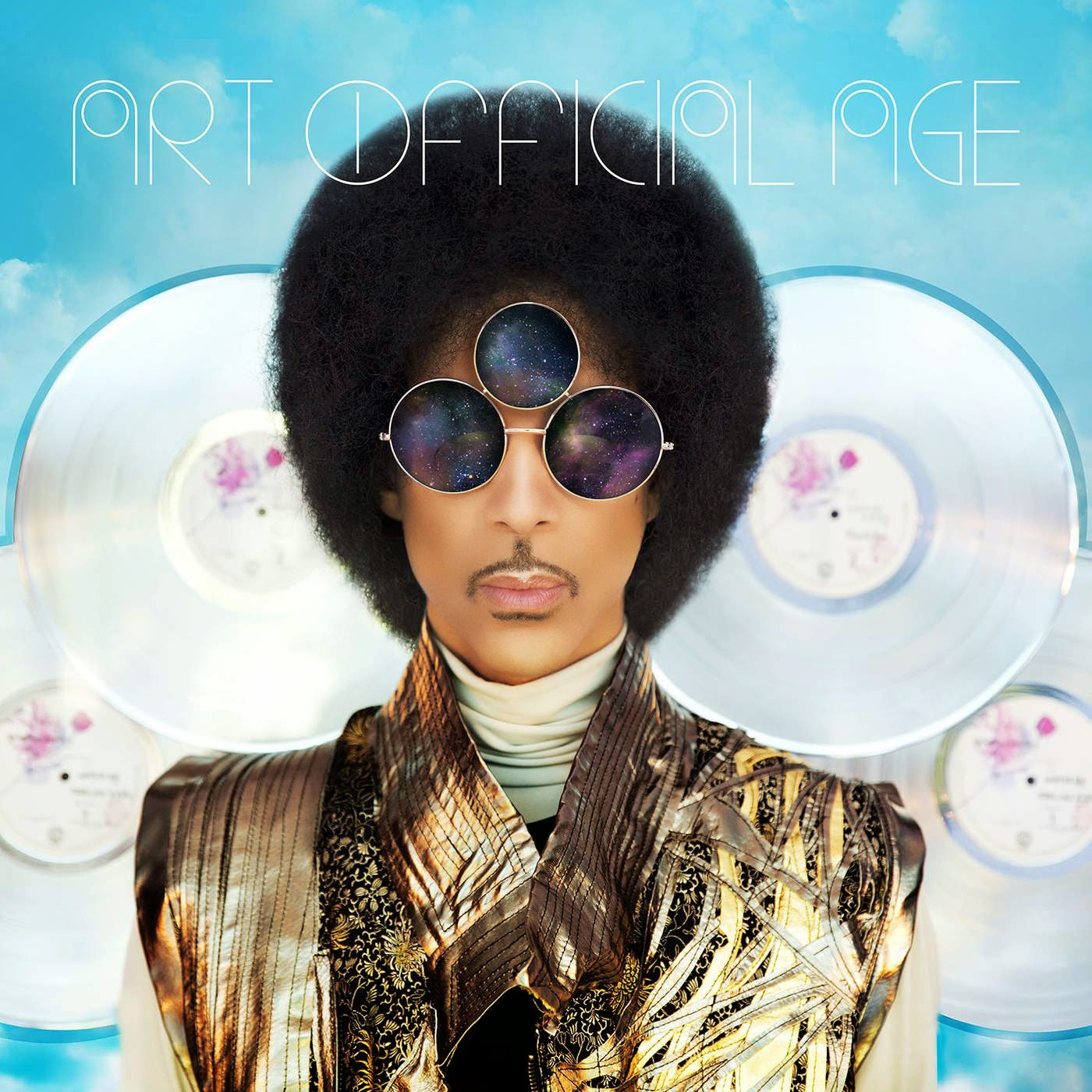
Best Prince: “Art Official Age”

Worst Prince: “Plectrumelectrum”

Best Death Grips Album: “Run the Jewels 2”

Worst Death Grips Album: “N****s on the Moon”

Best Unplugged Performance: Red Hot Chili Peppers at the Super Bowl

Worst Unplugged Performance: Probably any other Red Hot Chili Peppers performance

Best “Chinese Democracy”: Pink Floyd’s “The Endless River”

Best Adjective Mike: Killer Mike

Worst Adjective Mike: Fat Mike

Best Album That Made Most Reviewer’s Top 10 Lists That I Didn’t Listen to Because Ariel Pink is a Shithead: “pom pom” – Ariel Pink

Most Intentionally Terrifying Song: “Bestial Burden” – Pharmakon

Most Unintenionally Terrifying Song: “Lock the Door” – Robin Thicke

Best/Worst Song Titles: Aphex Twin

Best Band Name: The World is a Beautiful Place & I Am No Longer Afraid to Die

Worst Band Name: The World is a Beautiful Place & I Am No Longer Afraid to Die

A song that I would like to let you know exists: “Got Me Runnin’ Round,” a collaboration between Nickelback and Flo Rida. Seriously.

Potential albums to look forward to in 2015: Sleater-Kinney – “No Cities to Love” (1/20)
Two Gallants – “We Are Undone” (2/3)
Father John Misty – “I Love You, Honeybear” (2/10)
Hot Sugar – “God’s Hand” (2/24)
Heems – “Eat Pray Thug” (3/3) (solo debut from the Das Racist frontman – keep an eye out for this one)
Modest Mouse – “Strangers to Ourselves” (3/3)
Madonna – “Rebel Heart” (3/10)
Wale – “The Album About Nothing” (3/31) (Yes, the collaborative album with Jerry Seinfeld)
Chance the Rapper – “Surf”
Death Grips – “the powers that b”
Run the Jewels – “Run the Jewels 3” and “Meow the Jewels,” the cat version of “Run the Jewels 2”
2015 also might hold new albums from Kendrick Lamar, Sky Ferreira, Beyonce, Adele, Drake, Metz, Radiohead, Rihanna, Kanye, Deafheaven, Frank Ocean, Waxahatchee, and Giorgio Moroder’s first album since 1992, if we’re lucky.

See you with even more cynicisms next year!

-Andrew McNally

(PS – this is, by sheer coincidence, this blog’s 200th post!)

Crying – “Get Olde/Second Wind”

Grade: B

Key Tracks: “Bloom,” “Bodega Run”

To people who have never heard Crying, this double EP is something really new. To fans, it’s very literally not new. The first half is just a reprint of last year’s “Get Olde” EP, combined with a new “Second Wind” EP. So it can’t technically be labeled as an album, and the combination does not answer the listener’s question of why this was done in the first place. Still, “Get Olde” is an excellent EP, and their blend of emo, indie and chiptune is incredibly unique.

What separates Crying from Run For Cover Records labelmates like, say, Pity Sex or Tiger’s Jaw is definitely, unequivocally the use of the digital, video-game-y sounds. It’s a primary focus of their music – the main instrument on every track. Sometimes it’s shrill, sometimes it’s melodic, other times it doesn’t seem to fit and you wonder if you’re going to get a break from it. Luckily, Crying take it upon themselves to differentiate every track, so their unique sound doesn’t become an automatic staple after the first go-around.

It’s easy to describe Crying as a chiptune band, one instrument is literally a Game Boy. But where other bands have experimented with this before, they’ve never roped in such unexpected lyrics. Similar bands often take goofy tones, mimicking the video game world they’re trying to engross. But Crying sing on a real plane – real people in a real, crushing world. “Vacation” namechecks Costco and flip phones, proving they’re living in a globalized society. And frequent references to bodegas cement the band as New York apartment-dwellers, not suburban basement-surviving nerds. It’s a distinction, because Crying’s music has a dense aura to it.

Both EP’s have their up and down moments. They both end on slow tracks (“ES” and “Close,” respectively), and neither really works that well. But both EP’s have honest and devastating lyrics, often delivered in Elaiza’s exasperated vocals. And while “Get Olde” stays right by the Boy’s side, “Second Wind” lets up some room for some drum (“Easy Flight”) and some guitar moments (“Batang Killjoy”). The second side is more varied and denser than “Get Olde,” although the band is more consistent in the release’s first half. I’ve been on to Crying for a while now; their first full-lengthed release is an extremely interesting listen. It isn’t perfect, but it’s still a fun, desperate mess, and it’s a promising release for the future.

-By Andrew McNally

Prince’s “Art Official Age” and 3RDEYEGIRL’s “Plectrumelectrum” – A Review From the Uninitiated

Grades: Art Official Age: B+

Plectrumelectrum: D+

As a music critic, there’s been plenty of times where I’ve faked knowledge of an artist to give some insight into the recording of an album. I’ll admit it, I can’t say I’m on an equal playing field when I talk about both Ariana Grande and Foxygen, I have to look up information on someone like Grande because I’m much more inclined to listen to Foxygen in my own time. But I can’t fake Prince. Not admitting that I don’t know the first thing about Prince’s back catalog and topsy-turvy history would be unfair to him. Prince is a legend; a hero of pop music, and trying to fake my way through a review would not do him any justice. I know that he and Warner Bros. got into a bitter, bitter feud in the ’90’s, partially the reason for him to change his name to a symbol – so Warner would have to find a way to market it. And I know that he’s both feminine and seductive, yet legendary and encompassing enough for the NFL to pick him to play a Super Bowl halftime show (and one of the better ones). What I do know about Prince is that his music has jumped all around, and that’s exactly what his solo album, “Art Official Age,” does. So if you’re not familiar with his music, know that the album is inconsistent but often fun and honest. And if you are familiar, then you probably made up your mind before it even came out. Okay? Okay.

“Art Official Age” starts with a track titled “Art Official Cage,” and it’s a song that would have never existed in the “Purple Rain” years. It couldn’t have. It’s ripped from hip-hop and EDM, with big beats and air horns. It’s fun, and there’s way too much going on, but that’s part of the joy. The album jumps across fun, funky songs and big ballads, all of which are distinctly Prince and neither of which are aligned with any other pop artist. It’s the album’s best and worst quality, that it jumps so frequently and unexpectedly. Luckily, it’s good far more often than it’s bad.

The ballads come early, with the third track “Breakdown.” Prince hits some cringingly high notes, and pulls them off, obviously. “U Know” is a pseudo-ballad two tracks later, but one that has Prince rapping a bit. The hip-hop element is palpable on “U Know,” and is throughout the album. Prince constantly feeds off of genres that fed off him thirty years ago. Ballads aside, the album is a lot of fun, and Prince sounds like he’s truly enjoying it. Late album track “Funknroll” is exactly what it sounds like, a huge disco bash that’s a ton of fun and could easily be thrown on repeat for an hour without getting old. Second track “Clouds” is a strange track, with a strong spoken word that sets up the album’s loose premise of waking up in a world without gender pronouns. And leadoff single “Breakfast Can Wait” is an oddly specific, sexual song that’s exactly what you’d expect from Prince.

“Art Official Age” isn’t all great. The theme of waking up without gender pronouns are neat (and Prince to the max), but it never shows up outside of spoken word bits that are great on “Clouds” and finale “affirmation iii,” but are weak on the other tracks. And Prince seems to be borrowing just a tad too heavily from Daft Punk’s disco playbook – in that he tries lengthy, funky songs, but doesn’t pull them off as well as the duo. There are two tracks, “The Gold Standard,” and “Time,” that are far too long. The former is almost six minutes, the latter almost seven, and there isn’t much of a reason. They just inflate the album’s 53 minute runtime. But it starts strong and it ends strong, and it’s fun in between. People hanging out under rocks like myself should find a lot to groove to on this record, and find a lot of originality in it’s melting of both genres and themes.

On the inverse of that is the debut album from Prince’s backing band, 3RDEYEGIRL. Their album, “Plectrumelectrum,” flows through different genres and influences just as “Art Official Age,” but does so in a much more murkier and standard way. The band, who Prince is proudly touting as being all-female, gets off on the wrong foot with the lackluster “Wow,” a song that lacks the energy to be a true leadoff song, but has enough energy to not be a cop-out slow intro. After that, the album is a topsy-turvy ride, hitting high highs and low lows.

A low low is “Boytrouble,” an overlong and inane pop song that’s stylistically similar to far too many songs that have come before. Another low low is that the album appears to start off with a classic rock vibe for the first four or five songs, before slowly diverging into funk and hip-hop, without seeming to have any real reason. It flows well at the beginning, but the longer it goes on, the more it becomes a collection of songs instead of a fluid album. The album never seems to come to having any point, other than Prince showing off his (talented) backing band. Likewise, on “Fixurlifeup,” he sings lead, and he sings about misogyny in music and how bands shouldn’t be called “female” bands, yet he prides himself on showcasing his handpicked female backing band, contributing to the problem himself. (Not that he shouldn’t have an all-female band, just that he’s being pretty hypocritical about it).

The album isn’t all bad, though. There’s some great, exploratory songs. The title track (and longest on the album) is an instrumental classic rock jam that shows just how talented the band is. And the follow-up, “Whitecaps,” is a pleasant vocal-based pseudo-ballad. And the album has a better pacing, clocking in at a tighter 42 minutes, with some fat trimmed. The album certainly has it’s moments, it’s just very inconsistent and never has a sense of purpose. Perhaps the thing that summarizes it best is that the album’s final track is a different version of “Funknroll,” from “Art Official Age.” It’s a slightly different version that’s still good, but just not as much.

Not knowing anything about Prince didn’t harm me in listening to 3RDEYEGIRL. Their album is more direct, even if it hits different genres. It isn’t a great album and I give only a reserved recommendation for Prince fans only, but it still has some fun moments. And, they’re talented. they’re extremely talented. Non-Prince people like myself can at least enjoy it just as much (probably more) than Prince fans. As for “Art Official Age,” it’s also inconsistent, but it’s fun and energetic, and it might be a refresher for his fans. Or at least that’s what it sounded like to me.

-By Andrew McNally

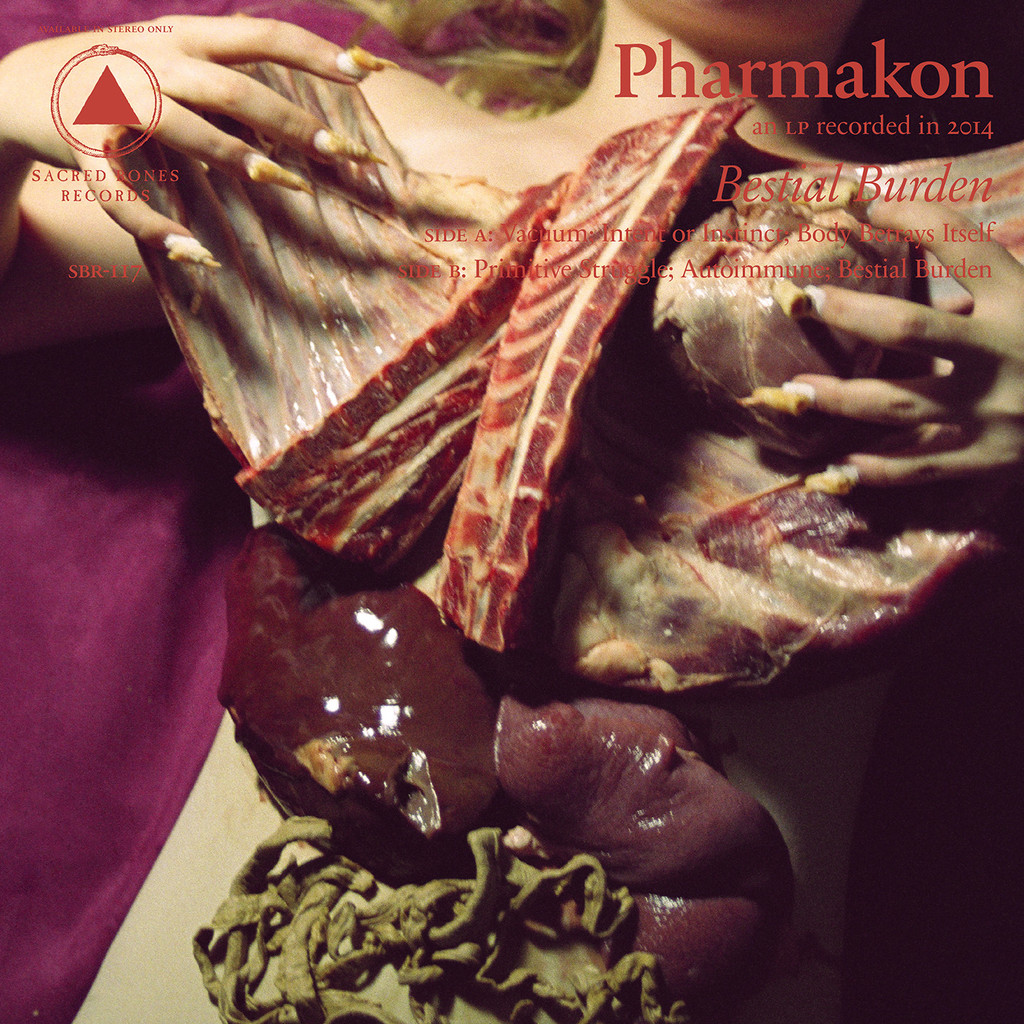
Pharmakon – “Bestial Burden”

Grade: B

Key Track: “Bestial Burden”

One of my biggest regrets of 2013 was never getting a chance to review Pharmakon’s proper debut album, “Abandon.” Pharmakon, industrial-noise based project of Margaret Chardiet, is one of the harshest acts out there, and “Abandon” still serves as just a brutal listen start to finish. Due to unforeseen health circumstances, Chardiet had to cancel the first major Pharmakon tour and get emergency surgery. While she was recovering, she wrote a follow-up: “Bestial Burden.” The album is menacing and brutal, more inward and deprecating, but also with its moments of honesty and musicality.

I take notes when I listen to albums. For the first track, “Vaccuum,” my notes only say “just breathing.” It’s an intro, one that is just the sound of heavy, panicked breaths. Sure, it’s nothing compared to the sonic assault of “Abandon,” but it sets the album’s tone. This album is frantic, not just devoted to volume but to dissonance and to issues of health and well-being. The first true track, “Intent or Instinct” is noticeably more industrial than anything on “Abandon.” For eight and a half minutes it soldiers on – the first scream comes in around the three-and-a-half minute mark, and the industrial beat never sways, even as the screaming gets more intense.

This constant, industrial tone is one that stays throughout the album. It marks a departure from the abrasive synth blasts of before, although it is still an assault on the ears. But the album is structured in its noise. The tracks have steady, unfaltering industrial beats that oftentimes border on the verge of being rhythmic. Or at least, consistent. Pharmakon have always had a way of finding rhythms in pure noise, but this album does it more cleanly and more directly than before.

After Chardiet had to undergo emergency surgery before her first European tour, she began writing a more introspective work. This album is the result. It’s noticeable in the album covers alone – “Abandon,” with a pair of skinny legs (presumably Chardiet’s), covered in maggots, to this one – insides. This album is inside the body. Songs about health and the body. The title track has the repetition of the line “I don’t belong here,” coupled with laughing.

Both “Abandon” and “Bestial Burden” have bonus tracks, and they’re indicative of the albums themselves. “Sour Sap,” from “Abandon,” is a blistering 27 minute hell journey through screaming and pure white noise. But “Bang Bang,” on “Bestial Burden,” is the straightest song Pharmakon’s ever done. Sure, it’s about getting murdered, but it gives Chardiet a chance to actually sing, instead of screaming, and she has a pretty accommodating voice. The longest track on “Bestial Burden” is “Intent or Instinct,” at eight and a half minutes. Though longer than any of the non-bonus songs on “Abandon,” the album’s songs feel shorter. And they are – there’s more shorter pieces, instead of a few long ones. It allows the album to feel like a journey through the mind and body; a disturbing trek through a broken and disturbed being. Interlude “Primitive Struggle” is just a man coughing over an increasingly fast heartbeat – so simple, but so demanding.

To jump into Pharmakon, you have to know to expect screaming, slammed-down synth notes, and a perpetual feel of pure terror lurking around the corner. “Bestial Burden” takes an inward stance, and the result is more structured, but no less full-frontal. If “Abandon” challenged insanity, then “Bestial Burden” challenges injury. It isn’t for the faint of heart. It’s abrasive and brutal, almost palpable in its intensity. Industrial-noise is called so for a reason, and although the album might not be as immediately terrifying or numbing as “Abandon,” it is still confounding and abrasive, and only for the most committed and toughest listeners. Have fun picking through it, Pharmakon is here to stay.

If you like this, try: Spinning Death Grips records backwards or something, I have no idea.

-By Andrew McNally

Ross Hammond & Grant Calvin Weston – “Blues and Daily News”

Grade: B+

Key Tracks: “Blue Teeth” “Aquarium Salt”

“Blues and Daily News,” a collaborative album between jazz guitarist Ross Hammond and drummer Grant Calvin Weston, came about by Weston recording improvised drum parts and mailing them to other artists. Hammond’s contributions led to the track “Little Melon Head,” which led to a full album recorded in the same vein. The 10 tracks are all short blasts of improvised guitar and drums, spiraling through jazz, funk and country rhythms, amongst other influences.

Hammond’s guitar is virtuosic throughout, as he improvs his way through many different styles. We get glimpses of rock, in opener “Huff, Puff, and Blow It All Down” and “Blues and Daily News.” “Aquarium Salt” is led by an ambient, minimalistic rhythm in the background. And “Blue Teeth” is centered around very twangy, slide-heavy country rhythms. “Little Melon Head” even has a Latin flare to it. Hammond’s musical knowledge of genres, and his ability to bounce through and around them is impressive. “The Big Dipper” is also a noteworthy track, simply because Hammond hits an intensity higher than any other track. Hammond’s improvisation style is structured, as much as improv can be. He feeds off his own rhythms and ideas, maintaining a consistent sound in each track without falling into doing anything actually repetitive.

But one of the album’s most interesting qualities is how the two musicians vary in their improv styles – Weston’s drumming is much more unfiltered and manic. It is impressive and technical from start to finish, and it’s more unstructured style provides a stark contrast to Hammond’s guitar. It adds a chaotic balance. Weston also shines on “The Big Dipper,” his strongest track. His drumming complements the quicker-than-normal guitar of the track. Weston is prominent on “Aquarium Salt,” as Hammond takes a backseat and lets Weston work. Weston often adds rock drumming to his jazz, as much Ginger Baker as Buddy Rich.

As mentioned, the album blends influences together. Country, ambient, rock, jazz and others are explored. The final track, “Get Ready to Meet God,” is even centered around a snippet of an interview with Muhammad Ali. There are a number of interesting ideas on “Blues and Daily News,” and although some of them could have been extended more, it makes for a unique listen. Hammond and Weston play off each other nicely, and the combination of non-jazz styles in a jazz platform makes for some fun and independent songs.

This album is especially surprising, given how it stands as a stark contrast to Hammond’s “Humanity Suite,” which I reviewed in March. Stream and download “Blues and Daily News” here.

-By Andrew McNally

The World is a Beautiful Place & I Am No Longer Afraid to Die – “Broken Bodies”

Grade: B

Key Track: “If And When I Die”

Nine-member band The World is a Beautiful Place & I Am No Longer Afraid to Die aren’t exactly known for palpable, conventional music. You can probably tell by staring at their eighteen syllable name. Their mix of emo, ambiance, twee-pop and dissonance has, for a few years now, brought a fresh voice to a scene dominated largely by straight pop-punk. Their new EP, recorded alongside spoken word artist Chris Zizzamia, is even more confoundingly complex and headache-y than their previous works.

The band, who I’m going to shorten to The World Is to avoid carpal tunnel (no offense!), brought on Zizzamia to bring a form of intense narration to their ambient music. They knew it would polarize fans – only the people truly onboard with them would appreciate it, because it is tough to swallow. Zizzamia spits some beautiful poetry throughout the EP, about human bodies making up stars, intertwining, and facing invincibility, all capping off with the beautiful line “I think my name is safest in your mouth” in the finale, “Autotonsorialist.” Another great line, “I like you like I like the dark/Why would I aim to defeat it?” peppers the track “Shoppers Beef.” Zizzamia is an interesting addition to the band – it isn’t just that spoken word works well alongside the band’s music, it’s that his spoken word works well. His flowing poetry, moving through anger, hope and experiment, is told with a spitting clarity and a scathing touch. It’s a strange fit, but that’s kind of the band’s MO, after all.

The band takes pages out of every section of their own playbook on “Broken Bodies.” Through the eight tracks, there’s a long, experimental opening, build-ups to climaxes that don’t happen, a conventional song (“$100 Tip”) that fades out into a multi-minute drum segment, and a track with a full, driving beat (“Space Explorations to Solve Earthly Crises”). They hit all their own notes. There are actual vocals throughout the album, in a few tracks. Some are just Zizzamia, some are both, and occasionally we get them simultaneously.

The fault in the EP’s experimentation is that it doesn’t have quite the same cohesiveness that their full-length, “Whenever, If Ever,” had. The EP flows, but each song is it’s own distinct being, where the tracks on their album all need each other to work. Still, spoken word alongside experimental emo makes for a very unique listen, like a sadder version of the Moody Blues’ “Knights in White Satin.” The World Is have already proven themselves to be one of the strangest, most difficult and original bands we have today, and “Broken Bodies” just extends this. This would probably never work for a full album, but it’s a consistent and consistently ambitious work, one that takes a few listens and aims for both the heart and the head.

Give them yr money and download it here.

If you like this, try: I don’t know, Pink Floyd? drugs?

-By Andrew McNally

Tony Bennett & Lady Gaga – “Cheek to Cheek”

Grade: B+

Key Tracks: “Cheek to Cheek” “I Can’t Dance”

I left my heart in an interdimensional meat planet.

So let’s just get it out of the way that a small part of me hoped this album would fail, so I could write “I Left My Heart in San FranciscNO.” Okay? Moving on.

This is a strange collaboration, and it might seem like a flash in the pan for two singers who are struggling to stay relevant – but it makes a lot of sense. The younger, Lady Gaga, has a history of professional jazz singing, and getting to try her hand at some jazz standards is a branch she could never explore solo. This isn’t Lady Gaga, this is Stefani Germanotta singing. She’s exercising a side to her music that Lady Gaga won’t allow for, and she’s coming back from a relatively terrible album. And the former is a singer who was forced to reinvent himself for a younger generation in the 90’s, and has managed to stay in the public light since then – despite always performing almost entirely covers. What better way to stay relevant than to record with Lady Gaga? The biggest recording artist of ~2009-~2011, trying to stay relevant herself.

So, reasoning aside. Does this album work? Yes, pretty much throughout. The standard version of the album is 11 tight songs, not quite hitting 35 minutes. It’s quick, melodic, and fun. All eleven tracks are jazz standards, a plus since it results in two relaxed musicians having fun in the studio. A majority of the songs are quick hoppers, so the album never drags at all. The album’s best quality is that Bennett and Gaga, products of two very different generations, are clearly enjoying working on standards older than both of them.

Gaga’s and Bennett’s harmonies don’t always work on the album, sometimes they’re just two singers singing at the same time. On standards like “Cheek to Cheek” and “It Don’t Mean a Thing (If It Ain’t Got That Swing),” though, their interplay resembles that of a jazz club in the 40’s, singing through some energetic, fun, early dance songs. Each singer gets one solo song, too – Bennett handles “Sophisticated Lady” while Gaga nails the incredibly difficult “Lush Life,” a song that’s plagued jazz singers for generations. It’s worth noting that, in many of the harmonies, Gaga takes the lower registers. When given their moments, both singers shine as much as you’d expect them too. And even when their interplay isn’t at it’s strongest, the tracks are still fun.

One notable surprise is some strong music in the background. The duo step aside for a lengthy sax solo on “Let’s Face the Music and Dance,” and the band is allowed to flourish throughout the album. Jazz is about the music, and Bennett and Gaga give the musicians their due space, not taking up all of the light themselves. The band sounds tight, adding a briskness to the songs that’s sometimes missing from them.

Tony Bennett’s entrance into professional music is cited as being in 1949, six years before Lady Gaga’s mother was even born. But the beauty of these jazz standards is that they never get old. Any singer can put their mark on a jazz standard. A song like “I Can’t Dance” can sound as fresh in 2014 as it did when Sinatra did it in 1957. These eleven songs are inter-generational, and hearing two extraordinarily different singers tackle them together is a pretty unique listen. Bennett isn’t really stepping out of his normal territory, but Gaga really is – and it’s refreshing to hear, especially after the questionably re-tread routes of her last album. “Cheek to Cheek” may not be ‘great’ per se, but it’s a fun, upbeat and surprisingly successful collaboration – essentially, if you’re a fan of any part of this machine, you’ll find something to enjoy.

-By Andrew McNally

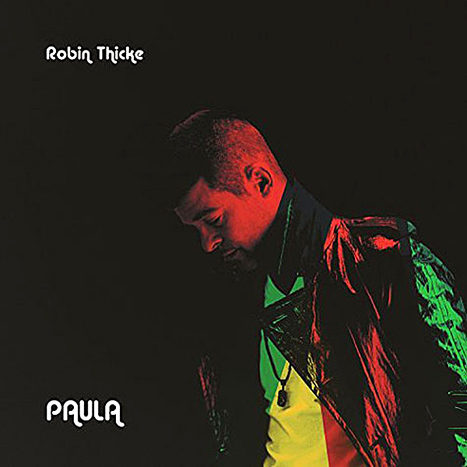
Robin Thicke – “Paula”

Grade: D

Acceptable track: “Living in New York City”

Let’s get this out of the way. This isn’t about the music. I don’t yet know if I’m referring to the album, or this review. But it’s a rare occasion when I can review an album where the music plays such an afterthought to the context behind it. Because this is barely an album. It has songs, sure, songs that have choruses and rhythms. But it’s all a thin veil for an attempt at a passionate, public apology. Occasionally, it works. Often, it doesn’t. Thicke dives too deeply into their relationship, even when he’s criticizing himself, giving us information we really didn’t need to know.

So let’s talk about the music a bit. The music does take a backseat, but when he’s prepping a quote-unquote ‘concept’ album like this, it’s not really the focus. Still, it’s all simple R&B, never elevating itself beyond some basic beats and unchanging soul rhythms that sound more in place in 90′s clubs. Sometimes it’s fun :) Sometimes it’s sad :( But from a music standpoint, there’s few highlights. “Living in New York City” has a fun, optimistic beat, and follow-up “Love Can Grow Back” has a big horn section and a jazzy, soulful vibe. But those are rare highlights. The album starts off with two slow-burners that musically are, frankly, boring. And although they set the album’s largely remorseful tone, they also stumble out of the gate with 9 minutes of dull music.
So where does Robin Thicke stand? “Paula” is a love letter, a deep apology for the way he acted as a husband. For the most part, he’s earnest in what he’s singing. In some of the more enthusiastic songs, he sounds like his heart just isn’t in it. (Only exception: “Living in New York,” where he sings about how she’s moved to NY and how pretty all the women there are). Some lines throughout the album I caught are, “All that she needs is another try,” “If you ever need a friend, baby / I can be the one that you want” (vomit emoji) and “There’s something bad in me” (understatement!) His lyrics get pretty intricate, so it’s easy to give him the benefit of the doubt, he’s genuinely grieving and it’s possible he actually feels bad for the stuff he’s done.

But, don’t let that deceive you. Thicke is a singer, it’s what he does, but there’s no reason for this be as public as it is. Even if he believes his own lyrics, this album is a power play. I was watching a World Cup game on ABC the other day and I saw an ad for Thicke on Kimmel’s dumb show and the voiceover said, “Robin Thicke concludes his ABC takeover!” He’s riding a storm of buzz over this album, capitalizing on his own deep emotions. And it’s important not to look at Thicke as some kind of hero here. Everything that happened between him and Paula was his fault, and he’s starting to be made out as a victim. He isn’t. “Paula” is usually pretty creepy, with too many details about their relationship growing more abusive. He just falls short of singing her social security number and where she sleeps at night. It honestly sounds unintentional, a side effect of him baring his true emotions, but it’s weird nonetheless. “Paula” is, at it’s best, forgettable. It is, at it’s worst, gross and shady. It isn’t good. Don’t listen to it and don’t acknowledge it, you’ll just be feeding into the Robin Thicke machine.

Oh also burn in hell for literally always.

(This review was originally posted at thefilteredlens.com, and since the time of publishing it has been released that “Paula” sold a whopping 530 copies in the UK. I wasn’t sure what the public’s perceptio of Thicke was nowadays, but it seems like we’re on the same page)

If you like this album, try: reading a different blog

Dunas – “Boas-Vindas”

Boas-VindasGrade: A-

Key Track: “Em Algum Lugar Dentro de Nos”

Dunas, a name that translates to “those sand dunes” from Portuguese, is a Brazilian-based band featuring the ambitiously experimental Francois Veenstra. The band, normally a Portuguese-singing, straightforward band, ventured way out during a contemplative period and instead recorded an improvised, instrumental, ambient EP. “Boas-Vindas” is four tracks and roughly thirty-three minutes of an improvised story.

The album’s opener, “Em Algum Lugar Dentro de Nos,” is an extremely peaceful work. It’s very ambient, and centered around an echo-y guitar and various nature sounds. The song, especially it’s first half, gives an aura of satisfaction and sounds like enjoying a nice spring day falling in tune with nature. Much of it sounds like it’s recorded from within a cave, with it’s swooping, almost wind-like rhythms.

Since it’s improvised, it’s tough to know if Dunas had planned for this EP to have a real storyline, but it seems to have a narrative of descent. If “Em Algum Lugar Dentro de Nos” is peaceful and feels like laying on the forest floor, watching the sky, “Por Favor, Por Favor” feels like becoming too engulfed. The song’s airy and faux-futuristic rhythms might seem like falling asleep comfortably on the forest floor, but is more akin to letting yourself get overtaken by the nature around you. It’s also a relatively peaceful song, and the lightest on the EP, but it slowly seeps into one that isn’t, through the sound of things getting disconnected at the end.

“Boas-Vindas” feels like a descent into a gritty underworld. Its immediately abrasive, back-and-forth dissonant piano rhythms are a stark difference from the first two tracks. The song feels like a bad dream; or seeing the ugly side of nature. If it starts in a cave, it ends deeper down, in darkness. The song’s title roughly translates to “hearty welcome,” and that’s what it resembles – an unwelcoming welcome. Other synth rhythms pile onto the early ones, and play until the noise settles into something less intense but no less loud – as you get more accustomed to it. The short outro, “Motion Picture Soundtrack,” follows in the previous song’s volume and drone-like tone.

The EP all flows together, as if it were one long song. This helps to enhance whatever sort of increasingly dark narrative hides behind the ambient music. The EP slowly goes from peaceful to forceful, and does both very well, especially when you factor in the improvisation. “Em Algum Lugar Dentro de Nos” is engagingly warm, and it makes the slow descent into noise all the more powerful. It is best appreciated with headphones on, to take in the full ambient effect. “Boas-Vindas” is a strong and weighty ambient release, so let it wash over you.

The band has produced a set of videos to accompany the EP’s lengthy tracks. You can watch the video for “Em Algum Lugar Dentro de Nos”

-By Andrew McNally

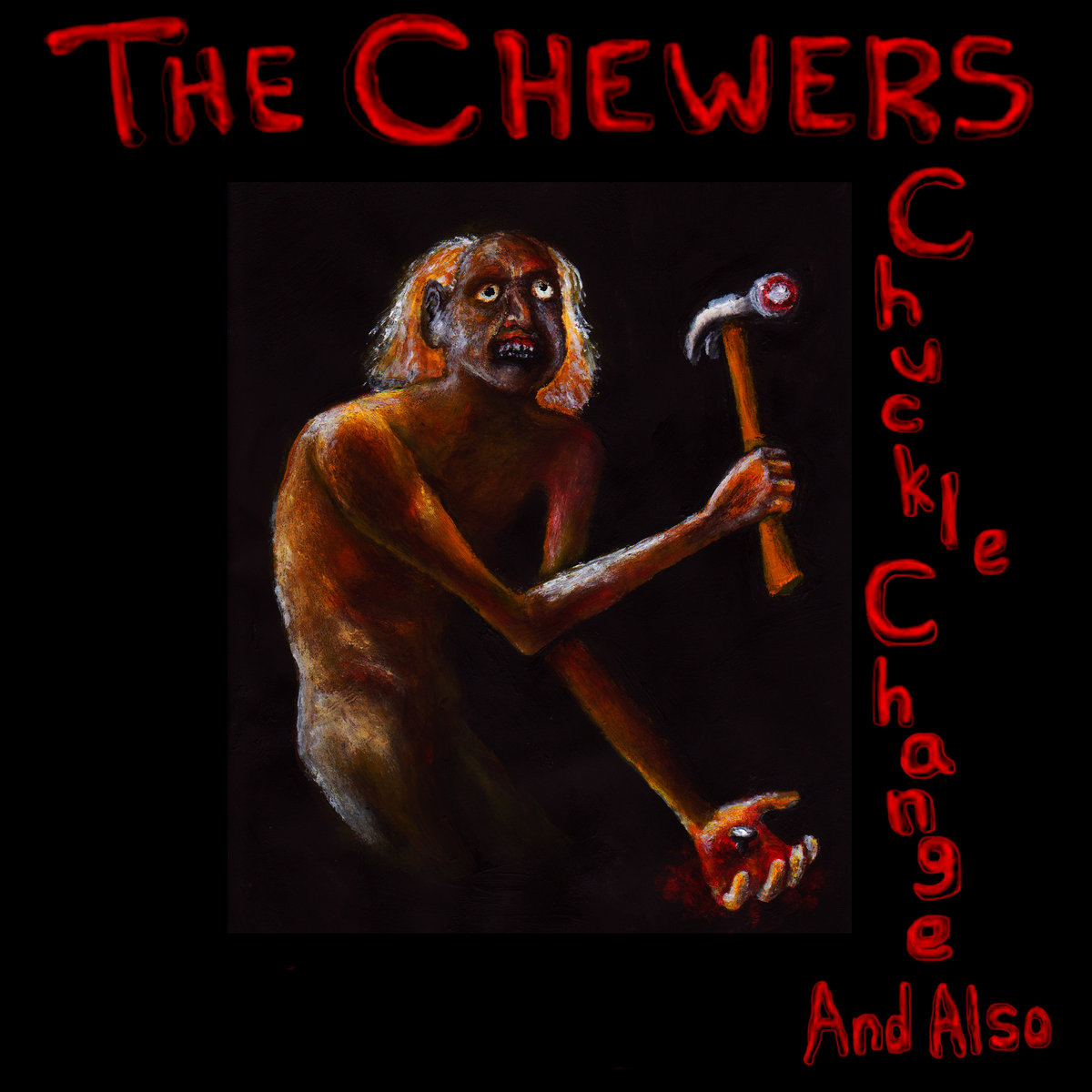
The Chewers – “Chuckle Change And Also”

(Photo Credit: bandcamp)

Grade: B+

Key Tracks: “Burn it Down” “Teeth Lock”

The Chewers describe their music as “deliberately off-kilter,” a very accurate self-description. The band, consisting of Travis Caffrey and Michael Sadler, plays a unique brand of avant-rock. The duo channels avant-garde bands like the Residents, making somewhat minimalist avant-rock that’s bizarre but still a little rhythmic. Take this album song-by-song and it’s almost too weird. But take it as a whole and it’s a continuous and surprisingly consistent look at a theme of dissatisfaction.

What separates the Chewers from most avant-rock bands is their location. The band hails from West Virginia and record in Nashville. Avant-garde music doesn’t exactly have a usual base, but the Midwest hasn’t exactly provided many avant bands. What the band adds is a bluegrass/hillbilly aspect to what’s otherwise noise-rock. It’s a bizarre combination, surely, and one that reinforces what the band seems to be about. Both men play a variety of instruments, and the music is a healthy, low-key mix of bluegrass and noise-rock. The album’s 22 songs only add up to 46 minutes, meaning almost none of the ideas stick around too long and the album is constantly changing.

With the album constantly changing ideas, the theme of isolation is made more present. The music itself sounds almost dissatisfied, played in a way that sounds upset with itself. The band adopt a number of characters throughout the album, singing in a variety of voices. These characters are all angry or sad about something typical, often something small. It’s an interesting approach, that adds a surprising amount of cohesiveness that might not be noticeable at first.

But most of all, the two are clearly enjoying making their off-kilter music, which makes for a fun and diverse listen. Each song, even though many fall around a minute in length, is like a small adventure in that you don’t know what it’s going to be. Avant-rock should be wildly unexpected, and even though the Chewers are more melodic than most avant-rock bands, their mix of noise and hillbilly and use of one-off characters makes for a satisfyingly bizarre listen.

The album can be streamed and purchased on their bandcamp page.

If you like this, try: the Residents are one of the longest running bands ever, and their long career started with the avant-rock and Beatles spoofing classic “Meet the Residents.” I’d start there.

-By Andrew McNally