The Black Keys – “Turn Blue”

(Photo Credit: chimes.biola.edu)

Grade: B+

Key Tracks: “Weight of Love” “Bullet in the Brain”

The Black Keys either like to take corners, or listen to criticism. Their last two albums – “Brothers” and “El Camino” – were distinctly different from what they’d done previously, and both suffered from it. “Brothers” had some quality songs, but it was too long and stuffed with slower tracks. After they found it difficult to play them live, they wrote more upbeat songs for “El Camino,” but they were so focused on the quality that it didn’t seem like they enjoying themselves. “Turn Blue,” however, sees the duo having fun again, and balancing loose and polished.

The first track on “Turn Blue,” called “Weight of Love,” is just ten seconds shy of hitting the seven minute mark. This is pretty different for band who is known for a quick and heavy blues sound. (Look through the Keys prior albums, it’s rare to find a song over five minutes). But it sets the tone of the album. The song is sleepy and a little psychedelic, a drastic departure from the old Keys. It isn’t fast, it’s much more of an extended way to open an album. But Dan Auerbach sure sounds like he’s having fun. The song, as do a few others later, has a distinct classic rock feel to it. Though always resembling garage bands of the 60′s, the Keys have usually stayed away from a classic rock sound. But it gets embraced on “Turn Blue,” and it’s a surprisingly welcome shift. Even the album’s hypnotic cover shows an embrace of a more suspended sound.

The album also benefits from having Danger Mouse on board, producing. He worked on “El Camino,” too, but the relationship between him and the band is more equal. Though still a duo, the band has added distinct bass parts that make a much groovier sound. It’s most evident on the title track and the hit “Fever,” but it adds a fun element throughout.

The album’s only real fault is a handful of songs that still sound a little too prepared. “Year in Review” sounds a little too strained, a little too rehearsed. “It’s Up to You Now,” meanwhile, feels so loose it almost sounds improvised. It’s also possibly the album’s heaviest track, with a booming drum intro. It’s very enjoyable, reminiscent of early Black Keys. They recapture a little of their earlier sound in some of the other heavier songs, like “Bullet in the Brain.” While “Tighten Up” and “Lonely Boy” were heavy in their own right, they felt more directed towards songwriting. The guitar fuzz and the loud, crushing drumming are more ambitious here, less constrained to an album format.

“Turn Blue” has many things working for it. It’s more energetic than “Brothers,” it’s more open than “El Camino,” and it’s just as wide and heavy as “Attack & Release.” A welcome groove makes the album more fun than what we’re used to, without sacrificing any of the volume. And on songs like “Weight of Love” and closer “Gotta Get Away,” it’s easy to tell the band is having fun with the record. “Turn Blue” doesn’t quite stand up to “Attack & Release” and “Thickfreakness,” but it is definitely one of the band’s better records.

If you like this, try: Given that most of the bands that resemble the Black Keys are equally famous, I’ll recommend another fuzzy, bluesy duo – The Creeping Ivies.

-By Andrew McNally
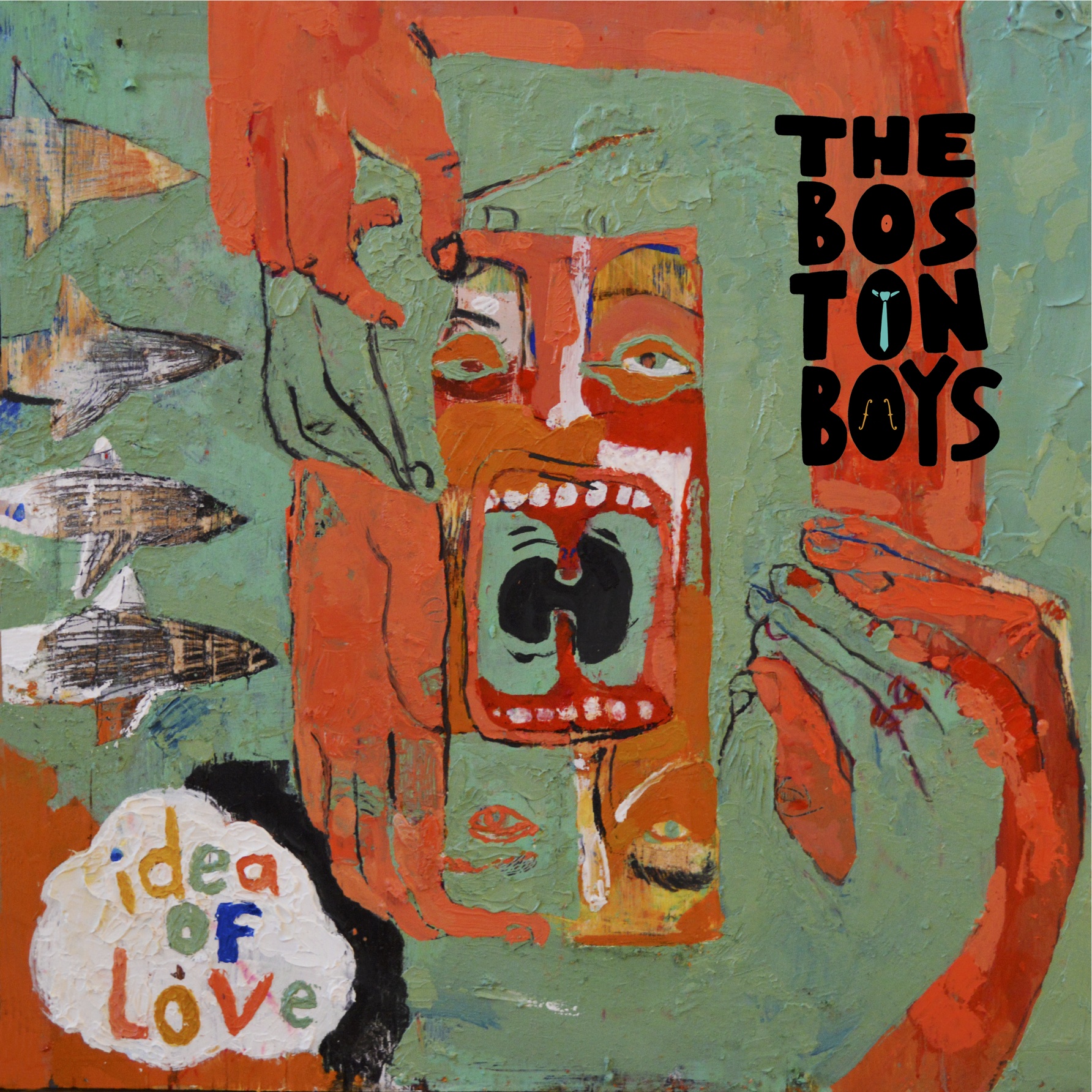
The Boston Boys – “Idea of Love”

Grade: B+

Key Tracks: “Between You and Me” “Become Like One”

The Boston Boys, a folk-heavy roots band now decidedly living in Brooklyn, have always relied on their diverse sound as their strongest quality. I wrote about “Keep You Satisfied,” their last EP, that the guys were able blend folk, rock, country and americana elements into a sound that’s both predictably shiny and refreshingly original. “Idea of Love,” their third EP, keeps this blend just as strong.

The opening song, the aptly titled “The Beginning,” sets the mood for the EP. The band doesn’t start with a bang, instead opening with a slow and string-heavy track that’s more psychedelic than it is folk. It’s the EP’s most interesting song and, although it ultimately doesn’t really resemble the five songs that follow it, it does set the tone the band is looking for – there’s going to be a lot of little surprises. From there they jump into “Between You and Me,” a much more traditional country-folk song. It’s rhythmic, has a medium tempo and some pleasant vocal harmonies. It’s more what you’d expect from a band like the Boston Boys; it sounds conventional, but it doesn’t fit under the monikers of ‘folk’ or ‘country,’ instead landing in their own little niche in between.

“Times Like These” is more stripped-down, largely just vocals and guitar, a decidedly folksy move. And as soon as the mood calms for it, the more fun and drum-heavy “Become Like One” starts. The transition between these two songs works well, as they show the band at their calmest and highest points, respectively. “Become Like One” really is a fun track, breaking out of folk to incorporate some standard rock elements (that stay true through the next song, as well). Final track “You Don’t Need Me” is a slow, folk-rock type ballad, a solemn way to end the EP.

As with “Keep You Satisfied,” the band’s diversity in the music makes for a fun listen. The lyrics might sometimes get drowned out because of it, but their constant mixing of genres can make for a unique listen, and helps each song on the EP separate itself from the others. The band has a distinctly American sound, like their music should be played on a front porch in a small town on a warm summer day. They take the best parts of American genres – folk, country, bluegrass and americana – add a little rock from time to time, and produce a sound that’s both wholly original and lovingly American. It’s surely no surprise that the Boston Boys are named after an American city, because their music serves to optimistically celebrate a whole range of American heritages.

The EP is officially released on Tuesday, May 20th.

-By Andrew McNally

Twin Berlin – “Sleazebrain”

(Photo Credit: http://www.rslblog.com)

Grade: B+

Key Tracks: “Rtbrfloat” “No Fun / Not 21”

Twin Berlin’s raw debut full-length comes catapulted out of a garage in the mid-’90’s. The Travis Barker-approved Connecticut trio channels underground indie-alt bands from the 90’s and blends them with a friendlier and more straightforward sound of today. The volume and the energy are high, as is the rhythm. The songs presented on “Sleazebrain” are probably going to get stuck in your head, guitar crunches and all.

The band, a trio consisting of Matt Lopez on vocals and guitar, Sean O’Neil on bass and James Janocha on drums, channel some storied predecessors. Their welcoming fuzz and guitar blasts do not sound out of place with the likes of Mudhoney and the Meat Puppets. The band is able to produce a batch of alt songs with strong, energetic punk influences and indie rhythms, all wrapped into a loud and warped sound that’s both raw and refined.

But although the band is able to recapture an image of the past, they add their own current flair, too. Where “Sleazebrain” differs from the likes of Dinosaur Jr., or some straighter 90’s revivalist bands of today, is catchier songwriting. Fuzzy guitar songs were radio-friendly in the 90’s, but Twin Berlin use more straightforward songwriting to make songs that aren’t aiming to reinvent the wheel, yet aren’t easy to forget. The band’s lyrics are more open and easy to relate to, and their adherence to conventional rock song structures allows for an album that seems to mix two different eras.

“Sleazebrain” isn’t a revolutionary album, and it isn’t trying to be. Instead, it establishes Twin Berlin as an honest and loud band, mixing punk, indie and garage fuzz with a ton of energy and ambition. The album is a punk album, masquerading behind some overly catchy rhythms. The guitar is roaring and rhythmic, the bass and drums adding ample energy. “Sleazebrain” sounds like it fell from the 90’s, but it has enough of a current flavor to survive today. The band’s best quality is their underground energy, and that’s readily apparent all throughout “Sleazebrain.”

-By Andrew McNally

Pixies – “Indie Cindy”


(Photo Credit: http://www.juno.co.uk)

Grade: D

Key Tracks: “Bagboy” “Magdalena 318”

Surviving Nirvana members Dave Grohl, Krist Novoselic and Pat Smear recently played at the Rock & Roll Hall of Fame induction with some rotating singers – Joan Jett, St. Vincent, Kim Gordon and, unpredictably, Lorde (and J. Mascis in an afterparty). It was only the third time they had performed together after Kurt Cobain’s death, the first two times being with Sir Paul McCartney. In that time, they only recorded one new song (with Sir Paul). The men have been very careful not to alter the band’s legacy in any way, and the only performances have honored both their own music and Cobain’s life.

Pixies, sadly, have gone the way of almost every other early 90′s band – Alice in Chains, Sublime, Smashing Pumpkins, Bush, Hole, Blind Melon – in reforming with a different lineup in a move that seems just shamelessly capitalistic. (Exceptions, of course – Soundgarden kept the same lineup, Pearl Jam and Radiohead are still going strong). Their first album in 23 years, “Indie Cindy” captures almost none of their perverse magic of the past. While it isn’t a horrendous album, it’s wildly, wildly inconsistent and is usually content being just a footnote to the band’s career rather than trying to expand on it.

There’s a lot to pick apart on the album. The most obvious, and most painful thing to note is that none of these 12 songs are necessarily new. Pixies released three EP’s, four songs each, from the end of last year to just last month. “Indie Cindy” is simply those 12 songs put together and reordered. At the tail end of an era where bands are reforming in the name of capitalism, this seems like the biggest moneygrab of them all.

For the most part, the music itself isn’t bad. It just isn’t Pixies. Pixies made a name for themselves (and influenced a whole decade of music that followed them) by creating wholly unpredictable music that was both melodic and noisy, with lyrics often about violence and mutilation. Yet there was a radio-friendly quality to the music that bridged the gap between radio alternative and underground bands. Here, most of the songs are closer to straight radio rock, ranging anywhere from decent to totally forgettable.

The album’s best songs are the ones were there are many things going on. “Bagboy” is a prime example – it’s partially spoken word, with heavy guitar rhythms and a few different percussion things going on. And “Magdalena 318,” which has a more industrial and grungier feel to it, easily the album’s best song. Too many of the songs are too straightforward, lacking energy and any real creativity. “Greens and Blues,” “Silver Snails” and “Snakes,” as just three examples, are three melodic and rounded alternative songs, but ones that are instantly forgettable. The good tracks on this album are diamonds in the rough, and there’s a lot of sifting to go through.

Besides the music, Black Francis’ vocals are inconsistent, too. There’s none of the screaming and unpredictability, but he hits some classic Pixies vocals – at points. On “Magdalena 318″ and “Blue Eyed Hexe,” his voice sounds just like it used to. Yet elsewhere his vocals are pretty average, contributing to the very average quality of the music. And on “Andro Queen,” his vocals are downright bad, with the song sounding like some cut track from a trippy 60′s band.

From the time that the Pixies first reunited to the time they actually put out “Indie Cindy,” two things happened – they lost Kim Deal, the equally creative force behind their earlier music (and have yet to find a permanent replacement), and they surpassed the amount of time in which they were a band in their first run. That should be indicative of the album – the time it took to put out one album in 2014 is longer than the time it took them to put out four studio albums and an EP in the early 90′s. “Indie Cindy” is passable as an alternative album, but it never has any idea what it wants to be. Occasionally, the band tries to grasp at their amazing legacy. But usually, they’re comfortable with sorely unremarkable alternative/”butt-rock” songs, and there’s simply no reason for this album to exist. It takes their legacy down a notch; adds an asterisk onto the ends of some legendary albums. “Indie Cindy,” to put it honestly, will please the local alternative radio DJ’s, but not the station’s listeners.

If you like this, try: I don’t exactly know what to recommend here, but if you’re into this album then you’re probably really into 90’s music rebirthed so I’d recommend Soundgarden’s surprisingly passable 2012 album “King Animal” or Smashing Pumpkins’ great 2007 album “Zeitgeist.”

-By Andrew McNally

Sinai Vessel – “profanity [ep]”

(Photo Credit: bandcamp)

Grade: A-

Key Track: “cuckold”

The guys in North Carolina’s Sinai Vessel were once approached after a show by someone, who may or may not have enjoyed the show, who called their music “punk for sissies.” The phrase “punk for sissies” is now draped across the band’s bandcamp page, as a source of inspiration. Taken in a non-derogatory way, the phrase fits the band – they’re punk, but one that’s smarter and more personal than most. There are hints of emo in their music, often in place of punk energy. Their new EP, “profanity,” is a solidly well-rounded listen that examines maturity and confusion, in a manner that switches from angry to introspective.

The EP doesn’t exactly start with any punches. Opener “cats” aligns itself a little closer to some twinkly emo than to punk, even if it’s examining small town religion. The vocals, as they are across the EP, are forceful, but the more midtempo music sets the tone of the EP – melodic and reflective, not always going for volume. The second track, “greatham,” is simply a forty second interlude. “cuckold,” possibly the EP’s best song, is a little louder and packs a secret punch in both it’s power and it’s poetry.

“drown around” matches the melodic and powerful nature of “cuckold,” with it’s screamed vocals and honest lyrics. Sinai Vessel are not focused on pulling intense punches, but the EP’s midpoint is it’s most forceful and loudest section. “flannery” is a very honest track, with the line “good country people with bad city hearts” repeated throughout. It serves as a slower song, and possibly the most developed on the whole EP. And “index on the oval” is a heavy and drawn-out finale, one that fits the EP well.

The band, consisting of Caleb Cordes on guitar, bass and vocals, Nathan Larson on drums and David Wimbish on horns, can easily create an atmosphere of cerebral and vulnerable punk, a largely untapped market. Sinai Vessel can be loud when they want to, and can even stretch themselves in post-punk (like on “index on the oval”). But they don’t overdo anything – they’re content playing midtempo and melodic rock most of the time. “profanity” is an eclectic work, one that shows Sinai Vessel have different intentions than most punk bands. Where the vocals are often intense, the music isn’t necessarily, and it’s a blend that entirely works. Sinai Vessel might be “punk for sissies,” but it’s punk for smart and despairing people, too.

You can stream and download the EP here.

If you like this, try: For the sound of Sinai Vessel, the emo-punk blend of Sleep Weather that I happened to have just reviewed. For the idea of Sinai Vessel, check out the band Swearin’, a relatively calm and poetic band that still qualifies as punk.

Sleep Weather – “Two Wheels Spinning”

(Photo Credit: bandcamp)

Grade: B

With emo, as we know it today, changing seemingly other week, it’s refreshing to hear a bit of a throwback band. Georgia’s Sleep Weather ride the waves of some their predecessors, with a louder and harsher sound then most emo bands today. It’s a little reminiscent of early, punk-influenced emo instead of the “twinkly” sounds of today.

This EP, the band’s first, is a tight four songs that hint at a bigger sound than expected. This comes partially from post-rock and hardcore influences that become apparent at certain points, and partially from the screamed vocals of Chris Branigan and Hunter Rawls. The vocals sound screamo-based, although comparing something to screamo isn’t usually a compliment. But the guttural vocals help drive the band’s heavy sound, in a crowd where many emo vocalists opt for cleaner and clearer vocals than the past. This is used the best on the album’s closer, “My Mountain,” where the music largely dies away during a great breakdown and the screaming vocals are harshly coupled with the quieted music.

The band, also consisting of Chris Slyfield on bass and Allen McCleese (with Branigan and Rawls on guitar), largely sticks to midtempo music. When it all comes together, it resembles Algernon Cadwallader’s brief existence as the emo revivalists who set the template in 2011, only to have most bands approach a more harmonious sound. The band sets itself apart in the first song, “Grasoline,” an almost painfully slow and long-winded song that’s more post-rock than it is emo. The band is, at times, in no rush to hit their climax. Their music is not necessarily heavy and it is not overly fast, but it’s very forceful. Sleep Weather have an angrier sound to them, consistent throughout the EP.

The EP’s production is a little too rough at times, but they’re just starting out, so it’s easily excusable. And the genre they play isn’t exactly classifiable. It’s like screamo, but more inventive and eclectic, and not rushing immediately towards volume. There are a lot of post-rock influences hidden in their energy and songwriting, but they most closely resemble our current Midwestern emo – just not as “twinkly.” “Two Wheels Spinning” is a promising release for a young band. They might just find an audience in people who are tired of this current, cleaner wave of emo.

The album is available for streaming and download here.

If you like this try: Rites of Spring’s legendary 1985 self-titled, and only, full-length album. While more punk-based, it shares the rougher qualities of Sleep Weather.

-By Andrew McNally

Skull Practitioners – “st1”

(Photo Credit: bandcamp)

Grade: B

Key track: “BPPAM (feat. Anna Barie)”

Skull Practitioners, out of New York, aren’t ones that are going to try to align with genres. Their debut tape may only be four songs, but it packs a few different punches. The band alternates between garage rock and psychedelia, channeling and coupling two opposing forces of the 70’s. The band uses alternating throwbacks to make music that’s instantly both familiar and unique. And, more importantly, they’re rocking, loudly.

Skull Practitioners are, first and foremost, a rock band. Whether they’re angled towards garage-punk or something trippier, they’re loud, in a classic rock sense. This is evident on all four songs, but especially on the second track “Nelson D,” recorded live in The Grand Victory. The song is instrumental; a pseudo-jam that has all the elements of classic garage-rock. The guitars and vocals are distorted, the volume is turned up, and the drums are fast and snare-heavy. “Nelson D” feels ripped out of a garage in 1977. Likewise, final track “Another Sicko (feat. Tom Derwent)” is a lot more psychedelic-based, but still ups the volume. It’s longer and slower, taking it’s time to flesh out some psychedelic ideas, while keeping the muzzled vocals of traditional garage rock.

The band seems to have a knack for writing throwback songs, equal parts classic rock and garage-punk. The tape’s opener and best song, “BPPAM,” has a serious garage-rock vibe, while holding onto some more traditional classic rock vocals from Anna Barie. It’s a strong and energetic song, bolstered by the great guest spot. “Foreign Wives,” meanwhile, seems to combine all of the band’s elements. The vibrato guitar rhythm with the cymbal-heavy drum beat adds a very DIY sense to the music. The whole song has an early punk feel to it, without ever actually sounding like it.

The tape’s only fault is not having any sort of real cohesiveness. All four of the songs are great in their own right, but it does feel like a collection. A live track comes second, with two studio tracks after. But it’s a first release, and in a weird way, it all fits. Skull Practitioners are not revolutionizing rock music, simply finding their place within it. By combining some established but combative influences, they’re working towards creating their own, unique sound, one that rocks and stays moderately consistent. The tape may not strive for originality, but it is a solid, loud, and heavy rock release that simply does as all rock records should.

The tape can be streamed and downloaded here.

-By Andrew McNally

The Menzingers – “Rented World”

(Photo Credit: Noisey)

Grade: A-

Key Tracks: “I Don’t Wanna Be An Asshole Anymore” “Rodent”

*** Let me start, as I have a few times before, by saying that this review should be taken with a grain of salt, as my love for the Menzingers runs deep enough that it’s impossible for me to stay unbiased as I shriek and clap listening to their new album. ***

The only downside to releasing a heralding, magnum opus of an album is figuring out how to follow it. Look at the most magnum opus-y album of this generation: Titus Andronicus’ “The Monitor.” (Okay, it’s probably “Yeezus,” but for the sake of conversation). The band followed it up with a significantly more straightforward and approachable album, “Local Business” (that’s just as good and I do and will always defend it). But this is tougher for pop-punk group the Menzingers, because 2012’s “On the Impossible Past” is simply a “magnum opus” because of how good it is. Listening to it for the first time is as memorable as graduating or getting married. The band accidentally created a masterpiece. So the only way to follow up an album as good as it is to just stick to the formula.

“Rented World” opens with a track called “I Don’t Wanna Be An Asshole Anymore.” It starts with a shrieking guitar and frantic energy, as any pop-punk opener should. But the song seems to slowly cool down, giving way a few times to just vocals. The follow-up, “Bad Things,” is strong but a lot more moderately-paced. This is how the Menzingers operate – their energy often feels forced, like they don’t quite have the heart to give it their all. And it fits them well, given their often lackluster-y existential lyrics. The album still has a ton of energy to it, but as with “Past,” the emotion comes first. Pop-punk has changed. This isn’t pizza, jorts and hating this town, this is death, addiction and overwhelming apathy.

For those playing along at home, the second track is indeed called “Bad Things.” “Past” had “Good Things” and “Nice Things,” and even those ironically-named times have taken a turn for the worse. While the album isn’t as interesting musically – it’s straighter, and it isn’t self-referential – it might just be even darker lyrically. “Past” was a cohesive album, because it told reflective stories. “Casey,” “Freedom Bridge,” “Nice Things” and “Gates” all tied specific memories to specific, lost people. But where that album was outward, this one is inward. There’s exceptions on both albums, of course, but “Rented World” is a look at all that’s wrong inside. The album is peppered with beautifully devastating lines like “I am only bad news / For you,” on “Rodent,” and “If everyone needs a crutch / I need a wheelchair” on first single and Key Track runner-up “In Remission.” “I know where your heartache exists,” “Nothing feels good anymore.” If “Past” was a sad look at a memory that can’t be relived, “World” is an honest look at a present that can’t be changed.

The Menzingers need to stop hogging talent. Sure, they’re a pop-punk band, they’re not the most talented group. But the band shares two great, similar singers in Tom May and Greg Barnett, and somehow, sharing rough lyrics between two singers deepens their impact. This album’s only real fault is lacking the arc that made “On the Impossible Past” the overnight success it is. But again, it’s an extremely tough act to follow. They do branch out just a little – “Transient Love” is a legit slower song, and almost a minute longer than any song on it’s predecessor. And it’s followed by “The Talk,” a >2:30 kicker that, at times, sounds more like traditional early 00’s pop-punk than their own moody blend. Otherwise, “Rented World” is simply a collection of songs meant to beat you up inside, and it certainly succeeds. It’s going to forever be compared to “Past,” but it doesn’t need to be; it’s a separate, confident and viable album that’s going to be remembered nearly as fondly. It’s crisp and concise; inspired and emotional, and loud as all hell. Effortlessly great songs like “Hearts Unknown” and “In Remission” prove that the Menzingers know exactly what they’re doing. So don’t fear a mediocre follow-up, and prep your heart and stomach in advance.

If you like this, try: This is a tough one, but as mentioned before, I defend Titus Andronicus’ “Local Business” to death. It’s another example of capitalizing on an insurmountable predecessor in a more straightforward but equally inspired manner.

-By Andrew McNally

The Creeping Ivies – “Ghost World”

(Photo Credit: bandcamp)

Grade: A

Key Tracks: “Ghost World” “The Creeps”

An immediate comparison between the Creeping Ivies and the Black Keys or the White Stripes might be unwarranted, but tough to ignore – the Creeping Ivies are a guitar and drums duo, making loud and fuzzy garage-blues-punk that calls back to their idols. But that’s only a jumping-off point, because the Creeping Ivies harken back to an entirely different era of music. “Ghost World,” their second full-length, sounds more like an album that would fit right in at a dark NY punk club in 1979.

The Scottish band – consisting of Becca Bomb and Duncan Destruction (real names, I’ll continue to pretend) – use bluesy-garage rock to channel some of the more inventive 80’s punk. Becca’s wide vocals dominate the album, often booming over the guitar and drums. It’s almost impossible not to be reminded of Poly Styrene of X-Ray Spex and Exene Cervenka of X, two 80’s punk bands that often incorporated blues and jazz into their music. And like Styrene and Cervenka, Becca’s vocals determine the song, especially on trippier songs like the excellent “Ramona Wolf.” Alternately cool, standard and hollering, Becca’s vocals are disarmingly decisive, and go against the rather lackluster vocals of most other garage bands today.

While other blues-punk bands often use blues as the center of their music, the Creeping Ivies tend to gravitate more towards punk and, in the aftermath, volume. The garage and blues elements help to pump the songs up and differentiate them, but are background parts. Songs like “The Creeps” sound ripped out of a Cramps album, not from a garage somewhere in Tennessee. And it helps give the songs energy. Even if the album is bluesy, it isn’t moody or too into itself, like the Black Keys can sometimes get. Instead, it’s loud and fun, never taking itself too seriously.

So whether the Creeping Ivies would qualify more as “blues” or “punk” I think would go to the latter. Penultimate track “What Would Johnny Ramone Do?” brings forth angst about MTV and the radio while channeling, again, an idol. “Ghost World” packs a bigger punch than first expected, and sounds very original in the midst of some bands that are starting to sound too similar. It’s loud, fun, distorted, and over not too long after it begins. It’s an album for a couple different eras, as long as it’s turned up.

The album is available for streaming and purchase here. (Bandcamp has a money conversion)

If you like this, try: As mentioned, I was reminded of the Cramps, so the Cramps’ classic 1980 debut, “Songs the Lord Taught Us.”

-By Andrew McNally

Phooey! – “Hello, Doubt” & “End End End”

,

(Photo Credit for both: bandcamp)

Grade: A-

Key Tracks: Hello, Doubt: “Little Boy (Who Dreams)” “Not a Day Goes By” / End End End: “Laughter Guns” “Teenage Kids”

Let me start by breaking character for a minute and saying that I recently received an interesting submission for this blog. Nikita, a man slightly younger than myself and residing in Ukraine, sent me a link to the bandcamp page for his band, Phooey!, and asked me to review something on the more recent side. Phooey!, very much led by Nikita, has four times as many releases as years that the band has existed – 12 releases, including seven EP’s. Seven EP’s might seem troublesome for a young group, but each is drastically different than the next. Their only two full releases are an LP that is not on the more recent side of their discography, and a collection of cut tracks that are self-described as “very awful,” so I chose two of the EP’s – “Hello, Doubt,” released this past February, and “End End End” from August 2012.

“Hello, Doubt” is their most recent solo release (second to a split they contributed two songs to), an offering of six, though really five, songs that fall somewhere between indie-pop and punk. The EP’s first four songs are all guitar-heavy, fast bits of fun pop/punk. All four, although especially “Not a Day Goes By,” mix catchiness, volume and harmonies into enjoyable jams that immediately get stuck in your head. The last two songs are more calmed and laid back, with “Cheetah” as a partially acoustic track and “The Elevator Song” a quick outro.

“End End End,” meanwhile, has distinct punk/noisepop qualities to it, a far cry from the band’s original acoustic recordings. The EP is a fun kind of punk – like some of Japanther’s more recent albums. It’s fast and loud, without taking itself too seriously. And it has some lo-fi elements of muzzled vocals and fuzzy guitars, usually uncommon in punk (although growing in popularity). The EP is structured like a full-length album, actually having a distinct beginning of three energetic songs, a middle of two shorter songs that form an interlude, and three slightly longer and more developed songs to close out. It’s surprisingly cohesive for a band that seems to want to dabble in everything.

And dabble they do – the follow-up to “End End End” was a sadder and more twee-based EP, “Girl Songs,” coming out only a month later. So it’s understandable why the band is focused on EP’s – they offer samples of all the different ways Nikita wants to go. The music on these EP’s can be a lot of fun, the work of a man who enjoys experimenting instead of settling down. I can’t say where Phooey! might go next, and they might not know either. But these two EP’s are two quick and fun releases, and show the diversity that Phooey! is about.

Hello, Doubt is available here and End End End is available here.

If you like this, try: Since I guess this is a band review, I’ll just say listen to Japanther. They’re more experimental but there were remnants of their music on these EP’s.

-By Andrew McNally