U2 – “Songs of Innocence”

(Photo Credit: www.engadget.com)

(Photo Credit: http://www.engadget.com)

Grade: C-

Key Tracks: “The Miracle (Of Joey Ramone)” “Cedarwood Road”

There’s a new U2 album out. It’s called “Songs of Innocence,” and you probably found it in your iTunes account. It’s free. Take it or leave it, listen to it or don’t, because nothing has ever mattered less. It’s not very good, but it’s what you’d expect from a U2 album. Exactly.

U2’s personally invasive new album has an interesting marketing strategy – ‘what if people just, like, had it?’ The band is giving their album away for free to all iTunes users in all countries, which in any year past 2005, is about everyone. It’s bold, but when you consider the band’s often convoluted and conflicting messages, it, like the album itself, is just another thing to hold against them.

U2, on this album, are practicing both of the worst evils. There are some songs, like “California (There is No End to Love),” that don’t sound like U2’s template. And then there are some, like “Iris (Hold Me Close),” that fit their template exactly. Listen to the song and tell me it doesn’t fit in just as easily on “War,” or “Atomic Bomb,” or “Joshua Tree.” “Songs of Innocence” is filled with songs that either sound way too much like U2, or not nearly enough. U2’s go-to template isn’t exactly run dry – it’s never truly been copied (though Coldplay’s still trying), but it is tired. There’s only so many high-neck frets the Edge can touch, and he’s pretty much exhausted them. U2’s problem in 2014 is ultimately the same they faced in the 90’s – they don’t know how to do anything new.

“Songs of Innocence” is constructed in typical U2 fashion. The first song has a certain energy, and the Edge contributes an admittedly nice riff. The next four songs, meanwhile, are all slow pop-ish ballads that kill any momentum set up by the opener. The last six songs see the band relaxing and trying out different influences – there’s a great bluesy song (“Cedarwood Road”) and a pretty meh synth-based one (“Sleep Like a Baby Tonight”) among the mix. There’s also a few rockers, that could’ve benefited from a different track order. That’s pretty much been the standard since U2’s 90’s experiments.

But, look, a straight review doesn’t matter because 1) Everyone’s got this album for free, so you might as well listen to it and 2) U2’s the biggest goddamned band on this planet, so my stray observations aren’t going to influence anyone. So, let’s talk instead about this questionable marketing strategy. U2’s previous album, 2009’s kinda actually underrated “No Line on the Horizon” became a thorn for the band. Bono was unimpressed with the album’s sales. It produced only one hit, and not a big one, and it sold less than almost every prior album of theirs. So the band was a little scared that they are no longer “relevant” in today’s music, and took to a newer strategy than straight album sales. But here’s the thing – that album “underperforming” still meant hitting #1 in 30 countries, setting sales records in Brazil, becoming the seventh highest selling album in 2009 globally, and producing the highest-grossing tour in history. That’s U2 on a bad day. So was this questionable, unwarranted release necessary? No, it wasn’t. And it goes against the album’s themes.

“Songs of Innocence” is largely centered around the band’s members growing up in their native Ireland, listening to punk music. Their opener is even titled, “The Miracle (Of Joey Ramone).” And they released this album for free, that’s a very punk thing to do. But, it’s the band’s fortieth anniversary (Ruby!), and they’ve always tried to be punk, and they’ve never succeeded. Releasing your album for free is completely negated when it’s not only through the world’s biggest corporation, but against it’s customer’s wills. That’s not punk. That’s way not punk. And it’s not like U2 is the first to release their music for free, or by surprise – “Beyonce” wasn’t attached to any corporate releases, and “In Rainbows” and “The Slip” were released for free simply for fan appreciation (and both in 2008). iTunes users don’t really have a choice in whether they want to download the album or not, and sure you can just delete it right after, but still. U2 has so much shoved up their asses that it’s the absolute opposite of punk. 5 million wasn’t a big enough of a reach for the band, so they hit a bigger reach regardless of the financial losses with it.

So one final note on the marketing. If you’re gonna do a bold strategy, you’d better have the album to back it up. “Beyonce” was a rap/R&B/pop odyssey and “In Rainbows” was an unnervingly melodic album. “The Slip” didn’t work that well, and NIN didn’t have as much success with it. This album doesn’t work well. It’s like every other U2 album, pretty much no better or worse. People getting it for free are likely going to shrug and accept it, maybe listen to it once and forget about it. There’s nothing special about this album, and release strategy be damned, the quality of the music is still what’s going to grab people. Maybe, U2, you should actually just accept that you don’t know how to play any other songs. You’re still going to get millions.

If you like this, try: Going outside, for once

-By Andrew McNally

Blonde Redhead – “Barragan”

Grade: C-

Key Tracks: “Dripping” “Defeatist Anthem (Harry and I)”

The first song on “Barragan,” the title track, is a breezy intro. It has a little acoustic guitar, and nature-y sounds of birds and wind; very calming. ‘Surprising’ might be another word to use. Blonde Redhead set up to change their image on “Barragan,” delivering more of a typical indie sound then their usual convoluted noise-rock inspired alternative. The result isn’t great. The album is left feeling largely empty, pointless and phoned in.

The album still has it’s moments. There are two stand out songs – the catchy and electro-brooding of “Dripping” is more akin to their better works, and the multi-chaptered story “Defeatist Anthem (Harry and I)” is a fulfilling listen. The latter is written and performed as a few smaller songs, each complementing a larger work. These two tracks still show a hint at an enthusiasm that isn’t really present on the rest of the album. The album’s production is particularly crisp, which does the best it can to benefit the minimalist, soft sound. Frequent use of calming sound effects – birds, typewriters, wind – adds to the album’s cooling sound, and the production enhances it.

But rambling about the production for the positives paragraph isn’t a good sign. There are some interesting songs on the album, but there are some that just feel lifeless. “Penultimo,” which is – you guessed it – the second to last song, is forgettably dull. The band’s problem isn’t that they aren’t inspired – choosing this point in their career to overhaul their sound is evident of that. Their problem rests in not being able to properly transcribe their desire to rework themselves. A majority of the songs on “Barragan” sound phoned in, like they’re changing their image for no real purpose. A band like Blonde Redhead shouldn’t need to feed into the already overbloated indie scene, but they are. The needlessly long “Mind to Be Had” (at 8:47) feels directly reminiscent of the needlessly long Death Cab song “I Will Possess Your Heart” (at 8:26), in that both feature a 3+ minute intro that’s painfully repetitive and time-killing.

It, like many other songs on “Barragan” just feels it’s missing something. There’s too many underhand pitches with no direction and a thin sound. “Barragan” feels like a map that the mapmaker didn’t bother to put any names on. The album is easy to absorb, with it’s soft sounds, but it’s nothing more, and that’s not the type of band Blonde Redhead has been. So kudos to a band always trying to keep things unique, but it just didn’t work this time. “Barragan” has no oomph, no back to it, and it’s pretty boring because of it.

If you like this, try: For a much better representation of a 90’s noise-rock-inspired group unexpectedly changing their output, try Sonic Youth’s 2006 “Rather Ripped.”

-By Andrew McNally

You Blew It! – “You Blue It”

Grade: A-

Key Track: “Surf Wax America”

The never-ending and ultimately inane debate about Weezer’s place in 90’s emo has been revived again, with Weezer’s influence on hybrid emo/pop-punk seen heavily in the past few years. So it only makes sense for a band like You Blew It! to do a series of Weezer covers. The band, right on the heels of their excellent sophomore album “Keep Doing What You’re Doing,” embody Weezer’s amped-up style of lovable-but-lonely fuzz-rock. The five songs they cover, all from Weezer’s legendary debut, are less covers and more progressions, showing how much Weezer really has influenced today’s emo.

The purpose of this EP wasn’t notoriety, the band stayed away from the Blue Album’s most recognizable songs – “Buddy Holly,” “Say It Ain’t So,” and “Undone” – in favor for some deeper cuts. “My Name is Jonas” and “Surf Wax America” are still recognized songs, but less so, and “In the Garage,” “Only In Dreams” and B-side “Susanne” are still somehow deep cuts. You Blew It! keep the songs mostly intact, preserving their integrity instead of flashing them up in any way.
“In the Garage” kicks the EP off, and it actually lacks the energy that the original boasts, as the band takes a more lackluster approach – either a reflection of emo’s slow draining of energy, or just a build up into the more accurate cover of “My Name is Jonas.” They keep the song almost as it is originally, as they probably should, adding only some reverb at the end.

“Only In Dreams” gets drastically shortened and moved to the midpoint, although it still serves as the longest song (as did the original version). “Surf Wax America” is probably the EP’s best song, with the band changing up the opening riff into a more emo-friendly rhythm before launching into a cover with just as much energy and guitar as the original. “Susanne,” meanwhile, is presented as a low-key acoustic track with a more lo-fi sound.

You Blew It!’s adherence to Weezer’s original, largely simple songs is reflective of a band honoring their influences instead of trying to overcome them. Weezer’s Blue Album has stood against time – we’re all still listening to it like it’s our first time. The Blue Album, whether Weezer was trying to or not, laid a template for pop-punk today, and You Blew It! is just the band to watch their throne. “You Blue It” is more about reflecting the progress of emo than it is about either band, showing how it’s evolved in form, and how it hasn’t really actually evolved at all. These are five reliable homages, as one band in their prime honors another from theirs.

-By Andrew McNally

Everything Ever – “Solid Ground”

Grade: B+

Key Tracks: “Big Ideas” “Black Cat”

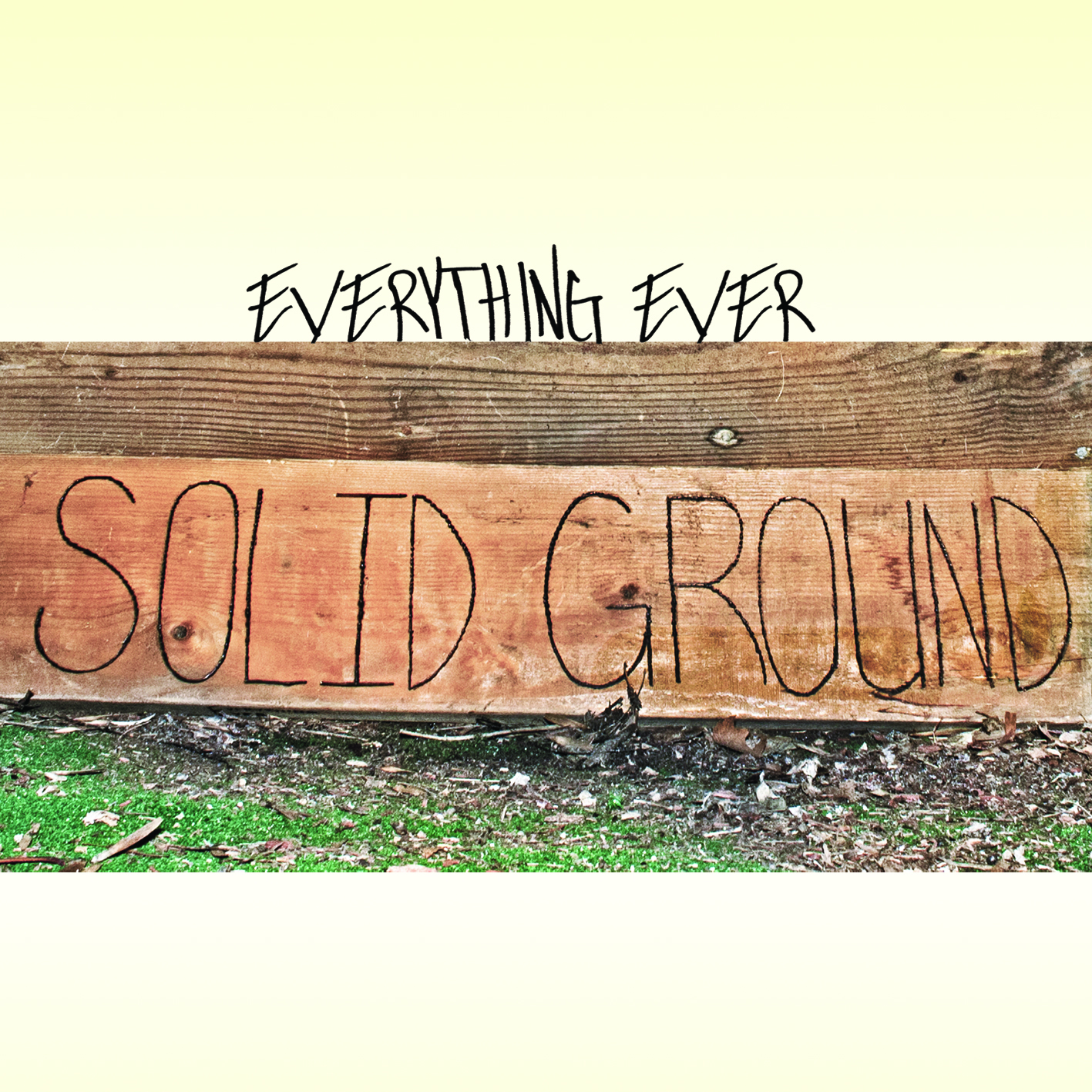
Not every up-and-coming punk band can come out of the gate with a debut album as consistent and enjoyable as “Solid Ground,” but not every punk band gets to open for Arrogant Sons of Bitches, too. When I first saw Everything Ever (then known as Curious Volume), they were the opening band on the line-up on night two of ASOB’s two-off reunion performances (a bill that also included Laura Stevenson, Shinobu, members of MU330 and I think Good Luck). The energy that these young men put into their show really surprised me, they held their own in a huge line-up. Now their debut album is out, brimming with energy and poetry.

I hesitate to call Everything Ever “pop-punk,” because they’re not as cut-and-paste (thankfully). Their music has pop-punk qualities, but it isn’t directly aligned with any punk subgenre. It could equally be called skate-punk with emotion. What is there, however, is big choruses. The band has big choruses and ‘gang’ vocals right out of their Staten & Long Island(s) roots. And there’s a lot of energy, especially in the album’s early songs. The opening trio of songs, “This Destruction,” “Rock Bottom” and “Big Ideas,” come roaring with enough energy and volume to make pop-punk purists smile. Likewise, late-album song “From Below” is a little blast to kickstart into the finale. This is something that has always come easy to the band, a nice benefit to have, and it’s on full display here.

But the band – consisting of Zach Sandel on drums, John Trotta on bass/vocals and Andrew Paladino on guitar/vocals – add some little eccentricities to their music to elevate beyond pop-punk simplicity. Trotta and Paladino put more emphasis on vocals and vocal rhythms than most punk bands, adding some depth to the tracks (I noticed it the most on “Of Guilt”). They also put in musical flourishes that save the songs from being verse-chorus-verse-chorus, etc. There are breakdowns, calmer moments, and just generally motivated songwriting. Listen closely on “Rock Bottom” for a quick, very effective chord change, for example. Absolutely the best example of the band’s songwriting is the finale, “Black Cats,” which does something most pop-punk bands would gawk at – stretches past six minutes. It’s a flowing song and a fitting finale, one that doesn’t sound nearly as long as it is. Everything Ever could be a pop-punk band – but are more one that have launched off of a template.

It could be that I saw the band open for ASOB and that I’m listening to Bomb the Music Industry! as I write this, but there were two things I noticed on the album that reminded me of Jeff Rosenstock’s songwriting – another man whose undefinable punk combined pop- and skate- templates. One example was quick – the pairing of lines “I gotta be more friendly / I gotta sing more passionately” in “Big Ideas” is delivered in a ‘pseudo-optimistic but kinda apathetic’ way that’s reminiscent of Jeff. And the lyrics, in general, have the same kind of poetic self-deprecation that BTMI was overloaded with. While most NY pop-punk bands direct their anger outwards, Paladino’s lyrics tend to focus more inwards, and while they’re maybe not as direct or specific as they could be, they’re still a poetic benefit that isn’t shared in fellow punk bands. So call Everything Ever what you’d like; maybe their name fits them well. “Solid Ground” is a strong debut, one that asks for a few listens. And with the band’s blending of influences, there’s no reason not to give it a few spins.

If you like this, try: Realistically, Everything Ever doesn’t actually sound a whole lot like ASOB/BTMI, even though I just spent a whole paragraph on comparisons. I’d rather align them with the Menzingers’ recent album, “Rented World,” which drifts closer to pop-punk than their earlier albums.

-By Andrew McNally

My Fictions – “Stranger Songs”

Grade: A-

Key Tracks: “Mt. Misery” “Postcard”

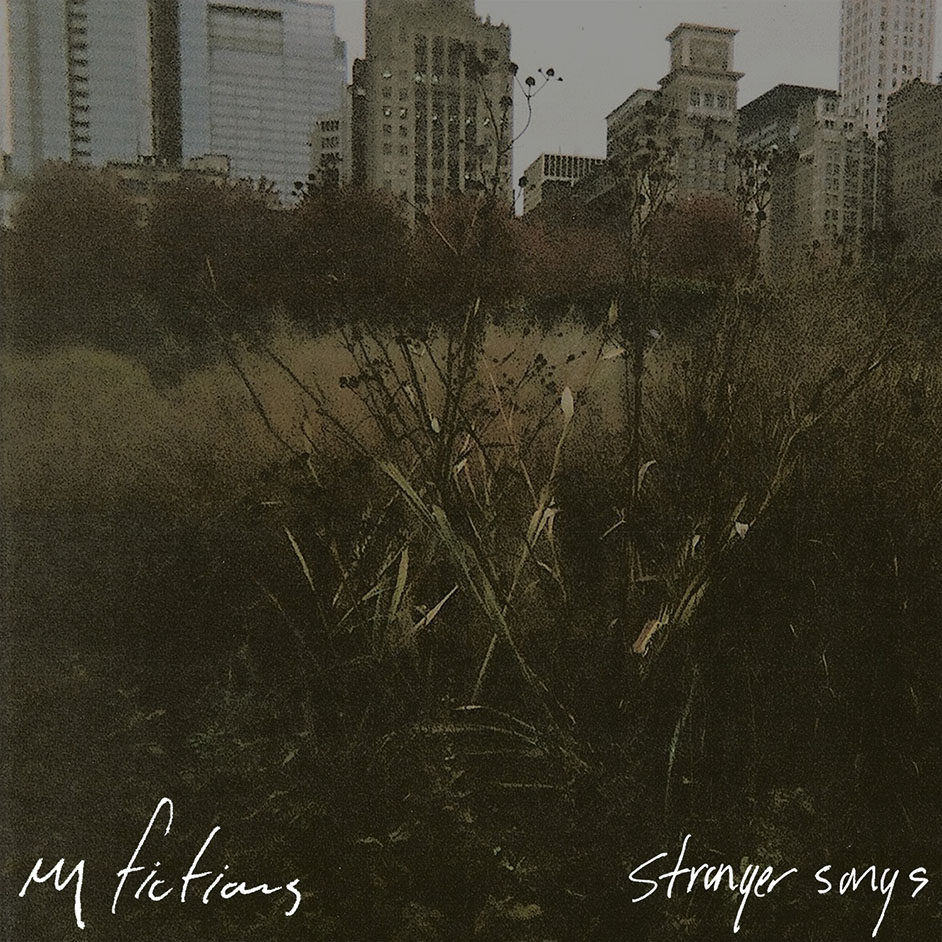
Boston group My Fictions know how to do hardcore right. Their new album, “Stranger Songs,” is fast, slick and uses volume to punish the listener’s emotions, not just their eardrums. At 10 songs and 28 minutes, it’s the work of a band that sounds frustrated and confused by the world around them, and they take out their feelings as quick as they can, with no unnecessary embellishments. “Stranger Songs” is loud and assaulting, with a dark and uncertain tone to boot.

The album’s opening track, “Mt. Misery,” starts with a bit of a cop-out intro, before jumping suddenly into a menacing, hardcore blast. Its follow-up, “Postcard,” the shortest track on the album, is an all-out assault on the listener. It is, as many of the songs are, centered on the frantic and explosive drumming that drives the beat further and further into submission. “Parking Lot” and “Stranger” also play around with false or building openings, and the energy behind the kit never lets up throughout the album.

But the album isn’t just about volume, it’s about using it properly. The album has an almost tantric feel to it, quickly softening and building back up, sometimes hitting a huge climax, sometimes not. “Airport Song” drops off completely at the end, leaving just faint bass notes and distant vocals. “Lower (A Selfish Song)” slows down towards the end for a punishing mid-tempo climax that’s as abrasive as they can get. My Fictions don’t come out of the gate and pound the listener into the ground with speed and volume – they welcome the quieter moments and tempo changes that enhance the hardcore sound.

“Stranger Songs” is not a summer album. I’d been receiving e-mails from (the excellent) Topshelf Records about the album’s release for months prior, but it’s a little difficult to get into it when I have the air conditioner running. It’s a dark and dense album, with the lyrics’ emotions coming out through the strained vocals. The band have an aura of unbridled frustration, no more apparent than on the aptly-named “Wake Anxious.” The guitars are dissonant and thundering, the drums heavy and the vocals distant and screamed. They sound disturbed by something, just in general, and use this album as their release. The album’s midpoint, “Concern,” is centered around a soundclip of someone asking a poet, “How can you write poetry if you’re not bothered by something?,” a line that comes up again in the final song. Taking a thunderous approach to your music only works if we believe there’s the frustration and anger behind it, and it’s on display here. They’re bothered. And it comes on full force. So prepare yourselves.

On an unrelated side note, I will be attending grad school in the fall. That does put this blog’s name in jeopardy, for sure. But I will be going to Emerson which is, by sheer coincidence, partially pictured in the cover of this album. I would like to promise this didn’t influence this review but no guarantees.

If you like this, try: I’m not up on my hardcore, I’m usually floored by a hardcore band’s stability throughout an album. So I’d like to suggest fellow Boston band Defeater’s recent “Letters Home” album, a continuation of their insane multi-album concept.

White Lung – “Deep Fantasy”

Grade: A

Key Tracks: “Drown With the Monster” “I Believe You”

In a world where punk is an ever-increasing and subjective term, we’re seeing more and more bands stretch the limits of the genre – the Waxahatachees and Andrew Jackson Jihads take a more acoustic-driven approach, and the Menzingers and the Modern Baseballs opt for deft poetry instead of angst. So it’s almost surprising to hear a band like White Lung, a well-oiled machine of anger and energy. They have a ferocity normally reserved for hardcore, and indeed, their music tends to hover towards hardcore and thrash metal, but it stays distinctly punk. Their excellent third album, 10 songs and 22 minutes, is a sweaty and kinetic burst that never once lets up.

White Lung aren’t changing anything on “Deep Fantasy.” This album isn’t an increase in power – they’ve always been as intense as they are here. But it’s still impressive. All ten songs on “Deep Fantasy” are at a non-stop, ferocious volume, as if they don’t know anything except that. White Lung have the ability to make a song that’s 2:26 feel long. The music is no frills – no drum fills, no theatrics, no breakdowns, no intros, no outros. Just volume. And yet, it doesn’t quite align with punk or metal. If they were to rely more on chords – which I’m glad they don’t – they’d veer into thrash metal. But the verses are usually marked by guitarist Kenneth William’s shearing, high-pitched rhythms, adding a shrieking element that isn’t metal at all.

Mish Way’s vocals dominate the album. She inverts some typical vocal structures by letting her voice fly high over the verses and taking a backseat, sometimes in a deeper pitch, during the choruses. Her voice is more stable on this time around, actually sounding intentionally conventional at most times. It creates a weird disparity – there’s clear, common vocals centered around a mass of volatile, unstable music. Her voice, at least on this record, actually resembles that of Debbie Harry’s, and the result is the album that Blondie always sounded like they wanted to experiment with, but never did.

To refer to a band, especially a punk band, as “female-fronted” in 2014 is ineffectual and stupidly ignorant, but for “Deep Fantasy,” it’s important to point out the album’s feminism. With blinding punk like this, you’d expect angry lyrics, whether personal, political, etc. And sometimes that’s the case – the repeated line “the water looks good on you” on “Drown With the Monster” speaks volumes. But some of the songs are poignant and rational. The album’s most intense track, the 1:42 blast “I Believe You,” is in response to sexual assault. Elsewhere, Way sings about other issues that society has laid on women – eating disorders, sexual fantasies and body image. To present rational and balanced lyrics in an otherwise aggressive setting brings home the importance of what Way presents – forcefully saying we need to address these issues in a safe manner.

White Lung only does one thing, and they do it extremely well. At 22 minutes, the album is a chugging engine that never gets repetitive or tired. It just keeps going, until you’re starting to break a sweat, and ending before the actual pain comes. Years ago, White Lung turned their instruments all the way up, and they haven’t adjusted them since. “Deep Fantasy” is an aural assault, and one of the best punk albums of the year. The band is a driving force in punk, and “Deep Fantasy” establishes them as a deafening group to watch out for.

If you like this try: an obvious comparison is equally feminist group Perfect Pussy, but they include effective moments of silence and feedback as major song points, that White Lung instead totally eschews. So, a better comparison might be noise-punk group So Stressed’s album “Attracted to Open Mouths.”

-By Andrew McNally

Phooey! – “A Collection of Sins”

Grade: B+

Key Tracks: “This Ain’t No Picnic” “Charted Trips”

Just a few weeks ago I compared and contrasted two albums done by Phooey!, praising the pseudo-collective for both the diversity of their music and the speed that they put out releases. And indeed, “A Collection of Sins” shows both – it’s a full-length, coming out on the heels of an EP and a split, and this time, it’s a little more baroque and psych-pop than it is noise/pop/twee/punk. And Phooey!, an ever-changing band, exists on this album solely as bandleader Nikita. It’s an 18 song collection of some covers and some originals, not aligning as much to any sort of subgenre than their past releases, instead making itself resemble a collection of vignettes. Only one song, “This Ain’t No Picnic,” is over three minutes, and nine are under two. The album’s strongest quality is probably how much it feels like someone in their bedroom, playing some little songs they’ve learned along the way.

There’s a lot going on during this album, a number of different ideas. “This Ain’t No Picnic,” the album’s first real song (after a Bugs Bunny soundclip intro), is calm and heavy on background percussion instruments. It has a baroque resemblance, without any of the grand ambitions. “Waiting Room,” is closer to psych-pop, “Charted Trips” is an acoustic semi-ballad and “Unfinished” sounds more like some of Phooey!’s earlier pop-punkish tunes. And “Rebel Gurrrl” is a much weirder, somewhat psychedelic finish to the album. In between are a number of alt-pop and fuzzy guitar songs, all ideas that don’t stick around too long.

“A Collection of Sins” is a pleasant album, the sound of a man recording some music in his alone time, messing around with the Replacements and Sam Cooke, among others. Each song is like a small offering of what Phooey! does, some more different than others. And at only 35 minutes, the “collection” feel to it doesn’t get too quick or repetitive. Not every song is as memorable as the album’s best, but since they’re all samples, it’s easy to overlook the less grabbing ones. So overall, it’s a fun release, just as varying as Phooey! is in general, and a good mix of covers and originals. If Phooey! was avoiding falling into any genre of music before, they certainly are now.

The album is available for stream and download here.

If you like this, try: Last time I compared Phooey!, as a whole, to Japanther. But this album’s varying style of vignettes is much more reminiscent of Guided By Voices and their offshoot, Swearing at Motorists.

Parquet Courts – “Sunbathing Animal”

Grade: A-

Key Tracks: “She’s Rolling” “Sunbathing Animal”

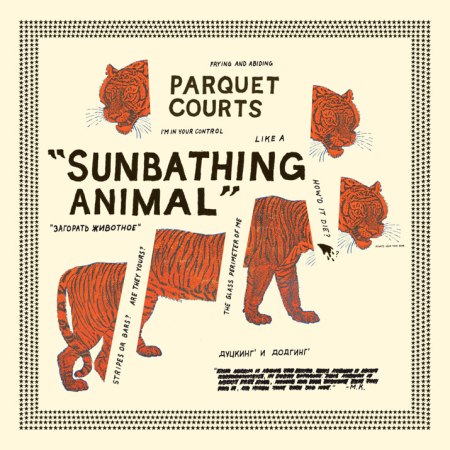
The men of Parquet Courts are growing older, but just in the sense that we all are. “Sunbathing Animal,” the second accessible full-length and third release from the band in barely a year and a half, shows hints at maturity. It’s a reluctant maturity, one of attempts at denial but eventual acceptance. The band, as they did on last year’s “Tally All the Things You Broke” EP, open up to more influences and more ideas. The always-terrific “Light Up Gold” mixed garage-rock and country influences, but was filled with a boundless youthful energy that is roped in and controlled here.

Parquet Courts seem to know that they can’t just keep playing hybrid country-punk forever. “Stoned and Starving” is one of the best songs in years, but at 5:12, it’s the only song on “Light Up Gold” that’s over 3:30. Of the 13 songs on “Sunbathing Animal,” five break that threshold, with two more only seconds away. The band is, in one way, slowing things down and introducing some more developed songwriting. “Bodies Made Of” starts the album on a deceiving, medium tempo. “Dear Ramona” follows a narrative and shows more mature songwriting. “She’s Rolling” goes past six minutes, and “Instant Disassembly” past seven, with the latter being a pseudo-ballad and the former ending in crazy, layered harmonicas.

But in another way, they’re not slowing things down at all. They’re still a punk band, and “Ducking & Dodging” shows its love for 8ths and 16ths. Its “vocals over a drum and soft guitar line” is one of the most garage-y rhythms in years. The title track provides a volume and energy blast after the slow-burning “She’s Rolling.” And there’s musical interludes, just as on “Light Up Gold.” “Vienna II” and “Up All Night” provide brief break-ups throughout the album. “Sunbathing Animal” is more drawn-out, and more expansive, but it packs as many punches as their previous works.

“Sunbathing Animal” pairs nicely with “Light Up Gold,” as a band exploring the width of their own sound. “Sunbathing Animal” is no better or worse than “Light Up Gold,” and it doesn’t immediately demand any comparisons. It’s a lot more structured, and the band is more in control of their energy. It’s still very youthful and tongue-in-cheek, still fun but serious. “Sunbathing Animal” is a distinctly different album for the band, but it’s still definitively Parquet Courts. And that should be enough of a reason alone to pick the album up.

If you like this, try: together PANGEA’s “Badillac,” a less exciting (but still agreeable) example of a garage-punk band expanding.

-By Andrew McNally

Fucked Up – “Glass Boys”


Grade: B

Key Tracks: “Echo Boomer” “DET”

The most immediately jarring thing about Fucked Up’s fourth proper full-length is it’s running time. At 44 minutes, it’s barely half the length of their previous album, “David Comes to Life.” It’s only ten songs, and only three are over five minutes. This isn’t to say Fucked Up are taking a backseat after the success of their last album – instead they’re taking a whole new approach. “David Comes to Life” was an unequivocally ambitious rock opera with many characters and four parts. And it was so good that they forced publications like The Chicago Tribune into not only putting a hardcore album in their 2011 “Best Of” lists, but finding ways to blur the name. It did leave the band in an accidental awkward position though – as one of the most unique and unconventional bands in music, they were suddenly mentioned in the same breath as bands like Foo Fighters, who they’d previously spoken out against. So to continue fighting from the inside, they released “Glass Boys” – their attempt at a skewering, conventional rock record.

First off, it doesn’t really work. Asking Fucked Up to release a typical rock record is like asking Charlie Kaufman to direct the next “Transformers” movie – it just isn’t going to be as dumb as it should be. “Glass Boys” is still littered with narratives, references to mythology and dark, convoluted poetry. And furthermore, Fucked Up is a hardcore band at heart. Even if the band has never been as raging as most hardcore bands, Pink Eyes’ vocals are still as throaty and guttural as before. They’re just too ambitious to try to pull off a normal rock record – even if it’s not done seriously. This is the band that’s doing “Year of the…” EP’s in between albums, with 10+ and 20+ minute songs. Fucked Up are too imaginative, and exist in too many genres, to really pull this off.

So what results is a batch of moderately regular songs. On one hand, it’s interesting to hear Fucked Up go back to some traditional hardcore roots, with songs that are easier to wrap your head around. It’s all high energy, still. On the other hand, it does sound like a bit of a failed experiment. The biggest case is on “Warm Change,” where they mimic classic rock by ending with a pointless, meandering guitar solo and a keyboard fade-out. It’s a bit of a parody, sure, but one that doesn’t fit alongside any other song on the album.

But still, if you take the album at a base level and don’t look at it like a certain concept, it’s still a strong hardcore album. “Echo Boomer” is a raging intro to the album, and songs like “Touch Stone,” “Sun Glass” and “DET” are just as loud and abrasive as you’d expect from Fucked Up. And in some ways, their ambition works – the drums and guitars were recorded differently. Jonah Falco recorded four different drum tracks throughout the album, and the guitars are layered and smoothed out to make more of a drone noise than a lead melody. They’ve released a whole alternate version of the album, with half-time drums. Even at their least ambitious, Fucked Up is still incredibly ambitious. So even if this is a grand idea that provides little fruitful, it’s still a solid record from the most inventive band in music. The fact that Fucked Up even thought to make the exact opposite of their previous album shows they’re still at the top of their game.

If you like this, try: Tonally, Fucked Up has always been a tough band to place. Hardcore-inspired rock, built for the indie crowd – there’s no specific audience. So thematically, I recommend two of my favorite albums: Titus Andronicus’ “Local Business,” where the band was similarly finding a way to make a post-magnum opus album, and Queens of the Stone Age’s “Songs For the Deaf,” an earlier attempt at an overly-regular rock album.

-By Andrew McNally

Cheap Girls – “Famous Graves”

(Photo Credit: punknews)

Grade: B-

Key Tracks: “Slow Nod” “Knock Me Down”

As with any Cheap Girls’ record, the main fault of “Famous Graves” is also it’s biggest strength. The band has never, ever left it’s comfort zone, and have left their music in this frustrating void where the listener knows what to expect and is delighted with another similar record, until it inevitably becomes tedious by the halfway point. “Famous Graves” is no different. It starts strong, but it has a middle that sags from too many similar sounding songs.

Part of Cheap Girls’ original act was not to do anything revolutionary, merely to add their own spin onto fuzzy indie/pop-punk (think a more emotional version of Weezer’s Blue album). By sticking so closely to the formula, it reinforces their aim to make consistent and appealing music. But that works a little too well in their favor. “Slow Nod” opens the album, a typically high-volume, medium-speed song with plenty of fuzz and tough to interpret vocals. It’s the band’s staple sound, and songs like “Slow Nod” prove they can still do it well, and with plenty of energy.

The second track, “Short Cut Days,” has a catchy vocal rhythm and excels on a sound that’s intentionally condensed in the studio, with a garage feel – but also sounds like it could tear the walls down live. Cheap Girls, at their best, manage to make both sounds simultaneously. The album’s third song and lead single, “Knock Me Down,” is a more personal song about overwhelming pain felt after surgery, and combines strong vocals, strong lyrics and energetic music, the album’s best package.

After that, though, there’s a long string of songs that do nothing to differentiate themselves from each other. While they’re inherently enjoyable, they all follow the same formula. They’re almost all in the three-to-four minute range and they feel like time that’s being killed off until the album’s strong finale. Having weak and formulaic tracks is almost unavoidable, but five of the eleven songs feel like underdeveloped cuts they’re burning off. A bulk of the album, roughly half of it, falls victim to serious repetition.

The album does have a strong finale, though. “Thought Senseless” stretches (barely) over four minutes, and is a little more developed than a typical Cheap Girls song. “Turns” is a pseudo-ballad, one that has many of the characteristics of one, except that it isn’t a soft song, which makes for an interesting listen. And bonus track “7-8 Years” is more vocally forceful than any of the album’s other songs. The mix of acoustic and electric allow the vocals to come through more clearly, and it ends up adding an element to it.

At their core, Cheap Girls are an enjoyable band. They’re both incredibly simple and subtly complex. They’ve always blended fuzz and pop, in a 90’s throwback. Their sound translates well live, and their albums can accompany any real mood or season. “Famous Graves” just sounds too repetitive, and it could easily be shuffled in and lost amongst their past albums. Cheap Girls aren’t going to win any new fans over with this album, they’re just going to have a few more great songs for fans to eat up, and some more to pass on by.

-If you like this, try: Lemuria’s semi-classic 2008 album, “Get Better.” They have a constant sound much like Cheap Girls (and the two have recorded together).

-By Andrew McNally