FIDLAR – “Too”

Grade: B+

Key Tracks: “40oz. on Repeat” “Overdose”

With track titles like “Punks,” “Overdose,” and “Bad Habits,” it might seem like “Too” is more of the same from FIDLAR. Their first album, mind you, had “Blackout Stout,” “Wake Bake Skate” and “Cocaine.” It might feel like there’s a gambit in song titles that FIDLAR is quickly running through. But, their sophomore album is an album that some people, myself included, didn’t anticipate coming so soon – the conflicting, adult album. Most punk bands grow up sometime – Rancid’s “Life Won’t Wait,” Dads’ “I’ll Be the Tornado.” FIDLAR’s maturity is a very reluctant one – some tracks on “Too” feel like holdovers from still-recent partying years. But as the guys grow up, they’re begrudgingly accepting a more sober life.

One of the best qualities of FIDLAR’s debut album, a personal favorite of mine, was an underlying, barely visible sense of angst. It only came out in certain songs, when the guys were sober enough to see that there were far too many problems in the world. Through the more youthful and the more adult songs on “Too,” the unifying sense is still the slight angst. This time, it’s on a more personal level, as “Too” is heavy on self-reflection. “I don’t know why it’s so difficult for me to talk to someone I don’t know,” is sung on “40oz. on Repeat.” “One week sober / and I’m still hungover,” from closer “Bad Habits.” “FIDLAR” was a humorously self-deprecating album, but “Too” ditches the humor. Take the lyrics from “Bad Habits,” set them in an entirely different musical context, and they could fit nicely on an Alice in Chains album.

But they’re still at a crossroads, because there’s still party tracks. “Sober,” despite the title, is almost inarguably the strangest song in the band’s catalog, with the opening third of the song done almost in spoken word (think the beginning of “The Sweater Song”* but with the vocal melody of “Baby Got Back”). And the album’s penultimate track, “Bad Medicine,” is a >3 minute song that feels like one last punk blast, for old time’s sake, the inverse of Renton taking one last injection in Trainspotting.

As with their debut album, the band has an innate and unexpected ability to eschew any one sub-genre of music. The downside is that it leaves FIDLAR without a distinct sound, something important in punk. But the upside is that each song is going to sound distinct. “Punks,” originally (or perhaps erroneously) titled “The Punks Are Finally Taking Acid,” is a heavy song, centered on a guitar riff akin to a quickened “She’s So Heavy,” with pained, screamed vocals. But follow-up “West Coast” is the kind of bouncy sing-along you more expect from the band. It goes back and forth, often reflective of the lyrics, and it adds a cohesiveness to the album. The lyrics are well-rounded, so the music should be too.

“Too” does ask one question that it does not answer – who should FIDLAR’s audience be, now? Their first album was able to answer that question very, very easily – partying punks and skaters. It’s practically a Ten Commandments for SoCal late teens who are gradually becoming less aware of Mat Hoffman. But their second album was made more for themselves, and that’s a dangerous line to cross. Just because we’re being let on on FIDLAR’s internal struggles doesn’t necessarily mean it’s something we want to see. I’m genuinely not sure who the intended audience is for this record, as the partyers generally aren’t going to warm up to the sobering songs as much. There’s a mixed audience for the album, and it’s going to be divisive among fans. Still, there’s enough going on that it stands as a solid, and different sophomore release. I’m just worried about what the band is going to have to go through for the next album.

* – I saw FIDLAR a couple months ago in Boston and they covered “the Sweater Song,” replacing most of the verses with the word “meow” repeated over and over again. Inspiration? Probably.

If you like this, try: Perfect Pussy’s “Say Yes to Love,” another album where a punk band suddenly tightened up, but not without a total maturity.

Titus Andronicus – “The Most Lamentable Tragedy”

Grade: B+

Key Tracks: “Lonely Boy” “Dimed Out” “More Perfect Union”

One of the things that made Seinfeld so great was a general lack of continuity – you can flip on any episode on TBS at 3pm or am and jump in. Sure, there’s recurring jokes – the person getting washed behind the sheet at the hospital George’s mom is in is my favorite. But each episode is pretty standalone, even for a sitcom. So it’s weird that Titus Andronicus stands by their Seinfeld references, in a way. Their fourth album, “The Most Lamentable Tragedy,” is an album that links all three of their previous albums up. It continues the “No Future” trend from “Titus Andronicus” and “The Monitor,” but left off of “Local Business.” One of this album’s best songs, “More Perfect Union,” is a reference to “A More Perfect Union,” from “The Monitor.” And “I’m Going Insane (Finish Him)” is a lyrical cover of their own “Titus Andronicus vs. the Absurd Universe (3rd Round KO)” from “Local Business.” There’s even the Seinfeld reference, a “Hello, Newman” shout on “Lonely Boy.”

Look, I love Titus Andronicus. I’ve long called them “America’s best rock band.” A picture I took of them at the Brooklyn Bowl has been the background on my phone for a few years. I didn’t ‘stand by them’ when they released “Local Business” – it’s one of my very favorite albums, I listen to it in full nearly once a week. So when they announced a 29 song, 93+ minute rock opera, I went into cardiac arrest. And as I was staring at it after it came out, before I listened, I thought – “there’s few bands that could really pull this off, and I’m not sure +@ even can.” “The Most Lamentable Tragedy” isn’t their strongest album, but in terms of ambition and effort, it is indeed unmatched.

The album is separated into five acts, much like Foxygen’s “…And Star Power” last year. The opera follows Our Hero, as he meets his doppelganger and struggles with manic depression, a reflection of Patrick Stickles’ own struggles. Stickles has reflected before – “The Monitor” reflected his depression, where my favorite +@ song “My Eating Disorder” details his selective eating.

There’s a lot to take in on the album, at 29 songs and over an hour and a half long. Given that the band has always centered itself equally on music and lyrics, there’s rarely one more worthy of attention – and that comes through the most on songs that feel like they could’ve been cut. It runs too long, even as an art project, and the average-lengthed songs start to bleed together a bit. There’s also a surprising number of them – although two of the songs are over nine minutes, and thirteen are under two minutes, most of the other tracks are between 3:00 and 4:30, unexpected for a band comfortable in the 5:00-6:30 range. Some songs, like “Dimed Out” and “A Pair of Brown Eyes,” feel zipped-up and perfectly sliced because of it, but some songs feel underdeveloped in that range.

The album keeps things interesting by engulfing all of Patrick Stickles’ influences, rather than focusing on one. Early on, especially on “No Future Part IV: No Future Triumphant” and “Lonely Boy,” the band directly channels their inner Springsteen. As the album gets more indulging, the band expands influences, from hardcore (“Look Alive”) to the Pogues (“A Pair of Brown Eyes”) to the traditional (an unexpected “Auld Lang Syne”). There’s a lot going on here, and it gets switched up so consistently that it feels like where in the manic itself.

“The Most Lamentable Tragedy” is a flawed but strong album. Just when it starts to lag, it winds up again and hits you with another punk blast. And it’s needlessly but joyously self-indulgent, keeping all of the band’s linked narratives going. It’s punk, it’s indie, it’s gospel, it’s anything you’d imagine Titus Andronicus to be. It succeeds just because it has the sheer audacity to demand it so. “The Most Lamentable Tragedy” is a beast, and with another dense, lengthy concept album under their belt, it’s safe to say we have no idea where +@ are going next. Their next album might equate struggles with body identity to stories of ancient gods, or it might be a Bon Jovi covers album. It’s tough to say, and that’s what makes +@ America’s best rock band.

If you like this, try: self-immolation

-By Andrew McNally

Wilco – “Star Wars”

Grade: A-

Key Tracks: “You Satellite” “Where Do I Belong”

Wilco are at an important point in their career. Like many artists before them – namely David Bowie, who they channel heavily here on their ninth album – they’re at a point where they’re growing restless again. Wilco established their original sound, as an alt-country band. And then, out of nowhere came “Yankee Hotel Foxtrot” and “A Ghost is Born,” their creative reawakening albums (although in most band trajectories, this period comes from creative woes, not accidental painkiller addictions). After Jeff Tweedy recovered, the band’s sound settled into a more mature, introspective look with the still-excellent “Sky Blue Sky.” And the two albums since then have seen the band embrace their catalog as a whole, both poking fun and honoring their creativity of the past.

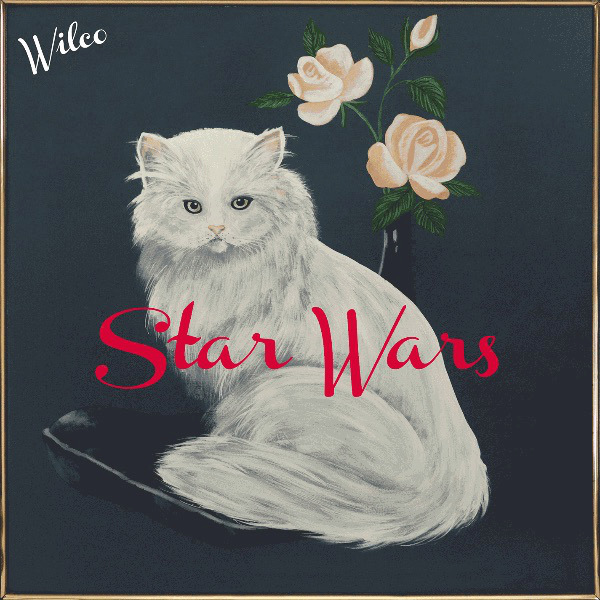
But, like Bowie did on “The Next Day,” they’re again growing restless with maturity. “Star Wars” is unlike any other Wilco album, in many ways. For on thing, it’s called “Star Wars.” Also, the cover has an adorable cat on it. It looks more like the cover for a Dusty Springfield record, not a Wilco one. And the songs are shortened, tightened and energized. There’s certainly other Wilco songs that would feel comfortable on this album – “Shot in the Arm,” “Wilco (the Song)” come to mind. But the band has created songs that don’t give themselves room to breathe. At 2:30, “Pickled Ginger” sounds just like a cut Deep Purple song with it’s fuzzed-out, grinding guitar line. Although “Star Wars” is distinctively Wilco, the songs here have traveled a long way from “Impossible Germany.” And it’s not a criticism – it’s a familiar sound, in an unfamiliar package. At 33:47, it’s the band’s shortest album by nearly ten minutes (ten minutes being two-thirds the length of their longest song). And as a band that’s stayed reliant to the album format, their decision to drop this release suddenly and for free online is growth as well.

Although the band has been playfully looking back at their earlier works in recent years, “Star Wars” marks the first time in years that they’ve actually incorporated any elements with an avant garde feel. They come mainly in the opener, “EKG,” a 1:15 chippy, dissonant intro that doesn’t serve as a standalong song, instead as a declaration of what’s to come.

Also, Jeff Tweedy as a frontman and songwriter seems to be less of a focus on this album. Something noticeable about one the album’s best songs, “You Satellite,” is that the volume of his vocals is closer to the rest of the instruments, instead of being at the forefront. And eventually, he gives way to the music entirely. Tweedy’s lyrics on this album aren’t his best (they’re a lot vaguer than past Wilco albums), but the focus is on the music and the vibe anyways. The longer they’ve been around, and especially since they’ve developed a more steady line-up, Wilco has seemed more like a full band and less like a collective.

Wilco haven’t released a mediocre album since 1999’s “Summerteeth,” but it’s been a long time since they’ve released a great one, too, and that’s just what “Star Wars” is. This is their best album since “Sky Blue Sky” in 2007 and, if you like just fun and lively Wilco, then before that. There are moments of beauty and grace on “Star Wars,” especially in affectionate closer “Magnetized.” But more often than not, those moments are often followed up by a sudden drum line, feedback or guitar melting. Just as you would expect from a band growing restless yet again.

If you like this, try: This one’s probably obvious since I mentioned it, but it’s stylistically and tonally resembling of Bowie’s “The Next Day,” if not actually all that similar.

Muse – “Drones”

Grade: D+

Key Track: “Reapers”

When you’re a band that’s been making the same album over and over again for 15 years, you should know better than to call it “Drones.” I won’t even touch the easy joke, nor will I say anything about the art-rocity on the cover. Let’s just not even spend time there.

Muse makes music for teenagers. I don’t know if it’s intentional or not, but they do. I was 14 when “Absolution” came out, and it rocked my world for a while. “Drones” takes a predictable anti-war stance, and man, if this had come out a decade ago, I would’ve fallen in love with it like it was any girl I talked to. Certain songs from “Drones” have Hot Topic-primed lyrics, down to a concept that’s confusing and inconsistent.

“Drones” supposedly follows someone as they join a military and become a human drone, or something Muse-y like that. It’s not always coherent, and it leads to very Muse-y songs like “Defector,” that has a chorus of “I’m free from society / You can’t control me,” or “Revolt,” which is pretty self-explanatory. The album’s second track is an interlude, of a drill sergeant prepping a soldier to be a “killing machine,” which is pretty much the equivalent to Kevin James starring in “Apocalypse Now.”

Musically, Muse looked to get back to basics on “Drones.” It doesn’t always work, but they have stripped themselves down a bit compared to the past few albums. Given that “The 2nd Law” had a literal dubstep song, hearing just the guitar-bass-piano-drums combo of the “Origin of Symmetry” days is a relief. It’s not enough – the strength of Muse’s early albums lies in their restlessness, as they clearly had ambitions that they couldn’t yet meet. But it is still an improvement. “Reapers” is the closest to classic Muse (note: to me classic Muse is “Newborn”). 10+ minute penultimate track “The Globalist” also hits old Muse for a while, before falling into terrible ballad territory (and giving way to the closer, “Drones,” which is Matt Bellamy a capella layered over himself – yikes).

Compared to the slough they’ve been slinging at us for a few years, “Drones” isn’t so bad. But there’s a second interlude on the album that’s part of a speech from JFK and it’s just like, come on guys. You’re British. This album is about drones. None of it makes any sense. Muse revel in their corniness, and it affects their songwriting. There’s some generally good Muse songs on this album, but they’re too few and far between to make you think they’re a band worth paying attention to again. 15 year-olds are probably going to pick this album up, and it might inspire them – that’s good. “Absolution” inspired me. It made me more political, and more musical. But it also advanced me past self-serving bands like Muse. Ten years from now, when Muse hits 31 years as a band, the kids that picked up “Drones” are going to smirk at themselves, at how far they’ve come since those teenage days.

-By Andrew McNally

The Sonics – “This is the Sonics”

Grade: A-

Key Tracks: “I Don’t Need No Doctor” “Save the Planet”

Does history repeat itself, or do things never change?

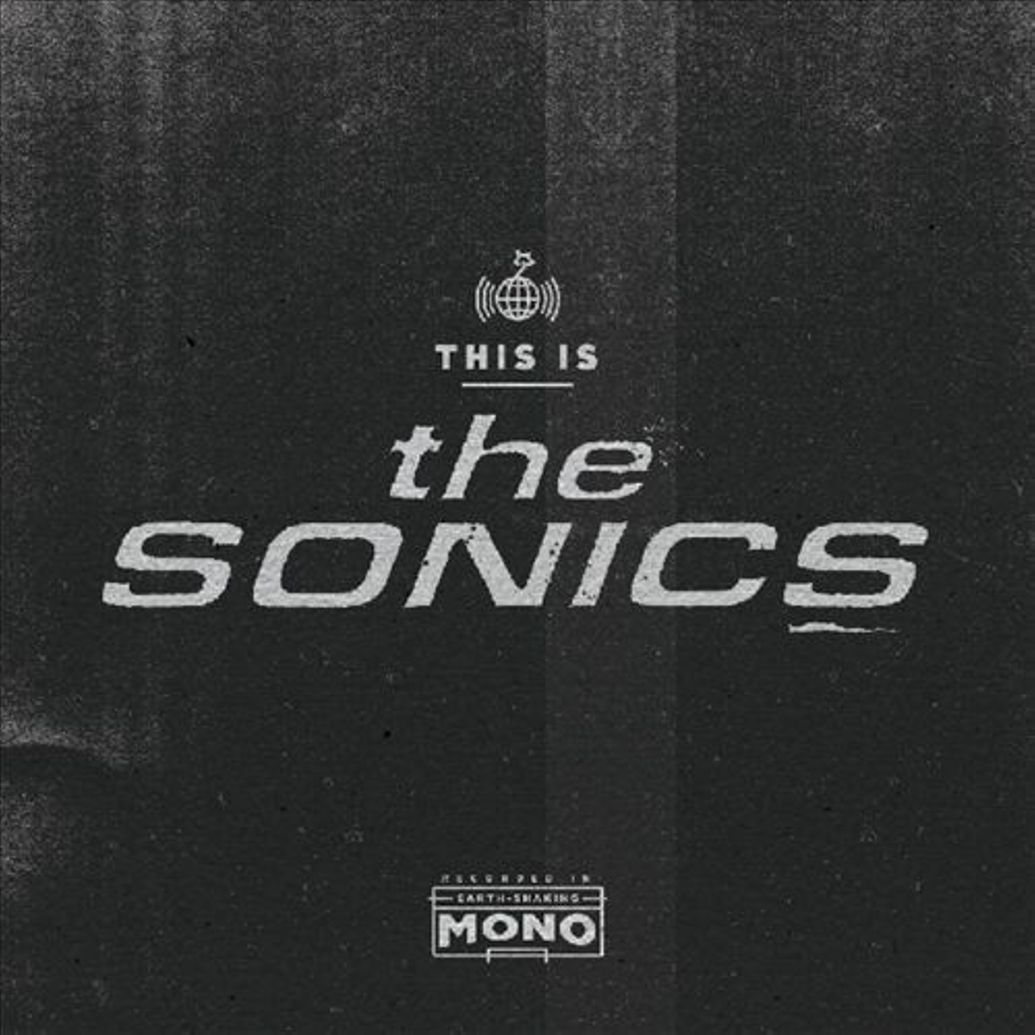
Fans of My Bloody Valentine, Guns N’ Roses and the Stooges are breathing a sigh of relief. “At least I’m not a Sonics fan.” “This is the Sonics” now takes the cake as the longest time in between albums. It’s the first album from the band’s original line-up in 49 years, and they play like nothing’s changed. Although the members are now in their 70’s, they’re still playing incendiary pre-punk garage rock.

This album plays like a movie in a series that ignores the films that came before it. The Fast and Furious series ignores Toyko Drift, like the film never happened. Except that in the world of the Sonics, what hasn’t happened is punk, disco, new wave, hip-hop, metal, boy bands, and everything else since “Sgt. Pepper”. The Sonics play like they’re still the forefront of music, something that would be vain if it mattered. In reality, it’s an incredibly refreshing listen. The band blow through 12 garage instant-classics in 32 minutes, each as good as the last.

All of the instruments work off each other on the album – there’s no competition for value. This is partly garage-rock mentality, and partially due to the record being recorded in mono. The producer, the legendary Jim Diamond, does little more than hit the start and stop buttons, just recording the band live. To add any flourishes, or to clean the sound up, would do the band injustice. Instead, the band is recorded as they should be – geared up, roaring with a possibly vampiric energy that some bands can’t match when they’re young.

There’s only really two nods to the fact that the Sonics aren’t still in 1966. The first is the inclusion of horns, something that wasn’t in the band until entirely different iterations of the Sonics played into the 70’s. The other is the late-album “Save the Planet,” which addresses global warming in the most Sonics way possible, by letting us know Earth is the only planet with booze. “Reality’s for people who don’t know how to drink,” Jerry Roslie sings, daring us to ignore his age.

The Sonics still have a cynical edge to their lyrics, a cynicism that separated them from the more party-hardy garage acts of the 60’s. There’s a relatively harmless causal sexism to the lyrics, much like the 60’s, as well as songs like “I Got Your Number,” with “I’ve Got Your Number, and it’s 666” sung in an offhand way. By convincing themselves that 60’s garage rock still wants to be heard, they’ve convinced us that lyrics like this are still surprising. “This is the Sonics” boasts a very 60’s throwaway album title (like “The Who Sings My Generation”), but it’s also very literal – this is them, all these years later. And to anyone that wasn’t around then, this is what they were. And it’s what they still are. 2015 hasn’t stopped throwing surprises at us, and a wholly rocking new Sonics album is something none of us expected.

If you like this, try: early garage rock like this has a big influence on the Burger Records type surf-punk bands, try Japanther at their more direct (“Surfin’ Coffin”).

-By Andrew McNally

METZ – “II”

Grade: B-

Key Tracks: “Acetate” “Kicking a Can of Worms”

METZ named this album “II” because they knew it would serve as a sequel. They came out swinging on their self-titled debut album, and fell into the rarity of an instant classic punk release. Even in a crowded genre, the album defied genre. “METZ” was like a butcher, taking a typical post-punk album and rolling it into one long strand, making incisions every few inches. Their music is extremely metrical, in a way that punk and post-punk usually prides itself on going against. “II,” unfortunately, doesn’t quite keep the energy. But it is a proper sequel.

Sequels are difficult – how much do you acknowledge the original? On the spectrum of “Godfather Part II” to “Hangover Part II,” METZ here fall somewhere around “22 Jump Street,” or “Led Zeppelin 2,” in the acknowledgement that yes, it’s more of the same, but you liked it the first time. METZ have a formula to their music that’s distinctly their own, but they’re already deviating from it.

The worst moments of “II” are the ones where METZ sound like they’re retreading themselves. The band, surprisingly, suffers from the “Give ‘Em Enough Rope” struggle of recapturing a debut album’s sheer energy. The songs presented here are sometimes more forceful than others, and sometimes more well-mixed than others. “Acetate” and “Landfill” have energy to them, while “Spit You Out” and “Nervous System” could use a little boost. And while the balance between heavy instrumentation and vocals is usually balanced, on “Wait in Line” it is too heavily in favor of the music. The lyrics throughout edge on intelligible, but “Wait in Line” is the only track where they’re too muted.

Still, the band recognizes that they can’t completely recreate their first album, and they allow themselves some flourishes. There’s something close to a solo on “Spit You Out,” and there’s a tremolo bit on “Eyes Peeled” that could be mistaken for a solo. They break out of their own system a bit, more than they allowed themselves to do on “METZ.” The vocals on “The Swimmer” are more frantic than they were before. There’s signs that the band knows this is a brand that can’t keep going forever. And at the end of it, “II” still rocks pretty hard. They might not be able to keep this formula up for long, but it’s still working in their favor.

If you like this, try: There’s a hundred different ways I can go with this one, but I’ll keep it basic. One of the best of the year – Sleater-Kinney’s “No Cities to Love

-By Andrew McNally

Mumford & Sons – “Wilder Mind”

Grade: D

Default Key Track: “Tompkins Square Park”

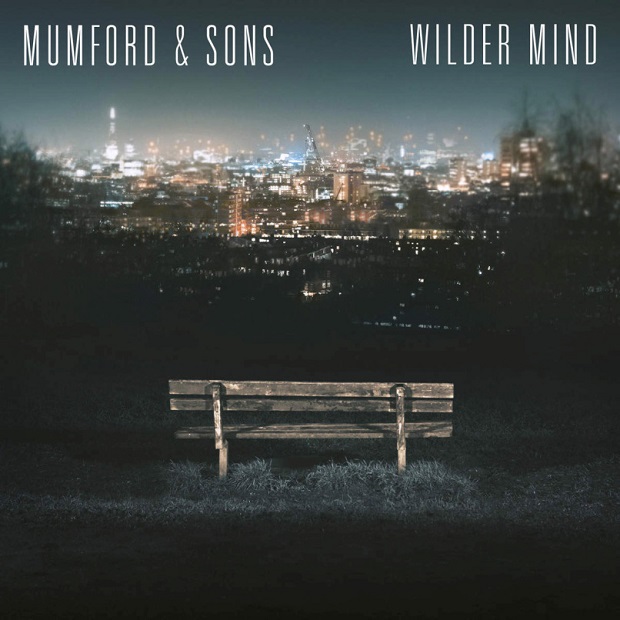
There was a time when vagueness was a part of rock music. It was big in classic rock – Springsteen and AC/DC alike told stories of everymen that resonated, even though they’re details were ripped out of entry level creative writing classes. Think about Tom Petty’s “Free Fallin’” – it describes a very specific girl, but an everygirl. Mumford & Sons harken back to the days of classic rock storytellers on their first electric album, “Wilder Mind.” But then isn’t now. Mumford & Sons going electric doesn’t resonate like when Dylan did it – hell, they’re probably quieter here. And in an incredibly overpopulated music scene, with artists like FKA twigs, Grimes, Viet Cong and TWIABPAIANLATD melting and reforming hybrid genres, and artists crafting increasingly more specific lyrics – see “Groin Twerk,” “Sometimes,” “King Kunta” – vagueness isn’t going to get you anywhere.

“Monster.” That was my choice for the first ballad of the album, when I first looked at the tracklist. Not because of the title, far from it – just because it was the sixth track. I was right. The album was predictable from the get-go; what you expect is presented almost exactly. The band sounds like any myriad of guitar-driven indie bands that’s existed from ’91 – present. There’s almost nothing memorable here. “Wilder Mind” stands equal with any of the non-“Hot Fuss” Killers albums, and any Coldplay album, as that album that most dads hold on to as a last grasp at trying to bond with their kids over music.

The album’s worst quality is that it isn’t worse than it is. If this album were actually worse, it could be fun-bad, like an ironic listen that you listen to for a laugh. But it’s just bland. It’s tepid, totally drained of life. There’s almost nothing enjoyable, and it’s forgotten before it’s even over. There are highlights, at least – the band sounds engaged on the opener “Tompkins Square Park,” a song that could stand as a Death Cab ripoff. And they do bring an energy to the table late on the album, on “Ditmas.” But the two Brooklyn-named songs notwithstanding, nothing else works here.

Mumford & Sons came out of the gates swinging a few years ago, armed with banjos, a new sound that rivaled acoustic dubstep, and a ridiculous personae that couldn’t be ignored. It got old fast, as they played themselves out, but they rode the world for a few years. Why they’d follow up a Grammy-pummeling album with this light-hearted, dull mess is beyond comprehension. Credit to a band trying to reinvent themselves, but “Wilder Mind” is just an old grenade, hissing with it’s pin pulled, and a crowd standing, slowly moving their fingers from their ears.

There aren’t even any songs about Gene Wilder. Should’ve been called “Whiter Mind.”

If you like this, try: catching up with the times

Alabama Shakes – “Sound and Color”

Grade: A-

Key Tracks: “Don’t Wanna Fight” “Gimme All Your Love” “The Greatest”

Alabama Shakes’ “Sound and Color” is their sophomore album, but you wouldn’t know it. They sound like veterans, who have earned the right to indulge themselves in whatever they want. They spend most of the album resembling bands that have come before them – anywhere from TV on the Radio, to Citizen Cope, to the MC5. But all the while, aside from a few digressions, they’re a Southern blues-rock band, in total control of their sound. If they want to have fun, they’re damn well going to have some.

The opening song is the title track, a minimalist song based around layered vocals and beats. Intentional or not, it harkens strongly back to TV on the Radio’s opener “I Was a Lover” (from “Return to Cookie Mountain”), as a hushed song that gives the impression that the band could, but isn’t necessarily going to, erupt. The album follows exactly as it’s presented – usually calm and ethereal, but with occasional, noisy flourishes. The second track, “Don’t Wanna Fight,” establishes a smooth guitar line that’s instantly more melodic than the whole previous song. Brittany Howard’s vocals come in as a prolonged squeak, because, why not? Smooth blues vocals are expected to complement the music, and she gets to that point. But fighting the grain is the album’s mission statement.

“Sound and Color” is an album that sounds like it was designed around individual songs, not around an album format. What I mean – take a classic like “Dark Side of the Moon” or “Abbey Road.” Excellent albums, but not every song sounds great when it comes up on shuffle. They’re centered around an album format. Blues (and blues rock) is usually centered around songs, and nearly every track sounds like the band worked out the components that would make it unique. “Dunes” has a quick section where the band gives way to a dissonant pair of acoustic guitars. “Future People” has a synth-y drone in the background that would’ve sent John Lee Hooker to the hospital. Best track “Gimme All Your Love” sounds like an improved version of any song by any boring alt-jam band, occasionally bordering on near-silence. And then it picks up, suddenly, and unexpectedly. And “The Greatest” is a straight, worn punk track, one that sounds like it’s going to have a deceiving, disappointing red herring intro but doesn’t, keeping the energy up for nearly four minutes.

Every member of Alabama Shakes is clearly exceptional. Howard’s voice goes from low and subdued to high and shrieking at any turn. Zac Cockrell’s bass bumps the band through the whole album, more audible than on most rock releases. Heath Fogg’s and Howard’s guitars drive funky, usually melodic but occasionally dissonant rhythms. And Steve Johnson’s drums keep the rhythms afloat, expanding the band’s whole sound. The band occasionally works in group vocals, and sometimes not. Sometimes, they sound like a collective, sometimes they’re supporting one member. But always, they’re laid back and just enjoying what they’re doing. Without the band’s pure enjoyment of the music they’re making, half of the songs on “Sound and Color” would sound unoriginal, played out. But the band seems to understand that they’re playing some pretty hybrid genres, and they roll with it. “Sound and Color” probably isn’t going to be an album we’re looking back on in twenty years, but for an immediate time, it’s a hell of a ride.

If you like this, try: TV on the Radio, but as great as “Cookie Mountain” is, their follow-up “Dear Science” was even better.

-By Andrew McNally

Lightning Bolt – “Fantasy Empire”

Post also featured on seroword.com

Grade: B

Key Tracks: “The Metal East” “Mythmaster”

Lightning Bolt is 21. Lightning Bolt is living on its own, balancing school and work. Lightning Bolt can drink, vote and smoke with no consequence. On their seventh album, they embrace being 21 as an actual 21 year old might – by accepting the rigidity of adulthood, accepting the routine of routine, but not embracing it.

The band, still comprised of just Brian Chippendale on drums and indecipherable vocals, and Brian Gibson on bass guitar, give the impression they’re cleaning things up. The songs on “Fantasy Empire” feel more rehearsed. They’re more rhythmic, more practiced, more worn-in. The band even recorded in a proper studio for the first time in years. This is a trajectory most bands tend to follow – they’re crazy while they’re young, but once they get a taste of success they straighten themselves up. But, Lightning Bolt has been unpredictably successful for many years, so to hear a more straight-forward, repetitive version of the duo is surprising, to say the least.

Or at least, that’s what they want us to think. Lightning Bolt’s rigidity on “Fantasy Empire” is only surprising because we’re used to their wild inconsistencies. Their songs weren’t improvised, but they sure damn sounded like it. 2005’s “Hypermagic Mountain,” one of the albums that got me into noise music, is an hour of Chippendale beating the drums into submission and Gibson shredding wildly. On “Fantasy,” there’s central rhythms and tempo changes. The vocals are rhythmic and coordinated (if not still wholly indiscriminate). But they’re still the same band. On opener “The Metal East,” the band rages on like an ambulance driver in a snowstorm – an experienced one.

The Brians were really just growing tired of the recording process and wanted a change. “Fantasy Empire” is their first album since 2009, and some of these songs have been in their concert rotation since 2010. Musical maturity is a different route for the band. Sometimes, it works, like the sudden tempo change and crescendo on “Mythmaster.” Other times, like on “Horsepower,” the lack of insanity leaves them focus-less. More often than not, things come together. The band nods to metal, like on “Runaway Train,” and to pop, like on the surprisingly rhythmic vocals of “Over the River and Through the Woods.” They’re more leveled, letting you know when you’re going to be assaulted and by which instrument. Things come together more, there’s a semi-structured cohesiveness. And the level to which the listener finds it either off-putting or a breath of fresh air, is really up to the listener. It does leave a hole, as they begin to sound like the bands they’ve inspired. But it’s a small hole, because even in it’s maturity, Lightning Bolt is still a 21 year old band – not yet rid of a few pranks, a few tricks up it’s sleeve, and a whole lot of energy.

If you like this, try: The best recent comparison to “Fantasy Empire” is Melt-Banana’s 2003 “Cell-Scape,” where they held back and wrote catchier, more accessible songs – and in doing so, their stance as the most ferocious band on Earth was only heightened, through the power of planned blasts instead of a full-on attack.

No Noise – “Strange Times”

Grade: A-

Key Track: “People Downstairs”

The best attribute of young rock bands is usually their youthful energy; No Noise is no different. Coming from (possibly a garage in) Montclair, New Jersey, the five-piece alt-rock band is marked by their 90’s influenced, energetic alt-fuzz.

“Strange Times” is led through battle by singer Mika, whose vocals dominate the EP. She rarely flourishes, instead letting her strong vocals fit within the music. She owns tracks like “Blisters” and “People Downstairs.” She complements the band behind her, with an energy that lifts them past similar, settled bands.

The five-piece, which also consists of Sam and Alec on guitar, Max on bass and Joe on drums, are younger than this reviewer – significantly younger. This bleeds through onto “Strange Times,” which benefits from a general aversion to metrics and structure. The band does conform to relatively standard rock structures, but they have a loose, almost practiced-sloppiness to them. Intentional or not, they’re reminiscent of early ’90’s acts like Built to Spill or ‘Blue Album’ Weezer in their rehearsed garage feel. Equal parts grunge and surfer, No Noise are able to tone it down, like on the bluesier “Play Dumb,” and are more than capable of kicking it back up, like on “People Downstairs.”

Lyrically, No Noise seem to be pretty straightforward, sticking more to a rock structure than the music might. And that’s alright, because they fit within the context of the songs, and the focus is stronger on the music and vocals anyways. And when it all comes together, it’s largely successful. “Strange Times” is an EP that demands replays, and it gets better with each spin. Their influences may lie in the greats, and they’re picking and mixing the best parts of each. No Noise have an open road ahead of them, and “Strange Times” is just a revving of the engines.

Stream the album on Spotify or on their Bandcamp page.

If you like this, try: Pavement, at their more guitar-heavy times.

-By Andrew McNally