A few words on Marilyn Manson’s “The Pale Emperor”

Grade: B-

Key Tracks: “Third Day of a Seven Day Binge” “The Mephistopheles of Los Angeles”

I have a distinct memory, in 2007, of downloading the lead single from Marilyn Manson’s ’07 album “Eat Me Drink Me,” called “Heart-Shaped Glasses.” I downloaded it, and realized that I was a seventeen year old grabbing a song from someone who relevancy had left behind years ago. I don’t know what I did next, but the realization of adulthood crept in so I probably bought a checkbook or scheduled a doctor’s appointment by myself or something. It’s now eight years later, and Manson’s name has been written into the history books as a somewhat flash-in-the-pan shock-rocker from the 90’s. But it’s time to make that edit.

I wasn’t planning on reviewing this album. I didn’t even know if I’d listen to it. I keep a running tab on new albums throughout the year and listen to whatever I can – Dylan’s covers album isn’t on Spotify, and Mark Ronson wasn’t tickling my fancy today, so I just threw on “The Pale Emperor,” remembering it had been getting more press than his previous few albums. I don’t know the last time I listened to a Manson album in full; I’m not positive I ever have. But I’m glad I did, because I’m finally getting the Marilyn Manson I’ve always wanted to hear – the real Marilyn Manson, the real Brian Warner.

My problem with Manson was that it never seemed real – he wore weird make-up, but so did Alice Cooper. He sang about hating people and culture, but so did everyone else. He sang about sadistic things, but so did Black Sabbath, and Iron Maiden. And when school shooters started admitting their love for Manson, he was forced to break facade and tell people not to do that. His music was meant to shock, but it was way, way too melodic. Whistle “The Beautiful People” to yourself right now. I bet you can. The Dead Kennedys were more violent and sloppier, and you can’t say that Manson would strike any nerves musically that Nine Inch Nails or, hell, Merzbow hadn’t already.

Manson fell into irrelevancy, once we all accepted his existence and decided to turn him into the butt of jokes instead of the envelope-pushing musician he was trying to be. And although the band has been releasing albums this whole time, “The Pale Emperor” is the first time we’ve seen Manson as a musician. The album doesn’t always turn the volume up; it’s poetic, melodic and, at points, bluesy. It’s even occasionally a little fun, even in it’s darkness. These feel like the songs that Warner – not Manson – has been sitting on for some time, waiting for a time to record. Maybe he waited too long, but they’re a welcome change for someone who had outplayed himself and his band.

Manson sounds like he’s actually having a good time on this record, and it’s a fun we can all engage in. It’s not all great, and it’s not overly memorable, but it’s a side of the band we’ve never seen before. Song titles like “Slave Only Dreams to Be King,” “Birds of Hell Awaiting” and “The Mephistopheles of Los Angeles” sound like typical Manson, but they’re not – because he’s not aiming for radio anymore. Manson – and the band – have finally hit the point where they don’t have to fight for hits any longer. People are either in it for the long haul, or they’re not.

I was never onboard the Manson train, I was a little too young, but this album excited me. I’ve always seen the band’s problems being the forefront of their music and their actual music on the backburner, and that’s finally switching. I titled this review “A few words on Marilyn Manson’s “The Pale Emperor”” because I wanted to talk more about his legacy than the album itself (and because I didn’t expect to go on this long); I’m not that familiar with his discography and how different this album really is. But it is a breath of fresh air from a musician who is finally able to be comfortable with himself. No forcing, no goals, and only the theatrics he wants – “The Pale Emperor” is still a dark, heavy album, but it’s finally one by Manson’s standards, not one by society’s.

-By Andrew McNally
My Fictions – “Stranger Songs”

Grade: A-

Key Tracks: “Mt. Misery” “Postcard”

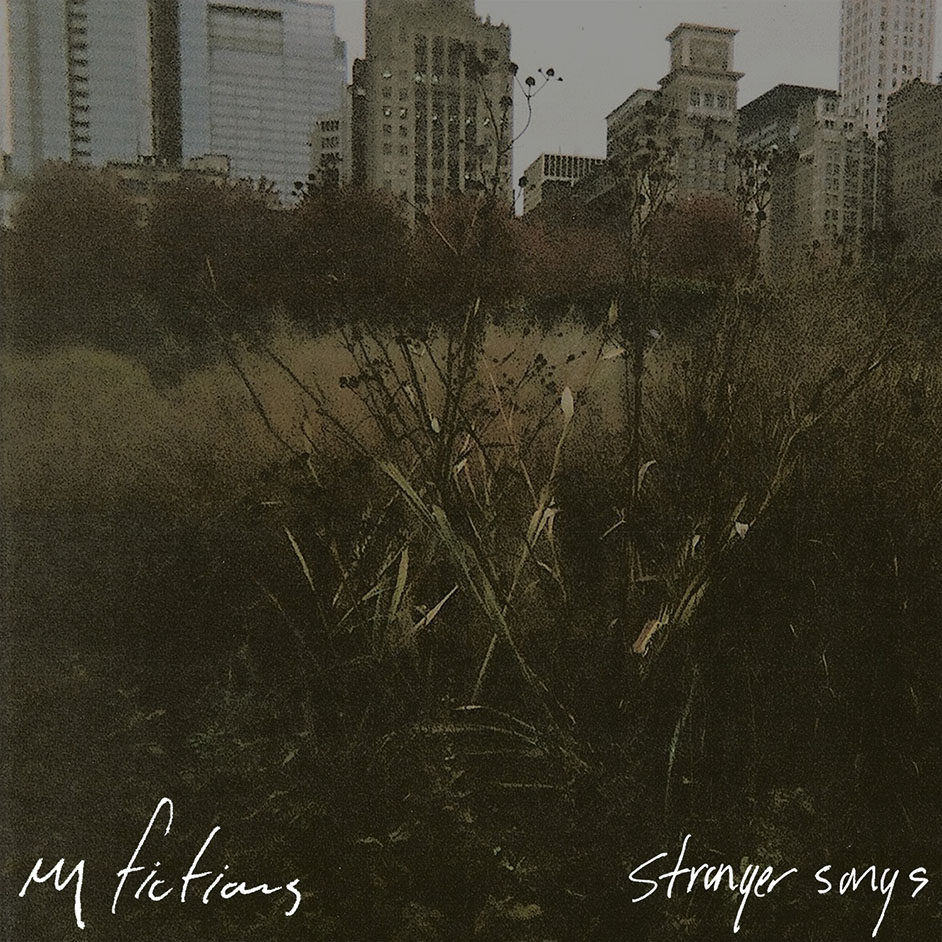
Boston group My Fictions know how to do hardcore right. Their new album, “Stranger Songs,” is fast, slick and uses volume to punish the listener’s emotions, not just their eardrums. At 10 songs and 28 minutes, it’s the work of a band that sounds frustrated and confused by the world around them, and they take out their feelings as quick as they can, with no unnecessary embellishments. “Stranger Songs” is loud and assaulting, with a dark and uncertain tone to boot.

The album’s opening track, “Mt. Misery,” starts with a bit of a cop-out intro, before jumping suddenly into a menacing, hardcore blast. Its follow-up, “Postcard,” the shortest track on the album, is an all-out assault on the listener. It is, as many of the songs are, centered on the frantic and explosive drumming that drives the beat further and further into submission. “Parking Lot” and “Stranger” also play around with false or building openings, and the energy behind the kit never lets up throughout the album.

But the album isn’t just about volume, it’s about using it properly. The album has an almost tantric feel to it, quickly softening and building back up, sometimes hitting a huge climax, sometimes not. “Airport Song” drops off completely at the end, leaving just faint bass notes and distant vocals. “Lower (A Selfish Song)” slows down towards the end for a punishing mid-tempo climax that’s as abrasive as they can get. My Fictions don’t come out of the gate and pound the listener into the ground with speed and volume – they welcome the quieter moments and tempo changes that enhance the hardcore sound.

“Stranger Songs” is not a summer album. I’d been receiving e-mails from (the excellent) Topshelf Records about the album’s release for months prior, but it’s a little difficult to get into it when I have the air conditioner running. It’s a dark and dense album, with the lyrics’ emotions coming out through the strained vocals. The band have an aura of unbridled frustration, no more apparent than on the aptly-named “Wake Anxious.” The guitars are dissonant and thundering, the drums heavy and the vocals distant and screamed. They sound disturbed by something, just in general, and use this album as their release. The album’s midpoint, “Concern,” is centered around a soundclip of someone asking a poet, “How can you write poetry if you’re not bothered by something?,” a line that comes up again in the final song. Taking a thunderous approach to your music only works if we believe there’s the frustration and anger behind it, and it’s on display here. They’re bothered. And it comes on full force. So prepare yourselves.

On an unrelated side note, I will be attending grad school in the fall. That does put this blog’s name in jeopardy, for sure. But I will be going to Emerson which is, by sheer coincidence, partially pictured in the cover of this album. I would like to promise this didn’t influence this review but no guarantees.

If you like this, try: I’m not up on my hardcore, I’m usually floored by a hardcore band’s stability throughout an album. So I’d like to suggest fellow Boston band Defeater’s recent “Letters Home” album, a continuation of their insane multi-album concept.

Nepotism – “Black Sheep”

(Photo Credit: bandcamp)

Grade: A-

Key Track: “New American Drugs”

Nepotism are a very eclectic group from South Carolina, taking the best parts out of 90’s punk, modern rock, metal and more, to make a distinct alt-metal sound. The five track EP jumps all around, making sure each song is unique, nearly all of which are successful. What makes Nepotism immediately attractive is the catchy quality of their music. While a lot of louder guitar-based alternative bands aim for discord and noise, Nepotism look for harmonies and memorable rhythms within volume.

The album’s stand out is “New American Drugs,” the most punk-influenced of the five songs. The song has a speedy and relentless central guitar rhythm, that’s equal parts funky, catchy and angry. It wouldn’t sound out of place on your favorite 90’s throwback radio station, but that doesn’t mean it sounds old. Closer “Nobody Knows” is another great track, in the same vein. It’s ferocious and non-stop, but still comfortably accessible. The song is nuzzled in rock radio – fit for radio, but not fit for all of radio’s audience.

“In Disguise” might be the only weak song on the EP. It is the EP’s slow song (hesitate to call it a ‘ballad’) and although it’s a completely successful song in it’s own right, it sounds a little too close to 311’s “Amber,” in many ways. It also suffers from being placed too early on the EP. As the second song, it kills the momentum brought up from strong opener “Let It Out.” All that said, those criticisms are easy to ignore, and I found myself humming on the second listen.

Nepotism are like many alt-rock bands today, taking their inspirations from eclectic groups and genres. This EP shows hints of Incubus, Tool, the Stone Roses and many 90’s alt-rock bands. While those bands all created molds and became victims of their own product, bands like Nepotism are using the molds made by everyone from 311 to Green River and turning them on their heads. “Black Sheep” is five songs that are definitely recorded by the same band, but really don’t sound alike. And that makes for a pretty unique release.

The album can be streamed and downloaded here.

If you like this, try: Pissed Jeans’ “Honeys.” Not really all that related, but there were certain moments where I was reminded of the post-rock band’s excellent (and equally diverse) new LP.

-By Andrew McNally

Tyranny Is Tyranny – “Let It Come From Whom It May”

(Photo Credit: bandcamp)

Grade: B

Tyranny is Tyranny create a pretty heavy sound for four people. With Russell Emerson Hall and Jason Jensen on vocals and guitar, M. Guy Ficcioto on bass and vocals and Ben Aldis on drums, the band creates a demanding and achingly slow hard rock-noise rock hybrid. The album is only seven tracks but is a full-length time wise, many songs going over five minutes. Think Pissed Jeans slowed down. And the band takes a strong, anti-capitalist approach. They seem to take on the same political fervor as Propagandhi, though aimed at a different target. Their leftist lyrics add a different element to their post-noise rock genre.

The album’s first two tracks – “Manufacturing Truth” and “Owned By Thieves” take more of a direct approach, coming off as decent, heavy rock songs. “Down the K-Hole” is heavier, though, and a little faster. The vocals are more intense and the central rhythm is crunchier, more chord-based. “The Haze of Childhood” is a quiet, instrumental interlude at the album’s physical midpoint (though actually coming earlier time-wise). It’s a welcome break before the intensity kicks up again. “Apostasy” starts off with the same rhythm as the previous song, building into a properly heavy song with a grinding central line. The sixth song, “The American Dream is a Lie,” acts as the first of two magnum opuses, a heavy and constantly changing song. The second, “Always Stockholm, Never Lima” is a destructive finale, feeling like it brings the album to a close.

The vocals contributed to the album are sometimes screamed, sometimes just aggressively sung. Overall, they resemble some of those very heavy but radio-friendly hard rock bands of the early ’90’s (your Sepultura and so forth). The band’s somewhat lo-fi recording makes the lyrics unintelligible at points, but they still contribute to the album. Very liberal rock bands tend to have their own goals, and Tyranny is Tyranny feels no different. They still have some kinks to work out, but Tyranny is Tyranny sounds like the beginning of a good political post-noise rock band.

The album can be found here.

-By Andrew McNally

August Burns Red – “Rescue and Restore”

(Photo Credit: Amazon)

Grade: B

Key Tracks: “Provision,” “Sincerity”

August Burns Red have never been a critic’s choice band, and I’ve never paid them any attention in the past. But their sixth album, “Rescue & Restore,” is surprisingly succinct. Metal albums rarely come as a full package like this one does. There is a statement on this album, and while I am not sure exactly what it is, the band is trying to get their point across. Most of the songs fit together nicely into something closer to a narrative than is expected. This album seems like it was developed as a number of combined thoughts, not just a bunch of songs packaged together as an album, the fault of many metal records.

This album is pretty relentlessly heavy. The drums beat throughout, the guitars are always screaming. Lyrics are hidden behind screaming and growling (at many different pitches, which helps deviate tracks from each other). Quiet moments intersect heavy breakdowns and melodic riffs. There are two segments of spoken word, the first of which is exceptionally corny (in the song “Spirit Breaker”), laughably so. And the songs do begin to sound alike the longer the album goes on, another fault of many metal albums. But the album is a surprising success, drawn out and chillingly heavy. It won’t win any new listeners to the genre, but fans should embrace it as a great work.

If you like this, try: Deafheaven’s album “Sunbather.” Not really related in any way other than being ridiculously heavy, but it’s one of the albums of the year.

-By Andrew McNally

Black Sabbath – “13”

Photo Credit: Rolling Stone

Photo Credit: Rolling Stone

Grade: B+

Key Tracks: “God is Dead?” “Methademic” (Bonus Track)

“13” is refreshing, because it proves that bands long past their prime can still make quality records. I was losing faith in this after Megadeth’s awful Collider came out just last week.

“13″ is the first Black Sabbath album to feature bassist Geezer Butler in nineteen years, and singer Ozzy Osbourne in thirty-five. Drummer Bill Ward, originally part of the recent reunion, is not on the album because of a contract dispute, and has been replaced with Brad Wilk (Rage Against the Machine). Even with positive early reviews and three-quarters of a reunion, fans are most likely skeptical about a new album. Butler, Osbourne and guitarist Tony Iommi are 63, 64 and 65, respectively. But Sabbath brought in legendary producer Rick Rubin, who has done wonders for everyone from System of a Down to Johnny Cash. What resulted from their sessions is an album much more similar to classic, early Sabbath and not the tepid albums that came later.

Black Sabbath have often been misunderstood as a band that sang/sings exclusively about doom and gloom, life and death, heaven and hell (which is the name of one of their more famous songs). But closer listens to their early albums show that they expanded far out beyond those themes, lyrically. Yes, they were embraced and continue to be (like 13′s “God Is Dead?” and “Pariah”). But the band has always sung about more than that, evident in songs like the poorly-titled “Methademic,” that deals with years of drug problems. “13″ has some of the best lyrics in Sabbath’s history.

The biggest surprise of the album might be the quality of Ozzy’s voice. If you’re reading this, then you can probably imagine what Ozzy’s talking voice sounded like on MTV in 2004, and maybe even what it has sounded like on his more recent albums. But those albums were Rubin-less, and Rick Rubin did his best to bring the band back to it’s seventies roots. Iommi’s riffs are there, Butler’s bass is booming, Ozzy’s voice fits nicely, and there is a constant impending sense of doom. It has all the key elements of early works like “Paranoid” and their self-titled debut. Something is lacking, however. It seems like it is a mix of energy and volume. It is certainly loud, but it feels like it should be more so, and with a little more urgency. Still, the album comes as a nice surprise and just goes to show that when the line-up is back, they haven’t lost a thing.

If you like this, try: If you’re exploring this album as a classic rock fan, then Bob Dylan’s “Tempest,” another great album coming out late in the game. If you’re exploring this as a metal fan, then System of a Down’s “Toxicity,” to see both religious lyrics brought in alongside silly ones, and the magic of Rick Rubin.

-By Andrew McNally

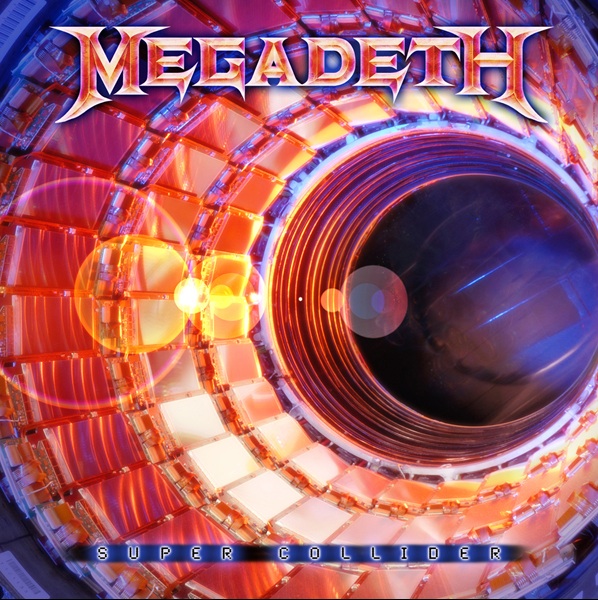
Megadeth – “Supercollider”

Photo Credit: metalsucks.net

Photo Credit: metalsucks.net

Grade: D

Key Tracks: “The Blackest Crow”

Old age isn’t going to stop Megadeth! Well, they’re going to try not to let it. Rather unsuccessfully. It’s sad to see heroes fall but it can happen to the best. Dave Mustaine’s lyrics aren’t hitting as hard, the band’s volume isn’t as ferocious. Nothing works well on this record, apart from a few acceptable songs.

First, the music. The band is not achieving the heaviness that they once were. The leadoff track, “Kingmaker,” is not a good song, but it does have flickers of the 80’s thrash. It is readily apparent that these flashes are about the most the listener will get. The album as a whole tends to fall closer to a really heavy radio rock work, lesser than the thrash metal that made the band renowned in the 80’s and 90’s. The drums are beating and the guitars are crunching and rapid-fire, but it is all less than before. It is at least entertaining, as it is still heavy and should be recognized as so. It just is not of the same caliber as their previous successes.

Speaking of declines from previous successes, Mustaine’s lyrics are downright awful. His political leanings have always made for awkward and forced lyrics, but they are particularly cheesy on this release. “Dance in the Rain” is the ‘standout’ on the record, as the chorus is supposed to inspire people to dance in the rain and enjoy life, like life lessons from a cool uncle. An abrupt switch/interruption happens during the song when Mustaine begins to sing about the “racist, sexist wars in the middle class” or something like that. It really doesn’t make sense. Mustaine’s lyrics are consistently forced and corny, and often fail to rhyme or fit into any sort of rhythm.

Halfway through this album, I had to put on “Hangar 18” to be reminded of better times. “Supercollider” is tedious and corny, a bad mix for a thrash metal band. One footnote should be mentioned – “The Blackest Crow” is a well-crafted song, albeit not thrash metal. The track starts with an acoustic guitar rhythm and builds intensity around a more haunting sound than the rest of the album. It is far and away the best song on the album. Otherwise, “Supercollider” is a total miss.

If you like this, try: “From Mars to Sirius” by Gojira.

-By Andrew McNally

Deafheaven – “Sunbather”

www.neogaf.com

Photo credit: http://www.neogaf.com

Grade: A-

Key Tracks: “Vertigo,” “Dream House”

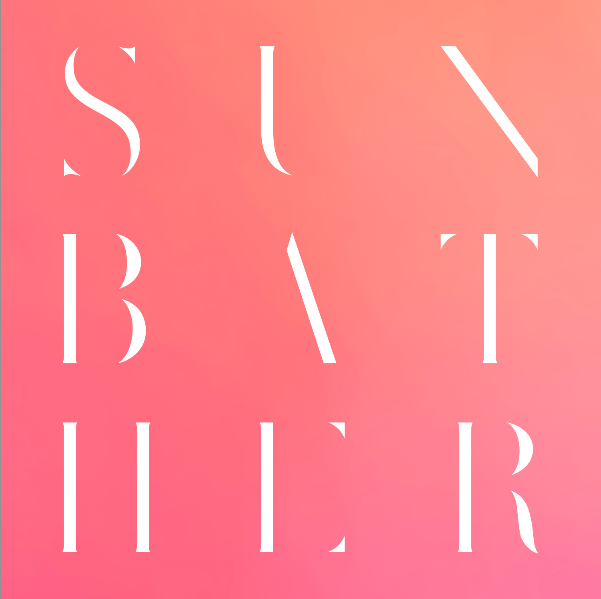
“Sunbather,” a seven track, full-length record, is largely unclassifiable. Deafheaven have been both widely acclaimed in the critic world, and occasionally scorned in the metal world for their blending of genres. The band is currently being labeled as “black metal,” but there is a distinct shoegaze element to their music as well. To put it simply, Deafheaven sounds like a couple guys who wanted to start a metal band but listened almost exclusively to My Bloody Valentine. And there is nothing wrong with that.

This is a brutally heavy record. A majority of the tracks stretch close to or well over ten minutes, allowing the band ample time to stretch their wings and experiment. The songs build up upon themselves, twisting and growing, not unlike God Speed! You Black Emperor. In fact, if it wasn’t for the traditionally growly black metal vocals, Deafheaven would probably be pegged as a very heavy alternative/shoegaze band. But the vocals, as often inaudible as they are, add to the intensity, leaving Deafheaven declaring themselves as a metal band.

“Sunbather” is truly one of the most original and interesting albums I have heard in a long time. I do not have much of an affinity for most subgenres of metal, yet I could do nothing but gasp and let myself be wholly entranced by the band’s originality. Bands are finding it tougher and tougher to make volume equate intensity, but Deafheaven does it ceaselessly. Fans of heavier alternative bands might be able to transition over genres and appreciate what this band is doing. Nearly every track on this album, from the lengthy, abrasively loud songs, to the shorter and quieter interlude pieces, borders on perfection. Only the album’s closer, “The Pecan Tree,” is disappointing, solely because it ends anti-climatically, and this album needs a more proper climax. Give this album a few listens; it might just be one of the most original of the year.

If you like this, try: “Allejuah! Don’t Bend! Ascend!” – Godspeed You! Black Emperor.

-By Andrew McNally