A Great Big Pile of Leaves – “You’re Always on my Mind”

(Photo Credit: Top Shelf Records)

Grade: B

Key Tracks: “Pet Mouse,” “Fun in the Sun”

A Great Big Pile of Leaves hit a high on their 2010 debut, “Have You Seen My Prefontal Cortex?” The band established themselves as a fun, alt-pop band that hold up remarkably well against their sadder labelmates like Snowing and Pianos Become the Teeth. Their music is fun, bouncy and often completely innocent while maintaining a steady volume and guitar attacks. Their debut is a pleasantly diverse album, sonically pleasing, full of fun and introspective tracks. Their second album, “You’re Always on my Mind,” out today, does not quite live up to the expectations set up by “Cortex.” The album is more reminiscent of their earlier EP’s, which are still bouncy guitar songs, but feel a little less inspired than their debut album.

The album’s summer release date is no accident. This is definitely a summer album. That might give the expectation of a Yellowcard or Cartel type pop-punk thing, but they are much more associated with alternative than most summer bands. The album’s food-based bookends are called “Snack Attack” and “Pizzanomics,” offering the exact sound you’d expect from the humorous titles. “Back to School” is the most summer-y song on the album, a literal ode to summer before having to go back to school. There is a gleeful tone to the album, a carefree sound that are reminders of good times, even if they’re in the past. The band does not seem to be looking for any sort of validation, or to be taken seriously. That doesn’t mean we shouldn’t – they’re talented musicians and have nailed down the art of fun songwriting. But their lack of seriousness adds to the fun on the album.

The album might not be as good as its predecessor, but it is still a good album. It is easy music to put on during a drive or a nice summer bike ride. It does not demand your patience, even your attention. It does its job as innocent alt-pop, providing an alternative to the usual pop on the radio and to the usual gloom of alternative music. It takes the best of both worlds. It might not be perfect, but it is fun.

If you like this, try: “Dig Up Your Dead” by Mansions (2011). Not as fun and not as good, but the band does sound kind of similar.

-By Andrew McNally

Pity Sex – “Feast of Love”

(Photo Credit: Brooklyn Vegan)

Grade: B-

Key Tracks: “Wind Up,” “Fold”

“Feast of Love” is the full-length debut for the hyped lo-fi band. The quartet plays a shoegaze-inspired band of emo. The album is equal parts alt-pop, emo and traditional shoegaze walls of sound. Sonically, despite the creative blending of genres, the album could use for some expansion. It is only twenty-seven minutes long but it feels a little tiring. Part of it is the shoegaze itself, it as a genre can often tire and frustrate the listener in the best possible ways. But part of it is a lack of individuality amongst the songs. The album feels like one drawn-out idea, and that’s generally what an individual shoegaze song is to start with, so a full album of similar ideas gets really bogged down. Still, it is a creative blending of genres and is it at times challenging and staggeringly original.

The lyrics are often tough to decipher, which is pretty characteristic of shoegaze (Godspeed You! Black Emperor did away with them entirely). This recent revival of lo-fi emo groups is often accompanied by poetic lyrics that are almost too easy to relate to, that result in heart-wrenching songs. Pity Sex is no different, with some great, poetic lyricism happening. Unfortunately, some of it is buried under walls of guitar.

“Feast of Love” has its faults, but it shows promise as a debut. It is tedious but creative, and is definitely worth a listen for people intrigued by the lo-fi emo revival and shoegaze. Pity Sex is currently on tour with two of the best young bands in America today, Dads and The World is a Beautiful Place & I Am No Longer Afraid to Die.

If you like this, try: The aforementioned bands, or check out the work done by the bands Teen Suicide and Julia Brown for something wickedly lo-fi.

-By Andrew McNally


Veenstra – “Six Months of Death”

Photo Credit: Bandcamp.com

Photo Credit: Bandcamp.com

Grade: B+

Key Tracks: “A Bear/A Fire/A Cave,” “Stone Burial”

Francois Veenstra, a solo musician from Brazil, is in the midst of an existentially lo-fi trilogy. His second album, “Six Months of Death,” was recorded like his debut, in an ultimate lo-fi setting: a bedroom, alone, with a handheld recorder. The album’s title sets the existential tone and states that the album is going to be no less introspective than his previous effort, “Journey to the Sea”. The first album in the series saw a protagonist following a river to the sea. “Six Months of Death” follows this protagonist as he finds the sea and begins to wander aimlessly, realizing the pointlessness of his previous adventure.

Musically, the protagonist’s existential pains are felt through winding, quiet music, all recorded by Veenstra. The songs are more like movements, building up or winding down at unexpected points. The transitions between songs feel more like thought breaks than song breaks – which is good, as it implies that the album works well as a whole. His vocals are tough to decipher, but they only show up sometimes, as the whole entity of the album seems to encompass this character and his travels. The album is experimental lo-fi alternative stuff, often quiet but getting the point across. Veenstra is a pretty decent musician, commandeering drums and bass just when the muted guitar begins to get a little slow. It is certainly quiet and toned-down, so lo-fi fans take notice. I’m curious what will happen to the protagonist next.

Veenstra’s albums can be found on Bandcamp, and he runs the blog Beings Being.

If you like this, try: “Whenever, If Ever” by The World Is a Beautiful Place & I Am No Longer Afraid to Die, the previous review before this one.

-By Andrew McNally

Portugal. The Man: “Evil Friends”

Photo Credit: Under the Gun Review

Photo Credit: Under the Gun Review

Grade: B+

Key Tracks: “Modern Jesus,” “Holy Roller”

Portugal. The Man have somehow found their way to prevalence in the indie world. They’re not the most interesting band, but they are constantly on tour and they try (and usually succeed) to record an album every year. Their consistency might be what has helped to make them a name over the past few years. Whatever it may be, they picked the right time to make a record like “Evil Friends.” Famous producer Danger Mouse was brought in to diversify the band’s sound, and although his mark might be left a little too hard, the band was left with their best album yet.

Portugal. The Man have always been an enjoyable band, but it took many albums for them to start to hit outside their comfort zone. True, their comfort zone has switched from garage rock to more of a sweeter, indie-pop sound. The transition has been slow, though, and this album expands their sound while maintaining their musical innocence. Every track is a fun and bouncy dose of indie-pop, all radio-ready but different from the previous song. Danger Mouse helped the band expand their sound to every limitation of alt-pop, with the best possible results.

Interestingly, the lyrics consistently haunt at things deeper. They don’t always get there, but with song titles like “Creep in a T-Shirt,” “Evil Friends,” and “Modern Jesus,” some darker themes are clearly being presented. Religion and nasty break-ups are emotionally worked through, sometimes cleanly, sometimes not. The lyrics do not necessarily fit the music, but the quality of the package as a whole makes it possible to overlook this. Overall, it is not the most unforgettable album, or the most original. If some great indie-pop from a respected band is what you’re looking for, though, “Evil Friends” is the right direction to turn in.

If you like this, try: “Dear Miss Lonelyhearts” by Cold War Kids, 2013.

-By Andrew McNally

Camera Obscura – “Desire Lines”

Photo credit: Spin Magazine

Photo credit: Spin Magazine

Grade: C

Key Tracks: “I Missed Your Party,” “Troublemaker”

Indie-folk bands like Camera Obscura are generally not known for being adventurous and playing around with genres and ideas. Any fan or casual listener of the genre pretty much knows what he or she is getting into when a new album by a band like Camera Obscura comes out. But “Desire Lines,” the band’s fifth album and first in four years, is seriously lacking something. The album is almost minimalistic, relying on only key instruments in a majority of the songs. It adds a certain consistency to the record, that helps it to flow without any rough transitions between ideas. It also, however, starts to feel like one long, run-on song that was not very interesting to start with.

The album, as a whole, feels like an unfinished idea. Indeed, the final track, “Desire Lines,” ends like a normal song. On both listens I found myself checking to see if my Internet had crashed, not realizing I had hit the album’s end. Lyrically, there is little original going on. Some of the more stand out tracks, like “I Missed Your Party” and “William’s Heart” have boring and uninspired lyrics. They are presented, too, by pretty and rhythmic vocals, but singer Tracyanne Campbell does not sound like she believes in her own lyrics.

Musically, the album is largely devoid of any detail. Every song is dominated by conventional rock instruments. Most of the songs seem to take the same relative tempo, with only “Cri Du Coeur”‘s wickedly-slow (and ultimately exceedingly dull) tempo providing a switch. “I Missed Your Party” has a nice addition of horns, which does bring a listener back in towards the album’s close.

“Desire Lines” is a moderately enjoyable listen, to someone who likes indie-folk acts like Rilo Kiley. Once it ends, though, it is immediately forgettable. It is innocent and fun pop, but never tries to be remarkable or original. “Desire Lines” is a low point for the usually great Camera Obscura.

-By Andrew McNally

Laura Marling – “Once I Was An Eagle”

(Photo credit: Rolling Stone)

(Photo credit: Rolling Stone)

Grade: B+

Key Tracks: “Breathe,” “Saved These Words”

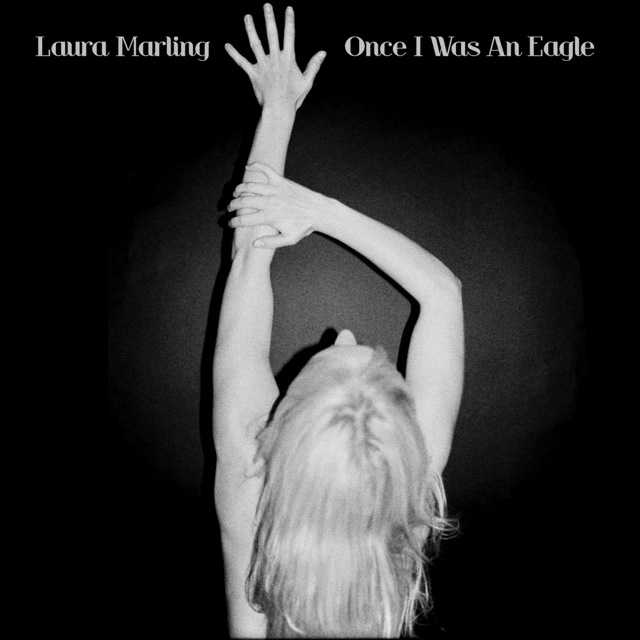
British singer-songwriter Laura Marling has been receiving constant praise for her work, including immediate approval of her fourth album, “Once I Was An Eagle.” The album does it’s job – it is an honest and effective folk album. But it does not start off that way. The first three tracks, “Take the Night Off,” “I Was An Eagle,” and “You Know,” are fairly tepid folk songs, with uninspiring lyrics and Marling’s vocals sounding phoned in. It is not until the fourth song, “Breathe,” that the album’s diverse originality starts to seep in. The song is a beautiful and building work of emotion. After “Breathe,” the album opens up into a mix of tracks with very diverse origins. Some have fast-paced with booming percussion, some are softer and more traditional of a singer-songwriter. Most songs feature just Marling and a slight instrument or two in the background. The album, as a whole, flows well in its transitions between different styles.

Once the album expands, there is a sense that Marling puts all the elements of herself into the record, exampled in the different styles. The songs have consistently great rhythms, no matter the volume or tempo. Marling deals with some tough thematic material in her lyrics, typical of a successful folk record. The album is long, stretching just over an hour, and it starts to feel tedious during the decrescendo towards the end. But the album’s final song, “Saved These Words,” is very reminiscent of “Breathe” in that it is a building song, a tough and perfect finale to the album.

Musically, the transitions between different styles keep it interesting, tough to accomplish for a folk singer. Marling’s guitar rhythms are often catchy and interesting, some less stale than others. Although the album starts slow, it turns into another near-perfect album for the acclaimed singer.

-Andrew McNally

The National – “Trouble Will Find Me”

(Photo Credit: Rolling Stone Magazine)

(Photo Credit: Rolling Stone Magazine)

Grade: A

Key Tracks: “Sea of Love,” “Demons”

With a title like “Trouble Will Find Me” and two opening tracks called “I Should Live in Salt” and “Demons,” the National give the immediate impression that their sixth album will be more of the same introspective and self-demonizing alt-rock that has brought them this far. And in many ways, the album is a continuation. Singer Matt Berninger is 42 now, so this is no time to drop the cynicism and open up. The National have always relied on sad, relateable lyrics to drive their songs close to home. “Trouble Will Find Me” continues the gloom, but after all these years, Berninger has begun to expand his horizon a bit.

Songs like “Sea of Love,” which might be my favorite song of the year so far, rallies about a situation filled with bad choices, a typical National song. What is not typical of the National, however, is some moments of dark humor and some namedrops across the record (Nirvana’s “Nevermind” album being one, to bring home the sadness). The National’s best albums, the two that preceded “Trouble,” relied on slight changes from the previous album, to make a separate but familiar listen. While the previous changes have been largely musical, “Trouble”s change relies more in lyric. Berninger seems to be making an attempt to bring himself closer to the listener, although the National have always been an engrossing band already. Still, Berninger sings about his own troubles, just ones that he relates to the listeners. The album’s cover, an interesting one on it’s one, serves as a symbol for these troubles as Berninger is swallowed by his inner demons and can only look to himself for help. Somehow, he makes us all understand.

The National have never been stupendous musically, and “Trouble” is no different, as the band focuses on the emotional impact of the lyrics. “Sea of Love”s pounding rhythm is one of their loudest songs, and is kind of a surprise on the album. But a majority of the songs are moderate-volume, guitar- or piano-driven tracks with repetitive music and lyrics, the band’s style. Sufjan Stevens, Richard Reed Parry and St. Vincent are among the album’s guest stars, with St. Vincent providing brief but powerful vocals on “Sea of Love.” The album may run a little long, and it feels a little anticlimactic after “Sea of Love”s boom, but the National have a way to always stay in the listener’s head. “Trouble Will Find Me” does this even more than their previous albums, and it might just be their best one yet.

-Andrew McNally

The Front Bottoms – “Talon of the Hawk”

(Photo credit: Property of Zack)

(Photo credit: Property of Zack)

Grade: C-

Key Track: “Twin-Size Mattress”

If you’ve never heard the Front Bottoms’ 2011 self-titled debut, then you might see this, their sophomore album, as a pretty unique blend of borderline-spoken word poetry, acoustic guitar, and beating drums. When this album was leaked by the band, however, the reaction was tepid. “The Front Bottoms” is one of my favorite albums, probably in my top five of all-time. A lot of my friends and I love this band dearly (I’ve even made friends because of mutual love for this band). On the opening chords of “Au Revoir,” a letdown was already starting. Bands often have their sophomore albums suffer from a bland rehashing of their debuts, and the Front Bottoms are no different.

The band – a duo in the studio – created a wholly original type of music on their first album, which is continued here. I can only call it “alt-emo folk-pop.” Their songs rarely feature anything more than acoustic guitar, drums and vocals that are barely sung, yet the band has a taste for making their music seem like it is always about to fly off the rails; like the musicians are about to lose control of their own song (For the best example, look up “The Beers,” their fastest and best song). The lyrics jump from sad poetry to non-described personal experiences frequently, even mid-line. And the poetic lines are often poignant, even ‘cutesy,’ still hitting the listener in the gut harder than they should.

But “Talon of the Hawk” is distinctly lacking. The lyrics are significantly cornier. They feels less poetic and more lame and forced, and the vocal delivery is not as random, with the verses formed into actual rhythmic lines. Musically, the band has never been proficient, as it is not their focus, but they are even less so here. The tracks on their first album are all instinctively catchy. On the second, they are almost all forgettable. Even the production quality, pristine, admittedly, feels better than it should. To their fans, the Front Bottoms are two goofy guys unaware of their own growing popularity, which does not come through on “Talon”s very professional recording style. The album’s only redeeming song is “Twin-Size Mattress,” both lyrically and musically strong. (The song is the album’s leadoff single. A video was recorded which, had I been standing ten feet to the right at a recent NYC show, I would’ve been in)

The album is dividing Front Bottoms fans. Some love it, some are left with a bad taste in their mouths. It is a serious decline from their first album in every way. Those previously unassociated with the band might find it much more intriguing and entertaining than those who ate up their debut. Reactions to pieces of work are, of course, subjective, but they are even more so with “Talon of the Hawk”

-Andrew McNally