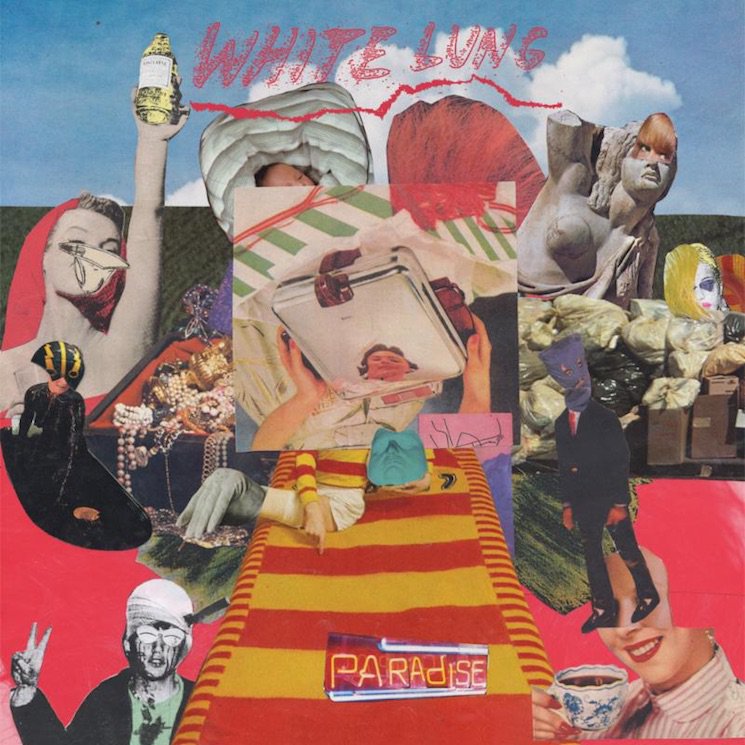
White Lung – “Paradise”

Grade: A-

Key Tracks: “Below,” “Kiss Me When I Bleed”

There’s two meanings to the word “raw.” On White Lung’s previous album, “Deep Fantasy,” they explored a hardcore sound that roared ferociously, even for hardcore punk, ripping through 10 songs in 22 minutes. Their new album smoothes things out a bit (although not much, it’s 10 songs through 28 minutes). There is a lot more emotional rawness on the album – the band is focused less on speed and volume and more on wearing themselves thin on tape.

White Lung are following in a trend set by previous releases by Perfect Pussy and Savages, in which very loud and angry bands are not shying away from their sudden success and are instead using their new standpoints in their music. Tellingly, Meredith Graves and Jhenny Beth opened their arms to love. Mish Barber-Way? Serial killers. And trailers. But also love. In between albums, she wed, and a post-wedding blissfulness permeates the album. At times, unfortunately, the band sounds like they’re pushing the volume only because they’re White Lung and that’s what is expected. Most of the time, however, this theme of emotional and physical rawness comes across effectively.

“Deep Fantasy” is one of my favorite albums – in the past two years I’ve spun it more than almost any other album. But if there’s any criticism I could level at it, it’s that it feels a little too polished at times. Surprising, given Kenneth William’s utterly shrieking guitar. The band operates at 11 and sound like they’re about to go off the rails at all moments. But still, they could use for a little more emotion in their music. It comes through here. On “Demented,” William trades in his wailing guitar for a straight-forward, pounding and unexpected one-chord riff. Anne-Marie Vassiliou sounds immediately more forceful on the drums, on opener “Dead Weight,” and one multiple songs throughout. And Mish Barber-Way strains herself on nearly every song. I found their first single, “Hungry,” underwhelming, but man her voice propels the song. She brings carnage to “Kiss Me When I Bleed” and adds tension to ballad “Below.” She dominates the album in the way that she dominated “In Your Home,” the closer to “Deep Fantasy.”

Lyrically, too, this album has a certain rawness to it that doesn’t jibe with the rawness of “Deep Fantasy.” One of that album’s best songs, “I Believe You,” was an extremely direct message to rape culture. That directness exists here, too, but instead of a punishing rawness, it’s an emotional one. Barber-Way investigates her fears and wonders about marrying a Southern man: “I will give birth in a trailer / Huffing the gas in the air / Baby is born in molasses / Like I would even care” she sings on “Kiss Me When I Bleed.” On “I Beg You,” “This is the death of me / I need a fantasy.” Between the rapid drumming, relentless guitar exploration and strained vocals, White Lung push themselves to a maximum that they’ve never explored. It doesn’t always pay off, some tracks like “Narcoleptic” and “Hungry” suffer from a tempo that’s too fast to be slow and too slow to be White Lung. Exploring their space might not always be their thing. Then again, they strip everything away and let sheer tension run “Below.” This is a personal and bleeding album, one that addresses the successes and failures of being a touring band, sudden notoriety, and life in general. It isn’t necessarily hardcore punk, but then again, White Lung never truly adapted the title. They never adapted any title. And it’s not like this album isn’t gonna rip your face off most of the time anyways. It’s raw, it’s passionate, it’s emotional, it’s loud, it’s destructive and most importantly, it’s White Lung.

-By Andrew McNally

Beyonce – “Lemonade”

(Photo Credit: honourmymystique.com)Grade: A

Key Tracks: “Don’t Hurt Yourself,” “Freedom,” “Formation”

Beyonce’s previous album, one of the only albums that I’ve felt deserved a self-title, was a masterpiece ode to love, sex, celebrity and family. And it’s release was revolutionary, the kind previously reserved to more predictably innovative acts like Radiohead and Nine Inch Nails. So expectations were high coming in to her next album, and although we’ve gotten an entirely different album than what we expected, it’s every bit as good, if not better, than expectations.

“Beyonce” felt like she was opening the doors into the private life of her and Jay-Z, into a world we shouldn’t really be hearing. The album was like we were all the winners of a Golden Ticket, getting a brief look inside the magic world of music’s most powerful couple. Well, this album also feels like something we shouldn’t be hearing, but for the opposite reason. “Lemonade” is full of personal clapbacks aimed at Jay, with the lyrics stopping just short of specifically telling us he’s cheated, and with whom (it was Becky with the good hair, who is supposedly Rita Ora). It is an emotional and personal roller coaster, with as much revenge as regret. Jay-Z might be one of the richest and most powerful men in entertainment, but no one can wrong Bey and get away with it.

There are memorable lines across nearly every song on “Lemonade.” She wastes no time in addressing the issue, on the ballad opener “Pray You Catch Me,” singing “You can taste the dishonesty / It’s all over your breath.” On the follow-up “Hold Up,” she laments being in her position, saying “What’s worse, looking jealous or crazy?” before deciding that she’s already been jealous, so she’s choosing crazy. Indeed, the album might feel a little crazy, with nearly every song serving as a very public response to a very private issue. But it also serves as part of the album’s identity, as an ode to black women. Anyone can – and should – listen to “Lemonade,” but it isn’t an album designed for everyone. There’s no proper radio bangers, and it’s intentional. If there were, we wouldn’t all be listening to the message. By developing her own marital problems, she addresses issues of women, occasionally black women, and puts them in a context that’s often pushed against in media. It’s been an interesting trend over the years, as Beyonce has voluntarily become a voice for black pride. This continues here in just about every context – musically, lyrically, historically and visually.

If she sounds frustrated on the first two tracks, then she’s totally over it on the next two. “Don’t Hurt Yourself” has some of the album’s most blatant lines – “You ain’t married to no average bitch, boy / You can watch my fat ass twist, boy / As I bounce to the next dick, boy” – that quell any notion that she has been singing from a fictional POV. She wrote a diss track about her own husband. I mean c’mon, that’s incredible. And it drags onwards into “Sorry,” which is not an apology for anything (nor should it be). “Now you wanna say you’re sorry / Now you wanna call me crying” she sings, holding it over Jay’s head. Elsewhere, on “Sandcastles,” she laments, “I know I promised that I couldn’t stay / Every promise don’t work out that way.” The album’s best line goes to “Love Drought”: “Nine times out of ten I’m in my feelings / But ten times out of nine I’m only human.”

Musically, the album is kind of all over the place. It needs to be, it highlights Bey processing a terrible thing and going through a range of emotions. What this album successfully tries to show is that, at the end of the day, she’s as human as the rest of us. She might sound justified, only to come off as too angry or too forgiving, because she’s not perfect.

The collaborators and co-writers are key to understanding the diverse music. She often reflected the styles of her collaborators on her self-titled album, namely Drake and Jay. It was done then because of the album’s secrecy. On “Lemonade,” it is done out of appreciation. The album is about appreciation – of yourself but more so, of others. And if the lyrics are multi-faceted, so are the collaborators. Jack White nails an appearance on “Don’t Hurt Yourself,” a blues-rock tune. “Freedom” is about black pride and is easily the most intense track, unsurprisingly featuring Kendrick Lamar. James Blake pops up on an interlude that is really just a James Blake song. The Weeknd turns “6 Inch,” a song about identity, into one of the album’s smoothest. She reflects all of their styles out of appreciation for their own work. Animal Collective and the Yeah Yeah Yeahs get songwriting credits for lyrics taken from their songs (on “6 Inch” and “Hold Up,” respectively). And “Hold Up” features co-author credits from EDM superstar Diplo and indie singers Ezra Koenig and Father John Misty. Going even further, Led Zeppelin, King Crimson, Jerome “Doc” Pomus & Mort Shuman, Burt Bacharach and “Prisoner 22” show up in the sample credits.

The music is as much of a journey as the lyrics, with all of the above artists contributing their own sounds. “6 Inch” is sultry, “Forward” is an electro-ballad, “Don’t Hurt Yourself” is a blues-rock kicker, and “Hold Up” sounds like what a Beyonce song written by indie singers would sound like. “Daddy Lessons,” one of the only songs about something other than her husband’s infidelity, starts with a New Orleans jazz sound before transitioning into an ode to her father, with a country-esque backdrop (taking in her Houston heritage). It sits right at the album’s midpoint, a standout that shows how divisive the album’s feel can be. And early single but visual-album afterthought “Formation” sounds (and looks) like New Orleans.

This was an album that no one was expecting, about an incident that we had only ever speculated about. But it’s an album we need – an affirmation for women who have been cheated on, and a call to arms for black women around the world. It’s not like black pride and feminism are new topics for Beyonce, far from it. But it’s the personality she’s decided to mold herself into that has allowed her to become such a powerful force in the world socially. The music has helped that, too. We don’t know what’s in store for the Jay/Bey marriage, but given the quality and rapidity of his music lately – or lack thereof – she may have just driven a nail into the coffin of his music career. And she did it with one of the albums of the year.

-By Andrew McNally

Future of the Left – “The Peace and Truce of Future of the Left” & “To Failed States and Forest Clearings”

The Peace and Truce of Future of the Left:

Grade: B

Key Tracks: “The Limits of Battleships” “No Son Will Ease Their Solitude”

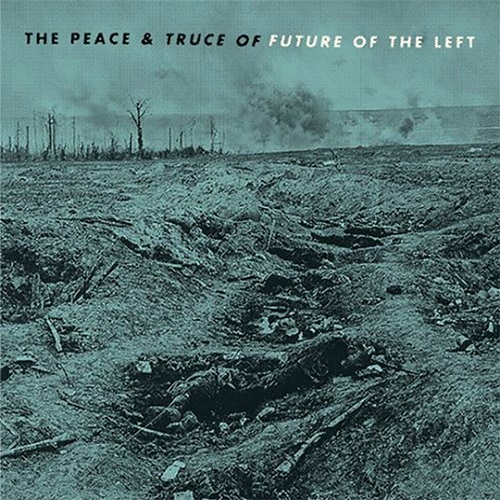
With all of the line-up changes that Welsh post-punk band Future of the Left has gone through, it’s pretty remarkable that 2/3rds of their line-up is original members. That said, they are currently down to a three-piece. Andy “Falco” Falkous will run this band until it dies, and he’s currently joined by his wife, Julia Ruzicka, and third wheel drummer Jack Egglestone, who has been around since the beginning (and also played in Falco’s previous band, mclusky). Their fifth album takes a more math-rock based stance, which can be frustrating at times.

The album’s first few songs all have very complex riffs, designed not to be catchy. They’re all heavy, of course, it wouldn’t be Future of the Left without unnecessary volume. The chugging midtempo rhythm and shrieking guitar of opener “If AT&T Drank Tea What Would BP Do” shouldn’t come as a surprise, their last album opened with a similar song. But it isn’t until “Grass Parade,” the fifth track, that we get a song with a real graspable rhythm. The first four tracks all have clunky, demanding rhythms, and while they’re all good in their own right, it does not request another listen very easily.

Once the album ‘picks up,’ which I’m using loosely, it falls more into a Future of the Left groove. “The Limits of Battleships” and “Eating For None” both have great rhythms, snuck in amidst the volume and anger. “Back When I Was Brilliant” is an effective midtempo, midalbum bruiser, and “White Privilege Blues” has an excellent breakdown in it. “Reference Point Zero” has an intense climax that fits in amidst the band’s best energy songs. And closer “No Son Will Ease Their Solitude” is a tense and building finale that’s delectably unpredictable, without going too off the rails.

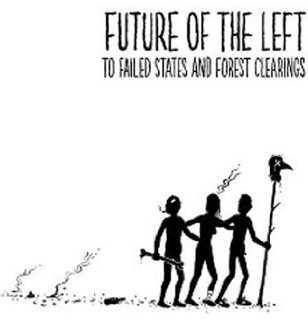
Falco’s lyrics are frustratingly buried in the music at times. As a singer, he has been praised and criticized for his on-the-nose subject matter, often tackling a specific target or industry. Or, sometimes, he’ll shield himself behind satire (my personal favorite Falco song is “I Am the Least Of Your Problems”). Sometimes, the lyrics come through here. One of the better tracks, “Miner’s Gruel,” is a subtlety-lacking look at teenage privilege. Album cover included, there’s a few tracks that reference the military. As always, there’s references that seem to make sense only to him, like to curry houses on “Back When I Was Brilliant,” to asking “How many farmer’s markets does it take to change a light bulb?” on “Proper Music” and bemusing, “My bank account is not a hole, it has no purpose and a hole has one” on “No Son.” Perhaps the best lyrical moment, though, is on “Eating For None,” when he proclaims, “I am most of the time perfectly happy.” With all due respect, I’ll believe it when I see it.

To Failed States and Forest Clearings:

Grade: A

Key Track: “The Cock That Walked”

The band crowdfunded “Peace and Truce,” and gave the record to paying fans early, promising another EP soon to follow. To nonpaying customers, they came at the same time. If the full-length was designed as a progression into less punk and post-punk and more complex music, then this is the refresher. The six tracks on this EP could have fit on any previous Future of the Left album, and should have. There isn’t a weak track on this release.

Opening song “The Cock That Walked” is about, apparently, creeps who get an erection on public transit. It has a pounding, fast-but-not-too-fast rhythm ripped out of their own playbook. Four of the six songs maintain this, a more standard Future of the Left sound. Keyboards mixed in with booming bass and crunching guitar lines. “Problem Thinker” is the first of the outliers, a much more slowburning song that really takes it’s time to build to a big conclusion. Also, “There’s Always Paul” is a bit lighter, centered more around light percussion and handclaps than anything else.

Overall, this EP has a kind of goofy feeling to it. Look no further than “Animals Beginning with a B,” where Falco sings “I can’t see a baboon from where I’m currently sitting but that doesn’t mean they don’t have them at the city petting zoo.” Look, I’m not sure what angle he’s taking here. But this EP is different than the album because Falco’s lyrics are both clearer and weirder. On “Fireproof (Boy vs. Bison)” he sings, “Someone at the party said to get fucked and he had not heard of that.” The lyrics throughout this EP are the kind that would truly divide Falco’s fans and critics. It acts as a companion piece to the full-length, and it should absolutely be for any longtime fans such as myself.

Read my review of Future of the Left’s “How To Stop Your Brain in an Accident.

-By Andrew McNally

Savages – “Adore Life”

Grade: A-

Key Tracks: “The Answer,” “I Need Something New”

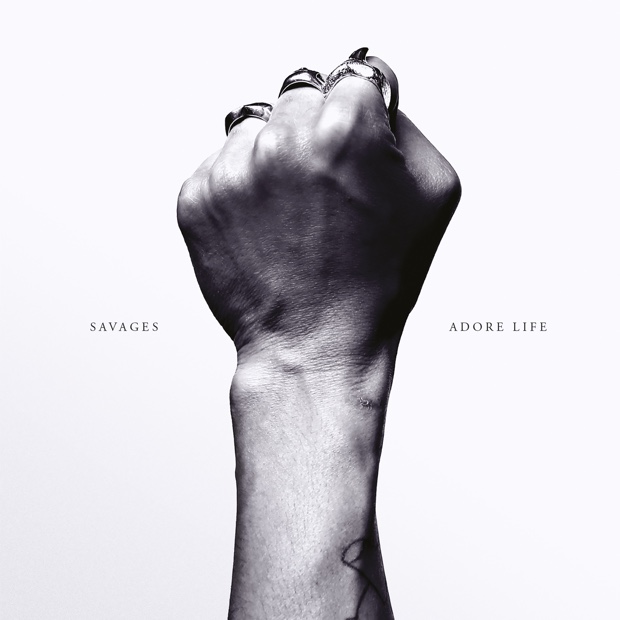
There’s something to be said about sophomore albums from traditionally angry bands. On debuts, bands trying to make an image can flaunt it all on record. But if their debut is successful, as Savages’ “Silence Yourself” was, then a follow-up of equally angry and aggressive songs is going to sound more hollow amidst the increased fame and exposure. While most bands might try to capitalize and create another album of the same, Savages have openly embraced their newfound exposure. “Adore Life” is filled with songs that are deceivingly optimistic, love songs even. But the band finds ways to embrace anger among optimism, and no it shouldn’t work, but it often does.

The first Savages album was marked by very sweaty songs where the guitars built up in crescendoing rhythms. Although there’s a few of those here, the band announces a change from the opening chords of “The Answer.” It’s loud as hell, but the guitar rhythm plays on, unchanging, for about a minute and a quarter. And when it does change, it goes right back to where it was. This album is more diverse than their debut was, with a wider range in emotion and influence.

There’s more brooding on this album. The title track is a toned-down ode to life that still sounds utterly abysmal even in its optimism. The finale, “Mechanics,” is also super lowkey, given the rest of the album. It has an aura of goth to it, although the influence of touring with Swans is obvious too. Throughout the album’s quieter or more down moments, the band sounds like they’re recording in a sewer, like it’s something we’re not supposed to know about it (which is extremely effective, by the way). The band allows themselves time to expand that they didn’t on their first album.

Of course, they don’t always take it. “The Answer,” “I Need Something New” and “T.I.W.Y.G.” all rip, hard. The second two could have easily been cuts from the first album, very sweat-inducing post-punk tracks that absolutely overflow with energy and ferocity. Even with some more drawn-out songs, Savages are at their strongest when their putting everything upfront to the listener, and the best songs here do just that.

Savages also sound more formed here. While “Silence Yourself” is a group project, each member gets their time to shine on this album. Singer Jehnny Beth gets moments throughout, although she sounds the strongest on “Slowing Down the World” and “I Need Something New.” Guitarist Gemma Thompson dominates “The Answer” even with just one rhythm repeated over and over again. Ayse Hassan gets a bass lead on “Adore,” and drummer Fay Milton adds the energy to “T.I.W.Y.G.” and “When In Love” to chug those songs along with wicked propulsion.

What makes this album unique is the devotion to life and love. The band said they were writing love songs. But keep in mind that this is the same band that put out an ode to rough sex called “Hit Me.” Beth’s lyrics center on love throughout, and it is jarring at first. But it’s a kind of love that stems out of having nothing else left. The band’s slower moments sound pained. Although “Adore” isn’t one of their better songs on its own, it is a mission statement for the band – when you’re hurt physically and emotionally, all you have left is life. Embrace it (“T.I.W.Y.G.”) or simply put up with it (“Slowing Down the World”), either way, it’s the one thing you can’t lose. Again, Savages live up to their name.

If you like this, try: Bully’s “Feels Like,” a young band that subtly sticks some very noisy elements in their otherwise alternative debut album.

David Bowie – “★”

Grade: A-

Key Tracks: “Blackstar” “Girl Loves Me”

I wrote this on the day of the album’s release and decided not to change it after his passing. Rest easy, Starman. Thanks for everything.

Bowie’s return to weirdness has been so natural, it’s easy to forget he spent a decade in retirement and the previous decade in a creative decline. His new album, his 26th, is among the strangest and most provocative he’s ever released. It seems like Bowie spent his decade in retirement (2003-2013) reminiscing on his own career. Throughout all the characters Bowie has performed as over the years, there’s really only been two real ones – pop Bowie, and terrifying avant-garde Bowie. His excellent 2013 comeback album “The Next Day” was pop Bowie, middling, introspective rock songs and ballads about growing old in a culture that values youth. He sounded pained but not so much remorseful as satisfied with himself. It seemed like a final album, a send-off, a ‘thanks for listening.’ Then this happened.

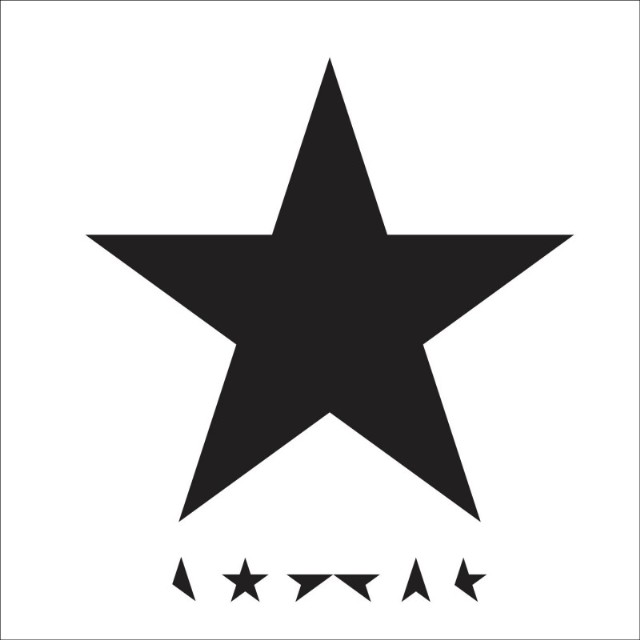
The opening song on “Blackstar” (officially titled ““) is “Blackstar,” in spelled-out form. It is only 17 seconds shorter than his longest, the 10:14 classic “Station to Station.” It originally surpassed 11 minutes but Bowie and longtime co-producer Tony Visconti sliced it down to 10 so they could release it as a single on iTunes (Bowie is a man of the people). Bowie’s vocals mix with the free-form jazz to sound somewhat akin to Scott Walker. It’s less “Diamond Dogs” and more “Bish Bosch,” and it’s hard not to imagine Walker when listening, another musician who had a modest start before growing increasingly ambitious and experimental (and who has been around even longer!)

There’s only seven songs on this album, with the title track accounting for slightly under 1/4 of the album’s length. It is less rock, less pop, and more free-form jazz. Bowie and co. have said they were listening to “To Pimp a Butterfly” when they wrote this, saying Kendrick Lamar’s attention to blending genres inspired them to do the same. But it sounds more like Bowie was listening to himself. “Blackstar” and it’s video have maybe-references to satanist Aleister Crowley, who was a heavy inspiration to Bowie during the “Station to Station” recording session. And “Lazarus” includes the line “I used up all my money / I was looking for your ass,” which sure seems to mimic the self-description in “Ziggy Stardust,” “With god-given ass.” Elsewhere, he sings the plot of the 17th century play “‘Tis a Pity She Was a Whore,” in a song with the same name, an incestual, murderous tale.

Musically, the album walks the line of free-form jazz, almost always maintaining a steady beat but allowing for tempo changes (“Blackstar”) and avant-garde horn freakouts (“‘Tis a Pity…”). A majority of the songs are heavy on horns and drums, with less guitar. Bowie often, and sometimes unexpectedly, gives way to the music. The influence of Lamar is only a spiritual level, but “Girl Loves Me” does have a beat that sounds hip-hop inspired.

With all the characters and personae that Bowie has performed as over the decades, it’s easy to forget just how he became famous at all – he’s got an insanely good voice. It comes through here, especially on “Girl Loves Me” and “Lazarus” but across the whole album. “Girl Loves Me” is an enchanting, almost hymn-like song with Bowie’s voice in both the fore and background. It’s the strongest vocal song on the album. He sounds restrained throughout, like it’s all part of an avant nightmare. The only real exception is “‘Tis a Pity…” where his vocals sound more pronounced, more confident.

There is no character here. “” is a glorious and scary mess that is haunting because there’s no character – this is an album Bowie and co. wanted to make. It’s one of the least accessible albums he’s made in his entire career, and it will surely be placed alongside “Station” and “Let’s Dance” among his best work. This does not sound like a final album, but if it is, then Bowie is requesting demanding that we remember him primarily as an artist, an ambitious one unafraid to make something jarring and remote, and not as a successful pop songwriter. “I am not a film star,” he muses on the title track, even with great turns in The Man Who Fell to Earth, Labyrinth, and, sure, Zoolander. He’s deeper than those roles. He is a blackstar, something theoretical, something deep, massive and annihilating. He is also demanding that, like Lazarus, he live on far past his actual self. Don’t worry, Bowie, you’re going to.

-By Andrew McNally

Le1f – “Riot Boi”

Grade: A-

Key Tracks: “Rage,” “Koi”

Le1f is coming into his own as a rapper in the best possible time: he’s walking alongside rappers like Kendrick Lamar and Heems (whom he used to produce for), who have been open about struggles with social issues. While they have been open about depression, Le1f raps about sexuality. He’s an openly homosexual rapper, something he wears with pride despite the potential ostracization from his own scene. And to tag on to a unique voice, he’s got a manic, sometimes avant-garde backing beat that results in a sonic experience unlike anything else in rap.

If we learned anything from the minor hit Le1f had with “Wut” in 2013, it was that Le1f’s voice is low and his flow is fast. He continues it on his first full-length, a baritone voice that either stands out or blends into the music, whenever necessary. But even if his flow is fast (like, Lil’ Wayne fast), his voice is as clear as his message: you can’t tear me down. Le1f, as an up-and-comer, has already had a bigger wall to climb than most: he accused (rightfully) Macklemore of stealing the beat for “Wut” in his mega-hit “Thrift Shop” and then called him out for “Same Love,” saying (rightfully) that a straight man had no right to tell that story. But going up against one of the biggest artists in the country will have some immediate backlash. Thankfully, Le1f has taken it head-on: “Riot Boi” is a riot, indeed. Le1f is telling the world: Macklemore wasn’t the right person to tell that story; Le1f is.

He does address his sexuality in multiple songs, the best being in “Grace Alek Naomi” and “Taxi.” In the former, he raps, “You say f**k boys, well n***a, I f**k boys.” On the latter, “Boys pass me like taxis do.”

Musically, Le1f makes sure that “Riot Boi” is a sonic amalgum. “Rage” alternates between insanity and springtime happiness like manic depression, “Cheap” has an incessantly catchy, chiptune beat, “Koi” mashes avant-garde with dance, and “Umami / Water” drops hard and takes a left turn, going from a decent song into a musical odyssey halfway through. Le1f dresses like a rapper of the future, and here he sounds like one too. “Lisa,” meanwhile, just has simple trap beats. Dev Hynes, aka Blood Orange, drops in on the smooth finale “Change,” which bolsters the album’s manic nature.

Le1f is a rapper in his own category. He’s not about theatrics – evident by the album’s opener, “Hi,” where he starts almost in media res. Yet, the album is filled with dense and unexpected musical mastery. His lyrics cut as hard as the music, and the music cuts hard. Even in a bludgeoning rap scene, every rapper is finding some way to be creative and different – but an album like “Riot Boi” still makes you wonder if the rest of the scene is going stale. Le1f should be a household name, and in a few years he might be. Just by sheer force.

-By Andrew McNally

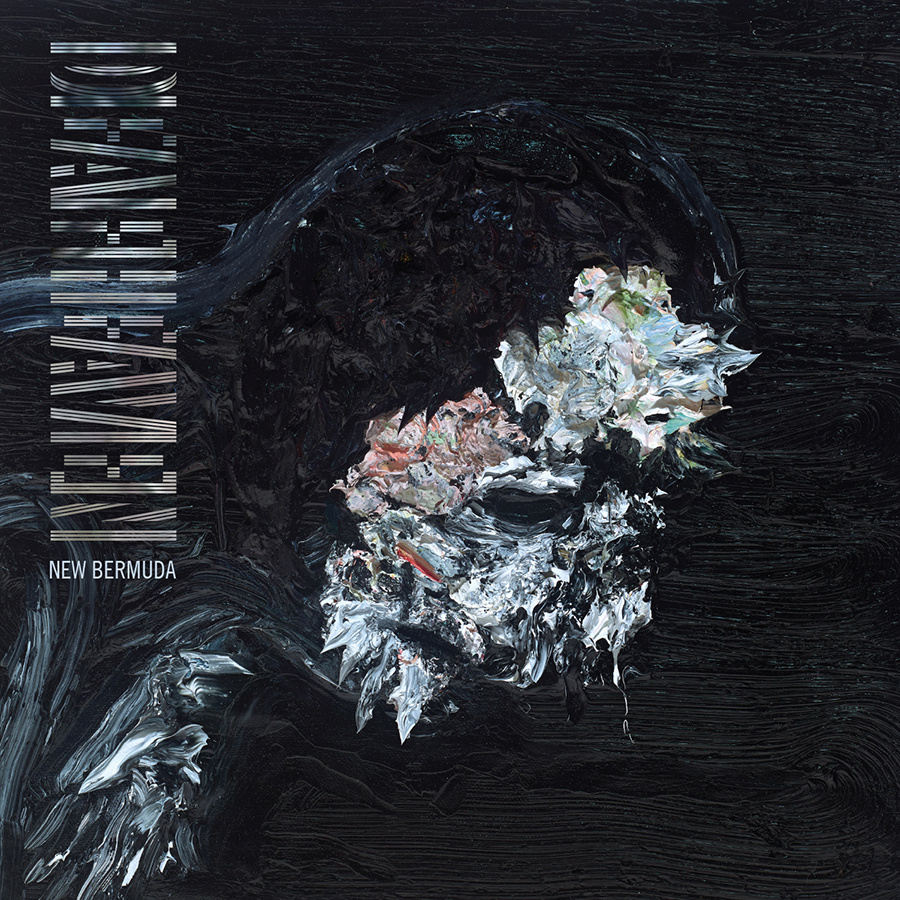
Deafheaven – “New Bermuda”

Grade: A

Key Tracks: “Luna,” “Gifts For the Earth”

Let’s get this out of the way – there’s no such thing as ‘pop-black metal.’ It’s a combination that would go together like salmon and cherry. To call Deafheaven the “poppiest” black metal band is a misnomer, it’s a meaningless statement. The last person to complete a marathon still completed a marathon. Yet listening to Deafheaven is like running a marathon – it’s a test of physical stamina, and not everyone will finish. The black metal band’s third album greatly loosens the grip on shoegaze, but tightens it on the metal, making for an even louder listen.

Chances are, if you’re reading this, you already have an opinion on Deafheaven. Anyone even remotely aware of current metal does. I raved over “Sunbather” way back when, and I think “New Bermuda” is an even more intense record. “Sunbather” was split into sections, where the listener was offered a break after every draining track. “New Bermuda” comes without that option, offering solace only in the songs themselves. At five songs, it’s slimmer than “Sunbather” and shorter, too. And it’s because the ear breaks come at shorter intervals.

The album’s breaks in volume are centered in quieter guitar rhythms, soundclips, and fade-outs. Twice the band fade-outs early, leaving the last few minutes of a track to audio clips and stuff you can quickly tune out to. Thanks, Deafheaven. The band grabs hold of the listener early and doesn’t really let go.

Although the band strays much further away from shoegaze, they still find ways to keep it original. George Clarke’s vocals are simply louder than on previous records. Instead of blending him into the music, the band has decided to put him front and center, his screams searing through the guitars like a katana in the rain. His lyrics are deeply poetic, if not entirely unintelligible. Opening track “Brought to the Water” is less draining than the “Sunbather” songs. And closer “Gifts For the Earth” actually features acoustic elements that border more on alternative than metal, much to the chagrin of late-20 somethings in Megadeth shirts.

But still, Deafheaven are here to bring the pain. “Luna” is possibly the most merciless song they’ve ever done. It starts like any Iron Maiden song – with its muted guitar riff and speedy drumming. But it is relentless. The whole album is, occasionally giving the listener glimpses of what life on the outside of Deafheaven is like, a less painful world that they cannot share in. Deafheaven, in their third album, have distanced themselves from their famous roots – they don’t want to be seen as pop-metal famous, and don’t want to contribute to polarized metal. But polarization is a key part of music, even metal, and Deafheaven have proven that they can not only write a record that’s brutal in sections, but one that’s brutal throughout. “New Bermuda” has a wide potential audience, maybe one wider than they expected. But it’s not for everyone, and sour metalheads that made their mind up two years ago aren’t going to be swayed back. Their loss.

-By Andrew McNally

Nerina Pallot – “The Sound and the Fury”

Grade: A-

Key Tracks: “There is a Drum,” “Rousseau”

The phrase “The Sound and the Fury” has a history deep in death. Macbeth first utters the phrase in a soliloquy in Act V, after learning of the death of his lady. And, more famously, William Faulkner adapted it as the title for what is arguably his most well-known novel. It doesn’t necessarily work for any real context on Nerina Pallot’s fifth studio album, but it does separate her from other singers. Pallot, by definition a singer-songwriter, incorporates more music (Sound) and darker themes (Fury) into her music than her contemporaries. “Fury,” like her previous albums, is filled start to finish with memorable songs, each brimming with Pallot’s devotion to making every moment unique.

The album’s opening is indicative of her music as a whole. “There is a Drum” starts with a half-minute of pretty, dreamy guitar before stopping completely and giving way to a haunting, disproportionately-loud horn that sounds like it came from the mountains of Tibet. It sets the tone for the album – two parts melodic, one part dark, and filled with music. “Drum” and later track “Spirit Walks” handle inspiration and music from other cultures, a thin line that British native Pallot walks largely with respect.

Other musical highlights on the album include the previously released “Rousseau,” a slower song centered on a steady, picked guitar line that might not sound out of place in an older Coldplay song (alternately – speed it up and it’s almost ska-like). “The Road,” the album’s other single besides “Rousseau,” has a long musical outro that highlights Pallot’s reliance on a full package, not just her. “Boy on the Bus” has a unique, wavey sound, and closer “The Longest Memory” ends the album on a strong musical note (no pun intended).

Most of the album’s songs were released last year. Pallot released an EP a month in 2014, and put the fan-voted best tracks on “Fury,” plus a few new songs. A busy Pallot released 60 songs last year, and this album serves somewhat as a highlights package. But it is cohesive; you wouldn’t even know this borders as a collection. Musically and lyrically, it maintains a tone but each song shoots off of it in a different direction. Some songs are full in sound, some intentionally restrained. Pallot’s earlier releases generally match “Fury” in both tone and quality. Pallot hasn’t broken in America yet; in fact, she’s barely spoken in whispers. I don’t know why this is. Pallot probably isn’t bothered by it. But for me, that’s my “Fury.”

If you like this, try: MisterWives debut, “Our Own House.” It’s got less substance, but it’s also an inherently great and diverse indie-folk work.

Wilco – “Star Wars”

Grade: A-

Key Tracks: “You Satellite” “Where Do I Belong”

Wilco are at an important point in their career. Like many artists before them – namely David Bowie, who they channel heavily here on their ninth album – they’re at a point where they’re growing restless again. Wilco established their original sound, as an alt-country band. And then, out of nowhere came “Yankee Hotel Foxtrot” and “A Ghost is Born,” their creative reawakening albums (although in most band trajectories, this period comes from creative woes, not accidental painkiller addictions). After Jeff Tweedy recovered, the band’s sound settled into a more mature, introspective look with the still-excellent “Sky Blue Sky.” And the two albums since then have seen the band embrace their catalog as a whole, both poking fun and honoring their creativity of the past.

But, like Bowie did on “The Next Day,” they’re again growing restless with maturity. “Star Wars” is unlike any other Wilco album, in many ways. For on thing, it’s called “Star Wars.” Also, the cover has an adorable cat on it. It looks more like the cover for a Dusty Springfield record, not a Wilco one. And the songs are shortened, tightened and energized. There’s certainly other Wilco songs that would feel comfortable on this album – “Shot in the Arm,” “Wilco (the Song)” come to mind. But the band has created songs that don’t give themselves room to breathe. At 2:30, “Pickled Ginger” sounds just like a cut Deep Purple song with it’s fuzzed-out, grinding guitar line. Although “Star Wars” is distinctively Wilco, the songs here have traveled a long way from “Impossible Germany.” And it’s not a criticism – it’s a familiar sound, in an unfamiliar package. At 33:47, it’s the band’s shortest album by nearly ten minutes (ten minutes being two-thirds the length of their longest song). And as a band that’s stayed reliant to the album format, their decision to drop this release suddenly and for free online is growth as well.

Although the band has been playfully looking back at their earlier works in recent years, “Star Wars” marks the first time in years that they’ve actually incorporated any elements with an avant garde feel. They come mainly in the opener, “EKG,” a 1:15 chippy, dissonant intro that doesn’t serve as a standalong song, instead as a declaration of what’s to come.

Also, Jeff Tweedy as a frontman and songwriter seems to be less of a focus on this album. Something noticeable about one the album’s best songs, “You Satellite,” is that the volume of his vocals is closer to the rest of the instruments, instead of being at the forefront. And eventually, he gives way to the music entirely. Tweedy’s lyrics on this album aren’t his best (they’re a lot vaguer than past Wilco albums), but the focus is on the music and the vibe anyways. The longer they’ve been around, and especially since they’ve developed a more steady line-up, Wilco has seemed more like a full band and less like a collective.

Wilco haven’t released a mediocre album since 1999’s “Summerteeth,” but it’s been a long time since they’ve released a great one, too, and that’s just what “Star Wars” is. This is their best album since “Sky Blue Sky” in 2007 and, if you like just fun and lively Wilco, then before that. There are moments of beauty and grace on “Star Wars,” especially in affectionate closer “Magnetized.” But more often than not, those moments are often followed up by a sudden drum line, feedback or guitar melting. Just as you would expect from a band growing restless yet again.

If you like this, try: This one’s probably obvious since I mentioned it, but it’s stylistically and tonally resembling of Bowie’s “The Next Day,” if not actually all that similar.

Jen Kirkman – “I’m Gonna Die Alone (And I Feel Fine)”

Grade: A-

On her last special, 2011’s “Hail to the Freaks,” Jen Kirkman was blessed with a wealth of material for stand-up – she had just gotten married. Now it’s four years later, and Kirkman has found herself with an even bigger plate of material – divorce. And turning 40. “Freaks” had a weird mismatch, of Kirkman’s largely cynical comedy battling with her joy of being married. All of that is swept under the rug on her new Netflix special, in favor of well over an hour of jokes and stories about self-love and self-confidence in defiance of age and gender standards.

Much of “I’m Gonna Die Alone” is devoted to how Kirkman at first uncomfortably, and now comfortably stands against the ideals of what a 40 year old is “supposed” to be. Kirkman is free, literally, to criticize those with kids, or to date anyone (including a 20 year old drummer, two days after her and her husband separated). On “Freaks,” a 36 year old Kirkman sounded surprisingly happy to be settling into a married life, one she never thought she’d fit into. Looking back now, present-day Kirkman realizes she was probably right all along.

Outside of marriage and divorce, Kirkman’s special still deals heavily with age. She struggles to find breakfast for her 17 years younger drummer boyfriend because she’s forgotten what it’s like to have to eat immediately. She attributes losing 40 pounds to standing while watching TV and having an occasional cigarette. And when she finds gray pubic hairs, she’s worried it’s going to look like barbed wire.

Kirkman’s confidence has risen considerably in the years since “Freaks.” She’s cynical, but she’s not bitter. Her cynicism is instead placed in her proud and utter rejection of societal standards. She doesn’t let anything weigh her down. She could easily (and maybe expectedly) taken the self-deprecating route that so many comedians have gone down in the wake of Louis CK, but she doesn’t. One of the special’s strongest suits is how easily Kirkman is able to dig out her niche in the world and observe it from the outside. Even in one of the special’s opening bits, about Dave, a man who doesn’t know the difference between lemons and limes, Kirkman observes the stupidity of humankind as an outsider. By ignoring the social norms she once embraced, she’s crafted a unique voice, and it has sharpened her comedy and delivery. With heightened TV appearances and a best-selling book under her belt, Kirkman is still on the rise. “I’m Gonna Die Alone (and I Feel Fine)” feels like a caged animal trying to get out. And watch out, because it’s soon going to be free.

If you like this, try: Kyle Kinane’s recent album, ““I Liked His Old Stuff Better,”” is one that departs from the expected self-deprecation route just like this one (and has already become one of my favorite stand-up albums).