Radiohead Through 10 Videos

On the release of Radiohead’s ninth album and their two excellent new singles, I thought we should take a look back on some of the band’s best videos. They’re a cultural institution as much as any classic rock band, with one of the best singers and a pair of the best guitarists in modern music. They followed a legendary-status album with two more, and even their worst album is still a pretty solid rock record.

When you ask someone what they think the greatest music videos of all-time are, you may get some stock answers: “Sabotage,” “Thriller,” “Sledgehammer.” But it won’t take long to mention Radiohead. The difference from person to person is which Radiohead video they think is the best. This is because there has never been a band who has captured the meaning of their own songs in video form as well, and on such a consistent basis, as Radiohead. The sound, tone and emotion of their songs is delivered expertly in exciting and often surreal videos. This is not meant as a list of their best videos; far from it. I’m not even getting to “House of Cards,” “Paranoid Android,” “There, There,” or “Go To Sleep.” It’s a celebration of what makes Radiohead so damn good at their own visual arts.

“Daydreaming,” 2016 –

Radiohead’s newest video may also be one of their most direct, or at least directly related to the song. The video, directed by Paul Thomas Anderson, is six minutes of Thom Yorke walking through doorways into varying locales – kitchens, hospital rooms, the beach, and finally a frozen tundra. While maybe too reminiscent of Eternal Sunshine, the video has the look and feel of daydreaming. It’s nice that this is the video that came out right when I decided to make this post, because it has that direct music-to-video correlation that Radiohead nails almost every time.

“No Surprises,” 1998 –

If “Daydreaming” seemed minimalistic, then “No Surprises” seems downright cheap. Whether the video is a tense look at someone testing their own mortality, or just using the title to taunt the audience, it’s one of their best videos. If you haven’t seen it, it’s one long shot of Thom Yorke in some kind of chamber, water rising up to and over his head as he stares blankly at the camera. When he blinks, the water goes rushing beneath him and he gasps for air as the song continues playing. It’s alarming and a little scary, even if it’s one long, unchanging shot. The minimalistic quality matches the song’s tone, somber, even by the band’s standards.

“Lotus Flower,” 2011 –

This video is also minimalism pushed to the fullest (or emptiest?), but in an entirely different way. By 2011, Radiohead seemed to know that they had hit a legendary status and, as they grew older, felt like they didn’t have to prove themselves. “The King of Limbs” received pretty mixed reviews, but I love it because they’re not trying to make the artistic statement that all of their other albums strive for. That, in itself, is a paradoxical artistic statement. And to celebrate, the album’s only video is just Thom Yorke busting out his worst dad-dance moves in a big, empty room.

“Karma Police,” 1997 –

Arguably their best video, “Karma Police” is yet another work in fantastic minimalism. The POV shot follows a car moving down a pitch-black Southern road at night, catching up to some poor, unfortunate man, until he can make the tables turn. It’s an incredible slow-burner (pun intended), that adds tension by beefing up the mystery. And it’s one of their many, very Lynch-ian videos. I shouldn’t have to explain how the video relates to the song. Even though we have no context for the video, we can feel empathetic for the man being hunted, and the karma he delivers.

“High And Dry,” 1995 –

So if you’ve never seen a Radiohead video and you’ve just watched these four, you might think they’re the kings of understatement (and you might also think that Thom Yorke is the only member). But this video is downright cinematic. It is reminiscent of the then-recent Pulp Fiction, with the band sitting innocently in a diner while a key to a suitcase is passed through a pie to a different table but, unfortunately, the wrong table. This is maybe the only video that would probably benefit by the band not being there, but their presence does add some authenticity. It’s a beautiful but tense song, and it plays out perfectly in this Shakespeare-cum-gangster video.

“Pop Is Dead,” 1993 –

Speaking of cinematic qualities, Radiohead allowed themselves to slip into weirdness in their videos before they did in their music. Their first album, “Pablo Honey,” is easily the least exciting in their discography (even if it does have their only true hit). It’s a fairly standard early-90’s wannabe-grunge album, and although this song was a non-album single, it shows. The video even looks like Alice in Chains’ “Them Bones” video. But with Thom dressed up like a corpse, and a funeral procession moving in a serpentine fashion through a field, it has a strong David Lynch aura. They may have felt constrained on their first album, but this video shows it didn’t last long.

“Fake Plastic Trees,” 1995 –

On top of being one of the band’s most beautiful songs, “Fake Plastic Trees” has a certain childlike innocence to it. Thom’s vocals and the band’s music resemble a child learning the harsh realities of the world. The lyrics are notoriously cryptic – rumor has it they’re about abortion – but it doesn’t matter. The feel is captured perfectly in the video, with band members riding around like children in shopping carts and make a ruckus in a faux-grocery store filled with bright lights. This is a song that transports you back to your childhood just to make pain even worse, and the video emphasizes it even more.

“Burn the Witch,” 2016 –

Radiohead have had a love affair with animation – aside from this, their other new single, they also have the videos for “Paranoid Android,” “Go to Sleep,” House of Cards,” “Pyramid Song,” and “There, There.” All of them have animation of some kind, and all strikingly different from each other. Their new video continues this affair – with claymation. “Burn the Witch” is a pretty bleak video from the get-go, with an inspector surveying a town and seeing a witch being attacked, a hanging square and a massive effigy to be burned – only to be put in it himself. The strings in the song have a confusing impact, sounding equally joyous and shameless, and the video’s irrepressibly morbid tone plays off of both.

“Knives Out,” 2001 –

Michael Gondry hadn’t yet directed the as-previously-mentioned Eternal Sunshine of the Spotless Mind, but he brings the same feel to Radiohead’s 2001 single. The video, done seemingly in one-take, details a woman being operated on and her lover sitting close-by, while their history plays out on a television. They love each other, but we also see them battling with axes. It’s surreal to the fullest – at one point, Thom’s head is replaced with a heart that opens and absorbs a picture of her – equal parts creepy and heartfelt. The video establishes a whole world within seconds, and makes a brief song feel like a whole movie.

“Just,” 1995 –

My personal favorite Radiohead video. “The Bends” provided some of the best (see above), this one being even better than the others. It’s another take on minimalism, with a middle-aged businessman walking to work and suddenly laying down in the street. A man, and then a few people, and then a crowd, try to figure out what’s wrong with him, even though he demands they just leave him alone. Eventually he tells them, but not us, and we see the whole crowd laying down. The song is not-so-subtly-but-poetically about depression, and having a man – an everyday man, but not the face of depression – suddenly take to bed on the sidewalk is a perfect encapsulation of how suddenly it can come on. The intercuts of the band playing in an apartment overheard are unexpected, especially since the members who aren’t Thom Yorke have become notoriously absent from their videos.

Radiohead have worked with some big name people, and here’s to hoping it continues. Some bands can make memorable videos, and some bands can make videos related to the song, but not all bands can do both – and Radiohead have been doing both since 1993. Their excellent new album, “A Moon Shaped Pool,” is available now, and I cannot recommend enough that you pick it up.

Beyonce – “Lemonade”

(Photo Credit: honourmymystique.com)Grade: A

Key Tracks: “Don’t Hurt Yourself,” “Freedom,” “Formation”

Beyonce’s previous album, one of the only albums that I’ve felt deserved a self-title, was a masterpiece ode to love, sex, celebrity and family. And it’s release was revolutionary, the kind previously reserved to more predictably innovative acts like Radiohead and Nine Inch Nails. So expectations were high coming in to her next album, and although we’ve gotten an entirely different album than what we expected, it’s every bit as good, if not better, than expectations.

“Beyonce” felt like she was opening the doors into the private life of her and Jay-Z, into a world we shouldn’t really be hearing. The album was like we were all the winners of a Golden Ticket, getting a brief look inside the magic world of music’s most powerful couple. Well, this album also feels like something we shouldn’t be hearing, but for the opposite reason. “Lemonade” is full of personal clapbacks aimed at Jay, with the lyrics stopping just short of specifically telling us he’s cheated, and with whom (it was Becky with the good hair, who is supposedly Rita Ora). It is an emotional and personal roller coaster, with as much revenge as regret. Jay-Z might be one of the richest and most powerful men in entertainment, but no one can wrong Bey and get away with it.

There are memorable lines across nearly every song on “Lemonade.” She wastes no time in addressing the issue, on the ballad opener “Pray You Catch Me,” singing “You can taste the dishonesty / It’s all over your breath.” On the follow-up “Hold Up,” she laments being in her position, saying “What’s worse, looking jealous or crazy?” before deciding that she’s already been jealous, so she’s choosing crazy. Indeed, the album might feel a little crazy, with nearly every song serving as a very public response to a very private issue. But it also serves as part of the album’s identity, as an ode to black women. Anyone can – and should – listen to “Lemonade,” but it isn’t an album designed for everyone. There’s no proper radio bangers, and it’s intentional. If there were, we wouldn’t all be listening to the message. By developing her own marital problems, she addresses issues of women, occasionally black women, and puts them in a context that’s often pushed against in media. It’s been an interesting trend over the years, as Beyonce has voluntarily become a voice for black pride. This continues here in just about every context – musically, lyrically, historically and visually.

If she sounds frustrated on the first two tracks, then she’s totally over it on the next two. “Don’t Hurt Yourself” has some of the album’s most blatant lines – “You ain’t married to no average bitch, boy / You can watch my fat ass twist, boy / As I bounce to the next dick, boy” – that quell any notion that she has been singing from a fictional POV. She wrote a diss track about her own husband. I mean c’mon, that’s incredible. And it drags onwards into “Sorry,” which is not an apology for anything (nor should it be). “Now you wanna say you’re sorry / Now you wanna call me crying” she sings, holding it over Jay’s head. Elsewhere, on “Sandcastles,” she laments, “I know I promised that I couldn’t stay / Every promise don’t work out that way.” The album’s best line goes to “Love Drought”: “Nine times out of ten I’m in my feelings / But ten times out of nine I’m only human.”

Musically, the album is kind of all over the place. It needs to be, it highlights Bey processing a terrible thing and going through a range of emotions. What this album successfully tries to show is that, at the end of the day, she’s as human as the rest of us. She might sound justified, only to come off as too angry or too forgiving, because she’s not perfect.

The collaborators and co-writers are key to understanding the diverse music. She often reflected the styles of her collaborators on her self-titled album, namely Drake and Jay. It was done then because of the album’s secrecy. On “Lemonade,” it is done out of appreciation. The album is about appreciation – of yourself but more so, of others. And if the lyrics are multi-faceted, so are the collaborators. Jack White nails an appearance on “Don’t Hurt Yourself,” a blues-rock tune. “Freedom” is about black pride and is easily the most intense track, unsurprisingly featuring Kendrick Lamar. James Blake pops up on an interlude that is really just a James Blake song. The Weeknd turns “6 Inch,” a song about identity, into one of the album’s smoothest. She reflects all of their styles out of appreciation for their own work. Animal Collective and the Yeah Yeah Yeahs get songwriting credits for lyrics taken from their songs (on “6 Inch” and “Hold Up,” respectively). And “Hold Up” features co-author credits from EDM superstar Diplo and indie singers Ezra Koenig and Father John Misty. Going even further, Led Zeppelin, King Crimson, Jerome “Doc” Pomus & Mort Shuman, Burt Bacharach and “Prisoner 22” show up in the sample credits.

The music is as much of a journey as the lyrics, with all of the above artists contributing their own sounds. “6 Inch” is sultry, “Forward” is an electro-ballad, “Don’t Hurt Yourself” is a blues-rock kicker, and “Hold Up” sounds like what a Beyonce song written by indie singers would sound like. “Daddy Lessons,” one of the only songs about something other than her husband’s infidelity, starts with a New Orleans jazz sound before transitioning into an ode to her father, with a country-esque backdrop (taking in her Houston heritage). It sits right at the album’s midpoint, a standout that shows how divisive the album’s feel can be. And early single but visual-album afterthought “Formation” sounds (and looks) like New Orleans.

This was an album that no one was expecting, about an incident that we had only ever speculated about. But it’s an album we need – an affirmation for women who have been cheated on, and a call to arms for black women around the world. It’s not like black pride and feminism are new topics for Beyonce, far from it. But it’s the personality she’s decided to mold herself into that has allowed her to become such a powerful force in the world socially. The music has helped that, too. We don’t know what’s in store for the Jay/Bey marriage, but given the quality and rapidity of his music lately – or lack thereof – she may have just driven a nail into the coffin of his music career. And she did it with one of the albums of the year.

-By Andrew McNally

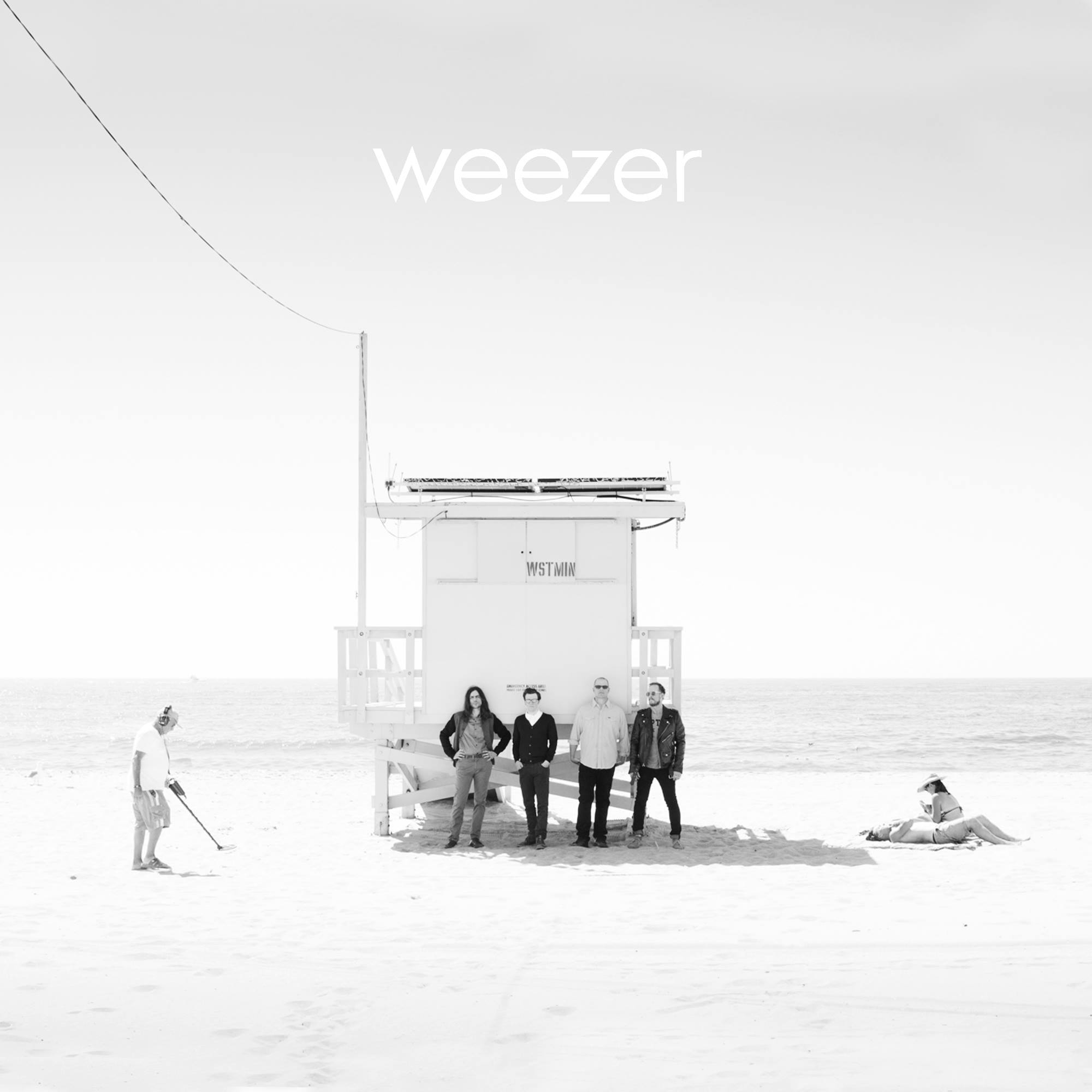
Weezer – “Weezer”

Grade: B

Key Tracks: “California Girls,” “Thank God For Girls”

No one really knows what goes on within Weezer. The bandmates who aren’t Rivers Cuomo might not even know what’s going on. But what went on, for many torturous years, was that Cuomo broke Weezer’s very easy-to-replicate formula. Their first four albums – “Weezer,” (Blue), “Pinkerton,” “Weezer,” (Green), and “Maladroit,” were all pretty similar works, even if the former two eclipse the latter two in terms of quality. And then, for whatever reason, the band released four mediocre-to-downright-unlistenable albums, in relatively quick succession. “Make Believe,” “Weezer” (Red), “Raditude” and “Hurley” all have individual songs that are worthwhile, but none were worth the wait. “Raditude” in particular showed the band giving in to their worst desires. 2014’s “Everything Will Be Alright in the End” was a shaky, tentative return to form that left listeners with their fingers crosses, hopeful for the future. And while their new, fourth self-titled album (White) isn’t a masterpiece or even one that really demands a second play, it is reminiscent of the Weezer past. So, it’s exactly what we’ve been asking for.

This has been billed as a concept album, with all ten tracks set during the summertime. I wouldn’t make the “concept album” distinction, however. Hits from their mediocre albums like “Memories” and “Beverly Hills” have been just as summer-y. Once Rivers Cuomo grew up, got that Harvard education and married that Japanese woman he questionably craved in “El Scorcho,” he couldn’t play the role of the nerdy underdog anymore. Whether something in Cuomo changed, or he was/is playing a character, Weezer’s lyrics switched from the very nerdy (“In the Garage”) to the very social (“We Are All on Drugs”). That change may have had an impact on the music, with the band only now relenting and reverting to their older, better style. Again, we can only speculate as to what goes on inside Weezer. But these are summer-y songs, because that’s what Weezer does now.

The average length of a radio single used to be 3:30, and I’m not sure if that still holds, but that seems to be something in the brains of the members. Seven of the album’s ten songs fall within the sex-second range of 3:24-3:30. These are songs built for the convention of pop radio, even if not the band’s focus. They’re fun, breezy, over as soon as they start. There’s not one but three songs with “Girl” in the title, as well as one with “Kids” and one “Summer Elaine and Drunk Dori.”

As we’ve learned both the easy and hard ways, Weezer operate best when they’re repurposing older material and ideas. The riff and feel of “Beverly Hills” is essentially repurposed for the great opener “California Kids.” The summer-y lyrics throughout repurpose the best parts of their worse albums, as well as any mid-range Beach Boys. Their influence is felt on this album, even amidst the guitar fuzz. And the crunchy guitar is back to stay, apparently. It’s here throughout, pleasantly buoying Cuomo’s lyrics. There’s no songs that stand out from the crowd, Weezer aimed more for a complete package.

Cuomo’s lyrics might seem bland at first listen (and especially at first glance, with the aforementioned trio of “Girl” songs), but they’re packing some punches. Early single “Thank God For Girls” comes off as a little sexist until you investigate the playfulness of the verses. There’s the not-so-subtle line about a “big, fat cannoli,” and the ode to “strong” and “sweaty” women. I don’t think Cuomo is trying to rewrite “Lola” here, instead remarking on the state of gender roles and attraction. Whether it works or not is up to you (jury’s still out on my end). Elsewhere, there’s predictably weird references to Burt Bacharach, the Galapagos and Sisyphus, among others. All very heady and unexpected for a summer album.

It’s easy to criticize the frustrating lack of originality on this album, because you do come off wishing it had some more zings to it. But when they tried to add those zings, we criticized them more harshly. So, take the album for what it is. It isn’t a great Weezer album, but it is a very good one, and it’s the one we deserve. From the hip “California Kids” to the surprisingly forlorn ballad “Endless Bummer,” Weezer have provided a solid set of songs that could end up going down as one of their better collections. Soak it in, dudes.

-By Andrew McNally

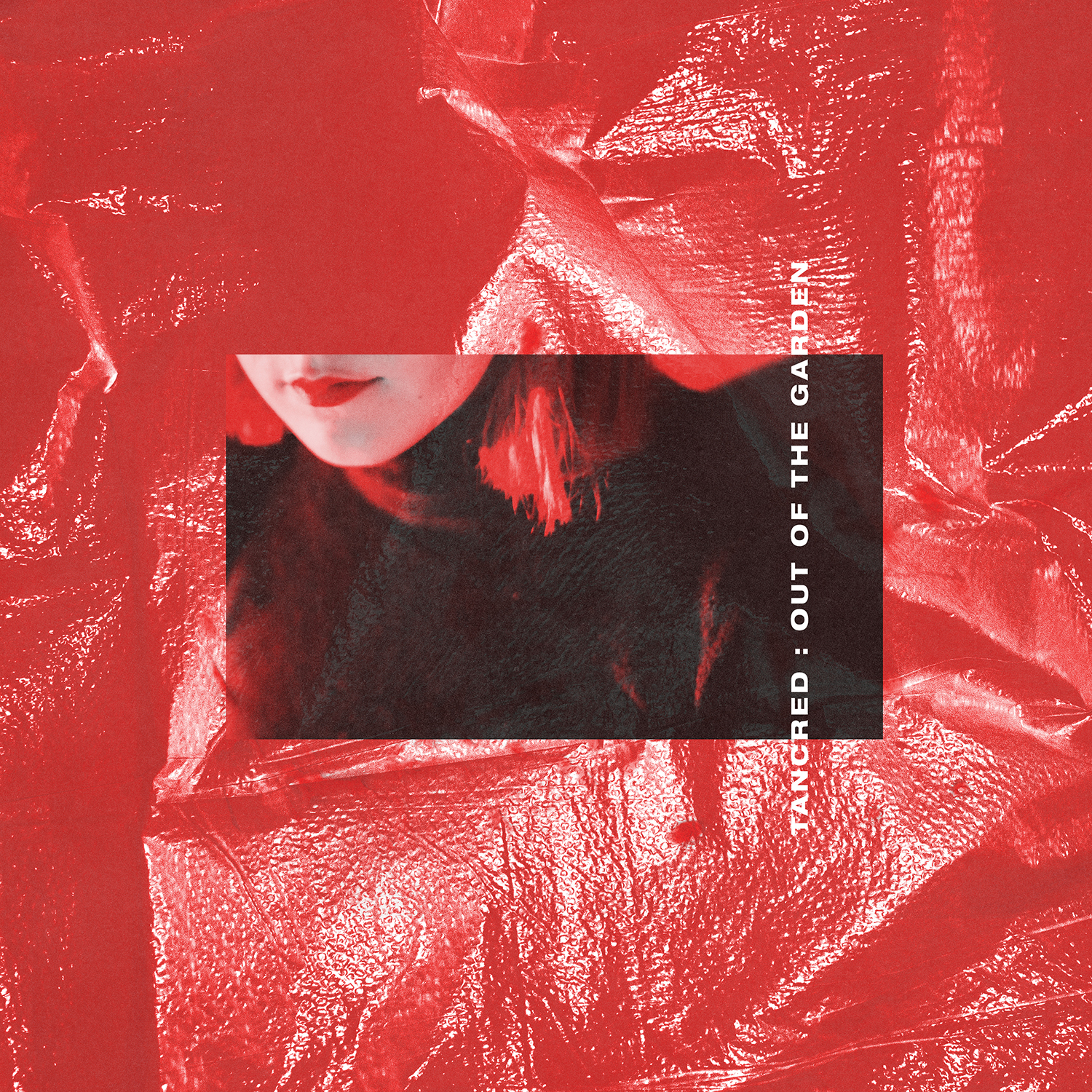
Tancred – “Out of the Garden”

Grade: B+

Key Tracks: “Bed Case” “Sell My Head”

Tancred’s last album, a self-titled album, was an excellent work of little numbers that was weirdly out-of-place. It was released through Topshelf Records, the label home to various emo and pop-punk bands like Into It. Over It., Defeater and A Great Big Pile of Leaves. But Tancred, nee Jess Abbott, really didn’t fit in that club. Even if her songs had a simplistic beauty to them, they were tough to categorize. And in the three years since that album, the scene has become overblown and overstayed. On her third album, Abbott finds herself moving even further away from any emo/pop-punk association, with a collection of fuzzed-up guitar tracks ripped out of the Breeders’ songbook.

There were guitar tunes on her previous albums, but this album’s riffy opener, “Bed Case,” is a stark contrast to “The Ring,” the beautiful, floating song that opened her last album. There is less restraint on “Out of the Garden,” and a lot more volume and energy. The energy isn’t maintained throughout, but more often than not there is enough oomph to keep listener riding down the nostalgia train. Abbott, alongside Terrence Vitali and Kevin Medina, create a world that falls somewhere in the 90’s boom between pop-punk and shoegaze, often swaying one way or the other. “Sell My Head” seems distinctly punk, while “Control Me” falls closer to shoegaze.

Abbott’s lyrics often center around relationships, as well as individualism, something she came into working in a bad section of Minneapolis. On “Sell My Head,” she sings, “I drank you up like wine / Until my teeth were black and white.” She muses on love in regards to self-expression all across the record. “This is how we learned to be happy / This is how we learned the hard way,” on “Control Me.” “Tie me up with ropes made of you,” she sings on “Poise,” and “You look like California / Take me there, take me there / You put me in a coma / But I don’t scare” on “Bed Case.”

90’s revivalists will have a lot to piece through on this album. All members come across well on the album, and while the fuzz-induced boom isn’t quite enough to sustain across the whole album, there’s enough great tracks here to certainly hold up. Tancred has always seemed fitful to place themselves in any genre, and this album is a delightful mix of everything in between.

Watch the video for their excellent single, “Bed Case” below (although not if you have epilepsy):

-By Andrew McNally

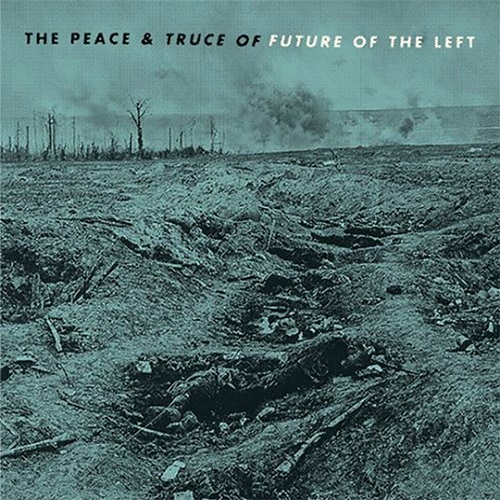
Future of the Left – “The Peace and Truce of Future of the Left” & “To Failed States and Forest Clearings”

The Peace and Truce of Future of the Left:

Grade: B

Key Tracks: “The Limits of Battleships” “No Son Will Ease Their Solitude”

With all of the line-up changes that Welsh post-punk band Future of the Left has gone through, it’s pretty remarkable that 2/3rds of their line-up is original members. That said, they are currently down to a three-piece. Andy “Falco” Falkous will run this band until it dies, and he’s currently joined by his wife, Julia Ruzicka, and third wheel drummer Jack Egglestone, who has been around since the beginning (and also played in Falco’s previous band, mclusky). Their fifth album takes a more math-rock based stance, which can be frustrating at times.

The album’s first few songs all have very complex riffs, designed not to be catchy. They’re all heavy, of course, it wouldn’t be Future of the Left without unnecessary volume. The chugging midtempo rhythm and shrieking guitar of opener “If AT&T Drank Tea What Would BP Do” shouldn’t come as a surprise, their last album opened with a similar song. But it isn’t until “Grass Parade,” the fifth track, that we get a song with a real graspable rhythm. The first four tracks all have clunky, demanding rhythms, and while they’re all good in their own right, it does not request another listen very easily.

Once the album ‘picks up,’ which I’m using loosely, it falls more into a Future of the Left groove. “The Limits of Battleships” and “Eating For None” both have great rhythms, snuck in amidst the volume and anger. “Back When I Was Brilliant” is an effective midtempo, midalbum bruiser, and “White Privilege Blues” has an excellent breakdown in it. “Reference Point Zero” has an intense climax that fits in amidst the band’s best energy songs. And closer “No Son Will Ease Their Solitude” is a tense and building finale that’s delectably unpredictable, without going too off the rails.

Falco’s lyrics are frustratingly buried in the music at times. As a singer, he has been praised and criticized for his on-the-nose subject matter, often tackling a specific target or industry. Or, sometimes, he’ll shield himself behind satire (my personal favorite Falco song is “I Am the Least Of Your Problems”). Sometimes, the lyrics come through here. One of the better tracks, “Miner’s Gruel,” is a subtlety-lacking look at teenage privilege. Album cover included, there’s a few tracks that reference the military. As always, there’s references that seem to make sense only to him, like to curry houses on “Back When I Was Brilliant,” to asking “How many farmer’s markets does it take to change a light bulb?” on “Proper Music” and bemusing, “My bank account is not a hole, it has no purpose and a hole has one” on “No Son.” Perhaps the best lyrical moment, though, is on “Eating For None,” when he proclaims, “I am most of the time perfectly happy.” With all due respect, I’ll believe it when I see it.

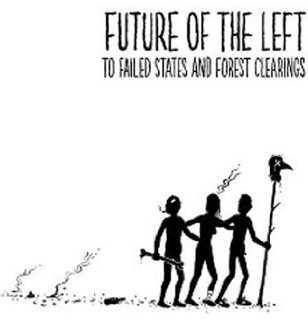
To Failed States and Forest Clearings:

Grade: A

Key Track: “The Cock That Walked”

The band crowdfunded “Peace and Truce,” and gave the record to paying fans early, promising another EP soon to follow. To nonpaying customers, they came at the same time. If the full-length was designed as a progression into less punk and post-punk and more complex music, then this is the refresher. The six tracks on this EP could have fit on any previous Future of the Left album, and should have. There isn’t a weak track on this release.

Opening song “The Cock That Walked” is about, apparently, creeps who get an erection on public transit. It has a pounding, fast-but-not-too-fast rhythm ripped out of their own playbook. Four of the six songs maintain this, a more standard Future of the Left sound. Keyboards mixed in with booming bass and crunching guitar lines. “Problem Thinker” is the first of the outliers, a much more slowburning song that really takes it’s time to build to a big conclusion. Also, “There’s Always Paul” is a bit lighter, centered more around light percussion and handclaps than anything else.

Overall, this EP has a kind of goofy feeling to it. Look no further than “Animals Beginning with a B,” where Falco sings “I can’t see a baboon from where I’m currently sitting but that doesn’t mean they don’t have them at the city petting zoo.” Look, I’m not sure what angle he’s taking here. But this EP is different than the album because Falco’s lyrics are both clearer and weirder. On “Fireproof (Boy vs. Bison)” he sings, “Someone at the party said to get fucked and he had not heard of that.” The lyrics throughout this EP are the kind that would truly divide Falco’s fans and critics. It acts as a companion piece to the full-length, and it should absolutely be for any longtime fans such as myself.

Read my review of Future of the Left’s “How To Stop Your Brain in an Accident.

-By Andrew McNally

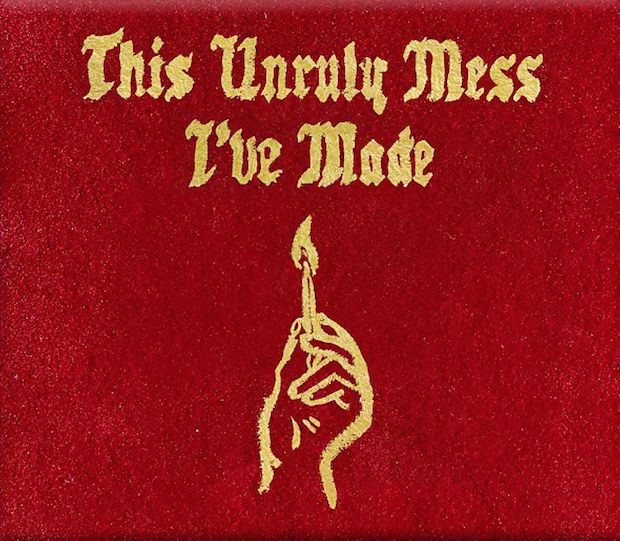
Macklemore & Ryan Lewis – “This Unruly Mess I’ve Made”

Grade: C-

Key Tracks: “Light Tunnels,” “White Privilege II”

Man, a couple years ago I really hated Macklemore. I watched two straight dudes rip off Le1f, a struggling queer, black rapper, and win a bunch of Grammy’s for it and get lauded as LGBT icons. When Macklemore Instragrammed his Grammy saying Kendrick should’ve won, I didn’t believe his sincerity. But I will say he’s won me over into at least neutral ground. He was noticeably absent from the public eye after that Grammy’s ceremony, and in that time, he’s been evaluating his own stance as a sudden, important voice in a community normally reserved for black performers. His second collaborative album with Ryan Lewis sees him tossing and turning internally, struggling with his own white identity. Unfortunately, he throws us along for the process – and This Unruly Mess I’ve Madehits high highs and low lows.

Macklemore is at his strongest when he is serious, checking himself. The opening track “Light Tunnels” is also the best, with Macklemore directly addressing the media bias for both controversy and white performers. He namechecks the Britney and Madonna kiss, and mentions media egging Kanye on for controversy. He also raps about not preparing a speech for the Grammy’s, being unprepared to win. “St. Ides,” the mid-point and the only track without a guest, is an honest look into Macklemore’s history with addiction (which he has allegedly slipped back into). The album also finishes with three great, serious songs. “Bolo Tie” is further musings on his stance, with his best flow on the album, “The Train” is a more gentle song, with some great Spanish background vocals courtesy of Carla Morrison, and there’s second single “White Privilege II.” Reviews of the track have been mixed, understandably. It’s possible that Macklemore shouldn’t have related the song to his own career, or that he shouldn’t have made the song at all. I can believe all viewpoints. To me though (as a white person), it was a burning in him that had to come out. It’s radically different than the rest of the album, with soundclips and sudden breaks in sound and tone. He calls out white media, as well as Miley, Elvis, Iggy Azalea and himself for appropriating black culture. He also calls out people who say they don’t listen to rap except for him. It’s misguided at times, but there’s a brutal truth at the bottom of the song that needs to come from a very specific white person. I don’t know if Macklemore is that person, but so far he’s the best option.

“Mess” is at it’s worst when Macklemore takes a step back and makes jokey-rap, which unfortunately is about 75% of the album’s runtime. The great, ranting opener is followed immediately with lead single “Downtown.” While the song itself is fun, and Macklemore surprisingly fits right in with legends Grandmaster Caz, Grandmaster Melle Mel and Kool Moe Dee, it’s a dopey song that represents the total opposite end of the spectrum from “Light Tunnels.” There’s “Brad Pitt’s Cousin,” where he makes fun of his appearance, “Let’s Eat,” where he jokes about failing a diet, and “Buckshot,” where he insults Seattle’s music legacy. “Brad Pitt’s Cousin” has a Deez Nuts joke and a guest appearance from his cat. “Let’s Eat,” maybe the worst of the bunch, makes reference to Ben Affleck and Matt Damon. The lyrics almost throughout are just hokey and terrible, with lame pseudo-boasts and jokes that fall immediately flat.

Ryan Lewis doesn’t have as immediate of a presence on this album. “Can’t Stop Us” and “Thrift Shop” – beats decidedly unoriginal – had huge, bumping rhythms deadset on radio. There’s more of a subdued nature on this album, possibly coming from Macklemore using his personally elevated platform for discussions on his stance. “Downtown” swipes a great old-school beat, which works well. Elsewhere, there are surprising guest contributions. As mentioned, some legends pop up on “Downtown.” YG makes a surprise guest on “Bolo Tie,” Chance the Rapper shows up on “Need to Know,” and Leon Bridges owns a soulful outro to “Kevin.” Ed Sheeran also pops up on a cheesy ode to Macklemore’s daughter, “Growing Up.” Most surprisingly is a guest contribution from 2016 Oscar nominee (really??) Idris Elba, who has enjoyed a small, private music career.

The album’s title, “This Unruly Mess I’ve Made,” comes from the opening track and refers to Macklemore’s accidental messing around with the state of race in rap. But it refers to the album as well, and I think they know this. There’s two distinct albums here, and they cannot blend at all. Serious songs bookend and occasionally permeate an album of otherwise goofy, cringeworthy songs. It’s obvious that Macklemore is weighing his own platform, and that he’s struggling with it. We’re forced to struggle with him, his music and direction changing on a dime. The result is an incredibly inconsistent and mismatched album that’s occasionally great, but often embarrassing. Macklemore is trying to find his exact voice. On “St. Ides,” he raps “We gon’ be alright,” just like Kendrick’s “Alright.” It is symbolic; one of the album’s best moments came from another rapper.

-By Andrew McNally

Grammy Predictions: Who Will and Who Should Win

(Photo Credit: The Grammy's)

(Photo Credit: The Grammy’s)

Well, it’s that time of year again. It’s the time for awards to distract you from taxes and the bitter cold. And music’s biggest night is quickly approaching! With performances from Adele, The Weeknd, Kendrick Lamar, Justin Bieber, a David Bowie tribute from Lady Gaga, a Glenn Frey tribute from The Eagles and Jackson Browne and a Lemmy Kilmister tribute from Hollywood Vampires (the band that includes Alice Cooper, Joe Perry, and Johnny Depp), it’s bound to be an eventful night. While I cannot comment on every award, I’m presenting the major ones with my predictions, as well as who should win and who should have been nominated. The Grammy’s are notoriously unpredictable (remember this?), so if I get every one of these wrong, blame them.

Best New Artist: Nominees: Courtney Barnett, James Bay, Sam Hunt, Tori Kelly, Meghan Trainor

Will Win/Should Win: Meghan Trainor/Courtney Barnett.

Although Trainor technically isn’t even qualified to be nominated for this award – she was nominated for a major award last year – this is hers to lose. She’s an excellent songwriter and a talented performer, and does the kind of just-barely-biting-but-still-bubblegum pop that the Grammy’s love. Her album, uh, wasn’t great, though. Barnett deserves this award. Her debut full-length was a wholly original blend of 90’s guitars, Dylan vocal ramblings and suburban Australian apathy.

Should Be Nominated: Fetty Wap. Where was Fetty Wap?

Best Pop Solo Performance: Nominees: Kelly Clarkson, “Heartbeat Song,” Ellie Goulding, “Love Me Like You Do,” Ed Sheeran, “Thinking Out Loud,” Taylor Swift, “Blank Space,” The Weeknd, “Can’t Feel My Face”

Will Win/Should Win: The Weeknd, “Can’t Feel My Face.”

Unabashedly one of the best songs of the year, The Weekned brought semi-subtle darkness to the best rhythm MJ never moonwalked to. The song’s explosive bassline counteracted the lyrics, that sound like a love song, until you realize they’re about an inevitable cocaine overdose. It was the second biggest hit of the year!

Should Be Nominated: The utterly neglected Carly Rae Jepsen. Not for “I Really Like You,” but for the non-single “Run Away With Me.” It’s my blog, I can say what I want.

Best Pop Duo/Group Performance: Nominees: Florence & the Machine, “Ship to Wreck,” Maroon 5, “Sugar,” Mark Ronson & Bruno Mars, “Uptown Funk,” Taylor Swift & Kendrick Lamar, “Bad Blood,” Wiz Khalifa & Charlie Puth, “See You Again”

Will Win/Should Win: Khalifa & Puth/Swift & Lamar

This one is really tough. Swift, Ronson and Khalifa all stand a big chance. But I have to give it to “See You Again.” While I have made my thoughts on Khalifa known, it is a genuinely great song. It also has two benefits: one of the 10 YouTube videos with over a billion views, and a now very famous spot in a movie – used in Furious 7 to commemorate Paul Walker’s untimely death. Plus, it was shunned by the Oscars, where it failed to even be nominated in a category it was expected to win. That said, “Bad Blood” was one of the most entertaining songs of the year, and brought together two artists that are usually hesitant with collaborations, and two artists who are otherwise competing tonight.

Should Be Nominated: Selena Gomez & A$ap Rocky, “Good For You.” Selena was among many former Disney stars who went through a whole career reboot this year, and the lead single from her great (and aptly named) album “Revival” is a sultry and engaging duet. Now, frankly, A$ap doesn’t help the song, and when it was released as a single, his verse was cut.

Best Rock Song: Nominees: Alabama Shakes, “Don’t Wanna Fight,” Elle King, “Ex’s and Oh’s,” Florence & the Machine, “What Kind of Man,” Highly Suspect, “Lydia,” James Bay, “Hold Back the River”

Will Win/Should Win: Alabama Shakes, “Don’t Wanna Fight”

I will hesitantly say that this one is almost guaranteed to the Shakes. “Don’t Wanna Fight” is not only one of the bluesiest and spine-tingling sons of the year, it’s one of the most this decade. Brittany Howard’s booming vocals are reminiscent of Ella or Aretha, but it a modern-tinged setting. It’s one of the best songs of the year, and the type of thing the Grammy’s love.

Should Be Nominated: After frustratingly finding out that Royal Blood’s “Figure It Out” was eligible last year, I’ll say Courtney Barnett’s “Pedestrian at Best.” It’s one of my favorites from the year. It would go under Best Alternative Song, but that’s not a category.

Best Rock Album: Nominees: James Bay, “Chaos and the Calm,” Death Cab For Cutie, “Kintsugi,” Highly Suspect, “Mister Asylum,” Slipknot, “.5: The Gray Chapter,” Muse, “Drones”

Will Win/Should Win: just throw a dart at the list/anything besides these nominees

Muse’s album was terrible, Death Cab’s album was worse. “Kintsugi” was the only album in 2015 I couldn’t make it through. Slipknot haven’t been relevant in years. I cannot say I am overly familiar with the music of Highly Suspect or James Bay and cannot comment on them further, I imagine they’re talented acts, to share the bill with three outdated artists. I have to make a prediction? Ugh. James Bay probably.

Should Be Nominated: METZ. Motorhead. Viet Cong. More than anyone else, Marilyn Manson.

Best Alternative Album: Nominees: Alabama Shakes, “Sound & Color,” Bjork, “Vulnicura,” My Morning Jacket, “The Waterfall,” Wilco, “Star Wars,” Tame Impala, “Currents”

Will Win/Should Win: Alabama Shakes, “Sound & Color

With all due respect to Wilco’s phenomenal album, this is again the Shakes’ to lose. I mean, it’s also nominated for Album of the Year, so it’s a surefire. Through and through, the best rock album of the year. Might as well take this time to highlight on of my favorite songs of the year, Tame Impala’s “Let It Happen,” which vaulted the album into nomination.

Should Have Been Nominated: How many times do I have to say this? Courtney Barnett, for “Sometimes I Sit and Think, and Sometimes I Just Sit”

Best Rap Song: Nominees: Fetty Wap, “Trap Queen,” Kendrick Lamar, “Alright,” Common & John Legend, “Glory,” Drake, “Energy,” Kanye West, Theophilus London, Allan Kingdom & Paul McCartney, “All Day”

Will Win/Should Win: Kendrick Lamar, “Alright”

As much as I want to see Sir Paul McCartney pick up a Best Rap Song award, I don’t see the Grammy’s giving this to anyone other than Kendrick. His album is filled with topical and devastating muses on the state of black culture, and “Alright” cuts the deepest. It’s a true rap song for the ages. That said, if Fetty Wap wins, it is well deserved.

Should Have Been Nominated: anything from Nicki Minaj’s “The Pinkprint.” How about “Want Some More”?

Best Rap Album: Nominees: J. Cole, “2014 Forest Hills Drive,” Drake, “If You’re Reading This It’s Too Late,” Dr. Dre, “Compton,” Kendrick Lamar, “To Pimp a Butterfly,” Nicki Minaj, “The Pinkprint”

Will Win/Should Win: Kendrick Lamar, “To Pimp a Butterfly

Easy. This is a stacked category – really, these are all great albums – but Lamar is fighting T. Swift for Album of the Year, and none of these will stand in his way. His album is one of the greatest rap albums ever, and the Grammy’s owe him one from last time. That said, “Pinkprint” was my favorite album from last year, and a win for Nicki would be huge for her career.

Should Have Been Nominated: I don’t really have a true answer for this one so a personal pick, Heems, “Eat Pray Thug”

Record of the Year: Nominees: D’Angelo & the Vanguard, “Really Love,” Mark Ronson & Bruno Mars, “Uptown Funk,” Ed Sheeran, “Thinking Out Loud,” Taylor Swift, “Blank Space,” The Weeknd, “Can’t Feel My Face”

Will Win/Should Win: The Weeknd, “Can’t Feel My Face”

So, let’s get this straight. I still don’t entirely understand the difference between this and the next category, Song of the Year. From my understanding, it relates to the overall production of a song, not just the writer/performer. All that said (or not said), The Weeknd made the best damn song of the year, and although he has competition here, I’m pulling for the Grammy’s picking him. It’s truly one of the grooviest songs in years.

Should Have Been Nominated: There’s a million answers to this. Elle King? I love “Ex’s and Oh’s.” The production on Bieber’s album was excellent too, it’s surprising not to see him nominated in this category.

Song of the Year: Nominees: Kendrick Lamar, “Alright,” Taylor Swift, “Blank Space,” Little Big Town, “Girl Crush,” Wiz Khalifa & Charlie Puth, “See You Again,” Ed Sheeran, “Thinking Out Loud”

Will Win/Should Win: Taylor Swift, “Blank Space”

This is a surprisingly weak category, given all of the great songs that came out this year. Khalifa could easily take it, but I wouldn’t be surprised if the Grammy’s give Swift this award as a consolation prize (see below). It is probably the best song of the bunch, and Swift is deserving of at least some awards for “1989,” which really is a great pop album. Maybe the name she’ll be writing is “Grammy” or something, sorry, that’s, never mind.

Should Have Been Nominated: Although chart success does not necessarily equate award success, there is a conspicuous lack of both “Uptown Funk” and “Can’t Feel My Face” from the list. The Weeknd deserves this award. End all, be all.

Album of the Year: Nominees: Alabama Shakes, “Sound & Color,” Kendrick Lamar, “To Pimp a Butterfly,” Chris Stapleton, “Traveller,” Taylor Swift, “1989,” The Weeknd, “Beauty Behind the Madness”

Will Win/Should Win: Kendrick Lamar, “To Pimp a Butterfly.”

I saved this for last because I truly cannot decide if I think the Grammy’s will give it to Kendrick or Taylor. No discredit to the other nominees, who are all very deserving, but this is a two-person fight. There’s some factors here: 1) The Grammy’s love Taylor, who released what might be her best album yet, 2) The Grammy’s know they messed up by not giving “good kid m.A.A.d city” Best Rap Album in 2013, 3) “To Pimp a Butterfly” is a much better album than “1989.” I think it’s going to go to Kendrick. There will be upset if he loses, although Swift also deserves the award. But man, it’s been years since there has been an album as politically relevant and important as Lamar’s. Rolling Stone, Pitchfork, Vice, EW, Billboard, President Obama and me all agreed it was the best album of the year. If he doesn’t win this award, he’d better call for a permanent boycott of the Grammy’s. #GrammysSoWhite

Thanks for reading! Check back in tomorrow to see what I got right and what I got wrong. And tune in for next year’s coverage, to see how many awards Adele wins.

-By Andrew McNally

Wiz Khalifa – “Khalifa”

Grade: C

Key Tracks: “BTS,” “Zoney”

Wiz Khalifa’s new, half-eponymous release is his sixth studio album, and it comes out right in the middle of a stacked month for him. Khalifa was, now infamously, involved in a quick Twitter feud with Kanye, in which the only real winner was Amber Rose. West – rightfully – attacked Khalifa for a career’s worth of mediocre music, and then – not rightfully – brought his ex-wife and son into the mix. Brushing that aside, Khalifa is up for a major Grammy nomination, for Song of the Year for the Furious 7 song “See You Again,” with Charlie Puth. Perhaps unexpectedly, this was an apropos time for him to drop a studio album.

And it’s okay. Khalifa has never been interested in being a truly innovative rapper, nor has he ever gotten political. Those are critiques in 2016 – the rap scene is getting more and more bloated, with seemingly hundreds of famous rappers trying to find their unique voice (and many of them doing it through rough, political tracks). This is, much like his previous album “Blacc Hollywood,” just a passable rap album.

There’s more interesting things going on from a musical standpoint than on “Hollywood,” which was just boring all-around. The more energetic songs have some oomph that was missing before, and there’s decent use of piano lines throughout that complement trap beats. And “Call Waiting” sits at the midpoint, breaking up monotony with some reggae that ends just before wearing out it’s welcome (although the Fugees reference at the beginning – undeserved). A tender moment happens at the end of “Zoney,” when he brings his young son into the recording (which comes off as a Win, given Kanye’s recent and incredibly inappropriate comments towards the child). There’s also a general lack of the empty ballads that divided “Blacc Hollywood,” with Khalifa sticking more closely to bangers and weed songs.

And weed songs aplenty. All but one, I think. There’s at least three songs that start with the sound of Khalifa smoking. He raps about buying weed, smoking weed, listening to songs he can smoke weed to, you know, diversity. The 6+ minute track “Lit” seems like it might be something innovative for Wiz, given it’s length, but it’s just him (and Ty Dolla $ign) rapping about weed for six minutes instead of four. Lead single “Bake Sale” is a corny joke, some of the corniest lyrics on the album. Every single song disappoints, lyrically, and although Khalifa’s flow has improved, he just sounds uninspired. He wanted to be known as a “weed rapper,” and he pummels us with that so much that he has become his own parody; his own walking advertisement for a product that cannot actually exist. In a world where rap is changing by the week, Khalifa is throwing himself into the heyday of three years ago – and he’s being left behind.

-By Andrew McNally

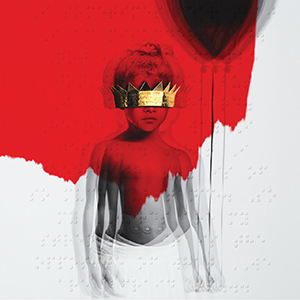
Rihanna – “ANTI”

(Photo courtesy of Roc Nation Records)Grade: C+

Key Tracks: “Same Ol’ Mistakes,” “Higher”

After months of teasing, delays (and rumored Adele delays), fights over the rights to the songs, and non-album singles, Rihanna’s long-awaited 8th album “ANTI” is finally here. It’s her first album since 2012 – by far the longest break in her career. Her first seven came out between ’05 and ’12, with ’08 the only year without a release. Even if it was delayed, the launch was haphazard; she dropped the Drake-duet “Work” as a single, and someone at Tidal accidentally put the whole album up. So this afternoon she released the whole thing for free. It was the same mistake that Kendrick Lamar went through with “To Pimp a Butterfly,” except that this album more relates to the haphazard way it was released.

The disparity between “FourFiveSeconds” and “Bitch Better Have My Money” hinted that “ANTI” might have a mixed feel to it. The former song was a somewhat tender and unexpected triplet with Kanye and Sir Paul McCartney. The latter was minimalistic, but brutal and throne-grabbing (and made our list of the ten best songs of 2015). And indeed, “ANTI” bathes itself in ideas, never fully committing to any of them. The album’s midsection is the weak point. “Desperado,” “Needed Me” and “Yeah, I Said It,” are all tracks that meander through basic rhythms, feeling unfinished and unrelated to anything else going on. Likewise, Rihanna’s lyrics don’t always complement her changing musical styles. They’re also relatively inconsistent, although she can still make simple drug songs sound exciting.

There are glimmers of greatness on “ANTI.” “Consideration” and “Woo” are both great scratchy, dancehall tracks. And the 6:37 “Same Ol’ Mistakes,” an unexpected cover of the Tame Impala song from last year, is a fully-realized, dreamy journey that improves on its source material. After that track, the album closes on four songs closer to ballads, most of which could have fit on earlier Rihanna albums, but all of which are great. Closer “Close to You” has a particularly affecting piano line.

There’s only two guests on the album, both effective. Rihanna plays off of SZA very well in opener “Consideration,” and “Work” is another notch in the Rihanna/Drake collab canon. Another note is standout “Higher,” which clicks in at just one second past two minutes, but is one of the best vocal songs she’s ever delivered. It’s a moment, a quick one, of sheer vulnerability from the normally zipped-up singer.

The problem with “ANTI” is that her intentions are unclear. At times, she wants to go in new directions and at others, she’s content doing what she’s been doing. The album would be stronger if it committed more fully to any of its ideas, but instead it meanders and becomes very inconsistent. The scratchy tracks are my personal favorites, but there are different takeaways from the album. It is as inconsistent in quality as it is tone, and although the production is great (with a long producer list), it feels like a partially-finished puzzle. Rihanna is trying to change her musical path, I think that’s been obvious for a little while, so whatever comes next could be more complete. But this album, her first without any real bangers, feels like a bad idea with many good, small ideas inside of it.

-By Andrew McNally

Megadeth – “Dystopia”

Grade: C+

Key Tracks: “Dystopia,” “Death From Within”

I don’t think there’s very many people, at least besides Dave Mustaine, who would argue for present-day Megadeth. Their releases have been inconsistent, and none in many years have matched the band’s late 80’s to early 90’s heyday. I was barely a month old when “Rust in Peace” came out, but I was probably rocking out to it already. So Megadeth are past their prime, and they showed it on 2013’s “Super Collider,” which was, frankly, awful. They had lost that lovin’ feelin,’ and by that I mean the music had been drained of energy in an ill-fated attempt at reclaiming a wide audience. Then the band members suffered a bunch of personal and professional turmoils, resulting in the departure of the drummer and the non-Mustaine guitarist. Armed with half of a new line-up, Megadeth kick it back into high gear on their 15th album, “Dystopia.”

Much of the album, and especially the opening tracks, mimic 80’s thrash metal surprisingly well. It’s sweaty, massive, and makes you want to punch someone in the face. This trend follows across nearly every track, with only small instances where they give way to a different form. The only real departure is “The Emperor,” which is less sustained, although it could just be seen as a point to stop and breath. Mustaine’s riffs are gigantic, and the dual-guitar solos come up strong. The title track is the only one that’s very guitar-heavy, this album’s “Hangar 18,” but the electric crunch throughout runs deep. The addition of Lamb of God drummer Chris Adler is a nice pick-up as well, his drumming can switch from chaotic to restrained to pummeling based on whatever calls. There’s also a two-song set in the album’s middle that, although two separate songs, act as an inspired mini-suite. “Poisonous Shadows” takes a decrescendoing break from thrash, and builds back up into the instrumental “Conquer or Die.” From a musical standpoint, this is one of Megadeth’s best albums in a long, long time.

And that’s where it stops. Megadeth’s lyrics have rarely been Pulitzer-ready, but they’ve gotten worse over time. Megadeth has a Dave Mustaine problem. His awful, corny and racist lyrics ruin all the goodwill “Dystopia” otherwise builds up. “The Threat is Real” is about enemies attacking from within, and sure as hell seems to be pretty anti-Islamic in that belief. It’s also got lines about “vultures coming home to nest.” He sings about American triumph, and the emperor’s new clothes. The theme of dystopia is clearly important to the album, but the super-conservative Mustaine vaguely presents a dystopia that’s really an American utopia. America is the strongest country, join or get out. Which, okay buddy, maybe it’s time to let some other guys do the writing.

Thankfully, when the music is as strong as it is on “Dystopia,” Megadeth becomes like a themed roller-coaster. It’s all about the ride, and the theme (in this case, the lyrics), only serves to feed into the brand. It’s a Superman roller coaster because the track is painted blue and red, and that’s easy to ignore. The real thrill comes in the mechanics, and that’s the music. A new and improved Megadeth bring the ferocity back, even with the consistently garbage lyrics.

If you like this, try: Slayer’s passable 2015 album “Repentless,” although if you like this, you’ve already listened to that album. Also try turning off the Xbox and going outside for a bit.