Phooey! – “Hello, Doubt” & “End End End”

,

(Photo Credit for both: bandcamp)

Grade: A-

Key Tracks: Hello, Doubt: “Little Boy (Who Dreams)” “Not a Day Goes By” / End End End: “Laughter Guns” “Teenage Kids”

Let me start by breaking character for a minute and saying that I recently received an interesting submission for this blog. Nikita, a man slightly younger than myself and residing in Ukraine, sent me a link to the bandcamp page for his band, Phooey!, and asked me to review something on the more recent side. Phooey!, very much led by Nikita, has four times as many releases as years that the band has existed – 12 releases, including seven EP’s. Seven EP’s might seem troublesome for a young group, but each is drastically different than the next. Their only two full releases are an LP that is not on the more recent side of their discography, and a collection of cut tracks that are self-described as “very awful,” so I chose two of the EP’s – “Hello, Doubt,” released this past February, and “End End End” from August 2012.

“Hello, Doubt” is their most recent solo release (second to a split they contributed two songs to), an offering of six, though really five, songs that fall somewhere between indie-pop and punk. The EP’s first four songs are all guitar-heavy, fast bits of fun pop/punk. All four, although especially “Not a Day Goes By,” mix catchiness, volume and harmonies into enjoyable jams that immediately get stuck in your head. The last two songs are more calmed and laid back, with “Cheetah” as a partially acoustic track and “The Elevator Song” a quick outro.

“End End End,” meanwhile, has distinct punk/noisepop qualities to it, a far cry from the band’s original acoustic recordings. The EP is a fun kind of punk – like some of Japanther’s more recent albums. It’s fast and loud, without taking itself too seriously. And it has some lo-fi elements of muzzled vocals and fuzzy guitars, usually uncommon in punk (although growing in popularity). The EP is structured like a full-length album, actually having a distinct beginning of three energetic songs, a middle of two shorter songs that form an interlude, and three slightly longer and more developed songs to close out. It’s surprisingly cohesive for a band that seems to want to dabble in everything.

And dabble they do – the follow-up to “End End End” was a sadder and more twee-based EP, “Girl Songs,” coming out only a month later. So it’s understandable why the band is focused on EP’s – they offer samples of all the different ways Nikita wants to go. The music on these EP’s can be a lot of fun, the work of a man who enjoys experimenting instead of settling down. I can’t say where Phooey! might go next, and they might not know either. But these two EP’s are two quick and fun releases, and show the diversity that Phooey! is about.

Hello, Doubt is available here and End End End is available here.

If you like this, try: Since I guess this is a band review, I’ll just say listen to Japanther. They’re more experimental but there were remnants of their music on these EP’s.

-By Andrew McNally

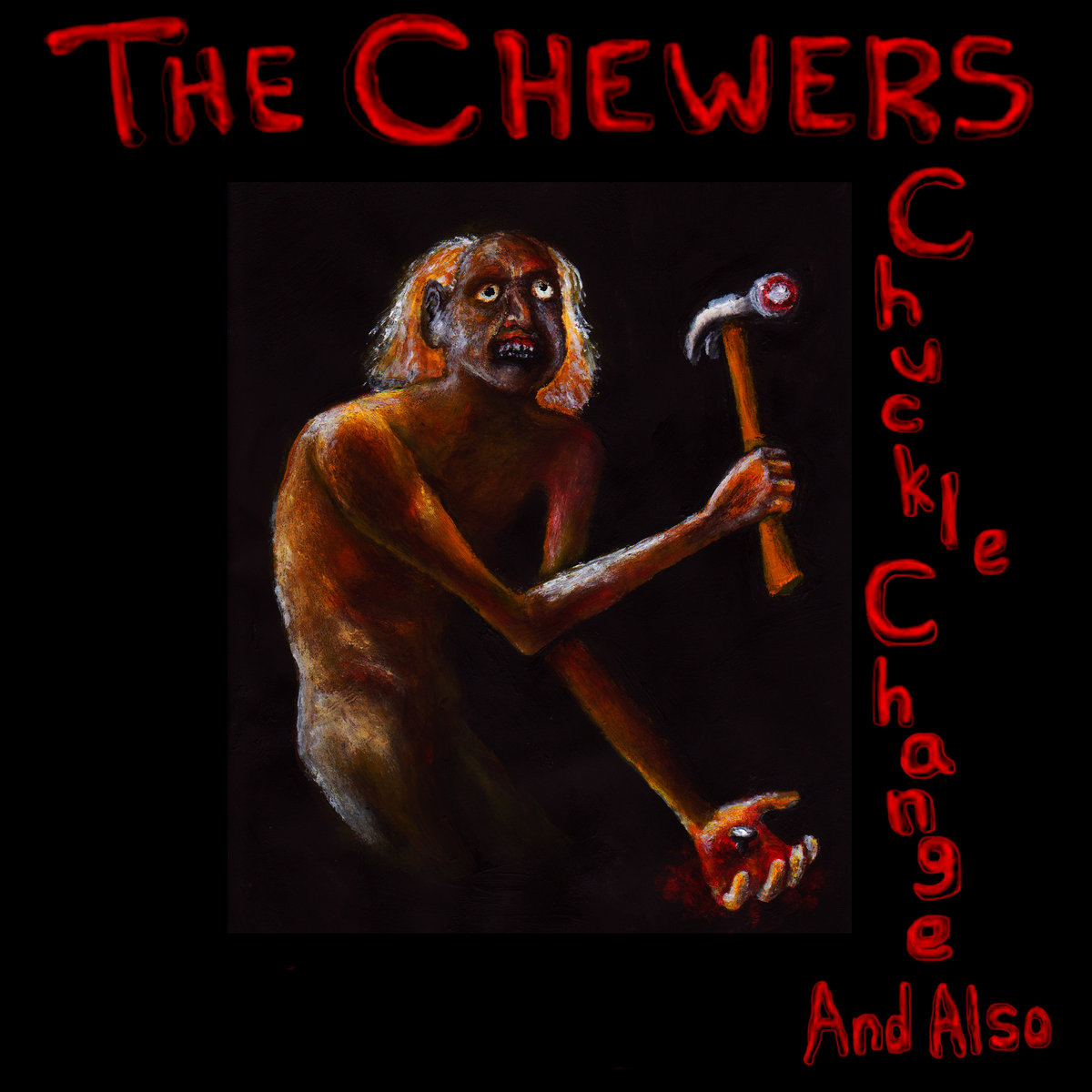
The Chewers – “Chuckle Change And Also”

(Photo Credit: bandcamp)

Grade: B+

Key Tracks: “Burn it Down” “Teeth Lock”

The Chewers describe their music as “deliberately off-kilter,” a very accurate self-description. The band, consisting of Travis Caffrey and Michael Sadler, plays a unique brand of avant-rock. The duo channels avant-garde bands like the Residents, making somewhat minimalist avant-rock that’s bizarre but still a little rhythmic. Take this album song-by-song and it’s almost too weird. But take it as a whole and it’s a continuous and surprisingly consistent look at a theme of dissatisfaction.

What separates the Chewers from most avant-rock bands is their location. The band hails from West Virginia and record in Nashville. Avant-garde music doesn’t exactly have a usual base, but the Midwest hasn’t exactly provided many avant bands. What the band adds is a bluegrass/hillbilly aspect to what’s otherwise noise-rock. It’s a bizarre combination, surely, and one that reinforces what the band seems to be about. Both men play a variety of instruments, and the music is a healthy, low-key mix of bluegrass and noise-rock. The album’s 22 songs only add up to 46 minutes, meaning almost none of the ideas stick around too long and the album is constantly changing.

With the album constantly changing ideas, the theme of isolation is made more present. The music itself sounds almost dissatisfied, played in a way that sounds upset with itself. The band adopt a number of characters throughout the album, singing in a variety of voices. These characters are all angry or sad about something typical, often something small. It’s an interesting approach, that adds a surprising amount of cohesiveness that might not be noticeable at first.

But most of all, the two are clearly enjoying making their off-kilter music, which makes for a fun and diverse listen. Each song, even though many fall around a minute in length, is like a small adventure in that you don’t know what it’s going to be. Avant-rock should be wildly unexpected, and even though the Chewers are more melodic than most avant-rock bands, their mix of noise and hillbilly and use of one-off characters makes for a satisfyingly bizarre listen.

The album can be streamed and purchased on their bandcamp page.

If you like this, try: the Residents are one of the longest running bands ever, and their long career started with the avant-rock and Beatles spoofing classic “Meet the Residents.” I’d start there.

-By Andrew McNally

The Used – “Imaginary Enemy”

(Photo Credit: Wikipedia)

Grade: C+

Key Tracks: “Revolution” “Cry”

Do you like the Used? If you do, you’ll probably like this, their sixth album. If you don’t like the Used, then this won’t win you over. The Used are one of the modern examples in music of sticking to a template. Songs from this album sound interchangeable with their 2002 debut, and any album in between. Fans know what to expect: some chaotic, occasionally violent songs, coupled with some slower, occasionally meaningful emo ballads. This album is a little more coherent than their past few offerings, and might by that logic actually be one of their better albums.

This album is more coherent because it takes itself as a whole, not as a collection of a dozen or so songs. The band takes a political agenda here, whatever exactly it may be. It’s a little more rooted in anarchist punk than what the band is used to. It’s often pretty vague, calls to action with group vocals, etc. But it only gets groan-y once, on “Evolution,” with the line “Call me a criminal / If thinking’s a crime.” Otherwise, the emo group goes via street punk, fed up with the current state and trying to inspire change.

The Used have always had a topheavy problem. Every single one of their albums has gotten off to a strong, energetic start for the first three to five songs, only to weigh it down with some questionable, usually overly conventional slower tracks. “Imaginary Enemy” is no different, although some of the slower tracks are better than normal. “Make Believe” and the title track are two that aren’t constantly upping the ante, but serve as reasonably likable album tracks. There are only a couple bombs, and they’re less overtly bad as they are just easy to get distracted from. The balance is still off, though, between the fast and the slow, and the album suffers from a poor tracklisting, as every other one has in the past.

The Used aren’t a band that is going to take big risks. Straying too far from their comfort zone would probably be a bad idea for them. So to see them move just a little towards a prominent theme and a little more direct punk sound is refreshing. While the album is still very imbalanced (and with a few songs that don’t fit thematically), it is better than the two stale previous efforts. The band has settled into being comfortable with the audience they have, and Used fans – and probably only Used fans – should be happy with “Imaginary Enemy” overall.

-By Andrew McNally

Daniel hales, and the frost heaves. – “Contrariwise: Songs from Lewis Carroll’s Alice’s Adventures In Wonderland & Through the Looking​-​Glass”

(Photo Credit: bandcamp)

Grade: A-

Key Tracks: “Jabberwocky” “Contrariwise”

“Contrariwise” is, in a very loose term, a companion piece. The album was first performed (in my home state of Massachusetts) during a production of “Alice In Wonderland,” and was later released as an album. All but two of the seventeen tracks on the album are musical versions of Lewis Carroll’s poems found within the Alice works. The other two songs, “Contrariwise” and “(Push Them Into the) Wishing Well” were written by Daniel Hales, and co-exist in Carroll’s world. This album certainly isn’t for a commercial audience – it’s an ambitious and dense work that seeks to add more musicality to Carroll’s writing, and it’s largely successful.

Given that Carroll’s poems are often totally fantastical and even, at least in the case of “Jabberwocky,” total gibberish, you can’t exactly place this album under any one genre of music. At times it’s experimental, other times folksy, other times indie. The album’s one long song, “The White Knight’s Song,” feels like a 60’s folk song where the focus was on storytelling. “Beautiful Soup” is almost a ballad, while “Father William” brings guitars into a noisy ending, and “‘Tis the Voice of the Lobster” is almost a little psychedelic. Carroll’s words are usually reflected through the variety of music, although some songs are more straightforward. “Jabberwocky,” for one, leads off the album with a surprisingly straightforward indie ditty, but it is still one of the best songs on the album.

The band, in this iteration, consists of Hales on vocals, guitar, banjo, harmonica and ukelele, James Lowe on bass, Ivan Ussach on drums and Anna Wetherby on viola. Daniel Kasnitz sings back-up vocals, and also credited are “the Looking Glass Creatures,” which happens to include Jeff Steblea. The band is swift throughout the album, often effortlessly switching between genres. The album, in many ways, feels similar to Steblea’s recent Mystics Anonymous, often blending straightforward indie/folk songs with more experimental works.

The band does a standout job at bringing Carroll’s words to life, and a great job expanding beyond their usual indie-folk sound into something more unpredictable. “Contrariwise” is a fun and ambitious album, if you’re looking for something like it. It won’t be something for everyone, but Carroll fans should take notice.

The physical and digital album and tracks are available here, and live videos, dates, merch and more are available here.

If you like this, try: As mentioned, the album loosely resembles the Mystics Anonymous album I recently reviewed, even having Steblea involved.

-By Andrew McNally

Grammer – “Awesome Knifes”

(Photo Credit: bandcamp)

Grade: A-

Key Track: “Quit (Your Job)”

“Twinkly emo” is a terrible name for a genre, but it’s impossible to ignore the almost meteoric rise of emo’s fourth-wave. (It’s practically founded this blog). Fourth-wave emo has risen like drug rock did in 1967, thanks largely to now-defunct bands Snowing and Algernon Cadwallader channeling Midwestern second-wave bands. Since then, pop-punk and punk bands like the Menzingers, Dads and Modern Baseball have fallen inline with the genre, as have more creative bands like the collective The World is a Beautiful Place & I Am No Longer Afraid to Die’s discordant six minute songs about volcanoes. But bands like Grammer – properly from the Midwest – invoke a simpler, 2011 sound that’s somehow now a throwback to a throwback.

Grammer’s debut EP is five songs and roughly thirteen minutes, and really feels like the EP’s of the subgenre’s two origin bands. All five songs are midtempo and are grounded by those (ugh) twinkly guitar rhythms that dominated pretty much every song Snowing ever recorded. Opening track “Astronaww, Man” even sounds a little like Snowing. They seem to channel a few different specific influences throughout the EP. “Coy Wolf” matches Algernon Cadwallader in it’s harsh vocals ugly pairing over clean riffs. “Quit (Your Job)” sounds a little like Dads, with more of a chord-based punk sound. But this isn’t copying predecessors, because Grammer have their own sound. They’re a little grittier, and their lyrics about childhood and life eschew complaining for apathy.

The people in Grammer – Maxx on vocals, Dakota and Miles on guitar, Grady on bass, and Alex on drums, are good musicians and songwriters. This EP fits nicely into the ever-increasing qualifications of fourth-wave emo, without sounding like it’s trying to. It hints at indie and punk, and hints at some emotions and lyrics thematically different than most emo bands. And there are surprises – like the great false ending to “Cigarette Regimen.” “Emo” has become an umbrella term over the last year, for any sort of sad, poetic, relatable, twinkly, fast, slow, loud, soft combination desirable. Grammer are more straightforward than most, and “Awesome Knifes” is a promising EP for a proper, no-frills, Midwestern group.

The EP is available for stream and downloading here.

If you like this, try: It should be obvious here that I’ll mention one of two bands. So try any releases by Snowing, if for some reason you haven’t already.

Foster the People – “Supermodel”

(Photo Credit: fosterthepeople.com)

Grade: C-

Key Tracks: “Coming of Age” “A Beginner’s Guide to Destroying the Moon”

It must be tough to follow up on instant success. Pop rock group Foster the People’s first album, “Torches,” had the inescapable singles “Pumped Up Kicks” and “Helena Beat.” Sophomore albums are usually difficult anyways, even without following worldwide hits. “Supermodel” tries hard to deepen the band’s sound, but it ends up being a mess of empty songs that aren’t nearly as dark as they want to be.

Foster the People, led by chief songwriter Mark Foster, wanted “Supermodel” to be a concept album about the ugliness of consumerism and capitalism – relatively dark themes for a catchy alt-pop band. And that may end up being part of the problem. Take the songs purely on a musical standpoint, and all but one of them are catchy pop tunes (odd man out being “Goats In Trees,” a spoken-word-over-acoustic-guitar song). It’s simply tough to imagine any sort of believability when a band that plays commercially friendly and high-grossing music is singing about the horrors of commercialism.

The album’s other problem is tripping out of the starting gate. The first three songs – “Are You What You Want to Be?” “Ask Yourself” and leadoff single and admittedly great “Coming of Age” all tackle the exact same vague subject of self-discovery. There’s a thin line between having a consistent narrative arc and just repeating yourself, and they fall in the latter. Had the songs been split up or diversified, the whole album might be stronger – it just lacks any momentum to start.

Musically, the album is also a little lackluster. They traded in the unique synth rhythms of their two big hits for a more straightforward guitar approach. It was an attempt to sound a little heavier – but it’s quite the opposite. It’s lighter than before, especially the acoustic songs. Only the memorable “A Beginner’s Guide to Destroying the Moon” kicks the volume up at all (and is then followed by the aforementioned acoustic “Goats in Trees”). Using all-too-familiar guitar rhythms does nothing to separate Foster the People from their counterparts. Think of them like an alt version of Katy Perry – one of the biggest names in their genre, but one of the most unoriginal. Sophomore albums are notoriously difficult, and Foster the People have fallen victim. “Supermodel” will please most fans of the band, but other listeners will likely be turned off by the album’s repetition, boring music and lack of pairing between music and lyrics.

If you like this, try: fellow alt-pop group Fitz and the Tantrum’s great sophomore album from last summer, “More Than Just a Dream.” They didn’t change anything, just focused on a consistent and catchy album that isn’t too repetitive.

-By Andrew McNally

Skrillex – “Recess”

(Photo Credit: soundisstyle.com)

Grade: C

Key Tracks: “Try It Out” “Dirty Vibe”

Weebles wobble but they don’t fall down.

Alright, that’s a slogan for a kid’s toy, but it kind of applies here too. “Recess,” Skrillex’s first official full-length (long delayed after all his work was stolen a few years back), has all the wobbles, but it never falls – there’s no bass drops. The EDM/dubstep mastermind practically invented a new form of music on his ubiquitous EP’s, but he levels out here and settles for more commercial dance music. Sometimes it works, usually it doesn’t. Too many songs on “Recess” fall victim to repetition, and could really benefit from some insanity.

“C,” in grade school terms, comes out to “average.” This is a very average album. The songs are catchy, easy to dance to, and forgotten the second they end. And it’s a shame, because Skrillex, aka former From First to Last singer Sonny Moore, was the leader of an EDM revolution only three years ago. “Scary Monsters and Nice Sprites” won Best Dance Recording at the Grammy’s, despite being one of the most chaotic releases of the year (and despite the voters of the Grammy’s not wanting to know what drugs their (grand)children were taking to his music). But this album feels safe, like a step back. It’s understandable to think that a full album version of the head-pounding and riot-ensuing music on his EP’s would cause seizures, but there’s a common ground that is almost never found.

There’s really only two great songs on the album – “Try It Out” and “Dirty Vibe.” The former is the leadoff single, and it’s a bridge between standard dance music and the typical Skrillex chaos. It resembles what dubstep has become – high pitches, inexplicably dancy, and shrill, just to the point of annoyance. The latter is the only song that tips on the side of chaos, maybe because of a Diplo guest spot. It’s the only song reminiscent of old Skrillex. It’s also worth noting two other great guest spots – Passion Pit’s Michael Angelakos on the otherwise overlong and forgettable title track, and Chance the Rapper on “Coast Is Clear,” one of the more decent tracks.

Although “Recess” is a wholly listenable album, it is disappointing. Skrillex seems to have fallen victim to his own creations. It’s entirely possible that his early releases set a bar too high, one that, if matched again, would only induce violence. It’s also possible that Skrillex wanted to make a more conventional, dance club record. Either way, it’s a turn in a different direction, and one that his fans may not be overly excited to grasp for. Songs from this album – especially single “Try It Out” – will surely be played in clubs. But there isn’t much more here. “Recess” gets a little boring, and it becomes kind of a chore to finish each song. Fans of dance music in general might enjoy the album, but fans honed in more on Skrillex might not feel the same.

-By Andrew McNally

Perfect Pussy – “Say Yes to Love”

(Photo Credit: Pitchfork)

Grade: A

Key Tracks: “Driver” “Interference Fits”

“Stop me if you’ve heard this one before,” Meredith Graves coyly sings on “Advance Upon the Real.” But there’s no stopping Perfect Pussy – there isn’t anything quite like this. In fact, it’s one of the only decipherable lines on the album. Perfect Pussy’s raw, cheap and ferocious punk energy is breathing life into music. The noise-punk band came together after Graves was asked to form a fake band to play in a scene of the 2013 film “Adult World,” and they ended up recording. They released their first EP, “I Have Lost All Desire For Feeling,” rather unceremoniously. But it was quickly picked up by major markets and by the time this debut LP came out (which wasn’t long), it was already hotly anticipated.

The first EP was four songs and roughly 13 minutes long. “Say Yes to Love” is double that – eight songs and 23 minutes. The whole album is characterized by relentless and chaotic energy and teasing intros and fade-outs. The volume is pushed to the max throughout, surrounded by reverb, power chords and lo-fi production. The chords themselves are deceivingly pop-punk, but Perfect Pussy are far too riotous to be considered it. The only song that isn’t all-out is the keyboard-prevalent closer, the ominously named “VII” (ominous because the EP’s song titles were in Roman numerals, suggesting parts V and VI exist). Even then, it’s a booming closer. The band’s intensity is thanks in part to the muffled production. It’s like the medium between Melt-Banana and Potty Mouth, recording with the production quality of Teen Suicide.

Fade-outs, reverb and tempting intros are a large part of this album. The opening song, “Driver,” waits a very teasing eleven seconds before the opening chords. “Big Stars” and “Interference Fits” have long periods of reverb at the end of the song, as if providing a quick break for the listener. And “Advance Upon the Real” has a little over three minutes of tape delay, at the end, in which some notes and chords in the background are just barely audible.

The vocals are improved on this album. On “Feeling,” Graves’ voice was so buried under the music that it was barely audible. They’re at least audible here, although the lyrics are almost entirely unintelligible. They might be taking a Lightning Bolt approach, burying the lyrics under fuzzy vocals to add a shroud of mystery. One of the album’s only other truly unmistakable lines is in “Interference Fits” – “Since when do we say yes to love?” – just intelligible enough to let the listener know what a red herring the album’s title really is. What follows, is Graves dubbed twice over herself, singing three different things at once.

Perfect Pussy have been one of the biggest bands to watch for 2014 and, no, they’re probably not going to become a household name, but they’re making waves in the music world. “Say Yes to Love,” even in its lighter moments, is intense. 23 straight minutes of vicious energy, fronted by Graves’ shout-singing (and Garrett Koloski’s machine-like drumming). Perfect Pussy have emerged from an otherwise empty Syracuse scene, and they’re here to stay.

If you like this, try: Potty Mouth’s “Hell Bent.” It’s not half as intense, but it matches PP’s pop-punk chords and lo-fi production.

-By Andrew McNally

Nepotism – “Black Sheep”

(Photo Credit: bandcamp)

Grade: A-

Key Track: “New American Drugs”

Nepotism are a very eclectic group from South Carolina, taking the best parts out of 90’s punk, modern rock, metal and more, to make a distinct alt-metal sound. The five track EP jumps all around, making sure each song is unique, nearly all of which are successful. What makes Nepotism immediately attractive is the catchy quality of their music. While a lot of louder guitar-based alternative bands aim for discord and noise, Nepotism look for harmonies and memorable rhythms within volume.

The album’s stand out is “New American Drugs,” the most punk-influenced of the five songs. The song has a speedy and relentless central guitar rhythm, that’s equal parts funky, catchy and angry. It wouldn’t sound out of place on your favorite 90’s throwback radio station, but that doesn’t mean it sounds old. Closer “Nobody Knows” is another great track, in the same vein. It’s ferocious and non-stop, but still comfortably accessible. The song is nuzzled in rock radio – fit for radio, but not fit for all of radio’s audience.

“In Disguise” might be the only weak song on the EP. It is the EP’s slow song (hesitate to call it a ‘ballad’) and although it’s a completely successful song in it’s own right, it sounds a little too close to 311’s “Amber,” in many ways. It also suffers from being placed too early on the EP. As the second song, it kills the momentum brought up from strong opener “Let It Out.” All that said, those criticisms are easy to ignore, and I found myself humming on the second listen.

Nepotism are like many alt-rock bands today, taking their inspirations from eclectic groups and genres. This EP shows hints of Incubus, Tool, the Stone Roses and many 90’s alt-rock bands. While those bands all created molds and became victims of their own product, bands like Nepotism are using the molds made by everyone from 311 to Green River and turning them on their heads. “Black Sheep” is five songs that are definitely recorded by the same band, but really don’t sound alike. And that makes for a pretty unique release.

The album can be streamed and downloaded here.

If you like this, try: Pissed Jeans’ “Honeys.” Not really all that related, but there were certain moments where I was reminded of the post-rock band’s excellent (and equally diverse) new LP.

-By Andrew McNally

Supastition – “Honest Living EP”

(Photo Credit: bandcamp)

Grade: A-

Key Tracks: “Honest Living” “Two Weeks Notice”

One of the criticisms of hip-hop that’s arisen over the past couple years is a disconnect with the audience. Drake said something recently – and accurately – about Jay-Z not being able to go four bars without referencing fine art. Jay-Z and Kanye may be at the top, but their tales of luxury and fine living have become off-putting. That’s what makes rappers like Supastition so important. “Honest Living” is dedicated to and directly inspired by the working class. The EP’s inspiration comes from North Carolina becoming the first state to eliminate federal unemployment benefits last year (come on, North Carolina, how evil do you have to be?). As the state’s economy crumbled further, Supastition himself was looking for work, documented in this release. “Honest Living” is a cohesive EP, about the pain felt through North Carolina and the discord felt between the comfortably rich and the poor that have been hurt by the state.

Although “Two Weeks Notice” starts with a a snarky bit of a businessman talking about golf, this EP isn’t exactly ‘angry,’ even though it easily could be. It instead has an aura of passive and informational aggression. Supastition wants to teach listeners, in a way that anger would not allow. He wants to teach listeners what it’s like “living in areas they won’t even deliver pizza to,” as he says in the song “Honest Living.” The EP retains a consistent, relaxed tone, even if the lyrics are thematically heavy and rightly emotional.

Rap that tells stories and has a serious sense of purpose like that on “Honest Living EP” is usually less focused on the skill and impressiveness of the rapper and more focused on the lyrics, but Supastition is an exceptional rapper. It might almost go unnoticed, with how important the lyrics themselves are. But he’s clear and concise, a no-frills artist. The EP’s producer, previous collaborator Croup, acts as the same. The EP is perfectly produced, filled with simple beats and no theatrics.

“Honest Living EP” is an inspired and honest work. There is no boasting, no violence, no NY vs. LA, and no Tom Ford namedrops. It is a vintage, down-to-earth release about economic struggles in North Carolina. Simple music for complex lyrics, and a cohesive EP from a man just trying to make a living. While there’s nothing wrong with big-shot hip-hop royalty, it’s so far removed from what rap used to be. “Honest Living EP” goes back to an old school sound, with lyrics of honest struggles.

The album can be streamed and downloaded for free on bandcamp, but doesn’t it deserve a few bucks?

-By Andrew McNally