Little Tyrant – “Stop Crying/Dying (A Collection of Platonic Love Songs)”

Grade: B+

Key Track: “Everyone who Wants to Kiss me is on the Internet”

Little Tyrant, pseudonym of singer Matt Diamond, starts off their short album with the proclamation: “I had lived through a majority of my life thinking I was sad because I was alone, but then I realized that it was the opposite, I was lonely because I was sad.” Diamond, the force behind folk act Little Tyrant, makes a mission statement in the opening number “Hi (Corny Intro).” They’re setting the rest of the album up as a set of tunes for the trans community, that’s a little more ambient and a little less harsh than other singers out there.

To call this album short is to sell itself a little – at eight tracks, it sits at 10:19. But the very brief runtime lets Diamond sit on some of the music’s more important elements. After the Paul Baribeau-like blast of “Wastin’ Away,” the feedback and slowed rhythms of “Light” seem to extend longer than they actually do, in a way that plays with the listener. The album’s longest song is 2:08, the closer “Everyone who Wants to Kiss me is on the Internet,” and it serves as what is a lengthy closer, relative to the seven songs prior.

Diamond’s music is more ambient than most folksy-singer-songwriters. “Sooner” and “Light” experiment a little more in an ambient setting, both musically and vocally. Their placement towards the end of the album help ease the listener into the ambiance, slowly moving from folk blasts into it.

Diamond has stayed away from lyrics that are too harsh. Their lyrics instead reflect the basics of growing up transgender. On “Mediocre Bedding,” they sing “I sat at the bar and smoked some cigars because that’s what growing up is.” The lyrics throughout reflect Diamond seemingly calling on others to try to make the most of their positions. “Wastin’ Away” features no other lyrics other than “You’re wastin’ away,” and they’re delivered in a frontal but apologetic, ‘it’s time we addressed this’ type of way.

After a couple of listens, its apparent that “Stop Crying” packs a number of punches in only 11 minutes. It sets up an environment in a folk world, and moves into ambient, all while delivering introspective but leading lyrics roped together for a specific community. It’s one of the more interesting releases to come out of the dwelling transgender folk scene, an album created as much for others as it is for Diamond.

The album is available for download/streaming here.

If you like this, try: Porch Cat’s split with JFKFC.

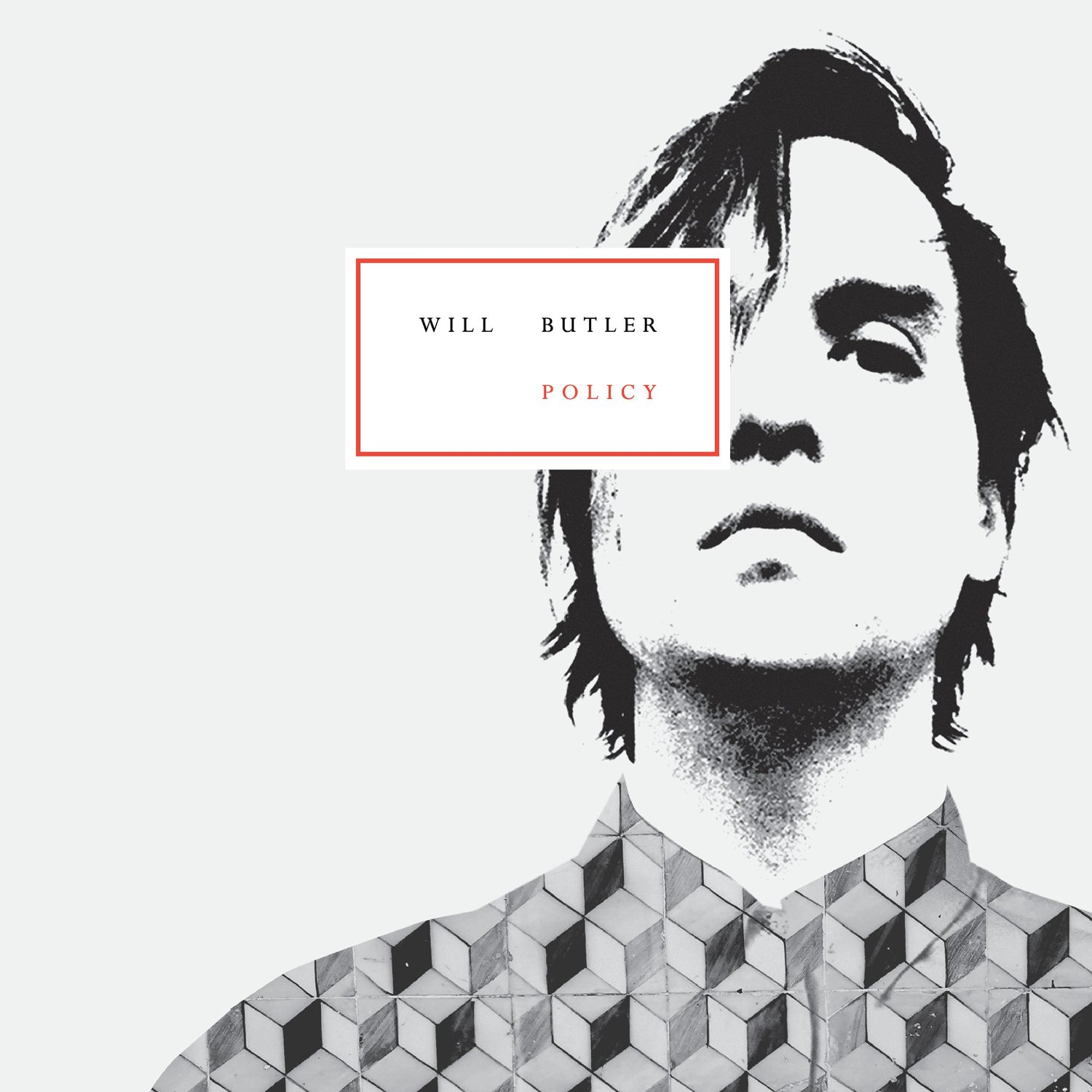
Will Butler – “Policy”

Grade: B+

Key Tracks: “Take My Side” “What I Want”

The idea of a “frontman” is one that dominated classic rock – everyone remembers Freddie Mercury, some people know Brian May’s name, not many people know Roger Taylor and John Deacon. But it’s a status that’s become outdated in the indie age, with alternative bands working more as units rather than musicians waiting for their chance to show off. Arcade Fire hasn’t melded with this change in pace. When a casual person thinks of Arcade Fire, they think of the frontcouple – Win Butler and Regine Chassagne. This is probably because Arcade Fire is huge, there’s six members (seven until recently), and everyone plays multiple instruments. So the band has an indie collective feel, like Broken Social Scene or the Polyphronic Spree. But they’re not, they’ve had a pretty core line-up since Funeral. What this has led to, in succession, is the other members besides Win and Regine trying to make their voices heard. Recently departed violinist Sarah Neufeld released a solo album in 2013, followed closely by multi-instrumentalist Richard Reed Parry. Now, Win’s brother is having his say. Will Butler, who is officially credited with playing “synthesizer, bass, backing vocals, guitar, percussion, sitar, panpipes, trombone, omnichord, glockenspiel, concertina, double bass, clarinet, gadulka and the musical saw” throughout his time in Arcade Fire, has released his first solo album.

As one of Fire’s two remaining crazy members (along with Parry), what we get from “Policy” is Butler’s contributions to Arcade Fire – one slice of the puzzle extracted, and propelled forward until it becomes its own being. “Policy” is often poppier, faster and more lively than Arcade Fire’s music. At 27 minutes, it’s a brisk outing, one that highlights the album’s quickened, but not unruly pace. A majority of the eight tracks are simple guitar-based indie, akin to the solo work of Brendan Benson. It’s a type of indie that is usually successful just because it never has to ask for any sort of originality to work. But “Policy” does still have some original things going on around it. On what’s maybe the album’s best track, “What I Want,” Butler sings wild lyrics around a vocal rhythm that keeps crescendo-ing. Remove the sweet indie sound the goofy lyrics, and it’s a noise-rock template.

“Policy” demands no comparison to Arcade Fire, in either its size or its scope, but it’s hard not to make comparisons. Will does, at times, sound like his brother. And occasionally the rhythms either cool down enough to resemble the band, or they build enough complexity to sound denser. But the album’s biggest difference might be in the lyrics. Butler’s lyrics aren’t at all similar to Arcade Fire’s cold, emotional odes. They wouldn’t fit on an album that leans more to enjoyable than painful. Instead Butler sings lines like “If I could fly / I’d beat the shit out of some birds” on opener “Take my Side,” and on “What I Want,” singing “I know a great recipe for pony macaroni.”

The album’s two outliers are the synth-y and sax-y second track, “Anna,” which almost feels like a red herring. It acts like it’s going to set a tone for the rest of the album, but Butler instead treats it like a song he’s doing for himself to get it out of the way. The biggest outlier is “Sing To Me,” a piano ballad. It’s an effective, low-key piece, and it’s got a strong, haunting tone to it, but it doesn’t really fit on “Policy.” The audience is never really set up for a ballad so soon – even as the penultimate track, it still comes after only 21 minutes.

Still, there are no bad moments on “Policy,” and even though it isn’t entirely effective as an original work and Butler doesn’t quite possess the independent power of being a solo musician, it’s a fun listen throughout. It takes a stance alongside but completely separate from Arcade Fire, and helps to signify Butler’s important position in the group.

If you like this, try: Brendan Benson’s 2012 album “What Kind of World.”

-By Andrew McNally

Heems – “Eat Pray Thug”

Grade: A-

Key Tracks: “Sometimes” “So NY”

Review also printed on Seroword.com

BRUH. Do you want to get shaken up? Wanna get rattled? Heems’ debut is the album to mess you up.

Queens rapper Heems finally has his debut album out, on his own Greedhead Records (search the name on my blog). He has described the album as “post-9/11 dystopian brown man rap.” Indeed, Himanshu Suri is a phenomenally unique force in hip-hop – a man living in New York who’s proud of his heritage, but also feels ostracized because of his race. And that politically charged motive is all over “Eat Pray Thug.” The songs excel on contradiction – New York is home; I’m driven from home.

The lead-off single, opening track and best song “Sometimes” establishes the discord perfectly, by setting Heems up as a rapper who isn’t taking on a persona. “Sometimes I’m pacifist / Sometimes it’s pass the fist / Sometimes I stay sober/ Sometimes it’s pass the fifth,” he raps about his human qualities. This disconnect is what demands the album work as a whole – on “So NY,” he raps about being so New York-based that, “I still don’t bump Tupac.” But, on most of the songs, especially closer “Patriot Act,” he’s more honest about the racism that he, his family, and others have been through as a Middle Eastern man living in New York City. On “Patriot Act,” he bemoans how life became difficult for many people he knew after 9/11, in a spoken word piece that references stop & frisks and donating to local politicians to stay safe. On “Flag Shopping,” he rhymes ‘flags’ with ‘rags,’ and later raps “They wanna Toby us / Like we Cunta Kinte.” Heems cuts deep with his personal experiences, accurate accusations and brutal truth.

But Heems doesn’t spend the whole album expanding on that. He tries pop songs and ballads, too. On “Pop Songs (Games),” he goes for a genuine, bona fide pop song and, while it’s results aren’t quite spectacular, he’s putting in the effort to diversify his music. And on “Home,” Heems and Dev Hynes (Blood Orange) expertly pull off a ballad (courtesy of the line “Be my remix to Ignition”). Heems hits all boundaries on a relatively short album, expanding a brief time to include everything he can.

“Former Das Racist frontman” “Das Racist head” “Creator of internet rap sensations Das Racist” Uuuuuuuuuugh. Still referring to Heems as being the frontman for Das Racist is like still referring to Conan as being a “Tonight Show” host. It happened, it was great and it was underappreciated, but it’s over. Das Racist hasn’t been a band for something like two and a half years, and it’s time to start recognizing Heems for what he is – an incredibly complex, diverse and talented rapper and entrepreneur. On “Eat Pray Thug,” Heems gives it his all, and nearly everything he throws at the wall sticks. “Eat Pray Thug” is an open, honest and powerful work, one that examines New York City as both a lifestyle and a germ pool. And it proves Heems to be the affronting rapper he’d set himself up to be; ready to grab the throne whenever it’s left unattended. There’s a lot going on, and Heems has a lot to say. We should all be listening.

If you like this, try: Any of the people Heems has signed to Greedhead; namely Le1f, or Lakutis.

Jeff Rosenstock – “We Cool?”

Grade: B+

Key Tracks: “You, In Weird Cities,” “I’m Serious, I’m Sorry”

Last year at some point, The Huffington Post published an article detailing bands that write a lot about drugs. And while most readers were left marveling at the fact that Tom Waits has survived it all and is still recording, I noticed that Jeff Rosenstock’s previous band pops up in the lists. It’s worth noting, as I’ve done so many times in the past, that Bomb the Music Industry! is my favorite band. By a whole lot. St. Vincent is a relatively distant second. So I was ecstatic to see BTMI! getting this coverage, even if 1) They were already broken up (to which I wrote this weepy post), 2) Most of the songs are unabashedly sad and, 3) It was in the Huffington Post. Now that he’s on his own, Rosenstock has the freedom to broaden his range. And although he does, “We Cool?” is still dominated by sad-drunk indie-punk songs.

Rosenstock sings “Malt liquor doesn’t make you young” in “Get Old Forever,” and “I’m always getting high when no one’s around” in “You, in Weird Cities.” Those are just the first two songs. “Nausea” and “Beers Alone Again” speak for themselves. He didn’t influence this wave of sad punk and emo bands, he practically invented it. The themes on “We Cool?” might echo those of (every BTMI! album), but we’re always going to be sad and infuriated, so it’s not at all a rehash.

Turn on nearly any track on “We Cool?” and it might sound like a BTMI! song left on the cutting room floor. But it’s a different record – it flows, musically, but not in the way that “Scrambles” or “Vacation” do. “We Cool?” balances different influences against each other. Weezer hot track “Novelty Sweater” bleeds into keyboard-heavy pseudo ballad “Nausea,” which then transitions into the harmonica-featuring “Beers Alone Again.” Rosenstock isn’t as constricted to a central theme, emotion, or season, like he was in previous bands. Instead, Rosenstock is investigating what it means to be a solo singer-songwriter. Perhaps it’s the maturity that comes along with the title, or perhaps it’s the first true solo work of someone who’s already a songwriting veteran at 32, but Rosenstock falls into singer-songwriter mode often on “We Cool?” He references ‘a god you never believed in’ on “I’m Serious, I’m Sorry,” which is itself a very singer-songwriter type song. And he focuses more on his voice – something BTMI! never focused on, to the point where they wrote a song about it (“Vocal Coach,” actually maybe my least favorite BTMI! song, but for other reasons). But for a punk singer-songwriter, Rosenstock’s vocals actually come through well, especially on “Nausea” and “I’m Serious, I’m Sorry.”

There’s debate over whether this is his first or second solo album – I say second. Either is correct. “I Look Like Shit,” released in 2012, was a collection of covers, B-sides and unreleased songs that had little flow to it. “We Cool?” is Rosenstock’s first cohesive solo album, and unlike “I Look Like Shit,” it’s highly re-listenable. It gets better after a few listens, even. What ultimately makes the album strong is that it isn’t associated with any of Rosenstock’s previous bands. He’s solo; it’s what he wants to do, even more on his terms than before. Sure, BTMI!’s John DeDomenici plays on the album, but it’s a Rosenstock show now. And although he strays beyond any conventions of structure, he sticks with the reluctantly-maturing, drunk-punk adult songs. Ten years ago last month, Jeff clicked upload on an album eventually titled “Album Minus Band,” under the Bomb the Music Industry! guise, expecting no response, not even from ASOB fans. Now, he released “We Cool?” a week early for no reason, to a wide, patient fanbase.

-By Andrew McNally

MisterWives – “Our Own House”

Grade: A-

Key Tracks: “Reflections,” “Coffins,” “No Need For Dreaming”

Let’s get this out of the way: there’s nothing inherently special about MisterWives. They’re not one of the more unique indie bands you’re going to hear. But, it’s their sweetness and earnest desire to just make music and bank off each other that makes them great. They’ve only existed for a short while, but on their full-length debut, they sound like a full-fledged band that’s had years of practice. The band’s pretty, vocal-heavy folk-indie is strong at every point.

I was lucky enough to catch MisterWives live at what had to have been one of their earliest shows. They were opening for another great band called Pyyramids in Manhattan, and I remember seeing enough of them to think that they seemed like a down-to-Earth, groovy group that was playing what they wanted to. On “Our Own House,” they’ve expanded their sound, but they haven’t lost much of the fun qualities that they had in that tiny Manhattan bar.

Three of the first five songs on this album have horns. Openers “Our Own House” and “Not Your Way,” and fifth track “Best I Can Do.” It’s worth noting, because the band has an interesting strategy, where they come out with the bang of some extra musicians, before settling into who they are themselves. They bust out with a groove, with a funky grip that hooks you in for a few tracks before you things have calmed and you’re listening to just a few people.

The best tracks on the album are the ones where MisterWives work as a collective – some songs are too heavy on vocals, but some are collective efforts. Two of the album’s better songs, “No Need For Dreaming,” and “Imagination Infatuation,” are collaborative efforts. “Hurricane” is even more guitar-heavy. But even on the tracks on that aren’t as cohesive, Mandy Lee Duffy’s vocals are strong throughout. She’s the anchor of the band; she formed it, she leads it, and her sweet but booming voice propels the band forward. The band’s best song, “Reflections,” is centered almost entirely around her vocals.

“Reflections” is one of five songs on the album that already existed, on last year’s “Reflections” EP. But it’s okay, because they’re worked into the twining of the album organically. They’re just reprints of the older versions, but they fit fine within the album’s frame.

On first listen, MisterWives might seem like another folksy-indie throwaway band, but there’s a lot of substance to their music. It’s grasping, and catchy, and a ton of fun. There isn’t a dull moment on their debut. What MisterWives really is, is five talented musicians sitting in a studio, simply creating whatever they want. And as far as the (pseudo-)indie-folk genre goes, MisterWives are already one of the better bands in the game.

if you like this, try: Company of Thieves. Genevieve Schatz’s voice was sweet but dominant, like Duffy’s, and the band also had a collaborative indie sound. “Oscar Wilde” is one of my permanent favorite songs.

-Andrew McNally

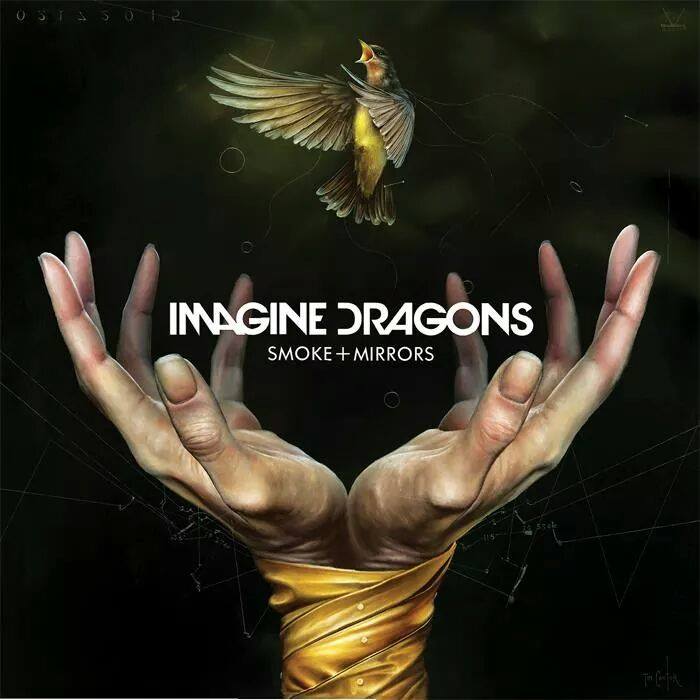
Imagine Dragons – “Smoke + Mirrors”

Grade: D

Key Songs: “Gold” “Trouble”

Imagine Dragons are what I like to call a “placeholder” band. They’re a band that comes out, plays a few selections of music that’s popular right now for a while, and disappears. They’re like a lounge singer who’s actually got some talent and creates original music. Problem is, there’s no point to the music. The gold medal placeholder band has been Muse, for years, but it’s been a few years since that last album, and that last album was bad even by the most forgiving of objective standards, so America turned to someone else. Along came Imagine Dragons – loud, bland, talented, unoriginal, (white,) and willing to play whatever will get them on the radio. Their sophomore album, “Smoke + Mirrors,” is just that. I mean, exactly what you expect.

Imagine Dragons have built themselves a weird, contradictory niche. They exist in a world where they’re both daring – for going outside of any one genre – and not daring whatsoever. They try a whole number of things on this album, but they’re all things that have been done before. And no, bands don’t always have to be original to be successful; if that were the case, AC/DC would’ve been out of business in 1976. But Imagine Dragons are too exciting to be repetitive; too repetitive to be exciting. It’s a weird discord, and I honestly don’t know if I’ve seen any band fall into this rhythm before.

The result, from someone who isn’t a fan, is that it sounds like Imagine Dragons are pulling songs straight from the oven and feeding them directly to the radio. That’s not entirely true, of course, they weren’t planning on 13 singles. But every song on this album – regardless of genre – is dead-set on radio. There’s nothing challenging, nothing that isn’t self-serving, not a single thing you don’t expect from Imagine Dragons.

“Smoke + Mirrors” has to be reviewed on a track-by-track basis, because there are some surprisingly good tracks. Second track and second single “Gold” really isn’t a bad song; it follows a hip-hop beat, possibly inspired by their great Grammy’s performance with Kendrick Lamar last year. And once the band flows through all the loud stuff they want to do and settle into toned-down tracks, we get two more good songs – “Trouble,” a somewhat fun and rhythmic song with no declarations, and “Summer,” a decent ballad. There’s also “Friction,” at the halfway point. “Friction” is centered around an Eastern stringed instrument and has an urgent feeling to it that no other song on the album does. It’s Imagine Dragons at their heaviest and most inclusive, but that’s still not overly impressive.

And when this album is bad, it’s bad. The lyrics throughout the whole album sound like words picked out of a radio rock lyric generator. The album’s opening line is “I’m sorry for everything I’ve done,” and it’s done in a way that makes it sound like an ‘edgy’ way to start an album. But it’s not (may I direct you to these opening lines?), and they almost never work. They never turn the volume up enough to be interesting, they never fully commit to hip-hop beats, and they don’t fully adhere to their ballads. They’re trying many things, and if they spent time expanding one sound, it could be strong. They’re clearly talented musicians, but it almost always sounds like they’re restraining themselves for fans.

There’s also the issue of ripoffs. I found three, without actively looking. The most subtle (and likely accidental) is in “Trouble,” which shares too many similarities to Linkin Park’s (yep) “Nobody’s Listening.” The less accidental are vocal and lyrical nods to the Steve Miller Band’s “The Joker” in “Polaroid,” and to Pat Benatar’s “Heartbreaker” in “Smoke and Mirrors.” They’re surely done in appreciation, but they don’t sound like it.

“Smoke + Mirrors” is sure to delight fans of placeholder bands, and probably won’t win anyone over. Imagine Dragons grabbed fans early, whomever would jump on, and don’t want to let go of them. So they’re exploring the boundaries of popular music from the inside, never straying out of sight of the listener. Don’t like the way this one’s done? Don’t worry, it’s over in four minutes. It’s a dull album, lacking in almost every component, with only a few redeeming songs.

So, More like UNImagined Dragons, amirite?!?!

If you like this, try: Don’t worry, teenage years are tough on everyone, it’s not just you.
Brooks Wheelan – “This is Cool, Right?”

Grade: B+

Key Bits: “new york stuff” “saturday night live stuff”

There was a sketch on Saturday Night Live recently, but not too recently, that was a play on Family Feud. It was a network edition. On one side stood CBS – host Jimmy Fallon as Jim Parsons, Taran Killam as Ashton Kutcher, John Milhiser as Jon Cryer and Noel Wells as Alyson Hannigan. On the other side stood NBC – Justin Timberlake as Fallon, Kate McKinnon (praise) as Jane Lynch, Jay Pharoah as Ice-T, and Brooks Wheelan. As himself. An SNL cast member. At the time, I laughed at the meta-humor and focused on Timberlake jumping around onstage as Fallon. But, this sketch really defined Wheelan’s presence at SNL, as a comic who was both too grounded and too weird to exist in the NBC universe. And, after his quick firing, Wheelan is out on his own – making that discord work.

It isn’t perfect. Wheelan spends basically the whole album talking about his upbringing, hoping to bank on comedy experiences to bolster his next work. But, Wheelan’s presence as both a bro-comic and an absurdist is strong here, and it’s so conclusive that it’s almost tough to know what to make of him. Wheelan talks about being an incredibly awkward child, through his love of ranking people he knows through brackets without their knowledge, and delivers it in such a way that we all can sympathize, even though that’s beyond crazy. He talks about being the youngest of three brothers in a small Iowa town, but his NYC experiences elevate those memories past the small-town boy charm.

Wheelan might jump from a joke about his brothers pranking him to a bit about how JFK really died from terrible rat breath and that the government covered it up; it’s an elaborate stand-up presence, one that shows that Wheelan is still finding his exact, specific footing.

Where Wheelan’s strengths lie, ironically, is in trying to find out exactly who he is as a comedian. The best bits he delivers on this album are family related – reacting to his father killing a possum with a rock in the garage, dipping his balls in a bottle of Scope that his older brothers used – but he also responds with absolutely unexpected reactions. He ends with pitching all his unused SNL sketches – most of which are weird, cerebral and outlandish (and outstanding, naturally).

He pitches at least eight sketches that SNL didn’t pick up, including a “Field of Dreams” where the players are Nazis, a pair of 109 year old grandfathers who are given Spencer’s gift cards, and an Australian tourist in America who can’t stop saying that Steve Irwin’s death was their 9/11. It’s brilliantly and delightfully weird, just the type of weird that could permeate SNL without making any waves. And on the album, Wheelan sounds a little resentful of his brief time at the show. He wasn’t on air much, and it sounds like it was a struggle on both sides to get his work up. Most of his failed sketches are brilliant, but just not the type to succeed on SNL, and his weird hybrid comedy just couldn’t survive there.

SNL has a history of passing on goldmines – Sarah Silverman, Zach Galifianakis, Louis CK and Larry David all had brief stints at the show before leaving unceremoniously. Wheelan never struck out to me much on SNL, but it might be because he never got his chance to. But on his own terms, on a debut album, he’s completely convincing. Wheelan is the bro-absurdist that could bridge gaps we didn’t know could be bridged.

If you like this, try: Kumail Nanjiani’s “Beta Male.” Kumail’s experiences growing up are decidedly different (Iowa v. Pakistan), but his content and delivery is similar to Wheelan’s.

Fade In: Beck

Beck just won the Grammy for Best Album, upsetting the shoo-in win for “Beyonce.” It’s led to some ‘controversy,’ Bey fans taking to Twitter to ask, “Who in the heck is Beck?” Well, I thought I’d use this opportunity to premiere a new feature of this blog: introductory playlists. It’s an idea I’ve been toying with for a little while, and this seems like the perfect time to start. Every so often, I’ll be publishing 5 or 10 song Spotify playlists with a range of songs from a certain artist. Big hits and deep cuts included, to give the best sense in a short time.

So who is Beck? Well, by this point everyone should know. He’s been releasing music since Beyonce was 12 years old. Though primarily a singer-guitarist, he often plays all the music on his albums, which can be anywhere from one to 15 instruments. His first and biggest hit came in 1994 with “Loser,” and two years later he released the seminal alternative album “Odelay.” His music has taken on a number of different personae. His early music is characterized by a huge blend of alternative, folk, psychedelia and often hip-hop influenced freestyled verses (Beck would record verses on a whim and promise to change them; he never did). A distinct change (no pun intended) came in 2002, when a break-up from a long-time relationship led to the somber, acoustic “Sea Change.” Since then, his music has taken more of an indie approach, regaining much of his early fun but sacrificing less structure. The album he just won a Grammy for, “Morning Phase,” is seen as a more optimistic sequel to “Sea Change,” and is a return to his soft, acoustic side. Want to talk about Beck but don’t know his music? No fear; here’s ten songs to start with.

1) “Loser” – His most well-known song, this song is marked by a depressing chorus, acoustic slide guitar mixed under freestyled, nonsensical lyrics and a vibe that no one else was doing in 1994. Coupled with Radiohead’s “Creep” and the Stone Temple Pilots’ “Creep,” it completes the trifecta of pure 90’s self-loathing.

2) “Nausea” – This 2006 single didn’t have a huge impact, but it’s one of Beck’s most fun songs off of one of his most underappreciated albums. It acts as a throwback to his earlier music – more defined, more practiced, but still acoustic madness that sounds unrehearsed.

3) “Blue Moon” – The lead single off his recent Grammy win, “Morning Phase,” “Blue Moon” is a gorgeous song, surprising by even the most somber of Beck standards. Featuring some beautifully poetic lyrics and a waking acoustic rhythm, it’s one of Beck’s best tracks, and one that showcases a very different side to his music.

4) “The New Pollution” – One of three big hits from his classic “Odelay” album, it’s typical Beck insanity. Catchy, and almost overstuffed with various instruments doing various things (including a nice saxophone bit).

5) “Think I’m in Love” – Another track from 2006’s “The Information,” “Think I’m in Love” is a more straight-forward indie song, an approach he took for the next few years. With an ever-repeating bassline, Beck sings optimistically about a new relationship. But – Beck fans know it’s only a few years removed from “Sea Change,” and it adds an unsettling nature to the song.

6) “E-Pro” – Maybe Beck’s loudest song, it was a roaring comeback in 2005. This is the first track on his “Guero” album, the first album he did after the soft and moody “Sea Change,” and Beck wastes no time announcing his return to his old self. With a beat sampled from the Beastie Boys’ “So What’cha Want,” an 8-bit music video and a heavy guitar line, it’s one of Beck most distinct tracks.

7) “Gamma Ray” – Beck’s 2008 “Modern Guilt” received decidedly mixed reviews, with some people saying he plays it a little too safe and structured. Agree or not, on “Gamma Ray” Beck shows he can pull that off, too. “Gamma Ray” acts as a somewhat direct indie song, and might not sound out of place on a Death Cab For Cutie or Modest Mouse album. It’s an unfortunately forgotten Beck release.

8) “Girl” – The other hit from “Guero” mixes acoustic guitar and game-y chiptune bits into just a simple, fun song. With all of the instruments Beck plays, it’s somehow one of his only songs to feature a solo, on acoustic guitar. Beck has always been one to have great choruses, but “Girl” is one of is most memorable.

9) “Wave” – Almost definitely the most unnerving Beck song, it’s the black sheep of his recent “Morning Phase.” Showing up directly in the middle of the album, it breaks the flow of light, cheery tunes with an utterly brooding lack of rhythm and emotion. It’s just Beck’s ghostly vocals and strings, with no chorus or discernible rhythm. It’s a haunting track and already one of the biggest standouts in his discography.

10) “Where It’s At” – Beck’s other big hit, this one doesn’t get quite the airplay “Loser” always has, but it’s close – and earned Beck his first Grammy. This is the key track from “Odelay,” and it’s crazy Beck at his finest. Every instrument imaginable shows up, it’s catchy but twisting, noisy, rapped, random, and druggy. It’s a little long, sure, but this is what you get when you give Beck two turntables and a microphone.

There you have it, ten Beck songs to introduce you to his music. This specific playlist leans more on hits, future ones will likely incorporate deeper cuts. Now you can properly debate whether or not Beck deserved to win the Best Album Award! (He didn’t, but I still love Beck).

-Andrew McNally

Tom Petty Beat the System Without Even Trying

Ask people to name the biggest classic rock bands – what do they usually say? The Beatles, Led Zeppelin, the Stones, the Eagles, Springsteen.

Ask people to name their favorite classic rock bands. Here’s mine: The Beatles, Fleetwood Mac, Cream, Creedence Clearwater Revival, Bob Dylan.

Tom Petty & the Heartbreakers isn’t usually a name that comes up under either list, yet we all love him, and he’s had one of the longest and most successful careers of anyone from the classic rock era. So, why is that? There’s one simple reason, and it’s the reason why he’s still famous today. Just a few weeks ago, news came out that Petty had settled a case out of court with singer Sam Smith over his now-award-winning song “Stay With Me.” Smith’s song follows the same melody as Petty’s 1989 song “I Won’t Back Down.” The fact that it was settled and that neither party was the one to break the news reinforces Petty’s later comment that it was pure coincidence. But coincidence or not (and I think it was), this is the third time this has happened.

Musicians getting sued over stealing riffs and melodies has always happened. Robin Thicke and Pharrell are currently fighting a losing battle with the Gaye family estate over “Blurred Lines.” The Rolling Stones probably make more in royalties from “Bittersweet Symphony” than the Verve ever will. Coldplay’s “Viva la Vida” was allegedly ripped off from Joe Satriani’s “If I Could Fly,” which was in turn alleged to be a ripoff of Cat Stevens’ “Foreigner Suite.” It’s always happening.

But this is now the third time in 13 years that Petty has been able to hold up a yellow card and call someone out for ripping him off.

In 2001, a little band called The Strokes released a little song called “Last Nite.” You may have heard it. The song almost single-handedly opened an indie revolution that had been laying dormant, unleashing the likes of the White Stripes, the Yeah Yeah Yeahs, Interpol, Franz Ferdinand, the already veteran Modest Mouse, and many more, in a short span. But it didn’t take long for people to realize that the opening riff to the song sounded an awful like the Heartbreakers’ first single, “American Girl.” Petty never sued or made any deal of it. But the Strokes still admitted that the riff was stolen. In 2006, Petty said of the steal, “…there was an interview that took place with them where they actually admitted it. That made me laugh out loud. I was like, ‘OK, good for you.’ It doesn’t bother me.” Petty even invited the Strokes to open on a tour that year.

Also in 2006, there was a little song called “Dani California” by a little band called the Red Hot Chili Peppers. You may be familiar with that one too, it’s the one where they made a video honoring a whole bunch of musicians who are far better than them. It wasn’t their first single, far from it (it was #30), they were and are one of the most established names in rock. But they, too, were accused of a Petty ripoff. The rhythm of the song matches that of Petty’s classic 1993 single “Mary Jane’s Last Dance.” Being the Chili Peppers, they feverishly denied it and claimed to be an original band capable of original ideas, even though the lyrics of the two songs are also pretty similar. Still, Petty didn’t sue or take any action.

Perhaps because this is getting repetitive, or perhaps because the song is just a little too close, but Petty’s publicists did get involved with “Stay With Me,” although the original low-laying settlement gives the vibe that Petty and Lynne had little interest in it and just saw it as a happy accident. The result, as you likely saw last week, is that Petty and ELO’s Jeff Lynne now share songwriting credits with Smith, Jimmy Napier and William Phillips. The song’s shelf-worth number of Grammy wins has continued to make this a notable story, too.

So why does this keep happening to Petty? It could just lie in the fact that Tom Petty is great and that nearly all of his big hits are excellent songs that never really get old. But that’s only the surface of it. 1976 saw the release of “Ramones,” “Boston,” “Station to Station,” and “the Runaways.” The Beatles were six years gone, Bob Dylan was beginning to show he wasn’t perfect, and Led Zeppelin was closing down. The Beatles the first band to prove that the album format could succeed, even with albums filled with original music. After that, nearly every band tried to rebel against music by creating an identity that was purely their own. The Ramones invented power chords, KISS and Alice Cooper wore make-up, Led Zeppelin were sloppy, AC/DC were tight, Black Sabbath sang about robots and suicide, and bands like Queen, Blondie and Fleetwood Mac all had their own, distinct sounds.

Petty, and the Heartbreakers, rebelled against that by not really doing anything original at all. Their music has never been showy, never grandiose, never Earth-shattering, and that’s what makes it so good. Classic rock can be exhausting, when “Freebird” gets followed up with “Iron Man” and “Dazed and Confused.” But when “American Girl,” or “Free Fallin'” comes on, it’s a sigh of relief. The Heartbreakers were one of the most successful classic rock bands that never tried too hard. Their songs are simple, just straightforward rock songs that could easily be by anyone, if you couldn’t immediately tell they were by Petty. Petty was a trailblazer in repetition. I don’t listen to much rock radio these days, I imagine it’s just filled with Nickelback and Stone Sour, but in a weird way, they have Petty to thank. the Heartbreakers often wrote rhythms that weren’t straightforward, but still simple – and have been copied. Petty was one of the first to know that rock music could just be what it is, as long as it’s catchy and memorable. And that’s why he’s now swimming in money and publicity. Petty rode a middle road – making music that was neither too sloppy or offensive to turn off a traditional crowd, but not dull enough to turn off new rock purists, either. And he’s still going, playing it. In short, Petty was one of many to help put the system of rock in place, but was one of the only who realized he could rig it, too.

the Heartbreakers released an album last year, “Hypnotic Eye.” It has an average of 77 on Metacritic and was the band’s first ever #1 album. This blog started but never finished a review, as I never found anything to say that wasn’t already being said. It was a great album, it was what they do best – straightforward rock. They’re still going, 39 years after their debut. They’ve essentially outlived the Strokes and the Red Hot Chili Peppers, who have both been flirting with irrelevancy for years now. And Sam Smith’s questionable reviews from the get-go might prove tough for the future, even with the Grammy sweep. In 1976, rock music was finally fully forming, it was finally done being molded by Paul McCartney, Muddy Waters, Robert Plant, Freddie Mercury, and countless others. Petty was one of the only ones that picked a safe stance (you could argue that AC/DC did too). He’s still playing sold-out shows, and is one of the few holdovers from the classic rock era: Springsteen, McCartney, the Eagles and Fleetwood Mac are still going strong, but that’s about it. My advice to young musicians is to always take the road less taken; but Petty didn’t, and he’s made an entire career out of it, to the point where he’s constantly being ripped off. We might eventually phase out the more showy classic rock, but we’ll never lose Petty. Keep going, Tom, you’ve earned it.

-By Andrew McNally

Post-Grad Music Reviews is run by Andrew McNally. Comments can be left below, questions and angry responses are welcomed at amcnal817@gmail.com

A few words on Marilyn Manson’s “The Pale Emperor”

Grade: B-

Key Tracks: “Third Day of a Seven Day Binge” “The Mephistopheles of Los Angeles”

I have a distinct memory, in 2007, of downloading the lead single from Marilyn Manson’s ’07 album “Eat Me Drink Me,” called “Heart-Shaped Glasses.” I downloaded it, and realized that I was a seventeen year old grabbing a song from someone who relevancy had left behind years ago. I don’t know what I did next, but the realization of adulthood crept in so I probably bought a checkbook or scheduled a doctor’s appointment by myself or something. It’s now eight years later, and Manson’s name has been written into the history books as a somewhat flash-in-the-pan shock-rocker from the 90’s. But it’s time to make that edit.

I wasn’t planning on reviewing this album. I didn’t even know if I’d listen to it. I keep a running tab on new albums throughout the year and listen to whatever I can – Dylan’s covers album isn’t on Spotify, and Mark Ronson wasn’t tickling my fancy today, so I just threw on “The Pale Emperor,” remembering it had been getting more press than his previous few albums. I don’t know the last time I listened to a Manson album in full; I’m not positive I ever have. But I’m glad I did, because I’m finally getting the Marilyn Manson I’ve always wanted to hear – the real Marilyn Manson, the real Brian Warner.

My problem with Manson was that it never seemed real – he wore weird make-up, but so did Alice Cooper. He sang about hating people and culture, but so did everyone else. He sang about sadistic things, but so did Black Sabbath, and Iron Maiden. And when school shooters started admitting their love for Manson, he was forced to break facade and tell people not to do that. His music was meant to shock, but it was way, way too melodic. Whistle “The Beautiful People” to yourself right now. I bet you can. The Dead Kennedys were more violent and sloppier, and you can’t say that Manson would strike any nerves musically that Nine Inch Nails or, hell, Merzbow hadn’t already.

Manson fell into irrelevancy, once we all accepted his existence and decided to turn him into the butt of jokes instead of the envelope-pushing musician he was trying to be. And although the band has been releasing albums this whole time, “The Pale Emperor” is the first time we’ve seen Manson as a musician. The album doesn’t always turn the volume up; it’s poetic, melodic and, at points, bluesy. It’s even occasionally a little fun, even in it’s darkness. These feel like the songs that Warner – not Manson – has been sitting on for some time, waiting for a time to record. Maybe he waited too long, but they’re a welcome change for someone who had outplayed himself and his band.

Manson sounds like he’s actually having a good time on this record, and it’s a fun we can all engage in. It’s not all great, and it’s not overly memorable, but it’s a side of the band we’ve never seen before. Song titles like “Slave Only Dreams to Be King,” “Birds of Hell Awaiting” and “The Mephistopheles of Los Angeles” sound like typical Manson, but they’re not – because he’s not aiming for radio anymore. Manson – and the band – have finally hit the point where they don’t have to fight for hits any longer. People are either in it for the long haul, or they’re not.

I was never onboard the Manson train, I was a little too young, but this album excited me. I’ve always seen the band’s problems being the forefront of their music and their actual music on the backburner, and that’s finally switching. I titled this review “A few words on Marilyn Manson’s “The Pale Emperor”” because I wanted to talk more about his legacy than the album itself (and because I didn’t expect to go on this long); I’m not that familiar with his discography and how different this album really is. But it is a breath of fresh air from a musician who is finally able to be comfortable with himself. No forcing, no goals, and only the theatrics he wants – “The Pale Emperor” is still a dark, heavy album, but it’s finally one by Manson’s standards, not one by society’s.

-By Andrew McNally