Future of the Left – “The Peace and Truce of Future of the Left” & “To Failed States and Forest Clearings”

The Peace and Truce of Future of the Left:

Grade: B

Key Tracks: “The Limits of Battleships” “No Son Will Ease Their Solitude”

With all of the line-up changes that Welsh post-punk band Future of the Left has gone through, it’s pretty remarkable that 2/3rds of their line-up is original members. That said, they are currently down to a three-piece. Andy “Falco” Falkous will run this band until it dies, and he’s currently joined by his wife, Julia Ruzicka, and third wheel drummer Jack Egglestone, who has been around since the beginning (and also played in Falco’s previous band, mclusky). Their fifth album takes a more math-rock based stance, which can be frustrating at times.

The album’s first few songs all have very complex riffs, designed not to be catchy. They’re all heavy, of course, it wouldn’t be Future of the Left without unnecessary volume. The chugging midtempo rhythm and shrieking guitar of opener “If AT&T Drank Tea What Would BP Do” shouldn’t come as a surprise, their last album opened with a similar song. But it isn’t until “Grass Parade,” the fifth track, that we get a song with a real graspable rhythm. The first four tracks all have clunky, demanding rhythms, and while they’re all good in their own right, it does not request another listen very easily.

Once the album ‘picks up,’ which I’m using loosely, it falls more into a Future of the Left groove. “The Limits of Battleships” and “Eating For None” both have great rhythms, snuck in amidst the volume and anger. “Back When I Was Brilliant” is an effective midtempo, midalbum bruiser, and “White Privilege Blues” has an excellent breakdown in it. “Reference Point Zero” has an intense climax that fits in amidst the band’s best energy songs. And closer “No Son Will Ease Their Solitude” is a tense and building finale that’s delectably unpredictable, without going too off the rails.

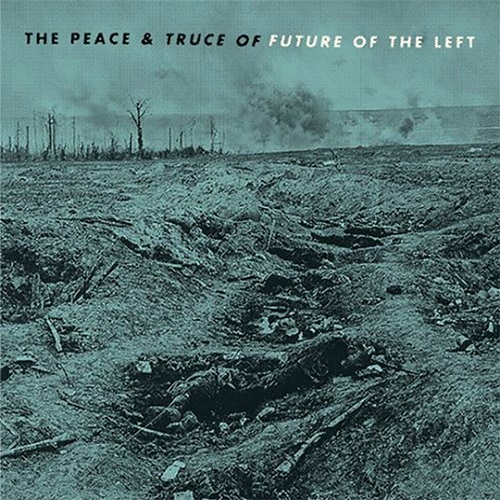
Falco’s lyrics are frustratingly buried in the music at times. As a singer, he has been praised and criticized for his on-the-nose subject matter, often tackling a specific target or industry. Or, sometimes, he’ll shield himself behind satire (my personal favorite Falco song is “I Am the Least Of Your Problems”). Sometimes, the lyrics come through here. One of the better tracks, “Miner’s Gruel,” is a subtlety-lacking look at teenage privilege. Album cover included, there’s a few tracks that reference the military. As always, there’s references that seem to make sense only to him, like to curry houses on “Back When I Was Brilliant,” to asking “How many farmer’s markets does it take to change a light bulb?” on “Proper Music” and bemusing, “My bank account is not a hole, it has no purpose and a hole has one” on “No Son.” Perhaps the best lyrical moment, though, is on “Eating For None,” when he proclaims, “I am most of the time perfectly happy.” With all due respect, I’ll believe it when I see it.

To Failed States and Forest Clearings:

Grade: A

Key Track: “The Cock That Walked”

The band crowdfunded “Peace and Truce,” and gave the record to paying fans early, promising another EP soon to follow. To nonpaying customers, they came at the same time. If the full-length was designed as a progression into less punk and post-punk and more complex music, then this is the refresher. The six tracks on this EP could have fit on any previous Future of the Left album, and should have. There isn’t a weak track on this release.

Opening song “The Cock That Walked” is about, apparently, creeps who get an erection on public transit. It has a pounding, fast-but-not-too-fast rhythm ripped out of their own playbook. Four of the six songs maintain this, a more standard Future of the Left sound. Keyboards mixed in with booming bass and crunching guitar lines. “Problem Thinker” is the first of the outliers, a much more slowburning song that really takes it’s time to build to a big conclusion. Also, “There’s Always Paul” is a bit lighter, centered more around light percussion and handclaps than anything else.

Overall, this EP has a kind of goofy feeling to it. Look no further than “Animals Beginning with a B,” where Falco sings “I can’t see a baboon from where I’m currently sitting but that doesn’t mean they don’t have them at the city petting zoo.” Look, I’m not sure what angle he’s taking here. But this EP is different than the album because Falco’s lyrics are both clearer and weirder. On “Fireproof (Boy vs. Bison)” he sings, “Someone at the party said to get fucked and he had not heard of that.” The lyrics throughout this EP are the kind that would truly divide Falco’s fans and critics. It acts as a companion piece to the full-length, and it should absolutely be for any longtime fans such as myself.

Read my review of Future of the Left’s “How To Stop Your Brain in an Accident.

-By Andrew McNally

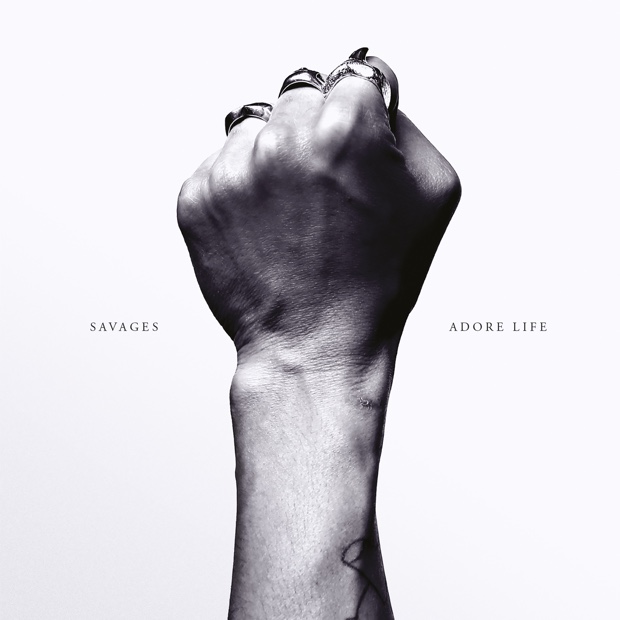
Savages – “Adore Life”

Grade: A-

Key Tracks: “The Answer,” “I Need Something New”

There’s something to be said about sophomore albums from traditionally angry bands. On debuts, bands trying to make an image can flaunt it all on record. But if their debut is successful, as Savages’ “Silence Yourself” was, then a follow-up of equally angry and aggressive songs is going to sound more hollow amidst the increased fame and exposure. While most bands might try to capitalize and create another album of the same, Savages have openly embraced their newfound exposure. “Adore Life” is filled with songs that are deceivingly optimistic, love songs even. But the band finds ways to embrace anger among optimism, and no it shouldn’t work, but it often does.

The first Savages album was marked by very sweaty songs where the guitars built up in crescendoing rhythms. Although there’s a few of those here, the band announces a change from the opening chords of “The Answer.” It’s loud as hell, but the guitar rhythm plays on, unchanging, for about a minute and a quarter. And when it does change, it goes right back to where it was. This album is more diverse than their debut was, with a wider range in emotion and influence.

There’s more brooding on this album. The title track is a toned-down ode to life that still sounds utterly abysmal even in its optimism. The finale, “Mechanics,” is also super lowkey, given the rest of the album. It has an aura of goth to it, although the influence of touring with Swans is obvious too. Throughout the album’s quieter or more down moments, the band sounds like they’re recording in a sewer, like it’s something we’re not supposed to know about it (which is extremely effective, by the way). The band allows themselves time to expand that they didn’t on their first album.

Of course, they don’t always take it. “The Answer,” “I Need Something New” and “T.I.W.Y.G.” all rip, hard. The second two could have easily been cuts from the first album, very sweat-inducing post-punk tracks that absolutely overflow with energy and ferocity. Even with some more drawn-out songs, Savages are at their strongest when their putting everything upfront to the listener, and the best songs here do just that.

Savages also sound more formed here. While “Silence Yourself” is a group project, each member gets their time to shine on this album. Singer Jehnny Beth gets moments throughout, although she sounds the strongest on “Slowing Down the World” and “I Need Something New.” Guitarist Gemma Thompson dominates “The Answer” even with just one rhythm repeated over and over again. Ayse Hassan gets a bass lead on “Adore,” and drummer Fay Milton adds the energy to “T.I.W.Y.G.” and “When In Love” to chug those songs along with wicked propulsion.

What makes this album unique is the devotion to life and love. The band said they were writing love songs. But keep in mind that this is the same band that put out an ode to rough sex called “Hit Me.” Beth’s lyrics center on love throughout, and it is jarring at first. But it’s a kind of love that stems out of having nothing else left. The band’s slower moments sound pained. Although “Adore” isn’t one of their better songs on its own, it is a mission statement for the band – when you’re hurt physically and emotionally, all you have left is life. Embrace it (“T.I.W.Y.G.”) or simply put up with it (“Slowing Down the World”), either way, it’s the one thing you can’t lose. Again, Savages live up to their name.

If you like this, try: Bully’s “Feels Like,” a young band that subtly sticks some very noisy elements in their otherwise alternative debut album.

Ty Segall – “Emotional Mugger”

Grade: B

Key Tracks: “Californian Hills,” “Emotional Mugger / Leopard Priestess”

With a non-stop flurry of activity, Ty Segall has done his best job at distancing himself from any one sound. But ironically, as “Emotional Mugger” proves, there is a distinct ‘Ty Segall sound’. It’s one part T. Rex, one part Count Five, one part Deep Purple, and like a half a part of Jack White. “Mugger” jumps around a bunch, but overall, it’s a trippy, fuzzy and loud trip down all of Segall’s interests.

“Mugger” is his eighth solo album in his seven year career, which is impressive in its own right. But this time period also includes, naturally, two albums with Fuzz, an album with the equally busy Mikal Cronin, an album with Ty Segall Band (one of my personal favorite albums), an album with White Fence, a T. Rex covers album, and long-gone singles with bands like Epsilons, Party Fowl, Sic Alps, the Perverts and the Traditional Fools. So the manic energy of his music makes sense – he has to be this manic to be this productive.

Segall’s last proper solo album (T. Rex cover album notwithstanding) was a surprisingly reflective, acoustic work that highlighted his more classic-rock influence. It was an inevitable album, there was only so many ways Segall could spin garage rock into something unique, and he was going to have to slow down at some point. But that point, much like the time in between his albums, wasn’t very long. “Mugger” doesn’t match the volume of the Fuzz albums, or the mania of the Ty Segall Band release, “Slaughterhouse,” but it blends fuzzy guitar, garage rock energy and smooth vocals as well as anything else he’s done.

Musically, there isn’t much to say about a Ty Segall album that’s unexpected – it’s loud and fuzzy, his guitar is center-stage, and every song is an adventure in some way. The great opening track, “Squealer,” is a very staccato song, and it transitions nicely into “Californian Hills,” a song that shows restraint but gives way to two-bar bits of mania every so often. He takes two guitar solos, on “Diversion,” and “Mandy Cream,” both effective. And his almost-signature guitar shrieking permeates the longest track, “Emotional Mugger / Leopard Priestess.”

A word being used in other reviews of this album is “addictive,” but without context, it’s a word that can be applied to his whole discography. He makes music that’s very easy to get into, even if it’s immensely heavy. It’s always almost catchy. Check “Preacher,” from Fuzz. It’s not everyone’s cup of tea, but yet everyone could get into it. Also, his music always has high replay value. The addiction on this album is an incredibly innocent one. This album is, at least sometimes, about childhood. A child’s voice shows up at the end of “Candy Sam,” one of the two songs that references candy. The other one is, uh, “Baby Big Man (I Want a Mommy).” There’s a, uh, baby on the cover, too. The album seems to have an innocence to it that Segall sometimes shies away from on other records. He’s a man that likes to have fun in the studio, and comparisons to the equally boy-ish Thurston Moore are not unjustified. Here, he embraces it, with childlike innocence and childlike innocence. It’s just that kids probably wouldn’t enjoy his shrieking guitar and destroyed pedalboards.

“Emotional Mugger” isn’t one of the best Segall albums, but it’s got some great tracks. And even when Segall isn’t at his most effective, he’s usually still entertaining. This is a more than passable set of loud jams for people who like fun, fuzzy rock tracks. It is diverse and energetic, and hits basically every mark in the Segall book. Now, to just wait and see what he does next.

If you like this, try: Peach Kelli Pop! I never got a review of her third album out but she makes an incomprehensible mix of garage-rock, hardcore punk and the poppiest, girly-girl imagery. She comes from the same garage Segall did.

David Bowie – “★”

Grade: A-

Key Tracks: “Blackstar” “Girl Loves Me”

I wrote this on the day of the album’s release and decided not to change it after his passing. Rest easy, Starman. Thanks for everything.

Bowie’s return to weirdness has been so natural, it’s easy to forget he spent a decade in retirement and the previous decade in a creative decline. His new album, his 26th, is among the strangest and most provocative he’s ever released. It seems like Bowie spent his decade in retirement (2003-2013) reminiscing on his own career. Throughout all the characters Bowie has performed as over the years, there’s really only been two real ones – pop Bowie, and terrifying avant-garde Bowie. His excellent 2013 comeback album “The Next Day” was pop Bowie, middling, introspective rock songs and ballads about growing old in a culture that values youth. He sounded pained but not so much remorseful as satisfied with himself. It seemed like a final album, a send-off, a ‘thanks for listening.’ Then this happened.

The opening song on “Blackstar” (officially titled ““) is “Blackstar,” in spelled-out form. It is only 17 seconds shorter than his longest, the 10:14 classic “Station to Station.” It originally surpassed 11 minutes but Bowie and longtime co-producer Tony Visconti sliced it down to 10 so they could release it as a single on iTunes (Bowie is a man of the people). Bowie’s vocals mix with the free-form jazz to sound somewhat akin to Scott Walker. It’s less “Diamond Dogs” and more “Bish Bosch,” and it’s hard not to imagine Walker when listening, another musician who had a modest start before growing increasingly ambitious and experimental (and who has been around even longer!)

There’s only seven songs on this album, with the title track accounting for slightly under 1/4 of the album’s length. It is less rock, less pop, and more free-form jazz. Bowie and co. have said they were listening to “To Pimp a Butterfly” when they wrote this, saying Kendrick Lamar’s attention to blending genres inspired them to do the same. But it sounds more like Bowie was listening to himself. “Blackstar” and it’s video have maybe-references to satanist Aleister Crowley, who was a heavy inspiration to Bowie during the “Station to Station” recording session. And “Lazarus” includes the line “I used up all my money / I was looking for your ass,” which sure seems to mimic the self-description in “Ziggy Stardust,” “With god-given ass.” Elsewhere, he sings the plot of the 17th century play “‘Tis a Pity She Was a Whore,” in a song with the same name, an incestual, murderous tale.

Musically, the album walks the line of free-form jazz, almost always maintaining a steady beat but allowing for tempo changes (“Blackstar”) and avant-garde horn freakouts (“‘Tis a Pity…”). A majority of the songs are heavy on horns and drums, with less guitar. Bowie often, and sometimes unexpectedly, gives way to the music. The influence of Lamar is only a spiritual level, but “Girl Loves Me” does have a beat that sounds hip-hop inspired.

With all the characters and personae that Bowie has performed as over the decades, it’s easy to forget just how he became famous at all – he’s got an insanely good voice. It comes through here, especially on “Girl Loves Me” and “Lazarus” but across the whole album. “Girl Loves Me” is an enchanting, almost hymn-like song with Bowie’s voice in both the fore and background. It’s the strongest vocal song on the album. He sounds restrained throughout, like it’s all part of an avant nightmare. The only real exception is “‘Tis a Pity…” where his vocals sound more pronounced, more confident.

There is no character here. “” is a glorious and scary mess that is haunting because there’s no character – this is an album Bowie and co. wanted to make. It’s one of the least accessible albums he’s made in his entire career, and it will surely be placed alongside “Station” and “Let’s Dance” among his best work. This does not sound like a final album, but if it is, then Bowie is requesting demanding that we remember him primarily as an artist, an ambitious one unafraid to make something jarring and remote, and not as a successful pop songwriter. “I am not a film star,” he muses on the title track, even with great turns in The Man Who Fell to Earth, Labyrinth, and, sure, Zoolander. He’s deeper than those roles. He is a blackstar, something theoretical, something deep, massive and annihilating. He is also demanding that, like Lazarus, he live on far past his actual self. Don’t worry, Bowie, you’re going to.

-By Andrew McNally

Cage the Elephant – “Tell Me I’m Pretty”

Grade: B+

Key Tracks: “Cry Baby,” “Trouble”

On their debut album, Cage the Elephant gave us a funky, bluesy version of themselves. On “Thank You Happy Birthday,” we got the grunge version of the band, and on “Melophobia” we were given a garage-soul version of them. On the band’s fourth album, we get a new version of Cage the Elephant – themselves.

With a few big albums and a slough of hit singles under their belt, Cage the Elephant is finally exploring themselves instead of making odes to music past. That may have also come from the production of Black Key Dan Auerbach, who is on his quest to make every artist from Dr. John to Lana Del Rey sound a little more like the Black Keys. Auerbach is a no-brainer for Cage the Elephant, a riotous Midwestern alternative band. Take away a few members and you have the Black Keys.

“Tell Me I’m Pretty” is the band’s most coherent album; ironically, the coherence comes from a wider diversity in emotion. This is easily the band’s most personal and introspective album yet, filled with emotional ballads and tales of loss and separation. In fact, the middle portion of the album is all ballads, until late-album kicker “That’s Right.” Lines like “I been facing trouble almost all my life” (“Trouble”) are expected, but “I think we should just let go” (“Sweetie Little Jean”) is a new, softer side for them. It’s telling that they’ve stripped away other instruments, along with the mania. Here, they’re a band – vocals, drums, guitars, bass.

I’m usually turned off when fun alternative bands start writing slower music (*cough* TV on the Radio), but I’ve always had faith in Cage the Elephant. The band has said that by working on their own identity as a group, they’ve focused on making every song individually different from every other song, and it shows. That’s where the cohesiveness comes in – their first three albums focused on the album as a piece of art, this one focuses on songs. There’s a broader range in emotion and influence. “Mess Around” was an obvious lead single, but each song is so crafted that really any of them would be prepped for rock radio.

The songs on “Tell Me I’m Pretty” might not immediately grab a listener the way some of the songs on, say, “Thank You Happy Birthday” do, they require a little more patience. But each one eventually grabs, even without any hooks or bursts of manic energy (though some do with that, too). The songs here feel more like we’re being let in, like we’ve been invited to finally see the real Cage the Elephant. This might not be their best album, and it won’t have the replay value of their crazier work. But it proves that Cage the Elephant have done their homework and can create music that’s their very own, not an ode to a different era. In this reviewer’s opinion, Cage the Elephant are four-for-four.

If you like this, try: Cold War Kids’ “Dear Miss Lonelyhearts,” another indie band that’s used various influences to create their own, wholly original sound.

Jeff Lynne’s ELO – “Alone in the Universe”

Grade: B-

Key Tracks: “I’m Leaving You” “Alone in the Universe”

There’s always a risk when a classic rock artist comes back out of the woodworks and releases “their first album in [x] years.” There’s even more risk when you have to change your name because of legal troubles. So on paper, Jeff Lynne’s ELO’s new album, “Alone in the Universe,” shouldn’t have a purpose. And maybe it doesn’t. But it’s better than it deserves to be.

The name ‘Jeff Lynne’s ELO’ serves a dual meaning. As part of a court deal, it lets audiences know that it’s the Jeff Lynne version, the only constant member in the band’s run (and not ELO II, a different off-shoot). But it’s also billed as such because between songwriting and instrumentation, Jeff Lynne is credited with “everything except the shaker and the tambourine.” He plays all instruments here, and it’s really not ELO. There’s no O and hardly any E or L. It is, for all intents and purposes, a Jeff Lynne solo album.

That said, it’s also a victory lap for Lynne. Lynne, and ELO, had a substantially longer and more packed career than people expected them to. Their Greatest Hits discs are loaded start to finish with rock radio perennials. And after everything, ELO ended up marred by legal battles, so Lynne deserves something like this.

There’s a discord on this release, and it’s what makes the record better than expected. ELO always had a self-competing sound: they had the space-y ambition and imagery of Boston and Pink Floyd, but coupled it with brilliant, simple pop songwriting. It hardly makes sense on any song, nonetheless many excellent albums. This record embraces that discord – two competing song titles, “When The Night Comes” and “The Sun Will Shine On You” sit back to back. And the second track, “Love and Rain,” sits on the line, “Love and rain keep coming back again.” Likewise, this album is one that sounds nothing like any other ELO album and is a major outlier in their catalog, yet is Lynne’s victory lap for such a successful run. Just like their other music – it doesn’t make sense only because it does make sense.

The fact that this album, pleasant and reflective (if not largely immemorable), works at all is a testament to Lynne’s songwriting. Each track is a simple, often quite optimistic rock song. Lynne’s experience with the Traveling Wilburys is strong on the album, especially on “I’m Leaving You,” where Lynne’s vocal rhythm mirrors Roy Orbison’s “In Dreams.” The songs are much more grounded than anything in regular-ELO, and there’s really no song that is better or worse than any other one. The title track (and finale) is a great piece of meta-commentary, with Lynne now the sole member in a band whose numbers have fluctuated past six. Lynne proves to us that no matter what happens, he’ll always be able to write a damn good pop song. None of the songs on this album are particularly great, and none of them will stand the test of time with “Mr. Blue Sky” and “Rockaria!,” but they don’t need to. Lynne feels comfortable in this new form. This album sounds like it was recorded as much for him as it was for us – to prove to himself that he can do just fine by himself. “Alone in the Universe” isn’t going to shatter anyone’s foundations, but it’s a nice addition to the ELO catalog, and a late-stage classic rock album superior to most of what has been done by Lynne’s peers. Lynne has announced that he’s still here, and Jeff, as long as you are, we are too.

-By Andrew McNally

The Dead Weather – “Dodge and Burn”

Grade: B

Key Tracks: “Rough Detective” “Open Up”

Whenever I bring up the Dead Weather, I find myself constantly defending them. I always ask myself ‘why? I think they’re a great band.’ But I get that that their brooding, scuzzy alt-pop is kind of a turn-off to some, and an unnecessary throwback to others. Plus, there’s the whole “Jack White is a dumpster human” thing. But “Dodge and Burn,” their third album, tries to right those wrongs.

Off the bat, there’s a problem with this album – the energy isn’t really kicked in until the halfway point. Their last album, 2010’s “Sea of Cowards,” starts off with a deafening rhythm on “Blue Blood Blues.” No rhythm matches that until “Rough Detective,” the sixth track of twelve. But the Dead Weather are trying to show that they don’t need to up the volume to be weird, to be engaging. It doesn’t always work from the get-go, “Buzzkill(er)” lives up to it’s title. But early tracks like “Three Dollar Hat” show that the band is adapt to minimalism as much as the opposite.

Still, the volume-heavy tracks like “Rough Detective” and immediate follow-up “Open Up” are the strongest – there’s just nothing like them. The Dead Weather show a wider range on “Dodge and Burn,” and although it leaves more room for mistakes, it shows them uniting as a band too. The Dead Weather work best when the listener remembers they’re a band – in paradoxical ways. Sometimes, they’re in unison, and sometimes they’re competing for the spotlight. The Mosshart/White vocal tracks have always been the band’s best, and we get too few, but it’s what makes “Rough Detective” so strong. Unlike White’s other projects, the Dead Weather feels the most like four people, expressing their emotions related to the project. This is reflective in the songwriting credits – each member is credited to at least five songs, with four songs credited to all four members. The Dead Weather are a band, and they reflect it.

The only song with a single credit is the piano finale, “Impossible Winner,” credited solely to Alison Mosshart. It is weirdly toned-down song, too pretty for a Dead Weather. It isn’t a red herring, necessarily, but it isn’t a showcase of talent, either, because we already knew these musicians were capable of it from their other projects. Though a great song on it’s own merit, it sticks out as a mistake on “Dodge and Burn.”

The album does have its inconsistencies, but it does balance restraint and, well, the opposite. It isn’t the strongest Dead Weather album, but it’s a good listen, and nice just to have them back in the first place. We can look forward to their next album, in either eight months of five years.

FIDLAR – “Too”

Grade: B+

Key Tracks: “40oz. on Repeat” “Overdose”

With track titles like “Punks,” “Overdose,” and “Bad Habits,” it might seem like “Too” is more of the same from FIDLAR. Their first album, mind you, had “Blackout Stout,” “Wake Bake Skate” and “Cocaine.” It might feel like there’s a gambit in song titles that FIDLAR is quickly running through. But, their sophomore album is an album that some people, myself included, didn’t anticipate coming so soon – the conflicting, adult album. Most punk bands grow up sometime – Rancid’s “Life Won’t Wait,” Dads’ “I’ll Be the Tornado.” FIDLAR’s maturity is a very reluctant one – some tracks on “Too” feel like holdovers from still-recent partying years. But as the guys grow up, they’re begrudgingly accepting a more sober life.

One of the best qualities of FIDLAR’s debut album, a personal favorite of mine, was an underlying, barely visible sense of angst. It only came out in certain songs, when the guys were sober enough to see that there were far too many problems in the world. Through the more youthful and the more adult songs on “Too,” the unifying sense is still the slight angst. This time, it’s on a more personal level, as “Too” is heavy on self-reflection. “I don’t know why it’s so difficult for me to talk to someone I don’t know,” is sung on “40oz. on Repeat.” “One week sober / and I’m still hungover,” from closer “Bad Habits.” “FIDLAR” was a humorously self-deprecating album, but “Too” ditches the humor. Take the lyrics from “Bad Habits,” set them in an entirely different musical context, and they could fit nicely on an Alice in Chains album.

But they’re still at a crossroads, because there’s still party tracks. “Sober,” despite the title, is almost inarguably the strangest song in the band’s catalog, with the opening third of the song done almost in spoken word (think the beginning of “The Sweater Song”* but with the vocal melody of “Baby Got Back”). And the album’s penultimate track, “Bad Medicine,” is a >3 minute song that feels like one last punk blast, for old time’s sake, the inverse of Renton taking one last injection in Trainspotting.

As with their debut album, the band has an innate and unexpected ability to eschew any one sub-genre of music. The downside is that it leaves FIDLAR without a distinct sound, something important in punk. But the upside is that each song is going to sound distinct. “Punks,” originally (or perhaps erroneously) titled “The Punks Are Finally Taking Acid,” is a heavy song, centered on a guitar riff akin to a quickened “She’s So Heavy,” with pained, screamed vocals. But follow-up “West Coast” is the kind of bouncy sing-along you more expect from the band. It goes back and forth, often reflective of the lyrics, and it adds a cohesiveness to the album. The lyrics are well-rounded, so the music should be too.

“Too” does ask one question that it does not answer – who should FIDLAR’s audience be, now? Their first album was able to answer that question very, very easily – partying punks and skaters. It’s practically a Ten Commandments for SoCal late teens who are gradually becoming less aware of Mat Hoffman. But their second album was made more for themselves, and that’s a dangerous line to cross. Just because we’re being let on on FIDLAR’s internal struggles doesn’t necessarily mean it’s something we want to see. I’m genuinely not sure who the intended audience is for this record, as the partyers generally aren’t going to warm up to the sobering songs as much. There’s a mixed audience for the album, and it’s going to be divisive among fans. Still, there’s enough going on that it stands as a solid, and different sophomore release. I’m just worried about what the band is going to have to go through for the next album.

* – I saw FIDLAR a couple months ago in Boston and they covered “the Sweater Song,” replacing most of the verses with the word “meow” repeated over and over again. Inspiration? Probably.

If you like this, try: Perfect Pussy’s “Say Yes to Love,” another album where a punk band suddenly tightened up, but not without a total maturity.

Titus Andronicus – “The Most Lamentable Tragedy”

Grade: B+

Key Tracks: “Lonely Boy” “Dimed Out” “More Perfect Union”

One of the things that made Seinfeld so great was a general lack of continuity – you can flip on any episode on TBS at 3pm or am and jump in. Sure, there’s recurring jokes – the person getting washed behind the sheet at the hospital George’s mom is in is my favorite. But each episode is pretty standalone, even for a sitcom. So it’s weird that Titus Andronicus stands by their Seinfeld references, in a way. Their fourth album, “The Most Lamentable Tragedy,” is an album that links all three of their previous albums up. It continues the “No Future” trend from “Titus Andronicus” and “The Monitor,” but left off of “Local Business.” One of this album’s best songs, “More Perfect Union,” is a reference to “A More Perfect Union,” from “The Monitor.” And “I’m Going Insane (Finish Him)” is a lyrical cover of their own “Titus Andronicus vs. the Absurd Universe (3rd Round KO)” from “Local Business.” There’s even the Seinfeld reference, a “Hello, Newman” shout on “Lonely Boy.”

Look, I love Titus Andronicus. I’ve long called them “America’s best rock band.” A picture I took of them at the Brooklyn Bowl has been the background on my phone for a few years. I didn’t ‘stand by them’ when they released “Local Business” – it’s one of my very favorite albums, I listen to it in full nearly once a week. So when they announced a 29 song, 93+ minute rock opera, I went into cardiac arrest. And as I was staring at it after it came out, before I listened, I thought – “there’s few bands that could really pull this off, and I’m not sure +@ even can.” “The Most Lamentable Tragedy” isn’t their strongest album, but in terms of ambition and effort, it is indeed unmatched.

The album is separated into five acts, much like Foxygen’s “…And Star Power” last year. The opera follows Our Hero, as he meets his doppelganger and struggles with manic depression, a reflection of Patrick Stickles’ own struggles. Stickles has reflected before – “The Monitor” reflected his depression, where my favorite +@ song “My Eating Disorder” details his selective eating.

There’s a lot to take in on the album, at 29 songs and over an hour and a half long. Given that the band has always centered itself equally on music and lyrics, there’s rarely one more worthy of attention – and that comes through the most on songs that feel like they could’ve been cut. It runs too long, even as an art project, and the average-lengthed songs start to bleed together a bit. There’s also a surprising number of them – although two of the songs are over nine minutes, and thirteen are under two minutes, most of the other tracks are between 3:00 and 4:30, unexpected for a band comfortable in the 5:00-6:30 range. Some songs, like “Dimed Out” and “A Pair of Brown Eyes,” feel zipped-up and perfectly sliced because of it, but some songs feel underdeveloped in that range.

The album keeps things interesting by engulfing all of Patrick Stickles’ influences, rather than focusing on one. Early on, especially on “No Future Part IV: No Future Triumphant” and “Lonely Boy,” the band directly channels their inner Springsteen. As the album gets more indulging, the band expands influences, from hardcore (“Look Alive”) to the Pogues (“A Pair of Brown Eyes”) to the traditional (an unexpected “Auld Lang Syne”). There’s a lot going on here, and it gets switched up so consistently that it feels like where in the manic itself.

“The Most Lamentable Tragedy” is a flawed but strong album. Just when it starts to lag, it winds up again and hits you with another punk blast. And it’s needlessly but joyously self-indulgent, keeping all of the band’s linked narratives going. It’s punk, it’s indie, it’s gospel, it’s anything you’d imagine Titus Andronicus to be. It succeeds just because it has the sheer audacity to demand it so. “The Most Lamentable Tragedy” is a beast, and with another dense, lengthy concept album under their belt, it’s safe to say we have no idea where +@ are going next. Their next album might equate struggles with body identity to stories of ancient gods, or it might be a Bon Jovi covers album. It’s tough to say, and that’s what makes +@ America’s best rock band.

If you like this, try: self-immolation

-By Andrew McNally

Wilco – “Star Wars”

Grade: A-

Key Tracks: “You Satellite” “Where Do I Belong”

Wilco are at an important point in their career. Like many artists before them – namely David Bowie, who they channel heavily here on their ninth album – they’re at a point where they’re growing restless again. Wilco established their original sound, as an alt-country band. And then, out of nowhere came “Yankee Hotel Foxtrot” and “A Ghost is Born,” their creative reawakening albums (although in most band trajectories, this period comes from creative woes, not accidental painkiller addictions). After Jeff Tweedy recovered, the band’s sound settled into a more mature, introspective look with the still-excellent “Sky Blue Sky.” And the two albums since then have seen the band embrace their catalog as a whole, both poking fun and honoring their creativity of the past.

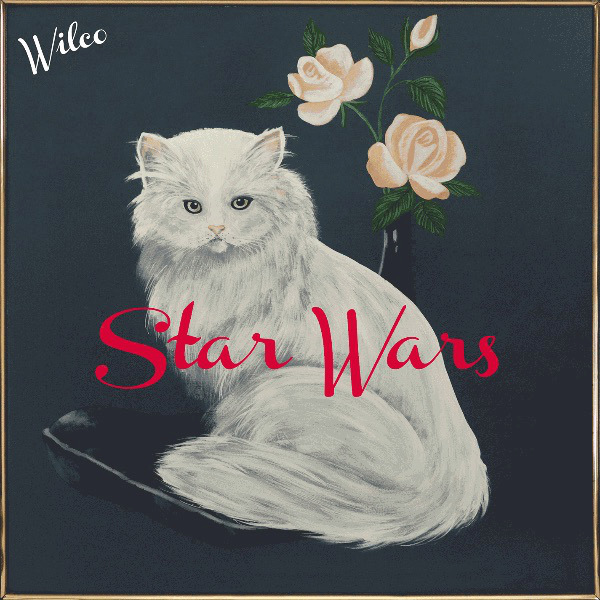
But, like Bowie did on “The Next Day,” they’re again growing restless with maturity. “Star Wars” is unlike any other Wilco album, in many ways. For on thing, it’s called “Star Wars.” Also, the cover has an adorable cat on it. It looks more like the cover for a Dusty Springfield record, not a Wilco one. And the songs are shortened, tightened and energized. There’s certainly other Wilco songs that would feel comfortable on this album – “Shot in the Arm,” “Wilco (the Song)” come to mind. But the band has created songs that don’t give themselves room to breathe. At 2:30, “Pickled Ginger” sounds just like a cut Deep Purple song with it’s fuzzed-out, grinding guitar line. Although “Star Wars” is distinctively Wilco, the songs here have traveled a long way from “Impossible Germany.” And it’s not a criticism – it’s a familiar sound, in an unfamiliar package. At 33:47, it’s the band’s shortest album by nearly ten minutes (ten minutes being two-thirds the length of their longest song). And as a band that’s stayed reliant to the album format, their decision to drop this release suddenly and for free online is growth as well.

Although the band has been playfully looking back at their earlier works in recent years, “Star Wars” marks the first time in years that they’ve actually incorporated any elements with an avant garde feel. They come mainly in the opener, “EKG,” a 1:15 chippy, dissonant intro that doesn’t serve as a standalong song, instead as a declaration of what’s to come.

Also, Jeff Tweedy as a frontman and songwriter seems to be less of a focus on this album. Something noticeable about one the album’s best songs, “You Satellite,” is that the volume of his vocals is closer to the rest of the instruments, instead of being at the forefront. And eventually, he gives way to the music entirely. Tweedy’s lyrics on this album aren’t his best (they’re a lot vaguer than past Wilco albums), but the focus is on the music and the vibe anyways. The longer they’ve been around, and especially since they’ve developed a more steady line-up, Wilco has seemed more like a full band and less like a collective.

Wilco haven’t released a mediocre album since 1999’s “Summerteeth,” but it’s been a long time since they’ve released a great one, too, and that’s just what “Star Wars” is. This is their best album since “Sky Blue Sky” in 2007 and, if you like just fun and lively Wilco, then before that. There are moments of beauty and grace on “Star Wars,” especially in affectionate closer “Magnetized.” But more often than not, those moments are often followed up by a sudden drum line, feedback or guitar melting. Just as you would expect from a band growing restless yet again.

If you like this, try: This one’s probably obvious since I mentioned it, but it’s stylistically and tonally resembling of Bowie’s “The Next Day,” if not actually all that similar.