Defeater – “Letters Home”

(Photo Credit: rocktransmission.com)

Grade: B+

Key Tracks: “Bastards,” “Bled Out”

I was largely unfamiliar with Defeater before giving this album a listen. Despite growing up seeing Boston punk and hardcore bands, I never crossed paths with Defeater’s music. Defeater do their best to separate themselves from other hardcore bands. Hardcore is traditionally an incredibly formulaic genre; bands that experiment even a little are sometimes ostracized. But Defeater do not so much play with the formula as they do add serious depth to it. While most hardcore bands focus primarily on the heaviness, eschewing poetry for indiscernible, throwaway lyrics about fighting and drinking (or not drinking, depending on the scene), Defeater take the time to add detail to every element. There is screaming – exclusively – but it is melodic. The emotion in the lyrics, which are often understood, adds a pretty consistently haunting element. And the musicians behind the singer, sure the songs are fast and loud but it isn’t “123GO” at the beginning of every track. Opener “Bastards” blows out of the gate, but the album speeds and slows accordingly, in an attempt to make an actual album instead of a collection of hardcore songs.

As mentioned, hardcore bands are not known for their deep and piercing lyrics (here’s looking at you, Hatebreed). But Defeater took the Coheed & Cambria approach to music: telling a long, multi-album story. While C&C are a goofy group that concocted a fantasy-inspired love story, Defeater took a much deeper turn and have been crafting a story about a family getting torn apart by the horrors of WWII. This is, frankly, brilliant. WWII is a topic that appeals to many people, and it allows them to get darker and darker with their lyrics on each album. Indeed, some of the titles include “Rabbit Foot” and four No’s: “No Shame,” “No Relief,” “No Faith,” and “No Savior.” The album may be heavy, but it is the heaviness of the lyrics that weighs more on the listener than the heaviness of the screaming and pounding guitars.

That said, even for an album that leaves as quickly as it arrives, it does drag on a little. A majority of the ideas that separate tracks from each other are used on the first half. The second half starts to fall into traditional hardcore. It is saved (ironically) by “No Savior,” which starts off with an extended slow period, and the album’s 6+ minute finale, “Bled Out,” which repeats the chorus of “Bastards” to bring the album around to a whole. But moments on the album do tend to blend into one another a little too much. High intensity is great, but when it is unfaltering, it just becomes normal. Still, “Letters Home” is lyrically deafening, and is the best example of a band expanding to the limits of hardcore without going beyond it. There is a new high standard in hardcore.

If you like this try: “Sunbather,” the new release from Deafheaven. It’s shoegaze-black metal, a totally new genre that is getting them thrown out of the metal community. It’s also one of the best albums of the year.

-By Andrew McNally

Frank Black – “Oddballs”

(Photo Credit: Amazon)

Grade: C

Key Tracks: “Pray a Little Faster,” “Man of Steel”

“Oddballs” was originally released in 2000, but only online and was not widely publicized. For whatever reason, he chose to release it in CD form thirteen years later. It seems like an odd choice, given that the Pixies just released a new single, but maybe that’s the exact reason – it might be more publicized if people are searching for new Pixies music. “Oddballs” might be stumbled across, giving it the attention it never got. That said, it is just a compilation of music Black recorded that were B-sides or didn’t make it on other albums. B-side compilations are, traditionally, boring and pretty useless. “Oddballs” is better than most, but still falls to some subpar tracks and ideas that should not have been acted upon.

The songs on the album were recorded between 1994 and 1997, the three years after the Pixies’ initial break-up. The songs, on the whole, maintain the intensity of the music of his former band, while distinctly sounding like a solo artist. There is no screaming and wailing, no Kim Deal on bass and no lyrics about bodily mutilation, separating it from the Pixies. It just often maintains the speed and volume of the Pixies’ albums.

Lyrically, it is far less interesting than Black’s former (and present) band. One of the two best tracks, “Pray a Little Faster” is darkly entertaining, but other tracks with titles like “Can I Get a Witness” and “Everybody Got the Beat” approach the exact, oft-extracted ideas that the titles sound like. Black’s attempts to separate his solo work and be seen as a viable solo artist are beneficial, but tracks like the ones on “Oddballs” do make the listener yonder for classic Pixies songs instead.

Something should be said for the album’s surprising flow. Given that it is a compilation, there is no expectation of it working as an actual album, just a collection of misplaced tracks. But Black structures it so it flows and never stays on one idea for too long. The opener (the aforementioned “Pray”) kicks off with a bang, that is sustained until the album’s midpoint, the only two songs over four minutes mix things up. The album’s closer and other best song, “Man of Steel” works perfectly as an outro, with a bombastic repeating coda. The song was likely written as a closing song that never found it’s place.

“Oddballs” is better than most rarities collections, but it is still barely good enough to stand on it’s own legs. It separates Black from the Pixies, but the album’s imperfections remind listeners of just how perfect the latter really was. Black’s “Oddballs” more often than not sounds a little too traditional and most of the ideas are not fleshed out enough. “Oddballs” should please die-hard Black fans, and likely only them.

If you like this, try: If you’re into rarities, check out “Little Johnny Jewel” and “Untitled Instrumental,” two songs that got cut from Television’s legendary “Marquee Moon” and are just as good as every song on the album.

-By Andrew McNally

Marla Mase – “Speak”

(Photo Credit: Bandcamp.com)

Grade: B

Key Tracks: “Piece of Peace,” “Lionness”

Musician and activist Marla Mase’s new album “Speak” is lengthy – sixteen tracks that stretch into a long running time – but the album’s message is consistent. Mase has been making a name for herself as an activist-performer, writing songs about equality, peace and feminism and equating them with raw and multimedia performances. “Speak” delves and winds through many genres. Opener “Piece of Peace” is a building rock song, reminiscent of “Gloria,” the song that started off Patti Smith’s legendary “Horses” album, only with a much different and more peaceful message. Next is “Open Up My Heart,” a spoken word track, and “Dance the Tango” embraces reggae later on. There is no consistent genre of music, just consistent messages of peace and love. “Lioness” is easily the album’s most experimental song lyrically, a song about feminism that has Mase growling like a lioness (in tune with the song, too, which is pretty tough). Mase is joined by eight musicians on the album, that help to create the ambient twisting through genres. The instruments themselves are all traditional of rock and pop music – guitars, bass, drums, keyboards, etc. – but Mase’s inspiration lends to the blending that the musicians create.

Mase’s singing voice, on the whole, isn’t overly strong. Some songs are talk-sung, and as a singer she never attempts to make her voice the focal point in a song. Normally this wouldn’t be good for a solo singer, but Mase’s voice isn’t the point here. The lyrics to her songs have much more depth than most other pop/rock singers. Thankfully, the strongly poetic lyrics and consistent genre-switches easily save the album from sounding awkward because of this. Again, think Patti Smith. Smith’s lyrics are often stronger than her voice, and her music is more often successful than not. Mase channels a lot of activist singers (John Lennon, Midnight Oil, etc) but none more than an early Patti Smith. Mase’s message is clear, and while “Speak” might feel a little long and sound a little too apparent that Mase is a young artist, learning the ropes, it works as a consistent message and an engaging listen.

Mase is performing the mutimedia presentation of this album on August 17th (my birthday!) at the East River Park in NYC. Admission is free. The album “Speak” can be streamed here or here.

If you like this, try: Patti Smith’s album “Banga” from 2012. A great album that went relatively unnoticed.

-By Andrew McNally

A Great Big Pile of Leaves – “You’re Always on my Mind”

(Photo Credit: Top Shelf Records)

Grade: B

Key Tracks: “Pet Mouse,” “Fun in the Sun”

A Great Big Pile of Leaves hit a high on their 2010 debut, “Have You Seen My Prefontal Cortex?” The band established themselves as a fun, alt-pop band that hold up remarkably well against their sadder labelmates like Snowing and Pianos Become the Teeth. Their music is fun, bouncy and often completely innocent while maintaining a steady volume and guitar attacks. Their debut is a pleasantly diverse album, sonically pleasing, full of fun and introspective tracks. Their second album, “You’re Always on my Mind,” out today, does not quite live up to the expectations set up by “Cortex.” The album is more reminiscent of their earlier EP’s, which are still bouncy guitar songs, but feel a little less inspired than their debut album.

The album’s summer release date is no accident. This is definitely a summer album. That might give the expectation of a Yellowcard or Cartel type pop-punk thing, but they are much more associated with alternative than most summer bands. The album’s food-based bookends are called “Snack Attack” and “Pizzanomics,” offering the exact sound you’d expect from the humorous titles. “Back to School” is the most summer-y song on the album, a literal ode to summer before having to go back to school. There is a gleeful tone to the album, a carefree sound that are reminders of good times, even if they’re in the past. The band does not seem to be looking for any sort of validation, or to be taken seriously. That doesn’t mean we shouldn’t – they’re talented musicians and have nailed down the art of fun songwriting. But their lack of seriousness adds to the fun on the album.

The album might not be as good as its predecessor, but it is still a good album. It is easy music to put on during a drive or a nice summer bike ride. It does not demand your patience, even your attention. It does its job as innocent alt-pop, providing an alternative to the usual pop on the radio and to the usual gloom of alternative music. It takes the best of both worlds. It might not be perfect, but it is fun.

If you like this, try: “Dig Up Your Dead” by Mansions (2011). Not as fun and not as good, but the band does sound kind of similar.

-By Andrew McNally

Roomrunner – “Ideal Cities”

(Photo Credit: Stereogum)

Grade: A-

Key Tracks: “Bait Car,” “Wojtek”

The dream of the 90’s is alive in Baltimore. Roomrunner gleefully throw ode to some of the early 90’s grunge and noise rock bands. Nirvana is idolized through fast rhythms that let a punk influence bleed heavily through. Pavement is redrawn through heavy distortion that adds to the melodies and through the rough transitions between songs. Roomrunner never tries to be conventional. The opening track, “Bait Car” is an assault on time signatures that are sometimes impossible to decipher. “Wotjek” sounds like more of a poppy side to the band, until the chorus, featuring rhythms of pure feedback that are different on each passby. The finale, “Snac Error,” ends with a waving drone of guitar that takes up a good chunk of the track.

“Ideal Cities” is over in about a half hour, and it is one of the rare times where the short length of a punk album does not feel entirely fulfilling. The album wasn’t one idea stretched into a certain number of tracks, but a bunch of little experimentations that left me wanting more. This is hardly a criticism, as the band made an interesting record that sounds fresh but resembles the pre-grunge bands of yesteryear. It is melodic and noisy, all while maintaining a sense of fun. Pavement and the Pixies would be proud.

If you like this, try: “Living Dummy” by Pangea (2o12). More of a conventional (surf-)punk record, but there is a similarity between bands, I cannot emphasize enough my love for “Living Dummy”

-By Andrew McNally

Middle Class Rut – “Pick Up Your Head”

(Photo Credit: http://www.playmusic.tw)

Grade: B

Key Tracks: “Cut the Line,” “Aunt Betty”

Middle Class Rut were one of the more successful bands to ride the coattails of Band of Skulls in 2009-10. The band, sometimes referred to as MC Rut, heralded a surprisingly successful debut album in 2010, shortly after Band of Skulls began to seep into alternative radio. There has been a recent revival in simple, heavy alt-rock, like a Ramones updated for the indie world. Middle Class Rut are some of the champions of this revival, being just a two-piece that plays heavy guitar rock that may have been recorded in a basement somewhere. This could all be traced back to the White Stripes, but these more recent bands specialize in an incredibly straight-forward approach to music, delivering the listener quick and heavy blasts, often over soon after they start.

Albums by bands like Middle Class Rut sound boring on paper, as the straight-forward sound of their music sounds wholly unoriginal. But Middle Class Rut are playing off the ever-increasing experimental nature of indie music, in the same way early punk bands were combating David Bowie and The Beatles’ “White Album.”  What the listener gets is a heavy alternative album of two guys messing around in the studio. There might not be a focus, but there might not have to be. The result is a dose of refreshingly heavy and fast album of personal lyrics.

The whole unoriginal nature of Middle Class Rut’s music does get old, surely. Some tracks on this album are less entertaining than others. The opener, “Born Too Late,” is even heavier and faster than the normal for the band. “Cut the Line” and lead-off single “Aunt Betty” are the album’s more thought-out songs, with some experimentation and just good songwriting. Other tracks get meddled in their own repetitive nature. The album is better than their debut, which was somewhat lighter and less interesting because of it. “Pick Up Your Head” is no great album, but it never achieves to be. What it does succeed at is being a fun and intense listen, surprisingly effective for a two-piece that always kind of sound the same.

If you like this, try: “Supermegafantastic” by IAMDYNAMITE (2012). They’re the best of these simplistic rock revival bands, in my opinion. Also a male two-piece, coincidentally.

-By Andrew McNally

August Burns Red – “Rescue and Restore”

(Photo Credit: Amazon)

Grade: B

Key Tracks: “Provision,” “Sincerity”

August Burns Red have never been a critic’s choice band, and I’ve never paid them any attention in the past. But their sixth album, “Rescue & Restore,” is surprisingly succinct. Metal albums rarely come as a full package like this one does. There is a statement on this album, and while I am not sure exactly what it is, the band is trying to get their point across. Most of the songs fit together nicely into something closer to a narrative than is expected. This album seems like it was developed as a number of combined thoughts, not just a bunch of songs packaged together as an album, the fault of many metal records.

This album is pretty relentlessly heavy. The drums beat throughout, the guitars are always screaming. Lyrics are hidden behind screaming and growling (at many different pitches, which helps deviate tracks from each other). Quiet moments intersect heavy breakdowns and melodic riffs. There are two segments of spoken word, the first of which is exceptionally corny (in the song “Spirit Breaker”), laughably so. And the songs do begin to sound alike the longer the album goes on, another fault of many metal albums. But the album is a surprising success, drawn out and chillingly heavy. It won’t win any new listeners to the genre, but fans should embrace it as a great work.

If you like this, try: Deafheaven’s album “Sunbather.” Not really related in any way other than being ridiculously heavy, but it’s one of the albums of the year.

-By Andrew McNally

Black Sabbath – “13”

Photo Credit: Rolling Stone

Photo Credit: Rolling Stone

Grade: B+

Key Tracks: “God is Dead?” “Methademic” (Bonus Track)

“13” is refreshing, because it proves that bands long past their prime can still make quality records. I was losing faith in this after Megadeth’s awful Collider came out just last week.

“13″ is the first Black Sabbath album to feature bassist Geezer Butler in nineteen years, and singer Ozzy Osbourne in thirty-five. Drummer Bill Ward, originally part of the recent reunion, is not on the album because of a contract dispute, and has been replaced with Brad Wilk (Rage Against the Machine). Even with positive early reviews and three-quarters of a reunion, fans are most likely skeptical about a new album. Butler, Osbourne and guitarist Tony Iommi are 63, 64 and 65, respectively. But Sabbath brought in legendary producer Rick Rubin, who has done wonders for everyone from System of a Down to Johnny Cash. What resulted from their sessions is an album much more similar to classic, early Sabbath and not the tepid albums that came later.

Black Sabbath have often been misunderstood as a band that sang/sings exclusively about doom and gloom, life and death, heaven and hell (which is the name of one of their more famous songs). But closer listens to their early albums show that they expanded far out beyond those themes, lyrically. Yes, they were embraced and continue to be (like 13′s “God Is Dead?” and “Pariah”). But the band has always sung about more than that, evident in songs like the poorly-titled “Methademic,” that deals with years of drug problems. “13″ has some of the best lyrics in Sabbath’s history.

The biggest surprise of the album might be the quality of Ozzy’s voice. If you’re reading this, then you can probably imagine what Ozzy’s talking voice sounded like on MTV in 2004, and maybe even what it has sounded like on his more recent albums. But those albums were Rubin-less, and Rick Rubin did his best to bring the band back to it’s seventies roots. Iommi’s riffs are there, Butler’s bass is booming, Ozzy’s voice fits nicely, and there is a constant impending sense of doom. It has all the key elements of early works like “Paranoid” and their self-titled debut. Something is lacking, however. It seems like it is a mix of energy and volume. It is certainly loud, but it feels like it should be more so, and with a little more urgency. Still, the album comes as a nice surprise and just goes to show that when the line-up is back, they haven’t lost a thing.

If you like this, try: If you’re exploring this album as a classic rock fan, then Bob Dylan’s “Tempest,” another great album coming out late in the game. If you’re exploring this as a metal fan, then System of a Down’s “Toxicity,” to see both religious lyrics brought in alongside silly ones, and the magic of Rick Rubin.

-By Andrew McNally

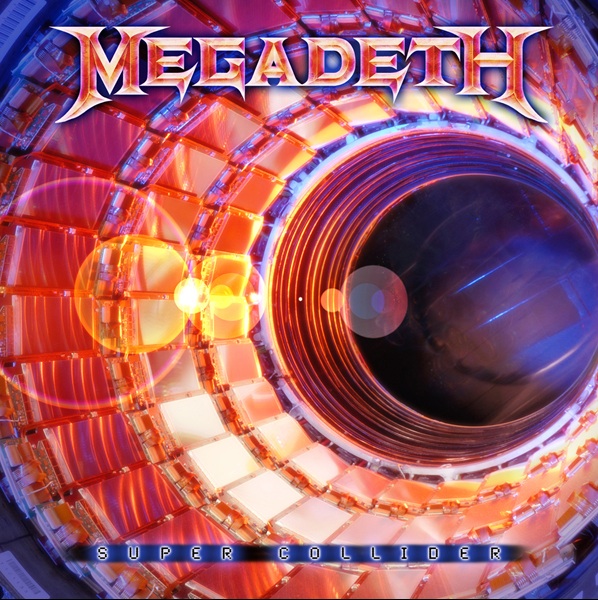
Megadeth – “Supercollider”

Photo Credit: metalsucks.net

Photo Credit: metalsucks.net

Grade: D

Key Tracks: “The Blackest Crow”

Old age isn’t going to stop Megadeth! Well, they’re going to try not to let it. Rather unsuccessfully. It’s sad to see heroes fall but it can happen to the best. Dave Mustaine’s lyrics aren’t hitting as hard, the band’s volume isn’t as ferocious. Nothing works well on this record, apart from a few acceptable songs.

First, the music. The band is not achieving the heaviness that they once were. The leadoff track, “Kingmaker,” is not a good song, but it does have flickers of the 80’s thrash. It is readily apparent that these flashes are about the most the listener will get. The album as a whole tends to fall closer to a really heavy radio rock work, lesser than the thrash metal that made the band renowned in the 80’s and 90’s. The drums are beating and the guitars are crunching and rapid-fire, but it is all less than before. It is at least entertaining, as it is still heavy and should be recognized as so. It just is not of the same caliber as their previous successes.

Speaking of declines from previous successes, Mustaine’s lyrics are downright awful. His political leanings have always made for awkward and forced lyrics, but they are particularly cheesy on this release. “Dance in the Rain” is the ‘standout’ on the record, as the chorus is supposed to inspire people to dance in the rain and enjoy life, like life lessons from a cool uncle. An abrupt switch/interruption happens during the song when Mustaine begins to sing about the “racist, sexist wars in the middle class” or something like that. It really doesn’t make sense. Mustaine’s lyrics are consistently forced and corny, and often fail to rhyme or fit into any sort of rhythm.

Halfway through this album, I had to put on “Hangar 18” to be reminded of better times. “Supercollider” is tedious and corny, a bad mix for a thrash metal band. One footnote should be mentioned – “The Blackest Crow” is a well-crafted song, albeit not thrash metal. The track starts with an acoustic guitar rhythm and builds intensity around a more haunting sound than the rest of the album. It is far and away the best song on the album. Otherwise, “Supercollider” is a total miss.

If you like this, try: “From Mars to Sirius” by Gojira.

-By Andrew McNally

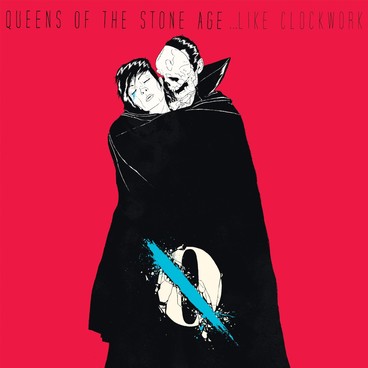
Queens of the Stone Age – “…Like Clockwork”

Photo Credit: Rolling Stone

Photo Credit: Rolling Stone

Grade: B

Key Tracks: “I Sat By the Ocean,” “Fairweather Friends”

“…Like Clockwork,” the long-teased and longer awaited new album from hard rock heroes Queens of the Stone Age, should be listened to with “Songs For the Dead” in mind, their behemoth, Grammy-winning album from 2002. “…Like Clockwork” is similar to “Songs” in three ways. The first is the re-introduction of former contributors Dave Grohl and Mark Lanegan, as well as ousted bassist and founding member Nick Oliveri (who only shows up in background vocals on two songs, but it is still a re-introduction). The other two similarities are thematic. “Songs” was a concept album, imagining a radio playing on a drive in southwestern America, and featured many Christian references. “Clockwork,” too, seems to feature a number of Christian references, if nothing more than metaphors. (Compare 2002′s “God Is in the Radio” to 2013′s “My God is the Sun”) Casual listeners might equate Josh Homme’s lyrics to those of the religiously-tortured soul of Dave Gahan, but Homme frankly chooses to sing about whatever he wants to.

The third similarity is the idea of conventional radio rock. “Songs” had a running theme of QOTSA’s songs playing on every station, in an attempt to solidify themselves as the kings of conventional rock radio. It worked, oddly enough, and they reflect that on “Clockwork.” Every one of the ten tracks feels significantly more conventional and regular than anything they’ve done before, with musical build-ups in slow songs and catchy guitar rhythms in the faster ones. Homme’s vocal melodies are incredibly catchy, even radio-friendly (particularly on the track “If I Had a Tail”). The album is still heavy, of course, but this is a side of QOTSA that has always stayed subtle. It is the band’s shortest album, and has only three songs over five minutes, a departure from the five on “Songs.” Homme likes to throw the audience loops and keep things fresh, which is tough to do for a rock band. “Clockwork” is almost a bit of a joke, in a way, that the original thing about it is its unoriginality. One almost has to wonder if the almost-optimistic sound is a response to Homme’s brush with death, or whether it is more of QOTSA’s relentlessly great tongue-in-cheek humor.

This does lead to some problems, however. “Keep Your Eyes Peeled,” the opener, never hits the intensity it thinks it does, and although the hauntingly-rhythmic “I Sat By the Ocean” follows it up, the tepid and unnecessary “The Vampyre of Time and Money” sits right after. And having this feeling of ‘Is this a joke or not?’ is a little iffy given that people have been waiting six years for a new album. The album grows stronger as it proceeds though, bolstered by barely audible but still appealing guest spots from Trent Reznor, Alex Turner and Sir Elton John (which was a surprise to come across). Homme is still heroically egotistical at times, which is when QOTSA is at their best. The album lacks at some points, falling too far into the unoriginality, but it is yet another great entry from the band overall.

-By Andrew McNally