The Front Bottoms – “Rose”


Grade: A-

Key Tracks: “12 Feet Deep” “Jim Bogart”

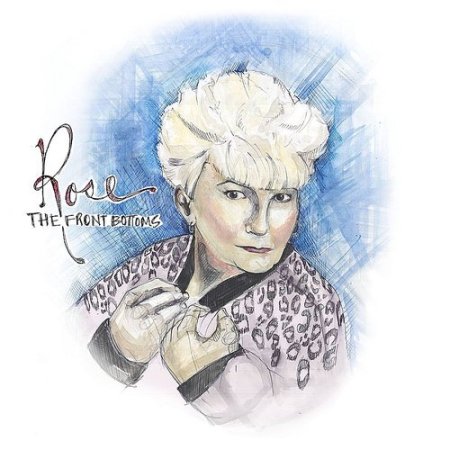
Leave it to a band like the Front Bottoms to put a reviewer in a tough spot on whether to call these songs “new” or not. Because these songs are freshly recorded. But they certainly aren’t new. The first five tracks that make up “Rose” – “Flying Model Rockets,” “Lipstick Covered Magnet,” “12 Feet Deep,” “Jim Bogart,” and “Be Nice to Me” – are re-recordings of older songs, with “Awkward Conversations” the only freshly recorded one. The Front Bottoms released three albums before their perfect 2011 ‘debut’ self-titled, “Brothers Can’t Be Friends,” “I Hate My Friends” and “My Grandma vs. Pneumonia,” respectively. But all three are only available in the deepest corners of the internet, so buried that even some of their more adamant friends aren’t even aware of them. They’ve played these songs live, though, and they’ve become staples, so they’re getting a proper release in the first of a set of EP’s named after the duo’s grandmothers.

The song with the most remarkable difference is “12 Feet Deep,” always one of my personal favorite Front Bottoms songs. “Because you are water twelve feet deep / and I am boots made of concrete” proved in c. 2010 to be an emotionally impacting line, reflecting a relationship that isn’t healthy but still committed. But in 2014, a more steady drumline and more inspired vocals transform it into a more optimistic and hopeful relationship, without altering any of the words. All throughout the EP, there’s lyrics about school and parents, which still sound fresh in Brian Sella’s non-aging voice. The poetry of early Front Bottoms is more natural; less forced than some of the corny couplets on last year’s “Talon of the Hawk.”

Musically, the band has it more together now than they did then. That’s another added bonus of re-recording – the only real fault of their early albums is some messy music, when they were still learning what they were doing. It’s more refined on “Rose,” though still a little off the rails, of course. “Jim Bogart” ditches the inside-a-box production, and adds trumpet and and a slick little keyboard rhythm to build up to the drum entrance. In one way, the songs feel stripped down on this EP – more confined and controlled, sometimes fewer instruments, and with a better production. But in another way, they feel even more expanded and in your face than they did before – the benefit of a band that’s since settled into a signature sound.

It was a smart idea for the band to release these older songs, revamped. Relative fame, a constant touring schedule (and a namedrop alongside the National and Daft Punk in this NYT article) have had the unfortunate drawback of their youthful, innocently downtrodden lyrics sounding less believable. A decidedly terrible full-length didn’t help that, either. So although the band is reaching a wider and wider audience, their music is sounding less personable and less impacting. These six songs show how youthful and energetic the Front Bottoms really are, and by re-recording them, they’ve proven that they haven’t really changed at all. It’s sad, it’s fun, it’s poetic and easy to relate to, so it’s all you’ve come to expect from them. The only criticism? It doesn’t include “The Cops.” And that’s really a personal criticism. Maybe on a future EP.

-By Andrew McNally

Phooey! – “A Collection of Sins”

Grade: B+

Key Tracks: “This Ain’t No Picnic” “Charted Trips”

Just a few weeks ago I compared and contrasted two albums done by Phooey!, praising the pseudo-collective for both the diversity of their music and the speed that they put out releases. And indeed, “A Collection of Sins” shows both – it’s a full-length, coming out on the heels of an EP and a split, and this time, it’s a little more baroque and psych-pop than it is noise/pop/twee/punk. And Phooey!, an ever-changing band, exists on this album solely as bandleader Nikita. It’s an 18 song collection of some covers and some originals, not aligning as much to any sort of subgenre than their past releases, instead making itself resemble a collection of vignettes. Only one song, “This Ain’t No Picnic,” is over three minutes, and nine are under two. The album’s strongest quality is probably how much it feels like someone in their bedroom, playing some little songs they’ve learned along the way.

There’s a lot going on during this album, a number of different ideas. “This Ain’t No Picnic,” the album’s first real song (after a Bugs Bunny soundclip intro), is calm and heavy on background percussion instruments. It has a baroque resemblance, without any of the grand ambitions. “Waiting Room,” is closer to psych-pop, “Charted Trips” is an acoustic semi-ballad and “Unfinished” sounds more like some of Phooey!’s earlier pop-punkish tunes. And “Rebel Gurrrl” is a much weirder, somewhat psychedelic finish to the album. In between are a number of alt-pop and fuzzy guitar songs, all ideas that don’t stick around too long.

“A Collection of Sins” is a pleasant album, the sound of a man recording some music in his alone time, messing around with the Replacements and Sam Cooke, among others. Each song is like a small offering of what Phooey! does, some more different than others. And at only 35 minutes, the “collection” feel to it doesn’t get too quick or repetitive. Not every song is as memorable as the album’s best, but since they’re all samples, it’s easy to overlook the less grabbing ones. So overall, it’s a fun release, just as varying as Phooey! is in general, and a good mix of covers and originals. If Phooey! was avoiding falling into any genre of music before, they certainly are now.

The album is available for stream and download here.

If you like this, try: Last time I compared Phooey!, as a whole, to Japanther. But this album’s varying style of vignettes is much more reminiscent of Guided By Voices and their offshoot, Swearing at Motorists.

Parquet Courts – “Sunbathing Animal”

Grade: A-

Key Tracks: “She’s Rolling” “Sunbathing Animal”

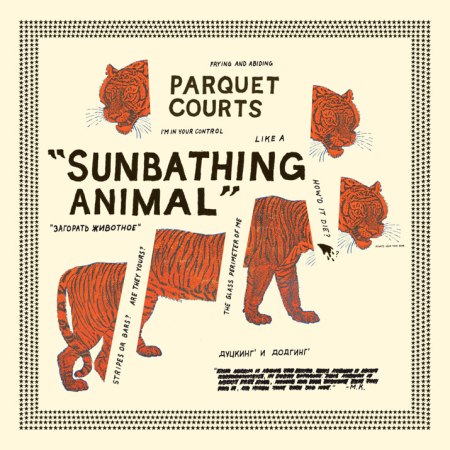
The men of Parquet Courts are growing older, but just in the sense that we all are. “Sunbathing Animal,” the second accessible full-length and third release from the band in barely a year and a half, shows hints at maturity. It’s a reluctant maturity, one of attempts at denial but eventual acceptance. The band, as they did on last year’s “Tally All the Things You Broke” EP, open up to more influences and more ideas. The always-terrific “Light Up Gold” mixed garage-rock and country influences, but was filled with a boundless youthful energy that is roped in and controlled here.

Parquet Courts seem to know that they can’t just keep playing hybrid country-punk forever. “Stoned and Starving” is one of the best songs in years, but at 5:12, it’s the only song on “Light Up Gold” that’s over 3:30. Of the 13 songs on “Sunbathing Animal,” five break that threshold, with two more only seconds away. The band is, in one way, slowing things down and introducing some more developed songwriting. “Bodies Made Of” starts the album on a deceiving, medium tempo. “Dear Ramona” follows a narrative and shows more mature songwriting. “She’s Rolling” goes past six minutes, and “Instant Disassembly” past seven, with the latter being a pseudo-ballad and the former ending in crazy, layered harmonicas.

But in another way, they’re not slowing things down at all. They’re still a punk band, and “Ducking & Dodging” shows its love for 8ths and 16ths. Its “vocals over a drum and soft guitar line” is one of the most garage-y rhythms in years. The title track provides a volume and energy blast after the slow-burning “She’s Rolling.” And there’s musical interludes, just as on “Light Up Gold.” “Vienna II” and “Up All Night” provide brief break-ups throughout the album. “Sunbathing Animal” is more drawn-out, and more expansive, but it packs as many punches as their previous works.

“Sunbathing Animal” pairs nicely with “Light Up Gold,” as a band exploring the width of their own sound. “Sunbathing Animal” is no better or worse than “Light Up Gold,” and it doesn’t immediately demand any comparisons. It’s a lot more structured, and the band is more in control of their energy. It’s still very youthful and tongue-in-cheek, still fun but serious. “Sunbathing Animal” is a distinctly different album for the band, but it’s still definitively Parquet Courts. And that should be enough of a reason alone to pick the album up.

If you like this, try: together PANGEA’s “Badillac,” a less exciting (but still agreeable) example of a garage-punk band expanding.

-By Andrew McNally

Owen Pallett – “In Conflict”

(Photo Credit: alpentine.com)

Grade: A-

Key Tracks: “I Am Not Afraid” “The Riverbed”

Although quick enough to be mistaken for an interlude, my favorite song off of Owen Pallett’s 2010 album “Heartland” is “Flare Gun.” The song, reflective of the album as a whole, sounds ripped out of a carnival. It’s got nearly a full orchestra behind it, and an almost sickeningly catchy rhythm. The song, and the album, is pop music, for sure. But it’s a puzzle. Pallett’s music has always been layered and difficult to grasp, and it’s what makes him the talented force he is today. “In Conflict” represents a drastic departure from “Heartland,” looking a whole new direction, with equally great results.

Pallett is, occasionally, described as “baroque pop.” It’s fair to say this isn’t really a popular genre of music today, and indeed, a Wikipedia search of the genre lists a number of very famous, very long-gone bands (Beach Boys, Moody Blues, and, confoundingly, the Beatles). But Pallett’s use of a wide number of instruments sets him aside from other alt-pop acts of today. On “Heartland,” he used those instruments to create a whole universe that he didn’t let the listener into. It’s a fun album, on the surface, and one whose storied lyrics gift many re-listens. But on “In Conflict,” his fourth solo album, he lets the listener come inside the puzzle and see the man inside. And he manages to do this without sacrificing any of the ambition.

The immediate thing to notice on “In Conflict” is a notable turn towards darkness; this album is gloomy, rarely offering anything promising. While “Heartland” sounded like a cryptic carnival, “In Conflict” resembles the longest night of the year – sure, things will get better, and there’s good things happening, but it isn’t enough. The album’s first song, “I Am Not Afraid,” mixes calming piano over industrial beats, starting off a bit unsettling. There’s fewer instruments, but they’re just as effective. Pallett goes for strings and synth rhythms to convey some convoluted moods. “On a Path” and “The Passions,” for example, use string sections to hit melodic, ballad highs. “Song For Five & Six” and “The Sky Behind the Flag,” meanwhile, benefit from their use of synth rhythms and space-y moods to add a bit of uncertainty to the mix.

The lyrics on “In Conflict” really help to open the album up to the man behind the music. Early on the album, he sings about growing up without a heart. Later, on “The Passions,” he invites the listener into the bedroom with him, solely as a viewer. “In Conflict,” on it’s most immediate level, shows Pallett as a human that never existed on “Heartland.” It’s dark, sure, but what’s to be expected of a man who can pull off baroque pop in 2014?

It’s also worth noting that, to go along with the album’s theme of pulling away the curtain and revealing the wizard, Pallett offers more vocally. He really shines on “On a Path,” but his voice is more present throughout than it was before. Whether he’s delivering some sort of devastating lyrics, or merely singing pitches – he’s more apparent on this album, more upfront and more available. His vocals add a personal force throughout; stronger and more frequent.

“In Conflict” isn’t the album for people looking for something fun. Its title sums it up pretty well – there’s a lot of conflicting emotions going on here. Ballads are interspersed with forceful tracks. It’s all personal, and ambitious, but humanly so. If “Heartland” was a puzzle the listener could never crack, “In Conflict” is one where Pallett has himself given up and left it to the listener to complete. It’s moodier and more contemplative, with effective music to go alongside. On “In Conflict,” Pallett fully proves himself as an ambitious alt-pop force who can’t be reckoned with, even if he wants to be.

If you like this, try: I’ve never shied away from a chance to promote Dirty Projectors’ last full-length, “Swing Lo Magellan.” It’s in a similar vain or something, just listen to both.

-By Andrew McNally

Cheap Girls – “Famous Graves”

(Photo Credit: punknews)

Grade: B-

Key Tracks: “Slow Nod” “Knock Me Down”

As with any Cheap Girls’ record, the main fault of “Famous Graves” is also it’s biggest strength. The band has never, ever left it’s comfort zone, and have left their music in this frustrating void where the listener knows what to expect and is delighted with another similar record, until it inevitably becomes tedious by the halfway point. “Famous Graves” is no different. It starts strong, but it has a middle that sags from too many similar sounding songs.

Part of Cheap Girls’ original act was not to do anything revolutionary, merely to add their own spin onto fuzzy indie/pop-punk (think a more emotional version of Weezer’s Blue album). By sticking so closely to the formula, it reinforces their aim to make consistent and appealing music. But that works a little too well in their favor. “Slow Nod” opens the album, a typically high-volume, medium-speed song with plenty of fuzz and tough to interpret vocals. It’s the band’s staple sound, and songs like “Slow Nod” prove they can still do it well, and with plenty of energy.

The second track, “Short Cut Days,” has a catchy vocal rhythm and excels on a sound that’s intentionally condensed in the studio, with a garage feel – but also sounds like it could tear the walls down live. Cheap Girls, at their best, manage to make both sounds simultaneously. The album’s third song and lead single, “Knock Me Down,” is a more personal song about overwhelming pain felt after surgery, and combines strong vocals, strong lyrics and energetic music, the album’s best package.

After that, though, there’s a long string of songs that do nothing to differentiate themselves from each other. While they’re inherently enjoyable, they all follow the same formula. They’re almost all in the three-to-four minute range and they feel like time that’s being killed off until the album’s strong finale. Having weak and formulaic tracks is almost unavoidable, but five of the eleven songs feel like underdeveloped cuts they’re burning off. A bulk of the album, roughly half of it, falls victim to serious repetition.

The album does have a strong finale, though. “Thought Senseless” stretches (barely) over four minutes, and is a little more developed than a typical Cheap Girls song. “Turns” is a pseudo-ballad, one that has many of the characteristics of one, except that it isn’t a soft song, which makes for an interesting listen. And bonus track “7-8 Years” is more vocally forceful than any of the album’s other songs. The mix of acoustic and electric allow the vocals to come through more clearly, and it ends up adding an element to it.

At their core, Cheap Girls are an enjoyable band. They’re both incredibly simple and subtly complex. They’ve always blended fuzz and pop, in a 90’s throwback. Their sound translates well live, and their albums can accompany any real mood or season. “Famous Graves” just sounds too repetitive, and it could easily be shuffled in and lost amongst their past albums. Cheap Girls aren’t going to win any new fans over with this album, they’re just going to have a few more great songs for fans to eat up, and some more to pass on by.

-If you like this, try: Lemuria’s semi-classic 2008 album, “Get Better.” They have a constant sound much like Cheap Girls (and the two have recorded together).

-By Andrew McNally

The Black Keys – “Turn Blue”

(Photo Credit: chimes.biola.edu)

Grade: B+

Key Tracks: “Weight of Love” “Bullet in the Brain”

The Black Keys either like to take corners, or listen to criticism. Their last two albums – “Brothers” and “El Camino” – were distinctly different from what they’d done previously, and both suffered from it. “Brothers” had some quality songs, but it was too long and stuffed with slower tracks. After they found it difficult to play them live, they wrote more upbeat songs for “El Camino,” but they were so focused on the quality that it didn’t seem like they enjoying themselves. “Turn Blue,” however, sees the duo having fun again, and balancing loose and polished.

The first track on “Turn Blue,” called “Weight of Love,” is just ten seconds shy of hitting the seven minute mark. This is pretty different for band who is known for a quick and heavy blues sound. (Look through the Keys prior albums, it’s rare to find a song over five minutes). But it sets the tone of the album. The song is sleepy and a little psychedelic, a drastic departure from the old Keys. It isn’t fast, it’s much more of an extended way to open an album. But Dan Auerbach sure sounds like he’s having fun. The song, as do a few others later, has a distinct classic rock feel to it. Though always resembling garage bands of the 60′s, the Keys have usually stayed away from a classic rock sound. But it gets embraced on “Turn Blue,” and it’s a surprisingly welcome shift. Even the album’s hypnotic cover shows an embrace of a more suspended sound.

The album also benefits from having Danger Mouse on board, producing. He worked on “El Camino,” too, but the relationship between him and the band is more equal. Though still a duo, the band has added distinct bass parts that make a much groovier sound. It’s most evident on the title track and the hit “Fever,” but it adds a fun element throughout.

The album’s only real fault is a handful of songs that still sound a little too prepared. “Year in Review” sounds a little too strained, a little too rehearsed. “It’s Up to You Now,” meanwhile, feels so loose it almost sounds improvised. It’s also possibly the album’s heaviest track, with a booming drum intro. It’s very enjoyable, reminiscent of early Black Keys. They recapture a little of their earlier sound in some of the other heavier songs, like “Bullet in the Brain.” While “Tighten Up” and “Lonely Boy” were heavy in their own right, they felt more directed towards songwriting. The guitar fuzz and the loud, crushing drumming are more ambitious here, less constrained to an album format.

“Turn Blue” has many things working for it. It’s more energetic than “Brothers,” it’s more open than “El Camino,” and it’s just as wide and heavy as “Attack & Release.” A welcome groove makes the album more fun than what we’re used to, without sacrificing any of the volume. And on songs like “Weight of Love” and closer “Gotta Get Away,” it’s easy to tell the band is having fun with the record. “Turn Blue” doesn’t quite stand up to “Attack & Release” and “Thickfreakness,” but it is definitely one of the band’s better records.

If you like this, try: Given that most of the bands that resemble the Black Keys are equally famous, I’ll recommend another fuzzy, bluesy duo – The Creeping Ivies.

-By Andrew McNally

The Boston Boys – “Idea of Love”

Grade: B+

Key Tracks: “Between You and Me” “Become Like One”

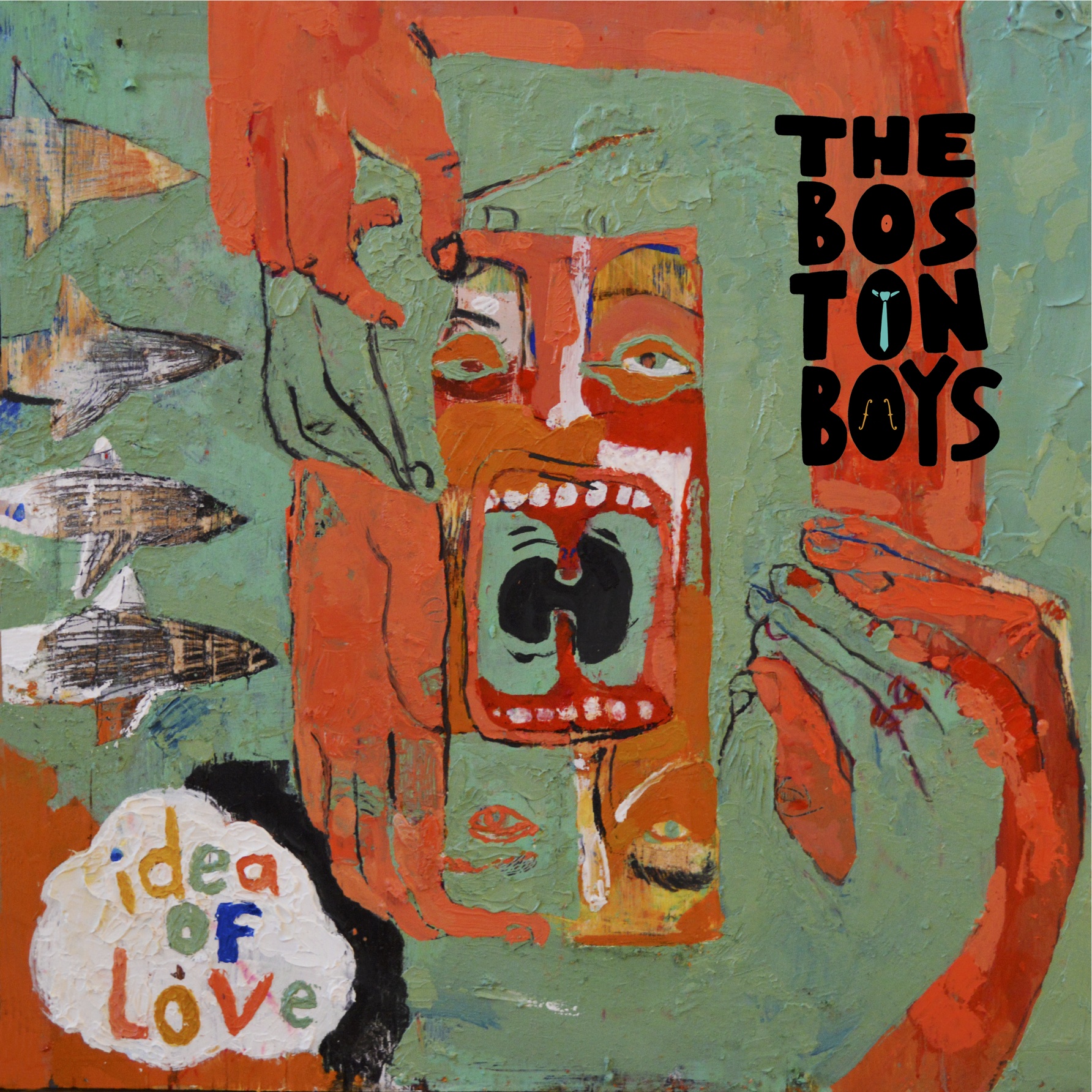
The Boston Boys, a folk-heavy roots band now decidedly living in Brooklyn, have always relied on their diverse sound as their strongest quality. I wrote about “Keep You Satisfied,” their last EP, that the guys were able blend folk, rock, country and americana elements into a sound that’s both predictably shiny and refreshingly original. “Idea of Love,” their third EP, keeps this blend just as strong.

The opening song, the aptly titled “The Beginning,” sets the mood for the EP. The band doesn’t start with a bang, instead opening with a slow and string-heavy track that’s more psychedelic than it is folk. It’s the EP’s most interesting song and, although it ultimately doesn’t really resemble the five songs that follow it, it does set the tone the band is looking for – there’s going to be a lot of little surprises. From there they jump into “Between You and Me,” a much more traditional country-folk song. It’s rhythmic, has a medium tempo and some pleasant vocal harmonies. It’s more what you’d expect from a band like the Boston Boys; it sounds conventional, but it doesn’t fit under the monikers of ‘folk’ or ‘country,’ instead landing in their own little niche in between.

“Times Like These” is more stripped-down, largely just vocals and guitar, a decidedly folksy move. And as soon as the mood calms for it, the more fun and drum-heavy “Become Like One” starts. The transition between these two songs works well, as they show the band at their calmest and highest points, respectively. “Become Like One” really is a fun track, breaking out of folk to incorporate some standard rock elements (that stay true through the next song, as well). Final track “You Don’t Need Me” is a slow, folk-rock type ballad, a solemn way to end the EP.

As with “Keep You Satisfied,” the band’s diversity in the music makes for a fun listen. The lyrics might sometimes get drowned out because of it, but their constant mixing of genres can make for a unique listen, and helps each song on the EP separate itself from the others. The band has a distinctly American sound, like their music should be played on a front porch in a small town on a warm summer day. They take the best parts of American genres – folk, country, bluegrass and americana – add a little rock from time to time, and produce a sound that’s both wholly original and lovingly American. It’s surely no surprise that the Boston Boys are named after an American city, because their music serves to optimistically celebrate a whole range of American heritages.

The EP is officially released on Tuesday, May 20th.

-By Andrew McNally

Porch Cat – “Split” (w/JFKFC)

(Photo Credit: bandcamp)

Grade: A-

Key Track: “Be Okay”

Porch Cat, recording name of Chan Benicki, flows some current folk-punk icon influence into a unique, americana-based folk sound. On the new release, a split with JFKFC, Benicki and a rounded line-up of backing musicians make a beautiful blend of folk with hints of both elegance and existentialism. It has the charactericstics of folk – it’s all acoustic, a full sound, but one with a running and sometimes indescribable punk influence.

On the album’s first song, “Ballad for Winter,” Bernicki sings “Addicted to a substance / Delusion and distress / Addicted to the way / The heart beats in my chest.” The lyrics throughout the four songs are poetic and often vaguely distressful, dealing with physical and mental health, sleep, and making it through tough times. “Be Okay” ends with the repeated and reluctantly enthusiastic chant of “we’ll be okay,” before transitioning into “Living Art” and singing about trying not to sleep forever. “Belly Full of Fire” almost sounds like an Irish drinking song, with a drinking song vocal rhythm and a chorus about a whiskey-fueled belly of fire. It’s just as forcefully optimistic as “Be Okay,” a kind of optimism that doesn’t sound certain. The EP’s lyrics are hesitantly personal. They reflect what much of folk-punk has become – the sound of someone picking up a guitar and singing about what they know.

What doesn’t reflect that, though, is the music of the EP. Where folk-punk bands that emulate this nonchalant sound often have music that’s nothing more than a guitar attack, Benicki and the backing musicians add rhythms and a larger range of instruments. Besides vocals and guitar, Benicki is credited with accordion and – unexpected surprise – singing saw. Benicki is joined by Alex Fairweather on guitar, bass, drums, tambourine, mandolin, and vocals, Jordan Hamilton on banjo, bass and mouth harp, and Naomi Gibson on fiddle and vocals (along with some others on secret vocals, secret meows, and ‘tea making’). With a wide variety of instruments, they’re able to create more developed songs and a deeper sound than most folk groups. “Belly Full of Fire” gets further reinforcement as an Irish drinking song with use of a mandolin and fiddle. The band sounds the most full at the end of “Be Okay,” with group vocals, drums and a bunch of acoustic strumming. Porch Cat is a more musically folk group, a little refreshing to hear today.

So although it’s easy to compare Porch Cat to a more traditional folk-punk band, they really have a stronger indie-folk sound, masquerading as folk-punk. They have a more complete and balanced sound, one with rhythmic and vocal harmonies and a wider range of instruments. And Bernicki’s vocals are strong throughout, some sweet-sounding singer-songwriter vocals marked with the more defeated lyrics. The four songs here are a complete and successful package, emotional yet pleasant, with a full and unassuming folk background.

The four tracks are available for streaming and download as part of a split with JFKFC, a more directly folk-punk band that’s also quite worthy of your time. It can be found here.

-By Andrew McNally

Twin Berlin – “Sleazebrain”

(Photo Credit: http://www.rslblog.com)

Grade: B+

Key Tracks: “Rtbrfloat” “No Fun / Not 21”

Twin Berlin’s raw debut full-length comes catapulted out of a garage in the mid-’90’s. The Travis Barker-approved Connecticut trio channels underground indie-alt bands from the 90’s and blends them with a friendlier and more straightforward sound of today. The volume and the energy are high, as is the rhythm. The songs presented on “Sleazebrain” are probably going to get stuck in your head, guitar crunches and all.

The band, a trio consisting of Matt Lopez on vocals and guitar, Sean O’Neil on bass and James Janocha on drums, channel some storied predecessors. Their welcoming fuzz and guitar blasts do not sound out of place with the likes of Mudhoney and the Meat Puppets. The band is able to produce a batch of alt songs with strong, energetic punk influences and indie rhythms, all wrapped into a loud and warped sound that’s both raw and refined.

But although the band is able to recapture an image of the past, they add their own current flair, too. Where “Sleazebrain” differs from the likes of Dinosaur Jr., or some straighter 90’s revivalist bands of today, is catchier songwriting. Fuzzy guitar songs were radio-friendly in the 90’s, but Twin Berlin use more straightforward songwriting to make songs that aren’t aiming to reinvent the wheel, yet aren’t easy to forget. The band’s lyrics are more open and easy to relate to, and their adherence to conventional rock song structures allows for an album that seems to mix two different eras.

“Sleazebrain” isn’t a revolutionary album, and it isn’t trying to be. Instead, it establishes Twin Berlin as an honest and loud band, mixing punk, indie and garage fuzz with a ton of energy and ambition. The album is a punk album, masquerading behind some overly catchy rhythms. The guitar is roaring and rhythmic, the bass and drums adding ample energy. “Sleazebrain” sounds like it fell from the 90’s, but it has enough of a current flavor to survive today. The band’s best quality is their underground energy, and that’s readily apparent all throughout “Sleazebrain.”

-By Andrew McNally

Human Kitten – “Manic Pixie Dream Boy”

(Photo Credit: bandcamp)

Grade: A-

Key Tracks: “San Diego” “Gender Bronoun”

Elijah Llinas’, aka singer-songwriter Human Kitten, second full-length album deals with struggling with cultural, societal and gender identities and the hushed lines between opposites. Llinas operates like Paul Baribeau – just a person with a guitar, using it more as a weapon to bring the lyrics home than as a lead instrument (although it’s not as almost abysmally basic as Baribeau’s playing). “Manic Pixie Dream Boy” is an honest look inside someone struggling to figure out exactly who they are.

Llinas has a voice fit for folk-punk, clear and strong, while still honest and raw. The vocals accurately reflect the varying emotions in the lyrics and add a very honest element to the music. And for one person with a guitar, Llinas has a firm grasp on songwriting. Whether lyrically or musically, the thirteen tracks on the album can differentiate themselves from each other. They all fit together, but Llinas employs tonal and volume shifts to keep it interesting. “San Diego” starts the album off on a reflective note, where “Share What Ya Got” ends on a guitar-heavy climax.

As mentioned, this album is lyric-focused. Llinas channels frustration with punk culture, and stresses with gender identity and acceptance. On opener “San Diego,” Llinas sings, “What have punks really done for the world?,” where later confessing to being a part of punk culture. And Llinas sings about gender on “Nature v. Nurture,” singing, “I told my doctor today that I am not a man / I am not a woman / Hell I don’t know what I am.” Later, on “Gender Bronoun,” “I’m caught between two separate identities and I can’t even decide on which one’s me.” Llinas’ poetry is more than honest, it’s a direct outburst. The songs are an inward portrayal at questioning one’s gender (and also, I just want to say, it’s 2014 and we still haven’t created a societal safe space for people questioning their gender. It’s very real and very prevalent). Llinas’ deeply poetic lyrics extend to depression, too, as on “I Still Don’t Want to Be Sad,” where Llinas sings, “I am sad most of the time but you can’t see it ’cause I keep it inside.” It’s heavy, deep, and relatable in one sentence, as folk-punk often is.

“Manic Pixie Dream Boy” is a proper folk-punk work; it’s acoustic but often fast, and lyrically devastating at almost every turn. Llinas is conflicted, and that’s something that maybe shouldn’t be analyzed and graded in a review, but it comes through in an honest and affecting way. The album looks at some societal standards in a confounding light and questions some fundamentals. But first and foremost, it’s an honest and inward release, one that’s, at times, all too easy to relate to. Folk-punk is often meant to disturb in some way, and Llinas takes the emotional route with a thought-provoking look into identity crises.

The album is available for purchase and streaming here.

If you like this, try: Paul Baribeau’s “Grand Ledge,” another completely solo and poetically affecting folk-punk release. (And I know I criticized Baribeau earlier but I truly love “Grand Ledge”)

-By Andrew McNally