Titus Andronicus – “The Most Lamentable Tragedy”

Grade: B+

Key Tracks: “Lonely Boy” “Dimed Out” “More Perfect Union”

One of the things that made Seinfeld so great was a general lack of continuity – you can flip on any episode on TBS at 3pm or am and jump in. Sure, there’s recurring jokes – the person getting washed behind the sheet at the hospital George’s mom is in is my favorite. But each episode is pretty standalone, even for a sitcom. So it’s weird that Titus Andronicus stands by their Seinfeld references, in a way. Their fourth album, “The Most Lamentable Tragedy,” is an album that links all three of their previous albums up. It continues the “No Future” trend from “Titus Andronicus” and “The Monitor,” but left off of “Local Business.” One of this album’s best songs, “More Perfect Union,” is a reference to “A More Perfect Union,” from “The Monitor.” And “I’m Going Insane (Finish Him)” is a lyrical cover of their own “Titus Andronicus vs. the Absurd Universe (3rd Round KO)” from “Local Business.” There’s even the Seinfeld reference, a “Hello, Newman” shout on “Lonely Boy.”

Look, I love Titus Andronicus. I’ve long called them “America’s best rock band.” A picture I took of them at the Brooklyn Bowl has been the background on my phone for a few years. I didn’t ‘stand by them’ when they released “Local Business” – it’s one of my very favorite albums, I listen to it in full nearly once a week. So when they announced a 29 song, 93+ minute rock opera, I went into cardiac arrest. And as I was staring at it after it came out, before I listened, I thought – “there’s few bands that could really pull this off, and I’m not sure +@ even can.” “The Most Lamentable Tragedy” isn’t their strongest album, but in terms of ambition and effort, it is indeed unmatched.

The album is separated into five acts, much like Foxygen’s “…And Star Power” last year. The opera follows Our Hero, as he meets his doppelganger and struggles with manic depression, a reflection of Patrick Stickles’ own struggles. Stickles has reflected before – “The Monitor” reflected his depression, where my favorite +@ song “My Eating Disorder” details his selective eating.

There’s a lot to take in on the album, at 29 songs and over an hour and a half long. Given that the band has always centered itself equally on music and lyrics, there’s rarely one more worthy of attention – and that comes through the most on songs that feel like they could’ve been cut. It runs too long, even as an art project, and the average-lengthed songs start to bleed together a bit. There’s also a surprising number of them – although two of the songs are over nine minutes, and thirteen are under two minutes, most of the other tracks are between 3:00 and 4:30, unexpected for a band comfortable in the 5:00-6:30 range. Some songs, like “Dimed Out” and “A Pair of Brown Eyes,” feel zipped-up and perfectly sliced because of it, but some songs feel underdeveloped in that range.

The album keeps things interesting by engulfing all of Patrick Stickles’ influences, rather than focusing on one. Early on, especially on “No Future Part IV: No Future Triumphant” and “Lonely Boy,” the band directly channels their inner Springsteen. As the album gets more indulging, the band expands influences, from hardcore (“Look Alive”) to the Pogues (“A Pair of Brown Eyes”) to the traditional (an unexpected “Auld Lang Syne”). There’s a lot going on here, and it gets switched up so consistently that it feels like where in the manic itself.

“The Most Lamentable Tragedy” is a flawed but strong album. Just when it starts to lag, it winds up again and hits you with another punk blast. And it’s needlessly but joyously self-indulgent, keeping all of the band’s linked narratives going. It’s punk, it’s indie, it’s gospel, it’s anything you’d imagine Titus Andronicus to be. It succeeds just because it has the sheer audacity to demand it so. “The Most Lamentable Tragedy” is a beast, and with another dense, lengthy concept album under their belt, it’s safe to say we have no idea where +@ are going next. Their next album might equate struggles with body identity to stories of ancient gods, or it might be a Bon Jovi covers album. It’s tough to say, and that’s what makes +@ America’s best rock band.

If you like this, try: self-immolation

-By Andrew McNally

Wilco – “Star Wars”

Grade: A-

Key Tracks: “You Satellite” “Where Do I Belong”

Wilco are at an important point in their career. Like many artists before them – namely David Bowie, who they channel heavily here on their ninth album – they’re at a point where they’re growing restless again. Wilco established their original sound, as an alt-country band. And then, out of nowhere came “Yankee Hotel Foxtrot” and “A Ghost is Born,” their creative reawakening albums (although in most band trajectories, this period comes from creative woes, not accidental painkiller addictions). After Jeff Tweedy recovered, the band’s sound settled into a more mature, introspective look with the still-excellent “Sky Blue Sky.” And the two albums since then have seen the band embrace their catalog as a whole, both poking fun and honoring their creativity of the past.

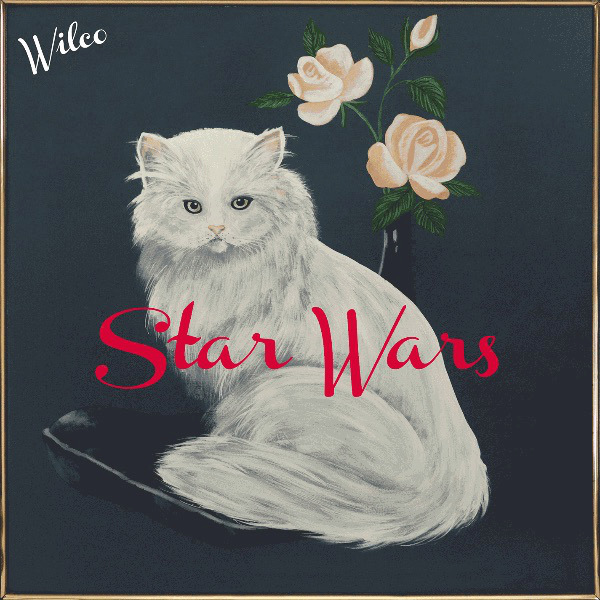
But, like Bowie did on “The Next Day,” they’re again growing restless with maturity. “Star Wars” is unlike any other Wilco album, in many ways. For on thing, it’s called “Star Wars.” Also, the cover has an adorable cat on it. It looks more like the cover for a Dusty Springfield record, not a Wilco one. And the songs are shortened, tightened and energized. There’s certainly other Wilco songs that would feel comfortable on this album – “Shot in the Arm,” “Wilco (the Song)” come to mind. But the band has created songs that don’t give themselves room to breathe. At 2:30, “Pickled Ginger” sounds just like a cut Deep Purple song with it’s fuzzed-out, grinding guitar line. Although “Star Wars” is distinctively Wilco, the songs here have traveled a long way from “Impossible Germany.” And it’s not a criticism – it’s a familiar sound, in an unfamiliar package. At 33:47, it’s the band’s shortest album by nearly ten minutes (ten minutes being two-thirds the length of their longest song). And as a band that’s stayed reliant to the album format, their decision to drop this release suddenly and for free online is growth as well.

Although the band has been playfully looking back at their earlier works in recent years, “Star Wars” marks the first time in years that they’ve actually incorporated any elements with an avant garde feel. They come mainly in the opener, “EKG,” a 1:15 chippy, dissonant intro that doesn’t serve as a standalong song, instead as a declaration of what’s to come.

Also, Jeff Tweedy as a frontman and songwriter seems to be less of a focus on this album. Something noticeable about one the album’s best songs, “You Satellite,” is that the volume of his vocals is closer to the rest of the instruments, instead of being at the forefront. And eventually, he gives way to the music entirely. Tweedy’s lyrics on this album aren’t his best (they’re a lot vaguer than past Wilco albums), but the focus is on the music and the vibe anyways. The longer they’ve been around, and especially since they’ve developed a more steady line-up, Wilco has seemed more like a full band and less like a collective.

Wilco haven’t released a mediocre album since 1999’s “Summerteeth,” but it’s been a long time since they’ve released a great one, too, and that’s just what “Star Wars” is. This is their best album since “Sky Blue Sky” in 2007 and, if you like just fun and lively Wilco, then before that. There are moments of beauty and grace on “Star Wars,” especially in affectionate closer “Magnetized.” But more often than not, those moments are often followed up by a sudden drum line, feedback or guitar melting. Just as you would expect from a band growing restless yet again.

If you like this, try: This one’s probably obvious since I mentioned it, but it’s stylistically and tonally resembling of Bowie’s “The Next Day,” if not actually all that similar.

Muse – “Drones”

Grade: D+

Key Track: “Reapers”

When you’re a band that’s been making the same album over and over again for 15 years, you should know better than to call it “Drones.” I won’t even touch the easy joke, nor will I say anything about the art-rocity on the cover. Let’s just not even spend time there.

Muse makes music for teenagers. I don’t know if it’s intentional or not, but they do. I was 14 when “Absolution” came out, and it rocked my world for a while. “Drones” takes a predictable anti-war stance, and man, if this had come out a decade ago, I would’ve fallen in love with it like it was any girl I talked to. Certain songs from “Drones” have Hot Topic-primed lyrics, down to a concept that’s confusing and inconsistent.

“Drones” supposedly follows someone as they join a military and become a human drone, or something Muse-y like that. It’s not always coherent, and it leads to very Muse-y songs like “Defector,” that has a chorus of “I’m free from society / You can’t control me,” or “Revolt,” which is pretty self-explanatory. The album’s second track is an interlude, of a drill sergeant prepping a soldier to be a “killing machine,” which is pretty much the equivalent to Kevin James starring in “Apocalypse Now.”

Musically, Muse looked to get back to basics on “Drones.” It doesn’t always work, but they have stripped themselves down a bit compared to the past few albums. Given that “The 2nd Law” had a literal dubstep song, hearing just the guitar-bass-piano-drums combo of the “Origin of Symmetry” days is a relief. It’s not enough – the strength of Muse’s early albums lies in their restlessness, as they clearly had ambitions that they couldn’t yet meet. But it is still an improvement. “Reapers” is the closest to classic Muse (note: to me classic Muse is “Newborn”). 10+ minute penultimate track “The Globalist” also hits old Muse for a while, before falling into terrible ballad territory (and giving way to the closer, “Drones,” which is Matt Bellamy a capella layered over himself – yikes).

Compared to the slough they’ve been slinging at us for a few years, “Drones” isn’t so bad. But there’s a second interlude on the album that’s part of a speech from JFK and it’s just like, come on guys. You’re British. This album is about drones. None of it makes any sense. Muse revel in their corniness, and it affects their songwriting. There’s some generally good Muse songs on this album, but they’re too few and far between to make you think they’re a band worth paying attention to again. 15 year-olds are probably going to pick this album up, and it might inspire them – that’s good. “Absolution” inspired me. It made me more political, and more musical. But it also advanced me past self-serving bands like Muse. Ten years from now, when Muse hits 31 years as a band, the kids that picked up “Drones” are going to smirk at themselves, at how far they’ve come since those teenage days.

-By Andrew McNally

Mumford & Sons – “Wilder Mind”

Grade: D

Default Key Track: “Tompkins Square Park”

There was a time when vagueness was a part of rock music. It was big in classic rock – Springsteen and AC/DC alike told stories of everymen that resonated, even though they’re details were ripped out of entry level creative writing classes. Think about Tom Petty’s “Free Fallin’” – it describes a very specific girl, but an everygirl. Mumford & Sons harken back to the days of classic rock storytellers on their first electric album, “Wilder Mind.” But then isn’t now. Mumford & Sons going electric doesn’t resonate like when Dylan did it – hell, they’re probably quieter here. And in an incredibly overpopulated music scene, with artists like FKA twigs, Grimes, Viet Cong and TWIABPAIANLATD melting and reforming hybrid genres, and artists crafting increasingly more specific lyrics – see “Groin Twerk,” “Sometimes,” “King Kunta” – vagueness isn’t going to get you anywhere.

“Monster.” That was my choice for the first ballad of the album, when I first looked at the tracklist. Not because of the title, far from it – just because it was the sixth track. I was right. The album was predictable from the get-go; what you expect is presented almost exactly. The band sounds like any myriad of guitar-driven indie bands that’s existed from ’91 – present. There’s almost nothing memorable here. “Wilder Mind” stands equal with any of the non-“Hot Fuss” Killers albums, and any Coldplay album, as that album that most dads hold on to as a last grasp at trying to bond with their kids over music.

The album’s worst quality is that it isn’t worse than it is. If this album were actually worse, it could be fun-bad, like an ironic listen that you listen to for a laugh. But it’s just bland. It’s tepid, totally drained of life. There’s almost nothing enjoyable, and it’s forgotten before it’s even over. There are highlights, at least – the band sounds engaged on the opener “Tompkins Square Park,” a song that could stand as a Death Cab ripoff. And they do bring an energy to the table late on the album, on “Ditmas.” But the two Brooklyn-named songs notwithstanding, nothing else works here.

Mumford & Sons came out of the gates swinging a few years ago, armed with banjos, a new sound that rivaled acoustic dubstep, and a ridiculous personae that couldn’t be ignored. It got old fast, as they played themselves out, but they rode the world for a few years. Why they’d follow up a Grammy-pummeling album with this light-hearted, dull mess is beyond comprehension. Credit to a band trying to reinvent themselves, but “Wilder Mind” is just an old grenade, hissing with it’s pin pulled, and a crowd standing, slowly moving their fingers from their ears.

There aren’t even any songs about Gene Wilder. Should’ve been called “Whiter Mind.”

If you like this, try: catching up with the times

Waxahatchee – “Ivy Tripp”

Grade: B+

Key Tracks: “Breathless” “<”

Bzzzzzzzzzzzzz.

That’s the first sound you hear on “Breathless,” the opening track to Katie Crutchfield’s third full-length as Waxahatchee. It’s a guitar-wall, a block of fuzz of an electric guitar settling into it’s distortion. It’s similar to the guitar in 2013’s “Misery Over Dispute,” but grittier, more forceful. “Ivy Tripp,” and especially “Breathless,” follows Crutchfield’s trend of increasingly confident electric songwriting, although the electric/acoustic balance is too far in favor of the former.

People that discovered Crutchfield through her 2012 debut, “American Weekend” (like myself), probably wouldn’t have guessed that she was in a punk band prior, cult favorites P.S. Eliot (with her sister Allison – frontwoman for the equally great Swearin’). “American Weekend” was entirely acoustic and lo-fi enough that she could’ve easily opened a recording program and recorded the whole thing in a bedroom. “Cerulean Salt,” one of the best albums of 2013 (a year filled with great albums), was able to mix electric and acoustic. Songs like “Misery Over Dispute” aligned with 90’s alt-rock, with a Weezer-like warm distortion to them. And tracks like the tear-inducing closer “You’re Damaged” proved acoustic ballads could fit right in with the plugged-in songs.

“Ivy Tripp” follows more open, progressive songwriting. It’s her most comprehensive album to date, with piano and synth incorporated at times. And for part of the album, the flow is just as jarring as it was on “Salt.” Right as “Breathless” starts to become droning in it’s fuzz, it gives way to the clean, acoustic opening of “Under a Rock.” Unfortunately, the album’s middle succumbs a few times to electric tracks that don’t have enough oomph to them, and may have worked better acoustic. It picks up again for the final third – two beautiful acoustic tracks, a piano ballad, and a circular, grungy bass-heavy song close out the album.

As usual, most of the songs on “Tripp” are sung to an unknown individual. This album is different from “Weekend” and “Salt,” in that it is as focused on the music as the vocals and lyrics, so there’s less lyrical standouts. But “<” has the repeated line “You’re less than me / I am nothing.” The song is also maybe the most interesting from a musical standpoint, as a building track with discordant guitars. Elsewhere, Crutchfield makes numerous references to water and, on “Air,” sings “I left you out like a carton of milk.”

Like the lyrics, her vocals on this album aren’t as much of the focus. But they’re still commanding, naturally.  They’re the strongest on “Air,” but they’re great throughout. The strongest quality in her music has always been the fact that she sounds like she’s making these albums for her, not for an audience – not a trait that’s usually a good thing. But “Ivy Tripp,” like the albums before, sounds like a work of grievances, of things that she needs to get off her chest. And the songwriting is more expansive, more confident, and comes with the biggest sound yet, but these still sound like songs recorded for her. The audience is merely a factor in her music; she’d like us to be included, but if we’re not, it’s okay. The songs are being made anyways.

If you like this, try: Any album from one of my absolute favorite bands, Laura Stevenson & the Cans. I recommend “Sit Resist.”

No Noise – “Strange Times”

Grade: A-

Key Track: “People Downstairs”

The best attribute of young rock bands is usually their youthful energy; No Noise is no different. Coming from (possibly a garage in) Montclair, New Jersey, the five-piece alt-rock band is marked by their 90’s influenced, energetic alt-fuzz.

“Strange Times” is led through battle by singer Mika, whose vocals dominate the EP. She rarely flourishes, instead letting her strong vocals fit within the music. She owns tracks like “Blisters” and “People Downstairs.” She complements the band behind her, with an energy that lifts them past similar, settled bands.

The five-piece, which also consists of Sam and Alec on guitar, Max on bass and Joe on drums, are younger than this reviewer – significantly younger. This bleeds through onto “Strange Times,” which benefits from a general aversion to metrics and structure. The band does conform to relatively standard rock structures, but they have a loose, almost practiced-sloppiness to them. Intentional or not, they’re reminiscent of early ’90’s acts like Built to Spill or ‘Blue Album’ Weezer in their rehearsed garage feel. Equal parts grunge and surfer, No Noise are able to tone it down, like on the bluesier “Play Dumb,” and are more than capable of kicking it back up, like on “People Downstairs.”

Lyrically, No Noise seem to be pretty straightforward, sticking more to a rock structure than the music might. And that’s alright, because they fit within the context of the songs, and the focus is stronger on the music and vocals anyways. And when it all comes together, it’s largely successful. “Strange Times” is an EP that demands replays, and it gets better with each spin. Their influences may lie in the greats, and they’re picking and mixing the best parts of each. No Noise have an open road ahead of them, and “Strange Times” is just a revving of the engines.

Stream the album on Spotify or on their Bandcamp page.

If you like this, try: Pavement, at their more guitar-heavy times.

-By Andrew McNally

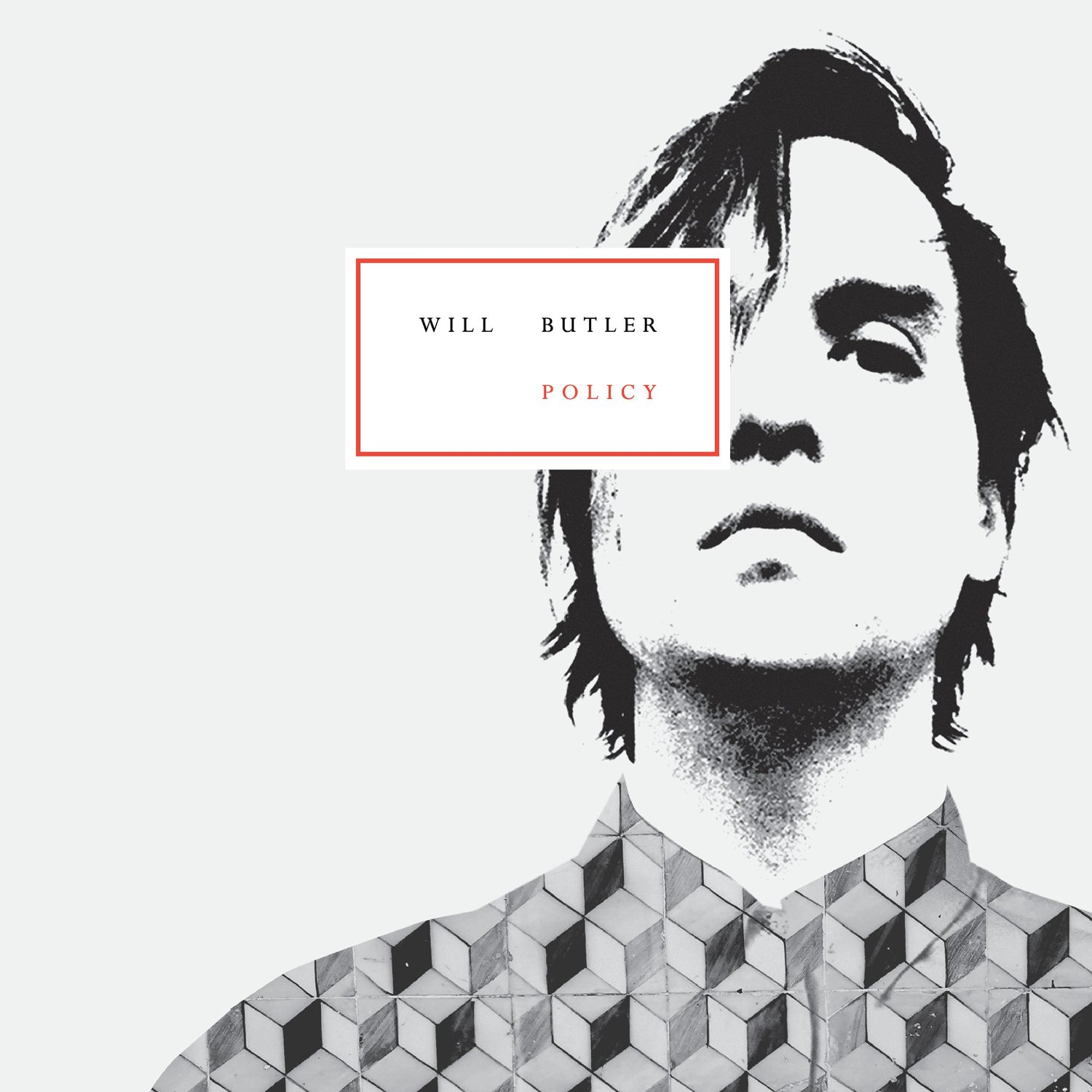
Will Butler – “Policy”

Grade: B+

Key Tracks: “Take My Side” “What I Want”

The idea of a “frontman” is one that dominated classic rock – everyone remembers Freddie Mercury, some people know Brian May’s name, not many people know Roger Taylor and John Deacon. But it’s a status that’s become outdated in the indie age, with alternative bands working more as units rather than musicians waiting for their chance to show off. Arcade Fire hasn’t melded with this change in pace. When a casual person thinks of Arcade Fire, they think of the frontcouple – Win Butler and Regine Chassagne. This is probably because Arcade Fire is huge, there’s six members (seven until recently), and everyone plays multiple instruments. So the band has an indie collective feel, like Broken Social Scene or the Polyphronic Spree. But they’re not, they’ve had a pretty core line-up since Funeral. What this has led to, in succession, is the other members besides Win and Regine trying to make their voices heard. Recently departed violinist Sarah Neufeld released a solo album in 2013, followed closely by multi-instrumentalist Richard Reed Parry. Now, Win’s brother is having his say. Will Butler, who is officially credited with playing “synthesizer, bass, backing vocals, guitar, percussion, sitar, panpipes, trombone, omnichord, glockenspiel, concertina, double bass, clarinet, gadulka and the musical saw” throughout his time in Arcade Fire, has released his first solo album.

As one of Fire’s two remaining crazy members (along with Parry), what we get from “Policy” is Butler’s contributions to Arcade Fire – one slice of the puzzle extracted, and propelled forward until it becomes its own being. “Policy” is often poppier, faster and more lively than Arcade Fire’s music. At 27 minutes, it’s a brisk outing, one that highlights the album’s quickened, but not unruly pace. A majority of the eight tracks are simple guitar-based indie, akin to the solo work of Brendan Benson. It’s a type of indie that is usually successful just because it never has to ask for any sort of originality to work. But “Policy” does still have some original things going on around it. On what’s maybe the album’s best track, “What I Want,” Butler sings wild lyrics around a vocal rhythm that keeps crescendo-ing. Remove the sweet indie sound the goofy lyrics, and it’s a noise-rock template.

“Policy” demands no comparison to Arcade Fire, in either its size or its scope, but it’s hard not to make comparisons. Will does, at times, sound like his brother. And occasionally the rhythms either cool down enough to resemble the band, or they build enough complexity to sound denser. But the album’s biggest difference might be in the lyrics. Butler’s lyrics aren’t at all similar to Arcade Fire’s cold, emotional odes. They wouldn’t fit on an album that leans more to enjoyable than painful. Instead Butler sings lines like “If I could fly / I’d beat the shit out of some birds” on opener “Take my Side,” and on “What I Want,” singing “I know a great recipe for pony macaroni.”

The album’s two outliers are the synth-y and sax-y second track, “Anna,” which almost feels like a red herring. It acts like it’s going to set a tone for the rest of the album, but Butler instead treats it like a song he’s doing for himself to get it out of the way. The biggest outlier is “Sing To Me,” a piano ballad. It’s an effective, low-key piece, and it’s got a strong, haunting tone to it, but it doesn’t really fit on “Policy.” The audience is never really set up for a ballad so soon – even as the penultimate track, it still comes after only 21 minutes.

Still, there are no bad moments on “Policy,” and even though it isn’t entirely effective as an original work and Butler doesn’t quite possess the independent power of being a solo musician, it’s a fun listen throughout. It takes a stance alongside but completely separate from Arcade Fire, and helps to signify Butler’s important position in the group.

If you like this, try: Brendan Benson’s 2012 album “What Kind of World.”

-By Andrew McNally

MisterWives – “Our Own House”

Grade: A-

Key Tracks: “Reflections,” “Coffins,” “No Need For Dreaming”

Let’s get this out of the way: there’s nothing inherently special about MisterWives. They’re not one of the more unique indie bands you’re going to hear. But, it’s their sweetness and earnest desire to just make music and bank off each other that makes them great. They’ve only existed for a short while, but on their full-length debut, they sound like a full-fledged band that’s had years of practice. The band’s pretty, vocal-heavy folk-indie is strong at every point.

I was lucky enough to catch MisterWives live at what had to have been one of their earliest shows. They were opening for another great band called Pyyramids in Manhattan, and I remember seeing enough of them to think that they seemed like a down-to-Earth, groovy group that was playing what they wanted to. On “Our Own House,” they’ve expanded their sound, but they haven’t lost much of the fun qualities that they had in that tiny Manhattan bar.

Three of the first five songs on this album have horns. Openers “Our Own House” and “Not Your Way,” and fifth track “Best I Can Do.” It’s worth noting, because the band has an interesting strategy, where they come out with the bang of some extra musicians, before settling into who they are themselves. They bust out with a groove, with a funky grip that hooks you in for a few tracks before you things have calmed and you’re listening to just a few people.

The best tracks on the album are the ones where MisterWives work as a collective – some songs are too heavy on vocals, but some are collective efforts. Two of the album’s better songs, “No Need For Dreaming,” and “Imagination Infatuation,” are collaborative efforts. “Hurricane” is even more guitar-heavy. But even on the tracks on that aren’t as cohesive, Mandy Lee Duffy’s vocals are strong throughout. She’s the anchor of the band; she formed it, she leads it, and her sweet but booming voice propels the band forward. The band’s best song, “Reflections,” is centered almost entirely around her vocals.

“Reflections” is one of five songs on the album that already existed, on last year’s “Reflections” EP. But it’s okay, because they’re worked into the twining of the album organically. They’re just reprints of the older versions, but they fit fine within the album’s frame.

On first listen, MisterWives might seem like another folksy-indie throwaway band, but there’s a lot of substance to their music. It’s grasping, and catchy, and a ton of fun. There isn’t a dull moment on their debut. What MisterWives really is, is five talented musicians sitting in a studio, simply creating whatever they want. And as far as the (pseudo-)indie-folk genre goes, MisterWives are already one of the better bands in the game.

if you like this, try: Company of Thieves. Genevieve Schatz’s voice was sweet but dominant, like Duffy’s, and the band also had a collaborative indie sound. “Oscar Wilde” is one of my permanent favorite songs.

-Andrew McNally

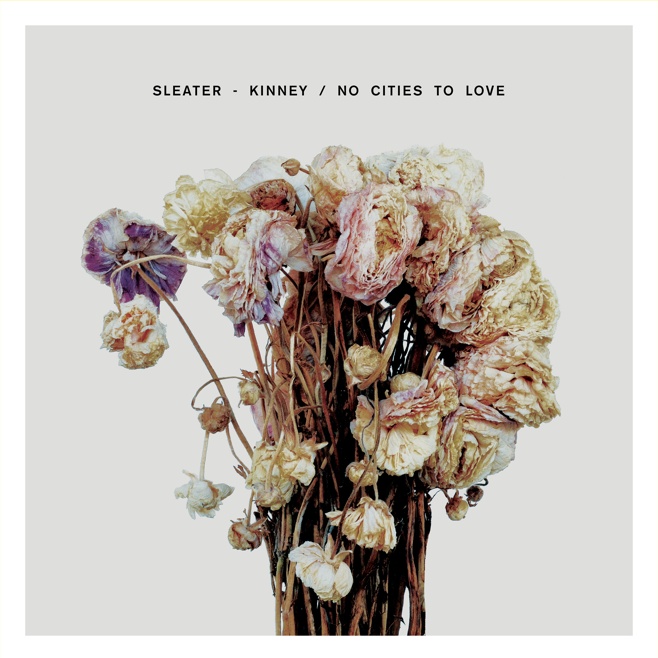
Sleater-Kinney – “No Cities to Love”

Grade: A-

Key Tracks: “Price Tag” “No Cities to Love” “Bury Our Friends”

Confession: This isn’t my first review of 2015. That belongs to Meghan Trainor’s “Title.” But do you know how cliche the metaphor is to start the year with a review of a debut? No, the first review of the year needs to be something more momentous – a comeback (and one that fits in well with my recent post on feminism in music, something Trainor does *not* fall under). So here, one of the biggest comebacks a blog like this could ask for – the first Sleater-Kinney album in 10 years.

Sleater-Kinney never really gave us a reason for their hiatus in 2006. It just seemed like they suddenly appeared, and suddenly disappeared. So, nine years after, it seems just as odd that they’d come back, especially given their successes – Janet Weiss has since played with the Shins, Wild Flag, Stephen Malkmus, and the densely uncrackable trio Drumgasm; Corin Tucker has found solo success; and Carrie Brownstein has found mainstream success as one-half of the largely improvised IFC show Portlandia (as well as Wild Flag). But 2015 needs Sleater-Kinney more than Sleater-Kinney needs 2015. We’ve caught up to their third-wave feminism; their leftist politics may have been “radical” for music in the 90’s (sad) but sound more anthemic today. There’s a revolution looming, and we’ve left Sleater-Kinney’s throne open for their welcome return.

Nearly needless to say, it’s an incredibly successful return. While Sleater-Kinney have never been a challenging band, their varying albums do rely on the listener to interpret the music, rather than the band. And for a band that’s woven through indie rock, riot grrrl and classic rock, “No Cities to Love” feels like a retrospective, that lets the listener reflect on which Sleater-Kinney exactly they’re listening to. Although “No Cities to Love” often sways sonically towards an indie S-K, it packs punk punches, and it’s brimming with energizing, political lyrics that are seemingly banned from indie otherwise. S-K’s political and social lyrics have never sounded fiercer, stronger, and Tucker’s vocals have a catchy scowl to them that entice the listener into their fury.

The album starts, by no coincidence, with “Price Tag.” The band sound like they’re restraining energy, not wanting to exhaust the listener from the get-go; but the lyrics about overspending on both political and personal levels rival the most ferocious and specific lyrics Against Me! or Sonic Youth could dream of. “A New Wave” matches the album’s catchiest, bounciest music with equally anthemic lyrics. “Surface Envy”‘s lyrics about making and breaking rules might sound a little tired, but S-K always have a way of putting out their own spin. And late-album highlight “Bury Your Friends” isn’t as political, but looks at the apathy of burying and reviving friends and idols (kind of like early songs by, well, Sonic Youth).

Musically, “No Cities to Love” leaps around. The title track is one of a few songs that’s outright catchy, with the band exploring its indie side. But “Surface Envy,” “No Anthems,” and “Fade” are all aided by a heavier, denser sound. Brownstein’s guitar is heavy throughout, reinforcing her importance and virtuosity in the guitar world. “Hey Darling” sounds like an indie track but has an unexpected heavy guitar, and “Surface Envy” has a dissonant chord running through its verses. “Bury Our Friends” even takes on a more mechanic tone at times, sounding more rehearsed and intentionally repeating than other tracks.

The Sleater-Kinney we get in 2015 is a mix of previous Sleater-Kinney’s, and it’s necessary blending. Indie and punk have come a long way in 10 years, and can go hand-in-hand now (whereas separated by sharp divides in 2005, unless you were Karen O or a member of Sleater-Kinney). “No Cities to Love” is rarely uneven, often totally complete, and serious in its beliefs. Comeback albums are tricky, but I don’t think there was much doubt that Sleater-Kinney could succeed in a world even more in need of political anthems. Leftist, catchy, angry and energetic, “No Cities to Love” is exactly what you want from a Sleater-Kinney album, just in the year 2015. Setting the bar high early, we’re 1-0 in great albums so far.

If you like this, try: Aside from rechecking your teen angst, rehanging posters you had in your bedroom in 1998, and remembering why you picked up a guitar in the first place, check out Potty Mouth’s 2013 debut, “Hell Bent.” Although more outwardly punk, Potty Mouth owe a lot to S-K’s feminist indie-punk sound.

-By Andrew McNally

(Okay. 1-1. Meghan Trainor review to be posted later.)

Crying – “Get Olde/Second Wind”

Grade: B

Key Tracks: “Bloom,” “Bodega Run”

To people who have never heard Crying, this double EP is something really new. To fans, it’s very literally not new. The first half is just a reprint of last year’s “Get Olde” EP, combined with a new “Second Wind” EP. So it can’t technically be labeled as an album, and the combination does not answer the listener’s question of why this was done in the first place. Still, “Get Olde” is an excellent EP, and their blend of emo, indie and chiptune is incredibly unique.

What separates Crying from Run For Cover Records labelmates like, say, Pity Sex or Tiger’s Jaw is definitely, unequivocally the use of the digital, video-game-y sounds. It’s a primary focus of their music – the main instrument on every track. Sometimes it’s shrill, sometimes it’s melodic, other times it doesn’t seem to fit and you wonder if you’re going to get a break from it. Luckily, Crying take it upon themselves to differentiate every track, so their unique sound doesn’t become an automatic staple after the first go-around.

It’s easy to describe Crying as a chiptune band, one instrument is literally a Game Boy. But where other bands have experimented with this before, they’ve never roped in such unexpected lyrics. Similar bands often take goofy tones, mimicking the video game world they’re trying to engross. But Crying sing on a real plane – real people in a real, crushing world. “Vacation” namechecks Costco and flip phones, proving they’re living in a globalized society. And frequent references to bodegas cement the band as New York apartment-dwellers, not suburban basement-surviving nerds. It’s a distinction, because Crying’s music has a dense aura to it.

Both EP’s have their up and down moments. They both end on slow tracks (“ES” and “Close,” respectively), and neither really works that well. But both EP’s have honest and devastating lyrics, often delivered in Elaiza’s exasperated vocals. And while “Get Olde” stays right by the Boy’s side, “Second Wind” lets up some room for some drum (“Easy Flight”) and some guitar moments (“Batang Killjoy”). The second side is more varied and denser than “Get Olde,” although the band is more consistent in the release’s first half. I’ve been on to Crying for a while now; their first full-lengthed release is an extremely interesting listen. It isn’t perfect, but it’s still a fun, desperate mess, and it’s a promising release for the future.

-By Andrew McNally