The Polyphonic Spree – “Yes, It’s True”

(Photo Credit: Glide Magazine)

Grade: B+

Key Tracks: “Popular By Design,” “Blurry Up the Lines”

“Yes, It’s True” is the fourth album from the vocal-heavy choral-pop-rock band, a genre that is a lot more conventional and a lot less gospel-influenced than it sounds. The Polyphonic Spree currently sits at twenty members, although the album does at times resemble a normal-sized group. The album is heavy on engrossing music and light on inspiring lyrics, but is frequently worthwhile. Former Tripping Daisy frontman Tim DeLaughter is in total control on this album, perhaps even too much. The collective playing behind him is under his spell, following him through his mixed influences.

The album always falls closer to pop than any other genre. Each track plays out like a typical single from one of DeLaughter’s inspirations, from the Beach Boys to Bright Eyes. “Single” is the important word there, though, because every song on the album is “single” standard. In fact, the album’s lead-off single, “You Don’t Know Me,” is not among the album’s better songs. The music on the album is often standard, fun vocal pop. It is a market that has been tapped many times before, but as long as the product is catchy and retains a little depth, it can be done again and again. There are a few tracks were DeLaughter does a back-and-forth in the chorus, exchanging solo lines with group lines from the musicians. It’s all very fun and inspired. The final track, “Battlefield,” ends with an extended synth fade-out that is meant to sound ominous, but almost comes off as anticipation for wanting to record another album.

Lyrically, the album doesn’t hold up nearly as well. Track titles like “Carefully Try” and “Let Them Be” don’t prepare to offer much lyrically. There is nothing more than basic pop poetry here, which can get repetitive. They even sound less inspired alongside the music. It’s rarely an issue, because the album has enough good spirit to make up for this. Also, pop albums nowadays do not seem to be expected to be poetic masterpieces, so it’s expected in a warped way.

Twenty-piece choral-pop groups are hard to come by, but The Polyphonic Spree are doing something right. They may be a collective – their ‘former members’ page on Wikipedia includes forty-five people, one of them being Annie Clark from St. Vincent – but they are having fun in the studio. And when it comes down to it, that is the key to a successful pop group. Things might not work, but if the listener believes enough in the band, they can look past it. And it is very easy to surpass the faults on “Yes, It’s True” and just enjoy the ride.

If you like this, try: “Here” (2012), the second album by Edward Sharpe & the Magnetic Zeroes. The best of their three, and one that includes a surprising variation of influences into a collective effort.

-By Andrew McNally

Whirr – “Around”

(Photo Credit: Brooklyn Vegan)

Grade: B-

Whirr’s new album is only four tracks long, and falls awkwardly in between an EP and an LP. At 28 minutes or so, it’s roughly the length of some punk albums, but shorter than many of their other albums. This is, unintentionally, symbolic of the album’s awkward placement in between genres, blurring together metal, noise rock and shoegaze into that pumps up the volume but often hangs around longer than it needs to.

The four tracks on “Around” range from 5:53 to 8:47, much longer than the average songs on Whirr’s previous albums. The band is trying out more of a shoegaze sound, possibly inspired by the crazy work being done by crossover geniuses Deafheaven. Shoegaze is an incredibly tough genre of music to pull off, because it requires patience on both the band and the listener. A band has to maintain a sound, even a note, for a long time at maximum volume, without it becoming monotonous. There’s a reason there aren’t many famous shoegaze acts. Whirr don’t exactly pull it off. The songs stretch on too long, ideas too thought-up. The volume is there, and the gloomy, bleak guitars from their previous albums support the ideas. But there isn’t quite enough to keep in interesting.

The third track, “Keep,” is the album’s best, because of a volume change roughly 3:30 into the song. A subdued and constant sound is suddenly dropped out, and guitars kick back in much louder than before. It is this long, drawn out sound with the occasional hiccups that makes acts like Deafheaven and Godspeed You! Black Emperor the inspirational acts they are. The song transitions into the title track, in one long song that would’ve been too daunting and too long to release as one actual track. “Around,” just like the first two tracks, overstays it’s volume, staying quieter for its seven minutes.

I have to commend the band for attempting to blend genres like this. They do a pretty decent job, considering all of the conflicting elements. The songs just stick around too long. The volume, the guitars and the ideas are all there and great, but there’s actually just a little too much of it. If Whirr were to keep exploring this idea, though, I’d keep listening.

-If you like this try: Deafheaven’s “Sunbather.” I’ve already linked to my review a few times before.

-By Andrew McNally

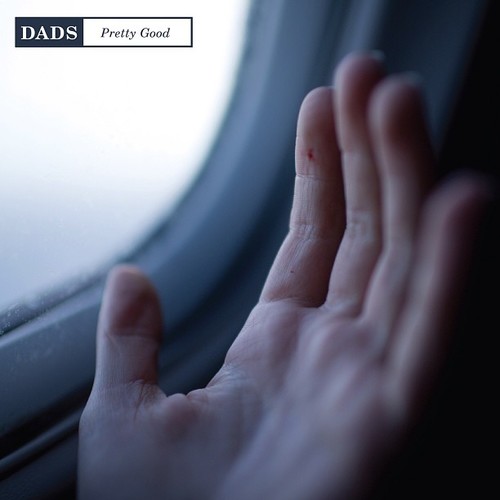
Dads – “Pretty Good”

(Photo Credit: best-vinyl.blogspot.com)

Grade: B

Dads, a wonderfully fast and gleefully sad duo from New Jersey, have been looking to shed their emo background. In March they were crowned the best emo band ever in Property of Zack’s March Sadness competition (probably in part to being the only band interested in the competition and encouraging their fanbase to vote). But the emo branding bears some weights, as the word ’emo’ brings more bad bands to mind than good ones. So the duo hopes to change that on their new four track EP, “Pretty Good.” It yearns for their emo-leaning work, but for a band attempting outreaches, it succeeds.

The opening track, “My Crass Patch,” is easily the EP’s best. The song is vocally similar to their previous works, but feels heavier and angrier. It sets the transition off on the right foot, sending a different message than the carefree-yet-miserable feel of their 2012 album, “American Radass (This Is Important).” The second track, “Can I Be Yr Deadbeat Boyfriend?” continues with the heavy feel, and adds a little punk inspiration throughout it’s very short run. It is the most reminiscent of their older music, sounding similar to the heavily-intro blasts like “Groin Twerk” and “Grunt Work,” while still sounding more purposeful.

The third song, “Boat Rich,” sounds terrible out of context of the album. Taken for what it is, the song sounds like a cornier (dare I say, more ‘radio-friendly’) version of “Let’s Go to the Beach!” from ‘Radass.’ But on the album, its lighter tone makes for a break from the heavy nature of the first two tracks. It also allows for the band to show that their branching out leads in both directions. This is further emphasized on the final track, “No We’re Not Actually,” a five minute slow burner.

“Pretty Good” lives up to it’s title. For a transition work, it is successful. But Dads only have two albums under their belt – their decent “Brush Your Teeth Again ;)” and the utterly perfect ‘Radass,’ and it is kind of a shame to see them leaving the genre so soon. I was hoping for one or two more of their lo-fi, emo pleasures before they branched out. Ultimately, it’s their decision, and they can’t be blamed for wanting to escape from the ‘twinkly’ emo before they’re sucked in and unfairly lumped in with worse bands. Let’s hope they can master these transitions as well as they can emo. For what it’s worth, I saw Dads play in Amityville, New York, and for two guys with limited time and a bad venue, they were phenomenal.

If you like this, try: “Where Were You While We Were Getting High?” by One Hundred Year Ocean, an emo EP by a band comprised of some members of recent Dads tourmates The World Is A Beautiful Place & I Am No Longer Afraid to Die. I have also reviewed The World Is’ recent debut, as well as the debut from Pity Sex, who were also on the bill. I’m a fan of Topshelf Records and their offshoots.

-By Andrew McNally

Robin Thicke – “Blurred Lines”

(Photo Credit: Rolling Stone)

Grade: D+

Key Tracks: “Take It Easy On Me”

“Growing Pains” indeed. “Blurred Lines” comes out as Thicke is 36, with a three year old son. The album is distinctly more pop-based than his previous albums, showing a backwards trend in songwriting, possible an effort to hold onto the immaturity needed to be a successful pop singer. The result is a bland pop album that suffices as a summer party mix, but is lacking in originality, effective lyrics, big beats and really anything to make it memorable.

Thicke’s inspiration for the album came from growing up under the impression that everything was black and white, right and wrong, etc, but realizing how untrue it is once you grow older. This could really be a strong concept for an album, one that could really show growth for a musician. What Thicke delivers, though, is ego-centric songs of love, sex and passion whose only difference from other pop songs of the last thirty years is Thicke forcibly pushing his ego into them, which ultimately just makes him sound like the massive dick he claims to have.

On some of the album’s more subdued moments, Thicke’s voice is pleasantly pretty, something he didn’t eschew for a pop album. And the collaborations, with Pharrell, T.I. and Kendrick Lamar among the guest spots, often work well to make some balanced songs. Every track on the album falls flat because of the overused and sometimes vainly vapid lyrics. Musically, too, the album is boring. Thicke tries to mix R&B, latin and pop influences, but the result is the blandest parts of all three. The album needs a lot more oomph, and maybe some musicians that at least to try to care about the music they’re recording. “Blurred Lines” is an alright summer album, and will surely be played at pool parties for the rest of the summer. It does it’s job on the most fundamental level, nothing beyond that. And by next summer, all people will remember is the title track and it’s racy (read: horribly sexist) video.

In conclusion, a .gif from the “Blurred Lines” video, courtesy of Tumblr. user jhermann. Click on it to see his phenomenal dance moves, ones that sum up the awkward masculinity of the whole album:

If you like this, try: Really can’t help you on this one.

-By Andrew McNally

Locrian – “Return to Annihilation”

(Photo Credit: The Sleeping Shaman)

Grade: B+

Key Tracks: “Eternal Return,” “A Visitation From the Wrath of Heaven”

“The ends justify the means” is not a phrase commonly associated with music, but it defines what Locrian sets out to do. The noise rock trio’s largely stellar new album is seven songs long, many of which build up furiously into large and loud ending moments. The final track, “Obsolete Elegies,” builds up for twelve minutes before unleashing a slow but heavy outro for the album. Locrian are a tough and complex band, one that most listeners are going to write off pretty quickly.

With a title like “Return to Annihilation” and song titles like “A Visitation From the Wrath of Heaven” and “Exiting the Hall of Vapor and Light,” Locrian comes off like a metal band. Instead, they are an overdrawn noise rock group sitting on the better side of Godspeed You! Black Emperor. Their songs are in no hurry to reach their conclusion, in a fifty minute, seven-track album. Their music is more intense, and often more complex than Godspeed. Locrian’s songs start off on bleak notes, often accentuated by droning guitar and dismal keyboards. The album’s cover certainly helps, one of the bleakest covers in years. I unfortunately did not listen to the album with headphones, but I can imagine that it creates a surrounding experience. The droning of some of their songs grow into their abrasive conclusions, that sometimes feature some screamed lyrics, but not always.

Yet some songs have a certain urgency to them. The album isn’t entirely drones. Opener “Eternal Return” jumps right out of the gate with volume and screaming, ending noisily in only two and a half minutes. The second track, “A Visitation…” is one that builds up, but has more of a defined purpose and less of a bleak nature than the tracks that follow. The fact that many of the songs have a similar structure but vary in tone is beneficial, as the album never gets too bleak or too repetitive, but is instead a dense, heavy, and pleasurably frustrating listen. There is a complexity to “Return to Annihilation” that will never dissipate no matter how many listeners. The album might not hit some of the more disturbing elements it aims for, but it is still a deeply confronting album that works at each of its volumes. Locrian plays for a very limited niche of people looking for challenging and well-conceived noise-rock, but they do it very, very well.

If you like this, try: “METZ” by METZ (2012). Their song structures are much more traditional, and they’re much more upfront with their aural assaults, but it’s an incredible piece of noise rock. The album really makes the listener sweat.

-By Andrew McNally

Fuck Buttons – “Slow Focus”

(Photo Credit: Electric Banana)

Grade: A-

Key Tracks: “Prince’s Prize,” “Stalker”

The shortest track on this album, the 4:22 of “Prince’s Prize,” is longer than the longest song on the new Hunx & His Punx album, sitting right below this one. This has always been the approach to music for the Buttons. Their songs are long, leaving a lot to dig through. Fuck Buttons, much like their name itself, challenge popularity to accept them. The band is an instrumental, electronic duo that creates long, dense works that are never easy and conventional yet never mean on the ears. There is a secret formula to their music, and it continues on their third album.

With all of the EDM and electronica albums coming out this year already – Daft Punk, Disclosure, James Blake and Zomby have already released great albums – it’s surprising that there is room for the Buttons to fit in. But there is, because they don’t attempt to make music people can dance to. Their music is more complex and tougher to crack. Daft Punk’s “Get Lucky” is one of the best songs of the year, but any ten seconds of this album has more complexity and depth than the entirety of Daft Punk’s hit. These songs are mesmerizing, switching to and from rough and pretty, and often mixing the two. “Stalker” is the best example of this, a ten minute dissection of a pretty but monotonous rhythm, played over some decidedly noisy bits. The Buttons give a lot to dissect, but don’t give many clues. They do it in a way that makes for a puzzling listen, not a frustrating one. “Slow Focus” plays out like a mystery that doesn’t get answered, with an ending that is totally acceptable anyways.

Through all three albums, Fuck Buttons have been tough to nail down, with their intentionally complicated sound always being on the verge of remix-worthy without ever going there. “Slow Focus” is loud and empty, seemingly devoid of human emotions, through its grandiose and expansive ideas. It always seems like it is about to crack into club music, but will never go there, because the band places value on the depth of it’s music. “Slow Focus” is long and fantastic. Seven tracks and fifty-two minutes of brilliance. It is too tough to crack on one listen, and will confuse most listeners. Hopefully, enough people will give it a few listens without shrugging it off and moving on to dance music. Although with the attitude of this music, the band might just not care if they do.

-By Andrew McNally

Hunx & His Punx – “Street Punk”

(Photo Credit: Soundcloud)

Grade: B

Key Tracks: “Born Blonde,” “Street Punk”

Brilliantly named Hunx & His Punx have jumped to a bit of a different ship. With the most straightforward album title of the year, the San Francisco band tighten up their sound and pick up the pace. The album is titled “Street Punk” because it is, well, an effort to be a street punk band. This change is no more apparent than in the band’s album covers. The older, ridiculously fabulous Hunx & His Punx had an album cover of a close-up of a male crotch in a speedo. This album, a (faux) tattooed chest. Track eight is called “Don’t Call Me Fabulous.” The reason for the band’s switch in sub-genres is unknown, but what we’re left with is a decent transition record, over as soon as it starts.

The second track on “Street Punk” is called “Everyone’s a Pussy (F**k You Dude)” and consists of only those six words, screamed over a blistering thirty-one seconds. The album is twelve tracks, and barely twenty minutes. This is probably for the better, because Hunx & His Punx haven’t exactly mastered street punk yet. The album is full of quick punk blasts, but ones that land in between street punk and their older, girl-group influences. The result is a strange blending of ideas, one that has moments better than others, but often succeeds in doing its job. It isn’t as loud, or as consistently quick as other street punk albums. It does have the ferocity. There is anger and disgust, some coming natural and some forced. But even when it’s forced, it usually works, because the band believes it’ll work. Shannon from fellow San Fran punks Shannon and the Clams shares vocals on this record, resulting in a nice back-and-forth between singers.

Hunx is, in a way, his usual self here. He sounds the same vocally. Some of the lyrical themes are the same. Yet the band has sped everything up, and added reverb and feedback. It’s a different Hunx & His Punx, and it makes the listener wonder where the band will land next. And with the crotch and the chest taken as album covers, what’s next? What genre does the arms align with?

If you like this, try: “Living Dummy” by Pangea (2011). They’re an equally genre-less California-based punk band, and “Living Dummy” is one of my very favorite records.

-By Andrew McNally

Gogol Bordello – “Pura Vida Conspiracy”

(Photo Credit: Rolling Stone)

Grade: A-

Key Tracks: “Dig Deep Enough,” “Malandrino”

Let me start by admitting something: Gogol Bordello has been one of my favorite bands since “Super Taranta!” came out in 2007. Eugene Hutz and his gang could release an album of nails on a chalkboard and I’d find something great to say about it. Okay. That’s out. Let’s start –

Do gypsies ever slow down? Do they settle, even for a period of time that’s barely remarkable? This is the main existential crisis at the heart of “Pura Vida Conspiracy,” the sixth album from the world’s only famous gypsy-punk band. They have been on tour since they formed in the late ’90’s, recording and performing all around the world, and taking their inspirations from as many places. Singer/guitarist Eugene Hutz is Ukrainian, and the rest of the band hails from all over Europe, bringing folk, flamenco and salsa into standard punk music. Where did they form? Manhattan. 2010’s “Trans-Continental Hustle” was recorded after Hutz lived in Brazil. “Pura Vida Conspiracy” was recorded in El Paso, Texas. Hutz sings about people in all cultures and in all walks of life, always convincing the listener he has experienced each one firsthand.

But this is the band’s first introspective record. Think back to previous albums. 2005’s “Immigrant Punk” dealt with world travelers. 2007’s “American Wedding” was an open letter on how boring American cultures can be compared to European ones. 2010’s whole album “Trans-Continental Hustle” tackled the inherent contradictions in the idea of immigration. But here, Hutz sings about himself. On a track called “The Other Side of the Rainbow,” he proclaims that the other side of a rainbow is black and white. Gogol Bordello are world travelers and surprisingly famous, given their totally radio unfriendly acoustic-electric-flamenco-salsa-dance-political-hyperspeed-punk. What Hutz has found, however, is an unexpected hollowness in being well-known. Maybe it is because his previous political motives haven’t made waves, or maybe it’s because Hutz is disgusted by fame. But this album features more slower tracks than previous efforts. Slow Gogol Bordello sounds bad on paper, but the collective can still pull it off.

There is still ferocious drumming and acoustic guitar. Hutz’s voice is still ridiculously Eastern European. The album blasts out of the gate with three speedy and diversely inspired songs. Track two, “Dig Deep Enough,” is my personal favorite, and features a reliance on flamenco inspiration, pretty new to the band. The introspection starts soon after, leading to the first Gogol Bordello album that actually makes the listener think instead of blinding agreeing with political ambitions. Lyrically, it might just be the strongest album yet. Musically, it isn’t. Something about their formula of ten stringed instruments playing over brutal drums never gets old, and the album could use a little more oomph. It doesn’t fit with the lyrics, yes, but the album does get just a little too down at points. Still, Hutz’s existential lyrics are frighteningly easily to relate to, and poetic, and carry any bogged down moments. “Pura Vida Conspiracy” isn’t so much disappointing as it is different. We probably should’ve seen this album coming, we all knew Hutz wouldn’t be comfortable with fame. Politics were swapped out for personal. It’s new, even for them, but as long as Hutz and his (currently) seven-piece backing band can keep delivering a whole beautiful mess of ideas, we should be on board.

If you like this, try: Okay I thought about this for a while and there aren’t any bands I can think of that sound remotely like Gogol Bordello, so how about Dropkick Murphys’ “The Meanest of Times” (2007). A punk band that began to get introspective, and there’s accordion. As close a connection as I can make.

-By Andrew McNally

Edward Sharpe & the Magnetic Zeroes – “Edward Sharpe & the Magnetic Zeroes”

(Photo Credit: Consequence of Sound)

Grade: B-

Key Tracks: “Let’s Get High,” “Remember to Remember”

The first minute and a half of the song “If I Were Free” features two singers. The first singer has two brief moments of vocal impression – Bob Dylan and Bruce Springsteen. The second singer, Ringo Starr ala “Yellow Submarine.” These vocal inflections are not meant to be intentional. The band is not trying to repeat the music done by those that inspire them. The vocal similarities to Dylan, Springsteen and Starr more seem to slip out, and that is what most of this album is. “Edward Sharpe & the Magnetic Zeroes” feels like odes to those that came before, with it’s attempts at originality feeling somewhat mixed. Self-titled albums are meant to be declarations of the band’s distinct sound, but this album is ironically the least original of their three.

“Up From Below,” the debut from Edward Sharpe & the Magnetic Zeroes, had a distinct country-folk sound that was trimmed perfectly for crossover radio. “Home” is a country song, completely, but found love on alternative radio (and in my head for a whole summer). Their follow-up, “Here” was an underrated gospel-based gem. This new, self-titled album doesn’t have as much of the mixing as it seems to think it has. It more resembles a Dylan album, when he was at his mid-60′s peak. Five studio musicians join the band’s eleven members on the album, but it feels like a one-person operation at times. Lengthy openers “Better Days” and “Let’s Get High” sound like a number of musicians gathered around one songwriter, following his or her lead, instead of a collective. “Let’s Get High” is a phenomenally energetic and great song, but one that doesn’t quite capture the feel of the band. Luckily, the album doesn’t continue this feel, as the songs get shorter and more voices are introduced. Lead singer Alex Ebert is given many lead moments (especially on “This Life”), but so is back-up singer Jade Castrinos, who gets to shine bright 0n “Remember to Remember.” Other singers are thrown into the mix, too, and frequently. Once the album gets past it’s inspired but dragging opening two tracks, it begins to feel like the huge collaborative effort it should.

“Two,” which is humorously the third song, is a beautiful duet between Ebert and Castrinos. “Life is Hard” and “If I Were Free” make the album’s middle a fun if agenda-less listen, bolstered by skilled songwriting. The pace drags towards the end. There are a number of slow songs that seemed to flow together, and lost my interest. The halted pace overstays it’s welcome, but at least it doesn’t finish out the album. The aforementioned “This Life” and “Remember to Remember” are not fast songs, but serve as powerful ending notes to the album. It is mixed, overall, and lacks the based-yet-blended originality that its predecessors had, but “Edward Sharpe & the Magnetic Zeroes” is, at its core, an enjoyable folk collective, aiming high and hitting it more often than not.

If you like this, try: Phosphorescent’s criminally underrated folk-everything album “Muchacho” (2013)

-By Andrew McNally

Defeater – “Letters Home”

(Photo Credit: rocktransmission.com)

Grade: B+

Key Tracks: “Bastards,” “Bled Out”

I was largely unfamiliar with Defeater before giving this album a listen. Despite growing up seeing Boston punk and hardcore bands, I never crossed paths with Defeater’s music. Defeater do their best to separate themselves from other hardcore bands. Hardcore is traditionally an incredibly formulaic genre; bands that experiment even a little are sometimes ostracized. But Defeater do not so much play with the formula as they do add serious depth to it. While most hardcore bands focus primarily on the heaviness, eschewing poetry for indiscernible, throwaway lyrics about fighting and drinking (or not drinking, depending on the scene), Defeater take the time to add detail to every element. There is screaming – exclusively – but it is melodic. The emotion in the lyrics, which are often understood, adds a pretty consistently haunting element. And the musicians behind the singer, sure the songs are fast and loud but it isn’t “123GO” at the beginning of every track. Opener “Bastards” blows out of the gate, but the album speeds and slows accordingly, in an attempt to make an actual album instead of a collection of hardcore songs.

As mentioned, hardcore bands are not known for their deep and piercing lyrics (here’s looking at you, Hatebreed). But Defeater took the Coheed & Cambria approach to music: telling a long, multi-album story. While C&C are a goofy group that concocted a fantasy-inspired love story, Defeater took a much deeper turn and have been crafting a story about a family getting torn apart by the horrors of WWII. This is, frankly, brilliant. WWII is a topic that appeals to many people, and it allows them to get darker and darker with their lyrics on each album. Indeed, some of the titles include “Rabbit Foot” and four No’s: “No Shame,” “No Relief,” “No Faith,” and “No Savior.” The album may be heavy, but it is the heaviness of the lyrics that weighs more on the listener than the heaviness of the screaming and pounding guitars.

That said, even for an album that leaves as quickly as it arrives, it does drag on a little. A majority of the ideas that separate tracks from each other are used on the first half. The second half starts to fall into traditional hardcore. It is saved (ironically) by “No Savior,” which starts off with an extended slow period, and the album’s 6+ minute finale, “Bled Out,” which repeats the chorus of “Bastards” to bring the album around to a whole. But moments on the album do tend to blend into one another a little too much. High intensity is great, but when it is unfaltering, it just becomes normal. Still, “Letters Home” is lyrically deafening, and is the best example of a band expanding to the limits of hardcore without going beyond it. There is a new high standard in hardcore.

If you like this try: “Sunbather,” the new release from Deafheaven. It’s shoegaze-black metal, a totally new genre that is getting them thrown out of the metal community. It’s also one of the best albums of the year.

-By Andrew McNally