Cheap Girls – “Famous Graves”

(Photo Credit: punknews)

Grade: B-

Key Tracks: “Slow Nod” “Knock Me Down”

As with any Cheap Girls’ record, the main fault of “Famous Graves” is also it’s biggest strength. The band has never, ever left it’s comfort zone, and have left their music in this frustrating void where the listener knows what to expect and is delighted with another similar record, until it inevitably becomes tedious by the halfway point. “Famous Graves” is no different. It starts strong, but it has a middle that sags from too many similar sounding songs.

Part of Cheap Girls’ original act was not to do anything revolutionary, merely to add their own spin onto fuzzy indie/pop-punk (think a more emotional version of Weezer’s Blue album). By sticking so closely to the formula, it reinforces their aim to make consistent and appealing music. But that works a little too well in their favor. “Slow Nod” opens the album, a typically high-volume, medium-speed song with plenty of fuzz and tough to interpret vocals. It’s the band’s staple sound, and songs like “Slow Nod” prove they can still do it well, and with plenty of energy.

The second track, “Short Cut Days,” has a catchy vocal rhythm and excels on a sound that’s intentionally condensed in the studio, with a garage feel – but also sounds like it could tear the walls down live. Cheap Girls, at their best, manage to make both sounds simultaneously. The album’s third song and lead single, “Knock Me Down,” is a more personal song about overwhelming pain felt after surgery, and combines strong vocals, strong lyrics and energetic music, the album’s best package.

After that, though, there’s a long string of songs that do nothing to differentiate themselves from each other. While they’re inherently enjoyable, they all follow the same formula. They’re almost all in the three-to-four minute range and they feel like time that’s being killed off until the album’s strong finale. Having weak and formulaic tracks is almost unavoidable, but five of the eleven songs feel like underdeveloped cuts they’re burning off. A bulk of the album, roughly half of it, falls victim to serious repetition.

The album does have a strong finale, though. “Thought Senseless” stretches (barely) over four minutes, and is a little more developed than a typical Cheap Girls song. “Turns” is a pseudo-ballad, one that has many of the characteristics of one, except that it isn’t a soft song, which makes for an interesting listen. And bonus track “7-8 Years” is more vocally forceful than any of the album’s other songs. The mix of acoustic and electric allow the vocals to come through more clearly, and it ends up adding an element to it.

At their core, Cheap Girls are an enjoyable band. They’re both incredibly simple and subtly complex. They’ve always blended fuzz and pop, in a 90’s throwback. Their sound translates well live, and their albums can accompany any real mood or season. “Famous Graves” just sounds too repetitive, and it could easily be shuffled in and lost amongst their past albums. Cheap Girls aren’t going to win any new fans over with this album, they’re just going to have a few more great songs for fans to eat up, and some more to pass on by.

-If you like this, try: Lemuria’s semi-classic 2008 album, “Get Better.” They have a constant sound much like Cheap Girls (and the two have recorded together).

-By Andrew McNally

The Black Keys – “Turn Blue”

(Photo Credit: chimes.biola.edu)

Grade: B+

Key Tracks: “Weight of Love” “Bullet in the Brain”

The Black Keys either like to take corners, or listen to criticism. Their last two albums – “Brothers” and “El Camino” – were distinctly different from what they’d done previously, and both suffered from it. “Brothers” had some quality songs, but it was too long and stuffed with slower tracks. After they found it difficult to play them live, they wrote more upbeat songs for “El Camino,” but they were so focused on the quality that it didn’t seem like they enjoying themselves. “Turn Blue,” however, sees the duo having fun again, and balancing loose and polished.

The first track on “Turn Blue,” called “Weight of Love,” is just ten seconds shy of hitting the seven minute mark. This is pretty different for band who is known for a quick and heavy blues sound. (Look through the Keys prior albums, it’s rare to find a song over five minutes). But it sets the tone of the album. The song is sleepy and a little psychedelic, a drastic departure from the old Keys. It isn’t fast, it’s much more of an extended way to open an album. But Dan Auerbach sure sounds like he’s having fun. The song, as do a few others later, has a distinct classic rock feel to it. Though always resembling garage bands of the 60′s, the Keys have usually stayed away from a classic rock sound. But it gets embraced on “Turn Blue,” and it’s a surprisingly welcome shift. Even the album’s hypnotic cover shows an embrace of a more suspended sound.

The album also benefits from having Danger Mouse on board, producing. He worked on “El Camino,” too, but the relationship between him and the band is more equal. Though still a duo, the band has added distinct bass parts that make a much groovier sound. It’s most evident on the title track and the hit “Fever,” but it adds a fun element throughout.

The album’s only real fault is a handful of songs that still sound a little too prepared. “Year in Review” sounds a little too strained, a little too rehearsed. “It’s Up to You Now,” meanwhile, feels so loose it almost sounds improvised. It’s also possibly the album’s heaviest track, with a booming drum intro. It’s very enjoyable, reminiscent of early Black Keys. They recapture a little of their earlier sound in some of the other heavier songs, like “Bullet in the Brain.” While “Tighten Up” and “Lonely Boy” were heavy in their own right, they felt more directed towards songwriting. The guitar fuzz and the loud, crushing drumming are more ambitious here, less constrained to an album format.

“Turn Blue” has many things working for it. It’s more energetic than “Brothers,” it’s more open than “El Camino,” and it’s just as wide and heavy as “Attack & Release.” A welcome groove makes the album more fun than what we’re used to, without sacrificing any of the volume. And on songs like “Weight of Love” and closer “Gotta Get Away,” it’s easy to tell the band is having fun with the record. “Turn Blue” doesn’t quite stand up to “Attack & Release” and “Thickfreakness,” but it is definitely one of the band’s better records.

If you like this, try: Given that most of the bands that resemble the Black Keys are equally famous, I’ll recommend another fuzzy, bluesy duo – The Creeping Ivies.

-By Andrew McNally

Dunas – “Boas-Vindas”

Boas-VindasGrade: A-

Key Track: “Em Algum Lugar Dentro de Nos”

Dunas, a name that translates to “those sand dunes” from Portuguese, is a Brazilian-based band featuring the ambitiously experimental Francois Veenstra. The band, normally a Portuguese-singing, straightforward band, ventured way out during a contemplative period and instead recorded an improvised, instrumental, ambient EP. “Boas-Vindas” is four tracks and roughly thirty-three minutes of an improvised story.

The album’s opener, “Em Algum Lugar Dentro de Nos,” is an extremely peaceful work. It’s very ambient, and centered around an echo-y guitar and various nature sounds. The song, especially it’s first half, gives an aura of satisfaction and sounds like enjoying a nice spring day falling in tune with nature. Much of it sounds like it’s recorded from within a cave, with it’s swooping, almost wind-like rhythms.

Since it’s improvised, it’s tough to know if Dunas had planned for this EP to have a real storyline, but it seems to have a narrative of descent. If “Em Algum Lugar Dentro de Nos” is peaceful and feels like laying on the forest floor, watching the sky, “Por Favor, Por Favor” feels like becoming too engulfed. The song’s airy and faux-futuristic rhythms might seem like falling asleep comfortably on the forest floor, but is more akin to letting yourself get overtaken by the nature around you. It’s also a relatively peaceful song, and the lightest on the EP, but it slowly seeps into one that isn’t, through the sound of things getting disconnected at the end.

“Boas-Vindas” feels like a descent into a gritty underworld. Its immediately abrasive, back-and-forth dissonant piano rhythms are a stark difference from the first two tracks. The song feels like a bad dream; or seeing the ugly side of nature. If it starts in a cave, it ends deeper down, in darkness. The song’s title roughly translates to “hearty welcome,” and that’s what it resembles – an unwelcoming welcome. Other synth rhythms pile onto the early ones, and play until the noise settles into something less intense but no less loud – as you get more accustomed to it. The short outro, “Motion Picture Soundtrack,” follows in the previous song’s volume and drone-like tone.

The EP all flows together, as if it were one long song. This helps to enhance whatever sort of increasingly dark narrative hides behind the ambient music. The EP slowly goes from peaceful to forceful, and does both very well, especially when you factor in the improvisation. “Em Algum Lugar Dentro de Nos” is engagingly warm, and it makes the slow descent into noise all the more powerful. It is best appreciated with headphones on, to take in the full ambient effect. “Boas-Vindas” is a strong and weighty ambient release, so let it wash over you.

The band has produced a set of videos to accompany the EP’s lengthy tracks. You can watch the video for “Em Algum Lugar Dentro de Nos”

-By Andrew McNally

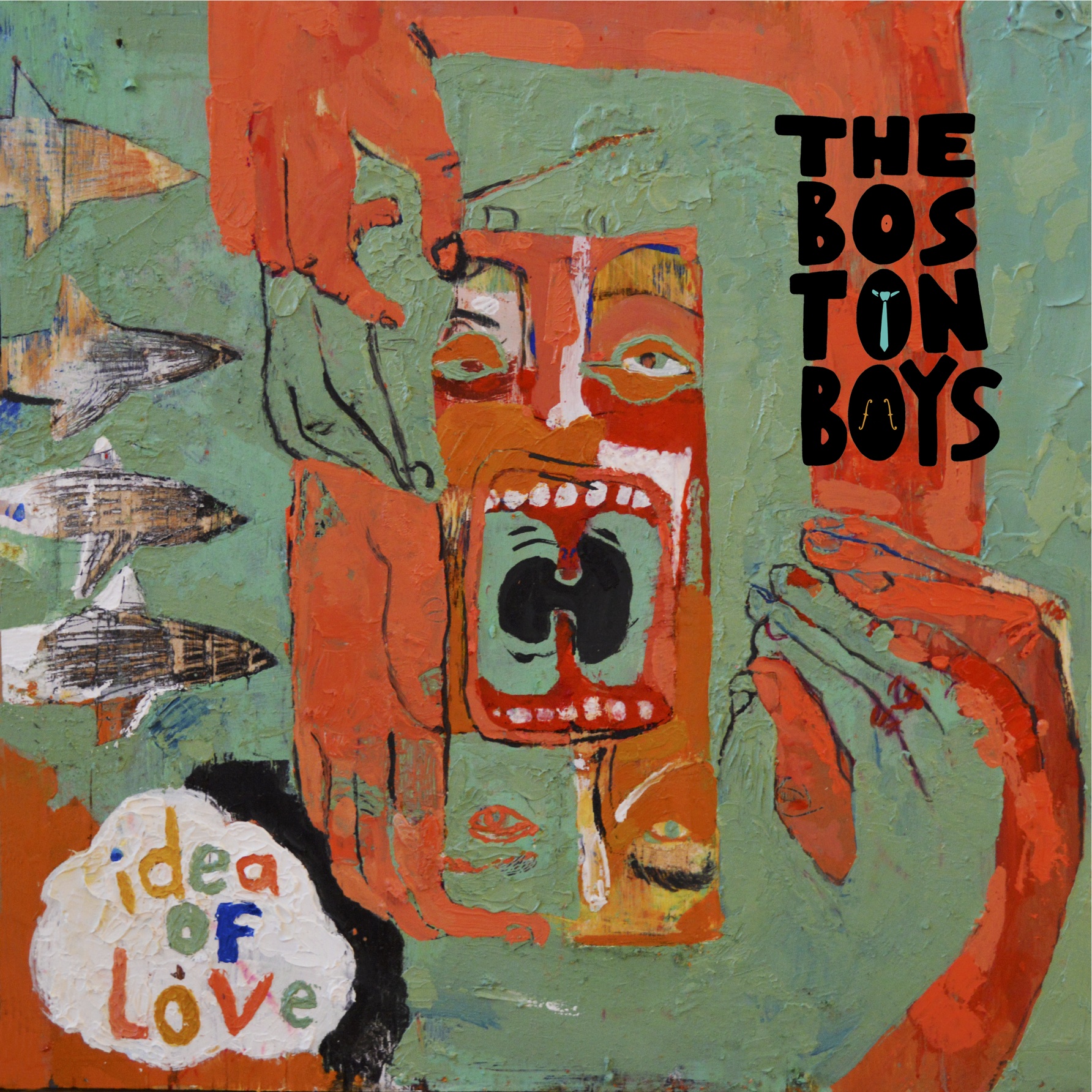
The Boston Boys – “Idea of Love”

Grade: B+

Key Tracks: “Between You and Me” “Become Like One”

The Boston Boys, a folk-heavy roots band now decidedly living in Brooklyn, have always relied on their diverse sound as their strongest quality. I wrote about “Keep You Satisfied,” their last EP, that the guys were able blend folk, rock, country and americana elements into a sound that’s both predictably shiny and refreshingly original. “Idea of Love,” their third EP, keeps this blend just as strong.

The opening song, the aptly titled “The Beginning,” sets the mood for the EP. The band doesn’t start with a bang, instead opening with a slow and string-heavy track that’s more psychedelic than it is folk. It’s the EP’s most interesting song and, although it ultimately doesn’t really resemble the five songs that follow it, it does set the tone the band is looking for – there’s going to be a lot of little surprises. From there they jump into “Between You and Me,” a much more traditional country-folk song. It’s rhythmic, has a medium tempo and some pleasant vocal harmonies. It’s more what you’d expect from a band like the Boston Boys; it sounds conventional, but it doesn’t fit under the monikers of ‘folk’ or ‘country,’ instead landing in their own little niche in between.

“Times Like These” is more stripped-down, largely just vocals and guitar, a decidedly folksy move. And as soon as the mood calms for it, the more fun and drum-heavy “Become Like One” starts. The transition between these two songs works well, as they show the band at their calmest and highest points, respectively. “Become Like One” really is a fun track, breaking out of folk to incorporate some standard rock elements (that stay true through the next song, as well). Final track “You Don’t Need Me” is a slow, folk-rock type ballad, a solemn way to end the EP.

As with “Keep You Satisfied,” the band’s diversity in the music makes for a fun listen. The lyrics might sometimes get drowned out because of it, but their constant mixing of genres can make for a unique listen, and helps each song on the EP separate itself from the others. The band has a distinctly American sound, like their music should be played on a front porch in a small town on a warm summer day. They take the best parts of American genres – folk, country, bluegrass and americana – add a little rock from time to time, and produce a sound that’s both wholly original and lovingly American. It’s surely no surprise that the Boston Boys are named after an American city, because their music serves to optimistically celebrate a whole range of American heritages.

The EP is officially released on Tuesday, May 20th.

-By Andrew McNally

Porch Cat – “Split” (w/JFKFC)

(Photo Credit: bandcamp)

Grade: A-

Key Track: “Be Okay”

Porch Cat, recording name of Chan Benicki, flows some current folk-punk icon influence into a unique, americana-based folk sound. On the new release, a split with JFKFC, Benicki and a rounded line-up of backing musicians make a beautiful blend of folk with hints of both elegance and existentialism. It has the charactericstics of folk – it’s all acoustic, a full sound, but one with a running and sometimes indescribable punk influence.

On the album’s first song, “Ballad for Winter,” Bernicki sings “Addicted to a substance / Delusion and distress / Addicted to the way / The heart beats in my chest.” The lyrics throughout the four songs are poetic and often vaguely distressful, dealing with physical and mental health, sleep, and making it through tough times. “Be Okay” ends with the repeated and reluctantly enthusiastic chant of “we’ll be okay,” before transitioning into “Living Art” and singing about trying not to sleep forever. “Belly Full of Fire” almost sounds like an Irish drinking song, with a drinking song vocal rhythm and a chorus about a whiskey-fueled belly of fire. It’s just as forcefully optimistic as “Be Okay,” a kind of optimism that doesn’t sound certain. The EP’s lyrics are hesitantly personal. They reflect what much of folk-punk has become – the sound of someone picking up a guitar and singing about what they know.

What doesn’t reflect that, though, is the music of the EP. Where folk-punk bands that emulate this nonchalant sound often have music that’s nothing more than a guitar attack, Benicki and the backing musicians add rhythms and a larger range of instruments. Besides vocals and guitar, Benicki is credited with accordion and – unexpected surprise – singing saw. Benicki is joined by Alex Fairweather on guitar, bass, drums, tambourine, mandolin, and vocals, Jordan Hamilton on banjo, bass and mouth harp, and Naomi Gibson on fiddle and vocals (along with some others on secret vocals, secret meows, and ‘tea making’). With a wide variety of instruments, they’re able to create more developed songs and a deeper sound than most folk groups. “Belly Full of Fire” gets further reinforcement as an Irish drinking song with use of a mandolin and fiddle. The band sounds the most full at the end of “Be Okay,” with group vocals, drums and a bunch of acoustic strumming. Porch Cat is a more musically folk group, a little refreshing to hear today.

So although it’s easy to compare Porch Cat to a more traditional folk-punk band, they really have a stronger indie-folk sound, masquerading as folk-punk. They have a more complete and balanced sound, one with rhythmic and vocal harmonies and a wider range of instruments. And Bernicki’s vocals are strong throughout, some sweet-sounding singer-songwriter vocals marked with the more defeated lyrics. The four songs here are a complete and successful package, emotional yet pleasant, with a full and unassuming folk background.

The four tracks are available for streaming and download as part of a split with JFKFC, a more directly folk-punk band that’s also quite worthy of your time. It can be found here.

-By Andrew McNally

Lily Allen – “Sheezus”

Grade: C+

Key Tracks: “URL Badman” “Hard Out Here”

Months before Lily Allen’s third album even came out, it had already created some controversy. Her music video for lead single “Hard Out Here” was criticized for it’s use of black dancers as props, failing to convey the song’s satire against the use of people of color in things like music videos. No one can really know for sure if Allen was sincerely aiming for satire or just going for controversy – and that’s always been her style. The brilliantly named “Sheezus,” at it’s best, pries on a lack of subtlety. It gets just as direct as Lily Allen’s first two albums, but it doesn’t always stick.

After the release of her second album, “It’s Not Me, It’s You” in 2009, Allen announced her unexpected retirement. On “Sheezus,” her comeback album, she directly addresses it twice, in two of the best songs – “Sheezus,” a boastful song about her comeback and the strength of female pop singers right now in general, and “Life For Me,” a surprisingly honest song about transitioning into a more normal life after having a child. Otherwise, it’s a lot like she was never gone. Feminism, sex, loneliness and awful men are all covered here. And like before, traditional pop songs are unpredictably peppered amongst fun ones. The mixing doesn’t work as well this time, with some transitions not really fitting and the balance tipping too far into the traditional side.

“Sheezus” suffers from this imbalance. The album’s bookends – “Sheezus” and “Hard Out Here” are big, calls to arms with witty lyrics and deep implications. But they feel like they don’t quite fit, the result being trying to start controversy just for the sake of controversy. Allen’s music has seen it’s share of controversy in the past, but it’s always had a point, and that point isn’t as defined on this album. Still, Allen’s wit and directness occasionally shine through. “L8 CMMR,” about her husband, is about exactly what you’d expect. And “URL Badman” takes on the worst kinds of internet men – “When I’m a big boy / I’m gonna write for Vice” and “I don’t like girls much / They condescend me / Unless of course / They wanna play with my willy.” Songs like these show that Allen hasn’t lost her touch at all.

The album has more pop-based music than before. Her first two albums benefited from various instruments, but it’s largely conventional here. “Take My Place” has a chilling electro-rhythm, and “As Long As I Got You” is centered around an accordion, a nice adjustment after a few serious songs. “Hard Out Here” also has some EDM beats, but it’s a little strange given that it’s the album’s last real song. “Sheezus” is otherwise a little close to a traditional pop album, musically, something Lily Allen usually tries to avoid.

So for a comeback album, “Sheezus” stands it’s ground. It’s inconsistent, sometimes too tame, sometimes too controversial, sometimes finding the right path. Lily Allen is doing Lily Allen as always, but “Sheezus” isn’t as strong or defined as her previous albums. It’ll satisfy fans, and it’s great to have Allen back. “Sheezus” is only passable, but when it comes down to it, it’s a lot better than having no new Lily Allen album at all.

For a better listen, go for a version that has a bonus track, a cover of Keane’s “Somewhere Only We Know.” She’s covered Keane before and both are beautiful renditions.

-By Andrew McNally

Jim Gaffigan – “Obsessed”

(Photo Credit: firewireblog.com)

Grade: B+

Key Bits: “Donuts” “Seafood” “Cancer”

For stand-up comedians, if a formula isn’t yet broken, don’t change it. Jim Gaffigan continues to prove himself as a comedian who has found a unique voice, and one that can continue to drive it even though it seems like it should’ve overstayed it’s welcome. On what’s technically his ninth stand-up album, although only his fifth that’s readily available (the first four are out of print), Gaffigan continues to visit the same three topics he’s covered in the past – food, religion, and his kids. He honestly offers nothing new on “Obsessed,” instead choosing to enforce the album’s perfect title. “Obsessed” actually aims to cover the exact same ground that the near-perfect “Beyond the Pale” did in 2006. 2009’s “King Baby” suffered from being almost too safe, and 2012’s excellent “Mr. Universe” added a cynical vein, spawned on largely by long bits about his children. But “Obsessed” takes the exact same routes as “Beyond the Pale,” showing that as long as there’s food and weddings, Gaffigan’s material has yet to get stale. Unlike fortune cookies.

Nine of the album’s nineteen tracks have titles relating to food, with food bits often incorporated into other bits (like “Weddings,” where Gaffigan dreams of dying young from too much ice cream so he doesn’t have to go to his daughter’s wedding). And as always, they’re some of the best bits. “Obsessed” was recorded in Boston (my home city!), which feels very intentional for the album. Two of the strongest bits are centered around local New England cuisine, “Seafood” and “Donuts.” Just mere mentions of seafood and donuts elicit a response from the Boston crowd. The “Donuts” bit is all pretty predictable, with Gaffigan saying that still life paintings are of fruit because artists wouldn’t resist donuts long enough. And he doesn’t like seafood, not one bit. “‘I love lobster.’ ‘Look, I get it, I love butter too.'” Elsewhere, he tackles buffalo wings, Chinese desserts, Kobe beef and fried bread, among many others. The format is exactly as it has been on his previous food bits, and it’s largely predictable, but it’s still effortlessly entertaining.

On his non-food based bits, Gaffigan continues on with pieces on his kids, of which there’s five now. The jokes don’t land in the individual kids, but on having five kids as a collective. Now, people tell him just to stop before he forms a country (“Gaffganistan”) He briefly touches on religion again, too, with jokes on God sending Jesus back down to tell people they aren’t supposed to be eating crabs, and how people whisper the word ‘cancer’ because the Devil might give it to us if we say it loudly. His bit on “Cancer” is one of the album’s strongest points, too. He addresses both the disease – “Cancer wouldn’t even see me as a challenge” – and learning it’s his zodiac sign. “I killed grandma!” One aspect of Gaffigan’s comedic voice that goes unnoticed is how he can deliver slightly taboo bits on religion and cancer by starting with 45 minutes of totally clean jokes about food. It allows Gaffigan to talk about cancer in a totally inoffensive way, and keeps “Obsessed” spotlessly clean.

Gaffigan has largely done away with the “audience voice” gimmick that dominated much of “Beyond the Pale.” And that’s good, because it worked great there but it gets a little old even by the end of the special. He doesn’t even do many voices here, although twice he does what’s along the lines of a Jersey tough guy, that works surprisingly well. He’s more straight forward here, like he was on “Mr. Universe.” “Obsessed” might be Gaffigan finally perfecting his form, balancing food-based humor with hints of cynicism. He’s able to follow his formula exactly without sounding repetitive and without any dull points, and it’s another long special. “Beyond the Pale” is probably always going to be a high mark in Gaffigan’s career, but “Obsessed” comes pretty close to matching it.

If you like this, try: Gaffigan is a rarity in today’s world: a clean comic. So an obvious go-to is Brian Regan, another clean comic. Christopher Titus might be related, too, with his earlier albums being almost entirely family-based.

-By Andrew McNally

Twin Berlin – “Sleazebrain”

(Photo Credit: http://www.rslblog.com)

Grade: B+

Key Tracks: “Rtbrfloat” “No Fun / Not 21”

Twin Berlin’s raw debut full-length comes catapulted out of a garage in the mid-’90’s. The Travis Barker-approved Connecticut trio channels underground indie-alt bands from the 90’s and blends them with a friendlier and more straightforward sound of today. The volume and the energy are high, as is the rhythm. The songs presented on “Sleazebrain” are probably going to get stuck in your head, guitar crunches and all.

The band, a trio consisting of Matt Lopez on vocals and guitar, Sean O’Neil on bass and James Janocha on drums, channel some storied predecessors. Their welcoming fuzz and guitar blasts do not sound out of place with the likes of Mudhoney and the Meat Puppets. The band is able to produce a batch of alt songs with strong, energetic punk influences and indie rhythms, all wrapped into a loud and warped sound that’s both raw and refined.

But although the band is able to recapture an image of the past, they add their own current flair, too. Where “Sleazebrain” differs from the likes of Dinosaur Jr., or some straighter 90’s revivalist bands of today, is catchier songwriting. Fuzzy guitar songs were radio-friendly in the 90’s, but Twin Berlin use more straightforward songwriting to make songs that aren’t aiming to reinvent the wheel, yet aren’t easy to forget. The band’s lyrics are more open and easy to relate to, and their adherence to conventional rock song structures allows for an album that seems to mix two different eras.

“Sleazebrain” isn’t a revolutionary album, and it isn’t trying to be. Instead, it establishes Twin Berlin as an honest and loud band, mixing punk, indie and garage fuzz with a ton of energy and ambition. The album is a punk album, masquerading behind some overly catchy rhythms. The guitar is roaring and rhythmic, the bass and drums adding ample energy. “Sleazebrain” sounds like it fell from the 90’s, but it has enough of a current flavor to survive today. The band’s best quality is their underground energy, and that’s readily apparent all throughout “Sleazebrain.”

-By Andrew McNally

Pixies – “Indie Cindy”


(Photo Credit: http://www.juno.co.uk)

Grade: D

Key Tracks: “Bagboy” “Magdalena 318”

Surviving Nirvana members Dave Grohl, Krist Novoselic and Pat Smear recently played at the Rock & Roll Hall of Fame induction with some rotating singers – Joan Jett, St. Vincent, Kim Gordon and, unpredictably, Lorde (and J. Mascis in an afterparty). It was only the third time they had performed together after Kurt Cobain’s death, the first two times being with Sir Paul McCartney. In that time, they only recorded one new song (with Sir Paul). The men have been very careful not to alter the band’s legacy in any way, and the only performances have honored both their own music and Cobain’s life.

Pixies, sadly, have gone the way of almost every other early 90′s band – Alice in Chains, Sublime, Smashing Pumpkins, Bush, Hole, Blind Melon – in reforming with a different lineup in a move that seems just shamelessly capitalistic. (Exceptions, of course – Soundgarden kept the same lineup, Pearl Jam and Radiohead are still going strong). Their first album in 23 years, “Indie Cindy” captures almost none of their perverse magic of the past. While it isn’t a horrendous album, it’s wildly, wildly inconsistent and is usually content being just a footnote to the band’s career rather than trying to expand on it.

There’s a lot to pick apart on the album. The most obvious, and most painful thing to note is that none of these 12 songs are necessarily new. Pixies released three EP’s, four songs each, from the end of last year to just last month. “Indie Cindy” is simply those 12 songs put together and reordered. At the tail end of an era where bands are reforming in the name of capitalism, this seems like the biggest moneygrab of them all.

For the most part, the music itself isn’t bad. It just isn’t Pixies. Pixies made a name for themselves (and influenced a whole decade of music that followed them) by creating wholly unpredictable music that was both melodic and noisy, with lyrics often about violence and mutilation. Yet there was a radio-friendly quality to the music that bridged the gap between radio alternative and underground bands. Here, most of the songs are closer to straight radio rock, ranging anywhere from decent to totally forgettable.

The album’s best songs are the ones were there are many things going on. “Bagboy” is a prime example – it’s partially spoken word, with heavy guitar rhythms and a few different percussion things going on. And “Magdalena 318,” which has a more industrial and grungier feel to it, easily the album’s best song. Too many of the songs are too straightforward, lacking energy and any real creativity. “Greens and Blues,” “Silver Snails” and “Snakes,” as just three examples, are three melodic and rounded alternative songs, but ones that are instantly forgettable. The good tracks on this album are diamonds in the rough, and there’s a lot of sifting to go through.

Besides the music, Black Francis’ vocals are inconsistent, too. There’s none of the screaming and unpredictability, but he hits some classic Pixies vocals – at points. On “Magdalena 318″ and “Blue Eyed Hexe,” his voice sounds just like it used to. Yet elsewhere his vocals are pretty average, contributing to the very average quality of the music. And on “Andro Queen,” his vocals are downright bad, with the song sounding like some cut track from a trippy 60′s band.

From the time that the Pixies first reunited to the time they actually put out “Indie Cindy,” two things happened – they lost Kim Deal, the equally creative force behind their earlier music (and have yet to find a permanent replacement), and they surpassed the amount of time in which they were a band in their first run. That should be indicative of the album – the time it took to put out one album in 2014 is longer than the time it took them to put out four studio albums and an EP in the early 90′s. “Indie Cindy” is passable as an alternative album, but it never has any idea what it wants to be. Occasionally, the band tries to grasp at their amazing legacy. But usually, they’re comfortable with sorely unremarkable alternative/”butt-rock” songs, and there’s simply no reason for this album to exist. It takes their legacy down a notch; adds an asterisk onto the ends of some legendary albums. “Indie Cindy,” to put it honestly, will please the local alternative radio DJ’s, but not the station’s listeners.

If you like this, try: I don’t exactly know what to recommend here, but if you’re into this album then you’re probably really into 90’s music rebirthed so I’d recommend Soundgarden’s surprisingly passable 2012 album “King Animal” or Smashing Pumpkins’ great 2007 album “Zeitgeist.”

-By Andrew McNally

Andrew Jackson Jihad – “Christmas Island”

Grad: B+

Key Tracks: “Temple Grandin” “Children of God”

When you think Andrew Jackson Jihad, “cryptic” isn’t quite the word that comes to mind. Their lyrics are puzzling, but far too direct to be “cryptic.” This is the band that once posed, “When a pregnant woman gets decapitated, does the baby survive?” But on their new full-length, “Christmas Island,” the band is a little more thought-provoking. They expand on folk-punk, embracing a bigger sound and lyrics that are even more unconventional. “Christmas Island” isn’t AJJ’s best album, but it takes the better parts of their two best albums and finally combines them into one.

Andrew Jackson Jihad’s best albums are probably their ’07 debut, “People Who Can Eat People Are the Luckiest People in the World,” and 2011’s “Knife Man.” The two albums really aren’t that similar, but “Christmas Island” aims to bridge the gap. It largely succeeds, as they expand their acoustic sound without getting too self-indulgent in electric rhythms. A vast majority of “Christmas Island” is acoustic, aimed less at energy than it is at poetry. Although the band is still aimed at devastating, almost demented poetry, they turn their focus back towards stripped down elements.

“Christmas Island” benefits from having flow, something that has hindered AJJ’s past albums. While their past albums have been wholly stellar, they often lacked any sort of narrative flow, often opting instead for shocking and abrasive lyrics. “Christmas Island” lets some some songs take a backseat for others, knowing which pack the biggest emotional punches. Opener “Temple Grandin” is a fight against autism, channeling the autism research hero. “Best Friend” is steeply poetic and existential, while “Angel of Death” is just as randomly self-deprecating as their earlier music.

Folk-punk is a genre that doesn’t ask much from a musical standpoint, but Andrew Jackson Jihad focus a little more on an expanded sound on this album. There are more instruments, often including piano and strings into the songs. And the songs are a little more rounded, instead of just the guitar attacks of the past. And there’s more slower songs, helping the album feel a little more complete. “Christmas Island” shows hints at maturity. There’s more diversity in the music, and more depth in the lyrics. They’ve always been a weird and unsettling band, but the lyrics on “Christmas Island” are so staunchly self-indulgent that Noisey had the band explain them. The album is peppered with lines like “eyes as red as a dog’s asshole when you see it shitting” (“Children of God”) and “I am the Kool-Aid on the mouth of a kid whose name is most likely Cody” (“Angel of Death”), which also mentions the Slap-Chop and their own Salad Glove. This is definitely AJJ’s most puzzling album yet, even if it ‘feels’ a little more mature.

So “Christmas Island” is both a step forward and a step back. They’ve re-embraced acoustic music – the only electric song is “Kokopelli Face Tattoo,” right in the album’s middle – while broadening it into a fuller sound. And they’ve deepened their lyrics, so they aren’t as aggressively violent and perverse, while still keeping them demented and inquisitive. “Christmas Island” suffers from a few too many cooled down songs (they are a punk band, after all), but it’s the right step forward for a band whose formula was growing a little tired. I’ve written about seeing AJJ before, and although “Christmas Island” doesn’t quite stand up to their best works, it’s easy to give it the benefit of the doubt. It’s one that will leave you just as puzzled and frightened as anything they’ve done before.

If you like this, try: the only band I can ever recommend in the same breath as AJJ, check out Defiance, Ohio’s 2006 album “The Great Depression.” The band’s best album perfectly balances screaming and singing over hyper-folk-punk, acoustic music.

-By Andrew McNally