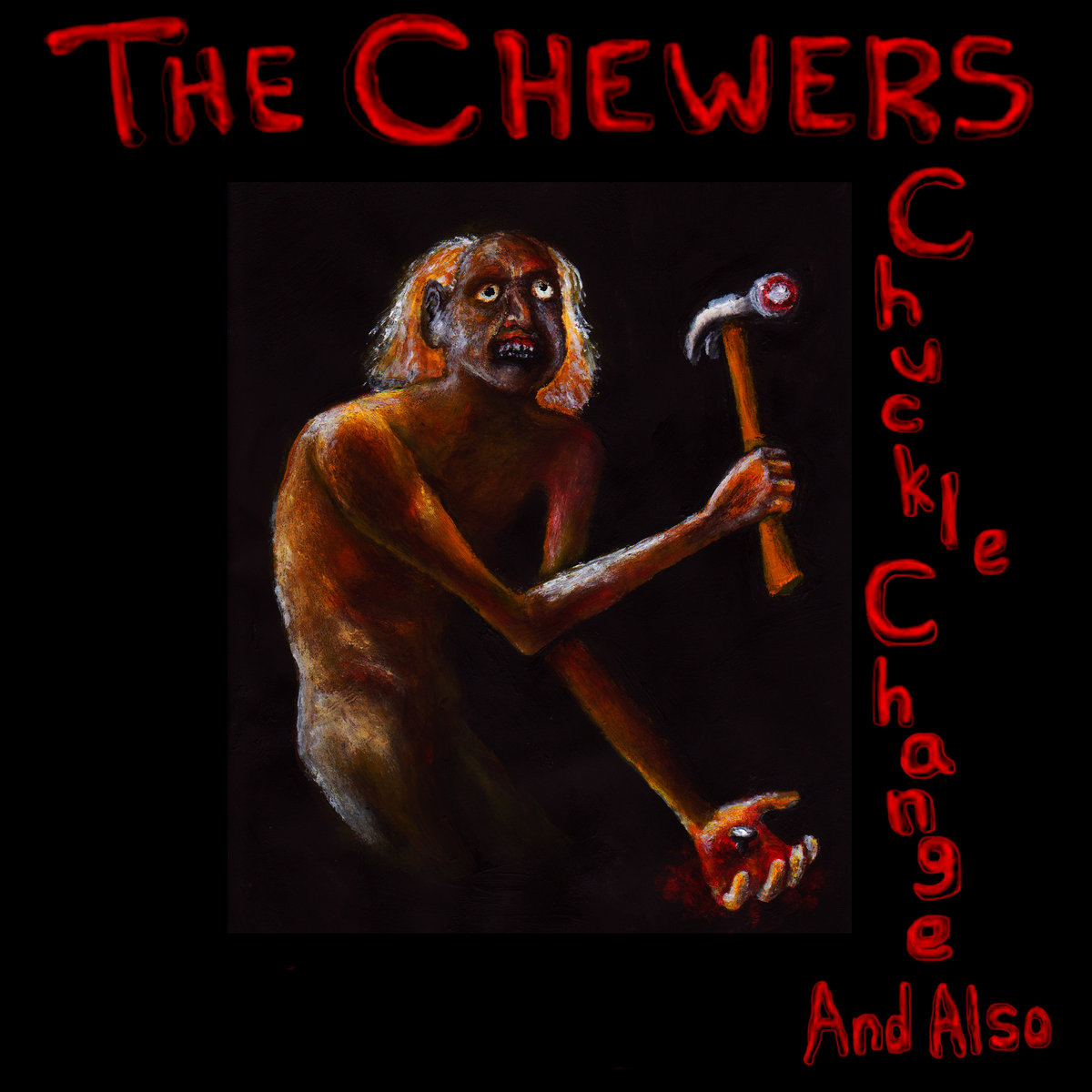
Daniel hales, and the frost heaves. – “Contrariwise: Songs from Lewis Carroll’s Alice’s Adventures In Wonderland & Through the Looking​-​Glass”

(Photo Credit: bandcamp)

Grade: A-

Key Tracks: “Jabberwocky” “Contrariwise”

“Contrariwise” is, in a very loose term, a companion piece. The album was first performed (in my home state of Massachusetts) during a production of “Alice In Wonderland,” and was later released as an album. All but two of the seventeen tracks on the album are musical versions of Lewis Carroll’s poems found within the Alice works. The other two songs, “Contrariwise” and “(Push Them Into the) Wishing Well” were written by Daniel Hales, and co-exist in Carroll’s world. This album certainly isn’t for a commercial audience – it’s an ambitious and dense work that seeks to add more musicality to Carroll’s writing, and it’s largely successful.

Given that Carroll’s poems are often totally fantastical and even, at least in the case of “Jabberwocky,” total gibberish, you can’t exactly place this album under any one genre of music. At times it’s experimental, other times folksy, other times indie. The album’s one long song, “The White Knight’s Song,” feels like a 60’s folk song where the focus was on storytelling. “Beautiful Soup” is almost a ballad, while “Father William” brings guitars into a noisy ending, and “‘Tis the Voice of the Lobster” is almost a little psychedelic. Carroll’s words are usually reflected through the variety of music, although some songs are more straightforward. “Jabberwocky,” for one, leads off the album with a surprisingly straightforward indie ditty, but it is still one of the best songs on the album.

The band, in this iteration, consists of Hales on vocals, guitar, banjo, harmonica and ukelele, James Lowe on bass, Ivan Ussach on drums and Anna Wetherby on viola. Daniel Kasnitz sings back-up vocals, and also credited are “the Looking Glass Creatures,” which happens to include Jeff Steblea. The band is swift throughout the album, often effortlessly switching between genres. The album, in many ways, feels similar to Steblea’s recent Mystics Anonymous, often blending straightforward indie/folk songs with more experimental works.

The band does a standout job at bringing Carroll’s words to life, and a great job expanding beyond their usual indie-folk sound into something more unpredictable. “Contrariwise” is a fun and ambitious album, if you’re looking for something like it. It won’t be something for everyone, but Carroll fans should take notice.

The physical and digital album and tracks are available here, and live videos, dates, merch and more are available here.

If you like this, try: As mentioned, the album loosely resembles the Mystics Anonymous album I recently reviewed, even having Steblea involved.

-By Andrew McNally

Foster the People – “Supermodel”

(Photo Credit: fosterthepeople.com)

Grade: C-

Key Tracks: “Coming of Age” “A Beginner’s Guide to Destroying the Moon”

It must be tough to follow up on instant success. Pop rock group Foster the People’s first album, “Torches,” had the inescapable singles “Pumped Up Kicks” and “Helena Beat.” Sophomore albums are usually difficult anyways, even without following worldwide hits. “Supermodel” tries hard to deepen the band’s sound, but it ends up being a mess of empty songs that aren’t nearly as dark as they want to be.

Foster the People, led by chief songwriter Mark Foster, wanted “Supermodel” to be a concept album about the ugliness of consumerism and capitalism – relatively dark themes for a catchy alt-pop band. And that may end up being part of the problem. Take the songs purely on a musical standpoint, and all but one of them are catchy pop tunes (odd man out being “Goats In Trees,” a spoken-word-over-acoustic-guitar song). It’s simply tough to imagine any sort of believability when a band that plays commercially friendly and high-grossing music is singing about the horrors of commercialism.

The album’s other problem is tripping out of the starting gate. The first three songs – “Are You What You Want to Be?” “Ask Yourself” and leadoff single and admittedly great “Coming of Age” all tackle the exact same vague subject of self-discovery. There’s a thin line between having a consistent narrative arc and just repeating yourself, and they fall in the latter. Had the songs been split up or diversified, the whole album might be stronger – it just lacks any momentum to start.

Musically, the album is also a little lackluster. They traded in the unique synth rhythms of their two big hits for a more straightforward guitar approach. It was an attempt to sound a little heavier – but it’s quite the opposite. It’s lighter than before, especially the acoustic songs. Only the memorable “A Beginner’s Guide to Destroying the Moon” kicks the volume up at all (and is then followed by the aforementioned acoustic “Goats in Trees”). Using all-too-familiar guitar rhythms does nothing to separate Foster the People from their counterparts. Think of them like an alt version of Katy Perry – one of the biggest names in their genre, but one of the most unoriginal. Sophomore albums are notoriously difficult, and Foster the People have fallen victim. “Supermodel” will please most fans of the band, but other listeners will likely be turned off by the album’s repetition, boring music and lack of pairing between music and lyrics.

If you like this, try: fellow alt-pop group Fitz and the Tantrum’s great sophomore album from last summer, “More Than Just a Dream.” They didn’t change anything, just focused on a consistent and catchy album that isn’t too repetitive.

-By Andrew McNally

Nepotism – “Black Sheep”

(Photo Credit: bandcamp)

Grade: A-

Key Track: “New American Drugs”

Nepotism are a very eclectic group from South Carolina, taking the best parts out of 90’s punk, modern rock, metal and more, to make a distinct alt-metal sound. The five track EP jumps all around, making sure each song is unique, nearly all of which are successful. What makes Nepotism immediately attractive is the catchy quality of their music. While a lot of louder guitar-based alternative bands aim for discord and noise, Nepotism look for harmonies and memorable rhythms within volume.

The album’s stand out is “New American Drugs,” the most punk-influenced of the five songs. The song has a speedy and relentless central guitar rhythm, that’s equal parts funky, catchy and angry. It wouldn’t sound out of place on your favorite 90’s throwback radio station, but that doesn’t mean it sounds old. Closer “Nobody Knows” is another great track, in the same vein. It’s ferocious and non-stop, but still comfortably accessible. The song is nuzzled in rock radio – fit for radio, but not fit for all of radio’s audience.

“In Disguise” might be the only weak song on the EP. It is the EP’s slow song (hesitate to call it a ‘ballad’) and although it’s a completely successful song in it’s own right, it sounds a little too close to 311’s “Amber,” in many ways. It also suffers from being placed too early on the EP. As the second song, it kills the momentum brought up from strong opener “Let It Out.” All that said, those criticisms are easy to ignore, and I found myself humming on the second listen.

Nepotism are like many alt-rock bands today, taking their inspirations from eclectic groups and genres. This EP shows hints of Incubus, Tool, the Stone Roses and many 90’s alt-rock bands. While those bands all created molds and became victims of their own product, bands like Nepotism are using the molds made by everyone from 311 to Green River and turning them on their heads. “Black Sheep” is five songs that are definitely recorded by the same band, but really don’t sound alike. And that makes for a pretty unique release.

The album can be streamed and downloaded here.

If you like this, try: Pissed Jeans’ “Honeys.” Not really all that related, but there were certain moments where I was reminded of the post-rock band’s excellent (and equally diverse) new LP.

-By Andrew McNally

Mystics Anonymous – “Dreaming For Hours”

(Photo Credit: bandcamp)

Grade: A-

Key Tracks: “Made of the Time” “Vanishing Phase”

Mystics Anonymous, aka singer-songwriter Jeff Steblea, approaches music “where nothing is off-limits.” Indeed, nothing is more limitless than dreams. “Dreaming For Hours,” his first project under this moniker in a decade, is a transient mix of indie rock and dreamy, electro influences, finding a healthy balance. “Dreaming For Hours” sounds like a 90’s product – but one that we would have then said was ‘ahead of it’s time.’ It’s experimental, but very accessible, carving itself a home in between conventional indie and experimental dream-pop.

There are points on the album where Steblea’s music does become just standard singer-songwriter type music. One of the standouts, “Made of the Time,” is essentially a straight rock song. There’s plenty of tracks on the album like this, and a majority of them are strong. Steblea, and his backing band, are not afraid to sound familiar – there are alt-rock songs with big choruses and folk-minded acoustic tracks. But there are outside elements. The first track, “Sinner’s Lament” starts with a 90’s house-like rhythm, and there are “dream” interludes throughout the album, some sounding like video games, some like nightmares. Some songs, like “False Voices” and “The Fifth Business,” blur the two into original, dream-like songs that intersperse the straighter alt songs.

Steblea’s vocals are not the most powerful, but they seem to dominate most of the songs. The straight tones balance the dreaming quality of some of the music, and it helps to establish a 90’s-type alt-sound. Likewise, the backing band sound effortlessly talented, but they often reserve themselves to simpler music. “Dreaming For Hours” acts almost as an exercise for musicians – advertising the fact that talented musicians can create rock songs that are just as good as complex, electro ones (and there’s plenty of both). (It’s also worth noting that the band includes Daniel Hales).

“Dreaming For Hours” certainly resembles a dream. Some ideas are over in a minute, many stretch over six. There’s something very unexpected about the album, hidden amongst more familiar themes, just like a dream. The album’s only real fault is it’s length – a little too much of a good thing. It’s problematic, because there are few songs that overstay their welcome, and the album is cohesive as a whole. But five of the album’s fourteen songs are over five minutes, and it makes for a lengthy listen. For a musician, that’s about the best problem to have. “Dreaming For Hours” is an achievement; an original yet familiar piece, centered around the great songwriting of Jeff Steblea.

The album can be streamed and purchased on the Mystics Anonymous bandcamp page. It is also available on Amazon, iTunes, Spotify, and most major sources.

-By Andrew McNally

No Man’s Valley – “…And Four Other Songs”

Grade: B+

Key Track: “Happy?”

It’s tempting to call No Man’s Valley a throwback band for today’s music. The Dutch group has the constructs of a typical rock band – vocals, guitars, bass, drums and keyboard. But the band prides themselves on incorporating 60s’ style rhythms and moods into their songs, and there’s elements from many different eras. The songs have a garage rock energy to them, and there is a frequent use of soundclips. When the whole package comes together, it becomes a band taking many different influences to become their own unique sound.

No Man’s Valley hails from the Netherlands, but their feelings are universal. The band sings of common themes like work, not fitting in, and, on the opener and best song “Happy?,” societal pressures to seem happy. “Happy?,” serving as a single of types, is the most 60’s-inspired song on the EP. The guitar-and-synth at the song’s beginning sounds like something the Zombies would have jammed on, if they sang about struggling to be happy instead of an actual happy song. it has a slow-burning energy and has a classic feel to it. “Sleeping on the Job” is a much more ‘recent’ era song – another slow-burner, but one that angrily takes on the tediousness of working (specifically, at an ad agency). Again, the song’s guitar/synth combination is a winner, this time taking on a 70’s feel.

“Moon” is definitely the most experimental song on the release, to the point where it almost doesn’t fit. But it’s a great song. The nearly five-minute song is slower, and has a hefty instrumental midsection played over soundclips, before erupting into a big, synth-heavy climax. Lyrically, the song tackles a feeling of loneliness, with the frequently repeated “The moon is a good listener” speaking volumes. The follow-up, “Black Sheep,” the quickest, shortest and most energetic track. It might be the least interesting one, but it does capture the band’s 60’s inspirations pretty dead-on. Finally, “We Have Lost the Way” serves as a fitting finale. The midtempo song strips away the vocals for a majority (save a soundclip, again tackling the ad agency), for a rousing sendoff, before bringing them back in and ever so slowly fading out.

Listeners could strike many comparisons to No Man’s Valley. One of the most immediate would be Nick Cave. Cave’s music is eclectic, but with a strong personal identity. “…And Four Other Songs” has a consistent tone and energy, combining many styles while staying original. The vocals might be compared to the vocals of Scott Walker – deep, and almost crooning at times. It doesn’t always work on this EP, but it often reinforces the dark and introspective lyrics. No Man’s Valley find originality in established influences, and “…And Four Other Songs” only goes to show that.

“Happy?” is streaming on their bandcamp page, and the EP will be available for free on March 23rd.

-By Andrew McNally

St. Vincent – “St. Vincent”

Grade: A

Key Tracks: “Birth In Reverse” “Prince Johnny”

St. Vincent’s previous album, the 2012 duet with David Byrne “Love This Giant,” got a little more of a mixed reaction than her previous three albums. But I haven’t stopped listening to the record – I know the whole album by heart. On the album, Byrne takes St. Vincent, moniker for the multi-talented Annie Clark, and brings her out of her comfort zone. Her previous albums were already wholly separate from anything else happening in alternative, but with Byrne’s introduction of horns and a bigger accompaniment, he brought her out of her timidity and almost forced her to take bigger and more fearless risks. Pictured above is Annie Clark, once slightly awkward in old Youtube clips, now purple-haired, staring down at us. “St. Vincent” is bolder and more fulfilling than any of her previous albums – and that’s not exactly a small statement.

Before I get to into the album, I should say, as I have said when necessary, that I am a huge huge St. Vincent fan. I learned “Birth in Reverse” by heart within 24 hours of it’s release. This year and last, I’ve spent Feb. 14th celebrating St. Vincentines Day, an excuse to get away from any standards usually set towards that date. And as I write this, I sit anxiously knowing I’ll be seeing her in ten days. If you’re reading this in Boston, look for me at the show, screaming, singing and just generally embarrassing myself.

So, “St. Vincent” is a step in a new direction. It’s bolder, and although it technically isn’t all that different from her other works, it has a more boundless feeling to it. Without really changing her sound, she has managed to still take herself in a new direction. That’s no more apparent than on the album’s best song, “Birth In Reverse.” The rough, almost factory-machine opening is a staunch stance against most other reserved indie singers. The song’s opening lyrics: “Oh what an ordinary day / Take out the garbage, masturbate” don’t exactly hurt that stance. St. Vincent has never been one to shy away from topics that might be taboo or a little warped, but on “St. Vincent,” she sounds more confident than she ever has. And with songs like “I Prefer Your Love,” with a chorus centered around “I prefer your love / To Jesus,” confidence is a needed trait.

As a fan of every one of St. Vincent’s albums, I have felt that the latter halves often don’t hold up to the former halves – whether because they’re a little too slow, or the mix of synth and guitar does not hold up as well. But “St. Vincent” is just solid throughout. The album’s first half is definitely better – all three of the pre-released songs are in the first five – but there are few forgettable moments. As always, she combines a heavy amount of synthesizers with her underrated guitar work. It works well across the album, but might work the best on the penultimate “Every Tear Disappears.” Only the guitar-heavy “Regret” and the midtempo closer “Severed Crossed Fingers” lag behind the rest of the tracks, not quite as original or memorable.

Although a strong singer in her own right, St. Vincent’s songs usually focus more on the music and lyrics. But there’s one song on this album, “Prince Johnny,” that’s worth mentioning for the vocals. The song builds to a long climax that’s beautifully sung, and drenched in an encompassing vocal echo that’s almost bone-chilling. It’s refreshing, in a way, to hear Clark finally devote a song more towards her vocals. Clark’s voice has never sounded even close to subpar – but a song like “Prince Johnny” has been needed for a while.

This album’s eponymous naming was kind of a happy accident, but it’s very fitting. This album is what St. Vincent does best – synthy, guitar-heavy indie-pop; equally weird and beautiful, in the best ways of both. And it’s self-titled, because it’s her best album yet. Each song is unique. Some simple, some complex, all great. I know it’s only February, but I’d wager that this will go down as one of the best alternative albums of 2014.

If you like this, try: The National’s “Trouble Will Find Me.” Maybe it came to mind because Clark herself provides back-up vocals on the album’s/band’s/2013’s best song, “Sea of Love.” But the album is related in that it’s similar to everything they have done prior, but just even better.

-By Andrew McNally

Modern Baseball – “You’re Gonna Miss It All”

(Photo Credit: bandcamp)

Grade: A-

Key Tracks: “Fine, Great” “Your Graduation”

Coming in at 12 tracks over only 30 minutes, Modern Baseball’s new LP might seem like a no frills, no punches blast of energy. But it really isn’t – the band takes their time on their new album. Their previous LP, “Sports,” was already one of the better albums of the whole 4th wave emo/pop-punk movement going on right now, but “You’re Gonna Miss It All” goes far beyond it. This album has a lot of depth and clarity, cementing itself directly in between emo and pop-punk, taking the best parts of both.

The album’s opener, “Fine, Great” starts acoustic. And although it builds into an electric chorus, it states the album’s tone – emotion over energy. Sure, later tracks like “Broken Cash Machine” and “Charlie Black” up the volume and energy, but only as the band sees fit. The band switches from big choruses to slower, acoustic rhythms at the drop of a hat, but does it seamlessly. The almost contradictory natures of the songs adds a complete, succinctness to the album. Where many bands in this movement have stuck to their sound (and done it well!), Modern Baseball have gone beyond themselves and expanded into foreign territories.

“Tryin’ hard / Not to look like I’m tryin’ that hard / Failing miserably at everything including that” opens the song “Two Good Things.” There’s a lot to be said about the vocals and lyrics on the album. The lyrics on the album are appropriately honest – as poetic as the Front Bottoms, and less hazy. The band seems to have the nailed the whole ‘realistic devastation’ that is common among emo bands today. And the vocals – refreshingly – are very clear, thanks to some clean production. While bands like Dads and TWIABPAIANLATD have even more devastating lyrics, they’re often lost in the more guttural vocals.

The album encompasses both pop-punk and emo at it’s finest. It’s simple but devastating, and sounds made by some average people just sitting around, encompassed by unexplainable (or totally explainable) emotions. Personally, I have been heavily into the 4th wave emo thing happening, and while I’ve been fond of Modern Baseball, I hadn’t loved them like I do Dads, the Menzingers, or Snowing. This album will definitely change that. Let “You’re Gonna Miss It All” become a forefront in the genre. The album can build you up and knock you down in exactly 30 minutes, and it’s both diverse and coherent. The album’s only real fault is that so many of the songs end so soon – there’s only one song over three minutes. And “I want more” isn’t so much a fault of the band as it is the listener. Modern Baseball have moved themselves into the forefront of a very packed genre.

If you like this, try: You Blew It!’s new record, “Keep Doing What You’re Doing,” almost as good as this one.

-By Andrew McNally

together PANGEA – “Badillac”

(Photo Credit: stereogum)

Grade: B+

Key Tracks: “Offer” “Depress”

together PANGEA’s previous full-length, “Living Dummy,” released when the band was still known simply as PANGEA, is an album I’ve listened to more times than I can count. It’s cohesive, fun, loud, silly and has low-key production – everything you want from a garage rock album. And every song is unique enough to make a perfect listen. On “Badillac,” the band – with a new name and on a new label – aim to diversify their music, while keeping a cohesiveness. “Badillac” isn’t as good as “Living Dummy,” but it still hits that goal.

The first song on “Badillac,” called “Alive,” sounds ripped out of rock radio instead of a California garage. It’s almost a mission statement – that the band is branching out and expanding their sound. The production is upped, although the vocals are still beautifully unintelligible sometimes. The songs are, at times, louder than ever before, or softer. More acoustic elements are incorporated, as is straight rock songwriting. The band explores their own sound, ending with a collection of songs that are more diverse, while still cohesive. The songs on “Badillac” don’t feel as related as they did on “Living Dummy,” but they don’t try to. The band set out to make more well-rounded songs, and they’ve done just that.

From a lyrical standpoint, “Badillac” is not as strong as “Living Dummy.” I’ll never forget the latter half of the first verse of “Make Me Feel Weeeird”: “Let’s talk about you now / What kind of guy is he? / You say he hates fags / Well I think he’d like me / Get bent / Get bent.” I’ve always loved the bluntness of the verse, but the lyrics are vaguer this time around. Simpler song titles – “Why,” “Alive,” “River,” “Offer” – symbolize this. The songs on “Badillac” are not as instantly memorable as before because of it. Not entirely, of course. “Badillac,” “Offer” and “Cat Man” still grab pretty quickly. But the album’s one major disappointment is the move towards more conventional lyrics.

Still, “Badillac” is a great release and will hopefully propel the band onto a bigger stage. It’s fun and it’s easy to revisit many times – all of their music is. together PANGEA are making their own thing out of garage rock, going beyond all limitations without losing the spirit. They’ve made a new identity and sound, while still resembling the old PANGEA. Hopefully they’ll keep the trend up – this could be their year.

-By Andrew McNally

Against Me! – “Transgender Dysphoria Blues”

(Photo Credit: consequenceofsound)

Grade: A-

Key Tracks: “Transgender Dysphoria Blues” “Drinking With the Jocks”

In a small number of scattered homes throughout America, there are sexist Nazi punks who have to wake up every morning and draw over their Against Me! tattoos with sharpies. There is a truly despicable branch of people known as Nazi punks, who love any political punk band and can wrongfully relate the band’s liberal politics to their own hateful ones. Nazi punks have been taken on before – notably here and here – but “Transgender Dysphoria Blues” is an indirect strike. Against Me!s first five albums were sharply political and tackled political issues more directly than almost any other band. But this is their first album since singer Tom Gabel came out as transgender and announced she would be living as Laura Jane Grace. And as one of the first successful transgender singers, and certainly the most famous one in the punk community – this becomes an incredibly important album.

Grace’s transition is addressed in the majority of the album’s songs. The two opening tracks, “Transgender Dysphoria Blues” and “True Trans Soul Rebel” are the most direct. “You want them to see you like they every other girl / They just see a faggot” she sings on the title track. The album perfectly balances the line between heart and anger; each song is a lesson, an attempt to teach shitheads that don’t understand the transgender life. It borders on a shock lesson – “I want to piss on the walls of your house / I want to cut those brass rings off your fat fucking fingers” she sings on the closer, “Black Me Out.” “Drinking With the Jocks” is a pounding track about recognizing differences, and “Unconditional Love” is a brutal, self-deprecating song about loving someone with identification issues. Tracks 5 and 6 are likely to go down as two of the best titles of the year – “Osama Bin Laden as the Crucified Christ” and “FUCKMYLIFE666.” It’s shocking, even for them, but it’s necessary.

Unfortunately, some of the songs don’t hold up simply on a musical standpoint. While all good on their own, some of them blend together a little too much. The album’s middle sags under songs that have the energy of classic Against Me!, but don’t have the unique songwriting. This might be reflective of a band that has kind of fallen apart. Since “White Crosses” in 2010, two members of the band quit. Famous punk drummer Atom Willard was brought on for percussion work, and Grace just handled bass herself (except NoFX’s Fat Mike, who shows up on two tracks). Still, Gabel’s voice was always very strong, and that hasn’t changed through the transition. Grace’s vocals are strong and have a wide range.

When “White Crosses” came out, it was preceded by an exceptionally boring single, “I Was A Teenage Anarchist.” It felt like a coda; the statement of maturity felt like the band giving up. But they’re recharged on “Transgender.” They have a renewed energy and a new MO. They’re hitting territories never hit by a punk band before. This might not go down in history like the band wants it to, simply because it doesn’t have their most memorable songs, but it should still serve as an incredibly important work and stamps an intense start to 2014. Grace is nothing less than a hero, and “Transgender Dysphoria Blues” acts as a proud, invasive, angry, heartful and necessary mess.

-By Andrew McNally

Stephen Malkmus & the Jicks – “Wig Out at Jagbags”

(Photo Credit: Pitchfork)

Grade: B

Key Tracks: “Lariat” “Surreal Teenagers”

At 47, Stephen Malkmus is very much an adult. He has had nothing to prove for many years, but that doesn’t mean he can’t still play music. His last few releases have served little purpose other than establishing Malkmus as the reluctant adult he is. And that’s where “Wig Out at Jagbags” stands – it’s youthful, but definitely adult. Malkmus seems like a ‘cool dad’ that will take his kids to shows and steal the neighbors wifi. His most well-known project, Pavement, served as an antidote to to those turned off by Nirvana and Sonic Youth in the early 90′s – deceivingly catchier, while still grungy and ear-aching. But now, Malkmus is comfortable making fun and diverse alternative that’s never great, but is always an easy listen.

“Wig Out of Jigbags” has a little of everything, like a less stoned Kurt Vile. “Lariat” has keyboards. “Houston Hades” heavily features a trombone. “Rumble at the Rainbo” is a punk blast and “Surreal Teenagers” has volume shifts akin to the Pavement years. The album feels like a mission statement – Malkmus is committed to having fun in the studio. The music doesn’t have much to it, and it doesn’t have to. These are songs Malkmus wants to record, and damn if he isn’t going to.

Lyrically, too, the album reflects Malkmus’s life. Some songs, specifically “Cinnamon and Lesbians,” are steeped in poetry, but some are simply referential. “Lariat” frequently mentions listening to music from the greatest decade, without ever saying what it is, and namedrops Tennyson and the Grateful Dead in the same line. The album has plenty of songs about age – reminiscent odes to growing up, and songs about accepting it when it happens. It’s a playful record, one that accepts adulthood with the stipulation of continuing to look at life through the eyes of an inspired teen. Malkmus is only aging physically, and it’s evident in his consistent releases. “Wig Out at Jagbags” won’t gain many new fans, but the payoff is Malkmus knowing his audience.

If you like this, try: Lee Ranaldo & the Dust’s “Last Night on Earth” – Another fun and eclectic album recorded by an alt god stripped of his band.