M.I.A. – “Matangi”

(Photo Credit: 514blog.com)

Grade: C

Key Tracks: “Bad Girls,” “Bring the Noize”

There’s a line between controversial art for the sake of making statements and helping causes, and controversial art just for the sake of controversy. There’s a reason we follow Banksy’s every move, and there’s a reason why we left Marilyn Manson by the wayside many years ago. This is a line M.I.A. has been straddling for years, landing on both sides. And that’s just what this album does – it falls on both sides. Some tracks are musically abrasive and/or lyrically riotous. Others fall into the “we really need to do something” type of (l)ac(k)tivism. It’s a mess, and the amount of what works to what doesn’t is probably even.

The first real song on the album (after an intro), the title track, starts with a long segment of M.I.A. just naming countries of the world. There doesn’t even seem to be any point – Canada gets included. Canada doesn’t really have any of the problems M.I.A. is usually rapping about. Many of the tracks feel less resilient, they’re not calls to action but just recognition of the world’s problems. So they seem prodding and controversial, but they have nowhere to go. Also, given some unexpected problems I’ll get to, some of her references are just outdated. “Y.A.L.A” is the biggest example – one of the better songs, a direct response to Drake’s “YOLO” phenomenon, but it’s a phenomenon that’s already dead and has already been spoofed (by the Lonely Island).

Musically, the album is ambitious, maybe even to a fault. Beats drop away, volumes and tempos fluctuate wildly. It’s abrasive, and although it suffers from too many ideas, the ideas she had on paper were definitely successful. The album’s early tracks, and “Y.A.L.A” and “Bring the Noize,” even lack rhythms at times, jumping wildly from idea to idea. And with M.I.A. rapping over all of it, it’s a glorified mess, one that’s a lot more practiced and perfected than it sounds. “Matangi” doesn’t hold the tone, though, there’s a lot of more relative conventional songs that kill any kind of flow the album has. The last few songs sputter to a mediocre finish. Two duets with The Weeknd are wasted on boring songs (the first of which, as I was also wrapped up in an article on “Better Call Saul,” I forgot I was listening to). The better songs musically are able to grab current EDM and dance trends and turn them over into very original, often loud tracks. It’s inconsistent and sometimes boring, but the tracks that work musically are quite a marvel.

The faults of the record aren’t necessarily M.I.A.’s fault – she started recording the album in 2010. It was originally supposed to be released last December, before Interscope shelved it for being too upbeat (can you imagine?). So the album’s frustrating delays don’t help the quality (and it’s something to keep in mind when listening). Also, in a moment that falls way, way on the wrong side of the controversy for a cause vs. controversy for controversy debate is M.I.A. working with Wikileaks leader/convicted molester Julian Assange. Assange helped her write the album’s dumbest song, “aTENTion.” It all feels like a plea for, ugh, attention, with no real artistic merit. And that’s reflective of the album – it’s listenable, some songs are great, but it’s so inconsistent and groan-worthy that it just can’t stand up to her earlier work.

-By Andrew McNally  (Post #100!)

Eminem – “The Marshall Mathers LP 2”

(Photo Credit: http://www.hiphopdx.com)

Grade: A-

Key Tracks: “Rap God,” “Evil Twin”

Sequels are bold claims. Sequels can seem like an easy way to grab an audience. “Hey, you liked it the first time, how about we do it all again?” But sequels demand the same quality as their predecessor, and rarely deliver. For every “Terminator 2″, there’s three “MIIB”s. You could argue that this is Em’s third sequel – “Recovery” followed “Relapse,” “The Eminem Show” was followed by “Encore.” But this one’s different, for two reasons. The first LP came out in 2000, and it’s been a long 13 years since then. Also, there’s the title – fans were expecting another messy and jaw-dropping album of Eminem rapping about himself and how he is about to fly off the rails. And, well, he delivers. In fact, he delivers almost completely consistently in what’s one of the best rap albums of the year, hands down.

What made Eminem so popular (and controversial) in the ’90′s was his mixing of humor and very, very violent lyrics. And this LP, nostalgia or not, is full of both. He comes out of the gate on a 7+ minute opening track “Bad Guy” threatening to bury two different people alive in a song where he twice gets to a screaming level. There’s a sound effect of him killing people in a skit that follows. On one of the better tracks, “Brainless,” he laments on how if he had been smarter growing up, he would’ve become a criminal (and namedrops plenty of famous ones). And in the intense and affecting finale, “Evil Twin,” he raps about growing up with his wild anger tendencies. Even at 41, his internal anger issues still sound horrifyingly believable.

But it’s not all violent – there’s humor, both dark and laughable. The deliriously enjoyable “So Far…” sees him rapping about being approached by fans when he’s trying to do remedial tasks like take out the trash (not clean his closet, unfortunately), all set over a sample of Joe Walsh’s “Life’s Been Good.” He raps like Yoda over a sample of the Zombies’ “Time of the Season” on the song “Rhyme or Reason.” And the namedrops and references are as on par as they were in the 90′s. He quotes the famous magnets line from Insane Clown Posse’s “Miracle.” There’s just an endless supply of clever lines. “I’m Lysol / I’m household” is one of my favorites.

The album is not without it’s faults – two major ones. The first is the length. This album is 16 songs and 78 minutes. I can see why it was never cut down, nearly every song is gold and not a single moment is wasted, but it still feels far too long. A premium edition of the album runs at 21 songs. This may actually warrant a double album, because none of these songs should be cut out. The other problem lies, surprisingly, in the production. It’s slick, of course, but the music behind Eminem is often just loud enough that it’s tough to actually hear the man himself. With Dr. Dre’s (still alive) and Rick Rubin’s names all over the album, it’s pretty disappointing that the balance is off so frequently.

One six-minute track on this album is called “Rap God.” That’s a boastful claim, but that’s what this album is – it’s Eminem. He’s running the show. His rapping sounds better than it ever has, even in his early years. There’s one point in the song where he’s rapping so fast that Twista is being put to shame (remember him?). Em’s name is on the album’s title for a reason. There’s only a handful of guest spots – two from Skylar Grey, one from Nate Ruess (of fun.), a forgettable re-pairing with Rihanna, and one with Kendrick Lamar. Lamar – who is seen as a rapidly rising star – is the only other rapper here, and he’s kept in place by a more wild Eminem. We may have written Em off, or even forgotten about him, but there’s no denying he’s back. And he’s still rap royalty. “The Marshall Mathers LP 2″ isn’t perfect, but as far as sequels go, it’s bordering on “Godfather Part II” in a world of “Police Academy 6″s.

If you like this, try: Kanye and Jay-Z have abandoned their throne – it’s open. Em’s return was surprising, but one of the other viable candidates, Drake, is just as moody, shocking and thought-provoking. I recommend his very recent “Nothing Was the Same.”

Why? – “Golden Tickets”

(Photo Credit: thelineofbestfit.com)

Grade: D

This is a really frustrating one, because any review should be based solely on the music. The concept behind this EP is brilliant and unique, but the actual execution is mediocre. The concept behind this album is that the indie-folk-rap group “stalked” their superfans online to learn information about them, and write songs about them. It’s a little creepy, but the odes are nice. Each fan gets the “golden ticket” of having a song based off them, and the band in turn sold each song online individually, proceeds going to various disaster reliefs. It was all for a good cause, and Why?’s big fans get songs written about them. In most of the seven tracks, frontman Yoni Wolf takes on the personae of the fans.

Beyond the concept, though, everything feels largely phoned in. There’s no indication that there is a concept behind the album, I only came across it when looking up information on the EP. What it sounds like instead is Wolf adopting random identities for the sake of poetry – something he has done on previous Why? songs. The first three tracks all have either “Me name is” or “I am” as introductory lines. He barely raps, often doing a more melodic talking that sounds pretty disinterested. And musically, the band has traditionally written interesting pieces of music – often filled with tempo changes and genre melding. But on “Golden Tickets,” they largely just create simple structures and stand by them, doing nothing to complement Wolf.

“Dropjaw” is the worst offender, and was based off the best concept. A fan sent the band a video of him mouthing a wordless monologue, and Wolf wrote lyrics to what he imagined him saying. Again, it’s a great concept – but Wolf’s rhythmless, medioce Jamaican accent that he adopts is off-putting. The final song, “Peta Godfrey,” is the album’s only real good point. Wolf sings at points, actually sounding interested, and the band has crafted what feels like a good old Why? song.

As a very big fan of Why?, this felt like a weird misstep. It’s great that they’re doing something like this for their fans, but the execution felt very flawed. I’ve enjoyed everything they’ve done up to now, so a little misstep is fine, but “Golden Tickets” is really a missed opportunity. For someone looking on getting into the band, this is not the best place to start.

-By Andrew McNally

Earl Sweatshirt – “Doris”

(Photo Credit: Pitchfork)

Grade: B

Key Tracks: “Chum,” “Whoa”

Everyone knows what made “The Silence of the Lambs” one of the scariest films ever. Little of the movie’s horror was in the face of the viewer, but infiltrated the mind instead. And it was driven home by the powerful believability of the actors. Earl Sweatshirt’s full-length debut, “Doris,” exists in much of the same way. He was the rising star of Odd Future when the group took a sharp and sudden rise to fame in 2010, and was a promising rapper in an otherwise passable group. His mysterious disappearance and fall from the public eye left the spotlight open for Tyler, the Creator and Frank Ocean instead, both of whom capitalized on it. His first EP, “Earl,” saw brutal tales of murder and a violent life, much in the Odd Future way of over-exploitation and disgustingly perverse gore in the lyrics. It was a lot, but with Sweatshirt’s capabilities, he pulled it off.

“Doris” is just as frightening of a record. But Sweatshirt leaves the restraint of Tyler, the Creator and gets into the listener’s mind, lyrically and musically. Sweatshirt raps often about growing up without his father, and how he feels he should be angrier about it than he actually is. And he raps about dealing with drug use, a possible cause for his disappearance (he is only 19 now, placing him at 16-17 then). Sweatshirt is a conflicted man, and he easily brings his mental anguish onto the record for us all to experience. His short songs and drone music accompany an often low-key style of rapping that sounds like he might be phoning it in, but really, he is so wrapped up in his own problems that he can’t work through them well enough to deliver what fans might expect. It might be added effect, it might not be, but like watching Anthony Hopkins and Jodie Foster, it doesn’t really matter. It’s effective enough as is.

Only two of the album’s fifteen tracks stretch over four minutes. No idea sticks around long, adding to the effect of Earl spouting out ideas and stopping when he can’t find resolutions. And musically, although the albums switches handily from beats to horns, etc, there is a constant drone feeling, a slight feeling of dread hanging over it. The music is often as low-key as the rapping. A plethora of guest stars tend to keep it cool, too. RZA flies off a bit (in an entertaining way), but Frank Ocean, Vince Staples, Mac Miller and many others contribute to the album’s tone. He even keeps the asinine Tyler, the Creator from flying off the handles and (relatively) keeps his profane manner down. One of the album’s best songs is “Whoa,” the second of two tracks with Tyler, that features both of them playing it cool over a unique, vocal beat.

“Doris” is not really revolutionary, and it does jump around a little frequently. Sometimes, it’s deeply honest and affecting. Sometimes, it’s tough to follow. But it is a narrative, and a brutal telling of a man who has too many problems for someone of his age. When the audience first sees Hannibal Lecter, he is locked in his cell, in a very mentally scary shot. “Doris” is a cell for Earl, and it is an album that sticks out more in the mind than in the gut. And for this, it’s more grounded and affecting than Odd Future could ever be.

If you like this, try: “Twelve Reasons to Die (The Brown Tape)” by Ghostface Killah (2013). An alternate version of his album from the spring that adds a minimalistic production. It also has a narrative feel, though one that goes more for the gut.

-By Andrew McNally

Ciara – “Ciara”

Photo Credit: the Huffington Post

Grade: B-

Key Tracks: “I’m Out,” “Super Turnt Up”

You have to admire Ciara’s perseverance. Lead-off single “Body Party” is her first song to make a dent in the Billboard chart since roughly 2010, usually the kiss of death for solo R&B / rap artists. Her last few albums have not been successes either critically or commercially, even if they were not exactly failures in both categories, either. I don’t want to bring up her critical and commercial struggles, because every review of “Ciara” begins with that fact. But it is an important lead-in to this album. The album is simply titled “Ciara.” Bands and artists that choose to self-title a non-debut are often making a statement, that the album encapsulates all of the artists’ progress until now. Some work, (“Fleetwood Mac,” “Social Distortion”) while some are misguided declarations into new territories (“Metallica,” “blink-182”). “Ciara” is the former. It is a completely safe and standard album, but one where Ciara can put her foot down and announce that, despite a consistently slipping presence, she is still here, and will not let past failures stop her.

That being said, it is a very safe album. Opener “I’m Out” is a very dance-friendly track, constrained to medium-volume beats and even features an only-slightly-uncensored guest spot from the often pervasive Nicki Minaj. The album continues down this path: basic R&B songs, basic club tunes, basic songwriting. “Body Party” is the only song that really features Ciara’s strong voice, the album’s biggest downfall. Also, it’s relatively quiet demeanor shows up too early on the album, as the third track, and it is a little off-setting against the early club songs that are still winding up the album.

“Ciara” is not a long album, only ten tracks ranging mostly between three and four minutes. This is probably good, because of how underhand the album feels. If it were to go on much longer, it would feel too tepid instead of feeling like a collection of what she has done so far. It is not great, and commercially and critically might go down as another hit-and-miss effort. It’s mixing of different ideas does seem to have a purpose, however, one that might not go noticed to the listeners but one that does tie up her career to this point. It is a basic work, one that is enjoyable and almost immediately forgettable. Depth-less and easy, without overstaying it’s welcome.

Also, side note: I’m always down for a song called “Super Turnt Up”

-By Andrew McNally

Jay-Z – “Magna Carta Holy Grail”

Photo Credit: hypetrak.com

Grade: C-

Key Tracks: “Jay Z Blue,” “Oceans”

“Watch the Throne,” the rap experiment from Jay-Z and Kanye West in 2011 must have left a mark on both performers. Both Jay and Kanye released albums this summer that showed growth and change as performers. But where Kanye’s “Yeezus” was a tormented work of introspective loyalty and political consciousness, “Magna Carta Holy Grail” is just an album of basic beats and repetitive lyrics about Jay-Z’s wealth. Jay-Z is said to be worth about $500 million alone, plus the wealth of his equally-famous wife, Beyonce. His ‘change’ is a further disconnect from his own fans, where his constant rapping about European vacation destinations sounds more like bragging to an audience than typical lyrical boasts. Rap & hip-hop is typically a young man’s game, and with Jay’s 43 years bringing him twelve platinum albums and partial ownerships in a nightclub chain and a professional basketball team, he is officially too far into the entrepreneurial world to sound fresh and real in the hip-hop world.

The album is not all bad. “Part II (On the Run)” features typically amazing work from Beyonce, and “BBC” is a fun song because of it’s guest spots: Beyonce, Justin Timberlake, Nas, Pharrell, and Swizz Beatz. “Jay Z Blue” is a brutally honest song about his daughter, and how he fears comparisons to his own father who was never around but for very different reasons. And “Oceans” features a well-placed guest spot from Frank Ocean, on a song about the film “Ocean’s 11″ being a metaphor for Jay’s accumulation of wealth.

Some tracks are just bad. The opener “Holy Grail” which also features Timberlake, is a bombastic call for receiving a legendary status, as Jay and JT channel Kurt Cobain and harmonize on an amended version of the chorus to “Smells Like Teen Spirit.” Not only does it sound bad, and not only does Jay already have the legendary status that he is attempting to claim to himself, but it is that kind of fame that led Cobain to suicide in the first place. The song is a dramatic misreading of Nirvana. “Somewhere in America” is the album’s worst track. Hova raps about how he’s good at math because he can count his money and than randomly mentions Miley Cyrus twerking. The song sounds like Jay freestyling a joke song in the studio and adding serious beats to it to make it a real track.

Other than the feeble Nirvana reference, there are some delightfully surprising references and soundclips on the album. Sinatra and Johnny Cash get reworkings that work much better than Cobain’s. M.I.A. and R.E.M. also get references. The most surprising, and haunting, is a soundclip from “Mommie Dearest” that leads in to “Jay Z Blue.” Where the album has some interesting references and clips, it is lacking in guest spots. A majority of the songs are just Jay-Z, and with the repetitive lyrics, it starts to get pretty old pretty quickly. Overall, “Magna Carta Holy Grail” is a very safe album that takes no chances whatsoever and sounds disconnected and pointless because of it. Hova is just too far out of reality to relate to any listener besides those that already appear on the money-drenched album.

One final note: the album was famously released to Samsung Galaxy users a week ahead of time. This irked me in two ways. As a Galaxy user who downloaded the album, I had to sign away the rights to all of my personal privacy in order to get the album. I’m personally expecting a bodyguard to show up at my door soon after I publish this and question why I didn’t like the album. With the NSA leaks and Hova’s past songs against privacy concerns, this didn’t even make sense. Also, I didn’t even get the album until Saturday, something like four days after I was supposed to, which almost negated the point entirely. Even then, the app died twice throughout playing the album. The album is already platinum and Jay already has millions because of it, but at what cost to his fans?

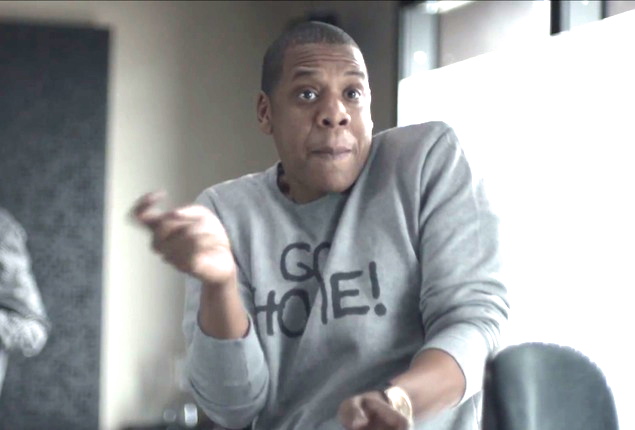
In conclusion, here’s a screenshot from the commercial that advertised the album that accurately sums up the problems:

Jay-Z is, at the end of the day, an adult father. And at the end of the day, this was an album that was advertised on television.

-By Andrew McNally

Wale – “The Gifted Season”

Photo Credit: Wikipedia

Grade: B+

Key Tracks: “The Curse of the Gifted,” “Gullible (feat. Cee-lo Green)”

Washington D.C.-based rapper Wale is showing a lot of promise on his third official full-length, “The Gifted.” There is a feeling of maturity on the album, a sense that Wale wants to be taken seriously as a musician, which is a tough barrier for a young rapper to overcome. He is still young though, and a fun-loving sense of immaturity bleeds through the record, in really enjoyable ways. While some tracks are tight and serious, some are loose club jams, and they all blend together to make a diverse album where nearly every track stands out from the previous, even if some are not overly creative.

Wale toys with a few rap cliches on the album, all of which are gleefully effective. The album’s leadoff single, “Bad,” is the last track of the album. But a remix of the song (featuring Rihanna), shows up seven tracks earlier, and even though the two versions sound very similar, the remix serves as an actual track and not something tagged on the end to extend the album’s running time. The album’s title – “The Gifted” – is a play on egotism in rap (and the album dropped only one week after Kanye West’s “Yeezus”), as Wale’s goal for the album is to try to establish himself as a musician, not to gloat about his previous work and success. The album’s best cliche is the second-to-last track, where Wale teases at his next project. But instead of teasing at a proper duet, like Watch the Throne, he teases at “The Album About Nothing,” an album – that’s actually happening – that he is recording with Jerry Seinfeld. Seinfeld appears on the tease, showing up to the wrong recording. It’s a great moment that sets up an album that will probably be a great and glorious mess.

At seventy minutes, the album does feel long. It takes some effort to make it all the way through. Some fat could have been trimmed, and maybe one or two of the less mature tracks could have been cut. Getting to the track with Seinfeld and “Bad” is a pay-off at the end, but the album does not need to be as long as it is. Still, it is a solid and creative effort from a man trying to prove his place in the music world. I think he succeeds.

-By Andrew McNally

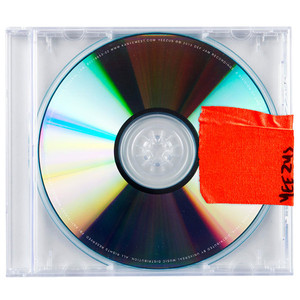
Kanye West – “Yeezus”

Photo Credit: E!

Photo Credit: E!

Grade: B+

Key Tracks: “I Am a God,” “New Slaves”

(Note: This and a few other of my reviews will be featured weekly on The Filtered Lens)

Kanye might be one to constantly reinvent himself, but “Yeezus” will still be a mark in his discography, the moment where his music truly hit revolutionary ground. “Yeezus” is an eclectic work, resulting in what has to be the first ever industrial rock / hip-hop pairing. This is the result of Daft Punk, Rick Rubin and Bon Iver frontman Justin Vernon all showing up with writing and producing credits.

Musically, “Yeezus” is a sonic experience. West’s rapping is mixed over blends of house and industrial music, with dramatic tonal shifts at any moment. “I Am a God” switches from rapping to ambient screaming at one point. The music lands anywhere from personal to terrifying, in a way that flows throughout the whole album. It feels minimalistic, too, despite the genre blending and the originality. Rubin was brought in to make a more stripped-down sound. West released no singles for the album, because hearing a track on the radio would diminish its feeling of placement as musically, the album can only be appreciated as a whole.

West’s lyrics lack any sort of flow, providing a surprising disappointment for the album. They are effective on every song, but there is no zeitgeist, no general theme. Songs like “I Am a God” and “New Slaves” aim to make some serious notes on culture, while “I’m In It” is nothing more than a crude song about sex. With no flow, the statement songs are less effective because they sound like rants, even if they’re well-written and well-performed. Each track, individually, has great lyrics, but not the album as a whole. Still, “Yeezus” is a powerhouse of originality, worthy of all the attention it is receiving.

-By Andrew McNally

The Lonely Island – “The Wack Album”

Photo Credit: Pitchfork

Photo Credit: Pitchfork

Grade: B

Key Tracks: “I F****d My Aunt,” “The Compliments”

“The Wack Album” is more of an amalgamate of ideas. The band throws a lot of ideas at the wall,and as soon as one starts to get stale, they move on to the next. Not everything works, but some stick very well. Only two tracks from this album were viral sensations from “SNL,” a show which none of the three members are a part of anymore. This has allowed them to expand into some new territories, with mixed results.

Comedy troupes that spoof hip-hop are certainly not a new thing. It is a very tired route for comedians to take, thanks to the Internet. The Lonely Island were by no means one of the first groups to do it, but they were among the first of the Internet era (remember “Lazy Sunday”? The song aired on “SNL” eight years ago). The Lonely Island have come under the ironic problem of having to sidestep the generic hip-hop parodies that they helped spawn. “The Wack Album,” their third full-length, has its hits and misses. The guest list on the album is as expansive as anyone could possible ask for: Lady Gaga, Justin Timberlake, the return of T-Pain, Kendrick Lamar, Adam Levine, Kristin Wiig and Hugh Jackman, among others. The guest stars, all having fun in the studio, help to add to the album’s theme of spoofing the very foundations of hip-hop.

The best bits on the album are the ones that have the simplest concepts. “The Compliments” is the three band members – Akiva Schaffer, Andy Samberg and Jorma Taccone – simply complimenting each other, making fun of insult songs. The song features the best guest spot, from rapper Too $hort, who has no idea what he is doing there. “Meet the Crew” is a parody of rappers constantly saying their own names in songs by being a band introduction with many, crazy personalities (ending with Rod Stewart, played by Samberg). “I F****d My Aunt” has the band members (and T-Pain) recounting childhood memories and following them up with “and [x] years later I f****d my aunt.” It’s an incredibly simple concept with no context, and works well because of it. The album’s best tracks all share this.

The more inventive and inspired bits actually do not work as well here. “YOLO” and “3-Way” are well thought-out, but regular “SNL” viewers are already familiar with those two tracks. “I Run NY” features Samberg rapping from the perspective of NYC mayor Michael Bloomberg. The song’s inspiration was, inventively so, to spoof all NYC rappers that claim to own the city. But the song falls flat as it quickly becomes a bit about Bloomberg saying profane things he would never say normally. “I Don’t Give a Honk” and “Hugs” cancel each out, as both songs are about replacing the F-word with a safer term, neither of which are very funny. Finally, “Diaper Money” is rapping from the perspective of a married man, but a very profane one, and it all doesn’t really make sense. The Lonely Island have never been ones to stray away from crude and bodily humor (“Dick In a Box” won them an Emmy), which is why the more inspired ideas end up missing. The characters themselves tend not to make sense. “The Wack Album” is at it’s best when the trio, guests or not, are stripped down and working solely with funny concepts.

If You like this, try: “The Sounds of Science,” the Beastie Boys box set that contains some of their lesser-known funny songs. Another white trio from NY that revolutionized comedy-rap.

-By Andrew McNally