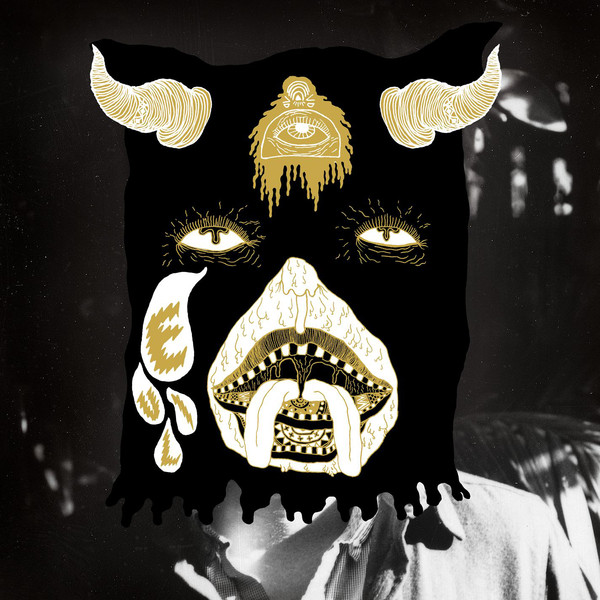
Bloc Party – “The Nextwave Sessions EP”

(Photo Credit: Pitchfork)

Grade: C

Best Track: “Ratchet”

Coming off a hiatus with a huge tour and their highly-underrated 2012 album, “Four,” Bloc Party are set to take another hiatus. Something isn’t working inside the band, and while it’s frustrating to fans, it’s better to have them take breaks than try to fight through it and end in disaster. No sooner did they announce a hiatus than they also announced a new EP, “The Nextwave Sessions EP.” It serves either as a parting gift for a band that isn’t sure when they’ll be back, or a sign of the times to come, given it’s title. Either way, though, it doesn’t really serve any purpose and really just exists as five tracks that sound like they’ve been cut from previous albums.

Opening track “Ratchet” has been released as a single for the band, and it’s really a good song. A constant, tremolo guitar rhythm serves as a very danceable beat behind lyrics about getting, well, ratchet. It is a little different than tracks from their previous album. It’s a catchy track that can get stuck in your head after only a few listens. Second track “Obscene” follows up nicely, as a much softer and slower song, but maintaining a kind of catchy, tremolo rhythm. “French Exit” is kind of a throwaway loud song, and it definitely could’ve been a lost song from “Four,” and album that had it’s fair share of heaviness. The last two tracks, “Montreal” and “Children of the Future” are forgettable slow ones. Three of the five songs on this EP are slower. If this is a final piece for the band, it shouldn’t be how they’re remembered, given their famously crazy live performances.

Bloc Party actively promoted this EP, releasing one of the singles and getting it reviewed in different reviews. They haven’t intended this to be a little, “for fans only” release. But it just doesn’t feel like it has any reason to exist. All of these tracks could have just been on earlier albums, or better left unrecorded. “Ratchet” is great and “Obscene” is good enough, but they can’t save the fact that this EP’s mere existence is confusing. It’s a good listen for core fans. The rest of us just have to wait for the next reunion.

-By Andrew McNally

The Civil Wars – “The Civil Wars”

(Photo Credit: Rolling Stone)

Grade: B+/A-

Key Tracks: “The One That Got Away,” “Devil’s Backbone”

A band name and bleak album cover have never sounded so apropos, as the Civil Wars release their second album amid public fighting. The folksy duo of Joy Williams and John Paul White have been having trouble making their partnership work lately, something that has not been kept secret from the media’s eye. While it is awful to have a group – especially a duo – struggling to make their magic work, the resulting product is a beautifully tormented album of folksy sadness and acoustic ballads. Whatever is happening over at the Civil Wars home base, they have pushed through to release music as planned, and although only some of the tension seeps through the album, we’re left with a whole album of strung together painful memories and broken hearts, always sounding beautiful and never too mellow or self-indulgent.

Save two covers – Etta James’ “Tell Mama” and a surprising, lyric-only cover of the Smashing Pumpkins’ “Disarm” – Williams and White share writing duties on every song (alongside a few other names). Williams seems to get a majority of the vocal duties, however, getting many moments to shine her powerful and remorseful voice. Parts of “Tell Mama” have the instruments cut out almost entirely behind Williams’ singing. White still gets his moments. Closer “D’Arline” sees him expanding his vocal wings too. Some tracks, like single “From This Valley,” feature some beautiful harmonies ripped right out of a CSNY song. Both singers have strong voices, ones that can intensify the sadness and the internal tension.

“The Civil Wars” is very light on music. Few songs feature more than an acoustic guitar and violin, if even the latter. This album is low-key folk to the max (or better yet, the min), focusing on the strength of the vocals and lyrics. Luckily, the tempos are constantly switched out. The album is never too slow, bolstered by a pleasant number of faster tracks. People that are not too into the light nature of the album might find it tedious by the end, but it stands as a beautiful piece of folk art that maintains a message without overstaying it’s welcome. “The Civil Wars” might be the most accurate album title of the year. Let’s hope they can work through everything and keep going.

If you like this, try: I don’t need to plug this band, but Fleet Foxes. Both albums of theirs are more harmonized, folksy sadness, albeit with a little more instrumentation.

-By Andrew McNally

The Polyphonic Spree – “Yes, It’s True”

(Photo Credit: Glide Magazine)

Grade: B+

Key Tracks: “Popular By Design,” “Blurry Up the Lines”

“Yes, It’s True” is the fourth album from the vocal-heavy choral-pop-rock band, a genre that is a lot more conventional and a lot less gospel-influenced than it sounds. The Polyphonic Spree currently sits at twenty members, although the album does at times resemble a normal-sized group. The album is heavy on engrossing music and light on inspiring lyrics, but is frequently worthwhile. Former Tripping Daisy frontman Tim DeLaughter is in total control on this album, perhaps even too much. The collective playing behind him is under his spell, following him through his mixed influences.

The album always falls closer to pop than any other genre. Each track plays out like a typical single from one of DeLaughter’s inspirations, from the Beach Boys to Bright Eyes. “Single” is the important word there, though, because every song on the album is “single” standard. In fact, the album’s lead-off single, “You Don’t Know Me,” is not among the album’s better songs. The music on the album is often standard, fun vocal pop. It is a market that has been tapped many times before, but as long as the product is catchy and retains a little depth, it can be done again and again. There are a few tracks were DeLaughter does a back-and-forth in the chorus, exchanging solo lines with group lines from the musicians. It’s all very fun and inspired. The final track, “Battlefield,” ends with an extended synth fade-out that is meant to sound ominous, but almost comes off as anticipation for wanting to record another album.

Lyrically, the album doesn’t hold up nearly as well. Track titles like “Carefully Try” and “Let Them Be” don’t prepare to offer much lyrically. There is nothing more than basic pop poetry here, which can get repetitive. They even sound less inspired alongside the music. It’s rarely an issue, because the album has enough good spirit to make up for this. Also, pop albums nowadays do not seem to be expected to be poetic masterpieces, so it’s expected in a warped way.

Twenty-piece choral-pop groups are hard to come by, but The Polyphonic Spree are doing something right. They may be a collective – their ‘former members’ page on Wikipedia includes forty-five people, one of them being Annie Clark from St. Vincent – but they are having fun in the studio. And when it comes down to it, that is the key to a successful pop group. Things might not work, but if the listener believes enough in the band, they can look past it. And it is very easy to surpass the faults on “Yes, It’s True” and just enjoy the ride.

If you like this, try: “Here” (2012), the second album by Edward Sharpe & the Magnetic Zeroes. The best of their three, and one that includes a surprising variation of influences into a collective effort.

-By Andrew McNally

Edward Sharpe & the Magnetic Zeroes – “Edward Sharpe & the Magnetic Zeroes”

(Photo Credit: Consequence of Sound)

Grade: B-

Key Tracks: “Let’s Get High,” “Remember to Remember”

The first minute and a half of the song “If I Were Free” features two singers. The first singer has two brief moments of vocal impression – Bob Dylan and Bruce Springsteen. The second singer, Ringo Starr ala “Yellow Submarine.” These vocal inflections are not meant to be intentional. The band is not trying to repeat the music done by those that inspire them. The vocal similarities to Dylan, Springsteen and Starr more seem to slip out, and that is what most of this album is. “Edward Sharpe & the Magnetic Zeroes” feels like odes to those that came before, with it’s attempts at originality feeling somewhat mixed. Self-titled albums are meant to be declarations of the band’s distinct sound, but this album is ironically the least original of their three.

“Up From Below,” the debut from Edward Sharpe & the Magnetic Zeroes, had a distinct country-folk sound that was trimmed perfectly for crossover radio. “Home” is a country song, completely, but found love on alternative radio (and in my head for a whole summer). Their follow-up, “Here” was an underrated gospel-based gem. This new, self-titled album doesn’t have as much of the mixing as it seems to think it has. It more resembles a Dylan album, when he was at his mid-60′s peak. Five studio musicians join the band’s eleven members on the album, but it feels like a one-person operation at times. Lengthy openers “Better Days” and “Let’s Get High” sound like a number of musicians gathered around one songwriter, following his or her lead, instead of a collective. “Let’s Get High” is a phenomenally energetic and great song, but one that doesn’t quite capture the feel of the band. Luckily, the album doesn’t continue this feel, as the songs get shorter and more voices are introduced. Lead singer Alex Ebert is given many lead moments (especially on “This Life”), but so is back-up singer Jade Castrinos, who gets to shine bright 0n “Remember to Remember.” Other singers are thrown into the mix, too, and frequently. Once the album gets past it’s inspired but dragging opening two tracks, it begins to feel like the huge collaborative effort it should.

“Two,” which is humorously the third song, is a beautiful duet between Ebert and Castrinos. “Life is Hard” and “If I Were Free” make the album’s middle a fun if agenda-less listen, bolstered by skilled songwriting. The pace drags towards the end. There are a number of slow songs that seemed to flow together, and lost my interest. The halted pace overstays it’s welcome, but at least it doesn’t finish out the album. The aforementioned “This Life” and “Remember to Remember” are not fast songs, but serve as powerful ending notes to the album. It is mixed, overall, and lacks the based-yet-blended originality that its predecessors had, but “Edward Sharpe & the Magnetic Zeroes” is, at its core, an enjoyable folk collective, aiming high and hitting it more often than not.

If you like this, try: Phosphorescent’s criminally underrated folk-everything album “Muchacho” (2013)

-By Andrew McNally

One Hundred Year Ocean – “Where Were You While We Were Getting High?”

Photo Credit: Bandcamp

Grade: B+

A four-track EP from the six-piece collective One Hundred Year Ocean moderately resembles the growing band that includes some of the same members, The World Is A Beautiful Place & I Am No Longer Afraid to Die. The four tracks on this EP are more consistent in tone, but bare resemblance to the great emo band.

It is tough to really establish an idea across only four tracks, so nothing is overly fleshed out. But there is a distinct sense that the band is toying with song structures. The build-ups that are frequent among similar-sounding bands are present, just not at the usual points in the songs. There is a feeling that the music, just like the music of The World Is…, is not based on songs but one large idea, and the songs are just fragments of it.

The volume is steady on the album, as the verses seem to fit in with typical structures. So the band seems to operate as a bridge between standard music and the experimental and drawn-out sound of The World Is…, combining elements of both. There is a slight humorous edge to the band, too, evident in the title of the EP and on the song title “Soco Amaretto Bud Light Lime” (a take on Brand New’s “Soco Amaretto Lime”) and in the darkly catchy lyrics of opener “Hospital Town.” It is difficult to expand an EP into something great, but One Hundred Year Ocean is doing a pretty unique thing. It is distinctly emo-based, with elements of punk and a little room for experimentation.

If you like this, try: “Whenever, If Ever” by the aforementioned The World Is… (just released last month, scroll down only a little ways for a review)

A Great Big Pile of Leaves – “You’re Always on my Mind”

(Photo Credit: Top Shelf Records)

Grade: B

Key Tracks: “Pet Mouse,” “Fun in the Sun”

A Great Big Pile of Leaves hit a high on their 2010 debut, “Have You Seen My Prefontal Cortex?” The band established themselves as a fun, alt-pop band that hold up remarkably well against their sadder labelmates like Snowing and Pianos Become the Teeth. Their music is fun, bouncy and often completely innocent while maintaining a steady volume and guitar attacks. Their debut is a pleasantly diverse album, sonically pleasing, full of fun and introspective tracks. Their second album, “You’re Always on my Mind,” out today, does not quite live up to the expectations set up by “Cortex.” The album is more reminiscent of their earlier EP’s, which are still bouncy guitar songs, but feel a little less inspired than their debut album.

The album’s summer release date is no accident. This is definitely a summer album. That might give the expectation of a Yellowcard or Cartel type pop-punk thing, but they are much more associated with alternative than most summer bands. The album’s food-based bookends are called “Snack Attack” and “Pizzanomics,” offering the exact sound you’d expect from the humorous titles. “Back to School” is the most summer-y song on the album, a literal ode to summer before having to go back to school. There is a gleeful tone to the album, a carefree sound that are reminders of good times, even if they’re in the past. The band does not seem to be looking for any sort of validation, or to be taken seriously. That doesn’t mean we shouldn’t – they’re talented musicians and have nailed down the art of fun songwriting. But their lack of seriousness adds to the fun on the album.

The album might not be as good as its predecessor, but it is still a good album. It is easy music to put on during a drive or a nice summer bike ride. It does not demand your patience, even your attention. It does its job as innocent alt-pop, providing an alternative to the usual pop on the radio and to the usual gloom of alternative music. It takes the best of both worlds. It might not be perfect, but it is fun.

If you like this, try: “Dig Up Your Dead” by Mansions (2011). Not as fun and not as good, but the band does sound kind of similar.

-By Andrew McNally

Pity Sex – “Feast of Love”

(Photo Credit: Brooklyn Vegan)

Grade: B-

Key Tracks: “Wind Up,” “Fold”

“Feast of Love” is the full-length debut for the hyped lo-fi band. The quartet plays a shoegaze-inspired band of emo. The album is equal parts alt-pop, emo and traditional shoegaze walls of sound. Sonically, despite the creative blending of genres, the album could use for some expansion. It is only twenty-seven minutes long but it feels a little tiring. Part of it is the shoegaze itself, it as a genre can often tire and frustrate the listener in the best possible ways. But part of it is a lack of individuality amongst the songs. The album feels like one drawn-out idea, and that’s generally what an individual shoegaze song is to start with, so a full album of similar ideas gets really bogged down. Still, it is a creative blending of genres and is it at times challenging and staggeringly original.

The lyrics are often tough to decipher, which is pretty characteristic of shoegaze (Godspeed You! Black Emperor did away with them entirely). This recent revival of lo-fi emo groups is often accompanied by poetic lyrics that are almost too easy to relate to, that result in heart-wrenching songs. Pity Sex is no different, with some great, poetic lyricism happening. Unfortunately, some of it is buried under walls of guitar.

“Feast of Love” has its faults, but it shows promise as a debut. It is tedious but creative, and is definitely worth a listen for people intrigued by the lo-fi emo revival and shoegaze. Pity Sex is currently on tour with two of the best young bands in America today, Dads and The World is a Beautiful Place & I Am No Longer Afraid to Die.

If you like this, try: The aforementioned bands, or check out the work done by the bands Teen Suicide and Julia Brown for something wickedly lo-fi.

-By Andrew McNally


Portugal. The Man: “Evil Friends”

Photo Credit: Under the Gun Review

Photo Credit: Under the Gun Review

Grade: B+

Key Tracks: “Modern Jesus,” “Holy Roller”

Portugal. The Man have somehow found their way to prevalence in the indie world. They’re not the most interesting band, but they are constantly on tour and they try (and usually succeed) to record an album every year. Their consistency might be what has helped to make them a name over the past few years. Whatever it may be, they picked the right time to make a record like “Evil Friends.” Famous producer Danger Mouse was brought in to diversify the band’s sound, and although his mark might be left a little too hard, the band was left with their best album yet.

Portugal. The Man have always been an enjoyable band, but it took many albums for them to start to hit outside their comfort zone. True, their comfort zone has switched from garage rock to more of a sweeter, indie-pop sound. The transition has been slow, though, and this album expands their sound while maintaining their musical innocence. Every track is a fun and bouncy dose of indie-pop, all radio-ready but different from the previous song. Danger Mouse helped the band expand their sound to every limitation of alt-pop, with the best possible results.

Interestingly, the lyrics consistently haunt at things deeper. They don’t always get there, but with song titles like “Creep in a T-Shirt,” “Evil Friends,” and “Modern Jesus,” some darker themes are clearly being presented. Religion and nasty break-ups are emotionally worked through, sometimes cleanly, sometimes not. The lyrics do not necessarily fit the music, but the quality of the package as a whole makes it possible to overlook this. Overall, it is not the most unforgettable album, or the most original. If some great indie-pop from a respected band is what you’re looking for, though, “Evil Friends” is the right direction to turn in.

If you like this, try: “Dear Miss Lonelyhearts” by Cold War Kids, 2013.

-By Andrew McNally

Camera Obscura – “Desire Lines”

Photo credit: Spin Magazine

Photo credit: Spin Magazine

Grade: C

Key Tracks: “I Missed Your Party,” “Troublemaker”

Indie-folk bands like Camera Obscura are generally not known for being adventurous and playing around with genres and ideas. Any fan or casual listener of the genre pretty much knows what he or she is getting into when a new album by a band like Camera Obscura comes out. But “Desire Lines,” the band’s fifth album and first in four years, is seriously lacking something. The album is almost minimalistic, relying on only key instruments in a majority of the songs. It adds a certain consistency to the record, that helps it to flow without any rough transitions between ideas. It also, however, starts to feel like one long, run-on song that was not very interesting to start with.

The album, as a whole, feels like an unfinished idea. Indeed, the final track, “Desire Lines,” ends like a normal song. On both listens I found myself checking to see if my Internet had crashed, not realizing I had hit the album’s end. Lyrically, there is little original going on. Some of the more stand out tracks, like “I Missed Your Party” and “William’s Heart” have boring and uninspired lyrics. They are presented, too, by pretty and rhythmic vocals, but singer Tracyanne Campbell does not sound like she believes in her own lyrics.

Musically, the album is largely devoid of any detail. Every song is dominated by conventional rock instruments. Most of the songs seem to take the same relative tempo, with only “Cri Du Coeur”‘s wickedly-slow (and ultimately exceedingly dull) tempo providing a switch. “I Missed Your Party” has a nice addition of horns, which does bring a listener back in towards the album’s close.

“Desire Lines” is a moderately enjoyable listen, to someone who likes indie-folk acts like Rilo Kiley. Once it ends, though, it is immediately forgettable. It is innocent and fun pop, but never tries to be remarkable or original. “Desire Lines” is a low point for the usually great Camera Obscura.

-By Andrew McNally

Laura Marling – “Once I Was An Eagle”

(Photo credit: Rolling Stone)

(Photo credit: Rolling Stone)

Grade: B+

Key Tracks: “Breathe,” “Saved These Words”

British singer-songwriter Laura Marling has been receiving constant praise for her work, including immediate approval of her fourth album, “Once I Was An Eagle.” The album does it’s job – it is an honest and effective folk album. But it does not start off that way. The first three tracks, “Take the Night Off,” “I Was An Eagle,” and “You Know,” are fairly tepid folk songs, with uninspiring lyrics and Marling’s vocals sounding phoned in. It is not until the fourth song, “Breathe,” that the album’s diverse originality starts to seep in. The song is a beautiful and building work of emotion. After “Breathe,” the album opens up into a mix of tracks with very diverse origins. Some have fast-paced with booming percussion, some are softer and more traditional of a singer-songwriter. Most songs feature just Marling and a slight instrument or two in the background. The album, as a whole, flows well in its transitions between different styles.

Once the album expands, there is a sense that Marling puts all the elements of herself into the record, exampled in the different styles. The songs have consistently great rhythms, no matter the volume or tempo. Marling deals with some tough thematic material in her lyrics, typical of a successful folk record. The album is long, stretching just over an hour, and it starts to feel tedious during the decrescendo towards the end. But the album’s final song, “Saved These Words,” is very reminiscent of “Breathe” in that it is a building song, a tough and perfect finale to the album.

Musically, the transitions between different styles keep it interesting, tough to accomplish for a folk singer. Marling’s guitar rhythms are often catchy and interesting, some less stale than others. Although the album starts slow, it turns into another near-perfect album for the acclaimed singer.

-Andrew McNally