Edward Sharpe & the Magnetic Zeroes – “Edward Sharpe & the Magnetic Zeroes”

(Photo Credit: Consequence of Sound)

Grade: B-

Key Tracks: “Let’s Get High,” “Remember to Remember”

The first minute and a half of the song “If I Were Free” features two singers. The first singer has two brief moments of vocal impression – Bob Dylan and Bruce Springsteen. The second singer, Ringo Starr ala “Yellow Submarine.” These vocal inflections are not meant to be intentional. The band is not trying to repeat the music done by those that inspire them. The vocal similarities to Dylan, Springsteen and Starr more seem to slip out, and that is what most of this album is. “Edward Sharpe & the Magnetic Zeroes” feels like odes to those that came before, with it’s attempts at originality feeling somewhat mixed. Self-titled albums are meant to be declarations of the band’s distinct sound, but this album is ironically the least original of their three.

“Up From Below,” the debut from Edward Sharpe & the Magnetic Zeroes, had a distinct country-folk sound that was trimmed perfectly for crossover radio. “Home” is a country song, completely, but found love on alternative radio (and in my head for a whole summer). Their follow-up, “Here” was an underrated gospel-based gem. This new, self-titled album doesn’t have as much of the mixing as it seems to think it has. It more resembles a Dylan album, when he was at his mid-60′s peak. Five studio musicians join the band’s eleven members on the album, but it feels like a one-person operation at times. Lengthy openers “Better Days” and “Let’s Get High” sound like a number of musicians gathered around one songwriter, following his or her lead, instead of a collective. “Let’s Get High” is a phenomenally energetic and great song, but one that doesn’t quite capture the feel of the band. Luckily, the album doesn’t continue this feel, as the songs get shorter and more voices are introduced. Lead singer Alex Ebert is given many lead moments (especially on “This Life”), but so is back-up singer Jade Castrinos, who gets to shine bright 0n “Remember to Remember.” Other singers are thrown into the mix, too, and frequently. Once the album gets past it’s inspired but dragging opening two tracks, it begins to feel like the huge collaborative effort it should.

“Two,” which is humorously the third song, is a beautiful duet between Ebert and Castrinos. “Life is Hard” and “If I Were Free” make the album’s middle a fun if agenda-less listen, bolstered by skilled songwriting. The pace drags towards the end. There are a number of slow songs that seemed to flow together, and lost my interest. The halted pace overstays it’s welcome, but at least it doesn’t finish out the album. The aforementioned “This Life” and “Remember to Remember” are not fast songs, but serve as powerful ending notes to the album. It is mixed, overall, and lacks the based-yet-blended originality that its predecessors had, but “Edward Sharpe & the Magnetic Zeroes” is, at its core, an enjoyable folk collective, aiming high and hitting it more often than not.

If you like this, try: Phosphorescent’s criminally underrated folk-everything album “Muchacho” (2013)

-By Andrew McNally

Larry And His Flask – “By the Lamplight”

(Photo Credit: Brooklyn Vegan)

Grade: B

Key Tracks: “Pandemonium,” “The Battle For Clear Sight”

“By the Lamplight,” the second official release for the band Larry and His Flask, begins a capella. It only stays that way for a few beats, but it is enough for the band to set the stages. Larry And His Flask are, at the end of the day, a punk band. Yet the banjos and intense acoustic guitar are equally reminiscent of both folk and folk-punk bands, far away from the slight Irish tone to their music. They are a diverse band, taking their inspirations more from cultures than genres, like a Gogol Bordello without an eccentric lead singer.  Their second official release follows this trend, although it is a little more standard than their previous full-length. Still, the a capella opening acts as a bizarre intro for an unfamiliar listener and a gleefully expected one for fans.

When Larry and His Flask are at their best, which is often, they invoke one-thirds Mumford & Sons speed-folk and two-thirds Nekromantix rockabilly punk. The opening half of the album sees them accomplishing this frequently. Early track “The Battle For Clear Sight” has a nice addition of a female singer, Jenny Owen Youngs. The second half of the album gets a little bogged down in songs that sound a little too unoriginal, because of an already high standard that has been previously set. Still, the album’s fastest and slowest tracks, “Home of the Slave” and “All That We’ve Seen,” help to break it up some. And the band always sounds like they are having fun in the studio, which transposes to the listener. They are a fun band, one that genuinely enjoys what they are recording.

“By the Lamplight” is a little less experimental than their previous effort, but it still ranks the band among the most experimental bands in punk music. Their sound is equal parts Celtic punk, rockabilly and folk, and their diversity makes for a truly interesting band. I learned about this band after seeing them in Brooklyn open for the Menzingers (a perfect band), at a show that Gogol Bordello was coincidentally supposed to play at (it got cancelled part way through because of weather). If Larry and His Flask come your way, I recommend them live. Their diversity translates to a fun live show.

If you like this, try: Frank Turner’s “England Keep My Bones,” another diverse Irish-folk-punk musician whose best album is the second most recent.

By Andrew McNally

Camera Obscura – “Desire Lines”

Photo credit: Spin Magazine

Photo credit: Spin Magazine

Grade: C

Key Tracks: “I Missed Your Party,” “Troublemaker”

Indie-folk bands like Camera Obscura are generally not known for being adventurous and playing around with genres and ideas. Any fan or casual listener of the genre pretty much knows what he or she is getting into when a new album by a band like Camera Obscura comes out. But “Desire Lines,” the band’s fifth album and first in four years, is seriously lacking something. The album is almost minimalistic, relying on only key instruments in a majority of the songs. It adds a certain consistency to the record, that helps it to flow without any rough transitions between ideas. It also, however, starts to feel like one long, run-on song that was not very interesting to start with.

The album, as a whole, feels like an unfinished idea. Indeed, the final track, “Desire Lines,” ends like a normal song. On both listens I found myself checking to see if my Internet had crashed, not realizing I had hit the album’s end. Lyrically, there is little original going on. Some of the more stand out tracks, like “I Missed Your Party” and “William’s Heart” have boring and uninspired lyrics. They are presented, too, by pretty and rhythmic vocals, but singer Tracyanne Campbell does not sound like she believes in her own lyrics.

Musically, the album is largely devoid of any detail. Every song is dominated by conventional rock instruments. Most of the songs seem to take the same relative tempo, with only “Cri Du Coeur”‘s wickedly-slow (and ultimately exceedingly dull) tempo providing a switch. “I Missed Your Party” has a nice addition of horns, which does bring a listener back in towards the album’s close.

“Desire Lines” is a moderately enjoyable listen, to someone who likes indie-folk acts like Rilo Kiley. Once it ends, though, it is immediately forgettable. It is innocent and fun pop, but never tries to be remarkable or original. “Desire Lines” is a low point for the usually great Camera Obscura.

-By Andrew McNally

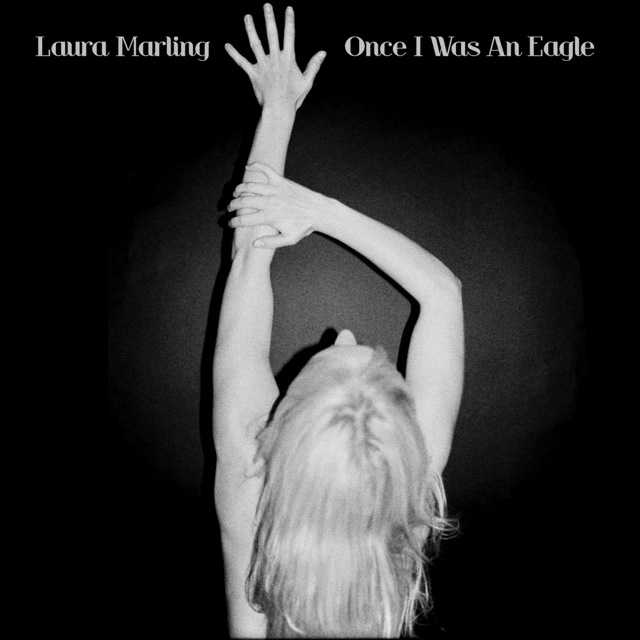
Laura Marling – “Once I Was An Eagle”

(Photo credit: Rolling Stone)

(Photo credit: Rolling Stone)

Grade: B+

Key Tracks: “Breathe,” “Saved These Words”

British singer-songwriter Laura Marling has been receiving constant praise for her work, including immediate approval of her fourth album, “Once I Was An Eagle.” The album does it’s job – it is an honest and effective folk album. But it does not start off that way. The first three tracks, “Take the Night Off,” “I Was An Eagle,” and “You Know,” are fairly tepid folk songs, with uninspiring lyrics and Marling’s vocals sounding phoned in. It is not until the fourth song, “Breathe,” that the album’s diverse originality starts to seep in. The song is a beautiful and building work of emotion. After “Breathe,” the album opens up into a mix of tracks with very diverse origins. Some have fast-paced with booming percussion, some are softer and more traditional of a singer-songwriter. Most songs feature just Marling and a slight instrument or two in the background. The album, as a whole, flows well in its transitions between different styles.

Once the album expands, there is a sense that Marling puts all the elements of herself into the record, exampled in the different styles. The songs have consistently great rhythms, no matter the volume or tempo. Marling deals with some tough thematic material in her lyrics, typical of a successful folk record. The album is long, stretching just over an hour, and it starts to feel tedious during the decrescendo towards the end. But the album’s final song, “Saved These Words,” is very reminiscent of “Breathe” in that it is a building song, a tough and perfect finale to the album.

Musically, the transitions between different styles keep it interesting, tough to accomplish for a folk singer. Marling’s guitar rhythms are often catchy and interesting, some less stale than others. Although the album starts slow, it turns into another near-perfect album for the acclaimed singer.

-Andrew McNally

John Fogerty – “Wrote a Song For Everyone”

(Photo credit: Consequence of Sound)

(Photo credit: Consequence of Sound)

Grade: A-

Key tracks: “Lodi,” “Who’ll Stop the Rain”

When a respected classic rock musician starts to get up there in years, they’re allowed to start having some fun in the studio. That’s exactly what Fogerty – famous most for Creedence Clearwater Revival, and some for his solo work – does on his ninth solo album. “Wrote” isn’t a duet album, it isn’t an original album, and it isn’t an album of covers, which many older singers resort to. Instead, it’s a healthy mix. A majority of the songs are reworkings of older songs of his, with guest stars. Fans of classic rock will instantly recognize CCR favorites like “Proud Mary,” “Who’ll Stop the Rain?” and “Fortunate Son” getting reworked, along many others. And to mix it up, Fogerty throws in a few original songs, just to prove that he hasn’t lost anything.

The guest stars on the album read like a planned tribute album, only the man being tributed showed up. Bob Seger and Alan Jackson, contemporaries of Fogerty, make two of the best appearances. Country singers like Keith Urban, Miranda Lambert and Brad Paisley contribute, as do current rock bands My Morning Jacket and Foo Fighters. The album’s most entertaining song, “Lodi,” features Shane and Tyler Fogerty, presumably his sons. The title track, though not one of the more memorable ones, features a unique pairing of Lambert’s vocals, and guitar work provided by Tom Morello of Rage Against the Machine. Jennifer Hudson, known for her powerful voice, dominates “Proud Mary” at the album’s finale. “Proud Mary,” one of classic rock’s most famous songs, has been covered by Tina Turner in the past, and this likely serves as an homage to her equally powerful version.

This album gets a high rating simply because there is nothing wrong with it. Fogerty, now 68 (happy birthday!), recorded this just to have some fun. There is no purpose to this album other than to show that Fogerty still loves his material and loves to perform. Fogerty successfully brings the fun to the audience, making for a completely enjoyable listen that erases that wonder of why the album exists in the first place. I even looked past some guest stars I do not like (namely, Kid Rock and Bob Seger) and recognized the great reworkings of the songs. Fogerty’s voice, too, is still kicking. Tom Petty and David Bowie might be the last holdouts of classic rock still recording successful new material, but Fogerty sounds as good as he ever has, kicking back and having fun.

The Front Bottoms – “Talon of the Hawk”

(Photo credit: Property of Zack)

(Photo credit: Property of Zack)

Grade: C-

Key Track: “Twin-Size Mattress”

If you’ve never heard the Front Bottoms’ 2011 self-titled debut, then you might see this, their sophomore album, as a pretty unique blend of borderline-spoken word poetry, acoustic guitar, and beating drums. When this album was leaked by the band, however, the reaction was tepid. “The Front Bottoms” is one of my favorite albums, probably in my top five of all-time. A lot of my friends and I love this band dearly (I’ve even made friends because of mutual love for this band). On the opening chords of “Au Revoir,” a letdown was already starting. Bands often have their sophomore albums suffer from a bland rehashing of their debuts, and the Front Bottoms are no different.

The band – a duo in the studio – created a wholly original type of music on their first album, which is continued here. I can only call it “alt-emo folk-pop.” Their songs rarely feature anything more than acoustic guitar, drums and vocals that are barely sung, yet the band has a taste for making their music seem like it is always about to fly off the rails; like the musicians are about to lose control of their own song (For the best example, look up “The Beers,” their fastest and best song). The lyrics jump from sad poetry to non-described personal experiences frequently, even mid-line. And the poetic lines are often poignant, even ‘cutesy,’ still hitting the listener in the gut harder than they should.

But “Talon of the Hawk” is distinctly lacking. The lyrics are significantly cornier. They feels less poetic and more lame and forced, and the vocal delivery is not as random, with the verses formed into actual rhythmic lines. Musically, the band has never been proficient, as it is not their focus, but they are even less so here. The tracks on their first album are all instinctively catchy. On the second, they are almost all forgettable. Even the production quality, pristine, admittedly, feels better than it should. To their fans, the Front Bottoms are two goofy guys unaware of their own growing popularity, which does not come through on “Talon”s very professional recording style. The album’s only redeeming song is “Twin-Size Mattress,” both lyrically and musically strong. (The song is the album’s leadoff single. A video was recorded which, had I been standing ten feet to the right at a recent NYC show, I would’ve been in)

The album is dividing Front Bottoms fans. Some love it, some are left with a bad taste in their mouths. It is a serious decline from their first album in every way. Those previously unassociated with the band might find it much more intriguing and entertaining than those who ate up their debut. Reactions to pieces of work are, of course, subjective, but they are even more so with “Talon of the Hawk”

-Andrew McNally