Bloc Party – “The Nextwave Sessions EP”

(Photo Credit: Pitchfork)

Grade: C

Best Track: “Ratchet”

Coming off a hiatus with a huge tour and their highly-underrated 2012 album, “Four,” Bloc Party are set to take another hiatus. Something isn’t working inside the band, and while it’s frustrating to fans, it’s better to have them take breaks than try to fight through it and end in disaster. No sooner did they announce a hiatus than they also announced a new EP, “The Nextwave Sessions EP.” It serves either as a parting gift for a band that isn’t sure when they’ll be back, or a sign of the times to come, given it’s title. Either way, though, it doesn’t really serve any purpose and really just exists as five tracks that sound like they’ve been cut from previous albums.

Opening track “Ratchet” has been released as a single for the band, and it’s really a good song. A constant, tremolo guitar rhythm serves as a very danceable beat behind lyrics about getting, well, ratchet. It is a little different than tracks from their previous album. It’s a catchy track that can get stuck in your head after only a few listens. Second track “Obscene” follows up nicely, as a much softer and slower song, but maintaining a kind of catchy, tremolo rhythm. “French Exit” is kind of a throwaway loud song, and it definitely could’ve been a lost song from “Four,” and album that had it’s fair share of heaviness. The last two tracks, “Montreal” and “Children of the Future” are forgettable slow ones. Three of the five songs on this EP are slower. If this is a final piece for the band, it shouldn’t be how they’re remembered, given their famously crazy live performances.

Bloc Party actively promoted this EP, releasing one of the singles and getting it reviewed in different reviews. They haven’t intended this to be a little, “for fans only” release. But it just doesn’t feel like it has any reason to exist. All of these tracks could have just been on earlier albums, or better left unrecorded. “Ratchet” is great and “Obscene” is good enough, but they can’t save the fact that this EP’s mere existence is confusing. It’s a good listen for core fans. The rest of us just have to wait for the next reunion.

-By Andrew McNally

Selena Gomez – “Stars Dance”

(Photo Credit: Wikipedia)

Grade: C

Key Tracks: “Birthday,” “Nobody Does It Like You” (Bonus Track)

No one can blame Selena Gomez for wanting to grow up. She got trapped in the Disney Channel at a young age. And now she has had to watch two former channel-mates attempt the transition into adulthood: The Jonas Brothers, who played the Hanson route of simply growing older without changing anything, and are slowly fading into obscurity, and Miley Cyrus, whose public outbursts flip-flop between emotionally human and dementedly perverse have left bad tastes in the mouths of people who enjoy watching celebrities break down. Gomez, who can legally drink as of only yesterday, found a proper route of simply maturing. Her music and personal life are more mature than previous, without being interesting to the paparazzi. Spring Breakers was a major advancement (and for her co-star, Vanessa Hudgens, who is navigating the same path), placing her in a sexual and bleak, very-very-hard-R-rated movie. But her proper debut album, “Stars Dance” is not very interesting, either. It nails the transition into adulthood, as she creates big-beat dance songs but plays everything safe for the potential younger audience. “Safe” just goes a little too far.

There is a song on the album called “B.E.A.T.” that is vaguely about sex, direct enough for the proper audience but maybe still over the heads of any kid listeners. The chorus actually eschews Gomez’s voice briefly for a repetition of beats that represent something or other, but they are just beats. Lyrically and musically, it is very safe. Gomez never reaches for high notes. In fact, her voice is never even prominently featured. It sounds phoned in at points. The only point where it doesn’t is the bonus track “Nobody Does It Like You,” where she stretches out a little. Her voice, the beats and the lyrics are the three components of the album but none are the focus. Weak lyrics can’t make up for the weak songwriting. All of the tracks are underhand pitches thrown at the listeners. It is all completely average.

That said, it is a transition album, perhaps. It could at least be seen that way. She is still young, and much of her fanbase, younger. Safe may have been the only option. Anything more than that, and she’s the next Miley Cyrus. While the album’s bland nature might sound tedious to some listeners, it might be experimental for Gomez. This is her first time truly branching solo, and the album does a successful job treading the moderate path between Cyrus and Jonas. Unfortunately for Gomez, average is the only safe route for her to take. Blame Disney.

-By Andrew McNally

Frank Black – “Oddballs”

(Photo Credit: Amazon)

Grade: C

Key Tracks: “Pray a Little Faster,” “Man of Steel”

“Oddballs” was originally released in 2000, but only online and was not widely publicized. For whatever reason, he chose to release it in CD form thirteen years later. It seems like an odd choice, given that the Pixies just released a new single, but maybe that’s the exact reason – it might be more publicized if people are searching for new Pixies music. “Oddballs” might be stumbled across, giving it the attention it never got. That said, it is just a compilation of music Black recorded that were B-sides or didn’t make it on other albums. B-side compilations are, traditionally, boring and pretty useless. “Oddballs” is better than most, but still falls to some subpar tracks and ideas that should not have been acted upon.

The songs on the album were recorded between 1994 and 1997, the three years after the Pixies’ initial break-up. The songs, on the whole, maintain the intensity of the music of his former band, while distinctly sounding like a solo artist. There is no screaming and wailing, no Kim Deal on bass and no lyrics about bodily mutilation, separating it from the Pixies. It just often maintains the speed and volume of the Pixies’ albums.

Lyrically, it is far less interesting than Black’s former (and present) band. One of the two best tracks, “Pray a Little Faster” is darkly entertaining, but other tracks with titles like “Can I Get a Witness” and “Everybody Got the Beat” approach the exact, oft-extracted ideas that the titles sound like. Black’s attempts to separate his solo work and be seen as a viable solo artist are beneficial, but tracks like the ones on “Oddballs” do make the listener yonder for classic Pixies songs instead.

Something should be said for the album’s surprising flow. Given that it is a compilation, there is no expectation of it working as an actual album, just a collection of misplaced tracks. But Black structures it so it flows and never stays on one idea for too long. The opener (the aforementioned “Pray”) kicks off with a bang, that is sustained until the album’s midpoint, the only two songs over four minutes mix things up. The album’s closer and other best song, “Man of Steel” works perfectly as an outro, with a bombastic repeating coda. The song was likely written as a closing song that never found it’s place.

“Oddballs” is better than most rarities collections, but it is still barely good enough to stand on it’s own legs. It separates Black from the Pixies, but the album’s imperfections remind listeners of just how perfect the latter really was. Black’s “Oddballs” more often than not sounds a little too traditional and most of the ideas are not fleshed out enough. “Oddballs” should please die-hard Black fans, and likely only them.

If you like this, try: If you’re into rarities, check out “Little Johnny Jewel” and “Untitled Instrumental,” two songs that got cut from Television’s legendary “Marquee Moon” and are just as good as every song on the album.

-By Andrew McNally

David Lynch – “The Big Dream”

(Photo Credit: Pitchfork)

Grade: C

Key Tracks: “Wishin’ Well,” “I’m Waiting Here (feat. Lykke Li)”

Do you remember the movie Kazaam, with Shaquille O’Neal? It was a fun movie, totally depth-less and objectively terrible, but enjoyable nonetheless. This is usually the best to hope for when a celebrity of one medium attempts to transition into another. David Lynch’s “The Big Dream,” his second album after 2011′s “Crazy Clown Time,” is similar to this. It isn’t great, by any means. It drags on through some rough patches. But Lynch is trying, and he obviously cares about what he is recording, even if only he ends up enjoying it. “The Big Dream” is yet another artist trying out a different medium than the one they are used to, with even more mixed results.

But “Kazaam” is about as far away from David Lynch as you can get, so let’s compare it to the first episode of Lynch’s near-perfect show “Twin Peaks.” As far as pilots go, “Twin Peaks”‘s is a pretty good one. The episode starts on a dreary note, with the discovery of Laura Palmer’s body. From there, it continues throughout the small town, introducing the key characters, one by one. “The Big Dream” operates in a similar way, introducing many ideas without actually acting on them. The opening song, “The Big Dream,” is perhaps the album’s weirdest, equating finding a dead body to what comes after. Lynch’s tracks often go nowhere from where they start, as if he intentionally did not finish a single one of them. Like a character, whose future is not yet known. For every Shelley Johnson, there’s a “Last Call.” For every Big Ed, there’s a “We Rolled Together.”

Unlike the pilot of Twin Peaks, however, these songs don’t sound like precursors to something great. They just sound like ideas, and they aren’t anything more than that. Every song is a song, and that’s that. It maintains a consistency, one that borders between surrealism and conventional music. Unfortunately, it is not enough of either, which leads to a collection of tracks that are enjoyable, but feel wholly unnecessary. As for the music itself, Lynch is not a strong singer, so he hides his voice behind ambient and dreamy microphone settings, which often complement the dreamy electronic-influenced music. He has surrounded himself with some talented names, and there is genuine inspiration in the work they’ve done. It is just an inspiration that has not been properly drawn-out. The album’s only great song is a bonus track (but lead single) called “I’m Waiting Here,” and features the only guest spot, with Lykke Li on vocals. It is not a bad album, but it is slight and annoyingly uncreative. I’m not sure who the target audience is for “The Big Dream,” but it is only a footnote on Lynch’s career. Definitely not worthy of massive quantities of cherry pie.

-By Andrew McNally

Jay-Z – “Magna Carta Holy Grail”

Photo Credit: hypetrak.com

Grade: C-

Key Tracks: “Jay Z Blue,” “Oceans”

“Watch the Throne,” the rap experiment from Jay-Z and Kanye West in 2011 must have left a mark on both performers. Both Jay and Kanye released albums this summer that showed growth and change as performers. But where Kanye’s “Yeezus” was a tormented work of introspective loyalty and political consciousness, “Magna Carta Holy Grail” is just an album of basic beats and repetitive lyrics about Jay-Z’s wealth. Jay-Z is said to be worth about $500 million alone, plus the wealth of his equally-famous wife, Beyonce. His ‘change’ is a further disconnect from his own fans, where his constant rapping about European vacation destinations sounds more like bragging to an audience than typical lyrical boasts. Rap & hip-hop is typically a young man’s game, and with Jay’s 43 years bringing him twelve platinum albums and partial ownerships in a nightclub chain and a professional basketball team, he is officially too far into the entrepreneurial world to sound fresh and real in the hip-hop world.

The album is not all bad. “Part II (On the Run)” features typically amazing work from Beyonce, and “BBC” is a fun song because of it’s guest spots: Beyonce, Justin Timberlake, Nas, Pharrell, and Swizz Beatz. “Jay Z Blue” is a brutally honest song about his daughter, and how he fears comparisons to his own father who was never around but for very different reasons. And “Oceans” features a well-placed guest spot from Frank Ocean, on a song about the film “Ocean’s 11″ being a metaphor for Jay’s accumulation of wealth.

Some tracks are just bad. The opener “Holy Grail” which also features Timberlake, is a bombastic call for receiving a legendary status, as Jay and JT channel Kurt Cobain and harmonize on an amended version of the chorus to “Smells Like Teen Spirit.” Not only does it sound bad, and not only does Jay already have the legendary status that he is attempting to claim to himself, but it is that kind of fame that led Cobain to suicide in the first place. The song is a dramatic misreading of Nirvana. “Somewhere in America” is the album’s worst track. Hova raps about how he’s good at math because he can count his money and than randomly mentions Miley Cyrus twerking. The song sounds like Jay freestyling a joke song in the studio and adding serious beats to it to make it a real track.

Other than the feeble Nirvana reference, there are some delightfully surprising references and soundclips on the album. Sinatra and Johnny Cash get reworkings that work much better than Cobain’s. M.I.A. and R.E.M. also get references. The most surprising, and haunting, is a soundclip from “Mommie Dearest” that leads in to “Jay Z Blue.” Where the album has some interesting references and clips, it is lacking in guest spots. A majority of the songs are just Jay-Z, and with the repetitive lyrics, it starts to get pretty old pretty quickly. Overall, “Magna Carta Holy Grail” is a very safe album that takes no chances whatsoever and sounds disconnected and pointless because of it. Hova is just too far out of reality to relate to any listener besides those that already appear on the money-drenched album.

One final note: the album was famously released to Samsung Galaxy users a week ahead of time. This irked me in two ways. As a Galaxy user who downloaded the album, I had to sign away the rights to all of my personal privacy in order to get the album. I’m personally expecting a bodyguard to show up at my door soon after I publish this and question why I didn’t like the album. With the NSA leaks and Hova’s past songs against privacy concerns, this didn’t even make sense. Also, I didn’t even get the album until Saturday, something like four days after I was supposed to, which almost negated the point entirely. Even then, the app died twice throughout playing the album. The album is already platinum and Jay already has millions because of it, but at what cost to his fans?

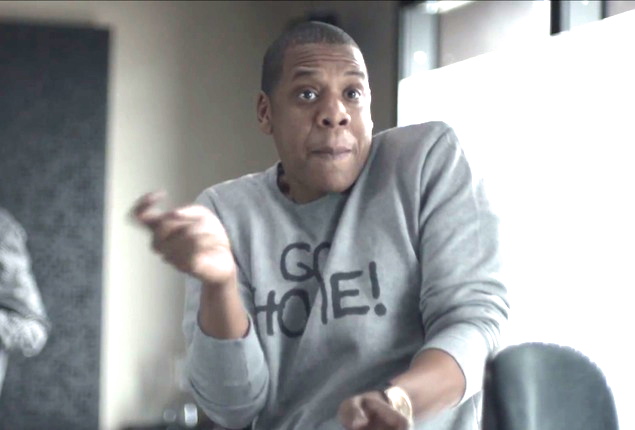
In conclusion, here’s a screenshot from the commercial that advertised the album that accurately sums up the problems:

Jay-Z is, at the end of the day, an adult father. And at the end of the day, this was an album that was advertised on television.

-By Andrew McNally

Jimmy Eat World – “Damage”

Photo Credit: Antiquiet

Photo Credit: Antiquiet

Grade: C+

Key Tracks: “Byebyelove,” “You Were Good”

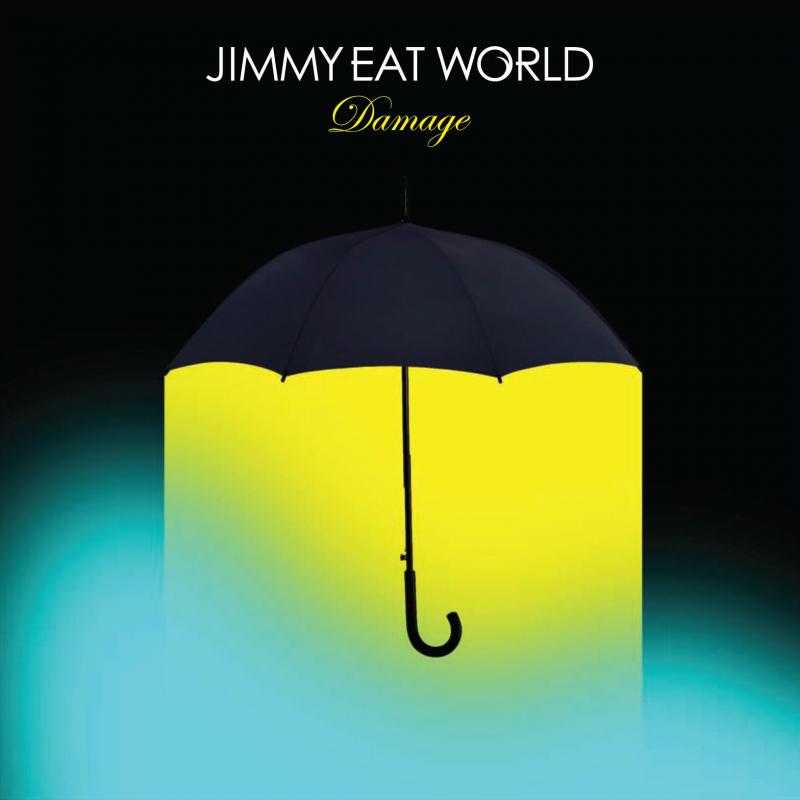
After some relative successes in the early- to mid-2000s, Jimmy Eat World have been quietly chugging along down the same relative path that led to fame in the first place. Kinda sad, kinda introspective, kinda inspirational, kinda pop, kinda punk alt-rock that is immediately listenable but never very interesting. “Damage,” their eighth album, is really no different. It’s more consistent and related than many of their previous albums, while also falling sometimes into forced or corny moments.

The members of Jimmy Eat World are approaching forty, and their inevitable disconnect from young crowds is becoming apparent. “Damage” tries, with moderate success, to be an ‘adult, break-up record.’ Lyrically, the album is among their stronger works. When it is effective, there are moments of Jim Adkins tearing away at the walls of youth hood. When it isn’t effective, the lyrics are cheesy bits of bad poetry. The album is pretty mix-and-match in this regard. It is consistent, at least, weaving through similar themes in many of the songs, definitely an intentional move.

The music of the album presents a problem, as the band has opted to largely keep the pop-punk sound of their previous albums, which does not successfully correlate with the themes they are attempting to highlight. It also means that many of the songs end up sounding too similar. The tempo is rarely a large difference from the previous track, and the volume almost never changes. This is expected of an album by a band like Jimmy Eat World, it just feels behind-the-times given the lyrical content.

The album’s two best tracks are actually the final two – the awfully-titled “Byebyelove” and “You Were Good.” The penultimate song is the only track on the album that has changes in volume, and has a certain intensity to it that is not achieved anywhere else on the record. “You Were Good” is a dramatic departure for the band, with a stripped-down, acoustic lo-fi sound, reminiscent of depressing folk singer-songwriters like Nick Drake. The change itself is so delightful and unexpected that I found myself caught up more in the realization than the actual song. “Damage” is definitely bolstered by it’s final two songs. Overall, it’s a decent record, one that is worth your time but not your memories. The band struggles to mature, but they’re trying.

If you like this, try: Weezer’s “Maladroit.” I personally think “Damage” will mirror “Maladroit” as an underrated entry in the given band’s canon.

-By Andrew McNally

Camera Obscura – “Desire Lines”

Photo credit: Spin Magazine

Photo credit: Spin Magazine

Grade: C

Key Tracks: “I Missed Your Party,” “Troublemaker”

Indie-folk bands like Camera Obscura are generally not known for being adventurous and playing around with genres and ideas. Any fan or casual listener of the genre pretty much knows what he or she is getting into when a new album by a band like Camera Obscura comes out. But “Desire Lines,” the band’s fifth album and first in four years, is seriously lacking something. The album is almost minimalistic, relying on only key instruments in a majority of the songs. It adds a certain consistency to the record, that helps it to flow without any rough transitions between ideas. It also, however, starts to feel like one long, run-on song that was not very interesting to start with.

The album, as a whole, feels like an unfinished idea. Indeed, the final track, “Desire Lines,” ends like a normal song. On both listens I found myself checking to see if my Internet had crashed, not realizing I had hit the album’s end. Lyrically, there is little original going on. Some of the more stand out tracks, like “I Missed Your Party” and “William’s Heart” have boring and uninspired lyrics. They are presented, too, by pretty and rhythmic vocals, but singer Tracyanne Campbell does not sound like she believes in her own lyrics.

Musically, the album is largely devoid of any detail. Every song is dominated by conventional rock instruments. Most of the songs seem to take the same relative tempo, with only “Cri Du Coeur”‘s wickedly-slow (and ultimately exceedingly dull) tempo providing a switch. “I Missed Your Party” has a nice addition of horns, which does bring a listener back in towards the album’s close.

“Desire Lines” is a moderately enjoyable listen, to someone who likes indie-folk acts like Rilo Kiley. Once it ends, though, it is immediately forgettable. It is innocent and fun pop, but never tries to be remarkable or original. “Desire Lines” is a low point for the usually great Camera Obscura.

-By Andrew McNally

The Front Bottoms – “Talon of the Hawk”

(Photo credit: Property of Zack)

(Photo credit: Property of Zack)

Grade: C-

Key Track: “Twin-Size Mattress”

If you’ve never heard the Front Bottoms’ 2011 self-titled debut, then you might see this, their sophomore album, as a pretty unique blend of borderline-spoken word poetry, acoustic guitar, and beating drums. When this album was leaked by the band, however, the reaction was tepid. “The Front Bottoms” is one of my favorite albums, probably in my top five of all-time. A lot of my friends and I love this band dearly (I’ve even made friends because of mutual love for this band). On the opening chords of “Au Revoir,” a letdown was already starting. Bands often have their sophomore albums suffer from a bland rehashing of their debuts, and the Front Bottoms are no different.

The band – a duo in the studio – created a wholly original type of music on their first album, which is continued here. I can only call it “alt-emo folk-pop.” Their songs rarely feature anything more than acoustic guitar, drums and vocals that are barely sung, yet the band has a taste for making their music seem like it is always about to fly off the rails; like the musicians are about to lose control of their own song (For the best example, look up “The Beers,” their fastest and best song). The lyrics jump from sad poetry to non-described personal experiences frequently, even mid-line. And the poetic lines are often poignant, even ‘cutesy,’ still hitting the listener in the gut harder than they should.

But “Talon of the Hawk” is distinctly lacking. The lyrics are significantly cornier. They feels less poetic and more lame and forced, and the vocal delivery is not as random, with the verses formed into actual rhythmic lines. Musically, the band has never been proficient, as it is not their focus, but they are even less so here. The tracks on their first album are all instinctively catchy. On the second, they are almost all forgettable. Even the production quality, pristine, admittedly, feels better than it should. To their fans, the Front Bottoms are two goofy guys unaware of their own growing popularity, which does not come through on “Talon”s very professional recording style. The album’s only redeeming song is “Twin-Size Mattress,” both lyrically and musically strong. (The song is the album’s leadoff single. A video was recorded which, had I been standing ten feet to the right at a recent NYC show, I would’ve been in)

The album is dividing Front Bottoms fans. Some love it, some are left with a bad taste in their mouths. It is a serious decline from their first album in every way. Those previously unassociated with the band might find it much more intriguing and entertaining than those who ate up their debut. Reactions to pieces of work are, of course, subjective, but they are even more so with “Talon of the Hawk”

-Andrew McNally

30 Seconds to Mars – “Love Lust Faith + Dreams”

30 Seconds to Mars

Grade: C

Best Tracks: “Pyres of Varanasi,” “Northern Lights”

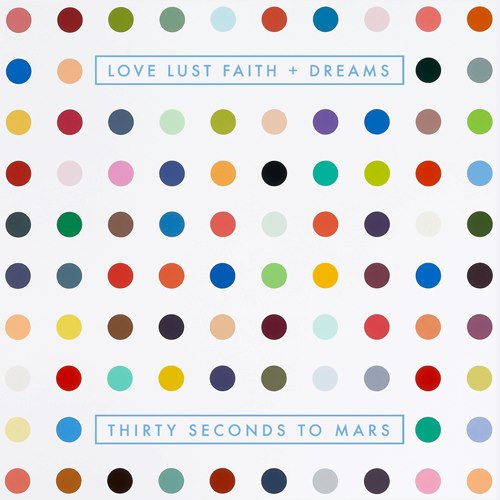
30 Seconds to Mars have never been ones to please the critics, with their often corny and awkward pairings of genres, and at most points, their fourth album never strays too far beyond that. Bandleader Jared Leto has always embraced the corniness of his lyrics and the music of his backing band. “Love Lust Faith + Dreams” feels no less cheesy or misguided than their previous efforts.

Lyrically, Leto’s meandering musings on the vague concepts can be summed up in the album’s title. The album is split thematically into four segments, each word in the album’s title. While Leto does stretch deeper and darker than his previous albums, a majority of the metaphors presented here are still largely depthless. The ‘faith’ section in particular is largely void of originality.

Musically, however, I have to applaud 30 Seconds to Mars. For a band that has never been very respected, they do find ways to reinvent themselves. The then-popular pop-emo brand of their second album was quite a different sound than their industrial-based debut. This album is louder, more experimental and electronic based, a sharp change from their vocally loud and musically quiet, unstructured third album “This Is War.” “Love Lust Faith + Dreams” sounds, at points, like a band too heavily inspired by Muse but more inventive. It also, at points, resembles a band that enjoyed the “Inception” soundtrack far more than they should have. But I was actually impressed by the music of this album. The more experimental nature diversified the individual songs more than their previous efforts. The ‘dream’ sequence is musically effective, introduced by “Convergence,” although the whole segment seems to build to a largely unsatisfactory ending.

I would wager to say that this is 30 Seconds to Mars’ best album, but I would not go out of the way to recommend it. Musically strong but lyrically, the band is still flailing in their typically cheesy nature, grasping at large concepts and ideas but rarely hitting the mark with any depth. 30 Seconds to Mars fans will surely love it, and they might even gain some new fans. “Love Lust Faith + Dreams” is not going to down as one of the year’s best, but it is a reasonable listen for general fans of the band.

-Andrew McNally