Future – “Honest”

Grade: B+

Key Tracks: “My Momma” “Benz Friendz (Whatchutola)”

Future’s second album isn’t entirely filled with winners, but it’s certainly unpredictable. Future, aka Nayvadius Cash, uses some brooding and synthy music to create a dark atmosphere around his music. But at the same time, it’s rhythmic and full of catchy hip-hop beats and occasional meaty samples. It matches the lyrics, which alternate between dirty and explicit to nods to personal struggles.

“Honest” could almost be described as “moody,” because of it’s seemingly inherent dark nature, but the title wouldn’t be right. The album is deceiving. Although it has many honest moments (hence the title), Future creates a unique and well-rounded atmosphere, one that’s human, with qualities both good and bad. The music’s dark but palpable nature not only reflects that, but it’s consistent throughout the album.

Future’s rapping remains the best part of his music, often frantic and unpredictable. He has a knack for dropping words in at select moments and creating his own vocal rhythms alternate to the music. It contributes to the trippy feel, with sometimes competing rhythms. Lyrically, Future is in complete control. He switches from explicit, like on opener “Look Ahead,” and on single “Move That Dope,” to tales of divorce settlements and upbringings (the affecting “I Won” and the personal “My Momma”).

He also has some A-list guest stars, who drop in for some inconsistent but sometimes great spots – Andre 3000 drops in on one the album’s best songs, “Benz Friends (Whatchutola),” and Wiz Khalifa guests on one of the most honest songs, “My Momma.” Drake and Kanye both show up, the former providing a memorable but short spot on an interlude, the latter contributing the album’s deepest story, “I Won.” Elsewhere, Pharrell, Casino and Pusha T are largely wasted on the overlong and tepid “Move That Dope,” but even securing their spots cements Future’s stance in the future of hip-hop. The only time the album sags is it’s midpoint, with a couple straight songs without guest spots, but it’s saved by the rich solo track “Covered in Money” and the collaboration with Andre 3000.

*One small issue I want to address with the album is that “Look Ahead” samples Amadou & Mariam’s “Dougou Badia,” and the duo seems to be getting no credit for their sample. I usually don’t pick up on things like this, but the sample is used as the whole basis of the song. They might have chosen not to get credit, I have no idea, I just want to put credit where credit is due because I defend Amadou & Mariam at all costs. Otherwise, “Honest” is a great album that creates a whole world without getting stuck in it, and helps to prove that Future’s name is well-chosen – he seems to be ahead of everyone else right now.

-By Andrew McNally

Sleep Weather – “Two Wheels Spinning”

(Photo Credit: bandcamp)

Grade: B

With emo, as we know it today, changing seemingly other week, it’s refreshing to hear a bit of a throwback band. Georgia’s Sleep Weather ride the waves of some their predecessors, with a louder and harsher sound then most emo bands today. It’s a little reminiscent of early, punk-influenced emo instead of the “twinkly” sounds of today.

This EP, the band’s first, is a tight four songs that hint at a bigger sound than expected. This comes partially from post-rock and hardcore influences that become apparent at certain points, and partially from the screamed vocals of Chris Branigan and Hunter Rawls. The vocals sound screamo-based, although comparing something to screamo isn’t usually a compliment. But the guttural vocals help drive the band’s heavy sound, in a crowd where many emo vocalists opt for cleaner and clearer vocals than the past. This is used the best on the album’s closer, “My Mountain,” where the music largely dies away during a great breakdown and the screaming vocals are harshly coupled with the quieted music.

The band, also consisting of Chris Slyfield on bass and Allen McCleese (with Branigan and Rawls on guitar), largely sticks to midtempo music. When it all comes together, it resembles Algernon Cadwallader’s brief existence as the emo revivalists who set the template in 2011, only to have most bands approach a more harmonious sound. The band sets itself apart in the first song, “Grasoline,” an almost painfully slow and long-winded song that’s more post-rock than it is emo. The band is, at times, in no rush to hit their climax. Their music is not necessarily heavy and it is not overly fast, but it’s very forceful. Sleep Weather have an angrier sound to them, consistent throughout the EP.

The EP’s production is a little too rough at times, but they’re just starting out, so it’s easily excusable. And the genre they play isn’t exactly classifiable. It’s like screamo, but more inventive and eclectic, and not rushing immediately towards volume. There are a lot of post-rock influences hidden in their energy and songwriting, but they most closely resemble our current Midwestern emo – just not as “twinkly.” “Two Wheels Spinning” is a promising release for a young band. They might just find an audience in people who are tired of this current, cleaner wave of emo.

The album is available for streaming and download here.

If you like this try: Rites of Spring’s legendary 1985 self-titled, and only, full-length album. While more punk-based, it shares the rougher qualities of Sleep Weather.

-By Andrew McNally

Skull Practitioners – “st1”

(Photo Credit: bandcamp)

Grade: B

Key track: “BPPAM (feat. Anna Barie)”

Skull Practitioners, out of New York, aren’t ones that are going to try to align with genres. Their debut tape may only be four songs, but it packs a few different punches. The band alternates between garage rock and psychedelia, channeling and coupling two opposing forces of the 70’s. The band uses alternating throwbacks to make music that’s instantly both familiar and unique. And, more importantly, they’re rocking, loudly.

Skull Practitioners are, first and foremost, a rock band. Whether they’re angled towards garage-punk or something trippier, they’re loud, in a classic rock sense. This is evident on all four songs, but especially on the second track “Nelson D,” recorded live in The Grand Victory. The song is instrumental; a pseudo-jam that has all the elements of classic garage-rock. The guitars and vocals are distorted, the volume is turned up, and the drums are fast and snare-heavy. “Nelson D” feels ripped out of a garage in 1977. Likewise, final track “Another Sicko (feat. Tom Derwent)” is a lot more psychedelic-based, but still ups the volume. It’s longer and slower, taking it’s time to flesh out some psychedelic ideas, while keeping the muzzled vocals of traditional garage rock.

The band seems to have a knack for writing throwback songs, equal parts classic rock and garage-punk. The tape’s opener and best song, “BPPAM,” has a serious garage-rock vibe, while holding onto some more traditional classic rock vocals from Anna Barie. It’s a strong and energetic song, bolstered by the great guest spot. “Foreign Wives,” meanwhile, seems to combine all of the band’s elements. The vibrato guitar rhythm with the cymbal-heavy drum beat adds a very DIY sense to the music. The whole song has an early punk feel to it, without ever actually sounding like it.

The tape’s only fault is not having any sort of real cohesiveness. All four of the songs are great in their own right, but it does feel like a collection. A live track comes second, with two studio tracks after. But it’s a first release, and in a weird way, it all fits. Skull Practitioners are not revolutionizing rock music, simply finding their place within it. By combining some established but combative influences, they’re working towards creating their own, unique sound, one that rocks and stays moderately consistent. The tape may not strive for originality, but it is a solid, loud, and heavy rock release that simply does as all rock records should.

The tape can be streamed and downloaded here.

-By Andrew McNally

Patton Oswalt – “Tragedy Plus Comedy Equals Time”

(Photo Credit: Indiewire)

Grade: B

Best bits: “Sellout” “My Prostitute”

There are two things that Patton Oswalt does best: self-deprecation, and total dismantling of some meaningless (usually reviled pop-culture) subject. He does both here – while mixing in some more predictable family humor. “Tragedy” certainly isn’t one of the best comedy albums, and it isn’t Oswalt’s best, but he sells all of his jokes and anecdotes and proves that he’s still at the top of his game.

The album starts with a great self-deprecating bit called “My Fitness Future,” which is just being skinny enough that he doesn’t have to attend his daughter’s graduation in a motorized cart (Bonus: after she graduates, he says has to go sit in A/C and “swap my folds,” which is one of the most guttural trio of words ever spoken). Self-deprecation is peppered throughout the album, although the second half is centered around longer stories about Oswalt’s younger days.

First, though, is a few stories about his daughter. Two bits are titled “I Am a Great Dad” and “I Am an Awful Dad,” channeling (probably unintentionally) Louis CK’s “My 7-Year-Old is Better Than Me”/”My 3-Year-Old is a 3-Year-Old” two bits. He offers stories about his daughter getting scolded on a playground and accidentally seeing “The Wolfman” on TV, and while they’re very funny, they’re a little more traditional than Oswalt is used to. The follow-up, “Adorable Racism,” where his daughter starts being extremely racist in a Starbucks, is a lot funnier, and transitions into the album’s funnier half.

“Creative Depression” is a wildly funny bit that examines Oswalt blissfully committing suicide in a grocery store’s Lean Cuisine aisle. The whole rest of the album is largely unrelated but all hilarious anecdotes. The special’s midpoint is a lengthy bit on the opinion on selling out, and how 44 year old Patton disagrees with 25 year old Patton – and includes a total dismantling take on Nickelback that makes them look, somehow, like heroes. The bit includes a story about the gig that paid him more than anything else, ever, and how it took a very questionable turn. It’s a funny story, and Oswalt’s selling of his own fate in the story is perfect.

Afterwards, he gives stories about attempting to buy fancy clothes, a sad 19th century gardener, trying to tell jokes in humorless Germany, and a very funny bit about the one time he picked up a prostitute in Atlanta. These stories are nothing more than reflections on Oswalt’s past, and do not have much of a comedic arc, but they’re all very humorous. The special has it’s faults – occasionally a little too dark, and definitely bottom-heavy – but it has glimpses of Oswalt at his finest, and his total confidence telling embarrassing tales anchors the album. Oswalt is one of the most original stand-up comics working today, and when he starts to really get rolling, he’s unstoppable.

If you like this, try: It feels painful to ever compare a comic to Louis CK, because it’s such a cop-out, he’s the best working today. But this album did feel very reminiscent of CK’s 2011 special “Hilarious.”

-By Andrew McNally

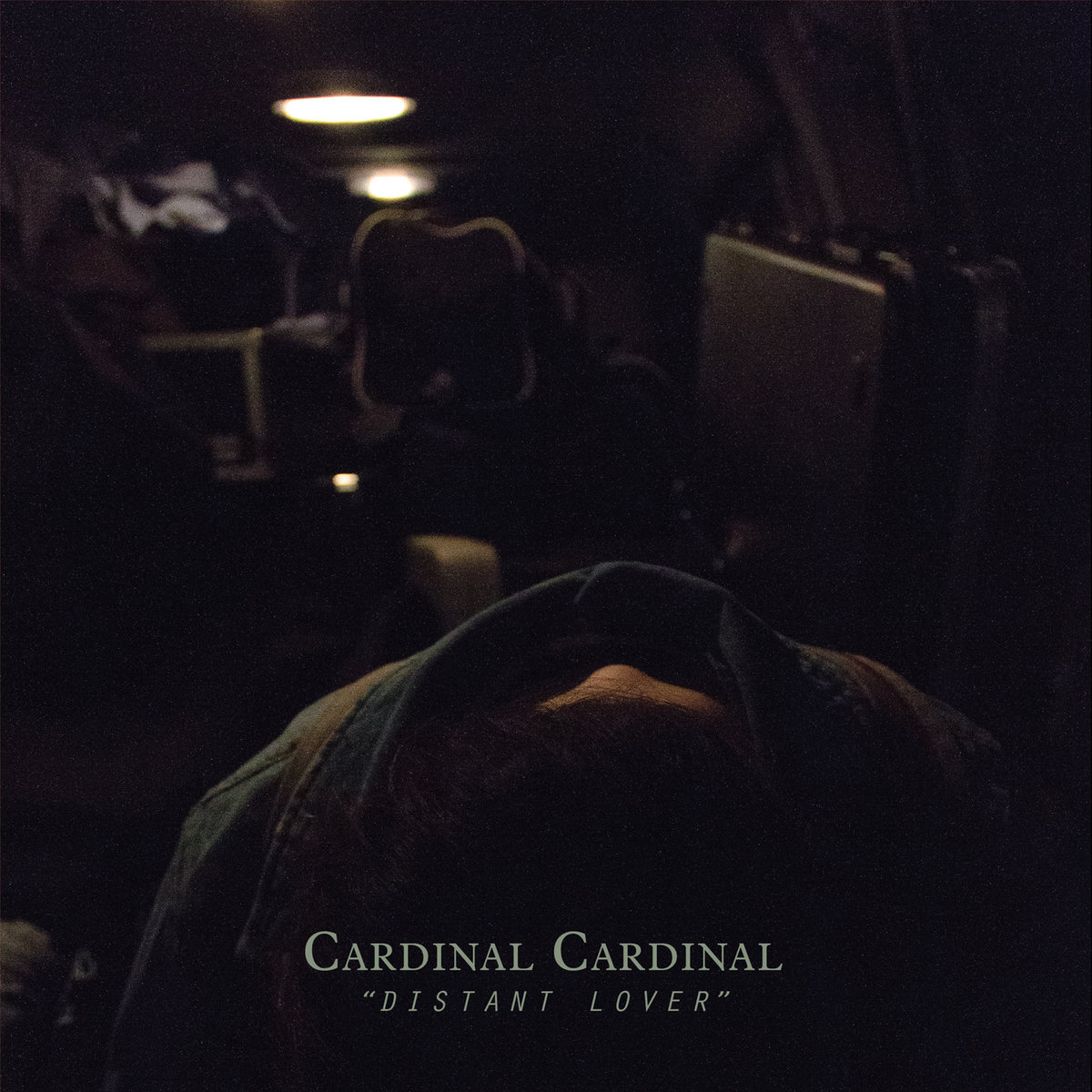
Cardinal Cardinal – “Distant Lover”

(Photo Credit: 6131 Records)

Grade: B

Key Track: “When I’m Not Alone”

On one hand, it’s a little tough to call something like Cardinal Cardinal a “side project,” when John Bradley’s primary band, Dads, only has one other member. But on the other hand, it is exactly what you would consider a side project to be – definably different than the main band. Dads have been steadily rising in popularity thanks to their often chaotic emo/punk music that mixes raging guitar and drums with deeply poetic lyrics. Cardinal Cardinal takes a wholly new approach, as an entirely acoustic EP that is focused on the opposite of what Dads seems to be – cohesive over chaos.

“Distant Lover” is very much just an offering – four songs and fifteen minutes. Bradley, working solo, is not trying to break down any barriers or reinvent genres. Instead, he’s simply showing an inspired, lighter side. Three of the four songs on the album are simplistic – they’re light and pretty, well-written and well-sung indie-folk songs. The only outlier is “When I’m Not Alone,” bolstered by a very unexpected tempo change.

Again, simplicity does not have to be a fault. Doing something that has been done can still be successful if you do it in your own way. And these songs are definitely Bradley’s. His voice and his equally poetic lyrics mark this EP. Just like the music of Dads, this album touches on losing loved ones and learning how to move on. It’s certainly sad, and the music reflects that. The acoustic nature of the album touches on sadness, not anger.

“Distant Lover” is only a few minutes long, but it’s promising to see Bradley come out of his element. This EP is inspired, a softer work that’s no less devastating. Dads have been trying to break out of the whole “twinkly emo” thing, and his might help that. Cardinal Cardinal’s debut is a reliable and memorable offering of some sad and relatable indie-folk.

-By Andrew McNally

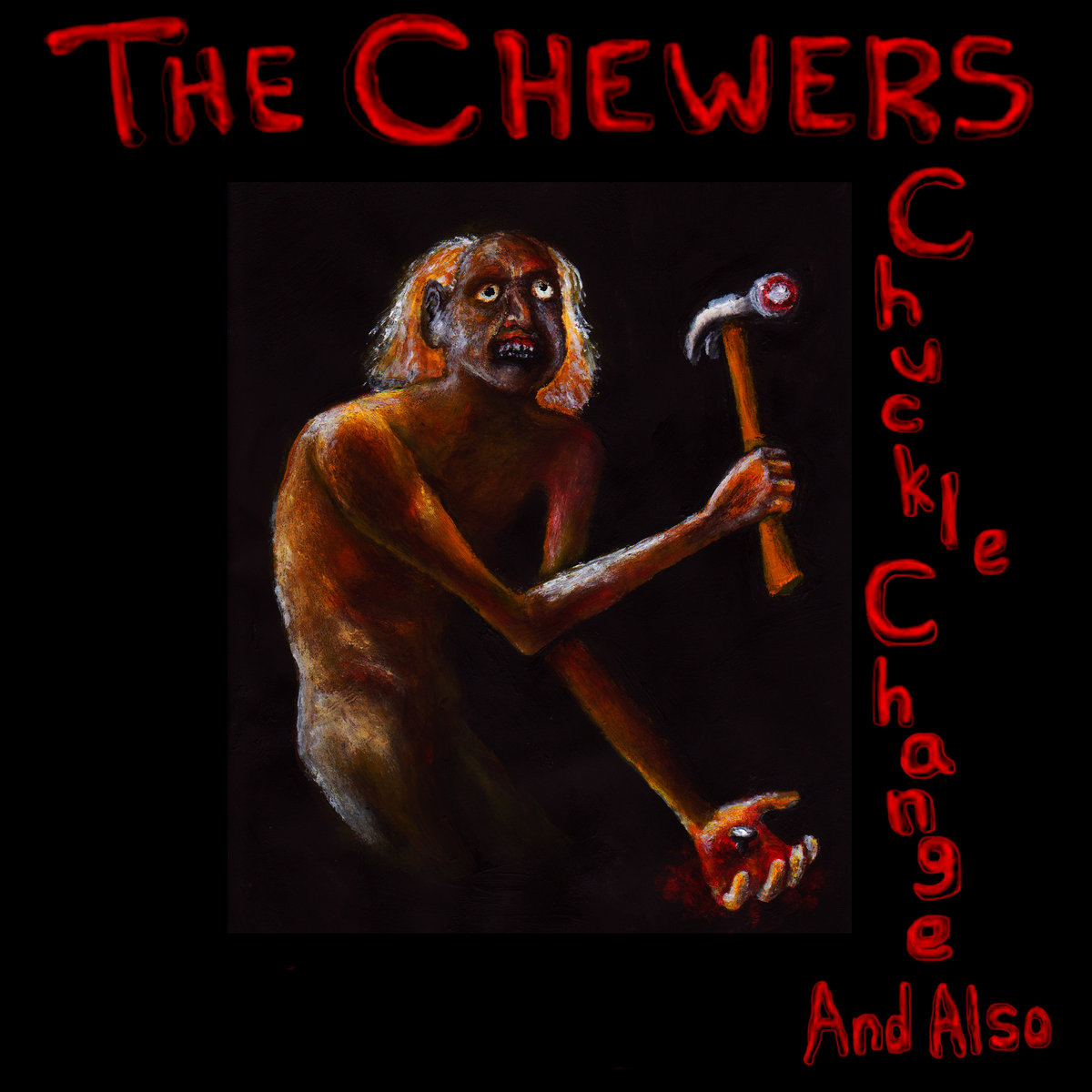
The Chewers – “Chuckle Change And Also”

(Photo Credit: bandcamp)

Grade: B+

Key Tracks: “Burn it Down” “Teeth Lock”

The Chewers describe their music as “deliberately off-kilter,” a very accurate self-description. The band, consisting of Travis Caffrey and Michael Sadler, plays a unique brand of avant-rock. The duo channels avant-garde bands like the Residents, making somewhat minimalist avant-rock that’s bizarre but still a little rhythmic. Take this album song-by-song and it’s almost too weird. But take it as a whole and it’s a continuous and surprisingly consistent look at a theme of dissatisfaction.

What separates the Chewers from most avant-rock bands is their location. The band hails from West Virginia and record in Nashville. Avant-garde music doesn’t exactly have a usual base, but the Midwest hasn’t exactly provided many avant bands. What the band adds is a bluegrass/hillbilly aspect to what’s otherwise noise-rock. It’s a bizarre combination, surely, and one that reinforces what the band seems to be about. Both men play a variety of instruments, and the music is a healthy, low-key mix of bluegrass and noise-rock. The album’s 22 songs only add up to 46 minutes, meaning almost none of the ideas stick around too long and the album is constantly changing.

With the album constantly changing ideas, the theme of isolation is made more present. The music itself sounds almost dissatisfied, played in a way that sounds upset with itself. The band adopt a number of characters throughout the album, singing in a variety of voices. These characters are all angry or sad about something typical, often something small. It’s an interesting approach, that adds a surprising amount of cohesiveness that might not be noticeable at first.

But most of all, the two are clearly enjoying making their off-kilter music, which makes for a fun and diverse listen. Each song, even though many fall around a minute in length, is like a small adventure in that you don’t know what it’s going to be. Avant-rock should be wildly unexpected, and even though the Chewers are more melodic than most avant-rock bands, their mix of noise and hillbilly and use of one-off characters makes for a satisfyingly bizarre listen.

The album can be streamed and purchased on their bandcamp page.

If you like this, try: the Residents are one of the longest running bands ever, and their long career started with the avant-rock and Beatles spoofing classic “Meet the Residents.” I’d start there.

-By Andrew McNally

Pharrell – “G I R L”

(Photo Credit: Hollywood Reporter)

Grade: B+

Key Tracks: “Hunter” “Gust of Wind”

This was a risky time for Pharrell to release a solo album. He’s riding the waves of one of the most successful years someone in music can have. He had guest spots on the two biggest songs of last summer – “Get Lucky” and “Blurred Lines,” and he co-wrote and produced two songs on Beyonce’s instant-legend self-titled album. He wore a silly, hip-hop-historical and now famous hat to the Grammy’s, and he released a 24 hour music video for his big hit, “Happy.” Pharrell is, nowadays, now famous for producing and guest spots, hugely overshadowing his solo work and his music with N.E.R.D. and the Neptunes. So if “G I R L” were to be underwhelming, it would likely derail the ever-increasing speed of the train that Pharrell is at the helm of. Luckily, “G I R L” is a sufficient pop release. It isn’t the most memorable of albums, but it strongly benefits from an all-inviting sound, a consistent feminist agenda, and huge name guest spots from Pharrell’s long, long contact list.

Pharrell tried to hit all bases with “G I R L,” and he certainly succeeds. It’s sexy – like the sweaty “Hunter.” It’s classy, with opener “Marilyn Monroe.” And it’s friendly – centered around the smash hit “Happy,” which seems to actually be stylized on the album as “Happy (from Despicable Me 2).” You know, the kids movie. The very next song is “Come Get It Bae,” featuring the not-family-friendly Miley Cyrus. Whatever your fancy is with pop music, “G I R L” likely hits it.

The guest spots, though usually not the focus of a review, are something to marvel at. As mentioned, Miley drops in. And so do Alicia Keys, Daft Punk, Kelly Osbourne, a very falsetto-y Justin Timberlake, Timbaland (relegated to beatboxing) and, unpredictably, JoJo. And the strings on the album – arranged by Hans Zimmer. The cast on this album reads like a Wes Anderson movie. And just like an Anderson film – some of the appearances are solely based on “look who I got to be here!,” while some, especially Daft Punk, add a whole level of depth and help separate each track from the next.

And it’s good that each song is distinct enough to stand out – because Pharrell, on his own, isn’t actually all that strong. The rare moments when he raps on the album work, but otherwise, his voice usually just blends into the background. Think about “Happy” – his voice only overpowers the music because the music is minimal during the chorus, and it’s catchy because of how his voice acts as an instrument, not for the lyrics. There are moments where he ups into falsetto, and he really doesn’t hit the notes. There are a couple moments were it resembles watching a Top 12 American Idol giving what you just know is their last performance. It just isn’t quite there, overall. But it’s a boatload of fun, so it’s never an issue.

“G I R L” is all linked together by a distinctly feministic tone. It’s almost possible to see this – and “Get Lucky” and his work on Beyonce’s album – as an apology for the gut-wrechnigly misogynist (and possibly divorce-causing) “Blurred Lines.” Pharrell sometimes skirts the lines of male pop feminism – respecting women’s bodies and sexual desires, etc., and sometimes fully delves into actual feminism. It helps to create a consistent tone, and let’s be real, it’s just nice to hear. Inviting feminist-leaning artists like Daft Punk, Timberlake and the severely misunderstood Miley Cyrus only helps that. The era of patriarchal sex-pop is coming to a close, and Pharrell seems to be the one locking the doors.

So “G I R L” only suffers from Pharrell himself not being the most talented singer. And given that this is his first solo album in eight years, it’s not his specialty. He produced the whole album, and wrote every song, much more his strong suits. The album is not the most memorable, because it all feels familiar. But it’s still enjoyable and every song is unique. It sounds by the books, if every song was taken from a different book than the one previous. “G I R L” is a listen for those of all ages and musical preferences. There’s something for everyone, and his “music for everyone” approach helps to bolster the feminist themes. “G I R L” won’t be one of the albums of the year, but it’s a more than decent pop release, and one that will help Pharrell continue his unstoppable reign.

-By Andrew McNally

No Man’s Valley – “…And Four Other Songs”

Grade: B+

Key Track: “Happy?”

It’s tempting to call No Man’s Valley a throwback band for today’s music. The Dutch group has the constructs of a typical rock band – vocals, guitars, bass, drums and keyboard. But the band prides themselves on incorporating 60s’ style rhythms and moods into their songs, and there’s elements from many different eras. The songs have a garage rock energy to them, and there is a frequent use of soundclips. When the whole package comes together, it becomes a band taking many different influences to become their own unique sound.

No Man’s Valley hails from the Netherlands, but their feelings are universal. The band sings of common themes like work, not fitting in, and, on the opener and best song “Happy?,” societal pressures to seem happy. “Happy?,” serving as a single of types, is the most 60’s-inspired song on the EP. The guitar-and-synth at the song’s beginning sounds like something the Zombies would have jammed on, if they sang about struggling to be happy instead of an actual happy song. it has a slow-burning energy and has a classic feel to it. “Sleeping on the Job” is a much more ‘recent’ era song – another slow-burner, but one that angrily takes on the tediousness of working (specifically, at an ad agency). Again, the song’s guitar/synth combination is a winner, this time taking on a 70’s feel.

“Moon” is definitely the most experimental song on the release, to the point where it almost doesn’t fit. But it’s a great song. The nearly five-minute song is slower, and has a hefty instrumental midsection played over soundclips, before erupting into a big, synth-heavy climax. Lyrically, the song tackles a feeling of loneliness, with the frequently repeated “The moon is a good listener” speaking volumes. The follow-up, “Black Sheep,” the quickest, shortest and most energetic track. It might be the least interesting one, but it does capture the band’s 60’s inspirations pretty dead-on. Finally, “We Have Lost the Way” serves as a fitting finale. The midtempo song strips away the vocals for a majority (save a soundclip, again tackling the ad agency), for a rousing sendoff, before bringing them back in and ever so slowly fading out.

Listeners could strike many comparisons to No Man’s Valley. One of the most immediate would be Nick Cave. Cave’s music is eclectic, but with a strong personal identity. “…And Four Other Songs” has a consistent tone and energy, combining many styles while staying original. The vocals might be compared to the vocals of Scott Walker – deep, and almost crooning at times. It doesn’t always work on this EP, but it often reinforces the dark and introspective lyrics. No Man’s Valley find originality in established influences, and “…And Four Other Songs” only goes to show that.

“Happy?” is streaming on their bandcamp page, and the EP will be available for free on March 23rd.

-By Andrew McNally

Beck – “Morning Phase”

(Photo Credit: http://www.spin.com)

Grade: B+

Key Tracks: “Say Goodbye” “Wave”

Since revealing that he would finally be releasing a new album, Beck has been promoting “Morning Phase” as a sequel to his 2002 album “Sea Change.” Beck’s music before that album, and most of it since, has been characterized by boundless energy, an almost unnecessary amount of instruments, samples, and verses that were often made up on the spot and never replaced. “Sea Change,” however, is a moody, acoustic work inspired by the break-up with his girlfriend of nearly a decade. “Morning Phase” is definitely a sequel – but the kind of sequel that tells a new story, not one that just rehashes what was done before.

“Morning Phase” is marked by it’s lack of instruments. “Morning,” the album’s first track (save a brief string intro), is a haunting and almost painfully-timed song, and starts with just an acoustic rhythm. It characterizes the album – it’s slower, calmer and more emotional than any of Beck’s most recent albums. But unlike “Sea Change,” which got too moody and self-indulgent (justifiably), this album has a wide range of emotions. Although the whole album sounds dry and down – it’s deceiving. There are tracks like that, certainly, but “Don’t Let It Go” and “Blackbird Chain” have a subtly popping vibe. It’s hopeful, at least. “Morning Phase” is certainly a thematic sequel to “Sea Change,” in the proper way a sequel should be.

One of the things to analyze on any Beck album is how many instruments are present, and how they’re being used. To say “Morning Phase” is a largely acoustic work does not equate to it being less interesting musically. “Say Goodbye” and “Blue Moon” are marked by unpredictable guitar strumming and rhythms, “Unforgiven” trades the guitar for a warped, piano drone, and finale “Waking Light” suddenly erupts into a full band setting, for the first time on the album. But the shining light is the album’s midpoint. “Wave” is far and away the album’s best song, and already stands up to the best songs in Beck’s discography. The song has no percussion, instead driven by a full string section, composed by Beck’s father, David Campbell. Beck’s voice flies loud and long over the strings, accompanied with almost no other music. It’s a dark song, centered around some of the album’s lighter tracks, and it’s one of the most ambitious songs Beck’s ever done.

While “Sea Change” was a relentlessly dark album, brought on by one sharp event, “Morning Phase” is a more diverse work, and seems to be inspired by years of reflection in the first album’s aftermath. It’s a rare sequel that’s better than the first. It might take a few more listens than most Beck albums to really get into, but it’ll be just as memorable as his better works. Beck fans were probably waiting for another crazy album, and we got the opposite, and it’s every bit as pleasing as hoped for. It’s been a long six years, but Beck leaves no need for an apology.

-By Andrew McNally

Fun Home – “Knit Into Place”

(Photo Credit: bandcamp)

Grade: B+

Fun Home started as a folk duo, with twin sisters Sara and Rose Savage. Although they’ve since expanded the band to include Daniel Hagendorf on drums and Benjamin Gardner on bass, and have adapted a more emo/indie sound, their folk presence is still a strong influence on their new “Knit Into Home” EP, released on Broken World Media. Four of the five songs end on lightened, often acoustic rhythms. The vocals have an unfiltered sweetness to them, not usually akin to emo groups. And even the lengths of the songs reflect an indie-folk element – the longest is 3:03.

“Stay Inside,” the opener, is a sweet and light midtempo song, with a very distant and almost apathetic attitude to it, using electric guitars but only barely. “Felt So Tired,” meanwhile, has more of a driving energy. The energy comes from a pounding snare drum during the verses that counteracts a bigger sound during the chorus. “Felt So Tired” might be the EP’s best song, with beautiful lyrics paired with a heartful energy that’s equal parts emo and folk.

“Bad Weather,” the EP’s midpoint, is the most driving track. It leans closer to emo than any other one, with a more simple, louder rhythm and some powerful lyrics. “Falling Asleep On the Floor” acts almost as an interlude – acoustic, quiet and pretty – although it is definitely a standalone song, and a strong one. It’s a great follow-up to “Bad Weather,” and one that shows the band is equally effective at quiet rhythms as they are loud blasts. The final track, “I’m Not There,” is the strongest vocally, with a very catchy vocal chorus. The song is actually the weakest musically, but it is saved by the strength of the vocals.

It’s snowing where I am right now, and it makes the perfect backdrop for “Knit Into Place.” It’s a cold weather album (one song is called “Bad Weather”). It has a warm feeling, produced by beautiful melodies and acoustic work mixed in alongside escalating, electric volumes. Fun Home aren’t exactly a “Fun” band, but the EP is consistently sweet yet drastic, and although it might take a few listens to fully appreciate, all four members are obviously talented musicians. Through the fusing music and captivating lyrics, the band manages to sound like average people, recording music not for profit or to make a statement, just to make something of their own – a big part of the current emo movement. “Knit Into Place” shows a lot of potential. The blending of folk, indie and emo works nearly every time. Let “Knit Into Place” be part of your snowed-in soundtrack.

The album is available for cassette purchase here and for streaming and downloading here.

If you like this, try: Laura Stevenson & the Cans, any album. Though the band doesn’t sound all that much like the Cans, they have all the same elements: poppy, catchy rhythms that are vastly different on every track; devastating lyrics; strong, strong vocals.

-By Andrew McNally