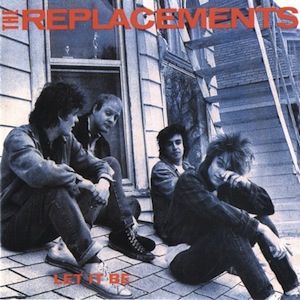
The Replacements Chronicles

It’s been a long few months since I’ve posted here – I really intended to use this blog more this year, but real life stuff keeps getting in the way! But I’m here with another edition of my new Chronicles series, where I burn through a band or artist’s studio catalog, specifically an artist that I should have a deeper knowledge on. You can check out my previous posts, Zola Jesus, and David Bowie. Truthfully, I finished this one months ago and just haven’t gotten around to uploading it. Whoops! My bad. But with the new release of the remixed Let It Be, it felt like the perfect time to upload. I haven’t included that here, but I’m excited to find some time to dive into it.
Unlike Zola & Bowie, I really do not know much of anything about this group. I remember checking them out many years ago and being turned off for some reason. Now I am older, wiser, and ready to explore something I’ve been putting off. I’ll be listening to all seven of their studio albums and chronicling my thoughts along the way. This will be a one-time entry, so all seven albums are below. Join me!


SORRY MA, FORGOT TO TAKE OUT THE TRASH (1981)

Okay so off the bat, I’m noticing the track lengths here. I think the reason I was initially turned off from the group was that they were heralded to me as a “punk” band so I was expecting the punk I was into at the time – Rancid, the Damned, the Stooges. It wasn’t that.

Well, this is actually along those lines and clearly where I should’ve started. This album does an expert job at melding pop and punk in the exact definition of power-pop. It’s got the punk energy and the punk snarl, but without sacrificing melody and licks. My immediate comparison was the Buzzcocks, though they leaned a bit more heavily into the “-pop” side of it. This album is full of bruisers, and a lot of them are excellent. The 1-2-3 opening punch of “Takin’ A Ride,” “Careless” and “Customer” really sets the tone for the band, with the latter song the best of the three. You’ve also got the two odes – “Somethin to Du,” the obvious ode to fellow punk group Husker Du, and “Johnny’s Gonna Die,” a more somber and serious song about the heroin-riddled Johnny Thunders. The best track is the comical “I Hate Music,” which satirizes the inherent paradox of the punk scene from the inside.

There is probably a little too much going on in this debut, even for one that isn’t particularly long. Some songs simply aren’t as melodic and memorable as the others, and the great ones are scattered throughout so it’s a real cherry-pick situation. The album feels a little maximalist, which is ironic given the short song lengths and barebones music. But, some songs could’ve definitely been cut.

It’s a fantastic album. It feels so definitive of the 80’s punk scene and the pop-driven bands who were rebelling against the hardcore factions. Power-pop like this simply doesn’t exist anymore, so all of these records feel like relics. Loved it, I’m hooked immediately. Can’t wait to check out the next six.

Grade: 7.5/10

Fav track: “I Hate Music”

HOOTENANNY (1983)

What a wild ride this one is. Almost immediately, the Replacements break the shackles of defined genre with this diverse, loose record. There’s a lot to love on this one, and the playful experimentation and gritty bitterness of the band is already coming out.

Some of the better tracks are punk bruisers that feel like a hangover off their debut. “Run It” is the shortest and loudest of them, a rambunctious track that feels like it’s about to go off the rails. Late-album bangers “You Lose” and “Hayday” are proper fight-starters, too, with only the latter stretching over two minutes. But there’s a lot of more midtempo stuff, too. One highlight is “Within Your Reach,” a more maturely written song that sounds closer to the Talking Heads side of new wave than anything. There’s also “Take Me Down to the Hospital” and closer “Treatment Plan,” two low-key songs that are closer to ditties than anything else.

Not everything worked for me. “Willpower” was straight up boring, and “Buck Hill” was another ditty that just felt like a filler retread of “Hospital.” In an album this short, there was still some unnecessary downtime. “Color Me Impressed” and “Lovelines” are both tracks that left no impression on me – literally, as my notes for both read just “?”.

There’s two absolutely bewildering tracks that were more confusing and exciting than anything else. The opening title track sees all of the band members switch instruments – poorly. It’s the kind of a thing a more restrained band would put at the end of the album. But the Replacements aren’t that band, and they both opened the album up with it, and named it after the song. Also there’s “Mr. Whirly,” a song credited to “mostly stolen,” which it is. It’s under two minutes, and is built on interpretations of other songs like “The Twist” and “Strawberry Fields Forever,” among others. I’m not sure it works as a taunt, but it’s fun. It got me more excited for the upcoming album “Let It Be.”

Great album, it kept me guessing top-to-bottom, even if it wasn’t 100% successful. I’m really wondering how I was put off from this group for so long. I’m excited to keep on going.

Grade: 8/10

Fav track: “Within Your Reach”

LET IT BE (1984)

I like to read reviews of albums when I do listen-throughs like this. I knew this was a renowned album, but I didn’t realize just how renowned it is. This represents a more mature Replacements, swapping out garage jams for longer and more toned-down songs and, in doing so, producing a certified indie classic.

I’ll be honest here and say I wasn’t hooked at first. The classic opener “I Will Dare” and the follow-up “Favorite Thing” didn’t really grab me in any way. I’m not really sure why, maybe because I didn’t quite know what to expect. Regardless, I was hooked after that. “We’re Comin Out” may have been more of a throwback punk jam, but it roped me in and the rest of the album held me tight. The disdainful ennui of “Unsatisfied,” the straight-forward rock of “Sixteen Blue” and the powerful ballad “Androgynous” all signal a genuine turning point for the group. “Androgynous” is easily the best and most important song they’ve done so far, with serious and prescient lyrics and real shades of Bowie rhythms on the vocal front (though maybe I’ve got Bowie on the mind from both his own flirtations with androgyny and, well, all of my Bowie posts).

The album isn’t devoid of energy and wit, though. I mean, there’s a song called “Gary’s Got A Boner.” The album is also titled Let It Be, with no songs by that name – an obvious bait. There’s also the aforementioned punk track “We’re Comin Out,” and a experimental garage tune called “Seen Your Video” that gives some vital energy to the album’s back half.

Still, the most impressive things about this album are the patient songwriting and the ballads. It’s a total 180 from the first two records, where energy and snark were the driving factors. The band wanted to sound more mature, and it’s a complete success. This may well be one of the best albums of the 80’s. I find myself struggling to criticize even a single song. Perfect.

Grade: 9.5/10

Fav track: “Androgynous”

TIM (1985)

Another Replacements album, another heralded piece of art from the 80’s. Critics seem to be just as hot on this one as they were with Let It Be, but I wasn’t feeling Tim as much. Pardon my phrasing.

This album was certainly interesting on paper, because it was as diverse as the previous outing while also managing to make everything feel cohesive, instead of a manic collection. My two personal favorite songs on the album – “Bastards of Young” and “Here Comes A Regular” – could not have been further apart. The former is the most raucous song on the album, a ripper that doesn’t align with their garage rock past, but falls somewhere near it. Closer “Regular” is a somber and metrical ballad, which sounds all the more striking when most of the preceding album was loose and rough. It’s got a catchy, repetitive hook that didn’t necessarily grab me at first but wore me down until I was super into it.

The rest of the album is fine to great, but the individual songs didn’t leave much of an impression on me. Like Let It Be, this one took some time to get going for me. The two songs I loved are on the back half, though “I’ll Buy” and “Swingin Party” were great as well. Even now, shortly after I finished listening to it, I couldn’t tell you much about most of the album’s songs. I think I owe this one an immediate revisit, because clearly something didn’t quite click for me.

Still, this is a great album, and it’s another logical step forward for the Replacements. They’re still maturing their sound, deepening their lyrics and cutting away some of the roughness. It’s rare to see such a hot streak to open a career, and I’m wondering if that gets maintained across the whole run (which I’m now over halfway into). I know very little about the upcoming albums, so let’s see!

Grade: 7.5/10

Fav track: “Here Comes A Regular”

PLEASED TO MEET ME (1987)

Okay so, if you’re reading this, then you’re doing it all in one chunk. But I should mention that there’s actually been a multi-week break in between Tim and now, which is antithetical to the project itself. Life got in the way! A lot of things are suddenly in shambles right now! But that is also fitting, given the general concept of this album. The Replacements are down to a three-piece, and shifting even further away from their punk origins. The album’s cover and title reflect this, in a one-two meta joke that also feels less snarky than their older jokes.

This album basically goes chronological – the opening three tracks, “I.O.U.,” “Alex Chilton” and “I Don’t Know,” are all fast-paced punkish bangers. But it calms down after that, and the forward-looking lyrics of “I Don’t Know” reflect that. The few songs that follow are all (a little too) similar, in their midtempo post-punk nature. There’s a lot of tracks that could get mistaken for indie these days. The songs are generally more serious than before, mostly drained of their humor and energy. Side A is all great, but it does fade out a bit as it goes on.

Side B sees the band diving further into unexplored genres and ideas. The classic closer “Can’t Hardly Wait” is a smooth, jazzy tune with early ska undertones and smoother production than any other track they’ve ever put out. “Shooting Dirty Pool” is a song that both sounds and takes place in a dark, carpeted lounge. And “Red Red Wine” comes close to pop ballad, ironically sounding similar to Peter Gabriel’s “Red Rain” (and this time, I don’t think it’s a joke).

The concept of this one really worked for me a lot. I greatly enjoyed this one, a true meeting of the punk and alt minds, and a stepping stone that feels like it was meant to happen behind the scenes. This is, also, the exact album I expected to hear at some point in this project, when I jumped in knowing very little about this group. Excellent.

Grade: 8/10

Fav song: “I Don’t Know”

DON’T TELL A SOUL (1989)

Again, there’s a logical progression we took to get to this album. This album continues down a path of self-serious reinvention. It is the most mature, serious and introspective album from them yet – by far. This album is a collection of jangly, adult songs.

As I often do with albums of midtempo alternative like this one, I’m struggling to really come up with much to say about it. Everything on this album works, but it’s not really a “for me” record. Naturally, my two favorites were the two most energetic songs – “They’re Blind” and “I Won’t,” although I will concede that the latter is really kind of a filler song.

It’s an immensely pleasurable listen, and it really doesn’t have any down moments, but it’s also definitely my least favorite so far. For me, the enjoyment in this record is more the path we took to get to the record rather than the record itself. What started out as a bratty, snarky punk group quickly found their cement in maturity and patience. And the fact that a more mature version of the group can put out a record this consistently solid without sacrificing any morals or soul is remarkable. It’s a trajectory that many have tried and few have passed.

This record is a must-listen for any 80’s alternative fans. I suspect it’ll grow on me with more listens, but that’s not the point here – immediate reactions only. So basically, I don’t know: it’s good!

Grade: 7/10

Fav song: “They’re Blind”

ALL SHOOK DOWN (1990)

Alas, this almost entirely fulfilling project ends not with a triumph but with a whimper. This last Replacements album is barely such, devised originally as a Paul Westerberg solo project. It’s messy and clunky, devoid of all charm and humor. Worst of all, it’s the only Replacements album that doesn’t have any sort of flow to it. It is, in my opinion, just bad.

But not entirely! The album did produce two modest hits in “Merry Go Round” and “Attitude,” and they’re both fine songs. There were also two late-album tracks, “Happy Town” and “My Little Problem,” that clung to me in the way that the older Replacements tracks did. So it’s not like this album is a wash or anything – but four out of thirteen tracks is a low batting average.

The Replacements coming to a halt in the 90’s feels similar to classic rock bands struggling to adjust to the 80’s. The album’s atrocious cover is a gray photo of two dogs while the album title is upside down and the band name is written twice – once forwards and once backwards. It’s an aggressively 90’s album cover, similar to Yourself Or Someone Like You, Cracked Rear View, and Stunt. Like the album, it feels unfocused and obligatory. There was a changing of the guards sonically, and this signaled the end of the Replacements.

There’s nothing wrong with this album, it’s just pretty boring. Everyone that plays on it feels lost and there’s little for a listener to really grab onto. It should’ve stayed a solo album rather than the label forcing their hand at a cash grab, because it does diminish the band’s legacy. Not a terrible album, but not a fitting end.

Still, this project has been far more fruitful than I could’ve possible imagined. I really wasn’t sure if I was going to like anything I heard – and I loved so much of it. Consider me hooked. I did a full 180. Their style didn’t really click with me until I just sat down and consumed what they had to offer. I will definitely be revisiting most of these albums on a regular basis now. Hooray!

Grade: 4.5/10

Fav song: “My Little Problem”

Thanks for reading, if anyone did! Up next is another long venture, and a band I’ll finally be seeing come Halloween night: DEPECHE MODE.

The Bowie Chronicles, Part 5

Well folks, we’ve done it. We’ve hit the end, er, we will in a few hundred words. I’ve listened to every studio album Bowie put out during his original run, and it’s been…..an experience. It was as enlightening as I had hoped, but maybe not quite as good as I had wished. A lot of these albums weren’t the best! But we still have a few more to get through before the finish line. Back at it.


BLACK TIE WHITE NOISE (1993)

It wouldn’t be the whirlwind of the Bowie catalog without another total reinvention. This feels like Bowie’s most adventurous album to date, a breezy and atmospheric art-pop album with forays into soul, jazz and electronic. The album was born out of excitement and tragedy, with Bowie’s marriage to Iman and the LA police riots, two things that occurred in the same week. The album is reflective of that, and I can feel it in the genre blend. Although all of these songs are fun and smooth, there is definitely a melding of influences. The added influence of the king Nile Rodgers behind the scenes only helps this.

It’s a bit of a confounding record, to be honest. Each track feels both complex and innately digestible, so the product all feels like manufactured soul. But there’s an earnestness to it too, with Bowie shedding yet another persona. You can listen to this either as forgettable background music or as a complex and curious work that ranks among Bowie’s more underrated albums. I suppose I, even more confusingly, took it both ways. It isn’t super cohesive – although I would argue it is more cohesive than the most slanderous of reviews claim – but it does seem to have an identity. There’s no standout track, not one I would grab for my general collection, but as a whole it’s a passable, fun listen.

As is the case with some previous albums, the low point for me was a cover – this time of Cream’s “I Feel Free,” arguably my personal favorite Cream song. It’s a pretty lifeless song, ironically, and a bad example of a “lyrics only” cover. It loses the spirit! There’s some other low points, though the album really does just flow as a whole. “Looking For Lester” is a fun jazzy jam for a while, until it belabors the point and you realize it’s very rehearsed. And the opening track “The Wedding” works for a bit but overstays its welcome.

As an experimental and dedicated record, I think this mostly works. It shakes the stink of “obligation” off form the 80’s pop records, this sounds like an album Bowie made for himself. It’s never really great but it has few low points too. I would maybe revisit this at some point, but I’d have to be in the right mood. I don’t know!

Grade: 7/10

Fav non-hit track: Well like the two Tin Machine records, this didn’t really provide a hit. I’ll say the dreamy “You’ve Been Around”

OUTSIDE (1995)

Man I don’t know what to make of this one. I had no clue coming into this that Bowie had done a massive concept album like this. I can see he was originally planning on this being a minimum 5-album project that was never seen out. It’s wild to think this is just sitting in his catalog with no real attention positive or negative.

I was listening to it while I was working (as with every other album on this list) so I really couldn’t pay devout attention to the narrative themes or characters, and that aspect was certainly lost on me. With only the music to go on, this was a slog and a half. Bowie was inspired by “outsider music” but I don’t really see that present here. It’s mostly slower songs and interludes that become mostly interchangeable with each other after time. It’s Bowie’s longest – by a considerable amount – and that length comes into play. It’s bloated and, simply, boring.

There’s a few interesting tracks, of course. “The Heart’s Filthy Lesson” is a particularly fun one, and the surprising “Hallo Spaceboy” sees Bowie tread into more of an industrial territory. This album preceded the doomed tour with Nine Inch Nails, but this song acts as the precursor. It’s the loudest and best song on the album, and the most left-field one. But both of those songs are on the album’s front half, and the back half is long.

This is another reactionary-against-pop album, with Bowie in full control of his ambitions. I can never fault him or the album for that. If this had been realized as a full universe, it could be a classic! But as an abandoned project, it exists as a weird artifact, an outsider album for even Bowie, and one that leaves me more dumbfounded than anything. On another listen, especially a closer one, I might learn to love it. But really, I found it monotonous. Bewildering, skippable work.

Grace: 4/10

Fav non-hit track: “Hallo Spaceboy”

EARTHLING (1997)

This one I know I’ve listened to at least some, because “I’m Afraid of Americans” has always been one of my favorite Bowie tracks and I was intrigued by the Nine Inch Nails pairing. But I really didn’t remember any of it! I super enjoyed it, it’s Bowie just exploring new territory because he wants to, again. But gone are the dreamier elements of his past few albums in favor of pseudo-industrial rock. It’s very metrical and often very heavy, probably the most abrasive music in Bowie’s catalog. But it’s not without melody, too.

It’s far from perfect, it really relies on the heavier, more booming songs – and they’re a little too and far between. The album’s more filler tracks don’t really hit with any sort of urgency or importance. They’re pleasant, but it’s clear the album is centered on a few songs and not a whole.

Thankfully, some of the best tracks are on the longer side – some of the longer ones in his catalog. The pounding opener “Little Wonder” hits six minutes, and the equally-good “Dead Man Walking” stretches past seven. And, unlike some of the other Bowie singles I love, “Americans” really sounds great in the context of the album. Absolute banger.

So: this is a great one, I feel it’s due for a reappropriation. I don’t think people are super keen on it, but there’s a lot of good stuff to dig through. Even some “lesser” songs like “Seven Years in Tibet” and “Battle For Britain (The Letter)” hit, at least as enjoyable songs. I liked it as much as I expected to!

Grade: 7.5/10

Favorite non-hit track: “Little Wonder”

HOURS… (1999)

I’ve mentioned this before, but Bowie has always been keenly aware of how an album cover can reflect its contents. Earthling see him downing a flashy suit from behind, with bright colors seemingly added in digitally. The cover to this album is…dreadful. His name is written in no specific font or size, and the image of one Bowie cradling another looks religious – the intention, but not in the correct way. It looks like the cover for a Christian rock album.

It’s pretty dull. After a few albums of “for me” experimentation, Bowie treads back into the light of radio-friendly music, this time in the form of adult contemporary rock. There’s absolutely nothing wrong with the album, it just all feels similar. There are 10 tracks; one is an interlude, one is a banger, and eight of them are mostly interchangeable ballads. On their own, they sound fine, but as a collection, it just doesn’t add up to anything particularly inspiring.

The opener “Thursday’s Child” was the only song I knew going on, and it really is a fine and pleasant ballad. Seemingly the most popular track (on Spotify) is mid-album ballad “Seven,” which really is the best one in the collection. It’s one of the better Bowie ballads, at least of the back half. I urge folks to check that one out. My personal pick was, naturally, the sole banger: “The Pretty Things Are Going To Hell.” It’s a fun tune, a nice antidote to the first few downer songs.

Those three songs aren’t really enough to save the album. It’s a release searching for an identity. It’s kinda spacey, a bit, but not enough to feel like Bowie. It simply exists. It’s one I’ve been dreading, and it really just wasn’t much of a listen.

Grade: 5.5/10

Fav non-hit track: “The Pretty Things Are Going To Hell”

HEATHEN (2002)

On paper, this album is intertwined with Hours… due to the fact that they’re both art-pop albums that embrace vaguely religious themes. But this is one is far better, and delightfully so. I had higher hopes for this one, but I really was surprised – it’s one of his more underrated albums! I mean, the reviews were all pretty positive, but its an album that’s just not talked about much anymore.

In practice, the album really is similar to Hours… as well – mostly ballads with some fun stuff thrown in. But the ballads feel stronger somehow. I’m not sure if it is inspiration of production, but the songs just sound fuller. And in this case, the “fun stuff” is covers of songs by Neil Young and Pixies. There’s also some delightful bops like “Afraid” and “I Took A Trip On A Gemini Spaceship,” the latter of which is unsurprisingly Bowie’s spaciest song in years. Early album cuts “Slip Away” and “Slow Burn” are extremely satisfying ballads, with Bowie relying more and more and his simple vocal power.

I’m being totally gushy – it’s not a perfect album or anything. The back half is fun and playful, but it isn’t anything super memorable. Songs like “A Better Future” and “Everyone Says ‘Hi’” are very digestible little jams that justify their presence but don’t exactly stick around in your brain. Nothing wrong with that! It’s an improvement over most of the last decade’s worth of album back-halves. But still, it only makes an album that’s “pretty good!”

It’s a shame that I’m so close to the end, because if Bowie had kept up with a sound like this, we could’ve potentially had a nice late-career run. But, touring was growing on him, and he was moving increasingly reclusive. Heathen is a fun album, though, and should be cherished as a little late-career gift (until the two late-late-career gifts). Really folks, it’s worth it!

Grade: 7.5/10

Fav non-hit track: “Slip Away”

REALITY (2003)

And friends, this is the end. And we end in a very similar way that we started: with a decent, mostly unnoteworthy rock album. Reality is a fun, playful rock album similar to the ones Bowie was putting out before he really got into his groove. It’s fascinating to think this is how he ended his original run, a run that I always assumed ended a few years after this album’s release. Now, I wonder if this was a planned goodbye.

This album has some solid bangers and ballads, though it’s got some filler time too. Real talk: I accidentally let this album sit for a week, so I’m not remembering it as well as most of these post-mortem reviews. But still, the good tracks are fresh in my brain. It’s an up-and-down album, but considering how bad some of the nadir albums have been, it still feels refreshingly jubilant. Bowie has one of his better late-career vocal performances on the disarming “Looking For Water,” a downtrodden song that’s still pulsing and catchy. “Reality” is a great bruiser, and would fit in with his early classic rock hits. “Try Some, Buy Some” hinges on a corny rhyme, but it grows into a powerful ballad about Bowie’s own addiction issues – and running with the theme he used in “Space Oddity” and “Ashes to Ashes.” A lot of the other tracks are at least enjoyable, if not as memorable as these three standouts.

Unlike the 90’s run of Bowie albums, he’s not trying to reinvent the wheel here. It’s just a showcase for what he did best during his heyday. It’s a fittingly hit-and-miss finale for a hit-and-miss catalog. I’m skipping over The Next Day and Blackstar because I already know those albums extremely well, and I love them both. So for the purpose of this exercise, Reality is the end. Quite frankly, this whole Bowie project was not as rewarding as I had hoped it would be! But it served it’s purpose – I’ve finally contextualized the decades of Bowie songs I’ve loved into a (somewhat) cohesive catalog from a (not at all) cohesive musician. While there was a lot of sludge, I definitely love and appreciate Bowie more than I already did. This has been fun! Even with the putrid 80’s albums!

Grade: 7/10

Fav non-hit track: “Looking For Water”

My next long project is going to be Depeche Mode – I’ll be seeing them on Halloween – but up next is a short one from a band I know little about: The Replacements.

The Bowie Chronicles, Part 4

Ugh, again, I apologize for how late this is – this whole Bowie project was supposed to take a month at most, but I haven’t had the time to actually make these posts. I’ve been listening and writing! But everything is on fire right now and I have neglected this blog. Not only am I done with Bowie, I’m done with the next artist and four albums deep into the next artist, so expect a flurry of these. Ok? Where did we leave off. Oh right, the 80’s. Not a pleasant time for Bowie. Let’s dance jump in.


LET’S DANCE (1983)

I knew going in that this would be an interesting one to write about, since Side A of this album kicks off with three huge hits – including my favorite Bowie track – so naturally I was going to like it. And yeah, hearing them back-to-back-to-back didn’t exactly provide any kind of insight or unique listening experience. The fourth song, “Without You,” didn’t exactly demand or grab my attention, a crashing back down to Earth. What else is there to say about this?

Side B was varied, though it ultimately proved that the album was the top-heavy release that I was expecting. Side A mostly eschews the moderately-uncharacteristic lengthy tracks in favor of more standard pop akin to Scary Monsters. It’s mostly pretty boring, though I really liked “Ricochet.” Also, “Cat People” is a minor classic for a reason. “Shake It” proved to be a decent final track and one that made me realize that Bowie has never really put much focus on closing tracks, something I always find fundamental to albums.

I’m a little surprised at how little I have to say about this one. I always kinda figured this was a key Bowie album based on the triple-punch openers (pun intended). Yet, it just exists, and it feels clear to me why Bowie himself didn’t like this period. It’s also worrying for me, because I know the next few albums are going to be much worse. Oh well. Let’s dive in.

Grade: 6/10

Favorite non-hit track: “Ricochet”

TONIGHT (1984)

Yep. This isn’t exactly great. For the first time since the beginning of his career, Bowie sounds consumed by, rather than predicting, the state of music. This feels very 80’s in a not complimentary way, a collection of cheesy ballads and synthy noodling. It isn’t bad, at all, it’s just…there.

There are some highs! The opening track “Loving The Alien” is one of Bowie’s best vocal performances to date. It’s a ballad – not a great way to open an album to be honest – that strips away theatrics in favor of performance. It’s a crooning song, something that I feel like is associated with Bowie but rarely actually present. There’s a handful of these tracks across the album, but none as good as this. Also, I really enjoyed “Neighborhood Threat,” which kicks off the back half with the first dose of adrenaline on the album. It’s a genuinely fun song, and seems to have fallen into obscurity within a catalog that hasn’t.

But that’s about it. Six of the album’s nine tracks are forgettable pop fluff, reflective of the times and not ideal relics. It’s clear Bowie was running out of juice. The album’s penultimate song “I Keep Forgettin’” is actively bad, a hokey and cringey song that sounds closer to music made for toddlers than anything else. The fact that it’s also the album’s shortest song is both a relief and an insight into how little ambition there was across recording. There’s nothing remarkable about this album, and diehards may get something to glean from it, but there is very little going on. It’s dull.

I’m going to say that this is the worst one yet, but I know that title is largely reserved for the next album. I’m about to hit a weekend, so I get to treat myself Monday morning.

Grade: 4.5/10

Favorite non-hit track: “Neighborhood Threat”

NEVER LET ME DOWN (1987)

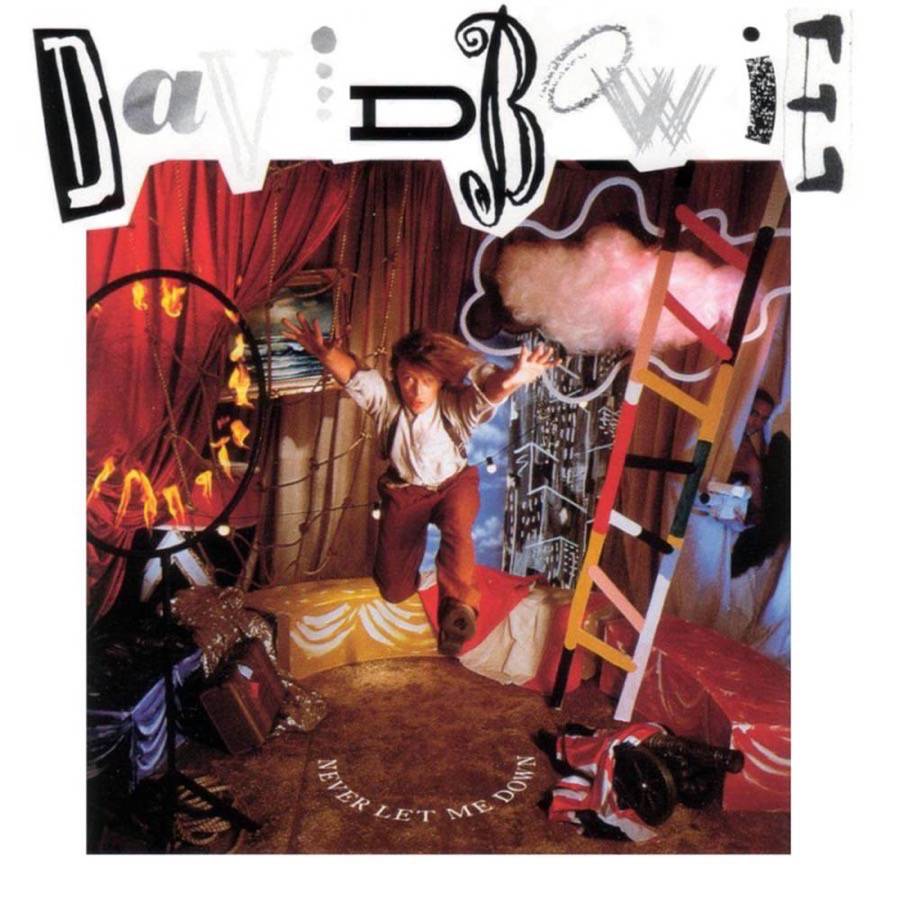
For the record, I was listening to the version on Spotify listed merely as “2018 Remaster” and I cannot tell if it’s the full-album remix or a slight reworking of the original, due to the platform’s continued and nonsensical war on an audiophile’s reliance on accurate data. Anywho. This album is fine. It’s pretty universally regarded as the worst Bowie album, by critics, biographers and the man himself. I don’t think I would go that far, but I also had my expectations set low because of the reviews. The album was supposed to be a return to rock-and-roll Bowie and by that metric, it’s an abject failure. The record mimics the art-pop of Tonight, a collection of quirky and complex pop tracks that sound closer to livelier Kate Bush or MJ than anything else.

For the most part, the record feels kind of lifeless. It’s not uninspired, like some earlier Bowie, but there isn’t really a whole lot going on, no real statement or character work. Each song individually is fine but the album as a whole feels lackluster. It’s clearly a mess, and unlike some of Bowie’s early slapdash albums, there’s no real excuse. He had the time and energy to do something more but the well ran dry. Every song feels like it borders on being fun and danceable but never quite gets there, more of the disposable pop music he had satirized a decade prior.

That’s the album as a whole. As stated, the quality isn’t due to effort, and there are some good tracks. “Zeroes” and “Glass Spider,” both centering the album’s midpoint, grabbed my attention and didn’t let go. There’s enough cool stuff going on in those songs to make them worthwhile listens. Also “New York’s In Love” is hokey, but it features the best guitar work on a Bowie album in a long while. These songs are all fine, but to call them the best on the album is not complimentary to the rest of the songs.

I don’t think this is the worst Bowie album yet, I’m keeping that with the previous entry. But there is a brutal irony to the album’s title, as Bowie has let us down again. Up next is the Tin Machine duo, something I personally am very excited for as it seems like “me” music – but I will tamper my expectations.

Grade: 5.5/10

Favorite non-hit track: “Zeroes”

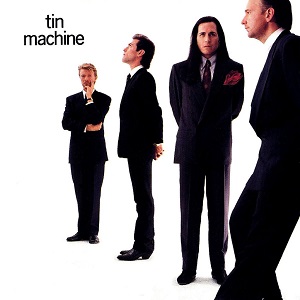
TIN MACHINE (1989)

It’s really funny that people had such strong reactions to this one in any direction. There’s really very little to say about it! A lot of reviews seem to liken it to alternative or even proto-grunge, but to me it’s more of a throwback to bluesy classic rock, released right around the time that “classic rock” became a solidified period of music. It doesn’t really fit the “hard rock” label and it doesn’t really try to, a lot of these reviews are head-scratchers. The album is definitely focused more on volume and vibes than melody, a lot of these songs intentionally eschew any earworm qualities. It’s a proper about-face for a man who was miserable in the pop music he was making.

However, this also means that there’s just very little to grab on to! This album is almost entirely forgettable, the second it’s over. The opener, “Heaven’s In Here,” is a solid rock track and a nice mission statement. The album’s best song is easily “Under the God,” a scathing satirical screed that has the most energy of any song on the album, and feels the most inspired. Otherwise, these are all just pleasantly enjoyable, disposable songs.

I was looking forward to this one despite the bad reviews because it might be something up my alley. It was, but it certainly isn’t an album that left any impression on me. It’s not one that I regret listening to, but I will not be paying a revisit. It’s fine! Time to wash the 80’s stink off of all of this.

Grade: 6/10

Fav non-hit track: “Under the God”

TIN MACHINE II (1991)

I never would’ve guessed that a Bowie album would be so tough to track down! This album is out-of-print and not available on Spotify. Luckily, it’s all up on YouTube, but it is wild that there’s an album so discarded that’s not even in print, less than a decade removed from his commercial peak.

Anyways, this one is a little better than the first iteration, and I’m surprised it’s been so thoroughly retconned. These songs are much more melodic, a marriage of rock and pop made after the whiplash affairs through both. There’s more energy here, and the band feels more locked in. I’m realizing now that Tin Machine exists mostly as a reactionary statement to pop-Bowie, with the man proving he can still hang in the rock crowd. But this album exists because the band simply wants it to – which is a much better incentive for an album.

To say it’s better isn’t entirely complimentary, because the first one really is forgettable. This is not a classic or totally worthy album, but it is solid. There are some good rock earworms, and a lot of sustained momentum through the album’s slightly-too-long runtime. Songs like the opener “Baby Universal,” “A Big Hurt” and “If There Is Something” are just great, energetic rock tunes. They can’t hang with Bowie’s best, of course, but they’re fun and they help this album a ton. Also, “Sorry” is a great, forgotten ballad; Bowie’s vocals on it are astonishing.

Otherwise, this is standard fare pop-rock stuff. Like the first Tin Machine album, this is a little too long when the quality isn’t stellar. A little less would’ve been a little more. But, it’s an improvement over the first, and it makes me a bit sad that the group didn’t live through the proper grunge era. This is a fine album, even if tough to find, but we’re still well in the wake of Bowie’s peak. Back to solo Bowie next. And one more post to wrap everything up.

Grade: 7/10

Fav non-hit track: “If There Is Something”


Thank you to anyone who is borthering these silly little musings on the worst David Bowie albums! This is part of an ongoing series where I’m deep diving into catalogs by artists I either love but don’t know as well as I should, or artists that are just big blind spots. You can check out the previous Bowie entries Part 1 | Part 2 | Part 3 as well as the foundational post, Zola Jesus.

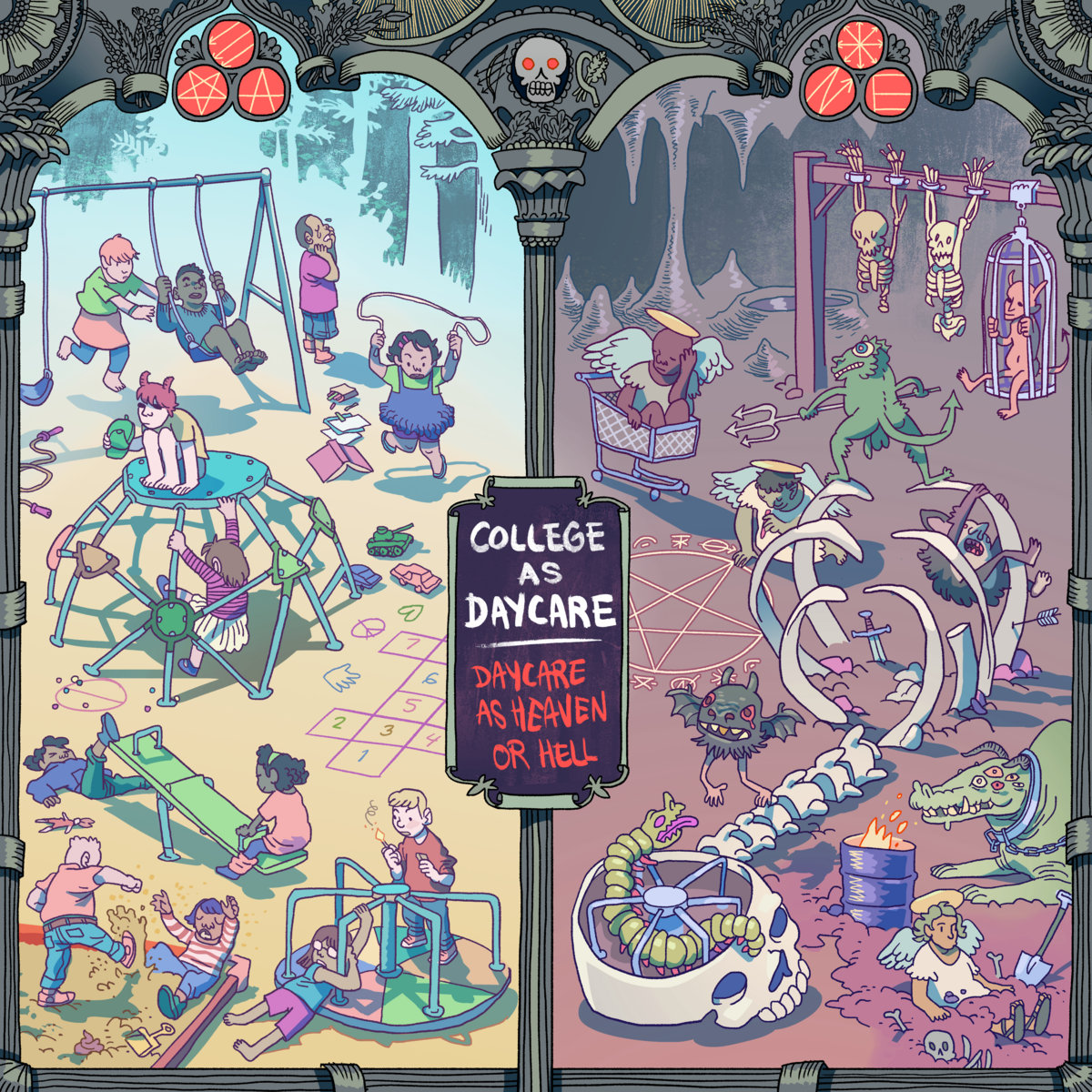
daycare – College as Daycare / Daycare as Heaven or Hell

Photo Credit: Bandcamp

Grade: B+

Key Tracks: “Life As A Petting Zoo,” “Diet Coke Saint”

2023 has already seen the debuts from genre-defying groups like Mandy, Indiana and Model/Actriz, and the debut album from new group daycare is no different. The Minnesota band bills itself as being pop-punk flair, and as “College as Daycare / Daycare as Heaven or Hell” kicks off, it seems like an apt indicator. But the album never finds comfortable territory, charging through a few other influences and ideas, in a delightful way.

The opener “Failed Disney Plot” is really only about 30 seconds long, an acoustic sensitive emo track that sounds closer to a Front Bottoms cut than anything. “Secs ‘n Babes” follows, showcasing the band’s spunky energy that they’ve prided themselves on. It’s the most characteristically pop-punk track on the album; energetic, ripe with tempo changes, and tongue-in-cheek references amidst more reflective lyrics. While I’m personally not big into pop-punk, these two songs prove themselves catchy as hell, and show the band can hang.

Daycare never intended to be a group – they only “formed” last year, as an excuse to put a few lingering songs to tape. Although a new group, the members – Andy Evren (vocals/guitar), Michael Kuhn (bass), and Eli Phillips (drums) – are seasoned songwriters, and those years show across the flowing nature of the album.

What I find interesting about this album is how it feels structured like a natural progression. The third track, “Life As A Petting Zoo,” exists well-within the confines of pop-punk, but has a more balanced rhythm and less referential lyrics. It feels like a Dirty Nil song more than anything – high praise in my eyes. From there, the band moves into more indie-inspired tunes. “funny” and “Xtian Boy” both feel like straight indie songs, especially with lyrics centered in religion. “DAYCARE” and “Rideout” are the same way – two great ballads on the album’s back half that stray far from the limits of pop-punk. “New Year’s Dissolution” is a great mid-album banger, with some strong energy, great guitar work and cool tempo changes. It’s also a song that can really only fall under “punk.” Late-album track “i.d.k.t.b.o.m.h.” is really the only time the band embraces pop-punk/emo again, fully, and it’s a much more-toned down track. And, as progressions logically go, the final track feels the furthest from the first. “Diet Coke Saint” is a straight indie ballad, complimented by haunting guest vocals and twangy guitar. It’s also maybe the best track on the album, and it comes as a real surprise given what came before it.

While some of the songs on this album won’t sound like the most exciting songwriting of the year, there’s a lot of interesting ideas. A lot of these songs rely on tempo changes, which feels like a nice symbol of how the band eschews any specific genre labels. It’s a very fun album, even through the more honest songs, which can be a difficult balance to capture on a debut. Also impressive for a debut is the production – the vocals sound crisp, and the band is all mixed well. All in all, there are some songs that sound a step above others, but this is a very solid punk debut. Daycare may not have intended to stick around after this, but they’ve begun booking shows – so check them out if you’re in Minneapolis!

“College As Daycare / Daycare As Heaven Or Hell” releases this Friday, June 9th. You can pre-order the album and stream the single “Life As A Petting Zoo” on their bandcamp page.

The Bowie Chronicles, Part 3

Sooooo sorry for this post being delayed for months, there’s been a lot of unplanned chaos in my life and this has been on the backburner! Truthfully, at the time of writing, I’ve not only been done with the Bowie project for weeks but have nearly wrapped up the next band’s Chronicles, too. So…expect a flurry of posts in the coming days. I’ve not had the time or motivation to actually upload what I’ve written and deal with the boring metadata administrative stuff to get these posts live. Anyways where were we? Oh yeah, BERLIN. We’re about to enter the critical peak of Bowie’s career!


LOW (1977)

Like Station to Station, this was not a first-time listen but a long-overdue revisit. I’ve been a fan of the instrumental opener “Speed Of Life” for quite a long time now. But what was incredibly interesting to me was listening to this (nearly) back-to-back with Station (that’s the point of this exercise!). Separated by only a year, they’re total complements to each other. Both albums venture out of stadium glam rock and into avant-garde territory, but where Station was focused on drawn-out, maximalist nonsensical pop-rock, Low finds its comfort in repetitive bursts of reflective art rock. It all is a reaction, of course, to Bowie’s move to Berlin. Bowie finds the state of Berlin and the state of his own mind in disrepair, and all of the fun of his previous albums is drained out here.

That’s not a negative. This a gorgeous record, and one that absolutely whiplashed people on it’s release. Bowie – first and foremost a singer – rarely actually lends his vocals on the record. The back half is all instrumental, as is the opener. The intent of this album was pessimistic – Bowie was in a bad place physically and mentally, and that’s displayed through distorted and sadder music, often with a repetitive and minimalist tone. But, it had the opposite effect on me. I find Low very peaceful, even in its melancholy. One of the standouts is the longest track “Warszawa,” which sees Bowie enter ambient for the first time. It’s the quietest track on the record (or any Bowie record so far) and feels like the lowest point for David, but a very calming and peaceful track for me. The back half – derided on first release – follows this trend for me, though none of the subsequent three songs hit the same level as “Warszawa.”

As with many other Bowie albums, the lone hit – “Sound and Vision” – feels like an outlier, because it’s the closest thing to a standard rock song. Even then, though, it’s quirky and repetitive and does not feature Bowie’s voice until a little ways in. It’s also nice to hear Mary Hopkin – who against all odds released a good album in 2022 – on backup vocals.

This one is a masterpiece. You’ll find out in a minute that I messed the listening order up, but the issue I had with “Heroes” is not present here – the tone of this record works throughout, on every track. It’s one of the most consistent Bowie records and one that really defies a true explanation. The record was disregarded as being like a soundtrack, but I don’t see why that’s a negative. It feels like the score to a film that can never exist. It’s not the most interesting record at all times, but it’s Bowie reflecting himself and his fractured state, no longer hiding behind plastic characters. You can feel, good and bad, Bowie’s true intentions and how ‘out of the game’ he was feeling here. This is one of the best I’ve done so far, and I love it far more in this sequential context.

Grade: 8.5/10

Favorite non-hit track: “Warszawa”

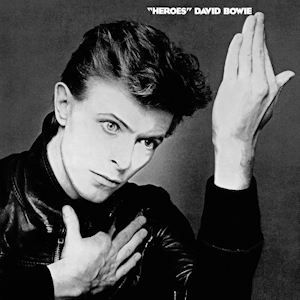
“HEROES” (1977)

Thanks to my pre-coffee morning brain and Spotify’s ambivalence to detail, I listened to this one before Low, which came out the same year but is alphabetically after “Heroes”. I’ve been saying for a long time that I think the title track is not only Bowie’s best song, but one of the best songs ever. It really does hold up this album and elevate it to seminal status, even with no other hits. Consider me surprised, then, to learn that much of this album was improvised in the studio. It shows, for better or worse, and the immaculately-crafted title track ends up sticking out like a sore thumb. The album’s first two tracks are weary rock tunes that seem to weirdly hearken back to the novelty days, and it’s apparent that there was no plan for them. I’ll be honest – they’re not good. But the rest of Side A after “Heroes” has some great rock tunes with impressive Bowie vocals. “Sons of the Silent Age” is a solid rock tune, and “Blackout” is one of the best Bowie tracks yet. One of his loudest tunes and some of his strongest vocals.

I’m not sure how to really write about Side B here; it’s clear that Brian Eno commandeered this record almost to a fault. Eno is a legend, and the three instrumental ambient tracks here are damn-near perfect, but they don’t fit. They’re pleasant listens, in the way that Music For Airports is. But they’re a huge departure for Bowie (pun intended, let me have it). I enjoyed the music, but I guess I just didn’t really “get” why this was featured unless it was really Eno doing a hostile takeover. All in all though, it does give the listener a calm break before the closer “The Secret Life of Arabia.” I think “Arabia” would probably be a great song on it’s own, but with this ambient section acting as a ~13 minute intro to it, it comes off very powerfully. It’s another great vocal turn from Bowie, and solidifies this as his best vocal album so far.

This record is a lot more confounding than I expected – I thought it was Bowie’s return to ballads. Far from it! I really enjoyed the listen, even though half the record didn’t make sense to me. It’s definitely a top-tier Bowie album, though I think it does a little more for most listeners than me.

Grade: 8/10

Favorite non-hit track: “Blackout”

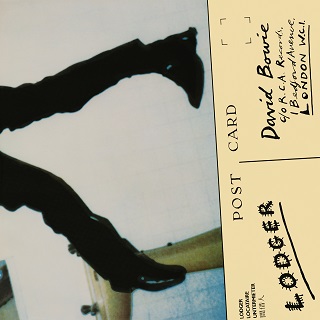
LODGER (1979)

Okay, I’m returning to this from a long break – well-timed for the mind, poorly timed for the post, as I split the Berlin trilogy up with a week and a half or so in between. Anyways, I have mixed feelings about this one. It’s a solid pop-rock album. I was nervous diving in since the album produced no real hits and simply isn’t celebrated very highly, but it was during his creative peak too. Like the other trilogy entries, the album is split into two ideological halves, but not quite in the same way. This album is more sonically cohesive than the vocal/instrumental complements of Low and the rock/ambient halves of “Heroes.” It’s just two lyrical halves – the first is about world travel and the second is more tongue-in-cheek critiques of Western pop culture. So, let’s split this review in two.

I wanted to like the first half more than I did. There’s some excellent ideas, namely taking inspirations from world music and pairing them directly with lyrics about travel. It’s inherently cultured and some of the most intelligent songwriting of Bowie’s career so far. It’s also just not super fun to listen to? The opener “Fantastic Voyage” is dull, and while “African Night Flight” and “Yassassin” are livelier, they don’t feel like the complete, sophisticated songs they should be. I hear the world influences, but the actual origins of the influences don’t feel as clear as, say, Graceland. That said, the final track of side A, “Red Sails,” is maybe my favorite on the album.

Side B is a lot more fun and definitely a more comfortable territory for Bowie. “D.J.” and “Boys Keep Swinging” are loosely satirical and fun pop-rock songs, while “Repetition” explores a slightly softer but very catchy side. “Swinging” is probably the highlight, but all five of these songs are vibrant and fun. There’s no unexplored territory here, and all five of them are ultimately kind of forgettable, but they’re worthy of a listen, too.

This album is fine. I’m not sure it was worthy of the mixed criticism on it’s release, or the pure reappraisal either. It was recorded on tour and it feels like it, even if it had lofty ambitions. It ultimately feels a little rushed, a little empty and a little plain, while still maintaining a purely fun energy. It doesn’t feel like the album Bowie wanted – both him and Visconti have said as much – and it’s a weak way to close out the Berlin era. And still, I might come back to it. It’s pleasant and digestible, with enough familiarity to be Bowie but enough exploration to not be a slog.

Rating: 6.5/10

Favorite track: “Red Sails”

SCARY MONSTERS (AND SUPER CREEPS) (1980)

I felt like I didn’t know much about this album going in and, knowing the downfall that’s coming in just a few years, I was worried. The backstory to this one is pretty interesting, where Bowie felt that his Berlin trilogy wasn’t selling well and that a lot of artists who were directly influenced by 70’s Bowie – namely another guy I love, Gary Numan – were now overpowering him. So this is a back-to-basics pop Bowie. It doesn’t all work unfortunately, but what does work is quite good.

Bowie rings in a new decade with one of most surprising songs, “It’s No Game (Part 1),” which features a female singer in the place of Bowie. The first side of this album is all very unique and often pounding music. Bowie’s pop to this point has often been kind of plastic, but side A of this album feels urgent and adventurous in a way that’s new. The second track, “Up The Hill Backwards” is a surprisingly beating track that feels a little more in place with the hyperpop and alt-pop stuff of today rather than anything from 1980. The third and fourth songs are, of course, the title track and “Ashes To Ashes.” Both are great and the latter will always be a top-5 Bowie song.

Side B is frustratingly bland. It isn’t bad, and it isn’t the artificial pop of past Bowie – it’s a step up from that. There is absolutely ambition here and not quick songs assembled on tour. But, some of them just don’t amount to much. “Fashion” feels kind of lame and “Teenage Wildlife” goes on longer than necessary. The remaining songs certainly aren’t bad, but just don’t leave a real impression on the listener. Still, it’s a solid album, and another important reboot in the career of Bowie. It really is fascinating to me that he’s had so many hold-ups, restarts and critical or commercial failures up to this point. We generally think of the era from Ziggy to Let’s Dance as a run of near-perfection, but it certainly wasn’t viewed that way at the time. This album though finally managed to mix critical and commercial success. I’ve said little about Side B, but I really do recommend this one.

Grade: 7.5/10

Favorite non-hit track: “Up The Hill Backwards”


Thank you to anyone who sought out, or stumbled on this and read it! If you did, feel free to go in order with Part 1 and Part 2 of the series. Part 3 sees the commercial peak and critical nadir of his career, as well as the Tin Machine years. It’s a trip. See you on the other side!

The Bowie Chronicles, Part 2

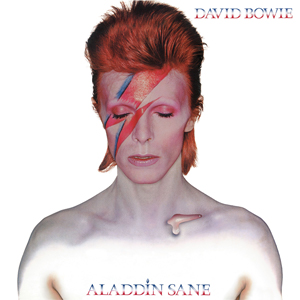
I really meant to get around to this sooner! Listening wise I’m already well into part 3, but I’ve been busy so I haven’t had a chance to update here. We’re hitting the real meat of Bowie’s career here, the topsy-turvy years of his glam phase-backslide-into-rock-and-drugs era. There’s some heaters in this collection, and some genuine blind spots in my listening history. Onto Aladdin Sane!


ALADDIN SANE (1973)

Ugh, this is a fantastic album but it’s impossible to look at without context. The point of this series is to watch how an artist transforms over time while also judging all of their albums individually, but there’s no way to listen to Sane as anything but a continuation of Stardust. And it’s a lesser one at that. This was Bowie’s first album as a megastar, written on tour, and it shows – the songs are punchier and slicker, but clearly recorded and mixed hastily and lacking in the substance that made Stardust such a classic.

There’s a deep irony here, in that the songs on Sane individually hit harder and more concisely than those on Stardust, and they come even closer to defining the glam rock sound. And yet, the whole doesn’t match the parts. This is a solid and fun rock album, but the first album in Bowie’s career that’s felt mandatory. Not directionless, not uninspired, but still mandatory. The songs are easy, empty and rushed. This is apparent immediately on the opener “Watch That Man” – a great, boisterous rock song, but one filled with repetitive, shallow lyrics. The album that follows is mostly that, punchy rock songs with tired lyrics and rushed production. It’s even more paradoxical – or possibly not – that the album’s best song is “Time,” a patient ballad with a committed vocal performance. It feels like a sign of the Bowie to come a few years later. The closer, “Lady Grinning Soul,” is an equally great, manic ballad that shows this album would’ve been better with more devotion and patience.

This album was inspired by both America and the Rolling Stones, with Bowie going so far as to include a cover of “Let’s Spend the Night Together.” It feels like DEVO’s cover of “Satisfaction,” in that it takes a signature Stones song and dilutes everything that made it a classic to turn it into a different entity altogether. Unlike the DEVO cover, I wouldn’t go back and listen to the Bowie one again, but it is decent. Anyways, that Stones influence is palpable here, with a bunch of flashy, rough blues-rock songs. I was surprised looking at the track list to see that the album only produced one Bowie classic – “The Jean Genie” – but after listening I understand why. What should have been a landmark album instead feels like a placeholder. On it’s own, it’s a fine record, but it’s Bowie treading water and I don’t think it would’ve made him a star if he wasn’t already. A couple of these songs really do slap, though.

Grade: 7/10

Favorite non-hit track: “Time”

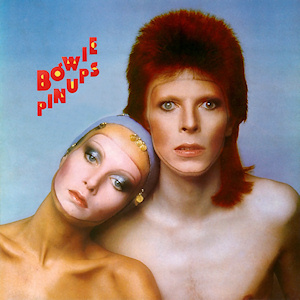
PINUPS (1973)

This one will be quick – if Bowie didn’t spend a whole lot of time on it, why should I? Pinups is a contract-filling covers album, made up of mostly classic rock tracks that influenced Bowie. It’s not bad, really, just a mostly unnecessary listen.

What is curious though, is that this is one of the only albums where we actually get to see the Spiders of Mars in action! Bowie makes an effort to glam up some of these songs, including the great opening one-two punch of “Rosalyn” and “Here Comes the Night.” The songs are mostly older classic rock – Yardbirds, Who, Them, Kinks – which feels antithetical to the Stardust character. Bowie spends some songs ‘updating’ them for a glam era and some doing straight covers, which is very confounding. It can’t help but feel pointless. He tries to outweird Pink Floyd on their “See Emily Play” – and fails. He slows down The Who’s “I Can’t Explain” to make it his own and, well, it’s a lot worse. The beauty of that song is the rocking energy within the crisp, clean instruments and production, not the lyrics or anything.

I actually think I like the tracks where Bowie plays it safe more, although those are even more pointless. His cover of “Sorrow” is genuinely great. He tries another Who track in “Anyway, Anyhow, Anywhere” and plays it so close he actually sounds like Roger Daltrey. And, as much as this album is nothing more than contract fulfillment recorded on the road, it is still important in context to the Spiders of Mars and end of the glam era. It’s an era associated with Bowie – yet one he was not active in for very long and with limited successes.

Grade: 6/10

Favorite non-hit track: Uh, N/A?

DIAMOND DOGS (1974)

This record is a mess, but not without some real highlights. It’s clear at this point that Bowie isn’t the solidified superstar I was under the impression he was in 1974; this album has too many directions and characters, loose half-inspired threads and competing influences. It’s very good, but it’s a couple different albums at once. I think it works best when it tries to work within glam but shed the Ziggy Stardust elements. The Spiders From Mars were gone, and the fact that Ziggy makes appearances here just feels somewhat stale. It feels like a step forward, a step laterally and a step back all at once.

The general conceit for this album, an apocalyptic one, works well. It’s a darker direction for the generally poppy sound of Bowie. The fact that he wanted to center it around 1984 but couldn’t get full permission from the Orwell estate is unfortunate and unintentionally funny, especially as the back-to-back tracks “1984” and “Big Brother” come off more like a weird obsession than an album concept. But, the theme really does set groundwork for glam and punk; it’s easy to forget how instrumental Bowie was in the latter. The album is at its best when Bowie is loose and loud. The title track is a fun, bombastic mess. “Sweet Things” rocks, and the song’s reprise leading right into “Rebel, Rebel” is an equally rambunctious sound. Meanwhile, more conventional tunes like “Rock N Roll With Me” are just disappointing. They sound plastic and empty, years behind the time.

This is ultimately a crucial record in the Bowie catalog, as it sees him move away from the glam sound, just as he was really perfecting the lyrical aesthetics. The album’s raw and rowdy elements really are fantastic, and directly inspirational to a forthcoming generation of loud bands. It’s the end of Ziggy Stardust and the end of this period of Bowie’s career. If this one had just been more cohesive than it would be an all-timer. But, it’s a still great listen and one that stamped Bowie as a legend.

Grade: 7.5/10

Favorite non-hit track: “Diamond Dogs”

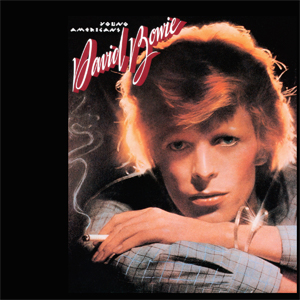
YOUNG AMERICANS (1975)

I’ll never understand when artists don’t put effort into an album cover. The covers of these 70’s Bowie records could not be more indicative of the music underneath. Diamond Dogs has the classic, loud painting of a half-dog-half-Bowie creature. Young Americans? Just a simple photo of Bowie smoking. With the glam era and the Ziggy Stardusted off his shoulders, Bowie is free to embrace an American soul sound. It’s a direction that’s been hinted at already, with some incongruous tracks on other albums that may have worked better here. It’s a pleasant, if forgettable listen.

This is clearly an album that Bowie wanted to make. With the power of hindsight, it’s a wild move to shed yourself of the zeitgeist-founding, sultry and disorderly persona in favor of porno music. But, Bowie has always had soul elements, and he’s finally devoting full time to their exploration. Young Americans is ultimately the most digestible Bowie record yet.

Most of these tracks are pretty similar and not wholly different than other soul songs. “Right,” “Somebody Up There Likes Me” and “Can Your Hear Me” are the most effective ones, especially due to the inclusion of backing vocalists. Bowie’s voice maybe isn’t the best on this record, and strong arguments can be made that everything sounds thin. It’s not a classic soul record, and if you removed Bowie’s obvious personal desire to record it, it’d probably a failure for the genre. There is also the bizarre inclusion to include a cover of “Across the Universe” – with Lennon! It’s not a good cover, it’s straight up bad, it doesn’t fit on the record, and it follows in the heels of a full covers album. The album’s fascination with the Beatles – Lennon also co-wrote “Fame” and there’s the shoutout on the title track – feels divorced from the American soul influences. It’s yet another Bowie record where competing influences cannot interact peacefully. But, that was not nearly enough to detract me from pleasantly enjoying this one.

Grade: 7.5/10

Favorite non-hit track: “Right”

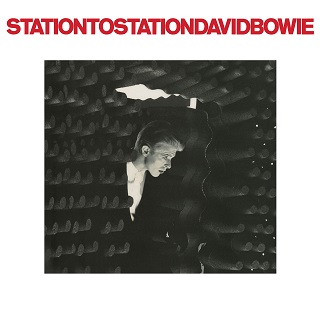
STATION TO STATION (1976) 

This I know for a fact was not a first-time listen; my dad had this one on CD growing up and I used to stare dumbfounded at what a ten-minute song could be. This is the result of Bowie in the throes of a cocaine addiction, one so bad that he’d later admit he has no recollection of even recording this album. That’s especially remarkable given how strong it and patient it is.

Americans gave Bowie some freedom to do what he wanted on his next album, and the result is a collection of fewer, longer tracks that incorporate a mix of everything Bowie had done up to that point. It’s a pretty genius album, and easily his most layered and textured so far. Gone are the direct lyrics in favor of dense poetry, gone are the simple guitar or synth rhythms in favor of complex, multi-instrument tracks with healthier runtimes.

The A side is certainly better – all three tracks shine. The title track is one of the most ambitious songs in the Bowie catalog (matched only by “Blackstar” 40 years later), with a 10+ minute runtime and patient, complex rhythms. “Golden Years” was the hit, and for good reason – it’s the catchiest track on the release. “Word On A Wing” is also a pure standout. Side B is less memorable, though it does include the infamous “TVC15,” with Bowie at his most nonsensical.

It’s fantastic, just a brilliant album even if it’s not the easiest one to listen to. Up next: The Berlin trilogy and the pop downfall!

Grade: 8.5/10

Favorite non-hit track: “Word On A Wing”


Thanks for reading! I hope at least one person has as much fun reading these as I do writing them. Feel free to check out the first installment in the Bowie series!

By Andrew McNally

Death Valley Girls – “Islands In The Sky”

Photo credit: Bandcamp

Grade: B

Key Tracks: “Islands In The Sky,” “Sunday”

So between this and my recent Oozing Wound review, I think it’s clear that I’m hijacking my own blog to just hype up great new releases by underrated bands I love. Death Valley Girls are cool as hell, and their fifth album feels like an important step forward in their career.

DVG have never truly felt like a “punk” band solely because they sound like ones that would reject the label themselves, but they stray closer to punk than anything else. Their previous albums were a genre blend of punk, pop, alternative and hints of soul, all buried under intentionally lo-fi production. The production allows the band to have a distinct sound – hypnotic and wavey, even as they’re playing music that doesn’t sound like that. “Islands” is categorically a DVG album, because that unique production quality is still in tow. But it also feels closer to an indie album – more patient and mature than the previous, energetic releases. The opener “California Mountain Shake” is a haunting, minimalistic tune that immediately sets a tone, separating this album from the rest of the pack. The title track and the following “Sunday” make up my two favorite songs on the album, and they both present a slower and more balanced side without sacrificing any of the energy. They are both extremely melodic tunes, but ones that make a push for an indie breakthrough.

After two listens, I won’t say this is my favorite DVG album. They are certainly pushing themselves in a new direction and I think they lost a little of their genre-blending – too many songs on the album’s back half bleed together. The album needs a banger or two to balance it out. I don’t feel familiar with most of the tracks on the back half, which is not great after two listens. Still, they are all excellent tracks! It’s a very pleasant listen front to back.

I always applaud and encourage bands to step out of their comfort zone, and that’s exactly what DVG did on “Islands.” It feels like a definitively indie album, and a damn good one at that. The lo-fi production makes the music sound fun, but there’s a ton of talent hidden under there too. I’m hoping that this is the album that gets the name Death Valley Girls into the conversation, because they’ve been pumping out great stuff for a few years now. It’s a logical progression and a nice complement to their earlier albums, expanding their general output and setting them up as a multifaceted powerhouse. Please: pay attention to this group!

If you like this, try: A very similar band that I also love dearly, The Coathangers. Their most recent album, 2019’s “The Devil You Know,” has the most explicitly anti-NRA song I’ve ever heard.

The Bowie Chronicles, Part 1

This is the second installment in this series, where I burn through an artist’s catalog in a quick manner. I’m doing these for three reasons – to get better at listening through catalogs in a quick way, to fill in some big gaps in my music knowledge, and to justify my continued payment towards this blog! I’m going to save time on any kind of artist intro and just tell you that for round 2, I’m listening to David Bowie. I’m a huge Bowie fan – always have been – but there’s plenty of his albums I’ve actually never listened to in full. For this exercise, I’ll be listening to all of his studio albums up to his original retirement. Some of them I’ve heard, but not in a long time, and listening to them will help contextualize his whole career. I will be stopping before The Next Day and Blackstar because I know those albums well enough as it is.


DAVID BOWIE (1967)

I knew his first couple albums were middling misfires so I wasn’t entirely sure what to expect, but I wasn’t expecting this. This debut album is pretty fun, but it’s a real head-scratcher as well. It’s an innocent collection of baroque pop songs that feel like they were supposed to be jokes with no punchlines. Nicely, they sound a lot like some of the wild Syd Barrett contributions to early Pink Floyd, with straightforward vocals and nonsensical, surreal lyrics. These songs aren’t as memorable as Barrett’s, but they are pretty fun.

It’s not fair to compare this album to the ones that came later – any song on this release is an absolute turd compared to “Heroes” – but it is difficult to not make the comparison. And this definitely lowers this album to a state of forgettable novelty tracks. Still, it’s an intriguing listen. It almost sounds like outsider music at times, which is something Bowie never really wandered into after this. It’s a confounding listen that is a fun gem to listen to once, but probably not worth a revisit.

Grade: 6/10

Favorite track: “Love Me Til Tuesday”

DAVID BOWIE/SPACE ODDITY (1969)

There was something off about the debut album that I didn’t quite work out, until I put this record on: he lacked confidence! I think that’s a second reason why the self-titled debut is the biggest outlier in his catalog. It’s apparent pretty immediately on this record that he’s gained the studio confidence he would obviously maintain for decades. That said, this is an album lost in time. I saw one review while I was listening that said something to the effect of, half of this album belonged in ’67 and half of it in ’72, and I agree. We get some fun, novelty type songs – including “Space Oddity” – that feel like an extension of his debut, and some softer folksy rock tunes that sound very indicative of the decade to come, though not something Bowie would really touch again. There’s plenty of fine tracks, but it doesn’t really gel well.

Alongside the increased confidence comes a patience – these songs are longer than the ones on the debut album, significantly. The closer “Memory of a Free Festival” hits the 7-minute mark, a repetitive and middling but catchy tune akin to “Hey Jude.” “Cygnet Committee” is seconds short of 10 minutes, actually one of Bowie’s longest tracks, though it isn’t really efficient with that time. “Unwashed and Somewhat Slightly Dazed” is nearly 7 minutes and, bewilderingly, kind of a Southern rock tune which, even more bewilderingly, is great. There is more depth to the lyrics here too. “Space Oddity” sounds like a novelty track, much like the ones on his debut, but it doesn’t take a wordsmith to work out the song’s drug addiction allegory. “God Knows I’m Good” is also a tongue-in-cheek tune that wouldn’t have existed on the saccharine debut.

On the whole, I’m glad I listened to this record. There’s some tunes that don’t fit anywhere else in his catalog in a way that feels like retroactive experimentation. It’s not a great record, but it’s got a couple real standouts.

Grade: 7/10

Favorite non-hit track: “Unwashed and Somewhat Slightly Dazed”

THE MAN WHO SOLD THE WORLD (1970)

I think this one is going to be short. This album feels simultaneously important and insignificant, an important step and a bore. This is the first album that feels properly Bowie, and the first that feels super cohesive – two statements that aren’t necessarily intertwined but certainly do make sense together. This one adopts more of a rock approach than the scattershot, novelty folksy-baroque self-titleds. You can hear plenty of glam glimpses here. I wouldn’t call it “hard rock” like the reviews all seem to, but it does have a loose roughness to it that contemporaries like Mott the Hoople and T. Rex had as well. It’s a tight collection, bolstered by the stunning opener “The Width of a Circle” and the classic penultimate title track. It’s a massive step-forward for an artist finally finding his identity. Well, his first one.

It’s also kind of…boring, really. It sounds pretty interchangeable with a lot of classic rock, with tracks like “Black Country Rock” and “Running Gun Blues” falling out of my memory immediately; I’ve only just finished the album and I’ve forgotten half the songs already. “After All” has a unique theatrical vocal rhythm that really didn’t work for me. Mid-album track “Saviour Machine” is a standout. It’s really just another rock song but it’s one that I really dug. Otherwise, I’m struggling to really find much to say here. From a standalone perspective, this is a standard rock album with a few stellar cuts and some filler.

Grade: 6.5/10

Favorite track: “The Width Of A Circle”

HUNKY DORY (1971)

Finally…a Bowie masterpiece. This is one of the big albums that I’m pretty certain I’d never actually listened to in full. I was surprised at how sparse it is, given that the three biggest tracks – “Changes,” “Life On Mars?” and “Queen Bitch” – don’t follow the trend. But “Dory” really is a sparse, piano-driven album. Songs like “Kooks” show a playful side to a softer Bowie, where “Oh! You Pretty Things” and “Eight Line Poem” are more somber affairs. All in all, this is a super cohesive album – only the rollicking “Queen Bitch” feels truly out of place.

This album is also a logical advancement from Man Who Sold the World, even if it doesn’t particularly sound like that record. Bowie is still, four albums in, finding his footing, managing to both diversify and solidify his sound. It acts as an accompaniment to “World,” as it is a much softer and melodic album, but is also miles better in quality. All of the songs on this record are near perfect, although the hits are very much the best tracks. This is the finest collection so far by far. It really is a remarkable leap from novelty singer/passable rock singer to ethereal artist. These songs all have tremendous depth and emotion and half of them do it with very few components. Bowie’s voice has yet to sound this good, he’s truly at all cylinders. Damn near perfect album.

Grade: 9/10

Favorite non-hit track: “Fill Your Heart”

THE RISE AND FALL OF ZIGGY STARDUST AND THE SPIDERS FROM MARS (1972)

I have absolutely listened to this album before but it’s been embarrassingly long since I’ve done a full run-through. Just remarkable, so much more of a masterpiece than even Hunky Dory, this one is just on another level. I have claimed for a while that “Starman” is Bowie’s best vocal performance and it sounds even better on the context of the record. The album is loose, piano- and guitar-driven bluesy rock, a sound perfected on the title track. Incredible concept record where every single second of tape is used well.

I won’t spend a lot of time here, there’s little point in pointed praise of one of the most famous records ever, but a little gushing is necessary. The album produced four iconic Bowie songs, but the album tracks are just as good. “Five Years” and “It Ain’t Easy” are every bit as good as “Moonage Daydream” and “Ziggy Stardust.” Like some previous Bowie albums, one of the hits feels out of place – “Suffragette City,” tacked on as the penultimate song and louder than any other track. But it also makes for a great, late-album banger. Hunky Dory was a classic, but it is still a stepping stone to the actual, fully realized Bowie. This is that Bowie. From a novelty singer to a generational artist, it’s quite a journey. It also feels like the perfect place to wrap up part 1.

Grade: 10/10

Favorite non-hit track: “Five Years”


Check out my previous and first installment in this series: Zola Jesus

By Andrew McNally

Best First Time Watches of 2022

I am aware that it is now 2023 and that talking about 2022 is illegal, but I love talking about films I’ve watched and I wanted to wait until the year was properly over to do this list (do not report me to the police). I’m not going to do a proper “Best Films of 2022” list because, frankly, I didn’t see that many. I loved a couple, didn’t care for some, and have still yet to see 90% of the ones I wanted to. Rather than that, I’ll just tell you that The Banshees of Inisherin is my favorite 2022 flick, so far. (This also helps me whittle down this list!) So, instead, here’s a list of my favorite first-time watches, and a few deep cuts I really enjoyed too! For the sake of keeping this interesting, I won’t write about movies twice, though there’s a few that could grace both lists.

Fifteen lesser-known films I cannot recommend highly enough:

BLUE COLLAR (1978) – Paul Schrader’s follow-up script to Taxi Driver (and directorial debut!) finds the complementary cast of Harvey Keitel, Richard Pryor and Yaphet Kotto as union members at an auto body shop in Detroit trying to overthrow their evil boss. Engaging but brutally real and cynical drama shows you flat out how The Man will always keep you down, even when you think you’re winning. As real in 2022 today as it was then. Also features one of the most shocking and heartbreaking deaths I’ve seen in a while.

DAYS OF WINE AND ROSES (1962) – Utterly tense and heart-pounding drama sees Jack Lemmon – in a breakout role as a dramatic actor – fall into the throes of alcoholism. He challenges a pretty, teetotaling coworker to a drink and soon enough, they’re married, miserable and drunk. The movie uses imperceptible time jumps to make everything shady and unclear, mimicking the lives of the characters. Powerful and deeply upsetting film, almost definitely the best one on this list.

DREAM DEMON (1988) – Dreamy, psychedelic horror flick sees an average woman about to marry a rich man in a highly-publicized engagement. But she’s plagued by nightmares, and develops a bizarre friendship with an American tourist. When her nightmares cause a paparazzi to disappear in real life, it gets weird. Movie is extremely dependent on dream sequences, which can be off-putting for some, but I loved it. The ambitious opening sees a dream sequence where her wedding turns into a decapitation. It’s wild, bold and very gory while also being borderline nonsensical.

ELEVATOR TO THE GALLOWS (1958) – A French new wave/noir about a cheating wife and her plot for her boyfriend to kill her husband, who is also his boss. What starts smoothly goes awry when the man realizes he’s left something incriminating behind, and gets stuck in a broken elevator, which also allows some rowdy teens to steal his car. As a confused and worried wife wanders the streets, the teens go on a crime spree of their own. Extremely fun to watch what’s essentially two films smashed into one.

THE EMPTY MAN (2020) – This indie horror movie went unnoticed but had its heyday this year when horror fans set it ablaze. A group of hikers get lost in Nepal as one gets drawn to a long-dormant supernatural being. Years later, teens in a flyover state awaken the same beast – this time intentionally – and start disappearing one by one. It’s up to an incredulous investigator to put things together before The Empty Man gets him too; or, will it? Conventional horror flick gives way to some over-the-top psychedelic, psychological stuff in the final act. Absolutely tremendous.

FAMILY PLOT (1976) – It sure feels weird to include a Hitchcock movie here, but people have just missed this one. Those that haven’t, have wrongfully misaligned Alfred’s final flick as being phoned-in, when really it’s just a much smaller scale. Gone are the international incidents, in favor of a grifter psychic and her husband (Bruce Dern!) tracking down a long-lost nephew – who is in turn plotting a robbery and does not trust the folks on his trail. More comical than anything, it’s wonderful to see Hitch transpose his talents to a smaller story.

FIVE GRAVES TO CAIRO (1943) – An early Billy Wilder film sees the sole survivor of a German attack on a British battalion hunker down in an Egyptian hotel, posing as the recently-deceased waiter. Rommel and his men set up camp there as the British soldier finds out that – you guessed it – the waiter he’s assumed the identity of was also a spy. Taut and exciting thriller keeps upping the ante while remaining extremely fun.

HUSH… HUSH, SWEET CHARLOTTE (1964) – A follow-up to Whatever Happened to Baby Jane? sees Bette Davis as an elderly woman refusing to give up her mansion to the town and losing her grip on sanity, decades after the murder of her husband (Bruce Dern!). Whether she committed the murder remains a mystery, as does the true intentions of Charlotte’s niece, who gets called in to help save the mansion. Really thrilling and tense stuff, and an all-time performance from Davis.

I AM A FUGITIVE FROM A CHAIN GANG (1932) – Love a movie that tells you what it’s about right away. A WWII vet comes home a hero, only to find himself unemployed and accused of a robbery he did not commit. He ends up on a chain gang, breaks free, and climbs up the ranks of a construction company – until the law catches up and arrests him again. A tough and brutal look at the way the country values justice and veterans, and it ends on an action sequence that holds up as shocking and thrilling even 90 years later.

IN THE SOUP (1992) – The first of two films on this list that stars Steve Buscemi as a filmmaker! In this one, he’s got an unfilmable 500 page script that he wants to…film. He struggles to find a producer, until a very suspicious gangster promises to fund it, and keeps putting it off while Buscemi does odd jobs for him and keeps him company. Funny and original, the script is solid but Seymour Cassel as the gangster really elevates it into a cult classic. An absolute delight with just a pinch of terror.

LE BEAU SERGE (1958) – French film sees François return to his hometown after many years away. His best friend from childhood, Serge, has wasted away. He’s a bad-temepered, poor alcoholic in an unhappy marriage with a kid on the way. François becomes worried that Serge can’t fend for the kid and doesn’t want it and starts to interfere. This drama has some slow points, but the final stretch is impeccable and the final shot is burned into my brain.

LIVING IN OBLIVION (1995) – Very funny, very tense no-budget indie comedy sees director Steve Buscemi have his passion project crumble before his eyes. The film is split into three extended scenes, each one of which sees Buscemi filming a scene which inevitably goes awry. An all-star cast bolster this movie that is simultaneously whiplash-inducing and utterly pointless. It works as a satire of the film industry, but one accessible to anyone on the outside. This one should be held in much higher regard.

ROADGAMES (1981) – Australian thriller sees Stacy Keach as an isolated, sarcastic trucker who finds himself on the run from a serial killer, and the police, as the serial killer has managed to pin his crimes on Keach. Add in a mysterious hitchhiker in the form of Jamie Lee Curtis and you’ve got a volatile but extremely fun little yarn.

THOMASINE & BUSHROD (1974) – This totally missed Western romp sees a black couple going on a well-planned crime spree across the West in 1911, aided by the newfangled invention of the automobile. It’s original, amusing and dramatic, embroidering the “moral criminal” Robin Hood mentality very well. It’s tense, but stays very charming and enthusiastic too.

WATERMELON MAN (1970) – A wild, confrontational and funny satire sees a very charismatic but deeply racist white man wake up one day to find he’s turned black. After a few days of constant bathing, the new reality sets in, as his family and friends (also racist) begin to scorn him. The downward spiral he falls is both comic from a karma perspective and palpably real, which makes for a very uncomfortable watch. Maybe a little dated in its own right, but still all too real.

Just for fun, because I am too self-indulgent, here’s three more:

3 Bad Men (Western/silent, 1926); Suture (Thriller, 1993); Wolfen (Horror, 1981)


And now, for the main event:

My 20 favorite first-time watches of 2022 that I didn’t already mention above:

20) YOJIMBO (1961) – One of many classic films that grace this list – a reason why I included so many “under the radar” ones above; if you’re reading this, you probably already know to watch Yojimbo. The Kurosawa classic follows a wandering ronin who finds two competing crime bosses puppeteering a small town, and uses himself to leverage the sides back and forth to avoid an all-out war. It’s a brilliant screenplay and one of the finest performances from Toshiro Mifune.

19) BAD DAY AT BLACK ROCK (1955) – This tightly contained little bruiser walks the line between Western and noir in a truly unique way, as it follows Spencer Tracy’s normal-man character searching for somebody in a very small town, only to be met with confusion and hostility from the locals. Did I mention, it’s a very small town. Things escalate quickly and Tracy finds himself in trouble, looking for information and trying to survive until the train comes through the next day. It’s basically a bottle episode of a film, but look at the cast – ten total characters, five Academy Award winners.

18) THE 400 BLOWS (1959) – Another “I don’t need to write about this one” entry, as I finally laid eyes on one of the most revered films ever. Truffaut’s earnest and brutally uncomfortable tale of a troubled schoolchild falling further and further into trouble and hopelessness ends on one of the most iconic – and potentially hopeful – shots in film history.

17) WHEEL OF FORTUNE AND FANTASY (2021) – With all the hype around Drive My Car, people seem to have completely missed Ryusuke Hamaguchi’s other 2021 film. The film is an anthology, with three unrelated stories of direct person-to-person confrontations. The first two involve a love triangle and a college professor who gets caught cheating with one of his students, but the real standout is the third film. Two women convince themselves they were classmates together and spend a day catching up, only to realize they’re total strangers. Rather than part ways, they use each other as stand-ins to confess long-buried secrets. Readers, my eyes did not stay dry.

16) Z (1969) – The first foreign film to be nominated for Best Picture is an Algerian release about a real-life government-orchestrated assassination of a leftist politician in Greece and the proceeding fallout. It’s bleak and brutal, and successfully presents itself as both a timeline of a real event and a plausible scenario for any country with political struggles (which is, all of them). Watching this in America in 2022 was…well, uncomfortable.

15) THE LONG GOOD FRIDAY (1980) – What a delight, I threw this on as background noise but got fully engrossed. Bob Hoskins stars as a midlevel crime boss trying to make a major play by bringing in an American investor, just as someone starts offing his men one-by-one. A taut and thoroughly nerve-wracking thriller takes place over a Good Friday and has Hoskins at his very best. Stunning directing, too. This one was an obvious influence on Uncut Gems.

14) BAD LUCK BANGING OR LOONY PORN (2021) – I could barely make heads or tails of this one and yet I loved it. The Romanian comedy follows a school teacher whose sex tape gets leaked, and she’s subjected to scorn and debate over whether she can remain in her position. It’s a satire on cancel culture and the way people weigh the actions of others subjectively. The first act is funny and tense, but the final act is an absolute riot – with one of the single wildest and most unpredictable endings I’ve ever seen. Curiously, the middle act is an unrelated, avant-garde production about Romania, good and bad, made for ignorant viewers like myself. The film opens with a full-on sex tape, but I unintentionally watched the edited Hulu version, which was very funny. Also gets points for having the best depiction of COVID on film yet (watch the questionable usage of masks).

13) HEAT (1995) – Again, what do I need to say here? It’s Pacino, de Niro, Kilmer and Mann. A damn-near perfect crime thriller that’s almost 3 hours but doesn’t feel longer than 1. Heart-pounding, fun and complete. The second-best scene is a chaotic shootout right in the middle of downtown LA, the best scene is entirely dialogue inside of a diner. A well-rounded picture.

12) CAPE FEAR (1962) – Sorry to those of you expecting a double dose of de Niro, but this is the original Gregory Peck & Robert Mitchum flick. This is one of the most heart-pounding movies I’ve ever seen, really. Peck stars as lawyer who gets Mitchum put away, only to have to flee years later when Mitchum is released and seeks revenge. Both the screenplay and Mitchum are so, so good that in the climax, you genuinely believe that a child is going to come to harm in a B&W film.

11) THE HAND OF GOD (2021) – I am a little incredulous of autobiographical films since they can often get self-indulgent, but this Italian drama smartly places weight on vibes instead of narrative. This technically-fictional coming-of-age tale sees the good and bad of growing up in the Italian country, from wanting to becoming a filmmaker to bored days watching Maradona to tragic accidents that upend entire lives. The scenery is gorgeous, the characters and dialogue all interesting and the vibes are totally engaging. I could live inside this movie, even the upsetting parts.

10) ROPE (1948) – My new favorite Hitchcock flick centers around the tensest dinner party in history. A sociopathic student and his reluctant lover friend kidnap and kill one of their friends, hide his body in a trunk, and invite all of their colleagues and the boy’s family over to a party. Why? Just to see if they get caught. Jimmy Stewart, as their nihilistic professor, is the only one to catch on that something very, very wrong has happened. The film is edited so it looks like long takes, and the whole thing takes place in one apartment. It all amounts to an incredibly tense and uncomfortable film that far outlasts its 80 minute runtime.

9) A MAN ESCAPED (1958) – Speaking of small-scale tension, this prison break drama might be the most heart-pounding film I’ve ever seen. With almost no backstory, we see a French resistance member held captive by Nazis and his multiple attempts to escape. As his friends jump the gun to run away and get executed, he works meticulously to break his door and plan his escape. The last act of this film is done in almost pure silence, with the man and an accomplice moving slowly and carefully through the jail undetected. It is so quiet that you can hear your own heavy breathing because it is, truly, nail-biting. One of the all-time best.

8) THE CRANES ARE FLYING (1957) – This Russian WWII drama sees a young woman’s lover whisked off to war without a chance to say goodbye. As the years go on, the communications cease and she can only assume the worst. Eventually, she moves in with the man’s somewhat intolerable brother. While the story is effective and conventional, this film’s beauty lies in the directing. Eye-popping cinematography and painstakingly perfected long shots elevate this from a decent war film to one of the all-time greatest pieces of art.

7) BEFORE SUNSET (2004) – For a guy who always talks about loving long films, this is my second entry that doesn’t hit 90 minutes. There’s nothing to be said about this one that hasn’t been said – the perfect sequel to the somehow even better Before Sunrise sees two people meeting by chance, nine years after their first chance encounter. While the first film centers on their characters, this one shows how they’ve advanced. It takes place nearly in real-time, with the two wandering around Paris reconnecting before Ethan Hawke has to catch a flight. Pockets of combativeness arise where they didn’t before, and ego steps in the way; and yet, this movie is 80 minutes of completely wholesome, heartwarming love. I still need to see the third!

6) THE WORST PERSON IN THE WORLD (2021) – This Norwegian romcom touches on just about every emotion and every genre. At times funny, other times dramatic, and occasionally surreal, this wonderful picture follows a woman in her late 20’s as she tries to navigate life and imperfect romantic relationships. Horrible elevator pitch, but it is written with a perfect, intricate hand. There is a genuine love for these characters, even as they make wretched mistakes, and it’s that love that makes this relatable for just about anyone who cares to invest. A beautiful and moving picture.

5) ON THE WATERFRONT (1954) – One of the most famous and revered films ever, and for good reason. Brando utterly commands every scene, even when he renders a lot of his own dialogue unintelligible. The story about longshoremen union members involved in a fight is an all-time story from Budd Schulberg, written with genuine urgency and malice. Elia Kazan’s directing just adds even more.

4) THE ASCENT (1977) – Another Russian WWII drama, this one is far, far more brutal than Cranes. As a Russian troop of soldiers struggles through a harsh winter in Belarus, two men break off to beg for food from townspeople. But, they’re captured by Nazis, and held separately in a concentration camp. Eventually, both men are given an ultimatum – join or die. I won’t go further for risk of spoilers, but the last quarter of this movie is intensely heartbreaking.

3) THERE WILL BE BLOOD (2007) – I know! I’d never actually seen it in full! I went in with the highest expectations and it still surpassed them. I can’t watch other Daniel Day-Lewis films now knowing how perfect he is here. The “I’ve abandoned my child” scene is just simply some of the finest acting ever put to film. This one is damn near perfect, but chances are you already know that.

2) DRIVE MY CAR (2021) – No recency bias here; the best film of 2021 is just one of the best of the century so far. A grief-stricken director struggles with the death of his unfaithful wife and reluctantly takes a role producing a stage production of Uncle Vanya. One of the primary actors he ends up casting – the man his wife cheated on him with. While Hamaguchi comes up with a punchy plot, the film revolves more around communications, with multilingual actors in Vanya serving as a metaphor for the man’s own introverted tendencies. He bonds with the actor and, more so, his personal chauffeur, herself a shy and withdrawn person. It is simply remarkable start to finish, with a justified runtime and arguably the best title card drop in history.

1) A SEPARATION (2011) – It’s been a long time since a film knocked me on the floor like this. The Oscar winner for Foreign Feature in 2011, this Iranian drama sees every taboo element you can think of. A fighting couple fails to secure a divorce, which sees a wife and teen daughter leave Tehran for the countryside while a husband (Nader) stays home to take care of his incontinent father. Nader hires a destitute, religious woman to care for his father during the day – but when Nader comes home, he finds his father tied to the bedpost and the woman gone. She returns, a fight ensues, and she ends up falling down the stairs. Was she pushed? The viewer does not know. But the woman’s husband, a man unemployable due to rage issues, convinces her to sue Nader for killing their unborn baby. The court case only gets messier. This film is shot documentary-style, which adds a sense of realism to it. Every single scene here is gut-punching, without ever being overbearing about it. Simply said, one of the best I’ve ever seen. Just prepare yourself.

I can’t help myself, here’s 9 more first-time watches I loved:

A Brighter, Summer Day (Drama/Coming of Age, 1991); All About Eve (Drama, 1950); Bande à Part (New wave/crime, 1964); Dune (Sci Fi/worms, 2021); I, Tonya (Biography/Comedy/Drama, 2017); The Killing (Noir, 1956); M (Thriller, 1931); Mulholland Drive (Noir, 2001); Suspiria (Horror, 2018);