Balance and Composure – “The Things We Think We’re Missing”

(Photo Credit: Pitchfork)

Grade: B

Key tracks: “Back of Your Head,” “Notice Me”

On a first listen, Balance and Composure might seem like an average, borderline hardcore band. But they ride a nice, uh, balance between hardcore and fourth wave emo, without incorporating too much of either. It’s a balance that takes the best parts of each genre and mixes them into one. It has the intensity of hardcore, without the repetitive ferocity. It has the lyrics and melodies of fourth wave emo, without the wallowing sadness. This album isn’t overly memorable in the long run, but it makes for a refreshing listen.

The band really excels early on in the album. “Back Of Your Head” and “Notice Me” are two of the stand out tracks, showing the band’s energy. Some bands struggle to capture a song’s energy in the studio, but songs like these can make you sweat. For the most part, the album is energetic, taking advantage of it’s distorted, fuzzy sound to make a loud creation. “Dirty Head” is a stand out too, though, as the album’s acoustic piece. Ballads on albums like “The Things…” are usually throwaways, but Balance and Composure have written a simple, affecting piece. Strictly musically, the album embraces it’s blending of different genres.

The irony of the album, though, is that because it embraces it’s unique sound so hard, it starts to get repetitive. No other band sounds like Balance and Composure but Balance and Composure, and at points they really sound like it. The album’s sound goes on a little too long, and because it sounds so similar for so long, it makes it a less memorable listen. “Dirty Head” is a nice reprieve, but it doesn’t do enough to break up the album at all. Varying song lengths also try, to some success, but by the end of the album, it feels just a little too exhausting.

Still, the good outweighs the bad here. This is a good album from a unique band, one that asks to be praised more as an idea than a collection of songs, and it deserves it. Energetic without being upbeat, heavy without being hardcore, and honest without being too sad, it’s constantly riding the right side of a tough fine line. It might get a little watered down in it’s own ideas, but it’s a welcome relief for fans of emo and hardcore who are getting a little too tired of similar bands.

If you like this, try: Defeater’s “Letters Home,” a recent release by a proper hardcore band, one of the best working today.

-By Andrew McNally

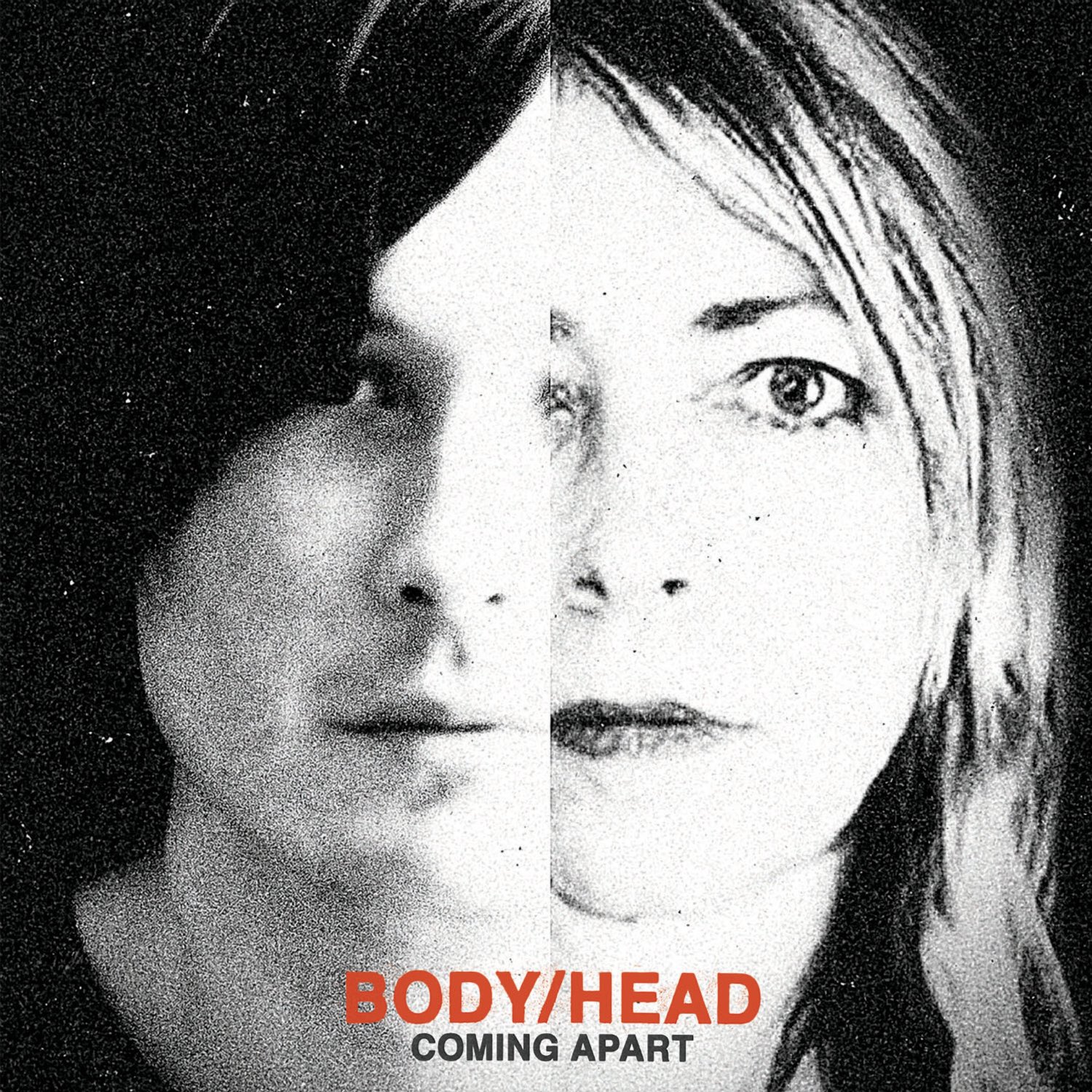
Body/Head – “Coming Apart”

Grade: A

Key Tracks: “Last Mistress,” “Black”

Sonic Youth fans like myself were heartbroken by their relatively unexpected 2011 break-up. But most fans expected to see the members in other projects soon enough. And two years later, we’ve already got three projects. Lee Ranaldo released his first proper solo album in 2012, an inconsistent but largely great album. Thurston Moore’s new, energetic band Chelsea Light Moving released their debut earlier this year (and it stands as one of my favorite albums of the year), and now Kim Gordon’s new duo have released their debut LP. Sonic Youth fans may have expected Gordon’s new project to be the most experimental and ambitious of all the immediate post-Youth groups, and it certainly is. Body/Head, also featuring Bill Nace, is a minimalistic guitar duo, playing long, crunchy drones, with occasional lumbering lyrics from Gordon. To put it simply, Body/Head sounds a little like some of Sonic Youth’s earliest records, slowed down a lot.

“Coming Apart” is a double album, coming in at roughly 68 minutes (but with only 10 songs). There is no way to tell when the album one switches to album two, but the album does have a building experimentation. That is, it tends to get more experimental as it goes along. “Abstract” starts the album off with a vocal-heavy song, and “Last Mistress” serves as one of the most droning tracks on the album. But it only gets more minimalistic as it goes on. Songs often lack beats, sometimes lack rhythms, and have long instrumental sections. And the last two songs, “Black” and “Frontal,” combine for a total of 30 minutes. “Black” is a dissonant, building odyssey with violent lyrics that channel Patti Smith’s “Land” portion of her album “Horses.” Gordon’s voice largely stays monotone throughout the album, and it is the most effective on “Black,” a song that’s too menacing to ignore.

The album is punishingly minimalistic, one that starts off making boldly ambitious claims and slowly grows even more so, until the listener is suddenly engulfed in a seventeen minute finale. It certainly won’t appeal to everyone, but those interested probably already know what they’re going into, with Kim Gordon involved. The duo works with both song structures and the total absence of them, drawing out notes as Gordon draws out words. Minimalism can often feel pointless, but “Coming Apart” never does. “Coming Apart” has poetry, it has meaning, and it has subtexts. It’s dark and heavy, but there’s beauty amidst the mess.

If you like this, try: “Drifters / Love is the Devil” by Dirty Beaches. It’s a little less noisy and has wider influences, but it’s another double album that only gets more experimental as it goes on.

-By Andrew McNally

Arctic Monkeys – “AM”

(Photo Credit: Spin)

Grade: C-

Key Tracks: “Do I Wanna Know?” “R U Mine?”

Bands by no means have to retain any sort of their original sound. Five albums and seven years later, the Arctic Monkeys do not need to sound like the bratty teenagers they were on their debut. But this album feels like such an antithesis to their debut that it ends up being frustratingly disappointing. When they shot out of nowhere in 2006, they were four teens playing wild, sloppy songs about underage drinking and one-night stands. Now, they’re well-dressed and playing metrical and over-produced odes to maturity and bachelor life. In some ways, a band maturing is nice, and this is the first Arctic Monkeys album where the members seem to fully realize who they are and what they’ll become. But this Arctic Monkeys seems like it would scoff at the 2006 Arctic Monkeys, and the 2006 Arctic Monkeys seems like it would despise what it’ll eventually become.

The band took a different approach to this album. Their recent, public relationship with Josh Homme of Queens of the Stone Age (and a tour with the Black Keys) has largely benefited them. Homme appears on this album; Alex Turner appears on QOTSA’s “…Like Clockwork.” The band has, for whatever reason, decided to ‘Americanize’ their music by recording in the desert with Homme and basing beats off of Dr. Dre. It’s an interesting idea, and one that fits wonderfully within the band’s running thing of each album representing some aspect of life. But the new songs are so beat-based that they feel like a how-to guide for people just starting to learn music. The drum machine and artificial clapping are basic and pointless. And the album is so slickly produced that it makes old songs like “A Certain Romance” feel like underground recordings from the ’70’s. The band and the production are both so slick and so smooth, that it doesn’t feel real. And that’s the last thing I ever expected from them.

Had this album been released by a different band, it would probably be a good recording. There’s diversity amongst the tracks, and a common theme of being a bachelor. The songs ask questions, the lyrics are provocative, and the music is catchy without being overblown. Taking it out of the history of the band, it’s a pretty decent recording. I wouldn’t recommend this as an introduction to the band (that might go to 2011’s “Suck It And See”), but if someone were to listen to this album with no prior knowledge of the group, they might enjoy it.

That being said, the band gave me something that they’ve never given me before, and that’s a large chunk of an album that’s truly boring. There’s a section of three or four songs in the album’s midpoint that should not be as dull as they are. And a song called “No. 1 Party Anthem” should not be one the album’s slowest songs. Unless, of course, this is a grown-up party with adults discussing current events. And this may be the Arctic Monkeys that we have come to.

I’ve been a lifelong fan of the Arctic Monkeys. I keep their debut, “Whatever People Say I Am, That’s What I Am Not,” as one of my go-to albums in my car. I loved “Favourite Worst Nightmare,” I enjoyed “Humbug,” and I adored “Suck It And See.” So to see the band go so slick and smooth felt, to me, like a total loss of principle. They may have been heading in that direction, but I didn’t think they would hit this point so quickly. This album is the direct opposite of their debut, and I find it hard to believe that these guys could truly mature this much in so few years. I will stick by this band, I’ll still see them if they come around this way, but I can’t see myself listening to “AM” again anytime soon.

If you like this, try: The new Queens of the Stone Age album I linked to, it’s another boring album by one of my all-time favorite bands.

-By Andrew McNally

The Boston Boys – “Keep You Satisfied”

(Photo Credit: TheBostonBoys.Bandcamp.com)

Grade: B+

The Boston Boys, operating out of New York but formed at Boston’s Berklee School of Music (not my alma mater, unfortunately), put a surprising amount of influence into an EP that’s roughly twenty minutes long. Though billed as a folk and americana band, The Boys show hints of bluegrass and soul, and even some country. The EP is diverse, showing broad appeal alongside a youthful energy and musical proficiency.

Opening track “Satisfied” packs a lot of energy into it’s folk and gospel roots, with some resounding vocals to boot. The band is consisted of Eric Robertson, Duncan Wickel, Josh Hari and Nicholas Falk, and all four are credited as singers. Second track “Amelia” mixes pop-like vocals with traditional folk guitar and violin, starting off melodic and slow before kicking up the tempo with some keyboard. “Endless Creation” has an incredibly catchy melody based around a couple different instruments, and some striking vocals. These help to save the song from some tired and overused lyrics. “Honeycomb” takes on much more of a country sound than heard previously, while still sneaking in a little blues. The band messes around a little with volume, keeping the song very quiet for segments before having stringed instruments kick back in for a quick rhythm. The final song, “Take Me Under,” is a ballad, and a prettier song than the first four. Although it too suffers from some overdone lyrics, it succeeds as an effective ballad and a soft finale.

The Boston Boys seem to be aiming for big audiences with their mistake-free blending of genres, and their proficiency might just lead them there. Despite having a limited number of songs (and this EP doesn’t come out until October), The Boston Boys were asked to perform as one of seven official bands on Obama’s re-election campaign. The Boys have a knack for bluegrass and folk, and they prove that on this EP. Its only faults are some tepid lyrics, and they are faults that are more than easy to overlook.

-By Andrew McNally

Okkervil River – “The Silver Gymnasium”

(Photo Credit: Paste Magazine)

Grade: B-

Key Tracks:”It Was My Season,” “Lido Pier Suicide Car”

The easiest thing to say about “The Silver Gymnasium” is that it does it’s job. A folk album that’s loosely based around the nostalgic concept of leaving one’s hometown comes in, has a number of varied tracks, and finishes. It’s unfortunate that this is being said of Okkervil River, because place this album a decade in the past and it would have been something really great. But Okkervil River might be a victim of their own creation. The band formed in 1998, long before the recent alt-folk revolution gave us Mumford & Sons, Laura Marling, Of Monsters and Men and what feels like two hundred other, largely great bands. Okkervil River used to be at the forefront of alt-folk, among the likes of fellow hold-outs Neko Case and pre-steriod addiction Wilco. The sounds conveyed on “The Silver Gymnasium” was a folk sound popular in the late ’90s. But with bands like Fleet Foxes now challenging the basic connotations of folk, this old sound is just a little outdated and a little boring.

But time should not be the main critique of quality, and there are some great songs on the album. Will Sheff’s voice is soothingly melodic, and matches the nostalgic tone perfectly. Opening track “It Was My Season” is so engagingly beautiful that almost anything that follows is set up for disappointment. Fellow stand-out “Lido Pier Suicide Car” serves as the album’s second-longest song, staying down tempo for long enough that its seconds away from becoming belaboring before kicking up the pace. And “Black Nemo” stands as a beautiful finale. These tracks, and a few others, are enough to still make the album a worthwhile listen, but there are a number of formulaic tracks. A fair amount of the album doesn’t quite feel original enough to exist in 2013, and a majority of the tracks aren’t really that memorable.

Okkervil River fans, and fans of late 90′s alt-folk will surely enjoy the album. Its nostalgic feel should connect with the band’s audience, many of whom can probably relate to leaving their hometowns. And in fact, the nostalgic tone might be why the album sounds a little tired. It could all be part of the concept. But even if it is, it isn’t an album for fans of the recent folk uprising. The concept works, and the never-indulgent personality Sheff displays works, it just isn’t easy to imagine revisiting the album after the first listen.

If you like this, try: the Neko Case album that’s reviewed directly underneath this!

-By Andrew McNally

Neko Case – “The Worse Things Get, The Harder I Fight, The Harder I Fight, The More I Love You”

(Photo Credit: thelineofbestfit.com)

Grade: B+

Key Tracks: “Night Still Comes,” “Man”

The full title of singer-songwriter Neko Case’s sixth solo album is “The Worse Things Get, The Harder I Fight, The Harder I Fight, The More I Love You” and it fits the album perfectly. The album sends across mixed emotions, signs of inner conflicting demons. “The Worse Things Get” is displayed by poetic questionings of everything, even her own identity. “The Harder I Fight” comes through in blue collar folk songs with strong, subtle grit. “The More I Love You” is declared through hauntingly beautiful odes to lovers. The mixing of emotions does not signify a lack of a theme; in fact, it is the theme. The album’s three interchanging segments all feel temporary and imperfect, as if she’s holding herself together as long as she can, until some emotion takes her over. The lyrical result isn’t a mixed album, but full parts of a human. And Case dominates the album as the sole voice, only occasionally calling on help from other musicians.

The music is reflective of the lyrical conundrums. The album’s second track “Night Still Comes” is a beautiful and building indie-folk song, one that gets followed by the speedy and electric-driven “Man.” “Man” also serves as the album’s most poetic and frightfully questioning song. Indie-folk bands usually have albums that stretch out into varying tempos and accompanying instruments, but Case goes further than most. “Nearly Midnight, Honolulu” is an a capella, profanity-laden song. “Where Did I Leave That Fire” has an almost industrial and metrical feel to it, and the final three tracks are surprisingly upbeat, fun songs. The album is truly diverse musically. It’s only two faults are just a few too many saggy, subdued moments around the album’s middle, and the less-than-rewarding short lengths of most of the songs. But those are not nearly enough to tarnish the album.

The beauty of this album is the faintest subtext of grit and anger that plays under some beautiful music. There are a lot of conflicting pieces to this album, all of which come together and form an indecisive existence; a look inside a troubled person. At times fun, at times engaging, at times frustrating, it is what most singer-songwriters set out to do. It may have a few too many ideas, it isn’t completely memorable, and it may end a little too soon, but it is a beautifully wrapped folk album.

If you like this, try: Laura Marling’s “Once I Was An Eagle.” Entirely acoustic-based, but another varied album from a great singer-songwriter.

-By Andrew McNally

Arc & Stones – “Arc & Stones”

(Photo Credit: Arc & Stones Bandcamp)

Grade: B-

The debut EP from New York based band Arc & Stones doesn’t accomplish anything revolutionary, nor is it an extraordinary album. But each of the five tracks has just enough diversity, and just enough energy, to get stuck in your head. There is a catchy element to their music, and they use a combination of genres to flesh out what would otherwise be boring, rock songs. The band meshes rock, folk and soulful sounds to make five honest songs that sound kind of generic but have depth to them.

Opening track “Silence” spins the 90’s Black Crowes-inspired sound on its head by subtly building up sound and getting a little heavier than it seems. “Say Goodbye” greatly resembles some of the more radio-friendly 90’s rock bands like Collective Soul, building up from an acoustic rhythm to a big, fuzzy guitar ending. “Let Me Down” follows a piano and acoustic rhythm similar to the one that starts off “Say Goodbye,” largely staying in it before a bigger, group chorus at the end. “She’s Mine” is a louder track, bolstered by a bluesy guitar rhythm that adds some needed speed to the EP. Final track “Rise” is also centered an electric guitar rhythm, a catchier one. Every track is reminiscent of the folksy mid-90’s radio rock.

The band is consisted of Ben Cramer on lead guitar, Dan Pellarin on vocals and rhythm guitar, Joey Doino on drums and Eddy Bays on bass. Musically, they center more on a collective and friendly sound, and the unfortunate downside is that there isn’t much to speak of originality wise. The band does blend genres successfully, adding some emotion and soul to their more subdued moments, and it is more fine-tuned than most other bands of this nature. Pellarin’s lyrics, as evidenced by the song titles, aren’t anything that we haven’t heard already, but his voice is strong. Pellarin’s voice is soothing and honest, and he really adds the soul to the album, a needed diversity.

“Arc & Stones” isn’t overly memorable, but it is a promising debut release. The band might find their niche and gain a following. There are enough elements of rock, blues, folk and soul to keep the songs in your head for at least a little while afterwards. Part honest displays, part 90’s throwback, “Arc & Stones” might be the beginnings of a really good band.

If you like this, try: “Pyyramids” by Pyyramids (2013). Another decent debut from a band that shows a lot of potential.

-By Andrew McNally

Nine Inch Nails – “Hesitation Marks”

(Photo Credit: Consequence of Sound)

Grade: B+

Key Tracks: “Copy of A,” “Came Back Haunted”

The most immediate thing about “Hesitation Marks” is that Trent Reznor went through some changes in his time off from Nine Inch Nails. There’s no way of knowing what, but forming a band with his wife and winning, of all things, an Academy Award both seem to have livened him up, just a little. “Hesitation Marks” is distinctly a Nine Inch Nails record – lengthy, synth-based tracks with many layers of sound. But there is something gone, and it’s the gloom-and-doom feel. I hesitate to say it’s ‘missing’ because Reznor never really sounds like he’s trying to recapture it. Instead of lyrics about fear of religion and death and mutilation, there’s more inward songs about betrayal and personal responsibility. There may be keyboards and synthesizers abound, but the songs are more structured and sound more accessible than previous Nine Inch Nails records. Reznor did something no one saw coming. He made a rock album.

This isn’t a bad thing, either, because it works for the most part. The album starts off with a 52 second intro, before kicking off with two of the faster songs, “Copy of A” and “Came Back Haunted.” A majority of the songs hover in the 5-6 minute range and follow typical rock song structures. The songs generally get slower as the album goes on, before ending with a 1:29 instrumental outro. Reznor concocted a typical rock album, just one that lacks in guitar.

“Hesitation Marks” lacks the heaviness that is present on nearly all of his past albums. “The Downward Spiral” was one of the best albums of the 90’s because of it’s wicked and menacing layers of volume. “Ruiner” actually sounded like an empire collapsing, and “March of the Pigs” was a better punk song than most punk bands are capable of writing. The layers are present on “Hesitation Marks,” but the outward anger is gone, both lyrically and musically. Instead, we get a more early-80’s sound, like Reznor opening the door a bit for Depeche Mode. While it’s disappointing on paper, Reznor still pulls it off remarkably. The album drags at points, and it’s less memorable than most NIN records, but it is still its own great thing. This is a different side of Reznor, still angry but at different targets, and flirting with commercialism. And at 61 minutes long, there’s a lot of it to take in.

-By Andrew McNally

Franz Ferdinand – “Right Thoughts Right Words Right Action”

(Photo Credit: Wikipedia)

Grade: B+

Key Tracks: “Right Action,” “Love Illumination”

The easy way out is to say “This is another Franz Ferdinand album,” because it is. It’s a collection of short, fun blasts of alt-rock that meddle between catchy beats and artsy lyrics. But, like their previous “Tonight: Franz Ferdinand,” it does it’s part to separate itself from their less aimed first two albums. “Tonight: Franz Ferdinand” was a slight concept album, one that chronicled a successful one-night stand, in the typical glitzy and suave Franz Ferdinand fashion. “Right Thoughts, Right Words, Right Action” relies more on the music than the lyrics to stand out. The album goes above the bands that influenced it – something many European alternative bands seem to struggle to do. Early British alternative bands like the Cure and Joy Division had a huge impact on the genre, and bands still model themselves to sound like their predecessors. This album sees the band still embracing them, but branching out and expanding their sound with consistently great results.

Some tracks, like “Bullet” and leadoff single “Right Action” still capture the energy of their previous albums. The tracks are catchy and fast, almost resembling a friendlier version of the Hives (with equally nice suits). “Right Action”‘s speedy guitar is interspersed with some bass bumps, giving the song a truly catchy feel. But the band experiments more with tempo and structure. There’s nothing close to the experimental, synth freak-out of 2009’s “Lucid Dreams,” but there are distinct points of growth. “Treason! Animals.” resembles an epic, based around a central character. “Fresh Strawberries” sees Alex Kapranos get his most cynical yet, comparing us all to a fruit that will soon go bad. The brilliant finale of “Goodbye Lovers and Friends” is a final statement; “This is really the end” Kapranos sings. But it’s doubtful that this is the final Franz Ferdinand record, it’s probably just their snark peering out one last time.

The only real fault of this record is it’s length. After waiting four years for a new record, it’s a little disappointing to only get 35 minutes of music. It’s a lot of fun, though, and it’s a memorable record. It’ll probably take a few listens to get to really know, and it deserves them. Franz Ferdinand have, yet again, made a fun and danceable album of bouncy, alt-pop with some real hidden complexity. Let’s hope this trend continues.

If you like this, try: This is the third album this year from a popular, catchy indie band that branches out from what we’re used to. The other two – which don’t need a plug – are among my favorites of the year: Phoenix’s “Bankrupt!” and Vampire Weekend’s “Modern Vampires of the City”

-By Andrew McNally

Sarah Neufeld – “Hero Brother”

(Photo Credit: CST Records)

Grade: B

Key Tracks: “Hero Brother,” “Sprinter Fire”

It’s been three long years since Sarah Neufeld’s primary band has released an album, so the sporadically-overworked violinist of Arcade Fire decided to work solo. The result is a relaxed-sounding album that falls nicely in between traditional performance classical and indie rock experimentation. The album barely has any other sounds than Neufeld’s violin, accompanied only by keyboards and occasional vocal rhythms.

Neufeld never overworks herself like she does on some Arcade Fire tracks, instead taking a minimalistic approach to her songs. Nearly every song is just Neufeld with some slight music in the background, and in some moments everything drops out altogether. Her playing is often slower but experimental, finding just the right moment for a violin shriek or a repeated sequence that would sound very out of place in a traditional orchestra. There is a subdued element to the album, even if Neufeld’s playing doesn’t always sound like it.

I will say that I am not sure what the target audience for this release is. Arcade Fire die-hards like myself might enjoy it based on principle (go Sarah!), but it is not by any means an album for people just looking for indie rock. It is strictly instrumental and classical-inspired, resembling a school recital but on a grand scale. Fans of pre-Stravinsky classical music might not eat it up either, given its tendency not to shy away from rough rhythms. But it is a good listen, even if its audience is kind of a niche. Win Butler said he’d retire from music at 30, so if he actually holds true to that word, maybe we can get some more solo work from Sarah. “Hero Brother” is a solid instrumental album, with just enough experimentation to make it an entertaining, genre-blending work.

-By Andrew McNally