Wilco – “Star Wars”

Grade: A-

Key Tracks: “You Satellite” “Where Do I Belong”

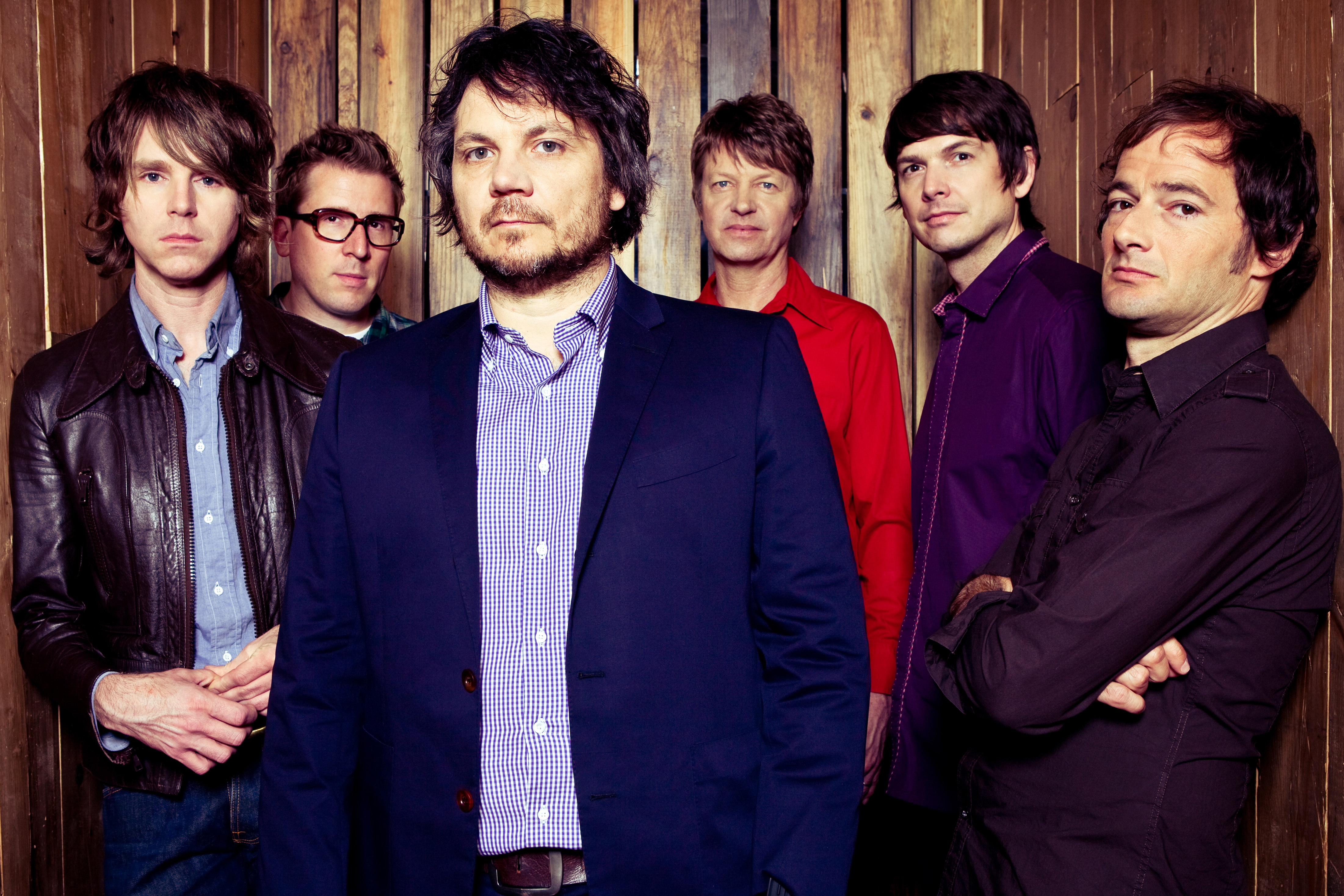
Wilco are at an important point in their career. Like many artists before them – namely David Bowie, who they channel heavily here on their ninth album – they’re at a point where they’re growing restless again. Wilco established their original sound, as an alt-country band. And then, out of nowhere came “Yankee Hotel Foxtrot” and “A Ghost is Born,” their creative reawakening albums (although in most band trajectories, this period comes from creative woes, not accidental painkiller addictions). After Jeff Tweedy recovered, the band’s sound settled into a more mature, introspective look with the still-excellent “Sky Blue Sky.” And the two albums since then have seen the band embrace their catalog as a whole, both poking fun and honoring their creativity of the past.

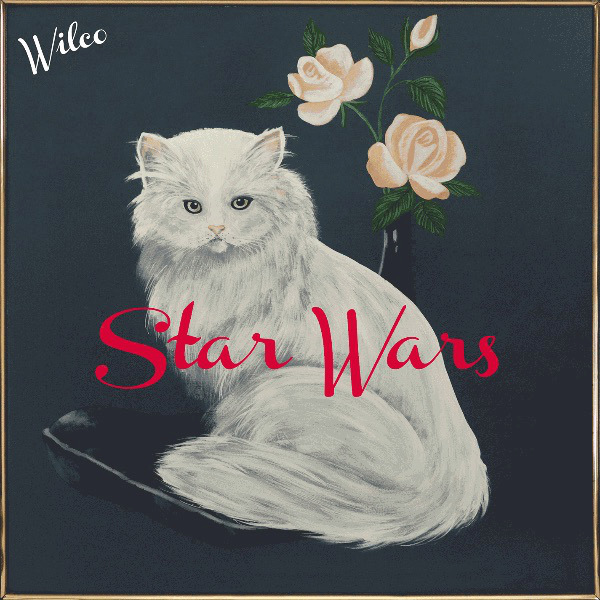
But, like Bowie did on “The Next Day,” they’re again growing restless with maturity. “Star Wars” is unlike any other Wilco album, in many ways. For on thing, it’s called “Star Wars.” Also, the cover has an adorable cat on it. It looks more like the cover for a Dusty Springfield record, not a Wilco one. And the songs are shortened, tightened and energized. There’s certainly other Wilco songs that would feel comfortable on this album – “Shot in the Arm,” “Wilco (the Song)” come to mind. But the band has created songs that don’t give themselves room to breathe. At 2:30, “Pickled Ginger” sounds just like a cut Deep Purple song with it’s fuzzed-out, grinding guitar line. Although “Star Wars” is distinctively Wilco, the songs here have traveled a long way from “Impossible Germany.” And it’s not a criticism – it’s a familiar sound, in an unfamiliar package. At 33:47, it’s the band’s shortest album by nearly ten minutes (ten minutes being two-thirds the length of their longest song). And as a band that’s stayed reliant to the album format, their decision to drop this release suddenly and for free online is growth as well.

Although the band has been playfully looking back at their earlier works in recent years, “Star Wars” marks the first time in years that they’ve actually incorporated any elements with an avant garde feel. They come mainly in the opener, “EKG,” a 1:15 chippy, dissonant intro that doesn’t serve as a standalong song, instead as a declaration of what’s to come.

Also, Jeff Tweedy as a frontman and songwriter seems to be less of a focus on this album. Something noticeable about one the album’s best songs, “You Satellite,” is that the volume of his vocals is closer to the rest of the instruments, instead of being at the forefront. And eventually, he gives way to the music entirely. Tweedy’s lyrics on this album aren’t his best (they’re a lot vaguer than past Wilco albums), but the focus is on the music and the vibe anyways. The longer they’ve been around, and especially since they’ve developed a more steady line-up, Wilco has seemed more like a full band and less like a collective.

Wilco haven’t released a mediocre album since 1999’s “Summerteeth,” but it’s been a long time since they’ve released a great one, too, and that’s just what “Star Wars” is. This is their best album since “Sky Blue Sky” in 2007 and, if you like just fun and lively Wilco, then before that. There are moments of beauty and grace on “Star Wars,” especially in affectionate closer “Magnetized.” But more often than not, those moments are often followed up by a sudden drum line, feedback or guitar melting. Just as you would expect from a band growing restless yet again.

If you like this, try: This one’s probably obvious since I mentioned it, but it’s stylistically and tonally resembling of Bowie’s “The Next Day,” if not actually all that similar.

Muse – “Drones”

Grade: D+

Key Track: “Reapers”

When you’re a band that’s been making the same album over and over again for 15 years, you should know better than to call it “Drones.” I won’t even touch the easy joke, nor will I say anything about the art-rocity on the cover. Let’s just not even spend time there.

Muse makes music for teenagers. I don’t know if it’s intentional or not, but they do. I was 14 when “Absolution” came out, and it rocked my world for a while. “Drones” takes a predictable anti-war stance, and man, if this had come out a decade ago, I would’ve fallen in love with it like it was any girl I talked to. Certain songs from “Drones” have Hot Topic-primed lyrics, down to a concept that’s confusing and inconsistent.

“Drones” supposedly follows someone as they join a military and become a human drone, or something Muse-y like that. It’s not always coherent, and it leads to very Muse-y songs like “Defector,” that has a chorus of “I’m free from society / You can’t control me,” or “Revolt,” which is pretty self-explanatory. The album’s second track is an interlude, of a drill sergeant prepping a soldier to be a “killing machine,” which is pretty much the equivalent to Kevin James starring in “Apocalypse Now.”

Musically, Muse looked to get back to basics on “Drones.” It doesn’t always work, but they have stripped themselves down a bit compared to the past few albums. Given that “The 2nd Law” had a literal dubstep song, hearing just the guitar-bass-piano-drums combo of the “Origin of Symmetry” days is a relief. It’s not enough – the strength of Muse’s early albums lies in their restlessness, as they clearly had ambitions that they couldn’t yet meet. But it is still an improvement. “Reapers” is the closest to classic Muse (note: to me classic Muse is “Newborn”). 10+ minute penultimate track “The Globalist” also hits old Muse for a while, before falling into terrible ballad territory (and giving way to the closer, “Drones,” which is Matt Bellamy a capella layered over himself – yikes).

Compared to the slough they’ve been slinging at us for a few years, “Drones” isn’t so bad. But there’s a second interlude on the album that’s part of a speech from JFK and it’s just like, come on guys. You’re British. This album is about drones. None of it makes any sense. Muse revel in their corniness, and it affects their songwriting. There’s some generally good Muse songs on this album, but they’re too few and far between to make you think they’re a band worth paying attention to again. 15 year-olds are probably going to pick this album up, and it might inspire them – that’s good. “Absolution” inspired me. It made me more political, and more musical. But it also advanced me past self-serving bands like Muse. Ten years from now, when Muse hits 31 years as a band, the kids that picked up “Drones” are going to smirk at themselves, at how far they’ve come since those teenage days.

-By Andrew McNally

Jen Kirkman – “I’m Gonna Die Alone (And I Feel Fine)”

Grade: A-

On her last special, 2011’s “Hail to the Freaks,” Jen Kirkman was blessed with a wealth of material for stand-up – she had just gotten married. Now it’s four years later, and Kirkman has found herself with an even bigger plate of material – divorce. And turning 40. “Freaks” had a weird mismatch, of Kirkman’s largely cynical comedy battling with her joy of being married. All of that is swept under the rug on her new Netflix special, in favor of well over an hour of jokes and stories about self-love and self-confidence in defiance of age and gender standards.

Much of “I’m Gonna Die Alone” is devoted to how Kirkman at first uncomfortably, and now comfortably stands against the ideals of what a 40 year old is “supposed” to be. Kirkman is free, literally, to criticize those with kids, or to date anyone (including a 20 year old drummer, two days after her and her husband separated). On “Freaks,” a 36 year old Kirkman sounded surprisingly happy to be settling into a married life, one she never thought she’d fit into. Looking back now, present-day Kirkman realizes she was probably right all along.

Outside of marriage and divorce, Kirkman’s special still deals heavily with age. She struggles to find breakfast for her 17 years younger drummer boyfriend because she’s forgotten what it’s like to have to eat immediately. She attributes losing 40 pounds to standing while watching TV and having an occasional cigarette. And when she finds gray pubic hairs, she’s worried it’s going to look like barbed wire.

Kirkman’s confidence has risen considerably in the years since “Freaks.” She’s cynical, but she’s not bitter. Her cynicism is instead placed in her proud and utter rejection of societal standards. She doesn’t let anything weigh her down. She could easily (and maybe expectedly) taken the self-deprecating route that so many comedians have gone down in the wake of Louis CK, but she doesn’t. One of the special’s strongest suits is how easily Kirkman is able to dig out her niche in the world and observe it from the outside. Even in one of the special’s opening bits, about Dave, a man who doesn’t know the difference between lemons and limes, Kirkman observes the stupidity of humankind as an outsider. By ignoring the social norms she once embraced, she’s crafted a unique voice, and it has sharpened her comedy and delivery. With heightened TV appearances and a best-selling book under her belt, Kirkman is still on the rise. “I’m Gonna Die Alone (and I Feel Fine)” feels like a caged animal trying to get out. And watch out, because it’s soon going to be free.

If you like this, try: Kyle Kinane’s recent album, ““I Liked His Old Stuff Better,”” is one that departs from the expected self-deprecation route just like this one (and has already become one of my favorite stand-up albums).

The Sonics – “This is the Sonics”

Grade: A-

Key Tracks: “I Don’t Need No Doctor” “Save the Planet”

Does history repeat itself, or do things never change?

Fans of My Bloody Valentine, Guns N’ Roses and the Stooges are breathing a sigh of relief. “At least I’m not a Sonics fan.” “This is the Sonics” now takes the cake as the longest time in between albums. It’s the first album from the band’s original line-up in 49 years, and they play like nothing’s changed. Although the members are now in their 70’s, they’re still playing incendiary pre-punk garage rock.

This album plays like a movie in a series that ignores the films that came before it. The Fast and Furious series ignores Toyko Drift, like the film never happened. Except that in the world of the Sonics, what hasn’t happened is punk, disco, new wave, hip-hop, metal, boy bands, and everything else since “Sgt. Pepper”. The Sonics play like they’re still the forefront of music, something that would be vain if it mattered. In reality, it’s an incredibly refreshing listen. The band blow through 12 garage instant-classics in 32 minutes, each as good as the last.

All of the instruments work off each other on the album – there’s no competition for value. This is partly garage-rock mentality, and partially due to the record being recorded in mono. The producer, the legendary Jim Diamond, does little more than hit the start and stop buttons, just recording the band live. To add any flourishes, or to clean the sound up, would do the band injustice. Instead, the band is recorded as they should be – geared up, roaring with a possibly vampiric energy that some bands can’t match when they’re young.

There’s only really two nods to the fact that the Sonics aren’t still in 1966. The first is the inclusion of horns, something that wasn’t in the band until entirely different iterations of the Sonics played into the 70’s. The other is the late-album “Save the Planet,” which addresses global warming in the most Sonics way possible, by letting us know Earth is the only planet with booze. “Reality’s for people who don’t know how to drink,” Jerry Roslie sings, daring us to ignore his age.

The Sonics still have a cynical edge to their lyrics, a cynicism that separated them from the more party-hardy garage acts of the 60’s. There’s a relatively harmless causal sexism to the lyrics, much like the 60’s, as well as songs like “I Got Your Number,” with “I’ve Got Your Number, and it’s 666” sung in an offhand way. By convincing themselves that 60’s garage rock still wants to be heard, they’ve convinced us that lyrics like this are still surprising. “This is the Sonics” boasts a very 60’s throwaway album title (like “The Who Sings My Generation”), but it’s also very literal – this is them, all these years later. And to anyone that wasn’t around then, this is what they were. And it’s what they still are. 2015 hasn’t stopped throwing surprises at us, and a wholly rocking new Sonics album is something none of us expected.

If you like this, try: early garage rock like this has a big influence on the Burger Records type surf-punk bands, try Japanther at their more direct (“Surfin’ Coffin”).

-By Andrew McNally

Snoop Dogg – “BUSH”

Grade: C

Key Tracks: “Peaches N Cream” “Run Away”

There’s a question I’ve had about ridiculously famous rappers for a while – what path do they follow, when they grow older? Classic rock singers like Rod Stewart and even Bob Dylan have been going the route of covers albums, so I’ve been wondering where a rapper like Snoop might go. Turns out, he doesn’t really know either. “BUSH,” his thirteenth album, meanders around basic funky rhythms with the aura of a man who hasn’t given up, but just doesn’t feel he has anything new to say.

It’s safe to say that the music that Snoop has put out in this millennium hasn’t tried to be revolutionary. “Drop It Like It’s Hot,” even as a potential candidate for one of hip-hop’s greatest songs, doesn’t try to prove anything. His Snoop Lion phase didn’t prove anything we didn’t already know (nor was it taken very seriously). So now that we’re 15 years into this century and Snoop Dogg is ever-increasingly just a family man, his music has taken a natural progression towards the fun and breezy. It often is, but it begs to wonder why it exists in the first place.

After a midtempo intro with Stevie Wonder, the next four songs on “BUSH” are all Snoop solo, and they could all really use the kick of someone else. “This City” serves as the best, centered around a hypnotic vibraphone rhythm, going on only slightly too long. The weakest of the four is “R U A Freak?,” with some groan-worthy punny lyrics and an uncredited appearance from Charlie Wilson so prevalent that I’m honestly not sure Snoop even shows up on the track.

There are brighter points later on the album. At the sixth of ten tracks, “Peaches N Cream” is the first one that really feels inspired. It’s the only song that credits Charlie Wilson, although he shows up on four tracks. “Run Away” features a surprising collaboration with Gwen Stefani, who channels her No Doubt years instead of her solo pop career. She adds a late spark to the album that’s missing elsewhere. And the album’s finale, “I’m Ya Dogg,” has guest verses from Rick Ross and Kendrick “some of ya’ll share bars like you got the bottom bunk in a two-man cell” Lamar, who called it himself – although the song is great, and really the album’s only true rap track, Snoop takes a vocal backseat and gets lost in the mix.

The funk revival of 2015 doesn’t seem like something planned, more coincidental. Snoop, Lamar, and Mark Ronson have all released funk-heavy albums, but each with a foundation coming from a different place. It’s going strong nonetheless, and the music is at least funky. Wonder is wasted in a lifeless opener, but “BUSH” does have it’s funky moments at times. It’s fun, and I think that’s all that Snoop’s going for now. If so, then it’s a minor success. But even so, he seems too content to be releasing placeholder, schlocky albums. This is the man who was vaguely involved in murder charges; the man with a drug rap sheet longer than Willie Nelson’s. It doesn’t seem right that he has settled into such a steady and easy life that he can release self-serving, basic funk. From reggae on “Reincarnated” to funk on “BUSH,” it seems like Snoop is closer to forfeiting the rap game rather than leaving it behind. But, it answers my question. When a successful rap artist can make enough and settle down, provided they didn’t marry Beyonce, then what are they to do? Keep it easy.

-By Andrew McNally

METZ – “II”

Grade: B-

Key Tracks: “Acetate” “Kicking a Can of Worms”

METZ named this album “II” because they knew it would serve as a sequel. They came out swinging on their self-titled debut album, and fell into the rarity of an instant classic punk release. Even in a crowded genre, the album defied genre. “METZ” was like a butcher, taking a typical post-punk album and rolling it into one long strand, making incisions every few inches. Their music is extremely metrical, in a way that punk and post-punk usually prides itself on going against. “II,” unfortunately, doesn’t quite keep the energy. But it is a proper sequel.

Sequels are difficult – how much do you acknowledge the original? On the spectrum of “Godfather Part II” to “Hangover Part II,” METZ here fall somewhere around “22 Jump Street,” or “Led Zeppelin 2,” in the acknowledgement that yes, it’s more of the same, but you liked it the first time. METZ have a formula to their music that’s distinctly their own, but they’re already deviating from it.

The worst moments of “II” are the ones where METZ sound like they’re retreading themselves. The band, surprisingly, suffers from the “Give ‘Em Enough Rope” struggle of recapturing a debut album’s sheer energy. The songs presented here are sometimes more forceful than others, and sometimes more well-mixed than others. “Acetate” and “Landfill” have energy to them, while “Spit You Out” and “Nervous System” could use a little boost. And while the balance between heavy instrumentation and vocals is usually balanced, on “Wait in Line” it is too heavily in favor of the music. The lyrics throughout edge on intelligible, but “Wait in Line” is the only track where they’re too muted.

Still, the band recognizes that they can’t completely recreate their first album, and they allow themselves some flourishes. There’s something close to a solo on “Spit You Out,” and there’s a tremolo bit on “Eyes Peeled” that could be mistaken for a solo. They break out of their own system a bit, more than they allowed themselves to do on “METZ.” The vocals on “The Swimmer” are more frantic than they were before. There’s signs that the band knows this is a brand that can’t keep going forever. And at the end of it, “II” still rocks pretty hard. They might not be able to keep this formula up for long, but it’s still working in their favor.

If you like this, try: There’s a hundred different ways I can go with this one, but I’ll keep it basic. One of the best of the year – Sleater-Kinney’s “No Cities to Love

-By Andrew McNally

Mumford & Sons – “Wilder Mind”

Grade: D

Default Key Track: “Tompkins Square Park”

There was a time when vagueness was a part of rock music. It was big in classic rock – Springsteen and AC/DC alike told stories of everymen that resonated, even though they’re details were ripped out of entry level creative writing classes. Think about Tom Petty’s “Free Fallin’” – it describes a very specific girl, but an everygirl. Mumford & Sons harken back to the days of classic rock storytellers on their first electric album, “Wilder Mind.” But then isn’t now. Mumford & Sons going electric doesn’t resonate like when Dylan did it – hell, they’re probably quieter here. And in an incredibly overpopulated music scene, with artists like FKA twigs, Grimes, Viet Cong and TWIABPAIANLATD melting and reforming hybrid genres, and artists crafting increasingly more specific lyrics – see “Groin Twerk,” “Sometimes,” “King Kunta” – vagueness isn’t going to get you anywhere.

“Monster.” That was my choice for the first ballad of the album, when I first looked at the tracklist. Not because of the title, far from it – just because it was the sixth track. I was right. The album was predictable from the get-go; what you expect is presented almost exactly. The band sounds like any myriad of guitar-driven indie bands that’s existed from ’91 – present. There’s almost nothing memorable here. “Wilder Mind” stands equal with any of the non-“Hot Fuss” Killers albums, and any Coldplay album, as that album that most dads hold on to as a last grasp at trying to bond with their kids over music.

The album’s worst quality is that it isn’t worse than it is. If this album were actually worse, it could be fun-bad, like an ironic listen that you listen to for a laugh. But it’s just bland. It’s tepid, totally drained of life. There’s almost nothing enjoyable, and it’s forgotten before it’s even over. There are highlights, at least – the band sounds engaged on the opener “Tompkins Square Park,” a song that could stand as a Death Cab ripoff. And they do bring an energy to the table late on the album, on “Ditmas.” But the two Brooklyn-named songs notwithstanding, nothing else works here.

Mumford & Sons came out of the gates swinging a few years ago, armed with banjos, a new sound that rivaled acoustic dubstep, and a ridiculous personae that couldn’t be ignored. It got old fast, as they played themselves out, but they rode the world for a few years. Why they’d follow up a Grammy-pummeling album with this light-hearted, dull mess is beyond comprehension. Credit to a band trying to reinvent themselves, but “Wilder Mind” is just an old grenade, hissing with it’s pin pulled, and a crowd standing, slowly moving their fingers from their ears.

There aren’t even any songs about Gene Wilder. Should’ve been called “Whiter Mind.”

If you like this, try: catching up with the times

Alabama Shakes – “Sound and Color”

Grade: A-

Key Tracks: “Don’t Wanna Fight” “Gimme All Your Love” “The Greatest”

Alabama Shakes’ “Sound and Color” is their sophomore album, but you wouldn’t know it. They sound like veterans, who have earned the right to indulge themselves in whatever they want. They spend most of the album resembling bands that have come before them – anywhere from TV on the Radio, to Citizen Cope, to the MC5. But all the while, aside from a few digressions, they’re a Southern blues-rock band, in total control of their sound. If they want to have fun, they’re damn well going to have some.

The opening song is the title track, a minimalist song based around layered vocals and beats. Intentional or not, it harkens strongly back to TV on the Radio’s opener “I Was a Lover” (from “Return to Cookie Mountain”), as a hushed song that gives the impression that the band could, but isn’t necessarily going to, erupt. The album follows exactly as it’s presented – usually calm and ethereal, but with occasional, noisy flourishes. The second track, “Don’t Wanna Fight,” establishes a smooth guitar line that’s instantly more melodic than the whole previous song. Brittany Howard’s vocals come in as a prolonged squeak, because, why not? Smooth blues vocals are expected to complement the music, and she gets to that point. But fighting the grain is the album’s mission statement.

“Sound and Color” is an album that sounds like it was designed around individual songs, not around an album format. What I mean – take a classic like “Dark Side of the Moon” or “Abbey Road.” Excellent albums, but not every song sounds great when it comes up on shuffle. They’re centered around an album format. Blues (and blues rock) is usually centered around songs, and nearly every track sounds like the band worked out the components that would make it unique. “Dunes” has a quick section where the band gives way to a dissonant pair of acoustic guitars. “Future People” has a synth-y drone in the background that would’ve sent John Lee Hooker to the hospital. Best track “Gimme All Your Love” sounds like an improved version of any song by any boring alt-jam band, occasionally bordering on near-silence. And then it picks up, suddenly, and unexpectedly. And “The Greatest” is a straight, worn punk track, one that sounds like it’s going to have a deceiving, disappointing red herring intro but doesn’t, keeping the energy up for nearly four minutes.

Every member of Alabama Shakes is clearly exceptional. Howard’s voice goes from low and subdued to high and shrieking at any turn. Zac Cockrell’s bass bumps the band through the whole album, more audible than on most rock releases. Heath Fogg’s and Howard’s guitars drive funky, usually melodic but occasionally dissonant rhythms. And Steve Johnson’s drums keep the rhythms afloat, expanding the band’s whole sound. The band occasionally works in group vocals, and sometimes not. Sometimes, they sound like a collective, sometimes they’re supporting one member. But always, they’re laid back and just enjoying what they’re doing. Without the band’s pure enjoyment of the music they’re making, half of the songs on “Sound and Color” would sound unoriginal, played out. But the band seems to understand that they’re playing some pretty hybrid genres, and they roll with it. “Sound and Color” probably isn’t going to be an album we’re looking back on in twenty years, but for an immediate time, it’s a hell of a ride.

If you like this, try: TV on the Radio, but as great as “Cookie Mountain” is, their follow-up “Dear Science” was even better.

-By Andrew McNally

Fade In: Death Grips

Noise-rap group Death Grips doesn’t always have the same line-up. That’s probably an important thing to note. They usually consist of rapper MC Ride and drummer Zach Hill. Sometimes, keyboardist Andy Morin is considered a member. Sometimes, it’s a combination, or no one at all. The experimental duo/trio has made waves since their debut mixtape, “Ex-Military,” came out in 2011. Their albums have dabbled in noise, samples, politics, controversy, and all with unlimited energy. In honor of their new supposedly final double album, “the powers that b,” I’m offering the second Fade In Playlist. So for those of you who have heard the name Death Grips but have felt like it’s too late to jump into the game – don’t worry, I’m here to help. Below is a 10 song playlist with the duo’s well-known songs, most riotous acts, and a few deep cuts.

1) “You Might Think He Loves You For Your Money But I Know What He Really Loves You For It’s Your Brand New Leopard Skin Pillbox Hat” Quite possibly the band’s loudest song, although you could make an argument for almost any other one too, the “Government Plates” opener with a Bob Dylan title serves as a proper introduction to the band. With the unsettling synth opener, to MC Ride’s inconsistent vocals, it’s a wild, drippy ride. Fourth album “Plates” suffered from MC Ride getting lost in the mix, and this song is no different, but the beat here is so head-numbing that it doesn’t even matter.

2) “I’ve Seen Footage” Arguably the band’s most famous song, “I’ve Seen Footage” is also one of their most straight-forward tracks. With a guitar line more typical of a punk song, Ride and Hill jump in for a song that’s more rock than anything. But that doesn’t mean it isn’t still volume-pushing. Their sophomore album, “The Money Store,” was the closest they’ve gotten to conventional music. And it wasn’t very close.

3) “Come Up and Get Me” For the band’s third album, “No Love Deep Web,” they returned to a darker sound, albeit a more minimalist one. The album is marked in history as the one with Zach Hill’s erect penis on the cover. You know, that one. Death Grips signed to a major label just to screw them over, accepting a bunch of money for this album and then releasing it early for free. Opener “Come Up and Get Me” is similar to the opener on “Plates,” with a synth beat that almost makes you lose control of your senses.

4) “Black Quarterback” The first half of their supposed final album, “the powers that b,” that officially came out last month, actually came out last June. Titled “n****s on the moon,” it suffered from over-production and music that was too choppy and dense. Bjork samples were on every song, to little effect. But one standout from this album is the only one that heavily features MC Ride. His lone vocals start the song, before getting quickly swept up in a wild mix.

5) “Guillotine” Death Grips first release was the 2011 mixtape “Ex-Military.” It still serves as the most well-rounded example of their music, and possibly their best work. Second track “Guillotine” was the song that put them on the map. It’s a rare Death Grips song that holds back; instead of an aural assault, it comes in metrical bursts. MC Ride’s vocals come in crescendo-ing screams. It’s one of their most playable songs, even if it’s still surprising after 100 listens.

6) “Birds” The closest thing the band has done to a ballad, in the sense that Los Angeles and New York are close relative to the size of the Earth. This “Plates” track starts with a jarring synth rhythm, but gives way to a quieter guitar. This album has been their most experimental to date – it isn’t always in your face, and “Birds” is the best example. It’s a more reserved sound, if not with streaking bits of avant-garde. There’s little rhythm, but it’s a break from the overbearing nature of everything that surrounds it.

7) “Get Got” The third of their more known songs, “Get Got” opened “The Money Store.” It’s a rapid-fire song that’s more melodic than most Grips works. In the years since it’s release, the song has grown tamer, but when the album came out, it was something revolutionary. It’s still a great song, and one of their easiest to throw on at any time.

8) “I Break Mirrors With My Face in the United States” Maybe the most apropos title for a Death Grips song yet, this song opens “jenny death,” disc two of their recent “the powers that b.” This disc is far superior to “ni**as on the moon,” and it shows early. The group works as a collective on the disc, and this track is pure riot. It’s speedy to a fault, with Ride leading the group through a storm with the repeated title phrase. Refreshing to see that they can still put out a track like this.

9) “No Love” “No Love Deep Web” was marked by a more minimalist sound, and on one of the two title tracks, it couldn’t be more apparent – a few times, the music totally gives way to MC Ride’s a capella vocals. And even when there’s music, it’s more subdued than other Death Grips albums. The group plays around with holding back, letting the music hit at certain times instead of full-on. While not my favorite of their albums, it might be the most important in their repertoire.

10) “Blood Creepin'” My personal favorite Death Grips song, this one is also in the running for loudest track. The closer to “Ex-Military” doesn’t hold back with volume. Hill and Morin are in full force themselves, until MC Ride comes in, scream-rapping with vocals that were recorded louder than the usual balance, and name-checking Sonic Youth. This band is almost always in assault mode, but never more than this track. I think it might be the most quintessential Death Grips song – loud, arsonistic, earache-inspiring, and inexplicably melodic.

There’s been bands like Death Grips before. But for what we have right now, they’re the most experimental and controversial performance art group out there. Run the Jewels might be putting out even better albums, but for better or worse, they’re not pulling off the stunts and pure volume that Death Grips are. Thanks for listening, or not, they wouldn’t care and I’ll pretend not to. Death Grips broke up last summer, and never reformed it, so take their current tour and continual album releases as you please. I’m sure “jenny death” isn’t the last we’ll see from them. But we’ve already got more than enough to get angry and punished.

-By Andrew McNally

Waxahatchee – “Ivy Tripp”

Grade: B+

Key Tracks: “Breathless” “<”

Bzzzzzzzzzzzzz.

That’s the first sound you hear on “Breathless,” the opening track to Katie Crutchfield’s third full-length as Waxahatchee. It’s a guitar-wall, a block of fuzz of an electric guitar settling into it’s distortion. It’s similar to the guitar in 2013’s “Misery Over Dispute,” but grittier, more forceful. “Ivy Tripp,” and especially “Breathless,” follows Crutchfield’s trend of increasingly confident electric songwriting, although the electric/acoustic balance is too far in favor of the former.

People that discovered Crutchfield through her 2012 debut, “American Weekend” (like myself), probably wouldn’t have guessed that she was in a punk band prior, cult favorites P.S. Eliot (with her sister Allison – frontwoman for the equally great Swearin’). “American Weekend” was entirely acoustic and lo-fi enough that she could’ve easily opened a recording program and recorded the whole thing in a bedroom. “Cerulean Salt,” one of the best albums of 2013 (a year filled with great albums), was able to mix electric and acoustic. Songs like “Misery Over Dispute” aligned with 90’s alt-rock, with a Weezer-like warm distortion to them. And tracks like the tear-inducing closer “You’re Damaged” proved acoustic ballads could fit right in with the plugged-in songs.

“Ivy Tripp” follows more open, progressive songwriting. It’s her most comprehensive album to date, with piano and synth incorporated at times. And for part of the album, the flow is just as jarring as it was on “Salt.” Right as “Breathless” starts to become droning in it’s fuzz, it gives way to the clean, acoustic opening of “Under a Rock.” Unfortunately, the album’s middle succumbs a few times to electric tracks that don’t have enough oomph to them, and may have worked better acoustic. It picks up again for the final third – two beautiful acoustic tracks, a piano ballad, and a circular, grungy bass-heavy song close out the album.

As usual, most of the songs on “Tripp” are sung to an unknown individual. This album is different from “Weekend” and “Salt,” in that it is as focused on the music as the vocals and lyrics, so there’s less lyrical standouts. But “<” has the repeated line “You’re less than me / I am nothing.” The song is also maybe the most interesting from a musical standpoint, as a building track with discordant guitars. Elsewhere, Crutchfield makes numerous references to water and, on “Air,” sings “I left you out like a carton of milk.”

Like the lyrics, her vocals on this album aren’t as much of the focus. But they’re still commanding, naturally.  They’re the strongest on “Air,” but they’re great throughout. The strongest quality in her music has always been the fact that she sounds like she’s making these albums for her, not for an audience – not a trait that’s usually a good thing. But “Ivy Tripp,” like the albums before, sounds like a work of grievances, of things that she needs to get off her chest. And the songwriting is more expansive, more confident, and comes with the biggest sound yet, but these still sound like songs recorded for her. The audience is merely a factor in her music; she’d like us to be included, but if we’re not, it’s okay. The songs are being made anyways.

If you like this, try: Any album from one of my absolute favorite bands, Laura Stevenson & the Cans. I recommend “Sit Resist.”