Melt-Banana – “fetch”

(Photo Credit: exclaim.ca)

Grade: A

Key Tracks: “The Hive,” “Schemes of the Tails”

There’s a certain number of people out there that have thought, “I wish Melt-Banana would just be more intense!” That number hovers around zero. But they’ve gotten more intense. The Japanese noise-punk group has been established, since the mid-90’s, as one of the leaders in the world of total aural assault. Their earlier albums were nonsensical blasts of noise, each track often lasting less than a minute. In the 2000’s, they gravitated towards more conventional song structures while still maintaining that furious intensity. 2003’s “Cell-Scape” was a goldmine of pop-brutality. After six years of inactivity, they’re back, and “fetch” makes those six years excusable.

It should be mentioned that they took time off because of problems faced in their native Japan – an earthquake in Tohoku and the nuclear meltdown at Fukushima left the band putting their careers to the side to help their country. But the return is still welcomed – because they’re back to their experimenting. Sometimes the band experiments, other times they just put out noise albums. But “fetch” sounds like the album that should’ve come out before “Cell-Scape.” To put it simply, this is the Melt-Banana album I’ve been craving since I got into them roughly six years ago.

“fetch” starts off with ocean waves and a synth rhythm, a bit of a red herring intro that also acts as a metaphorical apology for the band’s unintended hiatus. The song builds up, finally ending in intense Melt-Banana form. For those unfamiliar with the band, that involves guitar and drum paired with squeaky high vocals and drums that sound like they’re being murdered. Follow up “The Hive” is more of a traditional track, at slightly over two minutes.

A slight majority of the songs on the album are under the 2:30 mark, and all except an interlude are expectedly intense. But what makes this album great – maybe even their best – is the way it uses typical song structures to sound even more brutal. “Cell-Scape” loosely framed its songs around rock structures, but didn’t advance much beyond them. “fetch” takes a typical structure, allows the band to slow down just a little to add a noticeable energy, and intersperse typical songs against blasts of noise. The final track, “Zero,” almost comes close to resembling the Yeah Yeah Yeahs song of the same name, as a synth-based dance-number. But yet, the tracks before them are still brutally fast. Melt-Banana stretches their own boundaries on this album.

The vocals aren’t as high-pitched, and the drums are on a less consistently melodic, Zach Hill type of brutality, which automatically sounds different. “fetch” honestly would’ve been a wonderful intro to “Cell-Scape,” now 10+ years removed. But with the mediocre “Bambi’s Dilemma” standing as their most recent release, “fetch” is more than a welcome return – it’s a noisy, assaulting and relentless piece of noise-punk that recognizes its boundaries, always going to them but never going over. Melt-Banana is not a band that has a wide audience in America, but for those that do enjoy, they’ll hopefully accept “fetch” as an apology for a long absence.

If you like this, try: Lightning Bolt’s 2005 album “Hypermagic Mountain.” Two guys from Connecticut created one of the most feedback-laden, noisy masterpieces of the ’00s.

-By Andrew McNally

Elvis Costello and the Roots – “Wise Up Ghost”

(Photo Credit: Pitchfork)

Grade: A-

Key Tracks: “Walk Us Uptown,” “Refuse To Be Saved”

Elvis Costello and the Roots coming together is one of those combinations that no one ever thought up, but when we heard it, it just kind of makes sense. Costello, the post-punk singer who always has a groovy touch to his music, and who has recently been branching out to other genres, and the Roots, the jazzy hip-hop group and permanent residents as Jimmy Fallon’s house band. Their work together on “Wise Up Ghost” just feels natural, the best quality to have on a groovy record like this.

The album starts with the sound effect of someone increasing the volume on a Mac (that blip-blip-blip), a testament to how long each act has been active (The Roots since ’87, Costello since ’70) and an ode to the timeless style of music they create. The album’s opening tracks are very upbeat, hip songs that blend Costello’s post-punk with classier hip-hop. Many of the songs have a variety of instruments, creating a full and diverse sound. Standout “Refuse to Be Saved” matches a clean synth rhythm over horns, until both die out and a string section ends the song. They pull off an excellent ballad, too, in the closer “If I Could Believe” that relies successfully on Costello’s strong vocals.

The album is not without its faults. The fifth song, “Trapwire,” is undeniably slow, too slow for it’s placement on the album. This kind of kills the vibe that’s been built up before transitioning to a number of midtempo songs. The title track finally brings it back to the fun it was before, but not until track 11. What’s in between is a number of good songs, just ones that are not as interesting as what comes at the album’s bookends. Also, given that The Roots are one of hip-hop’s funkiest groups, it’s surprising that there is no rapping on the album. The vocals rest solely on Costello. Just one track of some back and forth would have been nice – a fast song with rapping in the verse and singing in the chorus.

Although the album is a little inconsistent, it is greatly helped by some pristine production. The production is just a little grainy and a little condensed, invoking the sound of a 70′s record. The album is kind of a throwback, and the production places the listener in that era with the help of some perfected vintage production.

The album’s slower songs are a little tough to get though, but “Wise Up Ghost” is a lot of fun while having a lot of depth. Costello still sounds great, and the Roots’ diverse instrumentation give the album a number of layers. The fact that this record came out in 2013 and not the ’70s is a bit of a surprise, because it feels right at home then. Meaning, of course, the album completely does what it sets out to do.

-By Andrew McNally

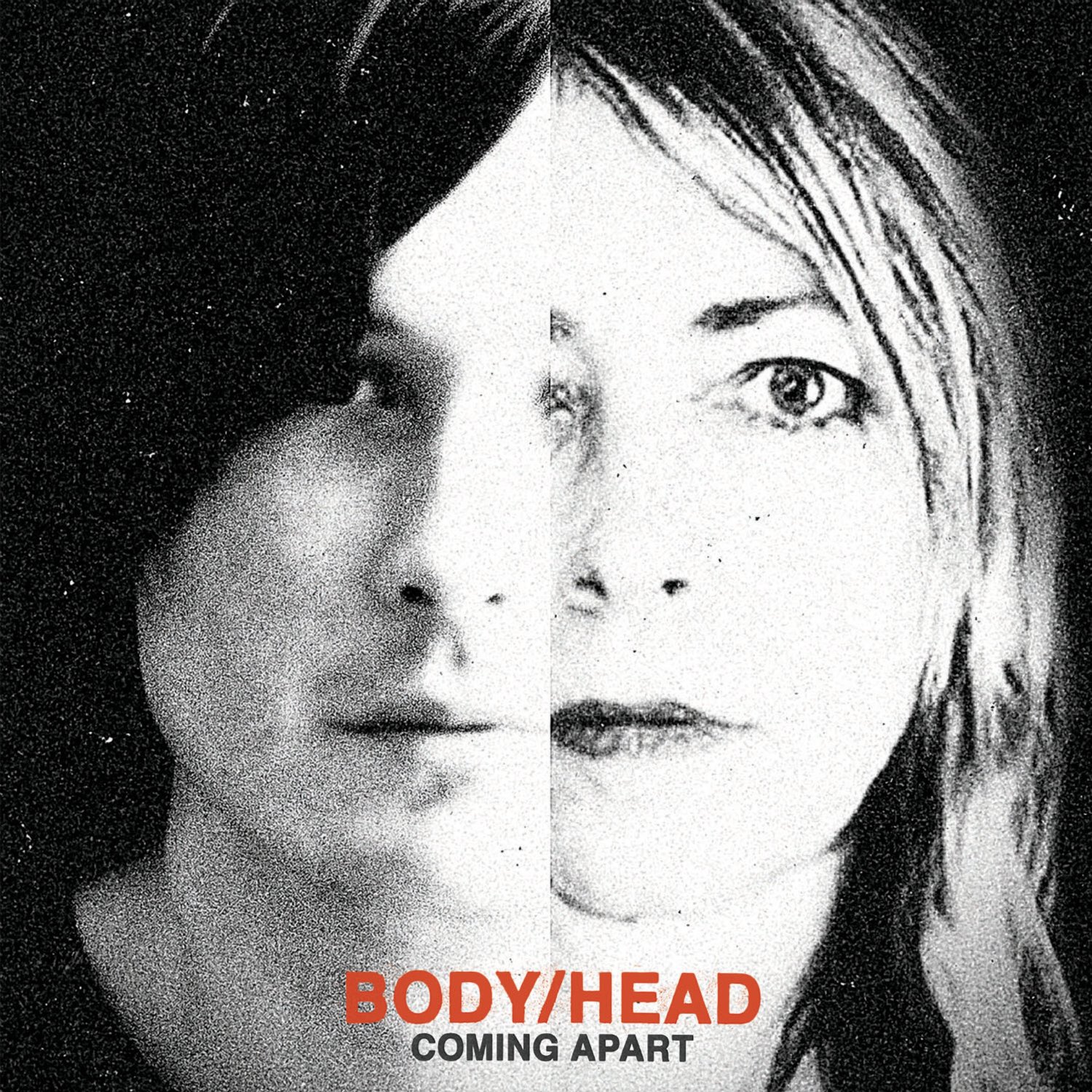
Body/Head – “Coming Apart”

Grade: A

Key Tracks: “Last Mistress,” “Black”

Sonic Youth fans like myself were heartbroken by their relatively unexpected 2011 break-up. But most fans expected to see the members in other projects soon enough. And two years later, we’ve already got three projects. Lee Ranaldo released his first proper solo album in 2012, an inconsistent but largely great album. Thurston Moore’s new, energetic band Chelsea Light Moving released their debut earlier this year (and it stands as one of my favorite albums of the year), and now Kim Gordon’s new duo have released their debut LP. Sonic Youth fans may have expected Gordon’s new project to be the most experimental and ambitious of all the immediate post-Youth groups, and it certainly is. Body/Head, also featuring Bill Nace, is a minimalistic guitar duo, playing long, crunchy drones, with occasional lumbering lyrics from Gordon. To put it simply, Body/Head sounds a little like some of Sonic Youth’s earliest records, slowed down a lot.

“Coming Apart” is a double album, coming in at roughly 68 minutes (but with only 10 songs). There is no way to tell when the album one switches to album two, but the album does have a building experimentation. That is, it tends to get more experimental as it goes along. “Abstract” starts the album off with a vocal-heavy song, and “Last Mistress” serves as one of the most droning tracks on the album. But it only gets more minimalistic as it goes on. Songs often lack beats, sometimes lack rhythms, and have long instrumental sections. And the last two songs, “Black” and “Frontal,” combine for a total of 30 minutes. “Black” is a dissonant, building odyssey with violent lyrics that channel Patti Smith’s “Land” portion of her album “Horses.” Gordon’s voice largely stays monotone throughout the album, and it is the most effective on “Black,” a song that’s too menacing to ignore.

The album is punishingly minimalistic, one that starts off making boldly ambitious claims and slowly grows even more so, until the listener is suddenly engulfed in a seventeen minute finale. It certainly won’t appeal to everyone, but those interested probably already know what they’re going into, with Kim Gordon involved. The duo works with both song structures and the total absence of them, drawing out notes as Gordon draws out words. Minimalism can often feel pointless, but “Coming Apart” never does. “Coming Apart” has poetry, it has meaning, and it has subtexts. It’s dark and heavy, but there’s beauty amidst the mess.

If you like this, try: “Drifters / Love is the Devil” by Dirty Beaches. It’s a little less noisy and has wider influences, but it’s another double album that only gets more experimental as it goes on.

-By Andrew McNally

Sarah Neufeld – “Hero Brother”

(Photo Credit: CST Records)

Grade: B

Key Tracks: “Hero Brother,” “Sprinter Fire”

It’s been three long years since Sarah Neufeld’s primary band has released an album, so the sporadically-overworked violinist of Arcade Fire decided to work solo. The result is a relaxed-sounding album that falls nicely in between traditional performance classical and indie rock experimentation. The album barely has any other sounds than Neufeld’s violin, accompanied only by keyboards and occasional vocal rhythms.

Neufeld never overworks herself like she does on some Arcade Fire tracks, instead taking a minimalistic approach to her songs. Nearly every song is just Neufeld with some slight music in the background, and in some moments everything drops out altogether. Her playing is often slower but experimental, finding just the right moment for a violin shriek or a repeated sequence that would sound very out of place in a traditional orchestra. There is a subdued element to the album, even if Neufeld’s playing doesn’t always sound like it.

I will say that I am not sure what the target audience for this release is. Arcade Fire die-hards like myself might enjoy it based on principle (go Sarah!), but it is not by any means an album for people just looking for indie rock. It is strictly instrumental and classical-inspired, resembling a school recital but on a grand scale. Fans of pre-Stravinsky classical music might not eat it up either, given its tendency not to shy away from rough rhythms. But it is a good listen, even if its audience is kind of a niche. Win Butler said he’d retire from music at 30, so if he actually holds true to that word, maybe we can get some more solo work from Sarah. “Hero Brother” is a solid instrumental album, with just enough experimentation to make it an entertaining, genre-blending work.

-By Andrew McNally

Drumgasm – “Drumgasm”

(Photo Credit: exclaim.ca)

Grade: A-

There’s very little to say about this album, other than your ears are about to get audited. “Drumgasm” is the debut album from the instrumental percussion supergroup consisting of Janet Weiss (formerly from Sleater-Kinney, now drummer for Wild Flag), Matt Cameron (of Pearl Jam and Soundgarden) and Zach Hill (of Hella, Marnie Stern and, importantly, Death Grips). All three drummers are known for a brash, edgier, sound – Hill especially – so there was already going to be an intense factor to this album. What makes it all the more intense and ear-busting, though, is it’s total improvisation. The three drummers are heard at the beginning of the album chatting, trying to figure out a plan before they decide to just start playing and see what happens. Their voices aren’t heard again until after they finish, as they congratulate each other.

The album consists of just two tracks, both called “Drumgasm.” Both songs hover almost exactly around twenty minutes, and focus more on skill and intensity, rarely finding a groove or constant beat. There are extended moments where one drummer is featured more prominently than the other two, and although it’s impossible to determine who it is, it’s not unwise to assume it’s Hill, based purely on speed and intensity.

This album excels best as a concept – a truly improvised duo of brash drum pieces without names. If percussion interests you at all (as it does to me), then this album is like a undeserved present. There are call-and-response moments, there are moments where the three work together to berate the volume of your speakers, and there are moments where they fall out of line with each other and it sounds messy. It’s got mistakes and miscues. Of course it does, it’s improvised, and although those missteps aren’t appealing, they further build the concept. The album’s only real fault, a “fault” that shouldn’t be blamed on the musicians, and the same one that could be attributed to most jazz, is that listening is a commitment. There are no breaks, and although the listener gets sucked in, it is immediately lost when either track is paused (I streamed the album via Pitchfork Advance, and my internet connection was lost 15 minutes into the first track). This is a really original album, and it’s execution is nearly perfect. It is loud and abrasive, musically interesting, yet it is ultimately three people having fun and messing around in the studio, and I recommend it as both a fun, and a sonically complex and challenging listen. Somehow.

-By Andrew McNally

The Polyphonic Spree – “Yes, It’s True”

(Photo Credit: Glide Magazine)

Grade: B+

Key Tracks: “Popular By Design,” “Blurry Up the Lines”

“Yes, It’s True” is the fourth album from the vocal-heavy choral-pop-rock band, a genre that is a lot more conventional and a lot less gospel-influenced than it sounds. The Polyphonic Spree currently sits at twenty members, although the album does at times resemble a normal-sized group. The album is heavy on engrossing music and light on inspiring lyrics, but is frequently worthwhile. Former Tripping Daisy frontman Tim DeLaughter is in total control on this album, perhaps even too much. The collective playing behind him is under his spell, following him through his mixed influences.

The album always falls closer to pop than any other genre. Each track plays out like a typical single from one of DeLaughter’s inspirations, from the Beach Boys to Bright Eyes. “Single” is the important word there, though, because every song on the album is “single” standard. In fact, the album’s lead-off single, “You Don’t Know Me,” is not among the album’s better songs. The music on the album is often standard, fun vocal pop. It is a market that has been tapped many times before, but as long as the product is catchy and retains a little depth, it can be done again and again. There are a few tracks were DeLaughter does a back-and-forth in the chorus, exchanging solo lines with group lines from the musicians. It’s all very fun and inspired. The final track, “Battlefield,” ends with an extended synth fade-out that is meant to sound ominous, but almost comes off as anticipation for wanting to record another album.

Lyrically, the album doesn’t hold up nearly as well. Track titles like “Carefully Try” and “Let Them Be” don’t prepare to offer much lyrically. There is nothing more than basic pop poetry here, which can get repetitive. They even sound less inspired alongside the music. It’s rarely an issue, because the album has enough good spirit to make up for this. Also, pop albums nowadays do not seem to be expected to be poetic masterpieces, so it’s expected in a warped way.

Twenty-piece choral-pop groups are hard to come by, but The Polyphonic Spree are doing something right. They may be a collective – their ‘former members’ page on Wikipedia includes forty-five people, one of them being Annie Clark from St. Vincent – but they are having fun in the studio. And when it comes down to it, that is the key to a successful pop group. Things might not work, but if the listener believes enough in the band, they can look past it. And it is very easy to surpass the faults on “Yes, It’s True” and just enjoy the ride.

If you like this, try: “Here” (2012), the second album by Edward Sharpe & the Magnetic Zeroes. The best of their three, and one that includes a surprising variation of influences into a collective effort.

-By Andrew McNally

Whirr – “Around”

(Photo Credit: Brooklyn Vegan)

Grade: B-

Whirr’s new album is only four tracks long, and falls awkwardly in between an EP and an LP. At 28 minutes or so, it’s roughly the length of some punk albums, but shorter than many of their other albums. This is, unintentionally, symbolic of the album’s awkward placement in between genres, blurring together metal, noise rock and shoegaze into that pumps up the volume but often hangs around longer than it needs to.

The four tracks on “Around” range from 5:53 to 8:47, much longer than the average songs on Whirr’s previous albums. The band is trying out more of a shoegaze sound, possibly inspired by the crazy work being done by crossover geniuses Deafheaven. Shoegaze is an incredibly tough genre of music to pull off, because it requires patience on both the band and the listener. A band has to maintain a sound, even a note, for a long time at maximum volume, without it becoming monotonous. There’s a reason there aren’t many famous shoegaze acts. Whirr don’t exactly pull it off. The songs stretch on too long, ideas too thought-up. The volume is there, and the gloomy, bleak guitars from their previous albums support the ideas. But there isn’t quite enough to keep in interesting.

The third track, “Keep,” is the album’s best, because of a volume change roughly 3:30 into the song. A subdued and constant sound is suddenly dropped out, and guitars kick back in much louder than before. It is this long, drawn out sound with the occasional hiccups that makes acts like Deafheaven and Godspeed You! Black Emperor the inspirational acts they are. The song transitions into the title track, in one long song that would’ve been too daunting and too long to release as one actual track. “Around,” just like the first two tracks, overstays it’s volume, staying quieter for its seven minutes.

I have to commend the band for attempting to blend genres like this. They do a pretty decent job, considering all of the conflicting elements. The songs just stick around too long. The volume, the guitars and the ideas are all there and great, but there’s actually just a little too much of it. If Whirr were to keep exploring this idea, though, I’d keep listening.

-If you like this try: Deafheaven’s “Sunbather.” I’ve already linked to my review a few times before.

-By Andrew McNally

Robin Thicke – “Blurred Lines”

(Photo Credit: Rolling Stone)

Grade: D+

Key Tracks: “Take It Easy On Me”

“Growing Pains” indeed. “Blurred Lines” comes out as Thicke is 36, with a three year old son. The album is distinctly more pop-based than his previous albums, showing a backwards trend in songwriting, possible an effort to hold onto the immaturity needed to be a successful pop singer. The result is a bland pop album that suffices as a summer party mix, but is lacking in originality, effective lyrics, big beats and really anything to make it memorable.

Thicke’s inspiration for the album came from growing up under the impression that everything was black and white, right and wrong, etc, but realizing how untrue it is once you grow older. This could really be a strong concept for an album, one that could really show growth for a musician. What Thicke delivers, though, is ego-centric songs of love, sex and passion whose only difference from other pop songs of the last thirty years is Thicke forcibly pushing his ego into them, which ultimately just makes him sound like the massive dick he claims to have.

On some of the album’s more subdued moments, Thicke’s voice is pleasantly pretty, something he didn’t eschew for a pop album. And the collaborations, with Pharrell, T.I. and Kendrick Lamar among the guest spots, often work well to make some balanced songs. Every track on the album falls flat because of the overused and sometimes vainly vapid lyrics. Musically, too, the album is boring. Thicke tries to mix R&B, latin and pop influences, but the result is the blandest parts of all three. The album needs a lot more oomph, and maybe some musicians that at least to try to care about the music they’re recording. “Blurred Lines” is an alright summer album, and will surely be played at pool parties for the rest of the summer. It does it’s job on the most fundamental level, nothing beyond that. And by next summer, all people will remember is the title track and it’s racy (read: horribly sexist) video.

In conclusion, a .gif from the “Blurred Lines” video, courtesy of Tumblr. user jhermann. Click on it to see his phenomenal dance moves, ones that sum up the awkward masculinity of the whole album:

If you like this, try: Really can’t help you on this one.

-By Andrew McNally

Locrian – “Return to Annihilation”

(Photo Credit: The Sleeping Shaman)

Grade: B+

Key Tracks: “Eternal Return,” “A Visitation From the Wrath of Heaven”

“The ends justify the means” is not a phrase commonly associated with music, but it defines what Locrian sets out to do. The noise rock trio’s largely stellar new album is seven songs long, many of which build up furiously into large and loud ending moments. The final track, “Obsolete Elegies,” builds up for twelve minutes before unleashing a slow but heavy outro for the album. Locrian are a tough and complex band, one that most listeners are going to write off pretty quickly.

With a title like “Return to Annihilation” and song titles like “A Visitation From the Wrath of Heaven” and “Exiting the Hall of Vapor and Light,” Locrian comes off like a metal band. Instead, they are an overdrawn noise rock group sitting on the better side of Godspeed You! Black Emperor. Their songs are in no hurry to reach their conclusion, in a fifty minute, seven-track album. Their music is more intense, and often more complex than Godspeed. Locrian’s songs start off on bleak notes, often accentuated by droning guitar and dismal keyboards. The album’s cover certainly helps, one of the bleakest covers in years. I unfortunately did not listen to the album with headphones, but I can imagine that it creates a surrounding experience. The droning of some of their songs grow into their abrasive conclusions, that sometimes feature some screamed lyrics, but not always.

Yet some songs have a certain urgency to them. The album isn’t entirely drones. Opener “Eternal Return” jumps right out of the gate with volume and screaming, ending noisily in only two and a half minutes. The second track, “A Visitation…” is one that builds up, but has more of a defined purpose and less of a bleak nature than the tracks that follow. The fact that many of the songs have a similar structure but vary in tone is beneficial, as the album never gets too bleak or too repetitive, but is instead a dense, heavy, and pleasurably frustrating listen. There is a complexity to “Return to Annihilation” that will never dissipate no matter how many listeners. The album might not hit some of the more disturbing elements it aims for, but it is still a deeply confronting album that works at each of its volumes. Locrian plays for a very limited niche of people looking for challenging and well-conceived noise-rock, but they do it very, very well.

If you like this, try: “METZ” by METZ (2012). Their song structures are much more traditional, and they’re much more upfront with their aural assaults, but it’s an incredible piece of noise rock. The album really makes the listener sweat.

-By Andrew McNally

Gogol Bordello – “Pura Vida Conspiracy”

(Photo Credit: Rolling Stone)

Grade: A-

Key Tracks: “Dig Deep Enough,” “Malandrino”

Let me start by admitting something: Gogol Bordello has been one of my favorite bands since “Super Taranta!” came out in 2007. Eugene Hutz and his gang could release an album of nails on a chalkboard and I’d find something great to say about it. Okay. That’s out. Let’s start –

Do gypsies ever slow down? Do they settle, even for a period of time that’s barely remarkable? This is the main existential crisis at the heart of “Pura Vida Conspiracy,” the sixth album from the world’s only famous gypsy-punk band. They have been on tour since they formed in the late ’90’s, recording and performing all around the world, and taking their inspirations from as many places. Singer/guitarist Eugene Hutz is Ukrainian, and the rest of the band hails from all over Europe, bringing folk, flamenco and salsa into standard punk music. Where did they form? Manhattan. 2010’s “Trans-Continental Hustle” was recorded after Hutz lived in Brazil. “Pura Vida Conspiracy” was recorded in El Paso, Texas. Hutz sings about people in all cultures and in all walks of life, always convincing the listener he has experienced each one firsthand.

But this is the band’s first introspective record. Think back to previous albums. 2005’s “Immigrant Punk” dealt with world travelers. 2007’s “American Wedding” was an open letter on how boring American cultures can be compared to European ones. 2010’s whole album “Trans-Continental Hustle” tackled the inherent contradictions in the idea of immigration. But here, Hutz sings about himself. On a track called “The Other Side of the Rainbow,” he proclaims that the other side of a rainbow is black and white. Gogol Bordello are world travelers and surprisingly famous, given their totally radio unfriendly acoustic-electric-flamenco-salsa-dance-political-hyperspeed-punk. What Hutz has found, however, is an unexpected hollowness in being well-known. Maybe it is because his previous political motives haven’t made waves, or maybe it’s because Hutz is disgusted by fame. But this album features more slower tracks than previous efforts. Slow Gogol Bordello sounds bad on paper, but the collective can still pull it off.

There is still ferocious drumming and acoustic guitar. Hutz’s voice is still ridiculously Eastern European. The album blasts out of the gate with three speedy and diversely inspired songs. Track two, “Dig Deep Enough,” is my personal favorite, and features a reliance on flamenco inspiration, pretty new to the band. The introspection starts soon after, leading to the first Gogol Bordello album that actually makes the listener think instead of blinding agreeing with political ambitions. Lyrically, it might just be the strongest album yet. Musically, it isn’t. Something about their formula of ten stringed instruments playing over brutal drums never gets old, and the album could use a little more oomph. It doesn’t fit with the lyrics, yes, but the album does get just a little too down at points. Still, Hutz’s existential lyrics are frighteningly easily to relate to, and poetic, and carry any bogged down moments. “Pura Vida Conspiracy” isn’t so much disappointing as it is different. We probably should’ve seen this album coming, we all knew Hutz wouldn’t be comfortable with fame. Politics were swapped out for personal. It’s new, even for them, but as long as Hutz and his (currently) seven-piece backing band can keep delivering a whole beautiful mess of ideas, we should be on board.

If you like this, try: Okay I thought about this for a while and there aren’t any bands I can think of that sound remotely like Gogol Bordello, so how about Dropkick Murphys’ “The Meanest of Times” (2007). A punk band that began to get introspective, and there’s accordion. As close a connection as I can make.

-By Andrew McNally