Cage the Elephant – “Melophobia”

(Photo Credit: IGN)

Grade: B

Key Tracks: “Come A Little Closer,” “It’s Just Forever”

Cage the Elephant’s previous album, 2011’s “Thank You Happy Birthday,” was a nearly-perfect throwback to the early 90’s grunge bands like Mudhoney, Pixies and the Meat Puppets. “Melophobia” kicks it back even further, embracing that sound with healthy doses of 60’s harmonies and 70’s rhythms.

On the whole, the songs on “Melophobia” are not quite as fast or rowdy as those on the predecessor, but previous great ballads like “Rubber Ball” and “Back Against the Wall” have shown us that the band can handle pretty much whatever they feel like trying to do. They do have moments of speed and distortion, the best being “It’s Just Forever,” a song that has a great guest spot from Alison Mosshart and sounds more like a Libertines-style garage song than anything else. “Teeth” also starts off as a late-album surprise with this speed, until it turns into music behind spoken word (something many bands try, usually unsuccessfully – it isn’t great here). This is a different Cage the Elephant, sonically, but not fundamentally. They’re still embracing decades worth of influence on each song.

Opening track “Spiderhead” has a backing keyboard beat that gives it a funky rhythm – like Fitz and the Tantrums waking up on the wrong side of the bed. Second track and leadoff single “Come a Little Closer” is a ballad in the same way 2011’s “Right Before My Eyes” is; it’s a pretty song, one that acknowledges the roughness behind it. Cage the Elephant has a way of making radio-friendly songs out of wild rhythms and rough vocals, and they continue that on “Melophobia.” The 60’s odes hit a peak on “Telescope,” whose chorus is lifted from a famous John Lennon quote (also, happy birthday John. Well timed, guys).

This album isn’t as inherently memorable as the two previous, because the songs feel a little more conventional on this album. On the whole, it doesn’t quite stand up to the band’s first two. But it is still a very enjoyable album. The band’s blending of typical structures and off-the-rails energy sounds even more perfected now, and they’re using 90’s angst on top of funkier rhythms and harmonies that sound straight from the 60’s. Although it’ll take a number of listens to learn, it further cements Cage the Elephant as one of alternative’s most unique and underrated bands.

If you like this, try: My all-time favorite album – Foxygen’s 2013 album “We Are the 21st Century Ambassadors of Peace and Magic,” a self-referential indie duo ripped straight from Lou Reed.

-By Andrew McNally

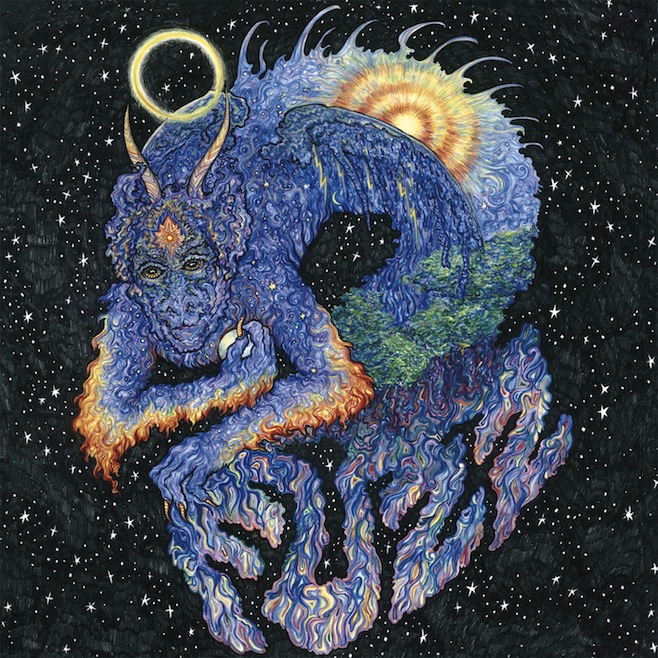
Fuzz – “Fuzz”

(Photo Credit: Pitchfork)

Grade: B

Key Tracks: “What’s In My Head?” “One”

There’s been a few bands called Fuzz already, but no one deserves to inherit the name more than Ty Segall. Segall has already made a name for himself as the most prominent man in garage rock, never fearing to turn the volume and the distortion past the max. And with this debut of yet another side project, he’s matched his output from 2012. This, his solo “Sleeper” and an album with Mikal Cronin called “Reverse Shark Attack” are his 2013 contributions. His work isn’t consistently great, but it’s usually pretty reliable. “Fuzz” isn’t as good as Ty Segall Band’s relentless 2012 album “Slaughterhouse,” but that’s easily in my top 10 favorite albums.

Here’s the thing though – this isn’t a Ty Segall project. This is a band, one that wants to be seen as one. Ty Segall’s name shows up nowhere on the cover or in the band name. He doesn’t even play guitar – he’s on drums (and still on vocals). Fuzz is easily the most comprehensive-feeling project he’s done. Even “Slaughterhouse” showed how much Segall was in control. This is where “Fuzz” excels the most. It feels like a proper band. A very loud one.

The album starts with a feedback drone on “Earthen Gate” before starting the song on a crawling pace. The pace doesn’t last, but it helps to separate this from Segall’s other heavy works. “Fuzz” has the intensity, volume and distortion of “Slaughterhouse,” but purposely leaves out the speed. The tempos are largely pretty fast, but the songs take time to develop instead of blowing through at brutal, rapid paces. And there’s some experimentation, too. The album’s midpoint has two of the three longest songs – “Hazemaze” stops periodically and resets itself, and “Loose Sutures” has a lengthy period of near silence before Segall gets a drum solo. The closer, “One,” (the longest track) sets a blisteringly fast pace behind a punk beat and lets the band mess around on an instrumental finale.

The album has a feel of very early metal, back when it was kids in garages playing fast and loud while avoiding the simplicity of punk. “Fuzz” has a powerful, thrash element to it, thanks mainly to Charles Moothart’s pillars of guitar. Some simple riffs and solos turn a garage rock album into a classic rock-resembling one. But the album does feel a little repetitive at points. The volume you’d expect from a Segall project is there – “Preacher” is among the most assaulting songs he’s been involved with. But occasionally it rests just on the volume factor, which is nothing close to shocking for fans. And having the album’s longest track have such a long period of near-silence is pretty disappointing, as listeners might expect a soloing adventure. Luckily, it ends before it starts to get too gimmicky, and it ends on such a strong and fun track. We may never hear from Fuzz again, or they could release another album by March. But their debut is more than decent, with the loud and crunchy guitars we love, some great drum work, Segall’s strong voice (and a great vocal sub from Moothart), and that nostalgia factor. It’s not the best album Segall’s had his name on, but it does stand as one of the better ones.

If you like this, try: I’ll get out of Ty Segall because there’s so many garage-punk bands I love right now: Metz, Parquet Courts, Thee Oh Sees, FIDLAR, Pangea and the unforgettable Jay Reatard all have A++ albums to check out.

Yuck – “Glow and Behold”

(Photo Credit: Pitchfork)

Grade: D

Key Tracks: “Middle Sea,” “Rebirth”

I have to praise Yuck for sticking around and even releasing a follow-up to their fuzz-drenched 2011 debut. Daniel Blumberg, the frontman for the band, left earlier this year. So the remaining members promoted Max Bloom to lead vocals, but the magic of their debut just isn’t here. They sound more conventional, and for a throwback band, that isn’t at all a good thing.

2011 was a good year for 90’s throwbacks – Cage The Elephant’s “Thank You Happy Birthday” channeled the Pixies and the Meat Puppets, and Yuck’s debut channeled Dinosaur Jr. and Pavement. Their debut was so drenched in feedback and reverb that it resembled shoegaze, even though the songs were too rhythmic and catchy. “Get Away” has always and will always be in my personal top 20. “Glow and Behold” turns down the reverb and fuzz. It doesn’t completely do away with it, but the focus here is much more on the songs themselves. What we get is some largely unremarkable indie-rock with a touch of distortion. The opening track, “Sunrise in Maple Shade” is a lighter instrumental track that sounds like a calm before a storm – but the storm never really comes. Only “Middle Sea,” at the album’s midpoint, can match volume with distortion properly.

Blumberg was a great frontman, because he brought a certain magic to the band. The songs seem uninspired now. Titles like “Out of Time” and “Somewhere” just sound so much more dull than 2011’s “Suicide Policeman” and “Holing Out.” And Bloom’s vocals don’t seem to fit the band’s sound. This is unfortunate, because of the circumstances (and I think promoting within shows a real sense of unity and confidence amongst members), but Blumberg’s nasally snare sounded far better in 90’s jams than Bloom’s lower, clearer vocals do. They’re channeling some more unremarkable 90’s bands now. The intentions are there, but “Glow and Behold” is both musically and vocally a disappointment to their legendary debut.

-By Andrew McNally

Tyranny Is Tyranny – “Let It Come From Whom It May”

(Photo Credit: bandcamp)

Grade: B

Tyranny is Tyranny create a pretty heavy sound for four people. With Russell Emerson Hall and Jason Jensen on vocals and guitar, M. Guy Ficcioto on bass and vocals and Ben Aldis on drums, the band creates a demanding and achingly slow hard rock-noise rock hybrid. The album is only seven tracks but is a full-length time wise, many songs going over five minutes. Think Pissed Jeans slowed down. And the band takes a strong, anti-capitalist approach. They seem to take on the same political fervor as Propagandhi, though aimed at a different target. Their leftist lyrics add a different element to their post-noise rock genre.

The album’s first two tracks – “Manufacturing Truth” and “Owned By Thieves” take more of a direct approach, coming off as decent, heavy rock songs. “Down the K-Hole” is heavier, though, and a little faster. The vocals are more intense and the central rhythm is crunchier, more chord-based. “The Haze of Childhood” is a quiet, instrumental interlude at the album’s physical midpoint (though actually coming earlier time-wise). It’s a welcome break before the intensity kicks up again. “Apostasy” starts off with the same rhythm as the previous song, building into a properly heavy song with a grinding central line. The sixth song, “The American Dream is a Lie,” acts as the first of two magnum opuses, a heavy and constantly changing song. The second, “Always Stockholm, Never Lima” is a destructive finale, feeling like it brings the album to a close.

The vocals contributed to the album are sometimes screamed, sometimes just aggressively sung. Overall, they resemble some of those very heavy but radio-friendly hard rock bands of the early ’90’s (your Sepultura and so forth). The band’s somewhat lo-fi recording makes the lyrics unintelligible at points, but they still contribute to the album. Very liberal rock bands tend to have their own goals, and Tyranny is Tyranny feels no different. They still have some kinks to work out, but Tyranny is Tyranny sounds like the beginning of a good political post-noise rock band.

The album can be found here.

-By Andrew McNally

Surgery In An Opera – “Sad Songs For the Sad State”

(Photo Credit: bandcamp)

Grade: B

It may help that I was, by chance, listening to Brand New’s “Deja Entendu” right before I put on this DIY EP from the trio called Surgery in an Opera. The band consists of Calvin Roberts on vocals and guitar, Eldon Campbell on bass and Joshua Strong on drums. In four songs, the band invokes the image of an early 2000’s pop-punk/emo band, which nostalgia seems to be bringing back to today. The band has a sound similar to that of Brand New without the budget – that catchy emo type of sound that isn’t afraid to go either acoustic or distorted.

The first and shortest track, “The Escape Artist,” feels like a true pop-punk song. It’s energetic and catchy, with fuzzy guitars and vaguely personal lyrics. Track two, “Down the Beaten Path, or a Song For Those in the Vehicle City,” is slower but more melodic, and it blends acoustic guitar with a distorted, electric one. Again, it’s a catchy song. And it doesn’t overstay it’s welcome – because around the three minute mark, the band stops for about five seconds before quickly jumping back into a chorus. “The Worker Bee Brings Home the Honey” is a song that takes its time to build up, leading up a slow climax and features guest vocals by the very emo-sounding Campbell. Finally, “Wounds Pt. 2” starts acoustic, with very typical pop-punk lyrics. But a very distorted electric guitar kicks in pretty quickly, and Roberts ends up making a very effective use of power chords. The song ends big and loud, blowing out the volume.

Surgery In An Opera are not doing anything revolutionary, and their lo-fi/DIY approach can be seen as both a good and bad quality to their music. But “Sad Songs For the Sad State” is a good little blast of emo/pop-punk. Roberts’ vocals are fine and they’re all along with each other. It’s a promising release for a band that sounds like they know what they’re doing. And if you’re going for that bit of early aughts nostalgia, this EP is just reminiscent enough to do the trick.

The EP is available for streaming here.

If you like this, try: I Kill Giants’ self-titled debut from earlier this year. A little heavier and scream-ier, but they’re another good up-and-coming nostalgia band.

-By Andrew McNally

Yoko Ono Plastic Ono Band – “Take Me to the Land of Hell”

(Photo Credit: hasitleaked.com)

Grade: A-

Key Tracks: “Moonbeams,” “7th Floor”

Avant garde has never sounded this groovy. Yoko Ono has never taken too much of a break, musically. But this album is the second in four years for the Plastic Ono Band, whose last proper release before 2009 was in 1973 and featured John Lennon. Ono’s music is tough to predict – it can exist anywhere from feminist poetry, noise recordings with Sonic Youth members, or this album, an unpredictable but catchy record. No, it isn’t radio-proper, but it finds a consistent groove early on and only breaks from it to get some avant garde freakouts.

Opening track “Moonbeams” nears six minutes, and pushes the volume until it is a loud and shrieking track, but one that still finds a little rhythm. The two tracks that follow, “Cheshire Cat Cry” and “Tabetai” calm down and settle into a weird and rhythmic pattern. the follow-up, “Bad Dancer,” is lyrically and musically the most conventional song on the album, with a funky rhythm that doesn’t really stray away. The album keeps up with this weirdly successful combination for a number of tracks, until the haunting piano ballad title track. The album meddles just a little too long in slow songs, but the final, “Shine, Shine” is a frantic and experimental bit that wraps it all up nicely.

“Take Me to the Land of Hell” settles much closer to Nico on the avant garde spectrum – pop with the unsettling dissonance seeping in. Only this album is far more upbeat and diverse than anything on “Chelsea Girl.” Ono’s vocals are right for the album, and her backing band create a perfect avant garde-pop background. Contributions from guests like Lenny Kravitz, Questlove and the two surviving Beastie Boys go unnoticed as part of an ensemble, but what the ensemble presents is a fun, intense performance piece that takes both the rhythms of pop-rock and the experimental nature of poetic avant-garde.

If you like this, try: I mentioned it already, Nico’s legendary 1967 album “Chelsea Girl.”

-By Andrew McNally

Potty Mouth – “Hell Bent”

(Photo Credit: Spin)

Grade: B

Key tracks: “Rusted Shut,” “The Spins”

Freshly born at a woman’s college just a short drive from me, western Massachusetts’ Potty Mouth’s full-length debut falls under the increasingly growing umbrella term of “pop-punk.” A decade ago, pop-punk was a very specific genre of music, but nowadays, it’s just anything that fits the qualifications. And technically, Potty Mouth do. Their songs are pop songs, tainted by punk rhythm and intensity. But they aren’t a big-chorus, small town hating band. Their songs have an added reverb tinge to them, uncharacteristic of pop-punk. And the band seems to have a personal attitude, not to be bothered by genre lines.

Potty Mouth have such a fuzzy and distorted sound that they almost start to resemble simple shoegaze bands like Yuck, but they still have definitive song structures. This toying with the basics of genres only helps to show the band’s open attitude and general distrust of being labeled under anything. This non-abiding of genres makes the catchiness of the album seem perversely warped, almost ironic. But it isn’t – the songs are catchy, at times fully embracing the pop element of pop-punk. Equal parts fuzzy and catchy, Potty Mouth properly blend the best of two genres to make that rich, 90’s-revivalist sound.

This isn’t a political album, but the band does take an approach towards equality in their music. And rightfully so, because they are often labeled as a “female band” and not as a “band”. This approach is, I guess, the “punk” element of the “pop-punk,” although that’s still defined more by the energy of the music. Because things aren’t equal, especially in the music world, they’re often labeled as a feminist band. But musings of equality creep into the album, pushing the album above most lyrically-boring pop-punk bands.

But what the album really is, is a decent set of fuzzy, catchy, punk tunes that have trouble separating themselves from each other but are instantly catchy and memorable. Potty Mouth has the energy of a punk band, the catchy rhythms of a pop group, and the reverb of a conventional-leaning noise-rock band. The album isn’t perfect, but it’s a winning combination.

If you like this, try: Yuck’s 2011 self-titled album. It isn’t that great of an album, but the distortion on “Hell Bent” reminded me greatly of it.

-By Andrew McNally

Elton John – “The Diving Board”

(Photo Credit: The Hollywood Reporter)

Grade: B

Key Tracks: “A Town Called Jubilee,” “My Quicksand”

Elton John understands that he may not be attracting a younger fan base, still writing music for a much older audience now. He’s responded accordingly, releasing a stripped-down, adult album. “The Diving Board” does not feature any members of his regular band, the first album he’s done without them since 1979. Instead, John sat down with Bernie Taupin, John composing the music and Taupin writing the lyrics. They wrote “The Diving Board” in two days.

Musically, “The Diving Board” is a very soft record. A majority of the songs are only John on piano, with some faint drums and/or guitar. Only a handful of songs have added instruments, allowing them sound bigger. But ‘big’ wasn’t the goal – those just help to break up the album a bit. “The Diving Board” is a bare-bones, soft rock record. John shows that, after all these years, he’s still immensely talented. Theatrics aside, John’s voice is still strong, even as he sings deeper than usual on this record.

He is still, predictably, a phenomenal piano player too. One of the album’s tales, “My Quicksand,” ends on a truly haunting piano chord. “Home Again” is centered around some truly beautiful piano work. Often, John takes vocal breaks during the songs that let him play some great riffs and solos. The album has three “dreams,” too, that act as quick, piano interludes where he really gets to shine.

As with most soft rock, it starts to get repetitive. The songs that aren’t the stand-outs start to sound similar, and while they’re never bad, they’re a little too repetitious. Thankfully, the stand-outs are placed throughout the album, so every time a casual listener might get distracted from the album, they’re drawn back in.  Overall, the album could stand to be a little shorter and do with a few less tracks. But “The Diving Board” serves as a welcome return for Sir Elton John, who hasn’t released an album since 2006. The album is beautiful and sparse, and serves as a nice ode to John’s musical origins.

-By Andrew McNally

Grouplove – “Spreading Rumors”

(Photo Credit: grouplovemusic.com)

Grade: A-

Key Tracks: “Ways To Go,” “Shark Attack”

When Grouplove’s first three hits – “Colours,” “Itchin’ on a Photograph” and “Tongue Tied” – emerged two years ago, they were getting fairly graded as another folksy indie band, one that added enough outside elements to be separated from bands like Mumford & Sons and Edward Sharpe & the Magnetic Zeroes, but didn’t add enough to be overly interesting. I, for one, expected their sophomore album to be focused on diversifying a couple of potential singles that are cemented amongst some average folk tunes. This was generally what their debut, “Never Trust A Happy Song,” was. But this album is radically different, embracing as many influences as possible. The band shifts away from folk, adding synths and volume. For the most part, it all blends well.

Christian Zucconi, the primary singer for the band, has always seemed to have a little grit or edge to his voice, that other indie-folk singers try not to have. It’s what made their early hits sound unique (plus “Tongue Tied”‘s rapping), and it’s one of the driving forces behind this album’s welcome diversity. His voice is strong, and the very unique sound of it never really gets tiring. Fellow singer Hannah Hooper gets some more moments, too. “Didn’t Have to Go” gives her a whole electro-ballad to shine as Christian takes a backseat.

Musically, the album is far more diverse than expected, and it rarely wallows in its ideas. The band wasn’t experimenting for the sake of it, these are carefully planned songs. The opener, “I’m With You,” is a mid-tempo song that’s got enough to stand on its own, but is really there to reinforce the loud and electric follow-up, “Borderlines and Aliens.” This is the song where the band really shows it’s change from their first album, with a fast and heavy song. Lead single “Ways to Go” features a prominent synth rhythm, which sounds unexpected at first until the next track, “Shark Attack,” goes into full EDM mode. Luckily, the band keeps up the diversity instead of letting the album’s first half carry the second.

There are some weak spots, some less than memorable songs and one track made uncomfortable by some awkward profanity. But overall, “Spreading Rumours” is a delight, and a fulfilling listen. It’s better than their debut, though it’s tough to compare the two. Grouplove seems even more like an anomaly in the indie-folk world, gleefully going to places other bands have vowed never to go to. That is, if we can still refer to Grouplove as “indie-folk.” It’ll be interesting to see where the band goes next, but for now, we can enjoy “Spreading Rumours.”

If you like this, try: The Bravery. The band was overshadowed by the meteoric rise of the Killers and unfairly forgotten. Through three albums, they drastically changed their sound and approach, like Grouplove does here.

-By Andrew McNally

Said the Whale – “hawaiii”

(Photo Credit: ridethetempo.com)

Grade: B

Key Tracks: “I Love You,” “Mother”

For the most part, Said the Whale is a fun indie band, not setting their sights on doing anything revolutionary or changing music at all. Their single “I Love You” is one of my favorite songs of the year, because it’s a bouncy little number with some oomph that gets stuck in your head. It’s nothing more than that, yet it’s great because of it. “I Love You” has more energy than most of the rest of the album, but it all still acts as a fun little reprieve from life.

Musically, the band keeps it simple. Most of the songs are quick and upbeat, not overstaying their welcome while staying different from each other. Think Two Door Cinema Club’s first album. Unfortunately, there’s something kind of inherently forgettable about music like this. The lack of complexity makes it fun, but doesn’t necessarily make a stand-out.

Vocally, the singer almost sounds like he’s emulating Vampire Weekend’s Ezra Koenig at times. The vocals are clear and the lyrics are often honest and entertaining. The production is crisp, but allows for a little distortion when it’s needed. And the album is over nearly as soon as it starts, probably a good quality for a fun listen like this one. It stops before it gets too repetitive.

With a band resembling Two Door Cinema Club and a singer resembling Ezra Koenig, it’s pretty certain that their album is going to be a decent one. “hawaiii” isn’t anything special, but it’s a good listen, and a nice break from complex indie bands. Chances are, fans picking up this album know exactly what they’re looking for, and won’t be disappointed.

If you like this, try: 2005’s “With Love and Squalor,” or really any album by We Are Scientists. Another fun, catchy but not totally forgettable indie band.

-By Andrew McNally