Los Campesinos! – “No Blues”

(Photo Credit: Pitchfork)

Grade: C+

Key tracks: “Cemetery Gaits” “Avocado, Baby”

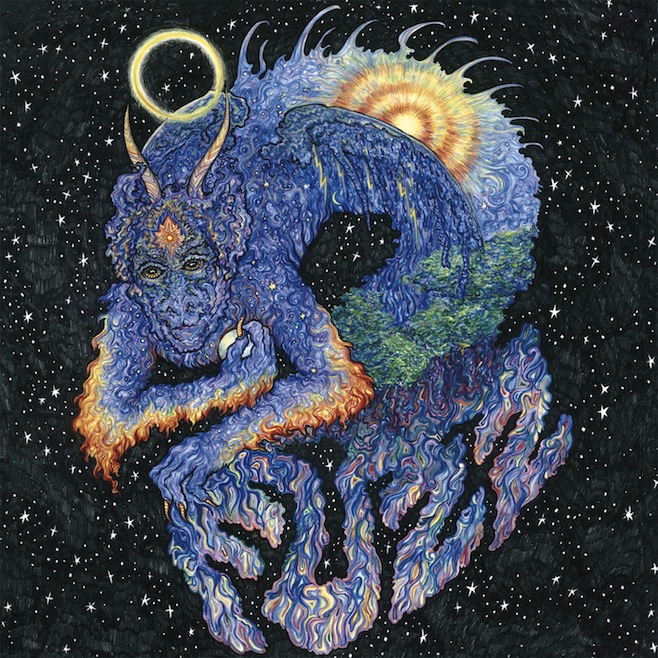
Do you remember being happy? Do you remember what it feels like? On “No Blues,” the Welsh (not Spanish) indie sextet Los Campesinos! seem to have remnants of happiness. The band that once sang about Spiderman and the seductive nature of envelopes in fast, poppy songs with a double-dose of cheer and enthusiasm, ended up getting very sad very quickly. I’ll put on their 2010 album “Romance is Boring” when I feel like listening to the saddest thing in my entire music collection. And while that album is perfect, their 2011 follow-up “Hello Sadness” just wallowed in it’s own misery, permanently midtempo and self-indulgent to a too abrasive point. “No Blues” seems to be a turn-around of sorts – there’s glimpses of joy, even if they feel nostalgic. There’s still no cheery twee-pop, but there’s a diversity and a more then-and-now, complete sound that was sorely lacking on “Hello Sadness.”

The first few tracks aren’t really remarkable. They’re still wandering around in a medium tempo and hazy confusion. LC! are at their best when they’re on a mission – which always results in either intense, slow songs or quick and bouncy ones. These early meddling ones, like most of “Hello Sadness,” don’t seem to know what purpose to serve. “For Flotsam,” “What Death Leaves Behind” and the misplaced acoustic track “A Portrait of the Trequartista as a Young Man” don’t exactly start the album off on the right footing. But the repetitive and engaging synth riff on “Cemetery Gaits” is hauntingly nostalgic – like a musical equivalent of looking through old photo albums. This track, more than any other on “No Blues,” portrays the album’s theme of longing nostalgia.

Not every following track lives up, but many do – “As Lucerne / The Low” displays the same sentiment. “The Time Before the Last Time” acts as a quiet and begrudging acceptance of the present, before the rousing (if not overlong) finale of “Selling Rope (Swan Dive to Estuary).” “Avocado, Baby” even borders on fun, something we haven’t gotten from the band since the morbidly entertaining “We Are Beautiful, We Are Doomed” album.

The beauty of LC!’s albums is how there’s always a few stand-out tracks that can be repeated endlessly. “You! Me! Dancing!” didn’t get old before Budweiser commercials, and it still hasn’t. “Miserabilia,” “Straight In at 101,” even “By Your Hand” from “Hello Sadness” are ones that will never get old to me. This album will probably take a few more listens to get into, but I can really only see “Cemetery Gaits” and “Avocado, Baby” being songs to listen to frequently. The album still meddles, and even when it’s being thematic, it isn’t as catchy any other LC! album before it. The metaphors and honest lyrics are all still there, as is Gareth Campesinos!’s reliant vocals. It just all feels a little too introspective; a little too personal. It’s certainly an improvement over “Hello Sadness,” thematically and musically, and the tonal shifts back towards lighter times is very welcome. This is by no means a mediocre album. And with a few more (definite) listens, the grade might get bumped up. It’s just some of the magic over the first three very, very different albums seems to have gone away, and they’re only semi-trying to get it back.

-By Andrew McNally

Pearl Jam – “Lightning Bolt”

(Photo Credit: antiquiet)

Grade: C-

Key Tracks: “Mind Your Manners” “My Father’s Son”

Just last week, I was driving when I did something I never do – I turned on the radio. One of Boston’s classic rock stations, WZLX, came on, and they were playing Pearl Jam’s “Daughter.” I can only imagine the meeting they held to determine whether or not early 90′s grunge acts now constitute as “classic rock,” but as someone who was three when that song came out, I’m uncomfortable with this progression. Now in 2013, Pearl Jam have released “Lightning Bolt,” and many critics are praising the album’s misalignment to today’s radio rock. But “classic rock” comes to mind, because it’s structured just like a classic rock album. And that’s really not a good thing.

Even bandwagon Pearl Jam fans know of Eddie Vedder’s punk attitude, much stronger than that of all his grunge peers. Their two most punk songs – 1994′s “Spin the Black Circle” and 2011′s non-album track “Ole,” have been completely upstaged by lead-off single “Mind Your Manners.” The rapid-fire song is almost like a lesson to punk bands, and serves as one of their best songs in years. But the album’s strict lack of any sort of narrative leaves the song out of place on the album. The first three tracks (including “Manners”) properly build the album up, and they’re all pretty decent songs, but the energy is completely killed by the ballad “Sirens.” Not only is the song extremely corny, but it stops the vibe the album gets into, and everything after it feels like disconnected songs. They put what they feel are the best songs at the beginning and fill the rest with the lesser tracks, with no sort of flow at all. It’s just like a classic rock album.

The band, of course, sounds great. They’re all great and diverse musicians. And Vedder’s growl-singing sounds as good now as it did in ’91. Even on the otherwise terrible “Sirens,” Vedder sounds phenomenal. One standout track is the eerily foreboding “My Father’s Son,” because of Vedder’s consistently strong lyricism. But they sound a little too comfortable. They’re not trying to prove anything, and the result is a bunch of bland and unrelated songs that aren’t anything original or memorable.

It’s actually a little tough to review this album, for two reasons. One, I’ve loved Pearl Jam for many years and I can’t stand saying anything bad about them, and two, I truly don’t remember this album even though I just listened to it two hours ago. It’s so uninspired that you come off only remembering the best and worst tracks. The first three and the ballad closer “Future Days” are worth the listen, “Sirens” is not, and everything in between is just dull and mid-tempo. It’s easy on the ears, especially for fans, but it’s instantly forgettable and dull, and its got a frustratingly  misleading name.

-By Andrew McNally

Paul McCartney – “New”

(Photo Credit: Rolling Stone)

Grade: B+

Key Tracks: “Save Us” “New”

It takes an audacious sense of humor to name a new album “New.” It takes someone even more audacious to also name the leadoff single “New.” And it takes a very bold person to release an album called “New” more than fifty years into their career. But that’s what we expect from Sir Paul. And it’s just over the top that the album is filled with innocent 60′s songs, like contemporaries to the Beatles themselves.

The Beatles first landed in America fifty years ago, and maybe Paul is getting nostalgic. There’s a number of songs on this album that recall memories of Paul’s from before he and John even formed the Beatles. Nowhere is this more noticeable than on “On My Way to Work,” about Paul’s days as a driver. The lyrics are filled with curiosity about life, adulthood and love. The title track is about falling in love and not being able to answer questions about it – a response to his recent marriage, but one that sounds more in place coming from a teenager. Innocent questioning was a big part of the Beatlemania era. Paul’s wide eyes towards the world shouldn’t be believable this late into his career, but it completely works.

Nearly every song, with “Appreciate”‘s modern beats being the only real exception, completely grab the 60′s sound – simple and catchy rhythms, and songs that end on the lower side of three minutes. Not all of them have enough energy to really make the album last, though. “Save Us” and “New” are the most energetic, with the latter being one of the many songs that channel the “Revolver”-era Beatles. But a number of the songs are so self-introspective that they aren’t necessarily memorable. Still, the album acts as a delightful throwback and a change for McCartney, who might just be entering a new phase of his life.

You can never really know what Sir Paul is going to do next. He’s released techno albums and composed classical pieces. Some of his most recent albums have been a little weirder and polarizing than his fans are used to. But “New” kicks it way back, with 60′s jams and simple pop-rock. Although it isn’t overly memorable, it’ll surely be a pleasure to his wide-ranging fans.

If you like this, try: There’s a million classic rock and pop albums I could recommend, so I’ll take a different root: Jake Bugg’s self-titled debut. A teenager from England who channels early ’60’s acts like Sir Paul himself.

-By Andrew McNally

Future of the Left – “how to stop your brain in an accident”

(Photo Credit: Wikipedia)

Grade: B+

Key Tracks: “bread, cheese, bow and arrow” “donny of the decks”

Some bands take a few albums to really find their groove. FotL’s first two albums – “Curses” and “Travel With Myself and Another” – are great releases, but they seem tame compared to 2012’s “the plot against common sense.” That album, another one of my 10 favorites*, has an unfiltered and relentless energy, sparked by production that’s both rough and loud. Very, very loud. The band’s post-hardcore is very metrical, a meter that sometimes is too fast to function. But this album is different. Their fourth album takes the tempo down, resulting in a more balanced release.

Now, that deserves an explanation. FotL has been one of the angriest bands in all of music. mclusky was an angry band, and when they broke up, some members formed the even angrier Future of the Left. Their music is satirical and politically-charged, taking on everyone from low-level British politicians to the queen herself. 2012’s “failed olympic bid” investigated the consequences of British athletes failing to qualify for their own Olympics. By saying their new album is a little slowed down, I’m not trying to imply they’ve softened. Now that they’re an independent band, they can be as motivated as they went. Their titles alone conjure a Dead Kennedys type shock reaction – “she gets passed around at parties,” “things to say to friendly policemen,” and, fittingly, “how to spot a record company.” The anger, the yelling, the satire, even bits of talking are all included and as strong as they always have been.

They’ve only slowed down musically. Opening track “bread, cheese, bow and arrow” starts off with a rhythm slower than all but one from “plot against.” But it’s a menacing riff, one that calls back to the beginning of “Arming Eritrea.” Slower and longer songs give the band some extra room to flesh out their ideas, which only brings out the anger more. A handful of songs are still blisteringly fast, but it’s more mixed this time around. The final song, “why aren’t i going to hell?” even has – gasp – an acoustic guitar. The synthesizer, oddly enough, has been downplayed (much to the chagrin of mclusky fans), but it is still a more varied listen than what we’ve come to expect.

I’ve had the pleasure to see this band three times (once in ’07, twice in ’12, the second of which was the tour with Andrew Jackson Jihad) and they’ve put on easily three of the best shows I’ve ever seen. I bought a shirt last time, that guitarist Jimmy Watkins accidentally spilled a beer on almost instantly. I’ve never been able to stop emphasizing my love for this band. “how to stop your brain in an accident” isn’t as instantly memorable as their previous album, but it showcases what the band is about just as well. And this batch of fourteen songs are like their old ones – probably best appreciated live. Don’t expect to hear for a few days.

If you like this, try: Maybe because I’ve been listening to it a lot later, but Jay Reatard’s “Blood Visions.” Miss you, Jay.

* – I’ve mentioned about 6 of my 10 favorite albums lately. It’s just coincidence, honestly, I try to keep my “10 favorite” down to 20 and not 100.

The Perms – “The Aberdeen EP”

(Photo Credit: Youtube)

Grade: B+

There’s a very comforting sound the the music of the Perms, and there’s good reason for it. The group’s powerpop/pop-punk sound sounds ripped straight from the peak of blink-182, without sounding like a rehashing. The band has been around since 1998, a product of the era instead of a regrettable throwback. With dual male singers, the band nails the late-90’s pop-punk sound, as they have been doing for years.

At four songs and only 11 minutes or so, this is only a small sampling size. But the four songs properly convey the sense of urgency in the genre. Rousing guitar opens “It’s Mania” before being matched with a “whoa-oh” vocal harmony in a predictably catchy number. “Aberdeen,” the only song over three minutes, is a bit slower and a little less catchy. It benefits from some sneering vocals, making a little less of an attempt to harmonize. “The Parent Thing” is the biggest throwback on the EP, sounding straight out of 2003 with the almost-too-catchy pop guitar and clear vocals. Finally, “Walk Away” focus a little more on the rock than the pop, with the vocals sharing a rhythm with guitar.

This EP has a very clean sound – everything sounds well-produced. Each of the four songs sound ready for the radio, catchy but with a nice helping of energy and fuzzy guitar. Pop-punk may be a genre filled with a number of mediocre and/or blindly nostalgic bands, but the Perms are a band that actually lived through it. They’ve made an original sound for themselves in a field full of unoriginal bands.

-By Andrew McNally

Lee Ranaldo and the Dust – “Last Night on Earth”

(Photo Credit: whenyoumotoraway)

Grade: C

Key Tracks: “Lecce, Leaving” “Blackt Out”

I’ve written already about the sad and sudden break-up of one of my favorite bands, Sonic Youth. One thing that isn’t surprising about the break-up is that the members have stayed prevalent in music, all approaching different projects with their own freedom. What is surprising, though, is that Lee Ranaldo was the quickest to release anything. Thurston Moore’s new band Chelsea Light Moving channels a more energetic Sonic Youth, Kim Gordon’s new duo Body/Head lets Gordon dig much deeper into the experimental drones she pushed for before. (Both debuts were near-perfect.) But Lee Ranaldo – Sonic Youths’ “third voice” released a solo album last fall, before either Moore or Gordon had music out. “Between the Times and the Tides” was a largely successful output, predictably combining typical structure with more noisy influences. He’s already got a second album out, with a new backing band.

And with this new, full, backing band (that includes Sonic Youth drummer Steve Shelley), Ranaldo sticks to more traditional rock structures, at times even resembling a Doobie Brothers type folk-rock. There is less experimentation, but it is definitely intentional. Ranaldo has always been less focused on a specific idea than his Youth bandmates, which can result in albums that vary wildly in both content and quality. “Last Night on Earth” is faulty – his combinations of influences feel a little more awkward and inconsistent.

“Lecce, Leaving,” the opening song, is one of the times where two contrasting ideas really work. It starts as a typical folkish-rock song, but has a long period of hyper-energy guitar build-up, calling back to early 90’s Youth. But otherwise, occasional noise influences and psychedelic bridges don’t really fit into the conventional structures of the song. “The Rising Tide” has a moderately short bit of psychedelia in its middle that fits well, but the multi-minute bookends that surround it (the song is 9+ minutes) make it seem too short. Luckily, the final song, “Blackt Out” (at 12 minutes) seems to completely regain Ranaldo’s experimentation, making a noisy and winding song that’s equal parts fun and fitting for the album’s end.

The main criticism of the album should probably fall on its length. The album is over and hour, at nine songs averaging around 7 minutes. Nearly every song feels a little too long, and when not every idea works, then the album should’ve been slimmed down a little. It’s a long listen, and one that isn’t always engaging.

Ranaldo himself still sounds good. His half-singing fits in the album and he always sounds gleefully comfortable to be fronting his own project. The album is lacking some of his insane guitar, but to hear Ranaldo at the forefront is enough of a pleasure. “Last Night on Earth” isn’t a great album – it suffers from it’s own length, and a full band going with Ranaldo’s noise-folk ideas sounds often sounds unnatural – but it is a decent listen. Devoted fans of the noise side of Sonic Youth might not find much to like, but their not the target audience. Ranaldo, as he always does, is simply doing what he wants to. And although it isn’t his best release, it’s great enough that he’s still recording and getting the chances to just do what he wants.

-By Andrew McNally

Sleigh Bells – “Bitter Rivals”

(Photo Credit: http://www.stereogum.com)

Grade: C+

Key Tracks: “Bitter Rivals,” “Minnie”

What’s a band to do when they can’t shock listeners anymore? They do the opposite – they give us what we don’t expect. This is what Sleigh Bells have struggling with since the release of their perfect 2010 debut, “Treats.” “Treats” has proved itself as the loudest and most abrasive alternative album of the century, mixing hip-hop beats and pop vocals over the crunching,  amp-destroying guitar. But the band’s follow-up, 2012′s “Reign of Terror” attempted to even volume with songwriting, resulting in an abysmally boring album that failed at both. “Bitter Rivals” isn’t great, but the band expands their sound in a promising way.

The title track starts the album. Alexis Krauss’s exuberant “Hi!” gets followed by snapping and an acoustic 12 bar blues rhythm, which feels intentionally deceiving to new listeners. When the lyrics – “It was the best of times / It was the worst of times / I had to kill the new sheriff in town” finally kick in, they bring that debut album intensity with them. It’s very reminiscent of “Treats” – ear-shatteringly loud but so catchy that it’ll get in your head permanently. The song does feel a little more influenced, though, and that picks up as the album goes on. Follow-up tracks “Sugarcane,” “Minnie” and “Sing Like a Wire” are loud but varied, as the band has finally figured the keys to writing actual tracks that exist beyond volume.

Unfortunately, it doesn’t stay as bombastic, as the songs get less memorable. Their embracing of other instruments and continued use of acoustic is great, but once the balance of songwriting and volume starts to tip in the favor of the former, the album loses steam. Some, like “Tiger Kit,” manage to work just based on principle, but others like “You Don’t Get Me Twice” are largely unoriginal. Also, Sleigh Bells aren’t known for long works – all three albums have a total 31 songs – but this album’s 29 minute length just doesn’t feel like enough.

It is definitely a step forward. The band welcomes everything that it’s debut seems to have turned away, because they know they need to stay fresh. “To Hell With You” is even kind of a slow song, and while it isn’t great, it’s a lot different. The songs have depth and less predictability than before. “Treats” is still far and away their best album, but “Bitter Rivals” is certainly an improvement over their sophomore album, and represents steps in the right direction.

-By Andrew McNally

Cage the Elephant – “Melophobia”

(Photo Credit: IGN)

Grade: B

Key Tracks: “Come A Little Closer,” “It’s Just Forever”

Cage the Elephant’s previous album, 2011’s “Thank You Happy Birthday,” was a nearly-perfect throwback to the early 90’s grunge bands like Mudhoney, Pixies and the Meat Puppets. “Melophobia” kicks it back even further, embracing that sound with healthy doses of 60’s harmonies and 70’s rhythms.

On the whole, the songs on “Melophobia” are not quite as fast or rowdy as those on the predecessor, but previous great ballads like “Rubber Ball” and “Back Against the Wall” have shown us that the band can handle pretty much whatever they feel like trying to do. They do have moments of speed and distortion, the best being “It’s Just Forever,” a song that has a great guest spot from Alison Mosshart and sounds more like a Libertines-style garage song than anything else. “Teeth” also starts off as a late-album surprise with this speed, until it turns into music behind spoken word (something many bands try, usually unsuccessfully – it isn’t great here). This is a different Cage the Elephant, sonically, but not fundamentally. They’re still embracing decades worth of influence on each song.

Opening track “Spiderhead” has a backing keyboard beat that gives it a funky rhythm – like Fitz and the Tantrums waking up on the wrong side of the bed. Second track and leadoff single “Come a Little Closer” is a ballad in the same way 2011’s “Right Before My Eyes” is; it’s a pretty song, one that acknowledges the roughness behind it. Cage the Elephant has a way of making radio-friendly songs out of wild rhythms and rough vocals, and they continue that on “Melophobia.” The 60’s odes hit a peak on “Telescope,” whose chorus is lifted from a famous John Lennon quote (also, happy birthday John. Well timed, guys).

This album isn’t as inherently memorable as the two previous, because the songs feel a little more conventional on this album. On the whole, it doesn’t quite stand up to the band’s first two. But it is still a very enjoyable album. The band’s blending of typical structures and off-the-rails energy sounds even more perfected now, and they’re using 90’s angst on top of funkier rhythms and harmonies that sound straight from the 60’s. Although it’ll take a number of listens to learn, it further cements Cage the Elephant as one of alternative’s most unique and underrated bands.

If you like this, try: My all-time favorite album – Foxygen’s 2013 album “We Are the 21st Century Ambassadors of Peace and Magic,” a self-referential indie duo ripped straight from Lou Reed.

-By Andrew McNally

Fuzz – “Fuzz”

(Photo Credit: Pitchfork)

Grade: B

Key Tracks: “What’s In My Head?” “One”

There’s been a few bands called Fuzz already, but no one deserves to inherit the name more than Ty Segall. Segall has already made a name for himself as the most prominent man in garage rock, never fearing to turn the volume and the distortion past the max. And with this debut of yet another side project, he’s matched his output from 2012. This, his solo “Sleeper” and an album with Mikal Cronin called “Reverse Shark Attack” are his 2013 contributions. His work isn’t consistently great, but it’s usually pretty reliable. “Fuzz” isn’t as good as Ty Segall Band’s relentless 2012 album “Slaughterhouse,” but that’s easily in my top 10 favorite albums.

Here’s the thing though – this isn’t a Ty Segall project. This is a band, one that wants to be seen as one. Ty Segall’s name shows up nowhere on the cover or in the band name. He doesn’t even play guitar – he’s on drums (and still on vocals). Fuzz is easily the most comprehensive-feeling project he’s done. Even “Slaughterhouse” showed how much Segall was in control. This is where “Fuzz” excels the most. It feels like a proper band. A very loud one.

The album starts with a feedback drone on “Earthen Gate” before starting the song on a crawling pace. The pace doesn’t last, but it helps to separate this from Segall’s other heavy works. “Fuzz” has the intensity, volume and distortion of “Slaughterhouse,” but purposely leaves out the speed. The tempos are largely pretty fast, but the songs take time to develop instead of blowing through at brutal, rapid paces. And there’s some experimentation, too. The album’s midpoint has two of the three longest songs – “Hazemaze” stops periodically and resets itself, and “Loose Sutures” has a lengthy period of near silence before Segall gets a drum solo. The closer, “One,” (the longest track) sets a blisteringly fast pace behind a punk beat and lets the band mess around on an instrumental finale.

The album has a feel of very early metal, back when it was kids in garages playing fast and loud while avoiding the simplicity of punk. “Fuzz” has a powerful, thrash element to it, thanks mainly to Charles Moothart’s pillars of guitar. Some simple riffs and solos turn a garage rock album into a classic rock-resembling one. But the album does feel a little repetitive at points. The volume you’d expect from a Segall project is there – “Preacher” is among the most assaulting songs he’s been involved with. But occasionally it rests just on the volume factor, which is nothing close to shocking for fans. And having the album’s longest track have such a long period of near-silence is pretty disappointing, as listeners might expect a soloing adventure. Luckily, it ends before it starts to get too gimmicky, and it ends on such a strong and fun track. We may never hear from Fuzz again, or they could release another album by March. But their debut is more than decent, with the loud and crunchy guitars we love, some great drum work, Segall’s strong voice (and a great vocal sub from Moothart), and that nostalgia factor. It’s not the best album Segall’s had his name on, but it does stand as one of the better ones.

If you like this, try: I’ll get out of Ty Segall because there’s so many garage-punk bands I love right now: Metz, Parquet Courts, Thee Oh Sees, FIDLAR, Pangea and the unforgettable Jay Reatard all have A++ albums to check out.

Yuck – “Glow and Behold”

(Photo Credit: Pitchfork)

Grade: D

Key Tracks: “Middle Sea,” “Rebirth”

I have to praise Yuck for sticking around and even releasing a follow-up to their fuzz-drenched 2011 debut. Daniel Blumberg, the frontman for the band, left earlier this year. So the remaining members promoted Max Bloom to lead vocals, but the magic of their debut just isn’t here. They sound more conventional, and for a throwback band, that isn’t at all a good thing.

2011 was a good year for 90’s throwbacks – Cage The Elephant’s “Thank You Happy Birthday” channeled the Pixies and the Meat Puppets, and Yuck’s debut channeled Dinosaur Jr. and Pavement. Their debut was so drenched in feedback and reverb that it resembled shoegaze, even though the songs were too rhythmic and catchy. “Get Away” has always and will always be in my personal top 20. “Glow and Behold” turns down the reverb and fuzz. It doesn’t completely do away with it, but the focus here is much more on the songs themselves. What we get is some largely unremarkable indie-rock with a touch of distortion. The opening track, “Sunrise in Maple Shade” is a lighter instrumental track that sounds like a calm before a storm – but the storm never really comes. Only “Middle Sea,” at the album’s midpoint, can match volume with distortion properly.

Blumberg was a great frontman, because he brought a certain magic to the band. The songs seem uninspired now. Titles like “Out of Time” and “Somewhere” just sound so much more dull than 2011’s “Suicide Policeman” and “Holing Out.” And Bloom’s vocals don’t seem to fit the band’s sound. This is unfortunate, because of the circumstances (and I think promoting within shows a real sense of unity and confidence amongst members), but Blumberg’s nasally snare sounded far better in 90’s jams than Bloom’s lower, clearer vocals do. They’re channeling some more unremarkable 90’s bands now. The intentions are there, but “Glow and Behold” is both musically and vocally a disappointment to their legendary debut.

-By Andrew McNally