Franz Ferdinand – “Right Thoughts Right Words Right Action”

(Photo Credit: Wikipedia)

Grade: B+

Key Tracks: “Right Action,” “Love Illumination”

The easy way out is to say “This is another Franz Ferdinand album,” because it is. It’s a collection of short, fun blasts of alt-rock that meddle between catchy beats and artsy lyrics. But, like their previous “Tonight: Franz Ferdinand,” it does it’s part to separate itself from their less aimed first two albums. “Tonight: Franz Ferdinand” was a slight concept album, one that chronicled a successful one-night stand, in the typical glitzy and suave Franz Ferdinand fashion. “Right Thoughts, Right Words, Right Action” relies more on the music than the lyrics to stand out. The album goes above the bands that influenced it – something many European alternative bands seem to struggle to do. Early British alternative bands like the Cure and Joy Division had a huge impact on the genre, and bands still model themselves to sound like their predecessors. This album sees the band still embracing them, but branching out and expanding their sound with consistently great results.

Some tracks, like “Bullet” and leadoff single “Right Action” still capture the energy of their previous albums. The tracks are catchy and fast, almost resembling a friendlier version of the Hives (with equally nice suits). “Right Action”‘s speedy guitar is interspersed with some bass bumps, giving the song a truly catchy feel. But the band experiments more with tempo and structure. There’s nothing close to the experimental, synth freak-out of 2009’s “Lucid Dreams,” but there are distinct points of growth. “Treason! Animals.” resembles an epic, based around a central character. “Fresh Strawberries” sees Alex Kapranos get his most cynical yet, comparing us all to a fruit that will soon go bad. The brilliant finale of “Goodbye Lovers and Friends” is a final statement; “This is really the end” Kapranos sings. But it’s doubtful that this is the final Franz Ferdinand record, it’s probably just their snark peering out one last time.

The only real fault of this record is it’s length. After waiting four years for a new record, it’s a little disappointing to only get 35 minutes of music. It’s a lot of fun, though, and it’s a memorable record. It’ll probably take a few listens to get to really know, and it deserves them. Franz Ferdinand have, yet again, made a fun and danceable album of bouncy, alt-pop with some real hidden complexity. Let’s hope this trend continues.

If you like this, try: This is the third album this year from a popular, catchy indie band that branches out from what we’re used to. The other two – which don’t need a plug – are among my favorites of the year: Phoenix’s “Bankrupt!” and Vampire Weekend’s “Modern Vampires of the City”

-By Andrew McNally

White Lies – “Big TV”

(Photo Credit: The Vinyl Scout)

Grade: B-

Key Tracks: “Big TV,” “There Goes Our Love Again”

There’s something inherently interesting about White Lies. On paper, they’re doing nothing original, but their albums are entrancing. There are plenty of bands today doing 80’s throwbacks – the Killers, Muse and Editors jump to mind. But White Lies can add enough depth to their songs to make them their own, and not just rehashed ballads that wouldn’t please Ian Curtis at all. Their third album sees little in the way of ambition, similar to 2010’s “Ritual.” And with an overabundance of ballads, it shouldn’t be an enjoyable record at all. But leave it to White Lies to be able to entice the listener to keep the album on for unexplainable reasons.

The beauty of White Lies’ simplicity is how they don’t simply rebrand 80’s alt-ballads. Every song on this album is synth-driven, to the point where it acts as a running narrative. But they also take the counter-counter-culture 80’s gloom, a la Depeche Mode and non-hair metal bands. The album exists as a blending of two 80’s sounds, many years too late. Still more, they often add guitar crunch and painfully reflecting lyrics to kick it into today’s world. For music that sounds easy and repetitive, there are always a few things going on.

“Death” is easily the most ambitious song from the band. Sadly, it is the first track on their first album. With each album, they’ve relied more and more on this formula. While it still proves successful, the band is starting to drag. There are too many slow songs here. They’re broken up nicely by a few up-tempo songs, and two short instrumental interludes, a first for the band. But the album can’t help but feel a little bloated. While still entirely listenable, it begs the question of how long the band will be able to keep this going without getting too boring. Or too spacey. The album sounds more spacey, like Muse at their peak, before they too got too bloated and boring.

Still, the album is an intriguing listen, because White Lies are one of the few bands today that can pull off an album like “Big TV” and get away with it. It’s inexplicably enjoyable, though very faulted. The ballads come too early and too often, and many are forgettable on their own. As an album, though, each song works, and it results in a nice, somewhat easy listen.

If you like this, try: “Given to the Wild” by the Maccabees (2012), another album of largely down-tempo songs that’s still totally enjoyable.

-By Andrew McNally

Bloc Party – “The Nextwave Sessions EP”

(Photo Credit: Pitchfork)

Grade: C

Best Track: “Ratchet”

Coming off a hiatus with a huge tour and their highly-underrated 2012 album, “Four,” Bloc Party are set to take another hiatus. Something isn’t working inside the band, and while it’s frustrating to fans, it’s better to have them take breaks than try to fight through it and end in disaster. No sooner did they announce a hiatus than they also announced a new EP, “The Nextwave Sessions EP.” It serves either as a parting gift for a band that isn’t sure when they’ll be back, or a sign of the times to come, given it’s title. Either way, though, it doesn’t really serve any purpose and really just exists as five tracks that sound like they’ve been cut from previous albums.

Opening track “Ratchet” has been released as a single for the band, and it’s really a good song. A constant, tremolo guitar rhythm serves as a very danceable beat behind lyrics about getting, well, ratchet. It is a little different than tracks from their previous album. It’s a catchy track that can get stuck in your head after only a few listens. Second track “Obscene” follows up nicely, as a much softer and slower song, but maintaining a kind of catchy, tremolo rhythm. “French Exit” is kind of a throwaway loud song, and it definitely could’ve been a lost song from “Four,” and album that had it’s fair share of heaviness. The last two tracks, “Montreal” and “Children of the Future” are forgettable slow ones. Three of the five songs on this EP are slower. If this is a final piece for the band, it shouldn’t be how they’re remembered, given their famously crazy live performances.

Bloc Party actively promoted this EP, releasing one of the singles and getting it reviewed in different reviews. They haven’t intended this to be a little, “for fans only” release. But it just doesn’t feel like it has any reason to exist. All of these tracks could have just been on earlier albums, or better left unrecorded. “Ratchet” is great and “Obscene” is good enough, but they can’t save the fact that this EP’s mere existence is confusing. It’s a good listen for core fans. The rest of us just have to wait for the next reunion.

-By Andrew McNally

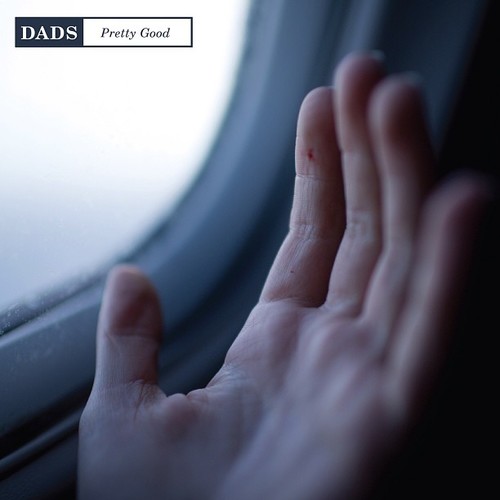
Dads – “Pretty Good”

(Photo Credit: best-vinyl.blogspot.com)

Grade: B

Dads, a wonderfully fast and gleefully sad duo from New Jersey, have been looking to shed their emo background. In March they were crowned the best emo band ever in Property of Zack’s March Sadness competition (probably in part to being the only band interested in the competition and encouraging their fanbase to vote). But the emo branding bears some weights, as the word ’emo’ brings more bad bands to mind than good ones. So the duo hopes to change that on their new four track EP, “Pretty Good.” It yearns for their emo-leaning work, but for a band attempting outreaches, it succeeds.

The opening track, “My Crass Patch,” is easily the EP’s best. The song is vocally similar to their previous works, but feels heavier and angrier. It sets the transition off on the right foot, sending a different message than the carefree-yet-miserable feel of their 2012 album, “American Radass (This Is Important).” The second track, “Can I Be Yr Deadbeat Boyfriend?” continues with the heavy feel, and adds a little punk inspiration throughout it’s very short run. It is the most reminiscent of their older music, sounding similar to the heavily-intro blasts like “Groin Twerk” and “Grunt Work,” while still sounding more purposeful.

The third song, “Boat Rich,” sounds terrible out of context of the album. Taken for what it is, the song sounds like a cornier (dare I say, more ‘radio-friendly’) version of “Let’s Go to the Beach!” from ‘Radass.’ But on the album, its lighter tone makes for a break from the heavy nature of the first two tracks. It also allows for the band to show that their branching out leads in both directions. This is further emphasized on the final track, “No We’re Not Actually,” a five minute slow burner.

“Pretty Good” lives up to it’s title. For a transition work, it is successful. But Dads only have two albums under their belt – their decent “Brush Your Teeth Again ;)” and the utterly perfect ‘Radass,’ and it is kind of a shame to see them leaving the genre so soon. I was hoping for one or two more of their lo-fi, emo pleasures before they branched out. Ultimately, it’s their decision, and they can’t be blamed for wanting to escape from the ‘twinkly’ emo before they’re sucked in and unfairly lumped in with worse bands. Let’s hope they can master these transitions as well as they can emo. For what it’s worth, I saw Dads play in Amityville, New York, and for two guys with limited time and a bad venue, they were phenomenal.

If you like this, try: “Where Were You While We Were Getting High?” by One Hundred Year Ocean, an emo EP by a band comprised of some members of recent Dads tourmates The World Is A Beautiful Place & I Am No Longer Afraid to Die. I have also reviewed The World Is’ recent debut, as well as the debut from Pity Sex, who were also on the bill. I’m a fan of Topshelf Records and their offshoots.

-By Andrew McNally

Gogol Bordello – “Pura Vida Conspiracy”

(Photo Credit: Rolling Stone)

Grade: A-

Key Tracks: “Dig Deep Enough,” “Malandrino”

Let me start by admitting something: Gogol Bordello has been one of my favorite bands since “Super Taranta!” came out in 2007. Eugene Hutz and his gang could release an album of nails on a chalkboard and I’d find something great to say about it. Okay. That’s out. Let’s start –

Do gypsies ever slow down? Do they settle, even for a period of time that’s barely remarkable? This is the main existential crisis at the heart of “Pura Vida Conspiracy,” the sixth album from the world’s only famous gypsy-punk band. They have been on tour since they formed in the late ’90’s, recording and performing all around the world, and taking their inspirations from as many places. Singer/guitarist Eugene Hutz is Ukrainian, and the rest of the band hails from all over Europe, bringing folk, flamenco and salsa into standard punk music. Where did they form? Manhattan. 2010’s “Trans-Continental Hustle” was recorded after Hutz lived in Brazil. “Pura Vida Conspiracy” was recorded in El Paso, Texas. Hutz sings about people in all cultures and in all walks of life, always convincing the listener he has experienced each one firsthand.

But this is the band’s first introspective record. Think back to previous albums. 2005’s “Immigrant Punk” dealt with world travelers. 2007’s “American Wedding” was an open letter on how boring American cultures can be compared to European ones. 2010’s whole album “Trans-Continental Hustle” tackled the inherent contradictions in the idea of immigration. But here, Hutz sings about himself. On a track called “The Other Side of the Rainbow,” he proclaims that the other side of a rainbow is black and white. Gogol Bordello are world travelers and surprisingly famous, given their totally radio unfriendly acoustic-electric-flamenco-salsa-dance-political-hyperspeed-punk. What Hutz has found, however, is an unexpected hollowness in being well-known. Maybe it is because his previous political motives haven’t made waves, or maybe it’s because Hutz is disgusted by fame. But this album features more slower tracks than previous efforts. Slow Gogol Bordello sounds bad on paper, but the collective can still pull it off.

There is still ferocious drumming and acoustic guitar. Hutz’s voice is still ridiculously Eastern European. The album blasts out of the gate with three speedy and diversely inspired songs. Track two, “Dig Deep Enough,” is my personal favorite, and features a reliance on flamenco inspiration, pretty new to the band. The introspection starts soon after, leading to the first Gogol Bordello album that actually makes the listener think instead of blinding agreeing with political ambitions. Lyrically, it might just be the strongest album yet. Musically, it isn’t. Something about their formula of ten stringed instruments playing over brutal drums never gets old, and the album could use a little more oomph. It doesn’t fit with the lyrics, yes, but the album does get just a little too down at points. Still, Hutz’s existential lyrics are frighteningly easily to relate to, and poetic, and carry any bogged down moments. “Pura Vida Conspiracy” isn’t so much disappointing as it is different. We probably should’ve seen this album coming, we all knew Hutz wouldn’t be comfortable with fame. Politics were swapped out for personal. It’s new, even for them, but as long as Hutz and his (currently) seven-piece backing band can keep delivering a whole beautiful mess of ideas, we should be on board.

If you like this, try: Okay I thought about this for a while and there aren’t any bands I can think of that sound remotely like Gogol Bordello, so how about Dropkick Murphys’ “The Meanest of Times” (2007). A punk band that began to get introspective, and there’s accordion. As close a connection as I can make.

-By Andrew McNally

Edward Sharpe & the Magnetic Zeroes – “Edward Sharpe & the Magnetic Zeroes”

(Photo Credit: Consequence of Sound)

Grade: B-

Key Tracks: “Let’s Get High,” “Remember to Remember”

The first minute and a half of the song “If I Were Free” features two singers. The first singer has two brief moments of vocal impression – Bob Dylan and Bruce Springsteen. The second singer, Ringo Starr ala “Yellow Submarine.” These vocal inflections are not meant to be intentional. The band is not trying to repeat the music done by those that inspire them. The vocal similarities to Dylan, Springsteen and Starr more seem to slip out, and that is what most of this album is. “Edward Sharpe & the Magnetic Zeroes” feels like odes to those that came before, with it’s attempts at originality feeling somewhat mixed. Self-titled albums are meant to be declarations of the band’s distinct sound, but this album is ironically the least original of their three.

“Up From Below,” the debut from Edward Sharpe & the Magnetic Zeroes, had a distinct country-folk sound that was trimmed perfectly for crossover radio. “Home” is a country song, completely, but found love on alternative radio (and in my head for a whole summer). Their follow-up, “Here” was an underrated gospel-based gem. This new, self-titled album doesn’t have as much of the mixing as it seems to think it has. It more resembles a Dylan album, when he was at his mid-60′s peak. Five studio musicians join the band’s eleven members on the album, but it feels like a one-person operation at times. Lengthy openers “Better Days” and “Let’s Get High” sound like a number of musicians gathered around one songwriter, following his or her lead, instead of a collective. “Let’s Get High” is a phenomenally energetic and great song, but one that doesn’t quite capture the feel of the band. Luckily, the album doesn’t continue this feel, as the songs get shorter and more voices are introduced. Lead singer Alex Ebert is given many lead moments (especially on “This Life”), but so is back-up singer Jade Castrinos, who gets to shine bright 0n “Remember to Remember.” Other singers are thrown into the mix, too, and frequently. Once the album gets past it’s inspired but dragging opening two tracks, it begins to feel like the huge collaborative effort it should.

“Two,” which is humorously the third song, is a beautiful duet between Ebert and Castrinos. “Life is Hard” and “If I Were Free” make the album’s middle a fun if agenda-less listen, bolstered by skilled songwriting. The pace drags towards the end. There are a number of slow songs that seemed to flow together, and lost my interest. The halted pace overstays it’s welcome, but at least it doesn’t finish out the album. The aforementioned “This Life” and “Remember to Remember” are not fast songs, but serve as powerful ending notes to the album. It is mixed, overall, and lacks the based-yet-blended originality that its predecessors had, but “Edward Sharpe & the Magnetic Zeroes” is, at its core, an enjoyable folk collective, aiming high and hitting it more often than not.

If you like this, try: Phosphorescent’s criminally underrated folk-everything album “Muchacho” (2013)

-By Andrew McNally

Frank Black – “Oddballs”

(Photo Credit: Amazon)

Grade: C

Key Tracks: “Pray a Little Faster,” “Man of Steel”

“Oddballs” was originally released in 2000, but only online and was not widely publicized. For whatever reason, he chose to release it in CD form thirteen years later. It seems like an odd choice, given that the Pixies just released a new single, but maybe that’s the exact reason – it might be more publicized if people are searching for new Pixies music. “Oddballs” might be stumbled across, giving it the attention it never got. That said, it is just a compilation of music Black recorded that were B-sides or didn’t make it on other albums. B-side compilations are, traditionally, boring and pretty useless. “Oddballs” is better than most, but still falls to some subpar tracks and ideas that should not have been acted upon.

The songs on the album were recorded between 1994 and 1997, the three years after the Pixies’ initial break-up. The songs, on the whole, maintain the intensity of the music of his former band, while distinctly sounding like a solo artist. There is no screaming and wailing, no Kim Deal on bass and no lyrics about bodily mutilation, separating it from the Pixies. It just often maintains the speed and volume of the Pixies’ albums.

Lyrically, it is far less interesting than Black’s former (and present) band. One of the two best tracks, “Pray a Little Faster” is darkly entertaining, but other tracks with titles like “Can I Get a Witness” and “Everybody Got the Beat” approach the exact, oft-extracted ideas that the titles sound like. Black’s attempts to separate his solo work and be seen as a viable solo artist are beneficial, but tracks like the ones on “Oddballs” do make the listener yonder for classic Pixies songs instead.

Something should be said for the album’s surprising flow. Given that it is a compilation, there is no expectation of it working as an actual album, just a collection of misplaced tracks. But Black structures it so it flows and never stays on one idea for too long. The opener (the aforementioned “Pray”) kicks off with a bang, that is sustained until the album’s midpoint, the only two songs over four minutes mix things up. The album’s closer and other best song, “Man of Steel” works perfectly as an outro, with a bombastic repeating coda. The song was likely written as a closing song that never found it’s place.

“Oddballs” is better than most rarities collections, but it is still barely good enough to stand on it’s own legs. It separates Black from the Pixies, but the album’s imperfections remind listeners of just how perfect the latter really was. Black’s “Oddballs” more often than not sounds a little too traditional and most of the ideas are not fleshed out enough. “Oddballs” should please die-hard Black fans, and likely only them.

If you like this, try: If you’re into rarities, check out “Little Johnny Jewel” and “Untitled Instrumental,” two songs that got cut from Television’s legendary “Marquee Moon” and are just as good as every song on the album.

-By Andrew McNally

One Hundred Year Ocean – “Where Were You While We Were Getting High?”

Photo Credit: Bandcamp

Grade: B+

A four-track EP from the six-piece collective One Hundred Year Ocean moderately resembles the growing band that includes some of the same members, The World Is A Beautiful Place & I Am No Longer Afraid to Die. The four tracks on this EP are more consistent in tone, but bare resemblance to the great emo band.

It is tough to really establish an idea across only four tracks, so nothing is overly fleshed out. But there is a distinct sense that the band is toying with song structures. The build-ups that are frequent among similar-sounding bands are present, just not at the usual points in the songs. There is a feeling that the music, just like the music of The World Is…, is not based on songs but one large idea, and the songs are just fragments of it.

The volume is steady on the album, as the verses seem to fit in with typical structures. So the band seems to operate as a bridge between standard music and the experimental and drawn-out sound of The World Is…, combining elements of both. There is a slight humorous edge to the band, too, evident in the title of the EP and on the song title “Soco Amaretto Bud Light Lime” (a take on Brand New’s “Soco Amaretto Lime”) and in the darkly catchy lyrics of opener “Hospital Town.” It is difficult to expand an EP into something great, but One Hundred Year Ocean is doing a pretty unique thing. It is distinctly emo-based, with elements of punk and a little room for experimentation.

If you like this, try: “Whenever, If Ever” by the aforementioned The World Is… (just released last month, scroll down only a little ways for a review)

A Great Big Pile of Leaves – “You’re Always on my Mind”

(Photo Credit: Top Shelf Records)

Grade: B

Key Tracks: “Pet Mouse,” “Fun in the Sun”

A Great Big Pile of Leaves hit a high on their 2010 debut, “Have You Seen My Prefontal Cortex?” The band established themselves as a fun, alt-pop band that hold up remarkably well against their sadder labelmates like Snowing and Pianos Become the Teeth. Their music is fun, bouncy and often completely innocent while maintaining a steady volume and guitar attacks. Their debut is a pleasantly diverse album, sonically pleasing, full of fun and introspective tracks. Their second album, “You’re Always on my Mind,” out today, does not quite live up to the expectations set up by “Cortex.” The album is more reminiscent of their earlier EP’s, which are still bouncy guitar songs, but feel a little less inspired than their debut album.

The album’s summer release date is no accident. This is definitely a summer album. That might give the expectation of a Yellowcard or Cartel type pop-punk thing, but they are much more associated with alternative than most summer bands. The album’s food-based bookends are called “Snack Attack” and “Pizzanomics,” offering the exact sound you’d expect from the humorous titles. “Back to School” is the most summer-y song on the album, a literal ode to summer before having to go back to school. There is a gleeful tone to the album, a carefree sound that are reminders of good times, even if they’re in the past. The band does not seem to be looking for any sort of validation, or to be taken seriously. That doesn’t mean we shouldn’t – they’re talented musicians and have nailed down the art of fun songwriting. But their lack of seriousness adds to the fun on the album.

The album might not be as good as its predecessor, but it is still a good album. It is easy music to put on during a drive or a nice summer bike ride. It does not demand your patience, even your attention. It does its job as innocent alt-pop, providing an alternative to the usual pop on the radio and to the usual gloom of alternative music. It takes the best of both worlds. It might not be perfect, but it is fun.

If you like this, try: “Dig Up Your Dead” by Mansions (2011). Not as fun and not as good, but the band does sound kind of similar.

-By Andrew McNally

Roomrunner – “Ideal Cities”

(Photo Credit: Stereogum)

Grade: A-

Key Tracks: “Bait Car,” “Wojtek”

The dream of the 90’s is alive in Baltimore. Roomrunner gleefully throw ode to some of the early 90’s grunge and noise rock bands. Nirvana is idolized through fast rhythms that let a punk influence bleed heavily through. Pavement is redrawn through heavy distortion that adds to the melodies and through the rough transitions between songs. Roomrunner never tries to be conventional. The opening track, “Bait Car” is an assault on time signatures that are sometimes impossible to decipher. “Wotjek” sounds like more of a poppy side to the band, until the chorus, featuring rhythms of pure feedback that are different on each passby. The finale, “Snac Error,” ends with a waving drone of guitar that takes up a good chunk of the track.

“Ideal Cities” is over in about a half hour, and it is one of the rare times where the short length of a punk album does not feel entirely fulfilling. The album wasn’t one idea stretched into a certain number of tracks, but a bunch of little experimentations that left me wanting more. This is hardly a criticism, as the band made an interesting record that sounds fresh but resembles the pre-grunge bands of yesteryear. It is melodic and noisy, all while maintaining a sense of fun. Pavement and the Pixies would be proud.

If you like this, try: “Living Dummy” by Pangea (2o12). More of a conventional (surf-)punk record, but there is a similarity between bands, I cannot emphasize enough my love for “Living Dummy”

-By Andrew McNally