Black Sabbath – “13”

Photo Credit: Rolling Stone

Photo Credit: Rolling Stone

Grade: B+

Key Tracks: “God is Dead?” “Methademic” (Bonus Track)

“13” is refreshing, because it proves that bands long past their prime can still make quality records. I was losing faith in this after Megadeth’s awful Collider came out just last week.

“13″ is the first Black Sabbath album to feature bassist Geezer Butler in nineteen years, and singer Ozzy Osbourne in thirty-five. Drummer Bill Ward, originally part of the recent reunion, is not on the album because of a contract dispute, and has been replaced with Brad Wilk (Rage Against the Machine). Even with positive early reviews and three-quarters of a reunion, fans are most likely skeptical about a new album. Butler, Osbourne and guitarist Tony Iommi are 63, 64 and 65, respectively. But Sabbath brought in legendary producer Rick Rubin, who has done wonders for everyone from System of a Down to Johnny Cash. What resulted from their sessions is an album much more similar to classic, early Sabbath and not the tepid albums that came later.

Black Sabbath have often been misunderstood as a band that sang/sings exclusively about doom and gloom, life and death, heaven and hell (which is the name of one of their more famous songs). But closer listens to their early albums show that they expanded far out beyond those themes, lyrically. Yes, they were embraced and continue to be (like 13′s “God Is Dead?” and “Pariah”). But the band has always sung about more than that, evident in songs like the poorly-titled “Methademic,” that deals with years of drug problems. “13″ has some of the best lyrics in Sabbath’s history.

The biggest surprise of the album might be the quality of Ozzy’s voice. If you’re reading this, then you can probably imagine what Ozzy’s talking voice sounded like on MTV in 2004, and maybe even what it has sounded like on his more recent albums. But those albums were Rubin-less, and Rick Rubin did his best to bring the band back to it’s seventies roots. Iommi’s riffs are there, Butler’s bass is booming, Ozzy’s voice fits nicely, and there is a constant impending sense of doom. It has all the key elements of early works like “Paranoid” and their self-titled debut. Something is lacking, however. It seems like it is a mix of energy and volume. It is certainly loud, but it feels like it should be more so, and with a little more urgency. Still, the album comes as a nice surprise and just goes to show that when the line-up is back, they haven’t lost a thing.

If you like this, try: If you’re exploring this album as a classic rock fan, then Bob Dylan’s “Tempest,” another great album coming out late in the game. If you’re exploring this as a metal fan, then System of a Down’s “Toxicity,” to see both religious lyrics brought in alongside silly ones, and the magic of Rick Rubin.

-By Andrew McNally
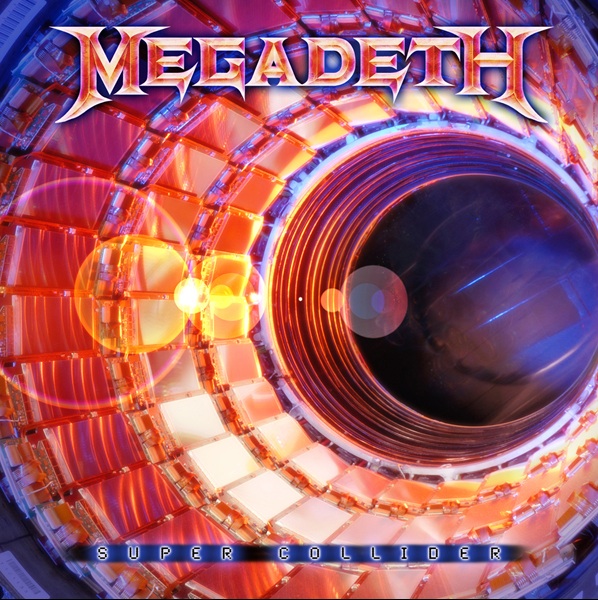
Megadeth – “Supercollider”

Photo Credit: metalsucks.net

Photo Credit: metalsucks.net

Grade: D

Key Tracks: “The Blackest Crow”

Old age isn’t going to stop Megadeth! Well, they’re going to try not to let it. Rather unsuccessfully. It’s sad to see heroes fall but it can happen to the best. Dave Mustaine’s lyrics aren’t hitting as hard, the band’s volume isn’t as ferocious. Nothing works well on this record, apart from a few acceptable songs.

First, the music. The band is not achieving the heaviness that they once were. The leadoff track, “Kingmaker,” is not a good song, but it does have flickers of the 80’s thrash. It is readily apparent that these flashes are about the most the listener will get. The album as a whole tends to fall closer to a really heavy radio rock work, lesser than the thrash metal that made the band renowned in the 80’s and 90’s. The drums are beating and the guitars are crunching and rapid-fire, but it is all less than before. It is at least entertaining, as it is still heavy and should be recognized as so. It just is not of the same caliber as their previous successes.

Speaking of declines from previous successes, Mustaine’s lyrics are downright awful. His political leanings have always made for awkward and forced lyrics, but they are particularly cheesy on this release. “Dance in the Rain” is the ‘standout’ on the record, as the chorus is supposed to inspire people to dance in the rain and enjoy life, like life lessons from a cool uncle. An abrupt switch/interruption happens during the song when Mustaine begins to sing about the “racist, sexist wars in the middle class” or something like that. It really doesn’t make sense. Mustaine’s lyrics are consistently forced and corny, and often fail to rhyme or fit into any sort of rhythm.

Halfway through this album, I had to put on “Hangar 18” to be reminded of better times. “Supercollider” is tedious and corny, a bad mix for a thrash metal band. One footnote should be mentioned – “The Blackest Crow” is a well-crafted song, albeit not thrash metal. The track starts with an acoustic guitar rhythm and builds intensity around a more haunting sound than the rest of the album. It is far and away the best song on the album. Otherwise, “Supercollider” is a total miss.

If you like this, try: “From Mars to Sirius” by Gojira.

-By Andrew McNally

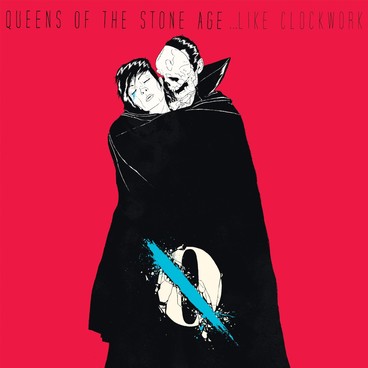
Queens of the Stone Age – “…Like Clockwork”

Photo Credit: Rolling Stone

Photo Credit: Rolling Stone

Grade: B

Key Tracks: “I Sat By the Ocean,” “Fairweather Friends”

“…Like Clockwork,” the long-teased and longer awaited new album from hard rock heroes Queens of the Stone Age, should be listened to with “Songs For the Dead” in mind, their behemoth, Grammy-winning album from 2002. “…Like Clockwork” is similar to “Songs” in three ways. The first is the re-introduction of former contributors Dave Grohl and Mark Lanegan, as well as ousted bassist and founding member Nick Oliveri (who only shows up in background vocals on two songs, but it is still a re-introduction). The other two similarities are thematic. “Songs” was a concept album, imagining a radio playing on a drive in southwestern America, and featured many Christian references. “Clockwork,” too, seems to feature a number of Christian references, if nothing more than metaphors. (Compare 2002′s “God Is in the Radio” to 2013′s “My God is the Sun”) Casual listeners might equate Josh Homme’s lyrics to those of the religiously-tortured soul of Dave Gahan, but Homme frankly chooses to sing about whatever he wants to.

The third similarity is the idea of conventional radio rock. “Songs” had a running theme of QOTSA’s songs playing on every station, in an attempt to solidify themselves as the kings of conventional rock radio. It worked, oddly enough, and they reflect that on “Clockwork.” Every one of the ten tracks feels significantly more conventional and regular than anything they’ve done before, with musical build-ups in slow songs and catchy guitar rhythms in the faster ones. Homme’s vocal melodies are incredibly catchy, even radio-friendly (particularly on the track “If I Had a Tail”). The album is still heavy, of course, but this is a side of QOTSA that has always stayed subtle. It is the band’s shortest album, and has only three songs over five minutes, a departure from the five on “Songs.” Homme likes to throw the audience loops and keep things fresh, which is tough to do for a rock band. “Clockwork” is almost a bit of a joke, in a way, that the original thing about it is its unoriginality. One almost has to wonder if the almost-optimistic sound is a response to Homme’s brush with death, or whether it is more of QOTSA’s relentlessly great tongue-in-cheek humor.

This does lead to some problems, however. “Keep Your Eyes Peeled,” the opener, never hits the intensity it thinks it does, and although the hauntingly-rhythmic “I Sat By the Ocean” follows it up, the tepid and unnecessary “The Vampyre of Time and Money” sits right after. And having this feeling of ‘Is this a joke or not?’ is a little iffy given that people have been waiting six years for a new album. The album grows stronger as it proceeds though, bolstered by barely audible but still appealing guest spots from Trent Reznor, Alex Turner and Sir Elton John (which was a surprise to come across). Homme is still heroically egotistical at times, which is when QOTSA is at their best. The album lacks at some points, falling too far into the unoriginality, but it is yet another great entry from the band overall.

-By Andrew McNally

Alice In Chains – “The Devil Put Dinosaurs Here”

(Photo credit: www.imwan.com

(Photo credit: http://www.imwan.com)

Grade: B-

Key Tracks: “Voices,” “Pretty Done”

A cut-and-paste rock album with a different singer might not be what all the 90′s revivalists are looking for, but Alice In Chains prove they still have some energy and spunk left. It’s been eleven years since the death of the original Alice In Chains singer, Layne Staley. He was a reclusive and tormented man, which brought life to the dark lyrics of Alice In Chains’ early music. The band’s reunion in 2005 with a new singer, William DuVall, was seen as misguided by many. But the band trekked on and released “Black Gives Way to Blue” in 2009 to surprising critical acclaim. Original guitarist and composer Jerry Cantrell picked up lyrical duties as well, becoming the band’s chief songwriter.

Their new album, “The Devil Put Dinosaurs Here” is more of the same for the band. The lyrics are typically gloomy and cover a wide spectrum of dark topics, including songs with titles like “Scalpel,” “Choke” and “Hung on a Hook.” The lyrics, penned by Cantrell, are effective, although the title track’s tackling of the blending of politics and religion just flat out does not work. The music is still loud and shrieking, with the monstrous and sludgy guitar tone from their previous album returning. Even in their advanced years, Alice In Chains are still being praised for bringing originality into heaviness.

“Devil” flows surprisingly well. The transition between the album’s first two tracks, “Hollow” and “Pretty Done,” is nothing more than a moment of silence before a similar rhythm comes in. Likewise, the fourth track, “Voices,” one of the slower songs, ends by building up volume before transitioning into the more haunting sound of the title track.

There is a problem with volume, however. The band focuses on the volume of it’s doom-and-gloom guitars, but it is consistently overpowering the vocals. DuVall and Cantrell share vocal duties, both with strong voices. On many tracks, though, the lyrics are only audible enough to hear, not audible enough to discern.

Alice In Chains’ original run had a number of emotionally powerful albums bolstered by Staley’s lyrics coming from real pain. Cantrell, chief lyricist, successfully follows in Staley’s footsteps in the manner of dark and haunting poetry. Post-Staley Alice In Chains, however, sounds like a band having fun in the studio, a band that probably is not feeling the lyrics they are singing. There is not necessarily anything wrong with this, it just further separates them from the 1989-1996 Alice In Chains that was popular on rock radio. “The Devil Put Dinosaurs Here” is an inventive rock album that plays around with traditional rock music while maintaining the sound. It does not resemble the original Alice In Chains, but it is still an enjoyable listen overall.

-Andrew McNally

John Fogerty – “Wrote a Song For Everyone”

(Photo credit: Consequence of Sound)

(Photo credit: Consequence of Sound)

Grade: A-

Key tracks: “Lodi,” “Who’ll Stop the Rain”

When a respected classic rock musician starts to get up there in years, they’re allowed to start having some fun in the studio. That’s exactly what Fogerty – famous most for Creedence Clearwater Revival, and some for his solo work – does on his ninth solo album. “Wrote” isn’t a duet album, it isn’t an original album, and it isn’t an album of covers, which many older singers resort to. Instead, it’s a healthy mix. A majority of the songs are reworkings of older songs of his, with guest stars. Fans of classic rock will instantly recognize CCR favorites like “Proud Mary,” “Who’ll Stop the Rain?” and “Fortunate Son” getting reworked, along many others. And to mix it up, Fogerty throws in a few original songs, just to prove that he hasn’t lost anything.

The guest stars on the album read like a planned tribute album, only the man being tributed showed up. Bob Seger and Alan Jackson, contemporaries of Fogerty, make two of the best appearances. Country singers like Keith Urban, Miranda Lambert and Brad Paisley contribute, as do current rock bands My Morning Jacket and Foo Fighters. The album’s most entertaining song, “Lodi,” features Shane and Tyler Fogerty, presumably his sons. The title track, though not one of the more memorable ones, features a unique pairing of Lambert’s vocals, and guitar work provided by Tom Morello of Rage Against the Machine. Jennifer Hudson, known for her powerful voice, dominates “Proud Mary” at the album’s finale. “Proud Mary,” one of classic rock’s most famous songs, has been covered by Tina Turner in the past, and this likely serves as an homage to her equally powerful version.

This album gets a high rating simply because there is nothing wrong with it. Fogerty, now 68 (happy birthday!), recorded this just to have some fun. There is no purpose to this album other than to show that Fogerty still loves his material and loves to perform. Fogerty successfully brings the fun to the audience, making for a completely enjoyable listen that erases that wonder of why the album exists in the first place. I even looked past some guest stars I do not like (namely, Kid Rock and Bob Seger) and recognized the great reworkings of the songs. Fogerty’s voice, too, is still kicking. Tom Petty and David Bowie might be the last holdouts of classic rock still recording successful new material, but Fogerty sounds as good as he ever has, kicking back and having fun.

The National – “Trouble Will Find Me”

(Photo Credit: Rolling Stone Magazine)

(Photo Credit: Rolling Stone Magazine)

Grade: A

Key Tracks: “Sea of Love,” “Demons”

With a title like “Trouble Will Find Me” and two opening tracks called “I Should Live in Salt” and “Demons,” the National give the immediate impression that their sixth album will be more of the same introspective and self-demonizing alt-rock that has brought them this far. And in many ways, the album is a continuation. Singer Matt Berninger is 42 now, so this is no time to drop the cynicism and open up. The National have always relied on sad, relateable lyrics to drive their songs close to home. “Trouble Will Find Me” continues the gloom, but after all these years, Berninger has begun to expand his horizon a bit.

Songs like “Sea of Love,” which might be my favorite song of the year so far, rallies about a situation filled with bad choices, a typical National song. What is not typical of the National, however, is some moments of dark humor and some namedrops across the record (Nirvana’s “Nevermind” album being one, to bring home the sadness). The National’s best albums, the two that preceded “Trouble,” relied on slight changes from the previous album, to make a separate but familiar listen. While the previous changes have been largely musical, “Trouble”s change relies more in lyric. Berninger seems to be making an attempt to bring himself closer to the listener, although the National have always been an engrossing band already. Still, Berninger sings about his own troubles, just ones that he relates to the listeners. The album’s cover, an interesting one on it’s one, serves as a symbol for these troubles as Berninger is swallowed by his inner demons and can only look to himself for help. Somehow, he makes us all understand.

The National have never been stupendous musically, and “Trouble” is no different, as the band focuses on the emotional impact of the lyrics. “Sea of Love”s pounding rhythm is one of their loudest songs, and is kind of a surprise on the album. But a majority of the songs are moderate-volume, guitar- or piano-driven tracks with repetitive music and lyrics, the band’s style. Sufjan Stevens, Richard Reed Parry and St. Vincent are among the album’s guest stars, with St. Vincent providing brief but powerful vocals on “Sea of Love.” The album may run a little long, and it feels a little anticlimactic after “Sea of Love”s boom, but the National have a way to always stay in the listener’s head. “Trouble Will Find Me” does this even more than their previous albums, and it might just be their best one yet.

-Andrew McNally

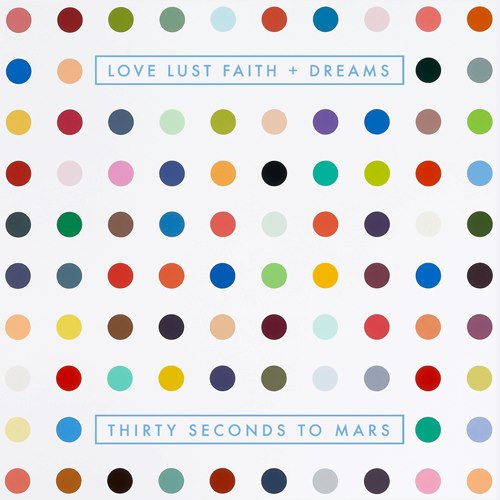
30 Seconds to Mars – “Love Lust Faith + Dreams”

30 Seconds to Mars

Grade: C

Best Tracks: “Pyres of Varanasi,” “Northern Lights”

30 Seconds to Mars have never been ones to please the critics, with their often corny and awkward pairings of genres, and at most points, their fourth album never strays too far beyond that. Bandleader Jared Leto has always embraced the corniness of his lyrics and the music of his backing band. “Love Lust Faith + Dreams” feels no less cheesy or misguided than their previous efforts.

Lyrically, Leto’s meandering musings on the vague concepts can be summed up in the album’s title. The album is split thematically into four segments, each word in the album’s title. While Leto does stretch deeper and darker than his previous albums, a majority of the metaphors presented here are still largely depthless. The ‘faith’ section in particular is largely void of originality.

Musically, however, I have to applaud 30 Seconds to Mars. For a band that has never been very respected, they do find ways to reinvent themselves. The then-popular pop-emo brand of their second album was quite a different sound than their industrial-based debut. This album is louder, more experimental and electronic based, a sharp change from their vocally loud and musically quiet, unstructured third album “This Is War.” “Love Lust Faith + Dreams” sounds, at points, like a band too heavily inspired by Muse but more inventive. It also, at points, resembles a band that enjoyed the “Inception” soundtrack far more than they should have. But I was actually impressed by the music of this album. The more experimental nature diversified the individual songs more than their previous efforts. The ‘dream’ sequence is musically effective, introduced by “Convergence,” although the whole segment seems to build to a largely unsatisfactory ending.

I would wager to say that this is 30 Seconds to Mars’ best album, but I would not go out of the way to recommend it. Musically strong but lyrically, the band is still flailing in their typically cheesy nature, grasping at large concepts and ideas but rarely hitting the mark with any depth. 30 Seconds to Mars fans will surely love it, and they might even gain some new fans. “Love Lust Faith + Dreams” is not going to down as one of the year’s best, but it is a reasonable listen for general fans of the band.

-Andrew McNally