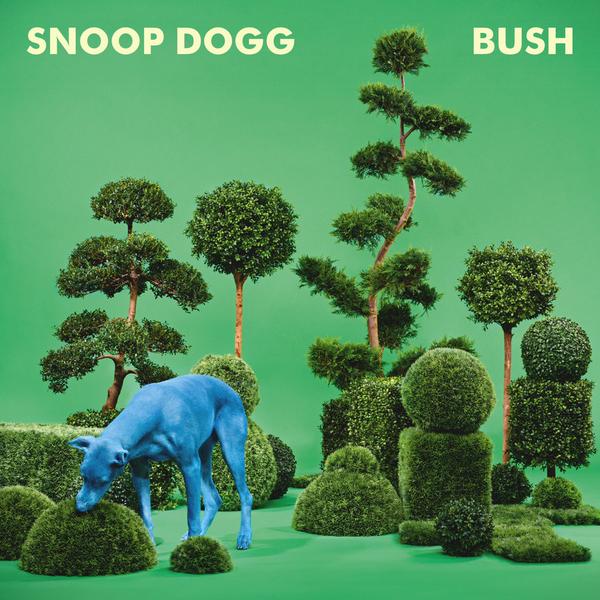
Snoop Dogg – “BUSH”

Grade: C

Key Tracks: “Peaches N Cream” “Run Away”

There’s a question I’ve had about ridiculously famous rappers for a while – what path do they follow, when they grow older? Classic rock singers like Rod Stewart and even Bob Dylan have been going the route of covers albums, so I’ve been wondering where a rapper like Snoop might go. Turns out, he doesn’t really know either. “BUSH,” his thirteenth album, meanders around basic funky rhythms with the aura of a man who hasn’t given up, but just doesn’t feel he has anything new to say.

It’s safe to say that the music that Snoop has put out in this millennium hasn’t tried to be revolutionary. “Drop It Like It’s Hot,” even as a potential candidate for one of hip-hop’s greatest songs, doesn’t try to prove anything. His Snoop Lion phase didn’t prove anything we didn’t already know (nor was it taken very seriously). So now that we’re 15 years into this century and Snoop Dogg is ever-increasingly just a family man, his music has taken a natural progression towards the fun and breezy. It often is, but it begs to wonder why it exists in the first place.

After a midtempo intro with Stevie Wonder, the next four songs on “BUSH” are all Snoop solo, and they could all really use the kick of someone else. “This City” serves as the best, centered around a hypnotic vibraphone rhythm, going on only slightly too long. The weakest of the four is “R U A Freak?,” with some groan-worthy punny lyrics and an uncredited appearance from Charlie Wilson so prevalent that I’m honestly not sure Snoop even shows up on the track.

There are brighter points later on the album. At the sixth of ten tracks, “Peaches N Cream” is the first one that really feels inspired. It’s the only song that credits Charlie Wilson, although he shows up on four tracks. “Run Away” features a surprising collaboration with Gwen Stefani, who channels her No Doubt years instead of her solo pop career. She adds a late spark to the album that’s missing elsewhere. And the album’s finale, “I’m Ya Dogg,” has guest verses from Rick Ross and Kendrick “some of ya’ll share bars like you got the bottom bunk in a two-man cell” Lamar, who called it himself – although the song is great, and really the album’s only true rap track, Snoop takes a vocal backseat and gets lost in the mix.

The funk revival of 2015 doesn’t seem like something planned, more coincidental. Snoop, Lamar, and Mark Ronson have all released funk-heavy albums, but each with a foundation coming from a different place. It’s going strong nonetheless, and the music is at least funky. Wonder is wasted in a lifeless opener, but “BUSH” does have it’s funky moments at times. It’s fun, and I think that’s all that Snoop’s going for now. If so, then it’s a minor success. But even so, he seems too content to be releasing placeholder, schlocky albums. This is the man who was vaguely involved in murder charges; the man with a drug rap sheet longer than Willie Nelson’s. It doesn’t seem right that he has settled into such a steady and easy life that he can release self-serving, basic funk. From reggae on “Reincarnated” to funk on “BUSH,” it seems like Snoop is closer to forfeiting the rap game rather than leaving it behind. But, it answers my question. When a successful rap artist can make enough and settle down, provided they didn’t marry Beyonce, then what are they to do? Keep it easy.

-By Andrew McNally

Kendrick Lamar – “To Pimp a Butterfly”

Grade: A

Best Tracks: the whole damned thing

He is a winner, and he’s probably gonna win again.

Oh, Jesus. One of 2015’s most hotly anticipated albums didn’t even have a confirmed release date, title, or tracklist a month ago. And now, it’s out a week early. It’s not known if Lamar dropping it early was to avoid a leak, or to pull a Bey, or just sheer confidence. But whatever way you look at it, “To Pimp a Butterfly” is not only one of the best rap albums of the year, it’s one of the best of the decade.

Lamar nails down a wide range of emotions and influences on “TPAB.” While rappers often try to make diverse albums, not all of them can pull it off. But Lamar shows all sides of himself simultaneously, not individually. “To Pimp a Butterfly” is as self-referential as an episode of Arrested Development. It is the work of a man who is confident to an arrogant point, but still deeply, deeply pained. Throughout the album, there’s a repeated spoken word bit about depression leading to screaming in a hotel room. He’s vulnerable when he raps “loving you is painful” on “u.” Lamar’s ability to shift tone is natural, and he’s possibly the best at playing off his emotions with the sound of his voice alone.

But at the same time, he’s confident, almost to a fault. Loving an unknown subject might be tough, but loving himself isn’t, as proven on the leadoff single “i,” even though the album version of the song is radically different. More still, he’s said the album’s title is a play on “To Kill a Mockingbird,” in one way because seeing “Pimp” next to “Butterfly” is an alarming juxtaposition, but also because he believes the album is Harper Lee-level importance. That’s bold; hell, that’s stupid. But, he’s right. It’s that good. He even ends with a 12 minute track, “Mortal Man,” which starts as a song, then transitions into a poem, and ends with another poem. In between the two – a spliced up interview with 2Pac from 1993. Pac. In the hip-hop world, that’s the equivalent of putting the Frost/Nixon tapes in the middle of a campaign speech.

The music on the album is dense. It goes from abrasive – “The Blacker the Berry,” “King Kunta” – to chill – “Momma,” “How Much a Dollar Cost” – to surprisingly funky – “Wesley’s Theory,” “i.” He pulls them all off, and they all flow and bleed together, sometimes in the middle of a track. There’s repeated musical sections, repeated phrases, and self-references. There’s also well-picked guest inclusions. The production credits read like a novel, but the album itself has few guests. Pharrell, Rapsody and Snoop Dogg round out expected roles. George Clinton and Ron Isley are less expected. Least expected is a sample of a Sufjan Stevens song.

Lamar knows what he wants and what he likes. “TPAB” is significantly different, tonally, than the song that made him famous – Big Sean’s “Control.” In his guest verse, he calls out nearly every rapper imaginable, even the beatified Andre 3000. On this album, Lamar raps about racial politics, and calls for black rappers to come together, overcome differences and fight against racism (most notably on “Mortal Man”). He praises Snoop, and calls out critics on “Hood Politics”: “Critics say they miss when hip-hop was rapping / Motherfucker if you did then Killer Mike would be platinum.” “Hood Politics” might be the album’s most important track, ironic given that it’s one of the more forgettable ones, musically. The song establishes Lamar’s political beliefs more than any other track.

Over the past few years, hip-hop albums have had a tendency to get bloated. But at 78 minutes and 16 tracks, there isn’t a moment that doesn’t belong on “To Pimp a Butterfly.” It doesn’t even feel like 78 minutes, anyways. Lamar is celebratory, depressed, angry; he is human. And he’s a phenomenal rapper, writer, and performer. If everyone was shocked by Lamar getting the Grammy snub last year, then they shouldn’t be shocked at the next ceremony.

-By Andrew McNally

Robin Thicke – “Blurred Lines”

(Photo Credit: Rolling Stone)

Grade: D+

Key Tracks: “Take It Easy On Me”

“Growing Pains” indeed. “Blurred Lines” comes out as Thicke is 36, with a three year old son. The album is distinctly more pop-based than his previous albums, showing a backwards trend in songwriting, possible an effort to hold onto the immaturity needed to be a successful pop singer. The result is a bland pop album that suffices as a summer party mix, but is lacking in originality, effective lyrics, big beats and really anything to make it memorable.

Thicke’s inspiration for the album came from growing up under the impression that everything was black and white, right and wrong, etc, but realizing how untrue it is once you grow older. This could really be a strong concept for an album, one that could really show growth for a musician. What Thicke delivers, though, is ego-centric songs of love, sex and passion whose only difference from other pop songs of the last thirty years is Thicke forcibly pushing his ego into them, which ultimately just makes him sound like the massive dick he claims to have.

On some of the album’s more subdued moments, Thicke’s voice is pleasantly pretty, something he didn’t eschew for a pop album. And the collaborations, with Pharrell, T.I. and Kendrick Lamar among the guest spots, often work well to make some balanced songs. Every track on the album falls flat because of the overused and sometimes vainly vapid lyrics. Musically, too, the album is boring. Thicke tries to mix R&B, latin and pop influences, but the result is the blandest parts of all three. The album needs a lot more oomph, and maybe some musicians that at least to try to care about the music they’re recording. “Blurred Lines” is an alright summer album, and will surely be played at pool parties for the rest of the summer. It does it’s job on the most fundamental level, nothing beyond that. And by next summer, all people will remember is the title track and it’s racy (read: horribly sexist) video.

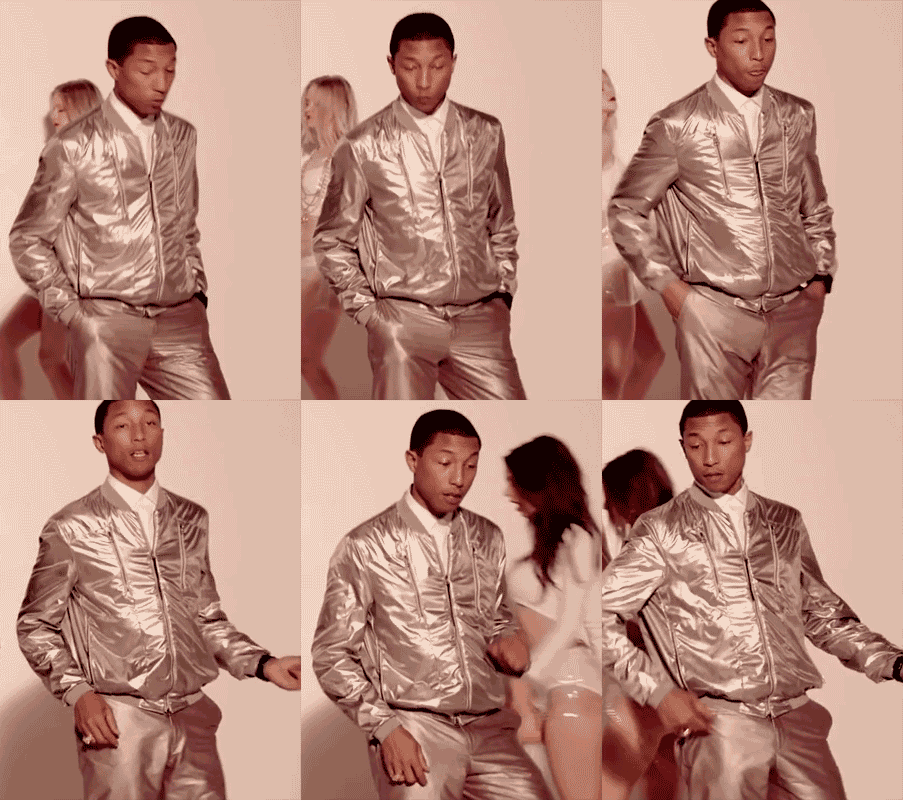
In conclusion, a .gif from the “Blurred Lines” video, courtesy of Tumblr. user jhermann. Click on it to see his phenomenal dance moves, ones that sum up the awkward masculinity of the whole album:

If you like this, try: Really can’t help you on this one.

-By Andrew McNally

The Lonely Island – “The Wack Album”

Photo Credit: Pitchfork

Photo Credit: Pitchfork

Grade: B

Key Tracks: “I F****d My Aunt,” “The Compliments”

“The Wack Album” is more of an amalgamate of ideas. The band throws a lot of ideas at the wall,and as soon as one starts to get stale, they move on to the next. Not everything works, but some stick very well. Only two tracks from this album were viral sensations from “SNL,” a show which none of the three members are a part of anymore. This has allowed them to expand into some new territories, with mixed results.

Comedy troupes that spoof hip-hop are certainly not a new thing. It is a very tired route for comedians to take, thanks to the Internet. The Lonely Island were by no means one of the first groups to do it, but they were among the first of the Internet era (remember “Lazy Sunday”? The song aired on “SNL” eight years ago). The Lonely Island have come under the ironic problem of having to sidestep the generic hip-hop parodies that they helped spawn. “The Wack Album,” their third full-length, has its hits and misses. The guest list on the album is as expansive as anyone could possible ask for: Lady Gaga, Justin Timberlake, the return of T-Pain, Kendrick Lamar, Adam Levine, Kristin Wiig and Hugh Jackman, among others. The guest stars, all having fun in the studio, help to add to the album’s theme of spoofing the very foundations of hip-hop.

The best bits on the album are the ones that have the simplest concepts. “The Compliments” is the three band members – Akiva Schaffer, Andy Samberg and Jorma Taccone – simply complimenting each other, making fun of insult songs. The song features the best guest spot, from rapper Too $hort, who has no idea what he is doing there. “Meet the Crew” is a parody of rappers constantly saying their own names in songs by being a band introduction with many, crazy personalities (ending with Rod Stewart, played by Samberg). “I F****d My Aunt” has the band members (and T-Pain) recounting childhood memories and following them up with “and [x] years later I f****d my aunt.” It’s an incredibly simple concept with no context, and works well because of it. The album’s best tracks all share this.

The more inventive and inspired bits actually do not work as well here. “YOLO” and “3-Way” are well thought-out, but regular “SNL” viewers are already familiar with those two tracks. “I Run NY” features Samberg rapping from the perspective of NYC mayor Michael Bloomberg. The song’s inspiration was, inventively so, to spoof all NYC rappers that claim to own the city. But the song falls flat as it quickly becomes a bit about Bloomberg saying profane things he would never say normally. “I Don’t Give a Honk” and “Hugs” cancel each out, as both songs are about replacing the F-word with a safer term, neither of which are very funny. Finally, “Diaper Money” is rapping from the perspective of a married man, but a very profane one, and it all doesn’t really make sense. The Lonely Island have never been ones to stray away from crude and bodily humor (“Dick In a Box” won them an Emmy), which is why the more inspired ideas end up missing. The characters themselves tend not to make sense. “The Wack Album” is at it’s best when the trio, guests or not, are stripped down and working solely with funny concepts.

If You like this, try: “The Sounds of Science,” the Beastie Boys box set that contains some of their lesser-known funny songs. Another white trio from NY that revolutionized comedy-rap.

-By Andrew McNally