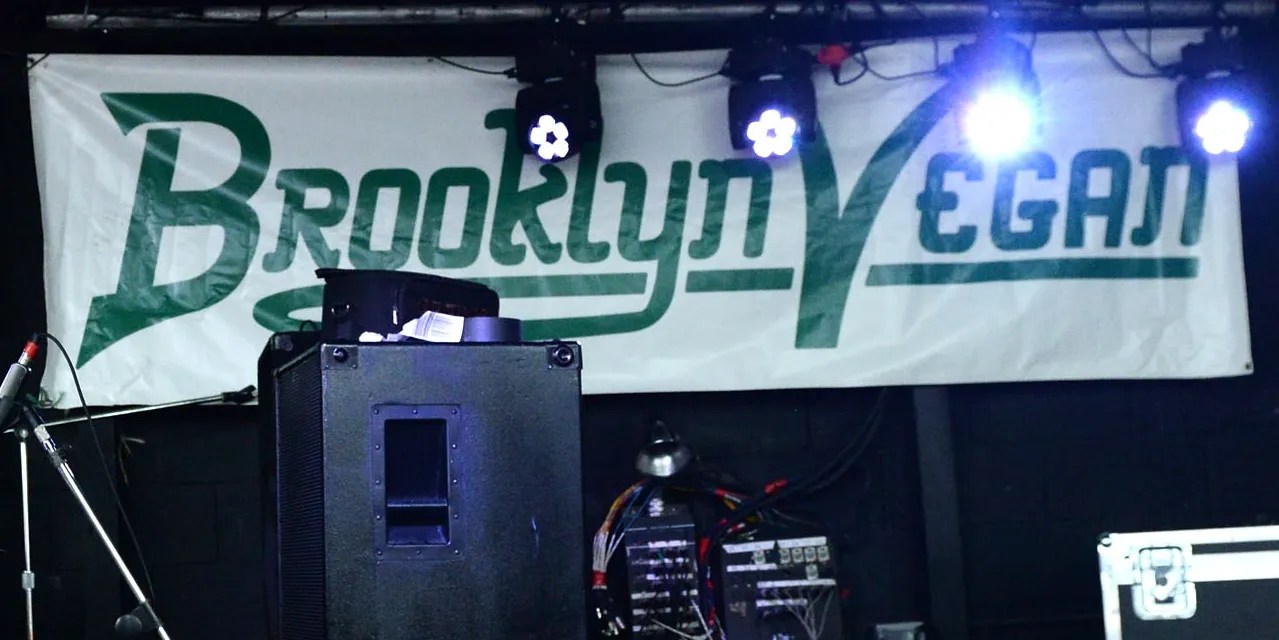
Another week, another blow to America’s cultural backbone. This week we, the crate-diggers of America, learned the devastating news that some company called Veeps emulsified the blog Brooklyn Vegan and the magazine Revolver and Alternative Press. Now, if you’re reading this little blog then you probably already know this, but these were not measly publications. AP and Revolver were respected and long-running magazines promoting up-and-coming artists and music a little off the beaten path. Brooklyn Vegan was, on a personal note, one of my favorite music blogs. They had a wide-ranging scope, from interviewing artists to covering any type of festival to being a hub for tour and new release info. Their weekly new music roundup was by far the most prolific of any blog I can find and was my source for new tunes every Friday.
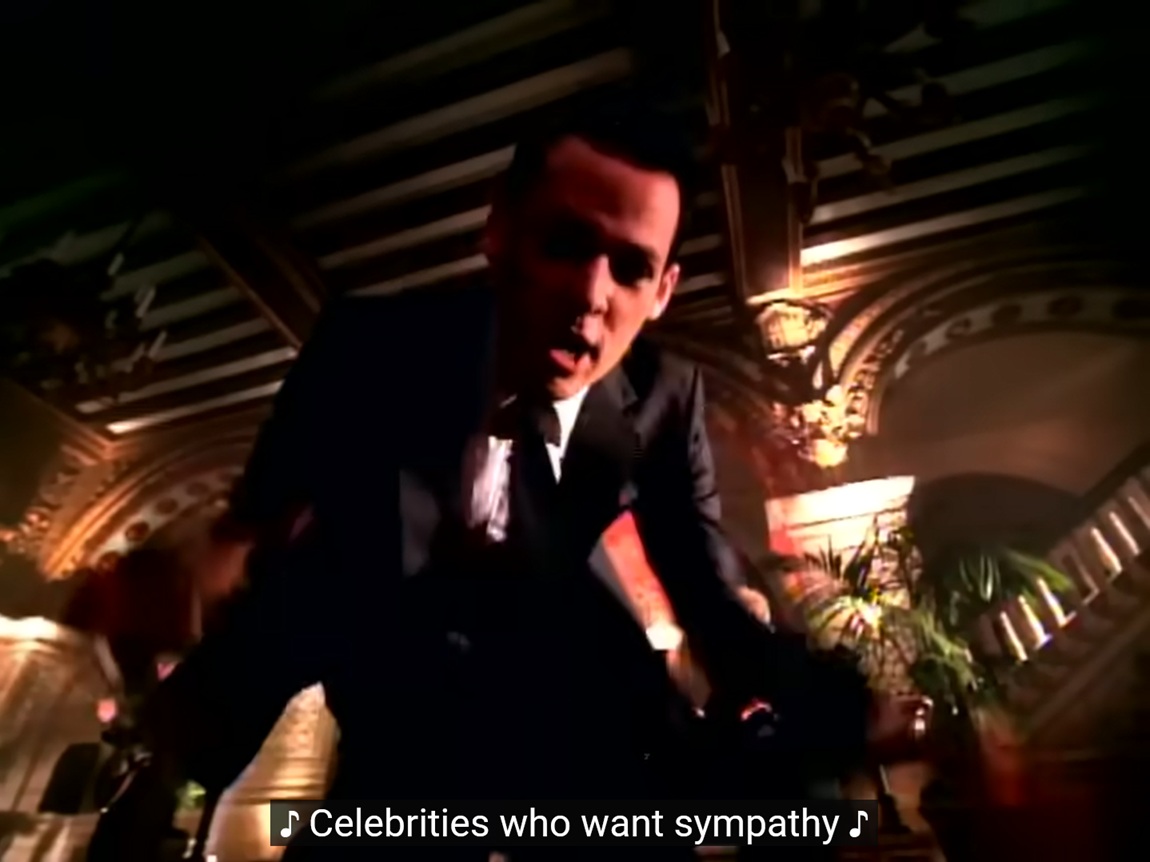
These publications were purchased and gutted by Veeps, a company owned by LiveNation and the guys from Good Charlotte, a band who had two hits 23 years ago. Ironically, one of those hits was “Lifestyles of the Rich & Famous,” a song that attempted to decry the celebrity narcissistic culture that the band was already starting to engage in. It’s a fairly logical progression from radio-friendly punk on a major label subsidiary to C-suite cultural butcher. Now, the Madden brothers aren’t actually responsible for any of these job cuts, but a band that capitalized off of teen angst and countercultural imagery should really know better.
But bigger than that, this is another notch in a wide degradation of culture. All fields are being affected, but none more so than music. Because music is so easily adopted and promoted by anyone, there is exponentially more music being released right now than ever before. And because anyone can make and promote music, the stakeholders have made it exponentially more difficult to actually find success in the music industry. And it is an attack on all fronts.
1) We’ve seen blue dot fever, a recent ‘trend’ of major artists unable to sell out shows because companies like TicketMaster and (cough) LiveNation have made tickets so expensive that fans have to be selective. Even artists like Bruce Springsteen and Taylor Swift have bemoaned how inaccessible their own concerts have become – although only The Cure have actually done something about it. Couple this with merchandise tables gutting artists at venues and streaming services effectively not paying anything at all, and music becomes a paying job for only a select few.
2) We’ve seen fewer and fewer artists actually scoring radio hits, as a few dozen artists have begun to monopolize the charts. To be clear – this is not on the artists. It is an attempt to keep the Top 40 at the level of sanitization that it has been at for 15 or so years (personal opinion: this one is beginning to backfire greatly).
3) We’ve seen the destruction in music discovery. It is cynical, and I believe incorrect, to blame a massive bloat of independent artists for the decline in music discovery. Discovery is an art form in itself, or at least an activity. There’s nothing better than crate-digging at a record shop and grabbing a couple cheap things you’ve never heard of. But now, so many people get their music from algorithms. I’ll admit I’ve found plenty of artists just through Related Artists features on streaming, and it can be effective, but it is not sustainable for art. Music is an art form that can be enjoyed passively, and the streaming services have fought harder than most people realize to make sure it is only passive enjoyment. Music made to be enjoyed passively can be done so for cheap and without all the hassle of, you know, trying to make a living off of it.
4) And to back to the primary point: We’ve seen the attacks on criticism. The gutting of BV, Revolver and Alternative Press aren’t budget cuts. It is another step in a cultural takeover by the wealthy. These are publications that made a name covering bands that were unique, edgier, rougher, ones that didn’t fit into a nice genre label. You would think the owners of a ticket company would want to promote as many artists as possible, but the money only lies in the biggest. And, logically, the biggest are often the safest. Not always, of course – bands like Deftones remain arena draws. But often the highest-selling are acts that are sterile like Benson Boone or Kacey Musgraves, even if the music is good (sorry Kacey, love you). These companies are, of course, conservative, and creativity is the enemy of conservatism. And when you can wipe out a whole generation of smaller touring acts, you can truly monopolize the ticket sales.
The draining of these publications isn’t just a blow to the staff. It’s a blow to all up-and-coming artists. Brooklyn Vegan specialized in punk and interviews with artists that aren’t arena groups. For many of these bands, it’s a big break. Those breaks are increasingly had to come by. Few artists out there truly make it without the help of parents who are hyperlinked on Wikipedia. The ones that do, like Noah Kahan, get seen as inspirational success stories rather than something achievable. For bands that are playing small to midsize venues, these blogs are a lifeline for promotion. A big story can catapult a band. One of my favorite bands, Thursday, bemoaned the fall of Alternative Press, mentioning that they’d be without a career if it was not for the magazine. They’re one of an uncountable number of bands that this is true for.
I don’t think people fully realize how important the art of criticism is, and yes, I consider it an art. Obviously I’m biased here, as a music critic, but criticism is a complex form that is often neglected. To be a good critic is to have impeccable cultural literacy, which is itself an art. Good art criticism should be complex and constructive, educating a reader as to the context around art while highlighting strengths and flaws. I personally find as little value in contrarian hit pieces as I do in bland praise (with a few exceptions). A good critic can talk about their own experience with a piece of art without writing about themselves, making it relatable to a reader. I often read negative reviews of albums I like and vice versa, because the context can help me understand other points of view. My biggest early inspiration in writing was Roger Ebert, because he roped individual films into his thoughts on the world. He was always insightful while being critical, and wrote about himself without writing about himself. Music blogs and zines will never die, but for most people, music criticism might become only Rolling Stone and side columns in major papers. These only serve to congratulate major artists, and give no insight into their work beyond the obvious. It also gives little space to smaller artists except those who have gotten big without their help. I worry for a future without something like Brooklyn Vegan, where people who have even an inkling for finding something new on their own terms can turn to.
I’ve been doing a lot of absolving of artists here, but there are some to blame. With music becoming competitive and commodified, we have seen a worrying uptake in artists who feel they are deserved of good reviews. I don’t believe in negative criticism for the sake of contrarianism or anything, but no artist is above a bad review. Sometimes music is just bad. There is a distinct difference in celebrating music and what we’ve deemed “poptimism,” which is a trend where ‘music criticism’ is just saying vague, nice things about big artists. In 2025, the usually brilliant and unique indie singer Indigo de Souza released a tepid, generic album called “Precipice.” Pitchfork gave the album a 6.6/10 in a mixed review that was constructive and well-written (and one that was, in my opinion, very forgiving). De Souza responded by having a bizarre, embarrassing meltdown, flaming Pitchfork on social media and wearing merch during concerts making fun of the review. Halsey, one of our most inconsistent artists, took it a step further in 2020, when she tweeted out a physical threat to Pitchfork’s offices after a negative review (!). Comically, she didn’t realize that Pitchfork’s offices were located in WTC1. But the point is, artists have learned that they can weaponize their followers against critics, which only serves to demean both art forms further. It’s a spineless, cowardly thing to do, to use your art to attack other artists for valid criticism. And more importantly, it sets up an artist as a pawn for the big money movers trying to impoverish the critics outright.
Look no further than this season’s conservative meltdown of choice, The Odyssey. At the time of writing, I haven’t seen the film, so there’s no comment from me on it. But there has been a big, curious reaction to translator Emily Wilson’s critique of the film. As someone who has done a direct translation of the epic, she’s extremely qualified to do a criticism of the film – few people out there understand the text better than her. While her critique was sharp, it was professional and academic, keeping the element of pop culture in regards. It’s natural for people to defend artists they like, but the reactions were nothing short of toxic. People came running to the defense of Christopher Nolan and his IMAX sensory onslaught because they’ve been conditioned to. And of course, people defended Wilson for the same reasons. But the Nolan defenders often went on the attack because they didn’t want to see art they like get criticized by anyone, let alone an academic that isn’t well-known. There were valid criticisms of Wilson’s criticism, but more often it amounted to nothing more than seeing a negative ‘review’ and getting angry at it, and going after Wilson herself. It is this pop cultural weaponization of art that devalues the act of criticism and feeds into the sanitization of it entirely. There is a prevailing pop cultural ignorance that people are proud of, and it has to combat against criticism for it work. Only the snobs would talk so negatively about this thing that I, personally, enjoy.
So where do we go from here? Music criticism will never be squashed, even if the full-time jobs are. Regional publications – like the one I proudly write for, Allston Pudding – will never disappear, because the crate-diggers will never disappear. I remain hopeful that art criticism will make a comeback. The tides are turning, I believe. Younger people are pushing heavier bands like Turnstile and Knocked Loose to the forefront of culture. People in every part of the country are raging against data centers, Flock cameras and all sorts of surveillance tech made by these same fascistic corporate suits. There is a return to physical media ownership, which to me signals a return to the ‘traditional’ style of art discovery. But what do we until the equilibrium is reinstated? I have been brainstorming ways I can use this largely dormant blog as support for what these publications did. Do I start Boston Carnivore? Can I keep track of new releases, of tours? Probably not alongside an unrelated full-time job. But I may try. We cannot let word-of-mouth die, or criticism with personality, or music that challenges the senses. It is simply an unfair world where a band can tour midsize venues and still have to hold a full-time job.
I maintain that, despite what many people say, discovering new music is easier than ever right now. I often go to bandcamp.com and just search for artists in my area (Boston). I’ve found tons of artists that way. Not everything is good, but everything is worth listening to. The important thing to remember is: they make take the money, but they can never crush the spirit. I saw a clip from an interview from the recently deceased legend Glen Hansard where he talks about how his busking was only successful when he was feeling the music. Hansard, like Ebert, was incredibly inspirational for a young me (albeit for a different reason). His spirit was more palpable than that of almost any other musician, ever. The spirit of music is unkillable. For every studio plant, every squeaky-clean pop slop nepo baby, and every pop-punk corporate sellout, there are 50 hungry and ambitious young musicians ready to take their place. We will never stop doing what we can to get them there.

