I’m hijacking my own music blog to talk about another one of my loves, film. Specifically, we need to talk about Eddington. I’m an Ari Aster fanboy; Hereditary is my favorite horror movie, Midsommar is not too far behind it. I liked Beau Is Afraid, though it was too ambitious and faulty. I saw the early reviews of Eddington – walk-outs at Cannes, half-star reviews saying it was offensive and unnecessary – and I swallowed my tongue. I don’t think we needed a movie about 2020 in 2025, even with the best possible filmmaker to do it. It seems that a lot of people agreed with this. But this movie isn’t about 2020, not at all. It’s a masterpiece, and I feel compelled to discuss why I loved it so much and haven’t stopped thinking about it since I walked out of the theater. In a different year it would probably be my favorite release, unfortunately it came out in the wake of Sinners. It is a film meant to be misunderstood, but even my film friends seem to have missed the mark on this one. So let’s get into it. Significant spoilers abound, by the way.
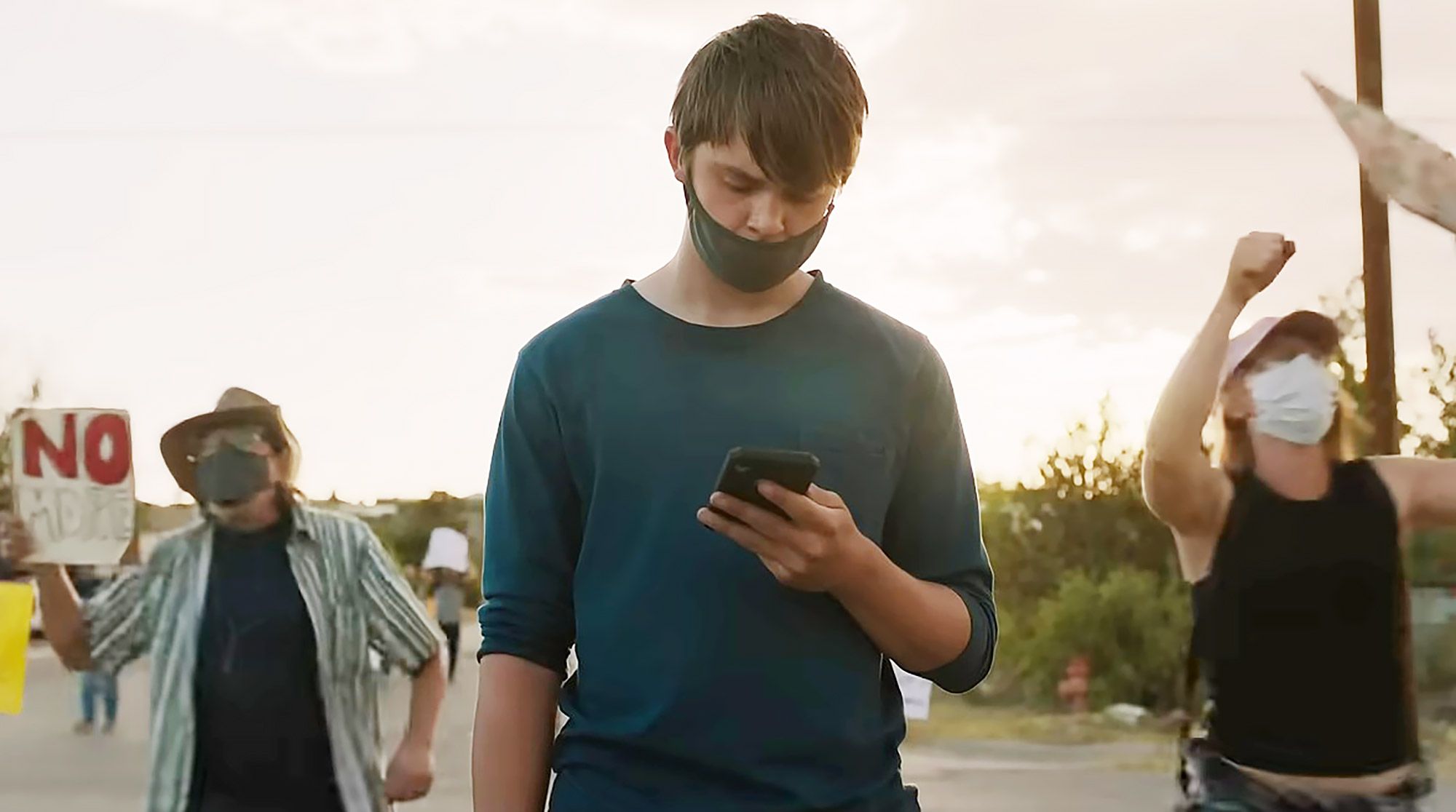
The 2020 stuff in this movie doesn’t really work! My biggest criticisms of this are the ones that drove a lot of people off at face value. The direct references to George Floyd were too exploitative. The mask bits were funny depending on context, but not inherently. It did feel like Aster was doing some prodding, like “hey, do you remember how funny people looked in masks? Remember social distancing?” and look, we’ve got another 5 years minimum before we can do that. But I think all of this was designed to shake off anyone who wasn’t going to like the difficulty of the film anyways. This is a film about tech. I felt that was obvious, but it seems people got too tripped up on the cultural references in the first hour.
None of the characters in this have a lot of depth – this is another criticism I’ve seen lobbied, and it’s the most unfair. They don’t have depth for a reason. The entire crux of this film is that tech companies have waged a secret war on the American people and won. This entire film is social media feeds, YouTube conspiracies, viral moments and influencers. The key figure in this movie isn’t town conservative sheriff Joe (Joaquin Phoenix) or liberal mayor Ted (Pedro Pascal), it’s the young man who adopts left-wing views to woo a hot girl, then adopts right-wing views when he sees a money trail. Almost the entire movie is predicated on one joke about Kyle Rittenhouse, a joke that probably isn’t worth it but is still an incredible payoff. Social media and tech in general eradicated his ability to have comprehension and morals – something that is true for every character here. These people are not deep because everything they do is performative. Joe is an anti-vaxxer, but he secretly gets tested for COVID. Ted is the lovable liberal, but he verbally abuses his kid and ignores his own COVID restrictions.
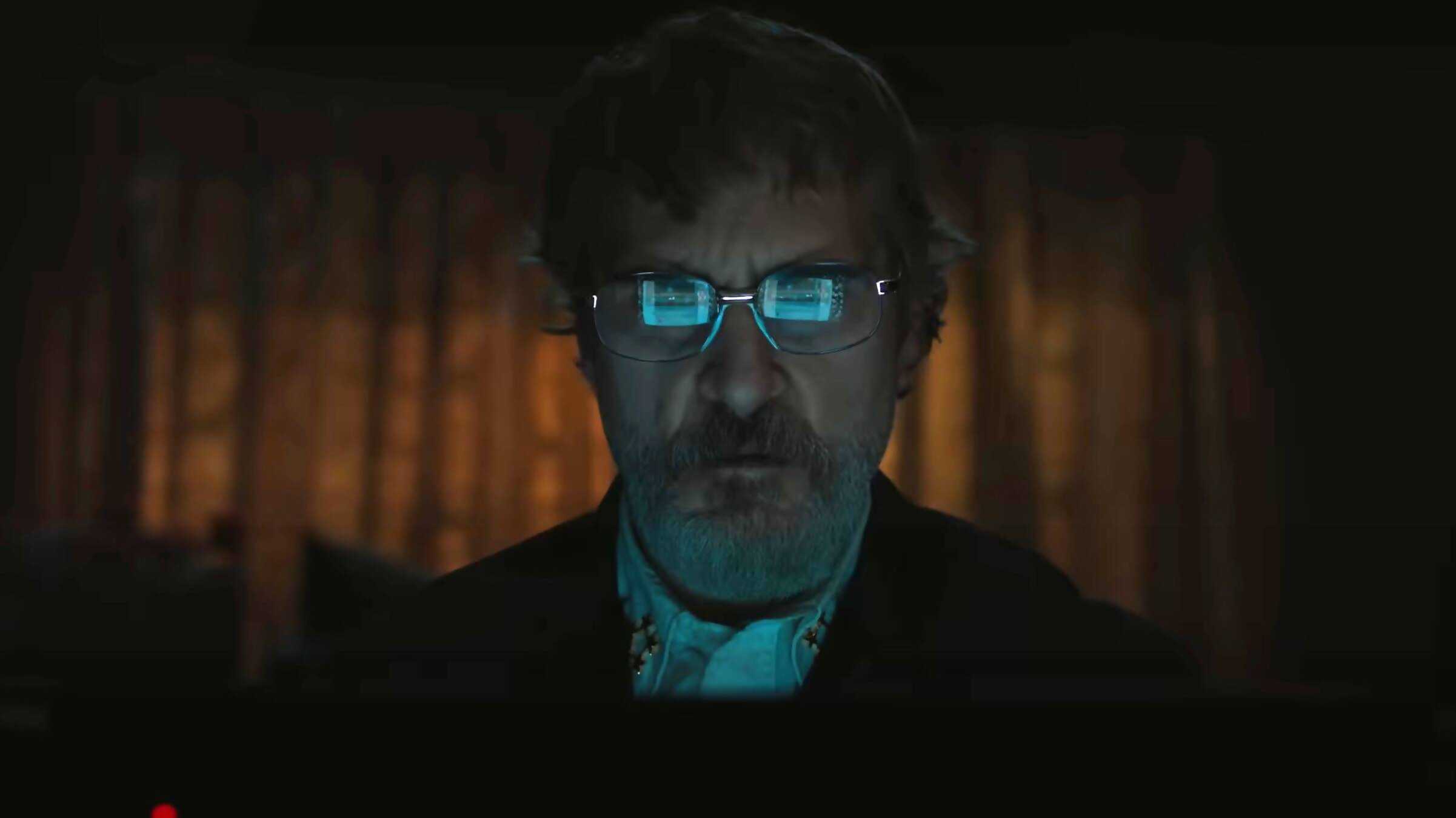
This film starts and ends with data centers. They pop up occasionally in the narrative, but the film is literally bookended with them. Everything is encompassed within the idea of an Eddington data center. We know how evil and resource-burning data centers are, but look at how both politicians end up opening their arms to them. Ted, the otherwise liberal, is firmly in the camp of building a data center. Joe is against it, but by the film’s end, he’s mayor and the data center is there, opened by a fellow conservative. Both men – one willing, one unwilling – become pawns for the unseen tech conglomerates that are invading to destroy their resources. But both men don’t put it as a top campaign priority, even though it would change the entire structure of the town. Tech always sneaks by in the background. Instead, COVID and BLM take center stage. BLM doesn’t happen without social media. Neither does the COVID antivax movement. It’s a little unfair to say that tech engineered these movements, but they’ve engineered the individuals. Without tech giants, Kyle Rittenhouse is just some dumb racist kid.
None of the characters in Eddington are critical to the story. Social media has turned many of us into performative yellers. Not everyone, of course, there are tons of people out there doing tons of genuine good and, well, genuine evil. But so many of us posters, doomscrollers and content consumers have become hollowed out. I yell at people all day in my social media trench about AI, transphobia, and other evils. But what do I actually do? I stock my community fridge, I donate to Palestinian families, I flip off Cybertrucks. But I’m not out there in the streets. And I think I still do more than a lot of us chronically online people. This is not a criticism of anyone – we all fell for the tech trap. The best, most succinct description I’ve seen of Eddington is “every character is a victim.” Everyone in this movie is doomed, because the data center is going to wipe out the town. Racial politics won’t matter when everyone is dying of thirst at an equal rate. The tech companies are getting us to pick sides and fight while they take over. Or, took over. The town of Eddington was doomed even if the center wasn’t built.
So, the first hour of Eddington establishes this mission statement. I say again, the first hour of this is murky. Aster is a cynical filmmaker, sometimes fatally, but he very importantly pulls back a little here. Having a mission statement of “everyone is empty because of social media and both sides are crazy!” is too misanthropic even for him. Unfortunately, this is where a lot of people got tripped up. This is not a centrist film, it is a very, very left-wing one. Look at the fate of the characters and what it says about politics.
Ted is a standard-fare liberal. He wears a suit, he’s charming, he’s always around. Liberal voters often value someone who looks and talks nice rather than someone who is a policy wonk. Ted has mastered this, despite the fact that he’s a wealthy tech pawn who yells at his son and breaks his own rules. That doesn’t matter – libs love him. And, at the end of the day, he’s still a good man. At a campaign event at his house, he’s confronted by Joe, and ends up slapping him before Joe storms off.
Joe is a “good conservative.” He’s not outwardly racist, he stands for his own convictions, etc. None of this is true, of course, but the people of Eddington don’t realize it. And like all “good conservatives,” he snaps at the slightest pushback. Not 24 hours goes by after getting slapped by Ted before he shoots and kills Ted in Ted’s home. He kills a homeless man, too. He’s a weak, desperate man. Later in the movie, he gets stabbed hard in the back of the head. The viewer rightly assumes he’s dead. He’s not. Similar to Lockjaw in One Battle After Another, he’s a conservative who just always survives. It’s not so much satire as it is just truth. We lost Michael Brooks at 36. We lost Henry Kissinger at 100. Conservatives just always survive, because only the good die young.
There was a lot of criticism over making Joe the central character, which is another fault of comprehension. In my estimation, this itself is a satire on American news media. Ted is the more popular politician, by a huge margin. But he’s almost an afterthought in this film because it’s all about the shiny, new conservative with the same talking points as the other ones. As Bari Weiss takes over CBS News and the New York Times gives page space to Richard Hanania, we are constantly drowning in mass media praising conservatives while not affording the same space to anyone left of center. If this movie were a real news story, Joe and Ted would not be given the same amount of space. This is a direct result of – you guessed it – major tech companies.
Every character in this is a victim. Every person gives their life away to tech without even realizing it. No one suffers more than Louise, Joe’s suffering wife who gives herself away to a mystical, dangerous conspiracy theorist who she sees on TikTok or YouTube. Is Austin Butler’s viral theorist a victim too? Well, yes, because his worst indulgences should never be made public like this, and it’s harming him too. Joe is emboldened by tech, but he goes viral for his incidents during protests. At the film’s climax, he’s attacked by “Antifa” (which are really conservative plants), and the directing literally turns into a first-person shooter video game. If that is not a metaphor for how tech has absorbed us (and not even the other way around), then what is? For a film that takes place deep in the desert, everyone here is too connected to screens.
At the end of the movie, none of this mattered. Ted was killed, Joe was paralyzed, and the town erupted into left-v-right chaos. And yet, the data center is opened, and in a few years, Eddington will be obliterated. We are supposed to see ourselves as the people of Eddington. This is not a film about 2020, it’s one about 2025, and 2030, and 2035. Every person is a pawn in an invisible game of chess, and so are we. So am I, for writing on my blog. So are you, for reading it. I’m obviously political myself and trying to influence you, just like anyone else. Eddington is not a perfect film, it’s too exploitative in parts and muddies its own point a little too much. But it’s also the best satire about our current times, far more so than the much more beloved One Battle, which did little but frustrate me by being a surface-level story that just mentions politics. I truly hope that this piece opens even one set of eyes to Eddington and that, in 10 years’ time, we’ll view this as the most prescient movie of the mid-20’s. Now go stream it on HBO and discuss it on Twitter.
Post-Grad Music Reviews is, understandably, a music blog. If you’re interested in occasional reviews, interviews, and best-of lists that dig deep into the vinyl vaults, feel free to give me a follow! I only post on occasion and exclusively for fun. Find me on bluesky or instagram under the username amcnal!
Don’t be surprised if I use this blog more for film analysis in 2026!
I am aware that it is now 2023 and that talking about 2022 is illegal, but I love talking about films I’ve watched and I wanted to wait until the year was properly over to do this list (do not report me to the police). I’m not going to do a proper “Best Films of 2022” list because, frankly, I didn’t see that many. I loved a couple, didn’t care for some, and have still yet to see 90% of the ones I wanted to. Rather than that, I’ll just tell you that The Banshees of Inisherin is my favorite 2022 flick, so far. (This also helps me whittle down this list!) So, instead, here’s a list of my favorite first-time watches, and a few deep cuts I really enjoyed too! For the sake of keeping this interesting, I won’t write about movies twice, though there’s a few that could grace both lists.
Fifteen lesser-known films I cannot recommend highly enough:
BLUE COLLAR (1978) – Paul Schrader’s follow-up script to Taxi Driver (and directorial debut!) finds the complementary cast of Harvey Keitel, Richard Pryor and Yaphet Kotto as union members at an auto body shop in Detroit trying to overthrow their evil boss. Engaging but brutally real and cynical drama shows you flat out how The Man will always keep you down, even when you think you’re winning. As real in 2022 today as it was then. Also features one of the most shocking and heartbreaking deaths I’ve seen in a while.
DAYS OF WINE AND ROSES (1962) – Utterly tense and heart-pounding drama sees Jack Lemmon – in a breakout role as a dramatic actor – fall into the throes of alcoholism. He challenges a pretty, teetotaling coworker to a drink and soon enough, they’re married, miserable and drunk. The movie uses imperceptible time jumps to make everything shady and unclear, mimicking the lives of the characters. Powerful and deeply upsetting film, almost definitely the best one on this list.
DREAM DEMON (1988) – Dreamy, psychedelic horror flick sees an average woman about to marry a rich man in a highly-publicized engagement. But she’s plagued by nightmares, and develops a bizarre friendship with an American tourist. When her nightmares cause a paparazzi to disappear in real life, it gets weird. Movie is extremely dependent on dream sequences, which can be off-putting for some, but I loved it. The ambitious opening sees a dream sequence where her wedding turns into a decapitation. It’s wild, bold and very gory while also being borderline nonsensical.
ELEVATOR TO THE GALLOWS (1958) – A French new wave/noir about a cheating wife and her plot for her boyfriend to kill her husband, who is also his boss. What starts smoothly goes awry when the man realizes he’s left something incriminating behind, and gets stuck in a broken elevator, which also allows some rowdy teens to steal his car. As a confused and worried wife wanders the streets, the teens go on a crime spree of their own. Extremely fun to watch what’s essentially two films smashed into one.
THE EMPTY MAN(2020) – This indie horror movie went unnoticed but had its heyday this year when horror fans set it ablaze. A group of hikers get lost in Nepal as one gets drawn to a long-dormant supernatural being. Years later, teens in a flyover state awaken the same beast – this time intentionally – and start disappearing one by one. It’s up to an incredulous investigator to put things together before The Empty Man gets him too; or, will it? Conventional horror flick gives way to some over-the-top psychedelic, psychological stuff in the final act. Absolutely tremendous.
FAMILY PLOT (1976) – It sure feels weird to include a Hitchcock movie here, but people have just missed this one. Those that haven’t, have wrongfully misaligned Alfred’s final flick as being phoned-in, when really it’s just a much smaller scale. Gone are the international incidents, in favor of a grifter psychic and her husband (Bruce Dern!) tracking down a long-lost nephew – who is in turn plotting a robbery and does not trust the folks on his trail. More comical than anything, it’s wonderful to see Hitch transpose his talents to a smaller story.
FIVE GRAVES TO CAIRO (1943) – An early Billy Wilder film sees the sole survivor of a German attack on a British battalion hunker down in an Egyptian hotel, posing as the recently-deceased waiter. Rommel and his men set up camp there as the British soldier finds out that – you guessed it – the waiter he’s assumed the identity of was also a spy. Taut and exciting thriller keeps upping the ante while remaining extremely fun.
HUSH… HUSH, SWEET CHARLOTTE (1964) – A follow-up to Whatever Happened to Baby Jane? sees Bette Davis as an elderly woman refusing to give up her mansion to the town and losing her grip on sanity, decades after the murder of her husband (Bruce Dern!). Whether she committed the murder remains a mystery, as does the true intentions of Charlotte’s niece, who gets called in to help save the mansion. Really thrilling and tense stuff, and an all-time performance from Davis.
I AM A FUGITIVE FROM A CHAIN GANG (1932) – Love a movie that tells you what it’s about right away. A WWII vet comes home a hero, only to find himself unemployed and accused of a robbery he did not commit. He ends up on a chain gang, breaks free, and climbs up the ranks of a construction company – until the law catches up and arrests him again. A tough and brutal look at the way the country values justice and veterans, and it ends on an action sequence that holds up as shocking and thrilling even 90 years later.
IN THE SOUP (1992) – The first of two films on this list that stars Steve Buscemi as a filmmaker! In this one, he’s got an unfilmable 500 page script that he wants to…film. He struggles to find a producer, until a very suspicious gangster promises to fund it, and keeps putting it off while Buscemi does odd jobs for him and keeps him company. Funny and original, the script is solid but Seymour Cassel as the gangster really elevates it into a cult classic. An absolute delight with just a pinch of terror.
LE BEAU SERGE (1958) – French film sees François return to his hometown after many years away. His best friend from childhood, Serge, has wasted away. He’s a bad-temepered, poor alcoholic in an unhappy marriage with a kid on the way. François becomes worried that Serge can’t fend for the kid and doesn’t want it and starts to interfere. This drama has some slow points, but the final stretch is impeccable and the final shot is burned into my brain.
LIVING IN OBLIVION (1995) – Very funny, very tense no-budget indie comedy sees director Steve Buscemi have his passion project crumble before his eyes. The film is split into three extended scenes, each one of which sees Buscemi filming a scene which inevitably goes awry. An all-star cast bolster this movie that is simultaneously whiplash-inducing and utterly pointless. It works as a satire of the film industry, but one accessible to anyone on the outside. This one should be held in much higher regard.
ROADGAMES (1981) – Australian thriller sees Stacy Keach as an isolated, sarcastic trucker who finds himself on the run from a serial killer, and the police, as the serial killer has managed to pin his crimes on Keach. Add in a mysterious hitchhiker in the form of Jamie Lee Curtis and you’ve got a volatile but extremely fun little yarn.
THOMASINE & BUSHROD (1974) – This totally missed Western romp sees a black couple going on a well-planned crime spree across the West in 1911, aided by the newfangled invention of the automobile. It’s original, amusing and dramatic, embroidering the “moral criminal” Robin Hood mentality very well. It’s tense, but stays very charming and enthusiastic too.
WATERMELON MAN (1970) – A wild, confrontational and funny satire sees a very charismatic but deeply racist white man wake up one day to find he’s turned black. After a few days of constant bathing, the new reality sets in, as his family and friends (also racist) begin to scorn him. The downward spiral he falls is both comic from a karma perspective and palpably real, which makes for a very uncomfortable watch. Maybe a little dated in its own right, but still all too real.
Just for fun, because I am too self-indulgent, here’s three more:
3 Bad Men (Western/silent, 1926); Suture (Thriller, 1993); Wolfen (Horror, 1981)
And now, for the main event:
My 20 favorite first-time watches of 2022 that I didn’t already mention above:
20) YOJIMBO (1961) – One of many classic films that grace this list – a reason why I included so many “under the radar” ones above; if you’re reading this, you probably already know to watch Yojimbo. The Kurosawa classic follows a wandering ronin who finds two competing crime bosses puppeteering a small town, and uses himself to leverage the sides back and forth to avoid an all-out war. It’s a brilliant screenplay and one of the finest performances from Toshiro Mifune.
19) BAD DAY AT BLACK ROCK (1955) – This tightly contained little bruiser walks the line between Western and noir in a truly unique way, as it follows Spencer Tracy’s normal-man character searching for somebody in a very small town, only to be met with confusion and hostility from the locals. Did I mention, it’s a very small town. Things escalate quickly and Tracy finds himself in trouble, looking for information and trying to survive until the train comes through the next day. It’s basically a bottle episode of a film, but look at the cast – ten total characters, five Academy Award winners.
18) THE 400 BLOWS (1959) – Another “I don’t need to write about this one” entry, as I finally laid eyes on one of the most revered films ever. Truffaut’s earnest and brutally uncomfortable tale of a troubled schoolchild falling further and further into trouble and hopelessness ends on one of the most iconic – and potentially hopeful – shots in film history.
17) WHEEL OF FORTUNE AND FANTASY (2021) – With all the hype around Drive My Car, people seem to have completely missed Ryusuke Hamaguchi’s other 2021 film. The film is an anthology, with three unrelated stories of direct person-to-person confrontations. The first two involve a love triangle and a college professor who gets caught cheating with one of his students, but the real standout is the third film. Two women convince themselves they were classmates together and spend a day catching up, only to realize they’re total strangers. Rather than part ways, they use each other as stand-ins to confess long-buried secrets. Readers, my eyes did not stay dry.
16) Z (1969) – The first foreign film to be nominated for Best Picture is an Algerian release about a real-life government-orchestrated assassination of a leftist politician in Greece and the proceeding fallout. It’s bleak and brutal, and successfully presents itself as both a timeline of a real event and a plausible scenario for any country with political struggles (which is, all of them). Watching this in America in 2022 was…well, uncomfortable.
15) THE LONG GOOD FRIDAY (1980) – What a delight, I threw this on as background noise but got fully engrossed. Bob Hoskins stars as a midlevel crime boss trying to make a major play by bringing in an American investor, just as someone starts offing his men one-by-one. A taut and thoroughly nerve-wracking thriller takes place over a Good Friday and has Hoskins at his very best. Stunning directing, too. This one was an obvious influence on Uncut Gems.
14) BAD LUCK BANGING OR LOONY PORN (2021) – I could barely make heads or tails of this one and yet I loved it. The Romanian comedy follows a school teacher whose sex tape gets leaked, and she’s subjected to scorn and debate over whether she can remain in her position. It’s a satire on cancel culture and the way people weigh the actions of others subjectively. The first act is funny and tense, but the final act is an absolute riot – with one of the single wildest and most unpredictable endings I’ve ever seen. Curiously, the middle act is an unrelated, avant-garde production about Romania, good and bad, made for ignorant viewers like myself. The film opens with a full-on sex tape, but I unintentionally watched the edited Hulu version, which was very funny. Also gets points for having the best depiction of COVID on film yet (watch the questionable usage of masks).
13) HEAT (1995) – Again, what do I need to say here? It’s Pacino, de Niro, Kilmer and Mann. A damn-near perfect crime thriller that’s almost 3 hours but doesn’t feel longer than 1. Heart-pounding, fun and complete. The second-best scene is a chaotic shootout right in the middle of downtown LA, the best scene is entirely dialogue inside of a diner. A well-rounded picture.
12) CAPE FEAR (1962) – Sorry to those of you expecting a double dose of de Niro, but this is the original Gregory Peck & Robert Mitchum flick. This is one of the most heart-pounding movies I’ve ever seen, really. Peck stars as lawyer who gets Mitchum put away, only to have to flee years later when Mitchum is released and seeks revenge. Both the screenplay and Mitchum are so, so good that in the climax, you genuinely believe that a child is going to come to harm in a B&W film.
11) THE HAND OF GOD (2021) – I am a little incredulous of autobiographical films since they can often get self-indulgent, but this Italian drama smartly places weight on vibes instead of narrative. This technically-fictional coming-of-age tale sees the good and bad of growing up in the Italian country, from wanting to becoming a filmmaker to bored days watching Maradona to tragic accidents that upend entire lives. The scenery is gorgeous, the characters and dialogue all interesting and the vibes are totally engaging. I could live inside this movie, even the upsetting parts.
10) ROPE (1948) – My new favorite Hitchcock flick centers around the tensest dinner party in history. A sociopathic student and his reluctant lover friend kidnap and kill one of their friends, hide his body in a trunk, and invite all of their colleagues and the boy’s family over to a party. Why? Just to see if they get caught. Jimmy Stewart, as their nihilistic professor, is the only one to catch on that something very, very wrong has happened. The film is edited so it looks like long takes, and the whole thing takes place in one apartment. It all amounts to an incredibly tense and uncomfortable film that far outlasts its 80 minute runtime.
9) A MAN ESCAPED (1958) – Speaking of small-scale tension, this prison break drama might be the most heart-pounding film I’ve ever seen. With almost no backstory, we see a French resistance member held captive by Nazis and his multiple attempts to escape. As his friends jump the gun to run away and get executed, he works meticulously to break his door and plan his escape. The last act of this film is done in almost pure silence, with the man and an accomplice moving slowly and carefully through the jail undetected. It is so quiet that you can hear your own heavy breathing because it is, truly, nail-biting. One of the all-time best.
8) THE CRANES ARE FLYING (1957) – This Russian WWII drama sees a young woman’s lover whisked off to war without a chance to say goodbye. As the years go on, the communications cease and she can only assume the worst. Eventually, she moves in with the man’s somewhat intolerable brother. While the story is effective and conventional, this film’s beauty lies in the directing. Eye-popping cinematography and painstakingly perfected long shots elevate this from a decent war film to one of the all-time greatest pieces of art.
7) BEFORE SUNSET (2004) – For a guy who always talks about loving long films, this is my second entry that doesn’t hit 90 minutes. There’s nothing to be said about this one that hasn’t been said – the perfect sequel to the somehow even better Before Sunrise sees two people meeting by chance, nine years after their first chance encounter. While the first film centers on their characters, this one shows how they’ve advanced. It takes place nearly in real-time, with the two wandering around Paris reconnecting before Ethan Hawke has to catch a flight. Pockets of combativeness arise where they didn’t before, and ego steps in the way; and yet, this movie is 80 minutes of completely wholesome, heartwarming love. I still need to see the third!
6) THE WORST PERSON IN THE WORLD (2021) – This Norwegian romcom touches on just about every emotion and every genre. At times funny, other times dramatic, and occasionally surreal, this wonderful picture follows a woman in her late 20’s as she tries to navigate life and imperfect romantic relationships. Horrible elevator pitch, but it is written with a perfect, intricate hand. There is a genuine love for these characters, even as they make wretched mistakes, and it’s that love that makes this relatable for just about anyone who cares to invest. A beautiful and moving picture.
5) ON THE WATERFRONT (1954) – One of the most famous and revered films ever, and for good reason. Brando utterly commands every scene, even when he renders a lot of his own dialogue unintelligible. The story about longshoremen union members involved in a fight is an all-time story from Budd Schulberg, written with genuine urgency and malice. Elia Kazan’s directing just adds even more.
4) THE ASCENT (1977) – Another Russian WWII drama, this one is far, far more brutal than Cranes. As a Russian troop of soldiers struggles through a harsh winter in Belarus, two men break off to beg for food from townspeople. But, they’re captured by Nazis, and held separately in a concentration camp. Eventually, both men are given an ultimatum – join or die. I won’t go further for risk of spoilers, but the last quarter of this movie is intensely heartbreaking.
3) THERE WILL BE BLOOD (2007) – I know! I’d never actually seen it in full! I went in with the highest expectations and it still surpassed them. I can’t watch other Daniel Day-Lewis films now knowing how perfect he is here. The “I’ve abandoned my child” scene is just simply some of the finest acting ever put to film. This one is damn near perfect, but chances are you already know that.
2) DRIVE MY CAR (2021) – No recency bias here; the best film of 2021 is just one of the best of the century so far. A grief-stricken director struggles with the death of his unfaithful wife and reluctantly takes a role producing a stage production of Uncle Vanya. One of the primary actors he ends up casting – the man his wife cheated on him with. While Hamaguchi comes up with a punchy plot, the film revolves more around communications, with multilingual actors in Vanya serving as a metaphor for the man’s own introverted tendencies. He bonds with the actor and, more so, his personal chauffeur, herself a shy and withdrawn person. It is simply remarkable start to finish, with a justified runtime and arguably the best title card drop in history.
1) A SEPARATION (2011) – It’s been a long time since a film knocked me on the floor like this. The Oscar winner for Foreign Feature in 2011, this Iranian drama sees every taboo element you can think of. A fighting couple fails to secure a divorce, which sees a wife and teen daughter leave Tehran for the countryside while a husband (Nader) stays home to take care of his incontinent father. Nader hires a destitute, religious woman to care for his father during the day – but when Nader comes home, he finds his father tied to the bedpost and the woman gone. She returns, a fight ensues, and she ends up falling down the stairs. Was she pushed? The viewer does not know. But the woman’s husband, a man unemployable due to rage issues, convinces her to sue Nader for killing their unborn baby. The court case only gets messier. This film is shot documentary-style, which adds a sense of realism to it. Every single scene here is gut-punching, without ever being overbearing about it. Simply said, one of the best I’ve ever seen. Just prepare yourself.
I can’t help myself, here’s 9 more first-time watches I loved:
A Brighter, Summer Day (Drama/Coming of Age, 1991); All About Eve (Drama, 1950); Bande àPart (New wave/crime, 1964); Dune (Sci Fi/worms, 2021); I, Tonya (Biography/Comedy/Drama, 2017); The Killing (Noir, 1956); M (Thriller, 1931); Mulholland Drive (Noir, 2001); Suspiria (Horror, 2018);


 Post-Grad Music Reviews