I’m hijacking my own music blog to talk about another one of my loves, film. Specifically, we need to talk about Eddington. I’m an Ari Aster fanboy; Hereditary is my favorite horror movie, Midsommar is not too far behind it. I liked Beau Is Afraid, though it was too ambitious and faulty. I saw the early reviews of Eddington – walk-outs at Cannes, half-star reviews saying it was offensive and unnecessary – and I swallowed my tongue. I don’t think we needed a movie about 2020 in 2025, even with the best possible filmmaker to do it. It seems that a lot of people agreed with this. But this movie isn’t about 2020, not at all. It’s a masterpiece, and I feel compelled to discuss why I loved it so much and haven’t stopped thinking about it since I walked out of the theater. In a different year it would probably be my favorite release, unfortunately it came out in the wake of Sinners. It is a film meant to be misunderstood, but even my film friends seem to have missed the mark on this one. So let’s get into it. Significant spoilers abound, by the way.
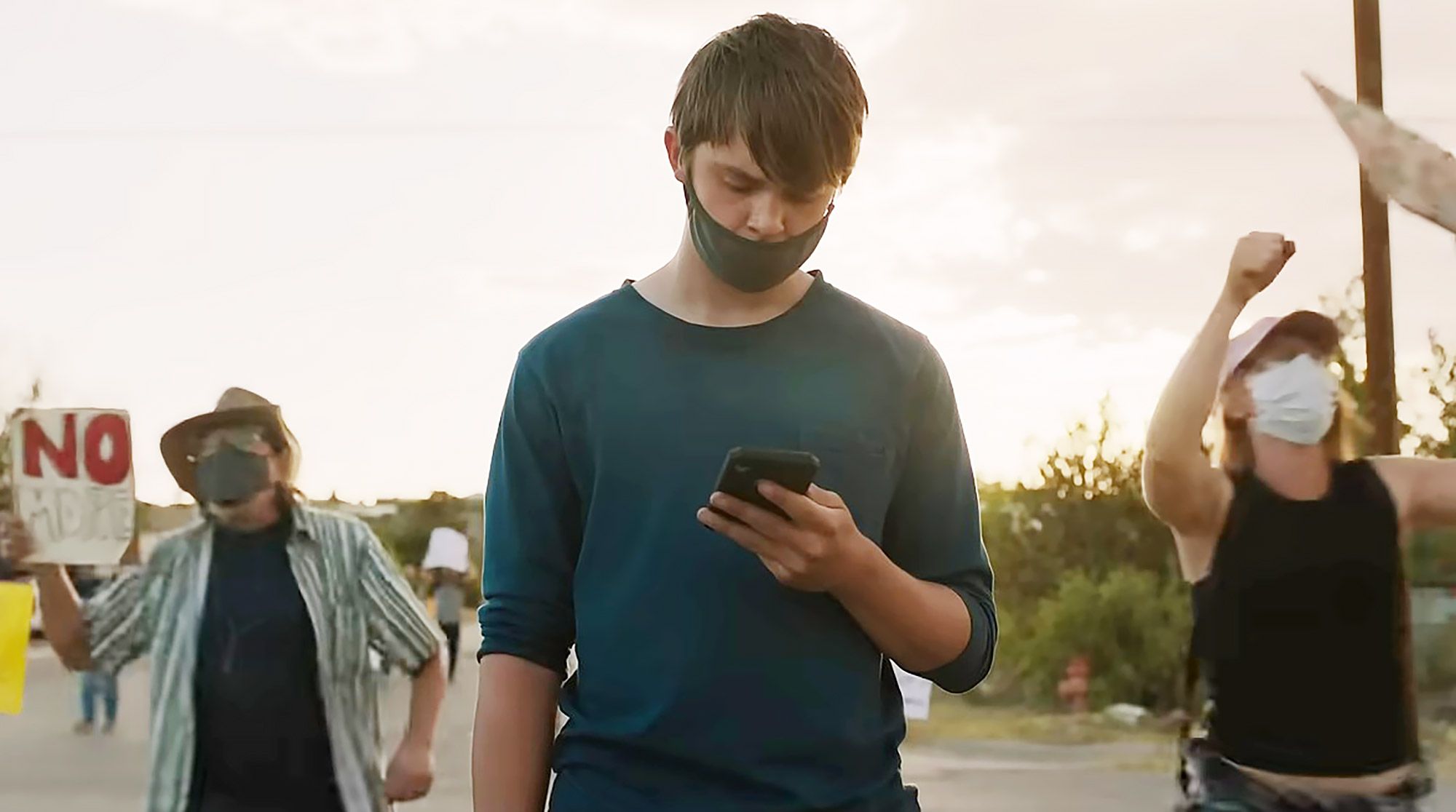
The 2020 stuff in this movie doesn’t really work! My biggest criticisms of this are the ones that drove a lot of people off at face value. The direct references to George Floyd were too exploitative. The mask bits were funny depending on context, but not inherently. It did feel like Aster was doing some prodding, like “hey, do you remember how funny people looked in masks? Remember social distancing?” and look, we’ve got another 5 years minimum before we can do that. But I think all of this was designed to shake off anyone who wasn’t going to like the difficulty of the film anyways. This is a film about tech. I felt that was obvious, but it seems people got too tripped up on the cultural references in the first hour.
None of the characters in this have a lot of depth – this is another criticism I’ve seen lobbied, and it’s the most unfair. They don’t have depth for a reason. The entire crux of this film is that tech companies have waged a secret war on the American people and won. This entire film is social media feeds, YouTube conspiracies, viral moments and influencers. The key figure in this movie isn’t town conservative sheriff Joe (Joaquin Phoenix) or liberal mayor Ted (Pedro Pascal), it’s the young man who adopts left-wing views to woo a hot girl, then adopts right-wing views when he sees a money trail. Almost the entire movie is predicated on one joke about Kyle Rittenhouse, a joke that probably isn’t worth it but is still an incredible payoff. Social media and tech in general eradicated his ability to have comprehension and morals – something that is true for every character here. These people are not deep because everything they do is performative. Joe is an anti-vaxxer, but he secretly gets tested for COVID. Ted is the lovable liberal, but he verbally abuses his kid and ignores his own COVID restrictions.
This film starts and ends with data centers. They pop up occasionally in the narrative, but the film is literally bookended with them. Everything is encompassed within the idea of an Eddington data center. We know how evil and resource-burning data centers are, but look at how both politicians end up opening their arms to them. Ted, the otherwise liberal, is firmly in the camp of building a data center. Joe is against it, but by the film’s end, he’s mayor and the data center is there, opened by a fellow conservative. Both men – one willing, one unwilling – become pawns for the unseen tech conglomerates that are invading to destroy their resources. But both men don’t put it as a top campaign priority, even though it would change the entire structure of the town. Tech always sneaks by in the background. Instead, COVID and BLM take center stage. BLM doesn’t happen without social media. Neither does the COVID antivax movement. It’s a little unfair to say that tech engineered these movements, but they’ve engineered the individuals. Without tech giants, Kyle Rittenhouse is just some dumb racist kid.
None of the characters in Eddington are critical to the story. Social media has turned many of us into performative yellers. Not everyone, of course, there are tons of people out there doing tons of genuine good and, well, genuine evil. But so many of us posters, doomscrollers and content consumers have become hollowed out. I yell at people all day in my social media trench about AI, transphobia, and other evils. But what do I actually do? I stock my community fridge, I donate to Palestinian families, I flip off Cybertrucks. But I’m not out there in the streets. And I think I still do more than a lot of us chronically online people. This is not a criticism of anyone – we all fell for the tech trap. The best, most succinct description I’ve seen of Eddington is “every character is a victim.” Everyone in this movie is doomed, because the data center is going to wipe out the town. Racial politics won’t matter when everyone is dying of thirst at an equal rate. The tech companies are getting us to pick sides and fight while they take over. Or, took over. The town of Eddington was doomed even if the center wasn’t built.
So, the first hour of Eddington establishes this mission statement. I say again, the first hour of this is murky. Aster is a cynical filmmaker, sometimes fatally, but he very importantly pulls back a little here. Having a mission statement of “everyone is empty because of social media and both sides are crazy!” is too misanthropic even for him. Unfortunately, this is where a lot of people got tripped up. This is not a centrist film, it is a very, very left-wing one. Look at the fate of the characters and what it says about politics.
Ted is a standard-fare liberal. He wears a suit, he’s charming, he’s always around. Liberal voters often value someone who looks and talks nice rather than someone who is a policy wonk. Ted has mastered this, despite the fact that he’s a wealthy tech pawn who yells at his son and breaks his own rules. That doesn’t matter – libs love him. And, at the end of the day, he’s still a good man. At a campaign event at his house, he’s confronted by Joe, and ends up slapping him before Joe storms off.
Joe is a “good conservative.” He’s not outwardly racist, he stands for his own convictions, etc. None of this is true, of course, but the people of Eddington don’t realize it. And like all “good conservatives,” he snaps at the slightest pushback. Not 24 hours goes by after getting slapped by Ted before he shoots and kills Ted in Ted’s home. He kills a homeless man, too. He’s a weak, desperate man. Later in the movie, he gets stabbed hard in the back of the head. The viewer rightly assumes he’s dead. He’s not. Similar to Lockjaw in One Battle After Another, he’s a conservative who just always survives. It’s not so much satire as it is just truth. We lost Michael Brooks at 36. We lost Henry Kissinger at 100. Conservatives just always survive, because only the good die young.
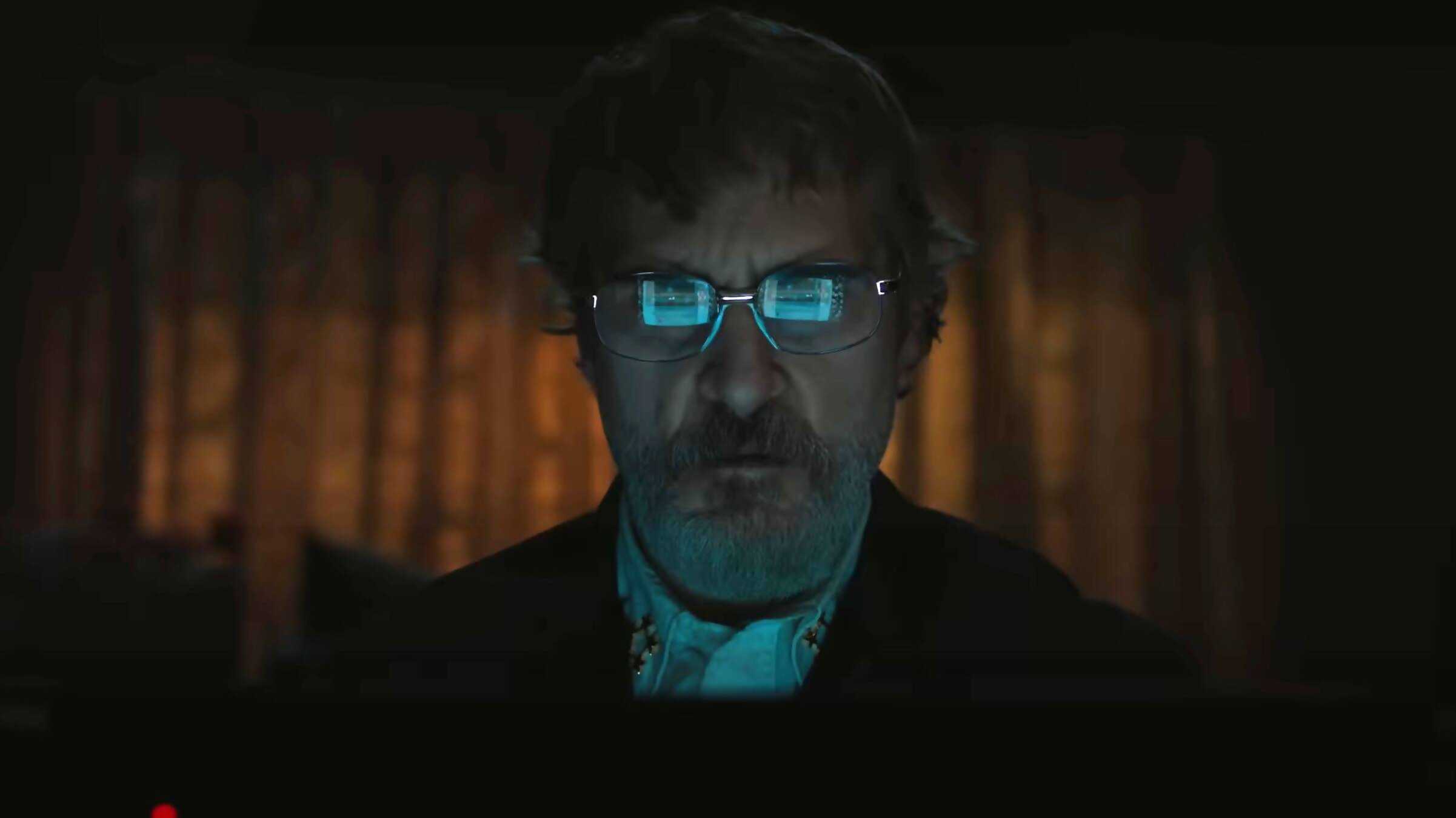
There was a lot of criticism over making Joe the central character, which is another fault of comprehension. In my estimation, this itself is a satire on American news media. Ted is the more popular politician, by a huge margin. But he’s almost an afterthought in this film because it’s all about the shiny, new conservative with the same talking points as the other ones. As Bari Weiss takes over CBS News and the New York Times gives page space to Richard Hanania, we are constantly drowning in mass media praising conservatives while not affording the same space to anyone left of center. If this movie were a real news story, Joe and Ted would not be given the same amount of space. This is a direct result of – you guessed it – major tech companies.
Every character in this is a victim. Every person gives their life away to tech without even realizing it. No one suffers more than Louise, Joe’s suffering wife who gives herself away to a mystical, dangerous conspiracy theorist who she sees on TikTok or YouTube. Is Austin Butler’s viral theorist a victim too? Well, yes, because his worst indulgences should never be made public like this, and it’s harming him too. Joe is emboldened by tech, but he goes viral for his incidents during protests. At the film’s climax, he’s attacked by “Antifa” (which are really conservative plants), and the directing literally turns into a first-person shooter video game. If that is not a metaphor for how tech has absorbed us (and not even the other way around), then what is? For a film that takes place deep in the desert, everyone here is too connected to screens.
At the end of the movie, none of this mattered. Ted was killed, Joe was paralyzed, and the town erupted into left-v-right chaos. And yet, the data center is opened, and in a few years, Eddington will be obliterated. We are supposed to see ourselves as the people of Eddington. This is not a film about 2020, it’s one about 2025, and 2030, and 2035. Every person is a pawn in an invisible game of chess, and so are we. So am I, for writing on my blog. So are you, for reading it. I’m obviously political myself and trying to influence you, just like anyone else. Eddington is not a perfect film, it’s too exploitative in parts and muddies its own point a little too much. But it’s also the best satire about our current times, far more so than the much more beloved One Battle, which did little but frustrate me by being a surface-level story that just mentions politics. I truly hope that this piece opens even one set of eyes to Eddington and that, in 10 years’ time, we’ll view this as the most prescient movie of the mid-20’s. Now go stream it on HBO and discuss it on Twitter.
Post-Grad Music Reviews is, understandably, a music blog. If you’re interested in occasional reviews, interviews, and best-of lists that dig deep into the vinyl vaults, feel free to give me a follow! I only post on occasion and exclusively for fun. Find me on bluesky or instagram under the username amcnal!
Don’t be surprised if I use this blog more for film analysis in 2026!
 Post-Grad Music Reviews